
|
|
|
|
|
|
Wehrmacht
(Das Heer)
Page 28
|
|
 |
|
||||||||||||||
|
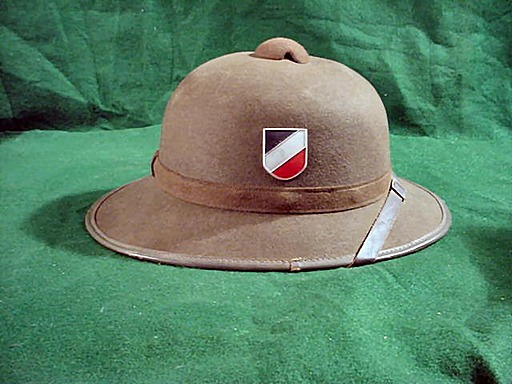
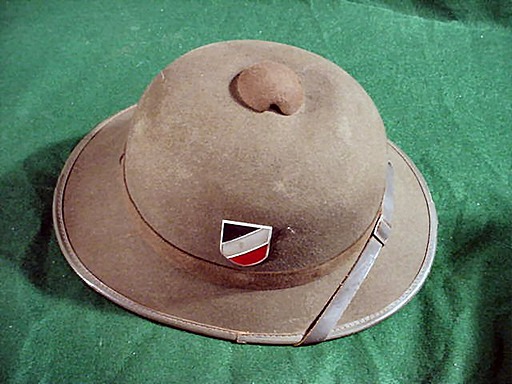
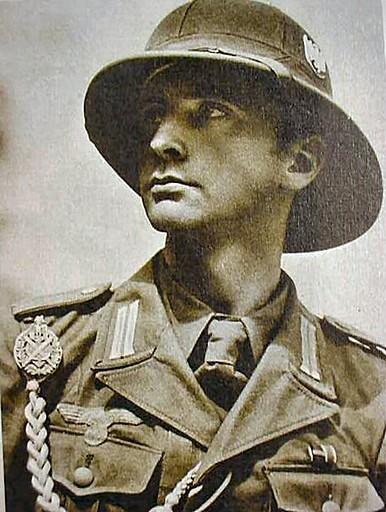
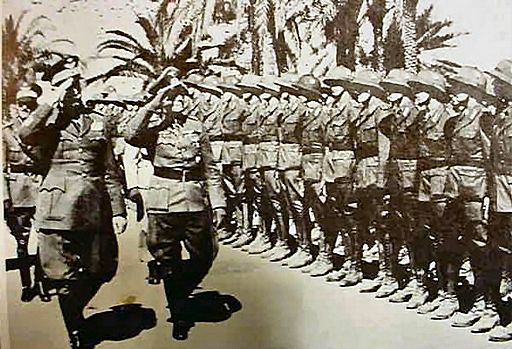
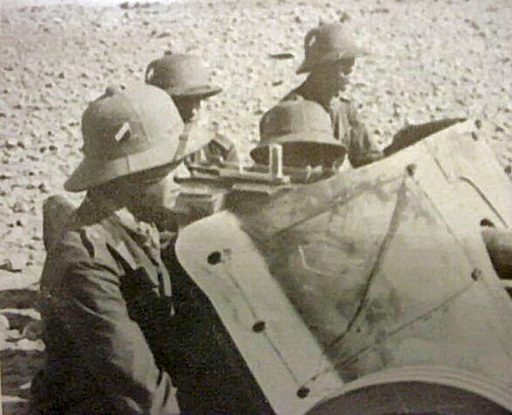
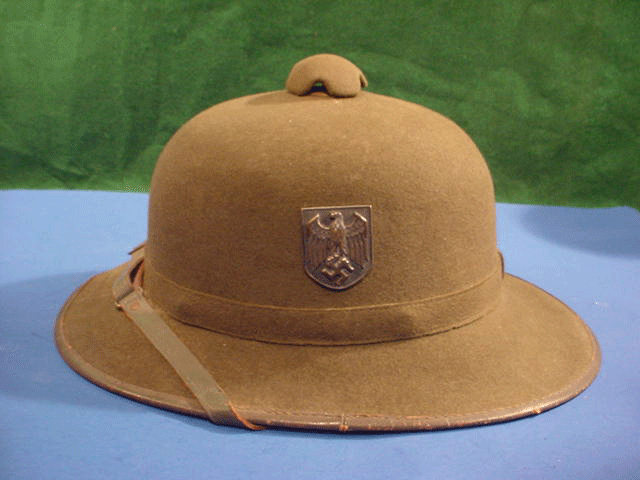
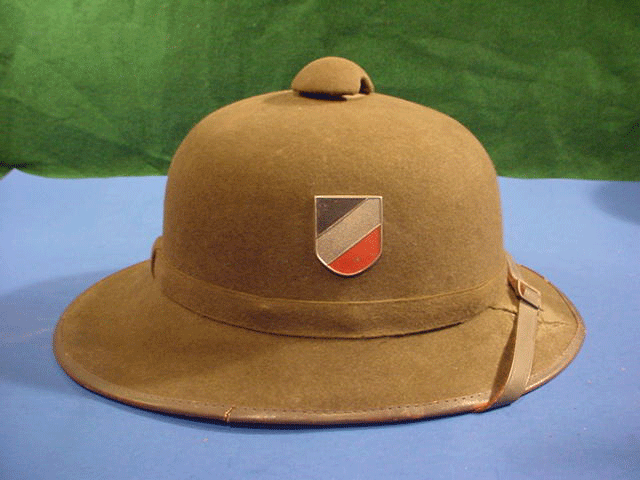
Africa Corps Pith Helmet; Officer’s Grade (Item WEHR 28-1; AFRICA 1-1) |
||||||||||||||
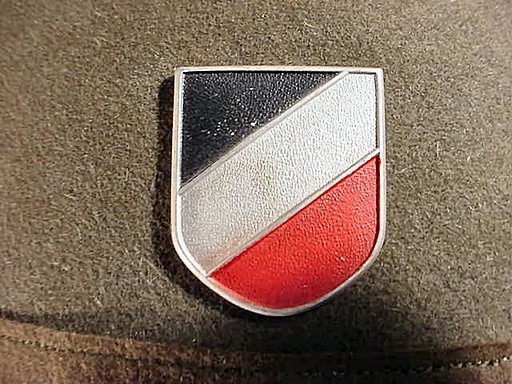
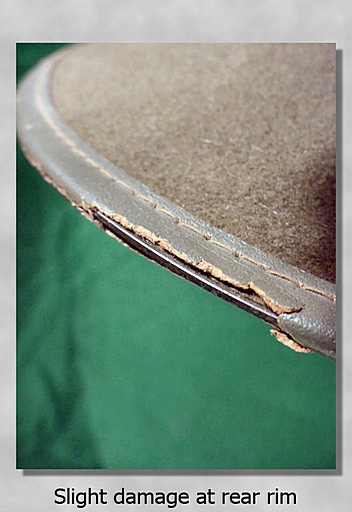
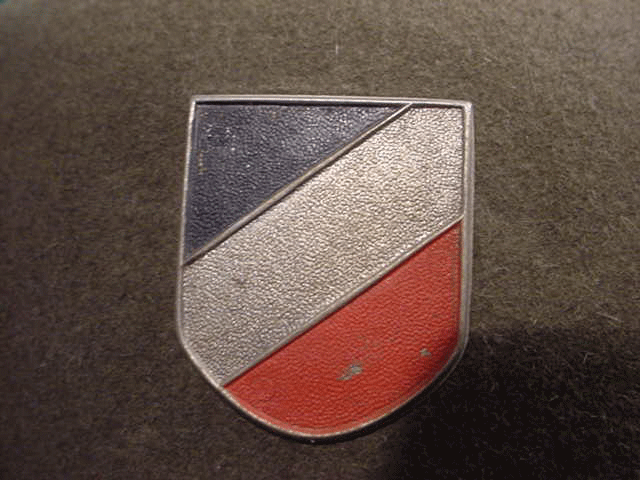
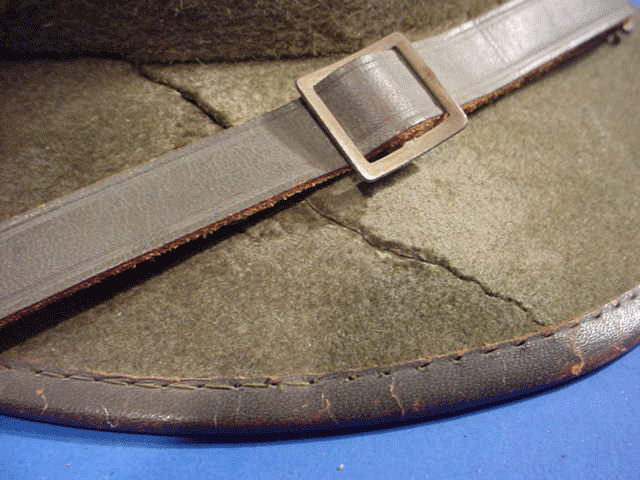
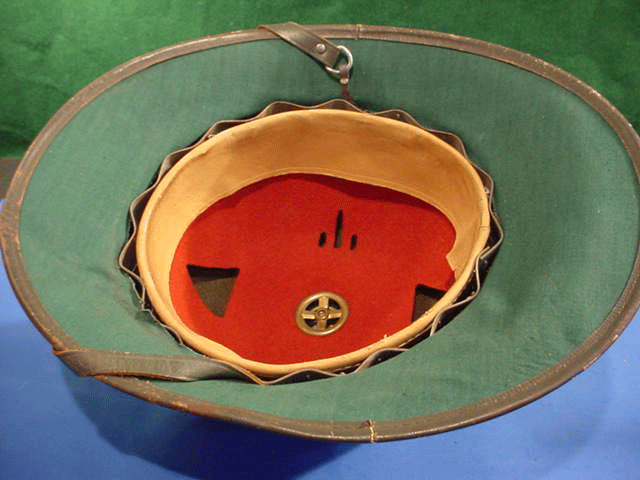
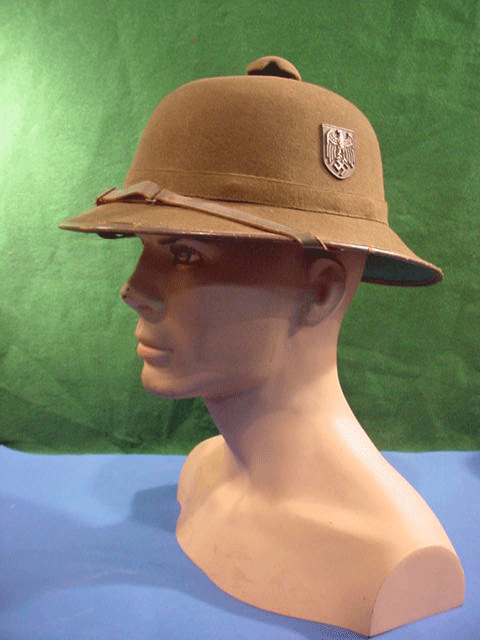
| DESCRIPTION: This is the classic velvet-finish helmet for tropical wear. It's 100-percent original, but the first thing a novice says is, “Why does it say ‘Germany’ inside?” The answer is that many more of these were made than ended up being needed by the time of the defeat of Rommel's Africa Corps the supply depot was jam-packed with these helmets and it was assumed that victory was inevitable and thousands of these would be issued to German occupation forces. We know that the Africa campaigns failed at no fault of the Desert Fox or his valiant men. It was a British entrepreneur who bought the whole lot from the British Government, but he was shipping them out of Germany to various dealers in England and America the requirement was the they had to say ‘Germany’ inside, just as porcelain crafted in 1950s Germany had to say ‘Germany’ in a stamping before being exported to America. So that’s why the word ‘Germany’ is stamped inside the sweatband. When they were first imported into the U.S., dealers sold them in magazine ads for as low as $35 back in the 1950s and early 1960s, but today you are lucky to be able to find one even for $1,000 from most web sites and military shops. We at Germania try to buy reasonably so we in turn can pass a bargain to our customers and we feel this one is truly a bargain. It is in generally good shape with some slight damage here and there on the edges, but it just doesn’t detract at all. The helmet is sound and except for that little edge damage it is in top condition, indeed. This is a very fine and (today rare!) piece of WWII history.
PRICE: SOLD |
|
|||||||
|
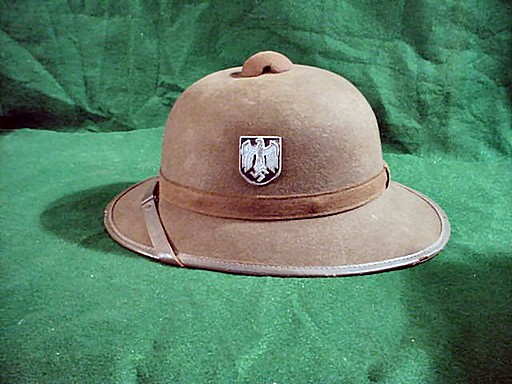
Africa Corps pith helmet (Item WEHR 28-1-a; AFRICA 1-1-a) |
|||||||
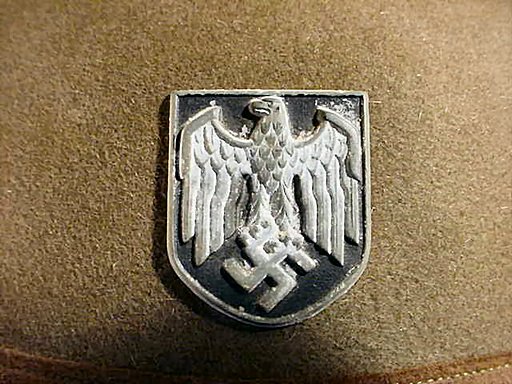
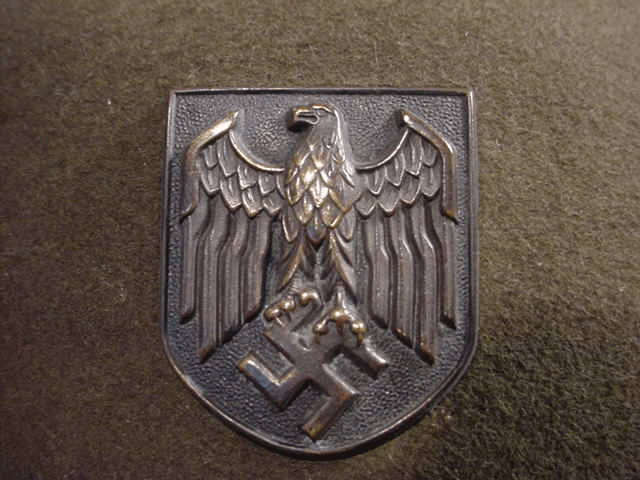
| DESCRIPTION: Here's another pith helmet (officers grade). It is exactly the same as the one above except it does not say Germany in the liner and the shield with the eagle is in a darker hue. Also this one has a crack in the bill (noticeable) but it is cracked all the way through to the other side. But its not like it will drop off or anything so collector's if this doesn't bother you all that much here is a bargain, priced very reasonably. Remember it is what it is and it is after all an original rare helmet.
PRICE: SOLD |
|
||||||||
|
Black Shame Medal by Karl Goetz (Item WEHR 28-2; ART 15-5) |
||||||||
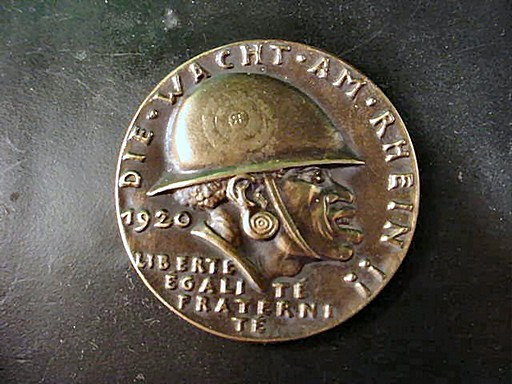
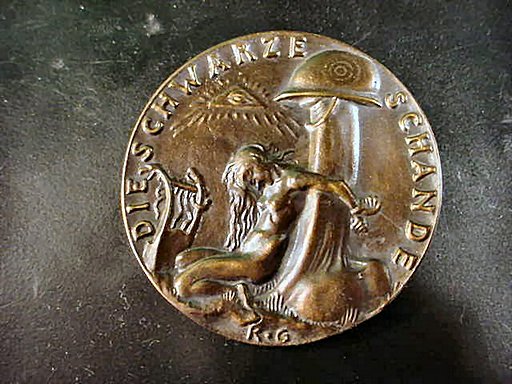
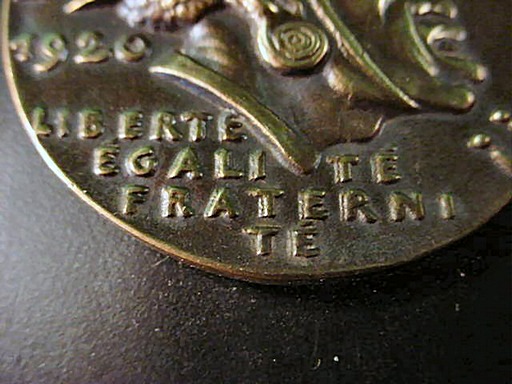
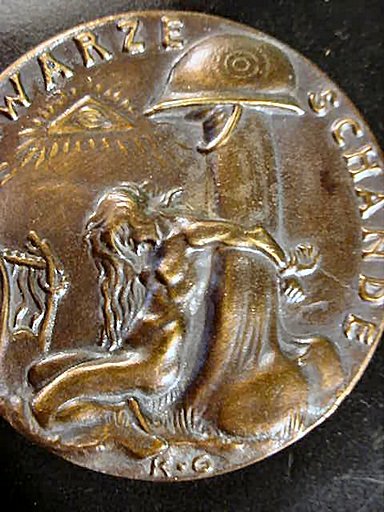
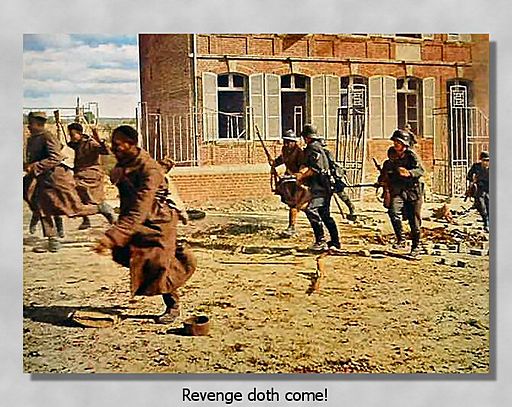
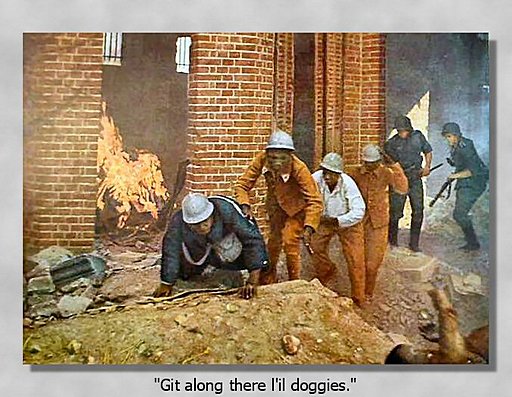
| DESCRIPTION: The history of the French occupation of the Rhineland is replete with horrific stories of cruelty and wanton murder of the German population. But by far the most-often-repeated crimes of those savages was rape. French use of Black Troops was nothing short of a national insult cast at a nation that the French hated with a passion. Rage was so rampant that it seemed to influence the NS initiative to at least sterilize the Black children of the Rhineland occupation. France recruited 190,000 African Negros before and during WWI. As for the Rhineland occupation, if only white French troops had advanced into the Rhineland in 1918 and 1919, the effect would have been to increase the proportion of Black Forces in the French homeland behind the French Frontier. But the main motivation in using Black Troops in the occupation was France’s belief in the strategic psychological effect that these troops would have on their military adversaries. It has been admitted the French were engaged in a blatant and obvious kind of psychological warfare against the Germans. They knew well that this would be viewed by the hated Germans as the basis of a radicalized insult to what the Teutons perceived as Germanic culture and civilization. To the Germans, these African “soldiers” were symbols of barbarous savagery as this was Germany’s first domestic encounter with Negroids within its national boundaries. In the summer of 1920, German officials estimated the number at thirty and forty thousand. These Black Troops were mustered from France’s colonial holdings in Algeria, Morocco, Tunisia, Madagascar, and Senegal. The post-WWI military occupation of Germany lasted from 1919 to 1930, but Negroid troops were left there longer to shame the German people. Black occupation troops became the focus of international attention in 1920 when, in Frankfurt, Black French Moroccan soldiers fired upon civilians, killing several, and wounding many more. After this, the London Daily Herald published an article entitled “The Black Scourge in Europe: Sexual Horror Let Loose by France on the Rhine,” which marked the beginning of an international outcry against the sexual misconduct of Negroid troops in Germany. This new emphasis on the sexual element set off a chain reaction of outrage and condemnation among press people and various international actors who invoked themselves. In fact, six parliamentary delegations petitioned the British and German governments for investigation and inquiry into rapes and assaults by Black Soldiers on civilians in the occupied territory. The cry was “our youth in danger, and the Rhineland was being disgraced and polluted;” the dignity of the Germans and the white race was implied. This sexual misconduct that had reached huge proportions must be contained, and the Negroids must be sent back to “La Belle France.” The uncontained sexual proclivities of the savages was doing irreversible damages to the German woman victims, but no thoughts of miscegenation is hardly imaginable. When German arms crushed the British Expeditionary forces at Dunkirk, then French forces also surrendered there at Dunkirk, and other French geographical locations overrun by the Wehrmacht and several German newsreels showed the Negroid troops being run out of the villages. As the prisoners are lined up, you can see the faces of these former jungle and desert dwelling savages. They even consent to doing an African war dance for the amused German soldiers with all the drum sets and bone practicing to the sound of Uhg’s and Boo-Boo’s. These white French soldiers asked the German officers if they would be so kind as to shoot the tribesmen so the French soldiers would not have to share the POW quarters with them. In some cases, where interrogation brought out that some of the Negroids were in the Rhineland occupation, the wishes of the French soldiers were granted summarily! The medal is called The Black Watch on the Rhine (Die Schwarze Wacht am Rhine). It was struck by the great medalist Karl Goetz as a protest to the sending of the Black Colonial Troops to occupy the Rhine territory, and the sexual depravity. The inscription on the obverse is ‘Liberty, Fraternity, Equality 1920.’ This is a tongue-in-cheek reference to the French national motto. On the back is a description of a nude female figure tied to a phallus that has a French helmet at its tip. The all-seeing eye of French masonry within the triangle seems to overlook and direct the savage scene. The initials for Karl Goetz are seen at the bottom. The words around the edge are Die Schwarze Schande (The Black Shame!). The Negroid soldier on the front looks much like the ones lined up as prisoners in the German WWII film. This is a great medallic piece from the historic epoch of the turbulent century.
PRICE: $700.00 |
|
||||
|
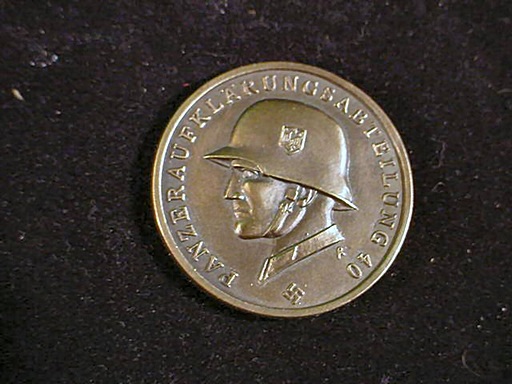
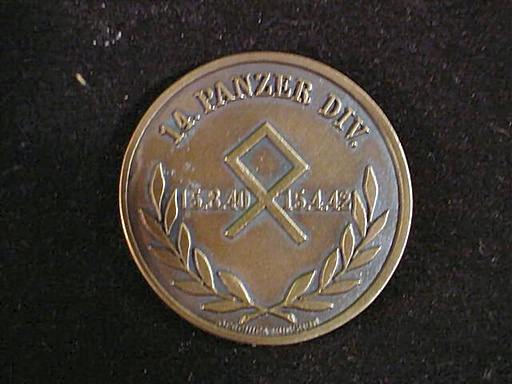
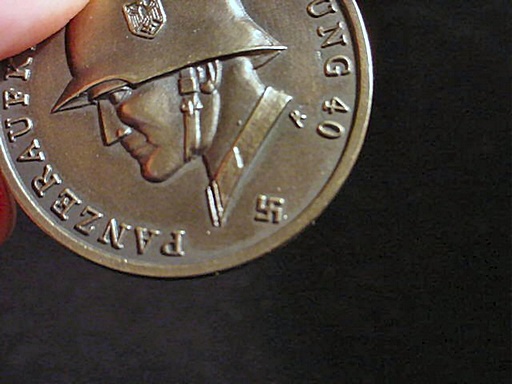
Medallion of the “Panzeraufklärungsarteilung 40” (Item WEHR 28-3) |
||||
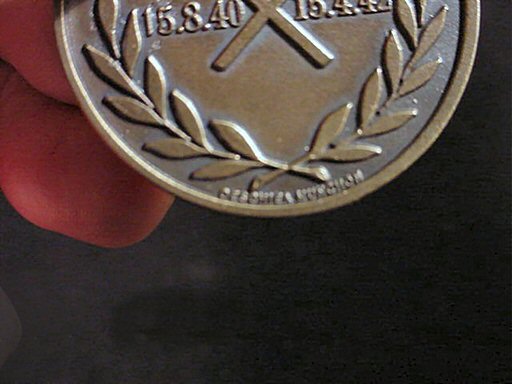
| DESCRIPTION: This translates to “Tank Reconnaissance Battalion.” This is a very beautiful piece of medallic art, and when you look it the details, even under magnification, everything, even the helmet decal, stands out like real! The front depicts a typical German soldier with a swastika underneath the design. The reverse has the Odel Rune with the dates 15/8/40-15/4/42, and has the divisional numbers with a wreath of victory leaves. At the bottom in small letters it says ‘Coeschiam Munchon,’ the company that produced it? The condition of the item is about mint, and is a great art medal to commemorate the bravery and resourcefulness of this necessary function of a successful tank-assault campaign.
PRICE: SOLD |
|
||||||
|
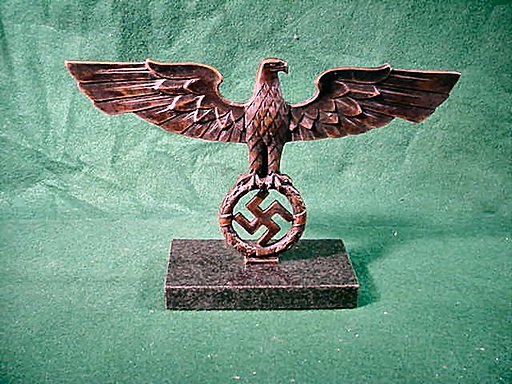
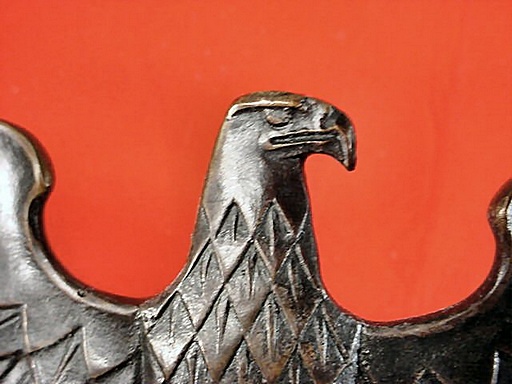
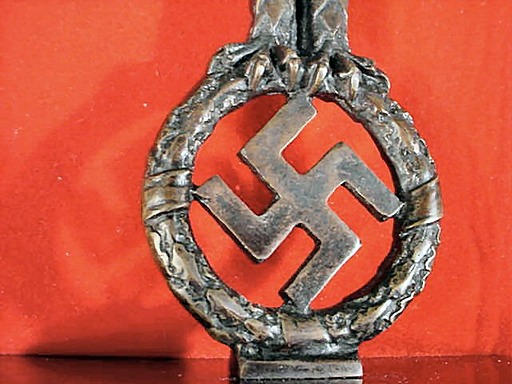
Desk Eagle (Hoheitsabzeichen) in Bronze (Item WEHR 28-6; NSD 16-4) |
||||||
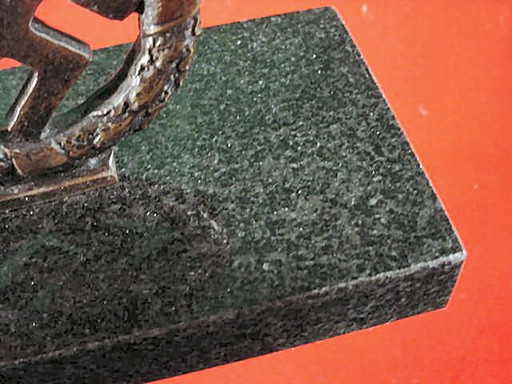
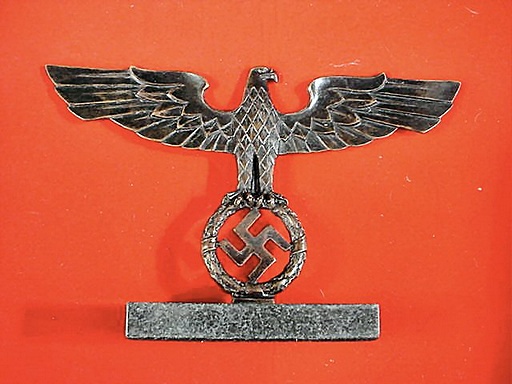
DESCRIPTION: Among the various pieces of bronze sculpture that we were able to procure from the Preussische Bergwerks was this great-looking desk piece. For the narrative of how we managed to end up with these magnificent bronzes go to Item PARTEI 2-10. The firm produced many fine sculptures in the era of the Third Reich. They made figures both in bronze and iron and a famous artist Schmidt Ehmen’s bronze Nuremberg eagles are one of the most apparent and recognizable symbols of the Third Reich era. This eagle, quite different than the party rally eagle, is very dramatic, but very different in that it is a sculpture with outstretched wings, while the Reichsparteitag Adler is with folded wings. This may very well be a Schmidt Ehmen eagle although it is not signed. Ehmen seldom signed his work, figuring the quality of the pieces was his signature. Since this was found in the foundry that Ehmen used for his casting the chance is good that this eagle was one of his. Also from this foundry at Item SA 12-8 is our great little SA man. The eagle is in genuine bronze with a wingspan of 11 1/2 inches, and with the marble plinth he stands about 7 1/2 inches high. The plinth is a 6 x 3 inches and is about an inch deep. If you read about other pieces at PARTEI 2-10 you will know that the foundry worked in bronze sculpture, but did not stone cut plinths. This is done at another location in the area and we actually managed to find this firm and were able to have bases made just as they were in the Reich! They look great! The whole presentation is overly dramatic and awe inspiring. We don't know if it was the Wehrmacht officers’ desks or political leaders for whom they were originally meant because this eagle is similar in form as used by both. My own theory is that it is a diplomatic eagle and might have been a decorative desk item for German consulates in various countries. The eagle has the look like the eagle on the sleeves and caps of Ribbentrop's diplomatic corps. The people today at the foundry didn't know. The older workers and managers were all gone. It was very fortunate for the collecting field that all this was secretly preserved by certain individuals. Late breaking news May 17, 2009: Recently we were reading a book, the title of which is Hoffmann & Hitler by Rudolf Herz published in 1994. In this volume is a picture of H.Hoffmann's showroom in Munich in 1938. It shows many of the pictures that were taken and published by this man who was Hitler's personal photographer. And there on the table with the portraits is a very "familiar piece" -- the amusing part is that one of Hoffmann's employees had set the eagle on the table backwards. It probably was well that the Fuhrer did not come visiting that day! The other interesting point that bears some research is this --did Hoffmann have something to do with the design of this eagle? Otherwise why would it be displayed there among items merchandised by his company? This was a salesroom devoted only to Hoffmann's works.PRICE: SOLD |
|
|||||||||
|
Small German WWII Reichs Kriegs Flagge (War Flag) (Item KRIEG 8-12; WEHR 28-7) |
|||||||||
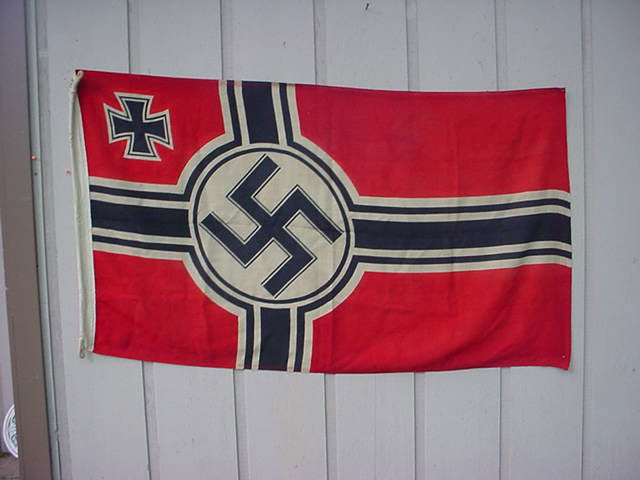
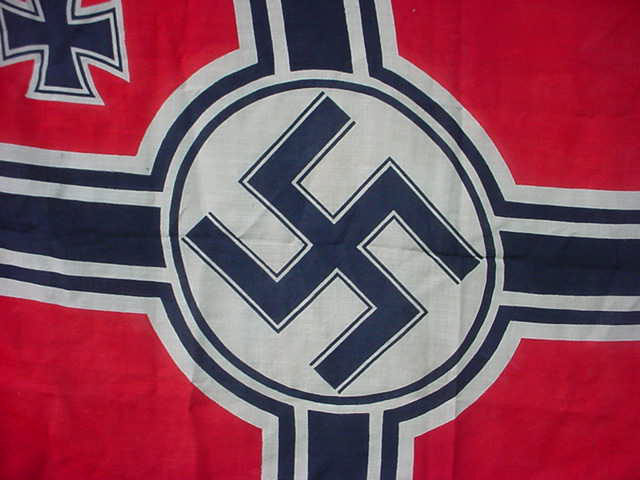
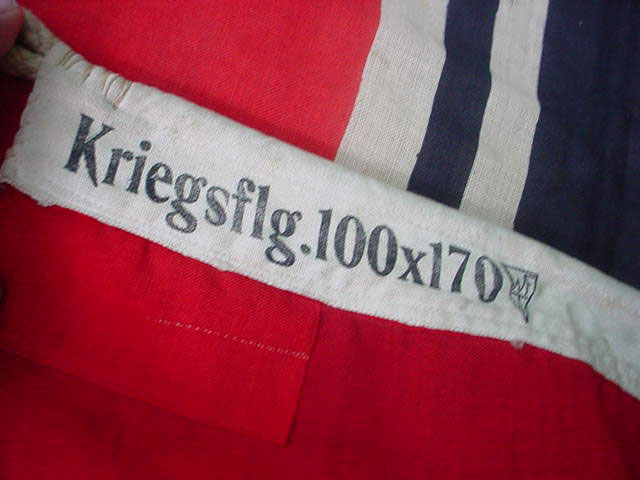
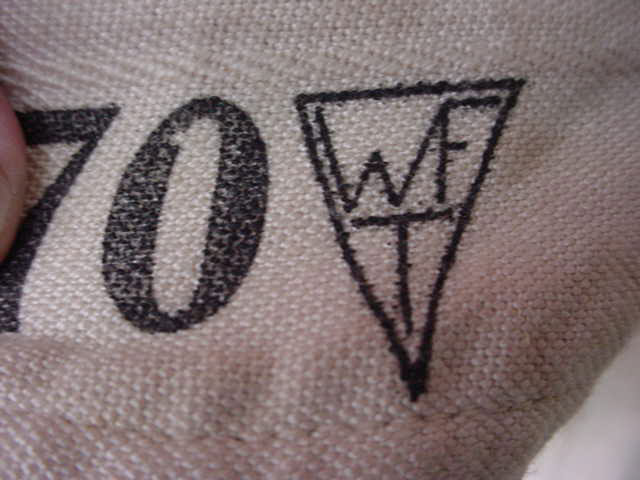
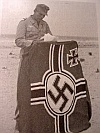
DESCRIPTION:This Reichs Kriegs Flagge is the ideal size that collectors relish because it doesn’t take up a whole wall in display space. It measures 35x65 in size. It is in really good shape. It has the burlap style edge bunting but does not have Kriegsmarine markings. Many collectors think that flags such as this were only for naval use and it is true that pictures showing such flags on ships are abundant in pictures of German vessels in high sea attacks or exercises. This very clean example is clearly marked on the bunting ‘KriegsFlg’. It is the German size of 10x170 and has a company logo. These flags flew from many a “Rathaus” (city hall) liberated or occupied (your choice) by German Wehrmacht soldiers, and they liberated nationalist leaning German citizens who had been virtually rescued from hateful communist inspired Germanophobes of various persuasions & backgrounds. From more information on this style flag go to Item WEHR 8-1. PRICE: SOLD |
|
||||||||||||||||||||||||||
|
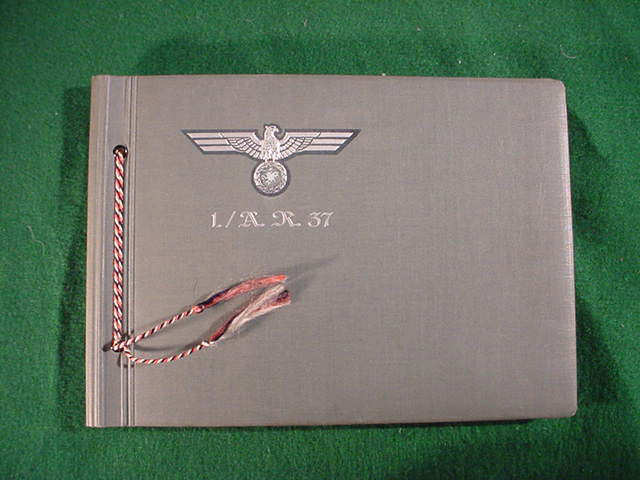
A Fine Photo Album From The 1st Artillery Regt No. 37 (Item WEHR 28-9; ALBUM 2-4 ) |
||||||||||||||||||||||||||
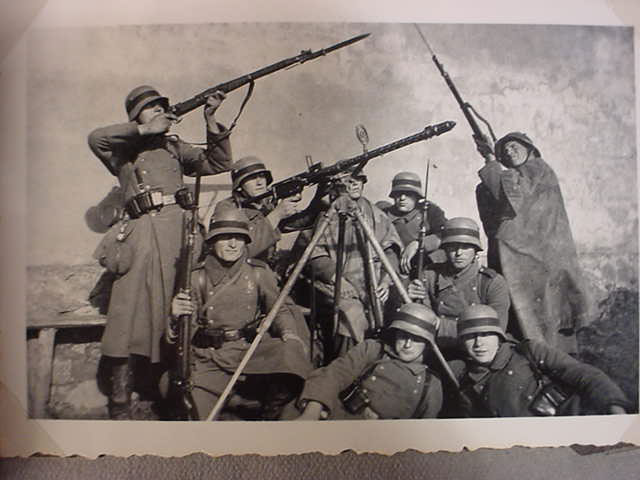
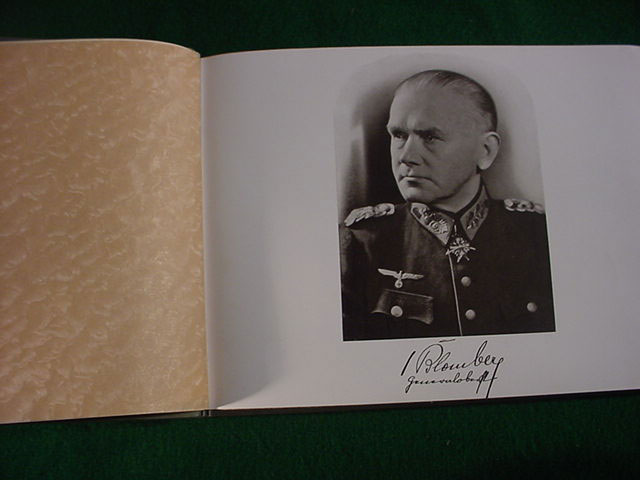
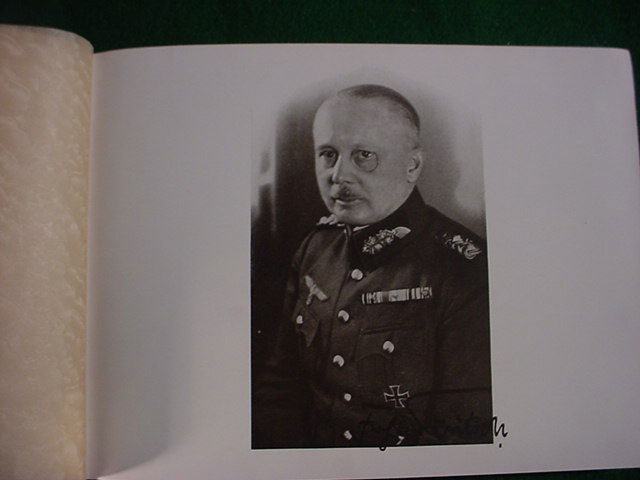
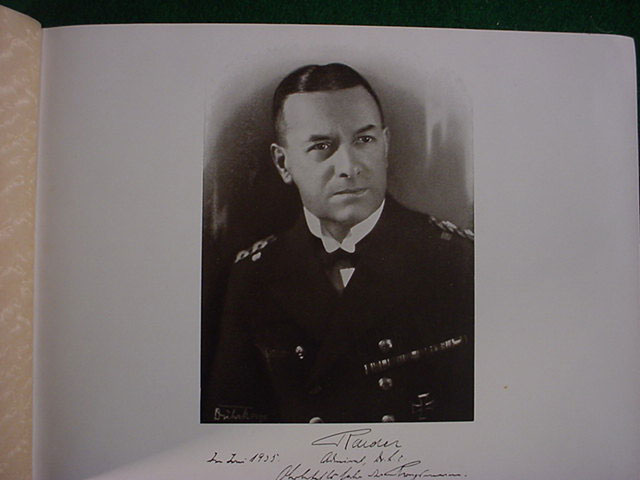
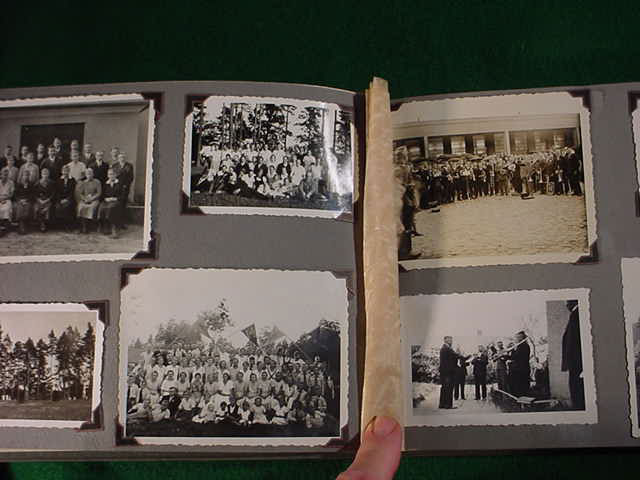
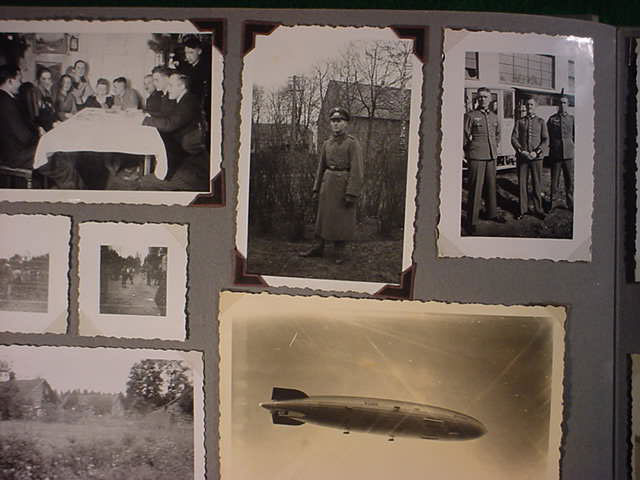
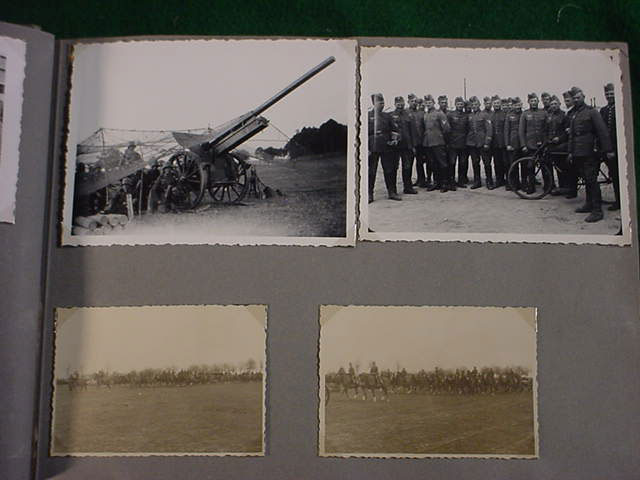
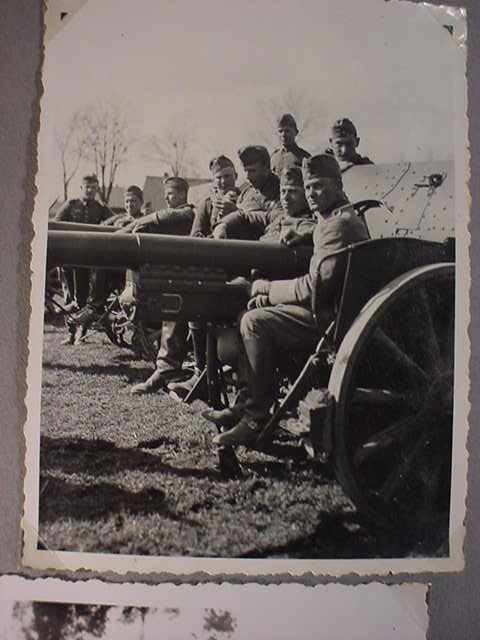
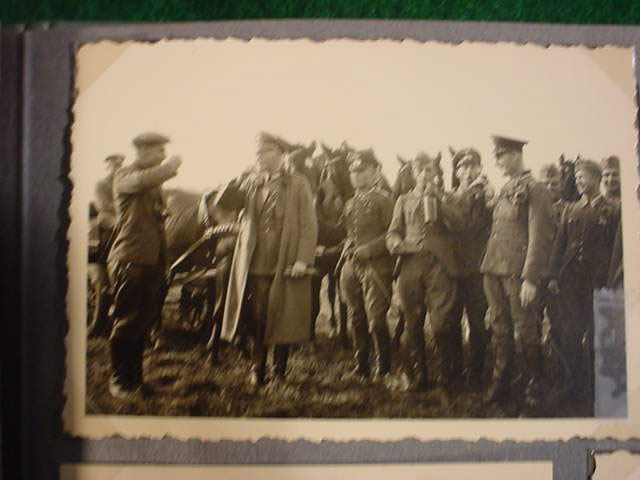
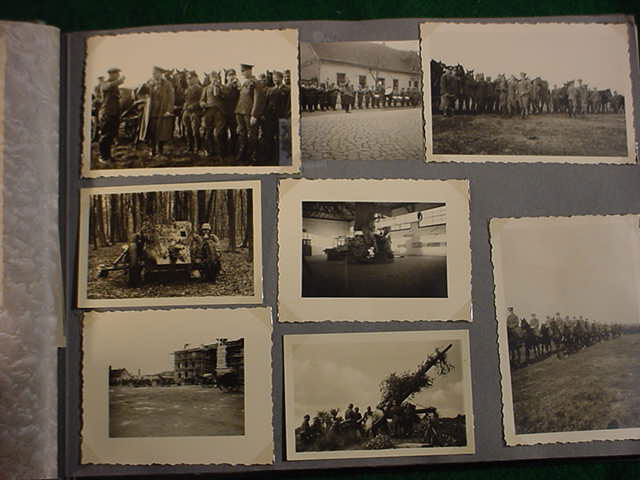
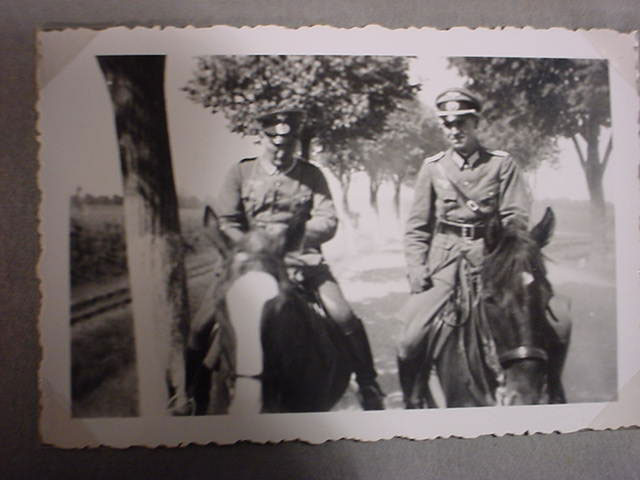
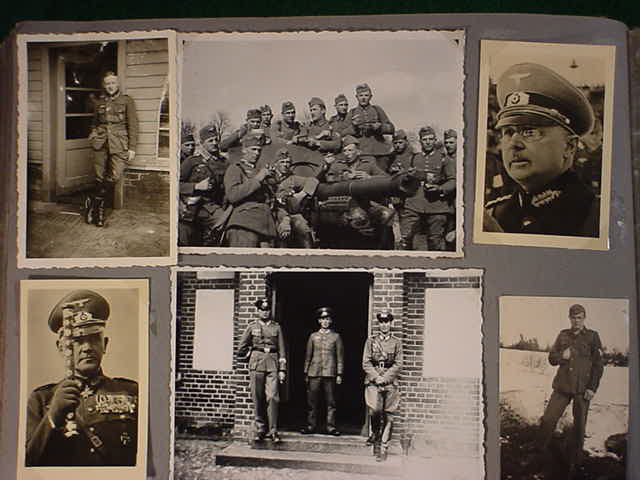
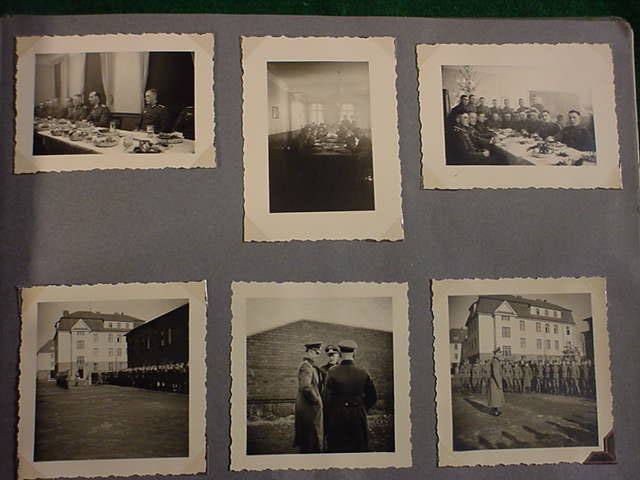
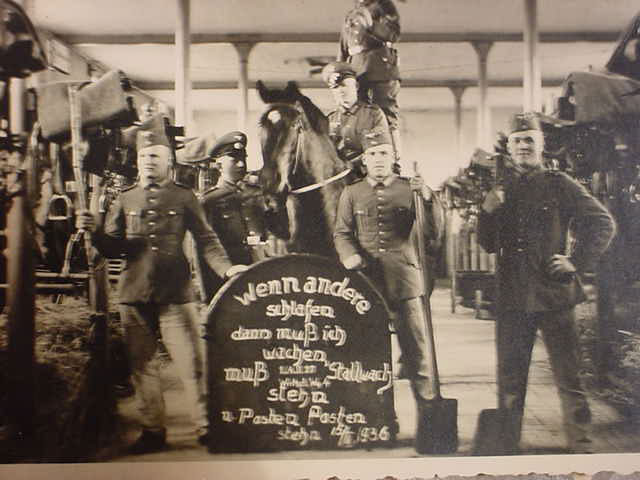
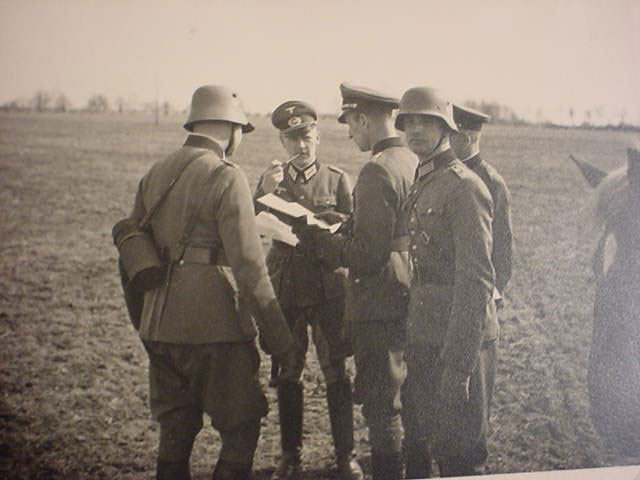
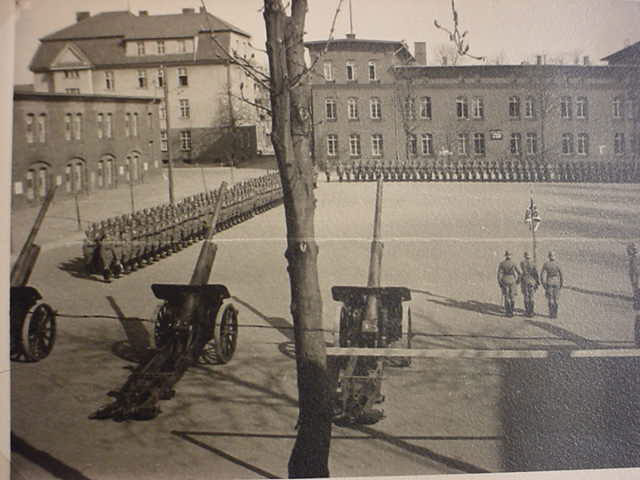
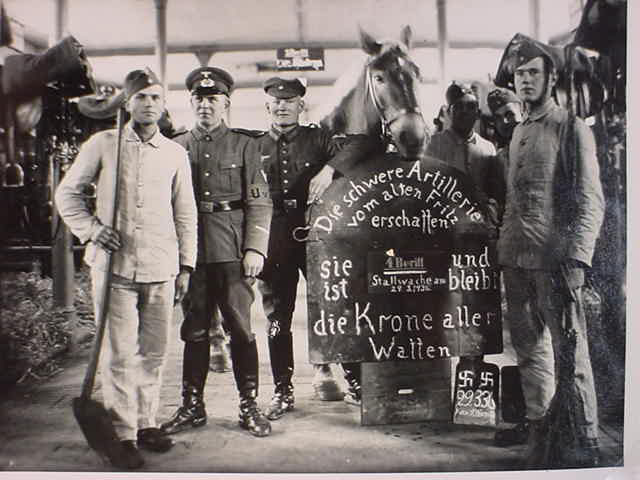
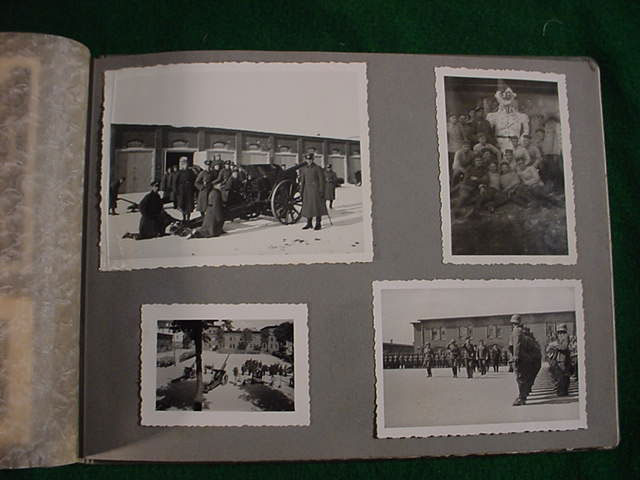
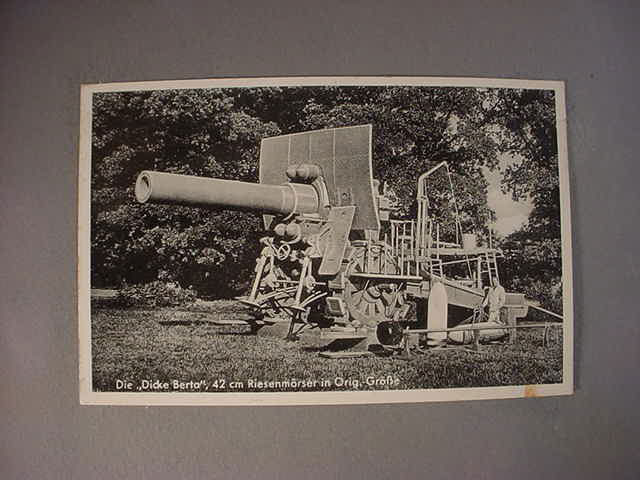
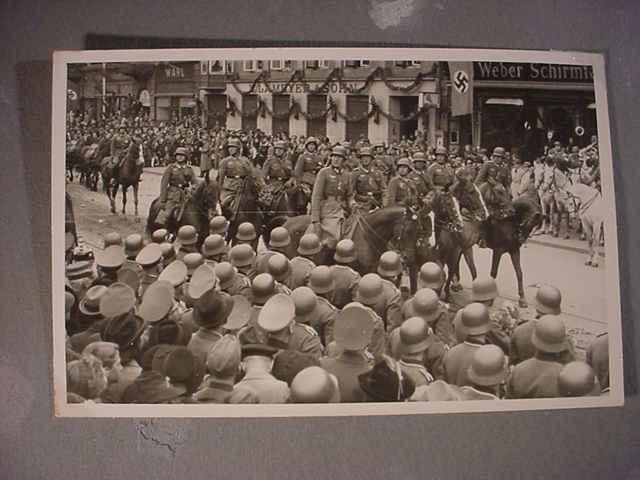
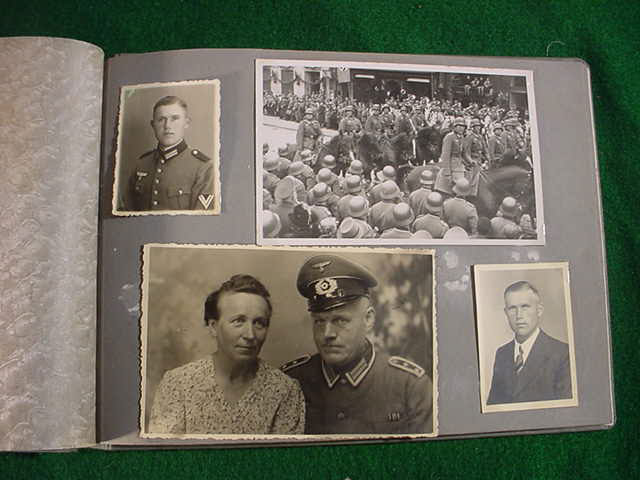
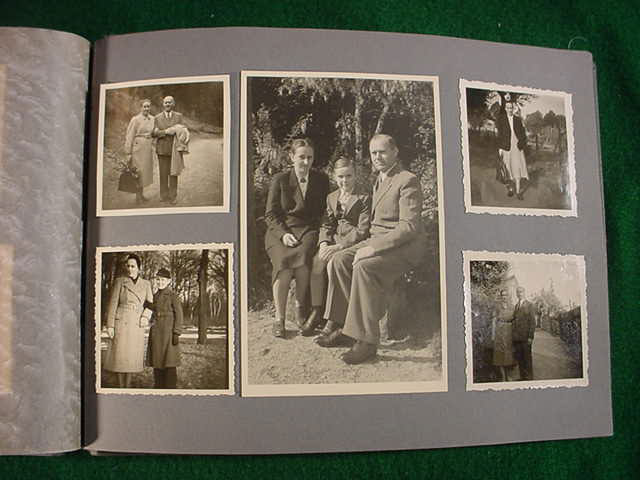
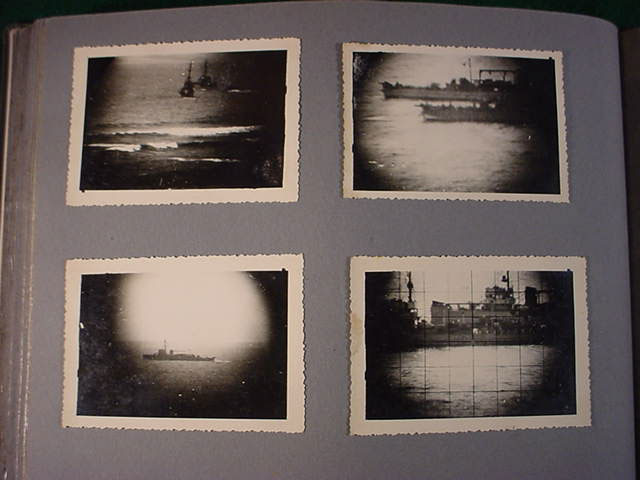
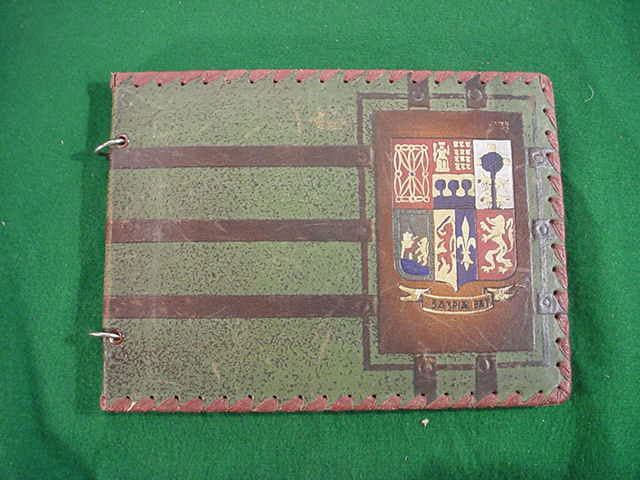
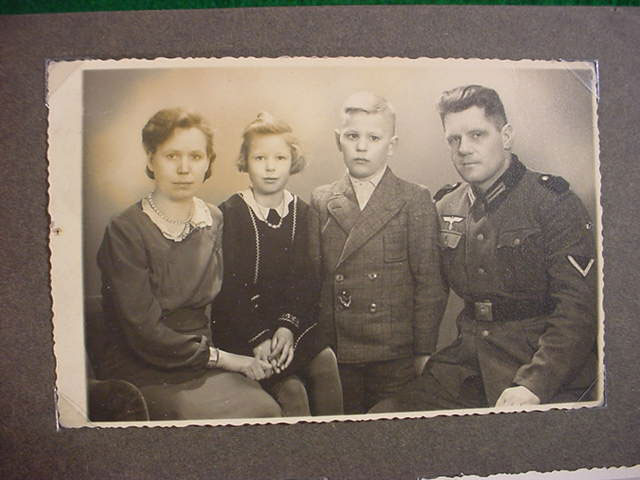
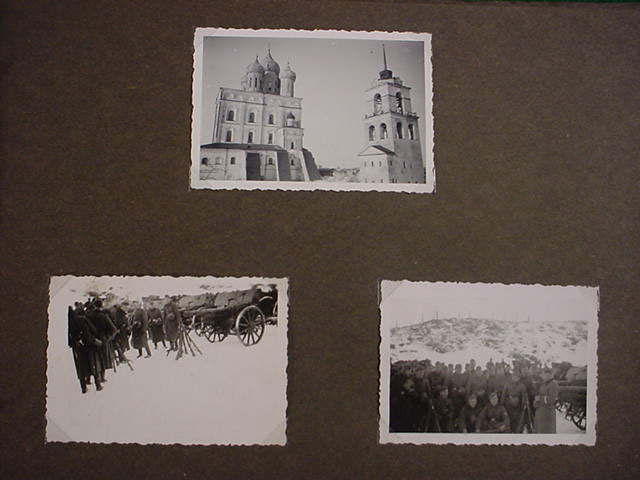
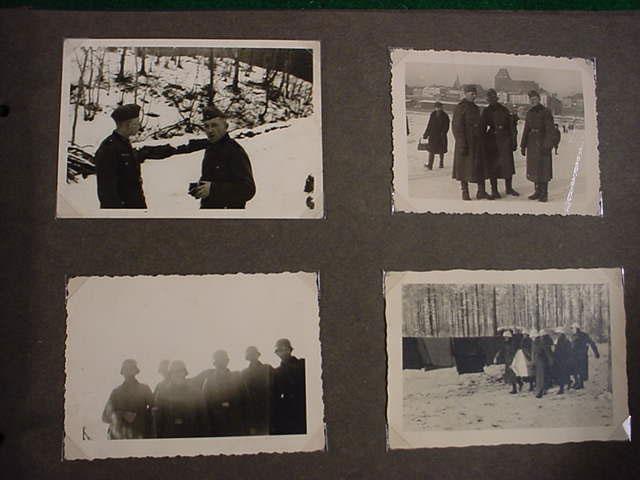
| DESCRIPTION: This is one of the early photo albums that were sold to soldiers to keep their personal pictures in. The first 3 pages feature prints of V. Blomberg,- V Fritsch, the general, staff officers, The Grand admiral, Raider and then over 125 pictures from the original owner’s life as a soldier of the Reich. It starts with some pictures of this family and their little church, works up through his membership in various German hiking clubs and the Hitler Youth. A local town band is featured. A brother or friend is a sailor of the German War Time Navy and is shown several times in the album. There are various celebrations; such as Christmas. A nice photo of the Zepplin Hindenberg Anti Aircraft Guns. “Soldiors – Soldiers – Soldiers” All types of artillery from field pieces to mighty 88_ riffle drills Calvary troops. Troop photos, some great pictures of equestrian subjects, more artillery at base and at the front. One lovely picture shows the soldiers and a great looking horse with a sign that says the mighty artillery from Alte Fritz (Fredrich the Great) It is the crown of all weapons. Great encampment scenes, more artillery, great Calvary parade scenes, pictures of the owner’s father in Wehrmacht uniform with his mother, Atlantic wall gun emplacements, the beach (soon to be bloodied). A great set of photos supplied by the Kriegsmarine friend of pictures taken through a U-Boat periscope of enemy ships about to be torpedoed. Some family pictures at the last section and finally a picture of our soldier and his lovely bride. Truly a superior German album of WWII. Cover is 10 ½ in x 7 ½ in. Cover great with fine silver embossed army Eagle, but the Heilege Swastika has been removed. The string cord is in the N.S. colors.
PRICE: SOLD |
|
|||||||||||||||||||
|
German WWII Photo Album (Item WEHR 28-10; ALBUM 2-5 ) |
|||||||||||||||||||
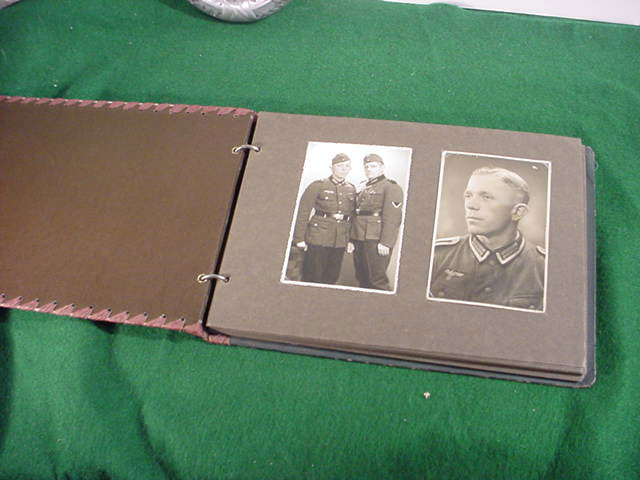
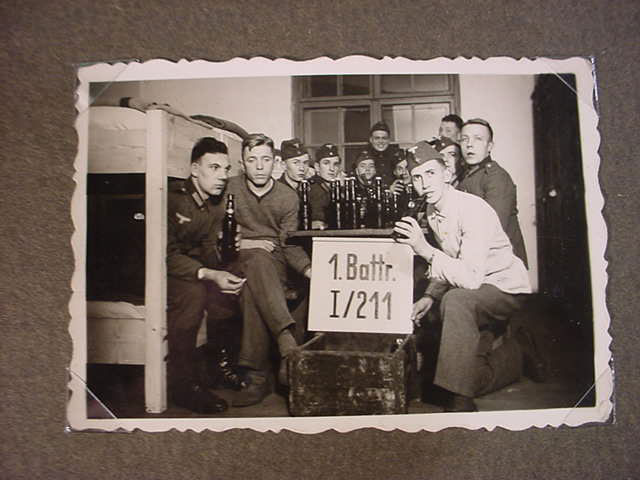
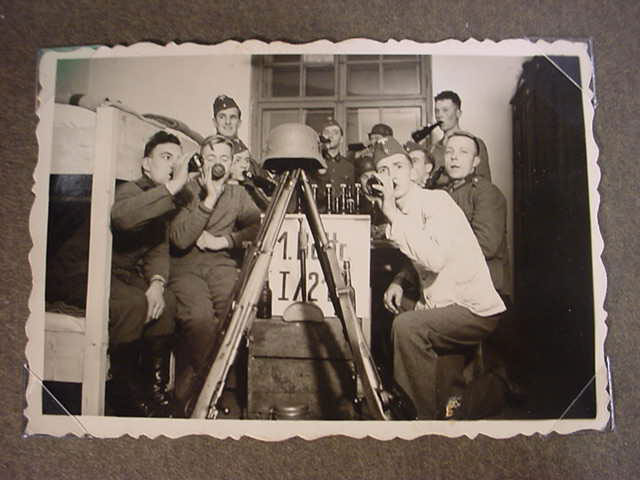
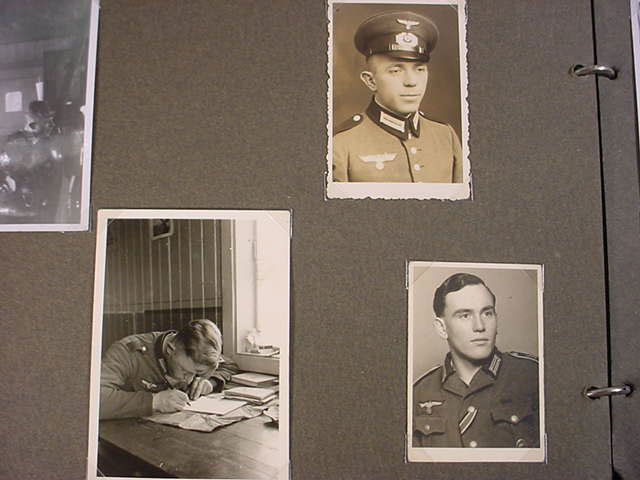
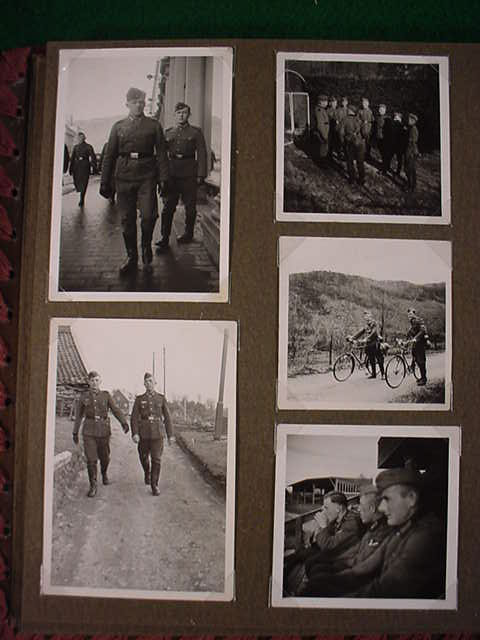
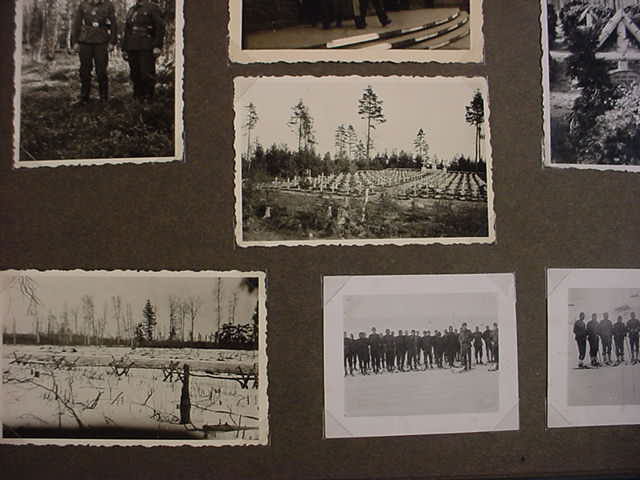
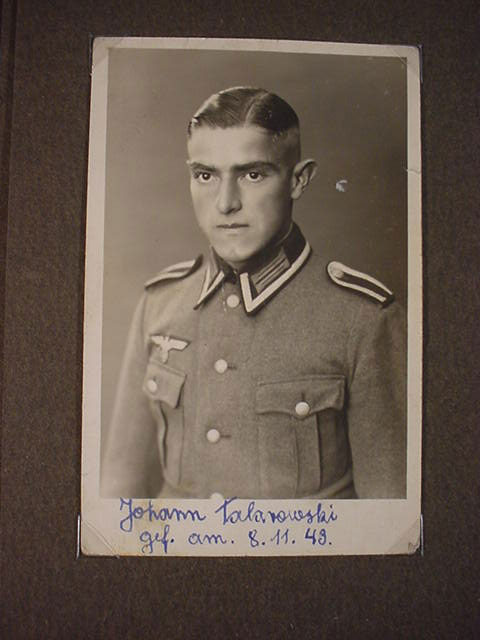
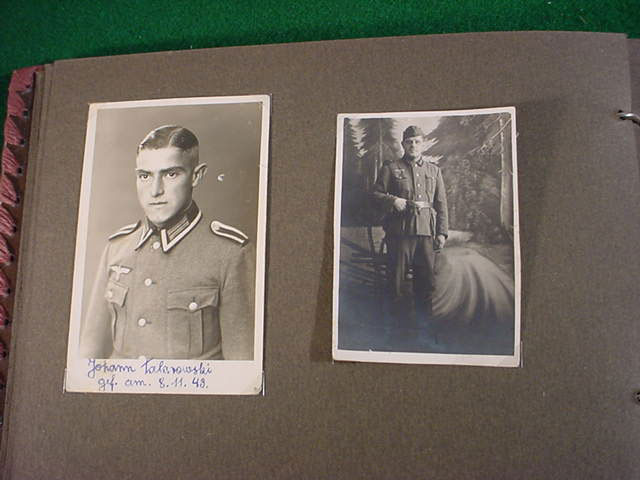
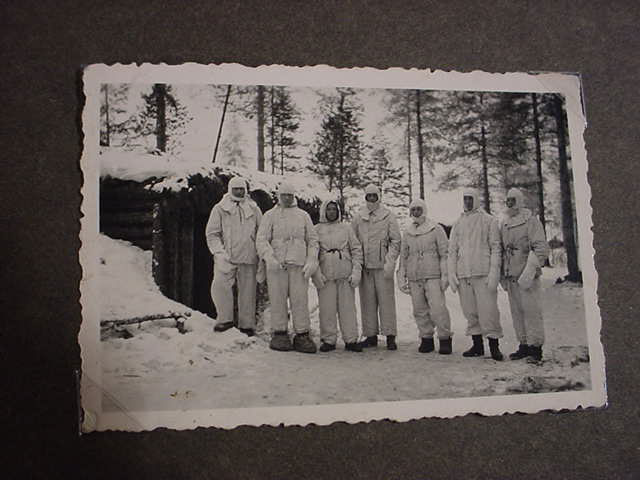
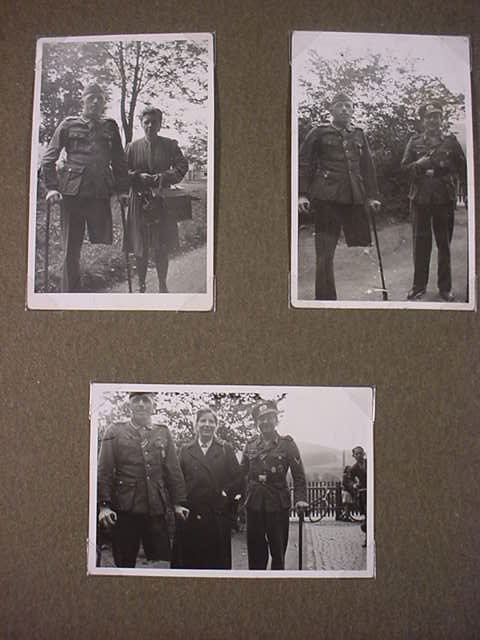
| DESCRIPTION: This particular album is one of the finest of them all. 100% complete with all photos there where they always were with none missing or replaced. It starts with the owner’s picture with a comrade next to him. Beside this a portrait style picture of the owner. All together there are 91 pictures, practically all have soldiers in them in duty, in recreation, in training. His comrades and his realities in the service are depicted. One scene shows the unit soldiers posing with their bottles of good German beer while they display an identification postcard showing their designation 1st Batterie 1/211. We figure this is a field artillery unit. On the cover is an embossed Coat of Arms with the legend. (In Memory of my service time) The pictures show artillery pieces being loaded on ship or truck. The pictures are typical of “Soldatenleben” (Soldier Life) on the front and at the base. Pictures of the many crosses in the field tell the morbid side of war. Also shown is a picture of a soldier returning to his family with an amputated leg. There are scenes of soldiers in camo. We assume these pictures are from the 1st part of the Russian Campaign. There is an identified picture of a young soldier Johann Tacnanowski (Getallen) (KIA) 8/11/43. Sad memories mixed with duty, devotion and pride of country and people by brave soldiers of the Reich.
PRICE: $300.00 |
|
||||||||||||||
|
Knights Cross of the Iron Cross “Ritterkreuz” (Item WEHR 28-11) |
||||||||||||||
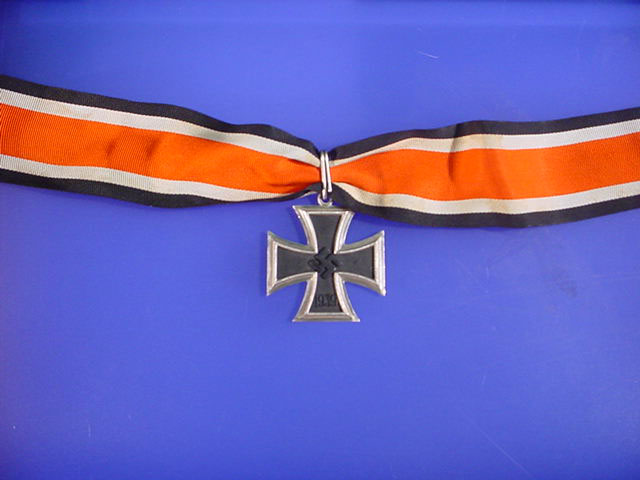
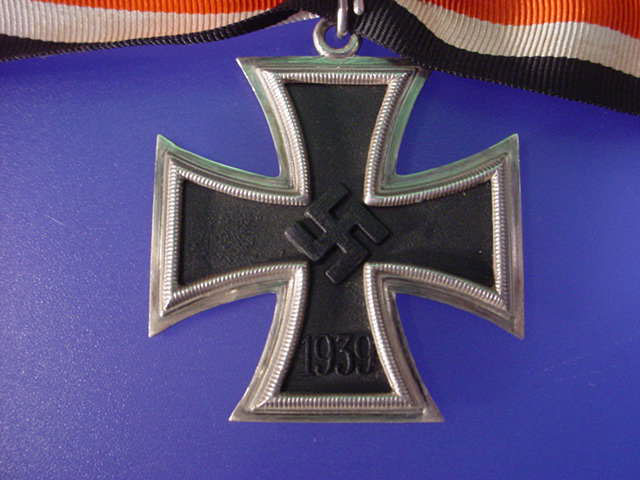
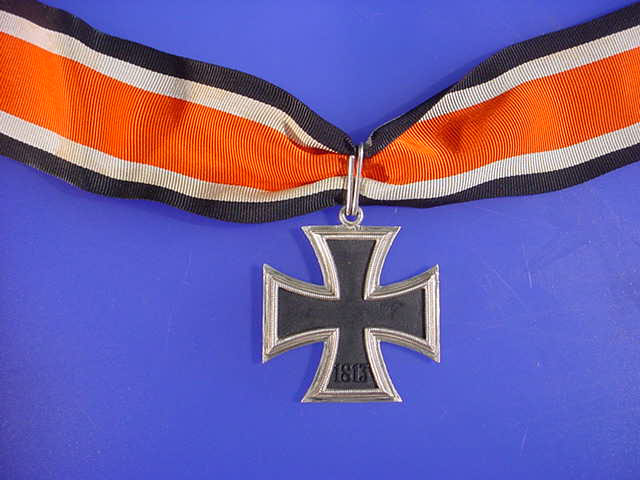
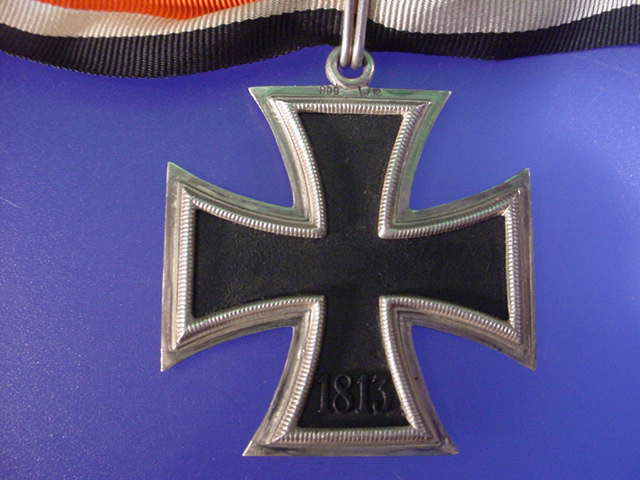
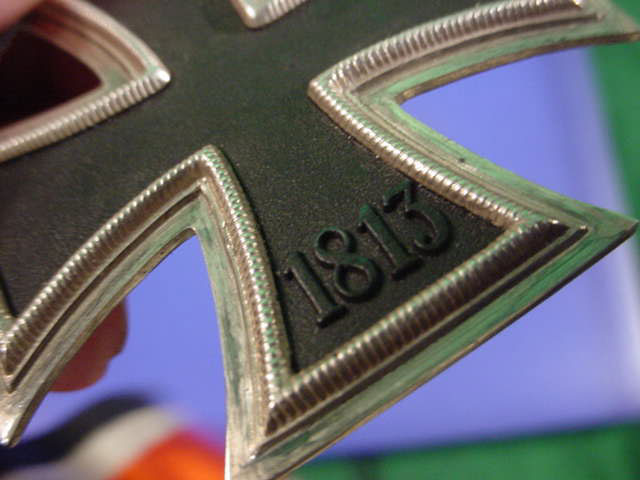
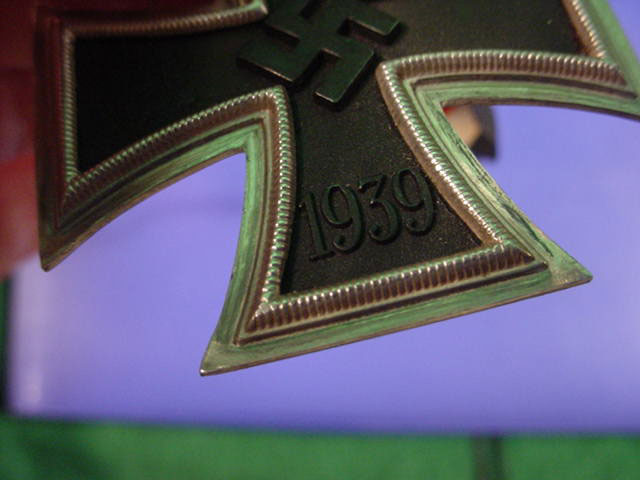
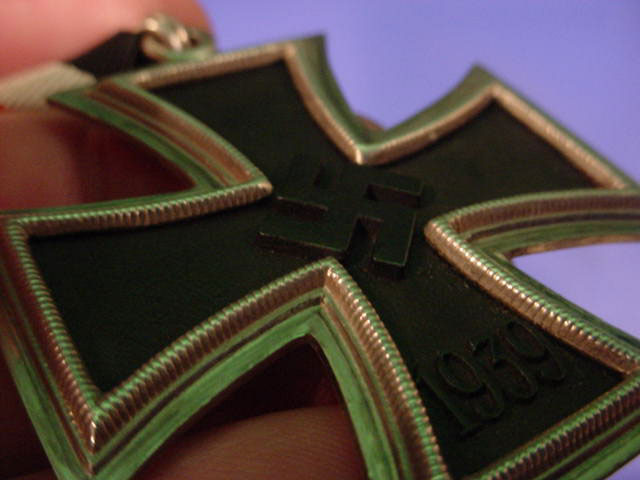
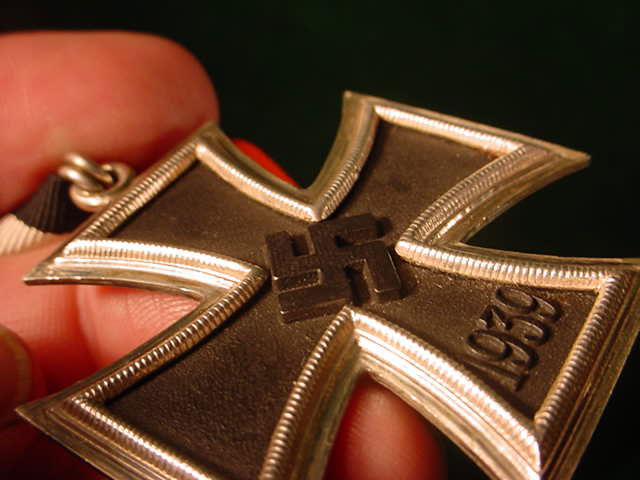
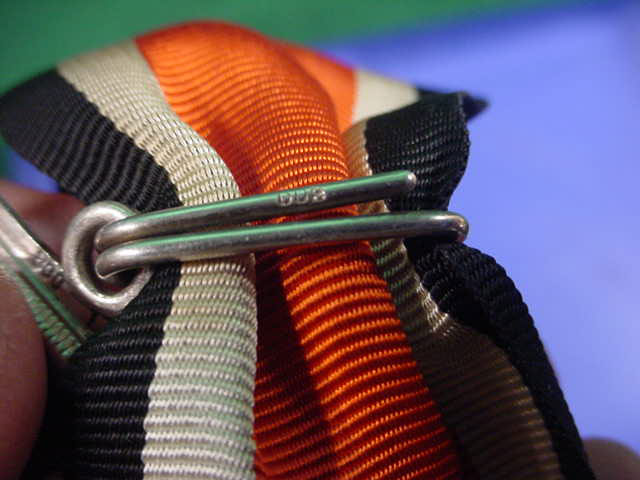
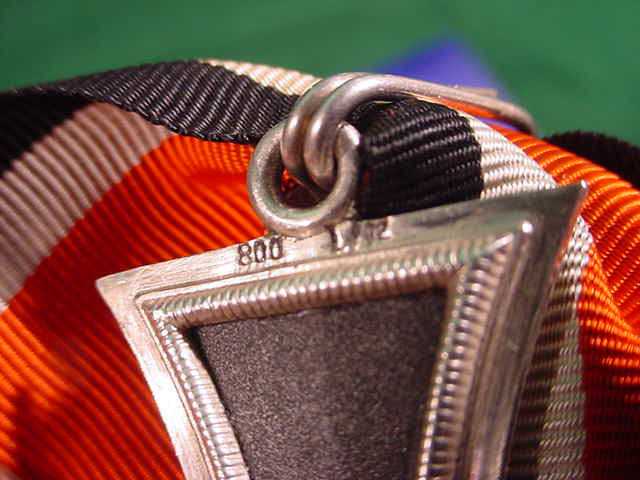
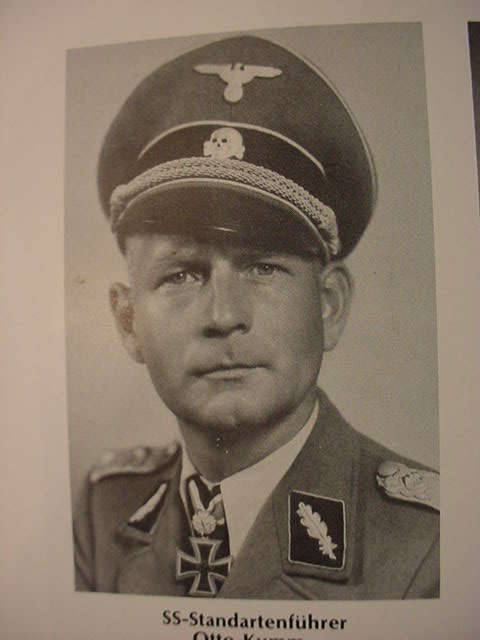
| DESCRIPTION: This is a very fine example of the highest German WWII Order in its 1st class presentation. After being awarded this decoration one would aspire to the same but with oak leaves, then swords and oak leaves, then with diamonds and it was given (once) with diamonds (n gold) to one recipient and this was Oberst Hans Ulrich Rudel. The stuka pilot of eternal fame. I am quite proud to have met him in 1969 this is an L/12 Marked Piece; of course this is the code letter and number for the LDO approved Knights Cross manufactured by C.E. Juncker in Berlin. The “L” is a bit less than clear, but one must remember that these numbers and letters were stamped on the finished cross and the finished with the hammer and punch and this would be subject to all the human frailties. Just like you and I, maybe he hadn’t had his coffee or Schnapps that morning. In any case this is a very fine R.K. in every sense of the word and it passes every test for originality that exists. The letters and numbers 1813 – 1939 are as fine as Government coinage would be. The ribbon is the fine satin like finish. Some slight use is seen at the top edge of the silver rim, otherwise the condition is excellent plus. The ring is also marked clearly with the 800 mark as is found in all Juncker models. This is one that any serious collector will be proud to add to his groupings of fine relics of WWII.
PRICE: SOLD |
|
|||||||||||
|
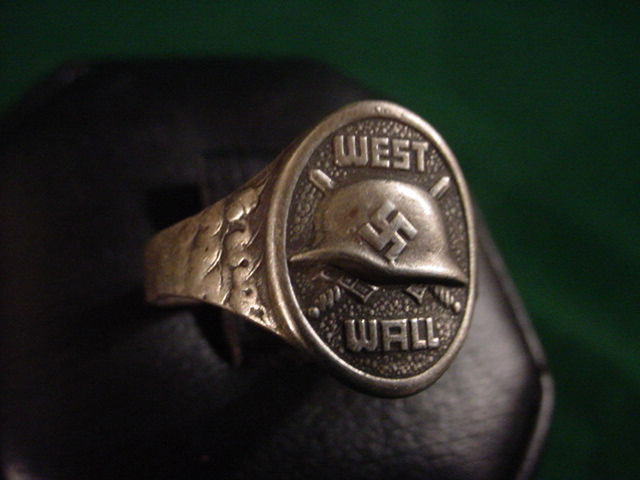
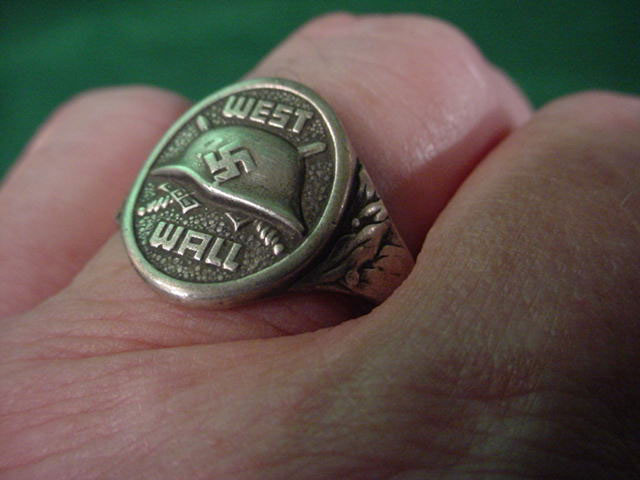
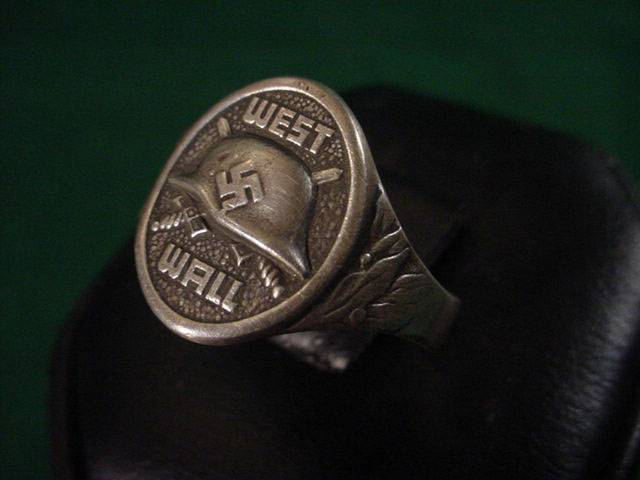
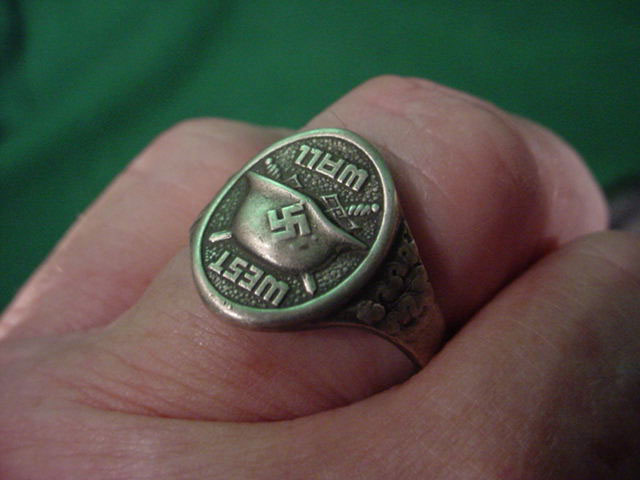
West Wall Helmet Ring (Item WEHR 28-12) |
|||||||||||
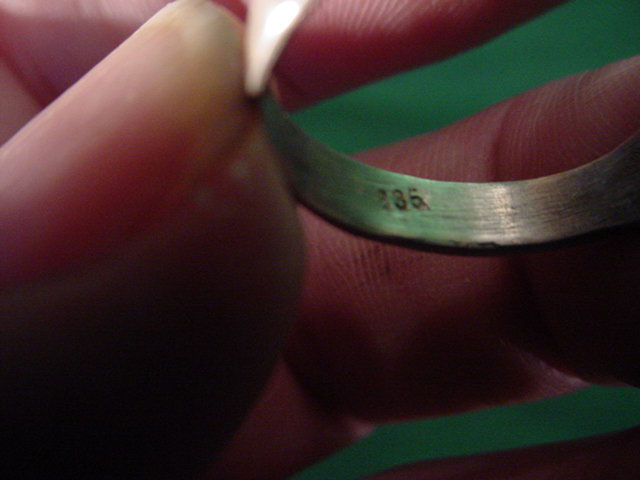
| DESCRIPTION: This is one of the varieties of West Wall Rings. There were several types, some featured skulls, while others featured the concrete “Dragons Teeth” fortifications. But by far the most popular were the ones such as this that depicted the German Helmet (“Der Stalhelm”). The soldiers that wore these rings were the front line of defense for the European continent. Many military songs were composed honoring these stalwart warriors. Throughout the time when all Europe feared for the coming invasion and the horrible Fratricidal War. Launched by the British who had started the whole thing in the first place with their “Preventative War” against the central powers with the ignoble idea that Britain must always Rule the Waves and the land and the air, etc., etc. Otto von Bismark had said, “Waging Preventative War is like committing suicide out of Fear of Death”. So as history records the Germans were crushed, the British lost their empire and the Soviets emerged as the “real danger” to the west. History is for the most part a continuum. Look at the preventative war against the Muslims that Bush and his Neo-Coms are waging against the Muslim world and look at the fallout already achieved. Sorry but as a historian I just can’t help extrapolating important meaning from events of the past and seeing the same mistakes being repeated. Read Pat Buchanan’s new book “The Unnecessary War”. Now back to the ring. This is a fine looking piece of martial jewelry; a design that “says it all”. This ring is in pure 835 silver and is so stamped inside. The helmet with the Swastika is literally defined with crossed swords and the words “West Wall”. By the way, the words “West Wall” are the same in German as they are in English. A great historically important piece of WWII history.
PRICE: $350.00 |
Page Twenty-eight |
Please refer to item designator in parentheses in all correspondence.
Please E-mail for any additional information you may need.