
|
|
|
|
|
|
Wehrmacht
(Das Heer)
Page 26
|
|
| |||||||||
|
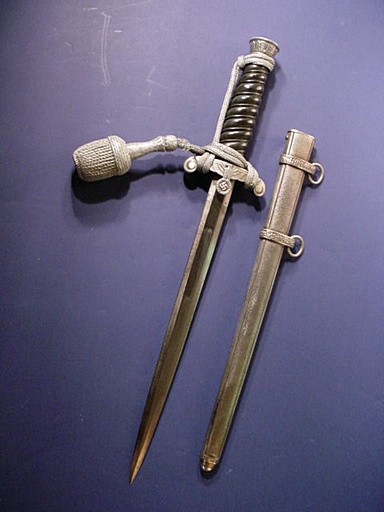
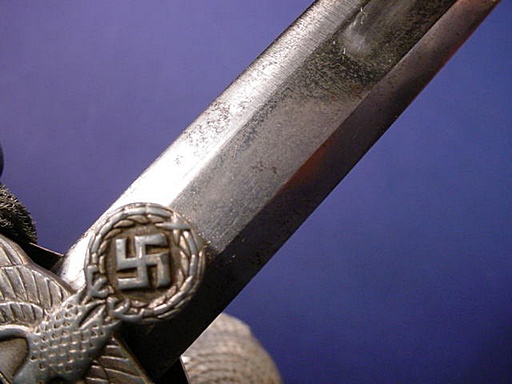
Variation Army Dagger (black grip) (Item WEHR 26-3) |
|||||||||
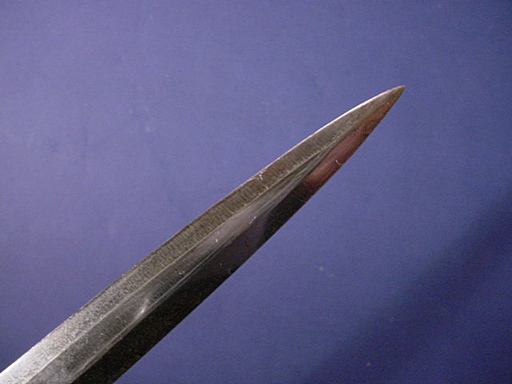
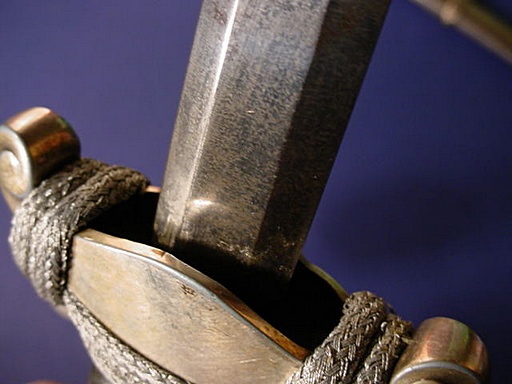
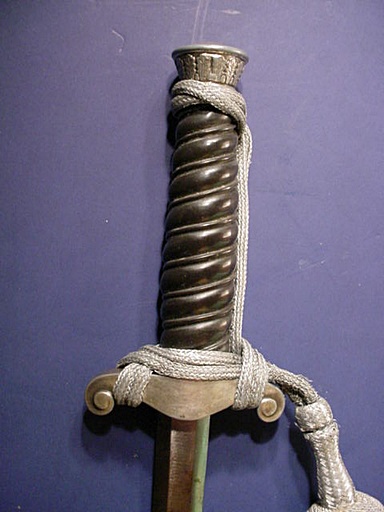
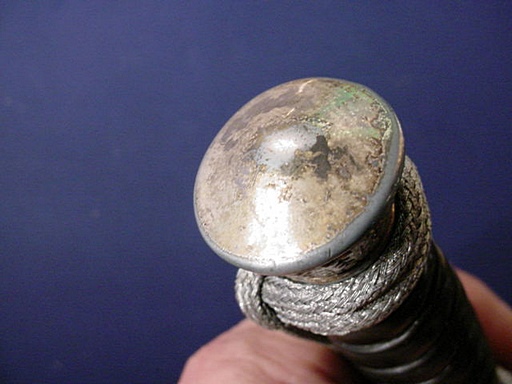
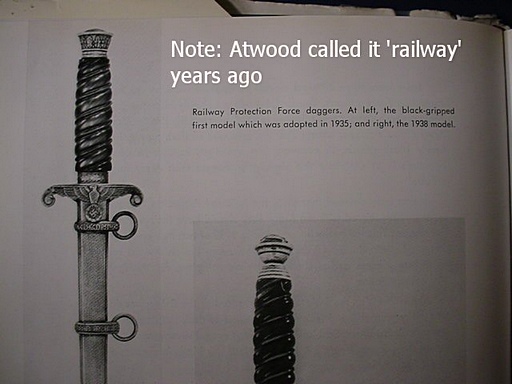
| DESCRIPTION: This is quite a rare dagger that is 100 percent authentic although the forums and other dubious individuals have made fanciful and frivolous claims bantering about theories that come straight from the moon. At one time these black-handled armies were considered railway-protection daggers, but that theory has fallen by the wayside. The closest to a common-sense idea comes from a German officer who worked on the West Wall defenses in 1944. He said that he saw at two least Pionier officers wearing black-grip daggers. He took notice of this because his dagger back in Germany was with standard white grip and secondly, he was sort of miffed at the idea that these stuck-up officers would have the effrontery to wear a dress dagger while ostensibly in a “work detail.” It seemed rather arrogant to him at the time, but as to the dagger, he swears it was a black gripped; otherwise normal army dress dagger. We have heard this theory before and it is the one that makes good logic. The piping and colors for the Pioniers, or engineers, was black. Keeping this in mind we think it natural and fitting that these officers of this necessary corps might want to have some distinctive recognition point. So, although we offer it as simply a rare army variation, we tend to believe the Pionier usage. It’s about 90 percent in condition (good plus) with a bit of surface stain. The blade is cleanable.
PRICE: SOLD |
|
||||||||||||
|
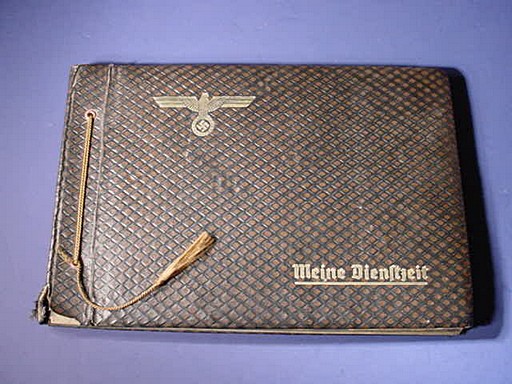
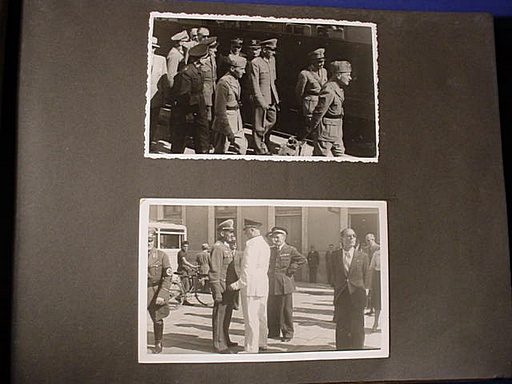
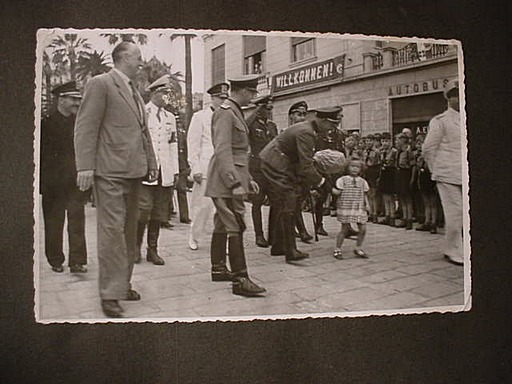
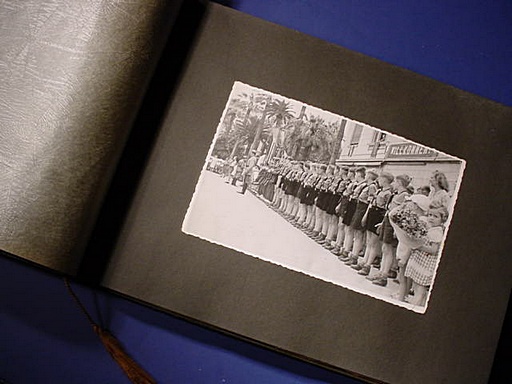
Album that Records a Visit to German West Africa (Item WEHR 26-7; ALBUM 1-7; I-FAS 3-10) |
||||||||||||
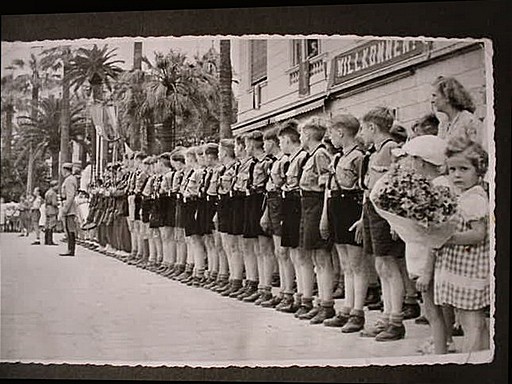
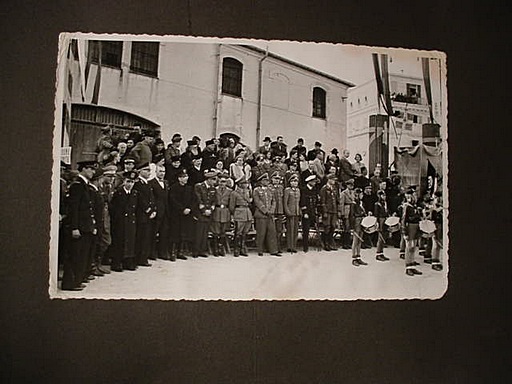
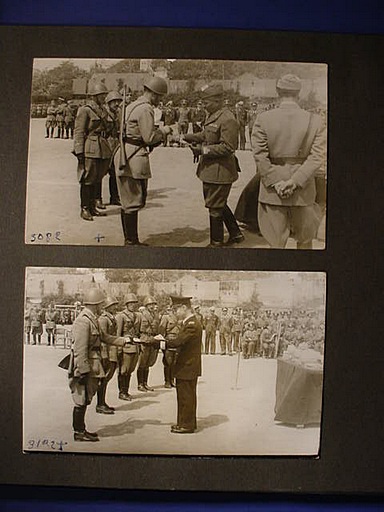
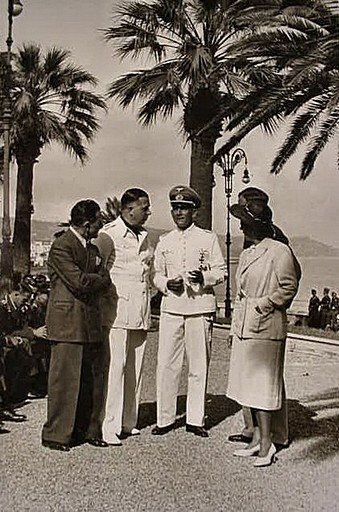
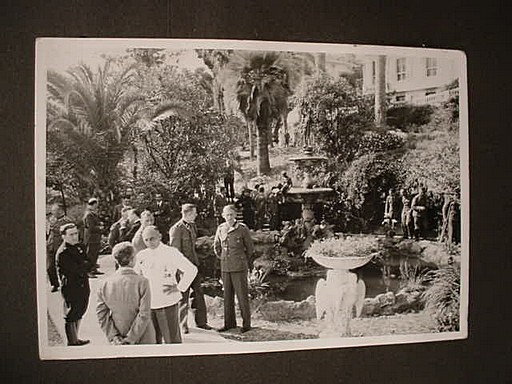
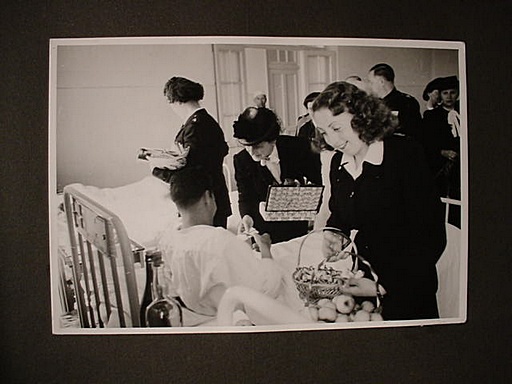
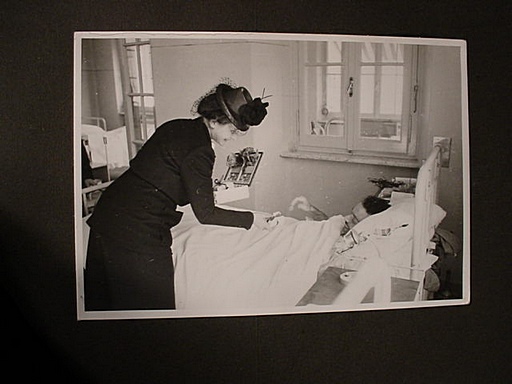
| DESCRIPTION: This appears to be a record in pictures of a visit by Italian dignitaries to the German colonies in West Africa. We see palm trees in the pictures that abound. The pictures may also show return hospitality shown to German Wehrmacht officials in Italian-held African territories. In any case, something important is going on. There are 26 photos all in sharp black and white ranging in size from 5 1/2 x 3 1/2 to 7 x 4 1/2 inches. We don’t know exactly what’s going on, but these are great pictures of the era. The album is 13 x 9 inches with Wehrmacht eagle embossed in the upper-left corner.
PRICE: SOLD |
| |||||||||
|
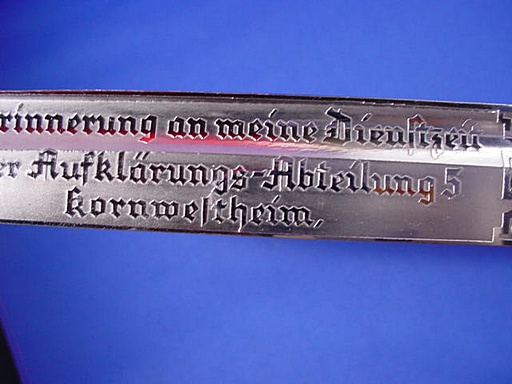
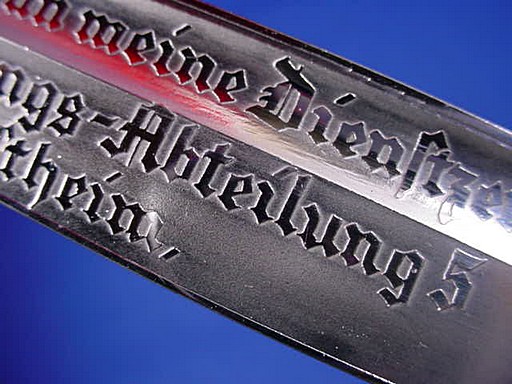
Engraved Presentation Honor Bayonet in Beautiful Condition (Item WEHR 26-8) |
|||||||||
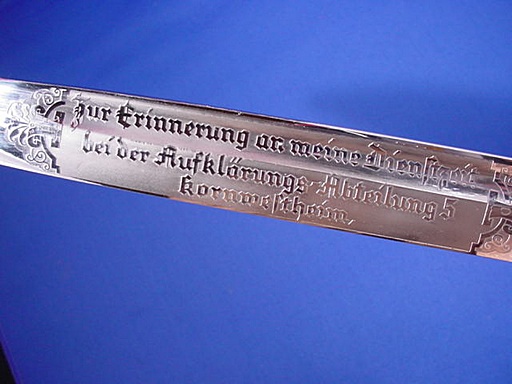
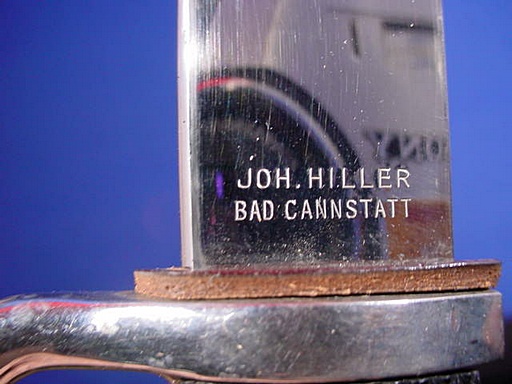
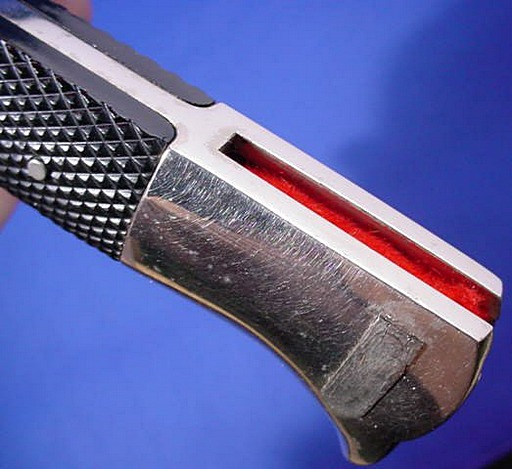
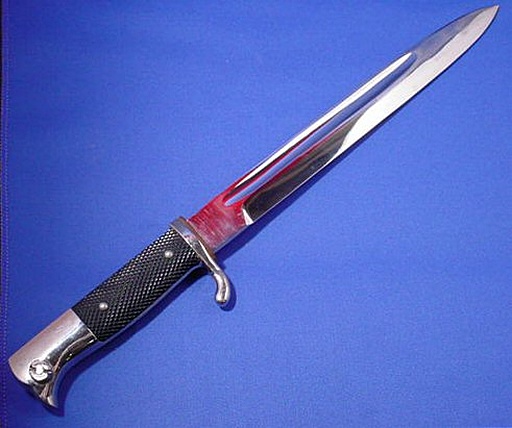
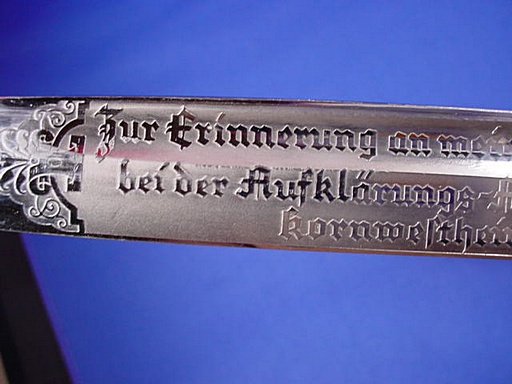
| DESCRIPTION: Translated: “In memory of my service time with the Reconnaissance Detachment No. 5 stationed at Kornwesthelm.” The Aufklärungs groups were the eyes and ears of the army divisions. They were equipped with motorcycles units, BMWs, Volkswagens, Kubelwagons and, later, Schwimmwagens, and light-model halftracks. They were considered elite soldiers in an important mission and the lives of so many depended on their abilities to assess the military situations. This bayonet is in near-mint condition overall with an original frog that shows minimal wear. The scabbard with slight scuffing is with original paint. The original red felt that fills the rifle receptacle slot is all there. Here is a first-class dress bayonet in excellent shape.
PRICE: $895.00; very reasonable |
|
||||||||||
|
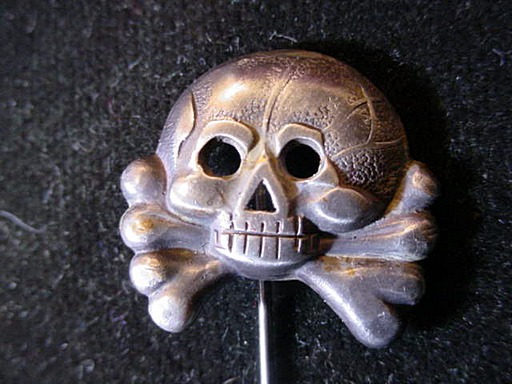
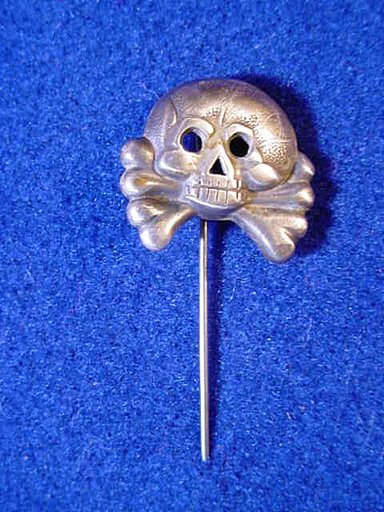
Panzer Stickpin II (Item WEHR 26-9; PINS 5-26) |
||||||||||
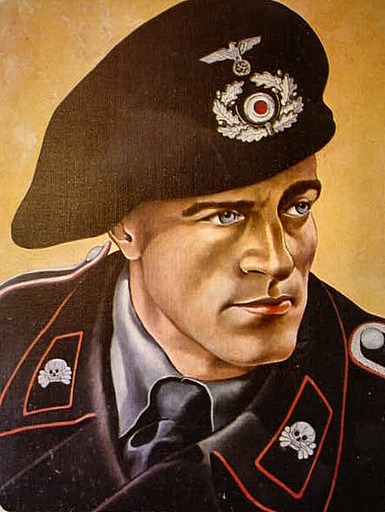
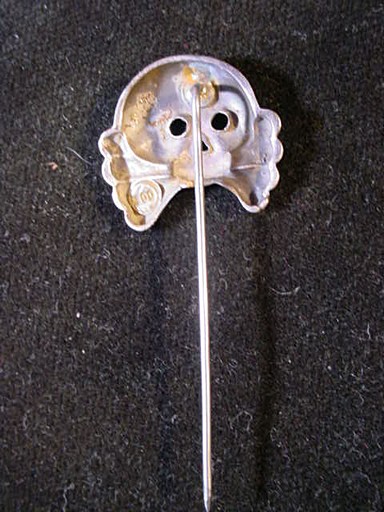
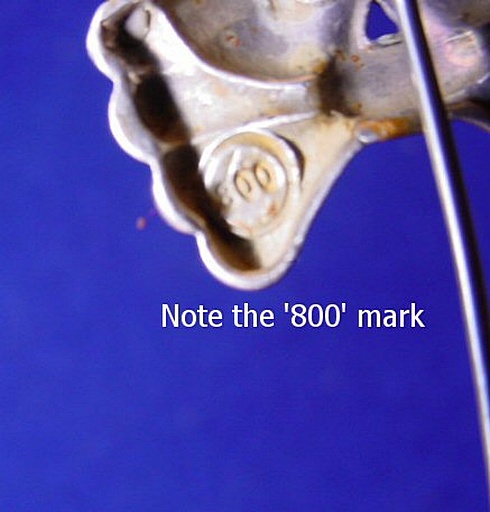
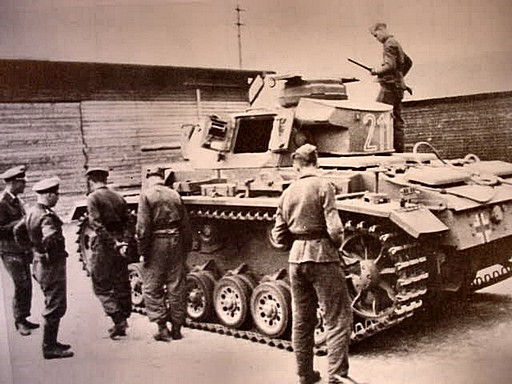
| DESCRIPTION: This is a particularly fine stickpin in a rather large size. This is because the men of the German tank divisions were extremely proud of their service. They were like the SS and elite troops. In their black uniforms and black berets, they cut a dashing figure on the earlier glory days of the German Wehrmacht. The pin is well defined in exquisite detail and is obviously die struck in ‘800’ silver and so marked on the back. It’s large; about the size of American dime.This is a really beautiful relic of the Blitzkrieg.
PRICE: SOLD |
|
|||||||||||||||||||||||||||||||
|
Spectacular! Important Items from the Career of Major (former Rittmeister) Rudolf Lippert (Item WEHR 26-10; OLY 7-4) |
|||||||||||||||||||||||||||||||
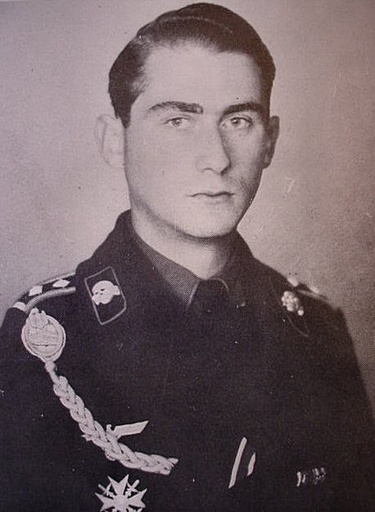
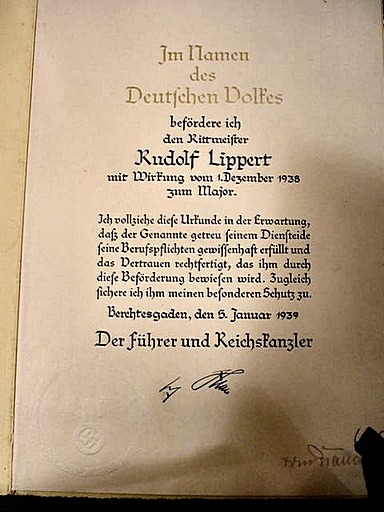
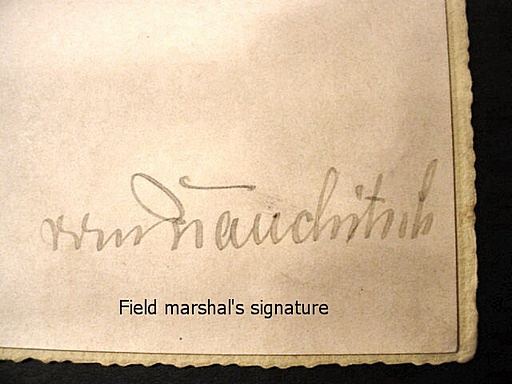
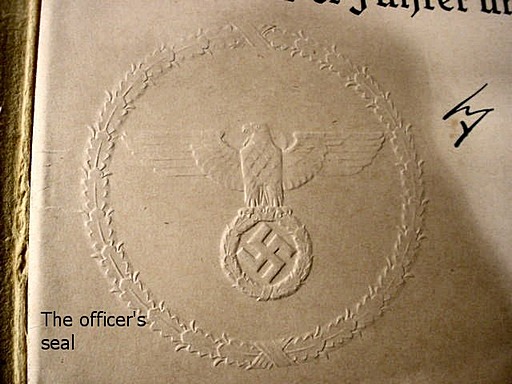
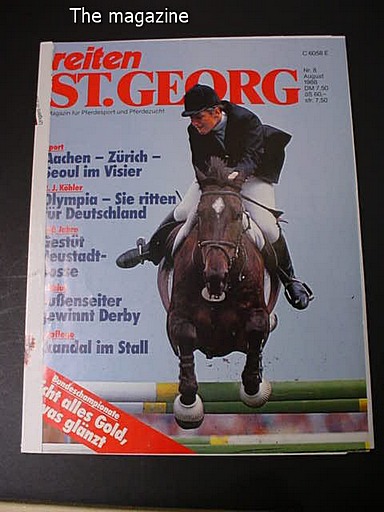
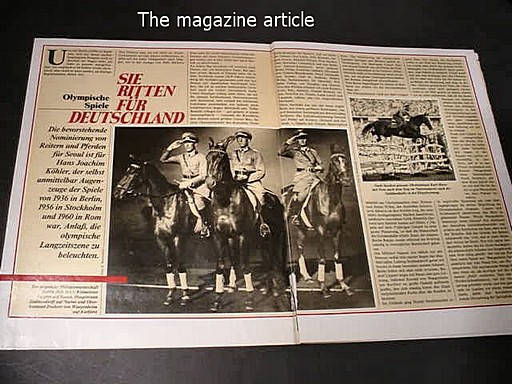
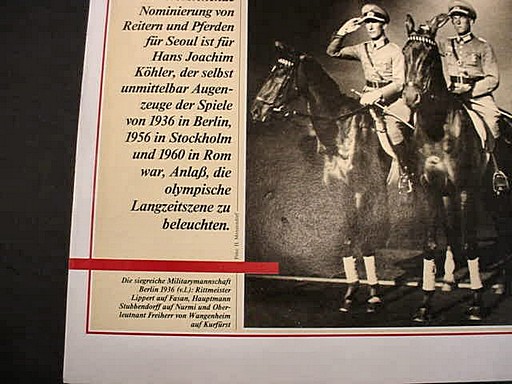
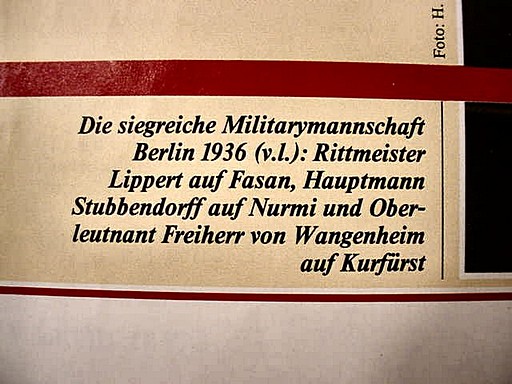
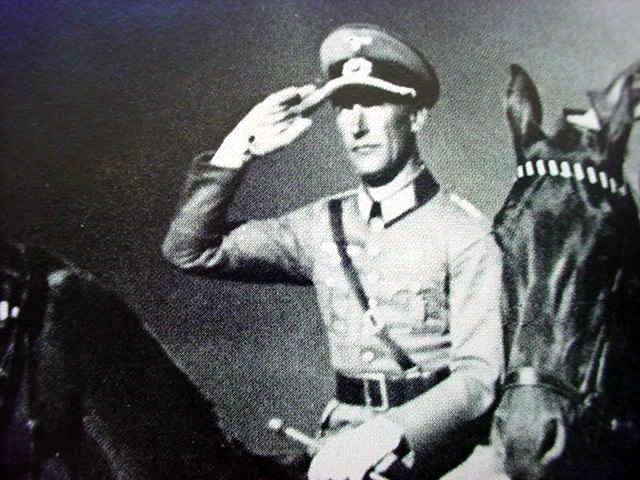
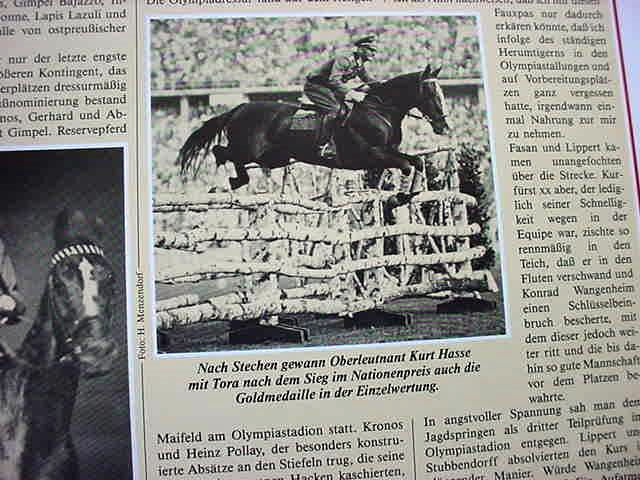
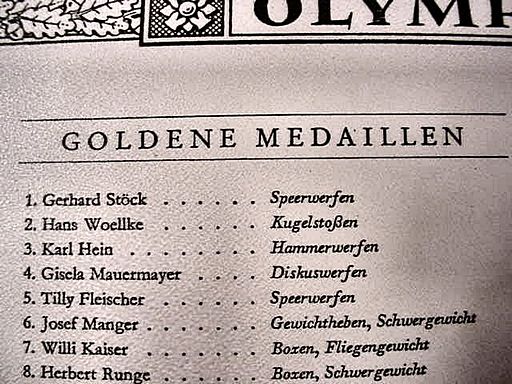
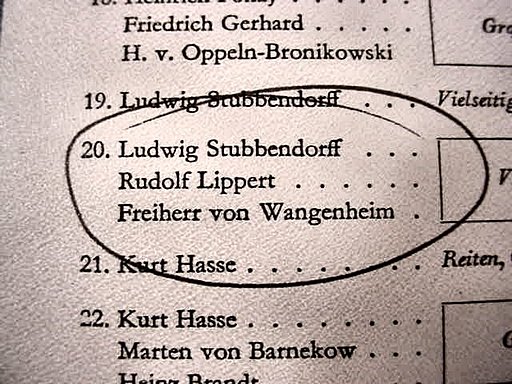
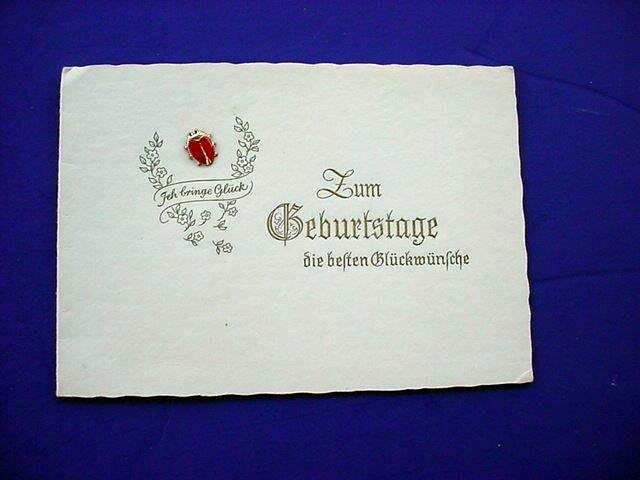
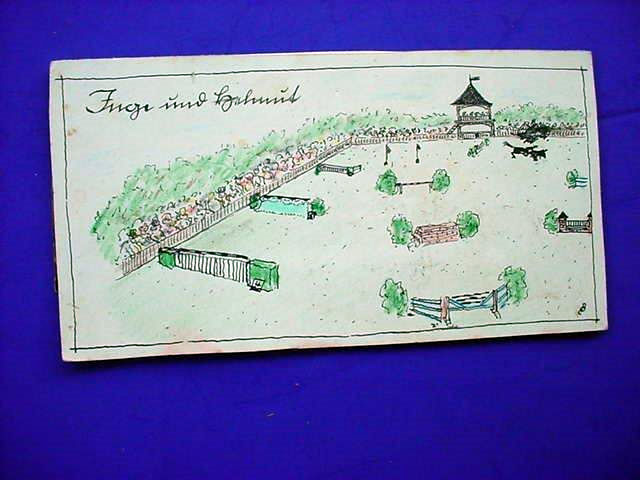
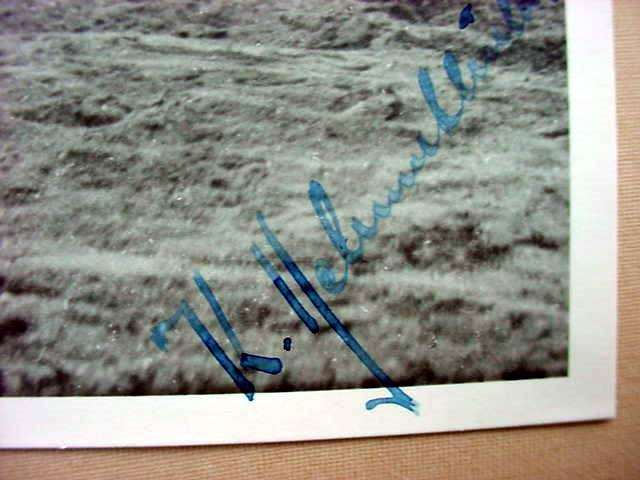
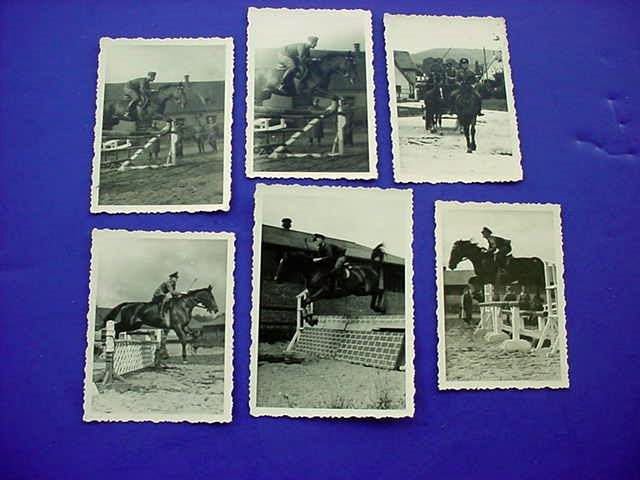
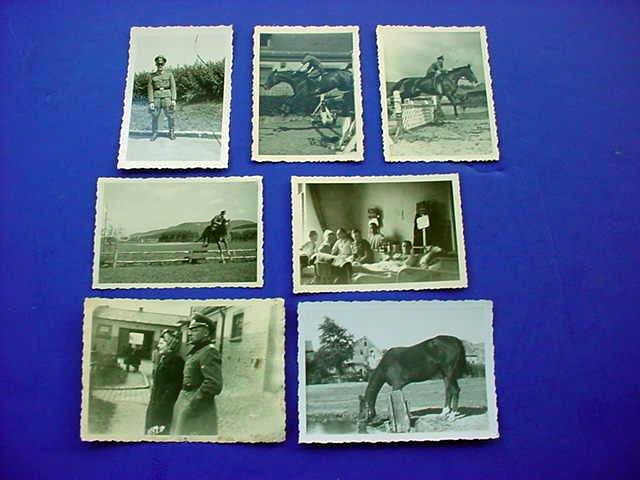
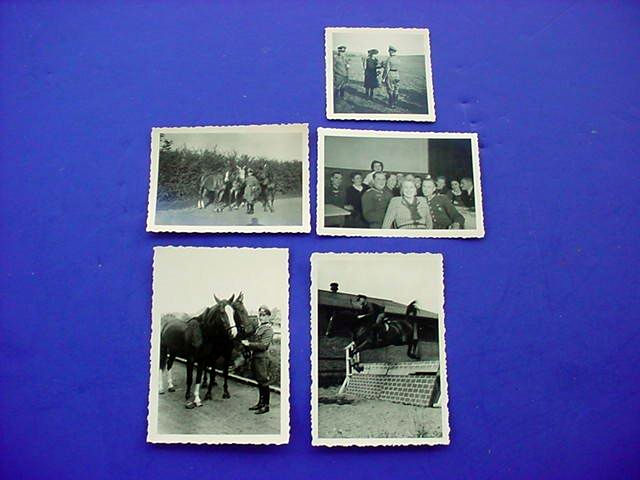
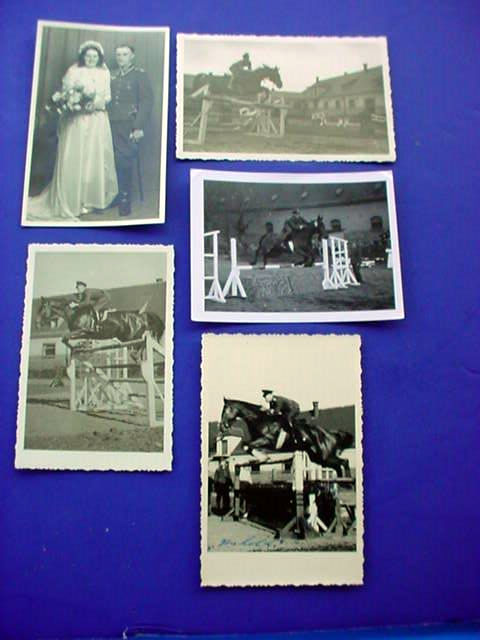
| DESCRIPTION: The military rank of Rittmeister was a title and rank describing a commissioned military riding master in the armies of Germany, Austria-Hungary, Scandinavia, and some other countries. It's equivalent to the rank Hauptmann in those service, and captain in the U.S. Army and U.S. Marine Corps. Included in this lot is the original official promotion document with Hitler’s signature in facsimile. The document with embossed Third Reich government seal is actually hand signed by Walther von Brauchitsch, who, in 1938, was appointed Commander in Chief of the German Army. Interestingly, the document was signed and issued at the Reich Chancellery in Berchtesgaden, not Berlin. It's dated January 5, 1939. Again, we say that this grouping is not only spectacular, but also historically incredible because Rittmeister/Major Lippert was a gold medalist in the 1936 Summer Olympics at Berlin. He was obviously an equestrian champion, especially in the barrier high jump. In a two-page opening in the German rider journal known as reiten ST.GEORG, there is a great picture of Rudolf Lippert mounted on his steed, Fasan, while two other equestrian winners pose alongside. It's a very dramatic scene as these handsome officers offer their salute to the Führer and the assembled massive crowd. The varied contests that Rittmeister won were titled "Vielseitkeitsprüfung" ("various horse trials"). He was a master of them all! In the group, there is a printed list of all the German Gold Medal winners and, of course, it lists Lippert. A copy of the list and the original pertinent pages of the 1936 issue of reiten ST.GEORG is included in the group. Also, among the assemblage is a neat, little cartoon card that depicts a horse competition field with various walled obstacle courses. Included is a neat, little birthday card with a ladybug that says "Ich bringe Glück." Additionally, there are many other photos of various sizes from the personal property of Major Lippert to include many taken of him seen in his specialty, which was show jumping and excellent dressage. The promotion document, with its golden Reich eagle on its cover, measures 10 x 14 inches and except for a few minor petite stains on the outside, it's in really great shape. It's presented in a heavy parchment-type folder, while inside, the actual document is in practically mint condition and the embossed Reich eagle and wreath stand right out there. This is one of the finest and most important historical groupings that we have ever acquired and it is well known that we specialize in the most astonishing and amazing relics known to the collecting and archival world. Again, the offering comprises: 1. The promotion document 2. Actual pages from the magazine reiten ST.GEORG 3. An official list of 1936 Olympic Gold Medalists 4. A signed 6½ x 8-inch photo (mounted on cardboard) of an army officer competing in the barrier jump; probably a friend of Major Lippert 5. Photos of various sizes from Rudolf Lippert’s own private collection PRICE: $2,950.00; for entire group |
|
|||||||||
|
WW II German Army Beer Stein or Bierkrug (Item WEHR 26-12) |
|||||||||
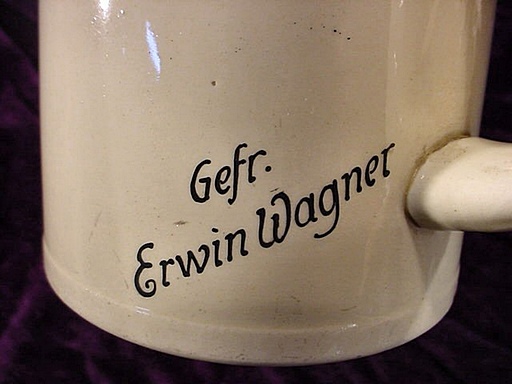
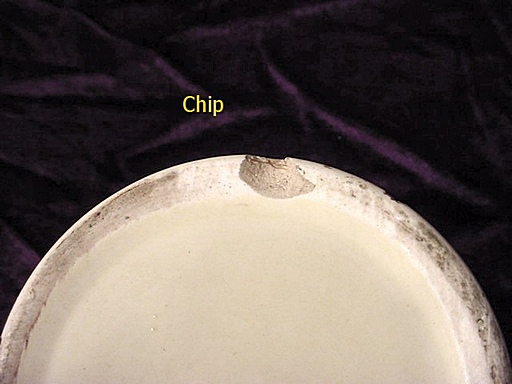
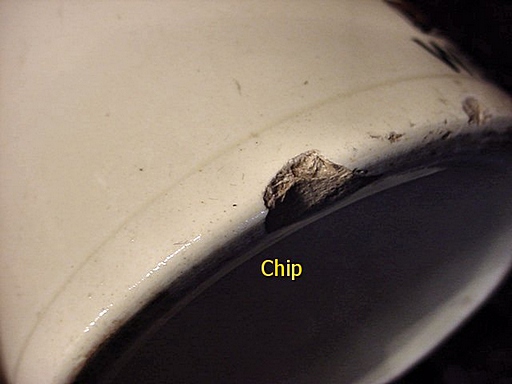
| DESCRIPTION: This is a particularly fine, little beer Krug made to commemorate Christmas of 1937 for the 7th Company of Jäger Regiment 104, stationed at the city of Speyer. The design is quite beautiful employing the early M-35 helmet, Mauser-98 rifles, a Maxim machinegun, and ammo-carrying box supported by oak leaves and surrounded with a rope pattern with the national colors black, white, red, making a beautiful potpourri of Germanic militarism. At the backside is the name and rank of the soldier it belonged to—Private First Class Erwin Wagner. There are a couple of fairly insignificant chips at the bottom (shown in image), but although they are there they really don’t even slightly detract from the beauty of the stein itself. The stein is 4 1/2 inches high and about 4 inches wide (not counting the handle). Note that there is a hole for fastening a lid. Please understand that it never had lid. These steins could be ordered with or without lid, but invariably the hole for the lid attachment is always there; that is how they were molded, always! This is a great little souvenir of the Wehrmacht at the height of its power and glory.
PRICE: $650.00 |
|
||||||||
|
War Front Box; “With Our Flag is Victory!” (Item WEHR 26-13) |
||||||||
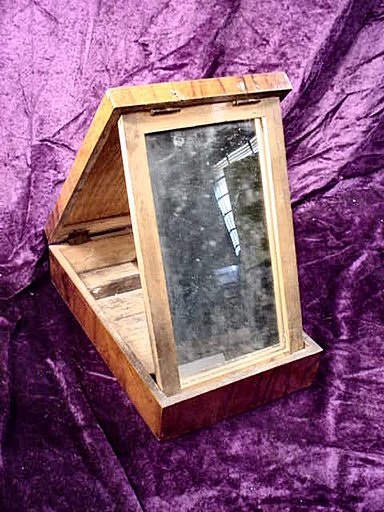
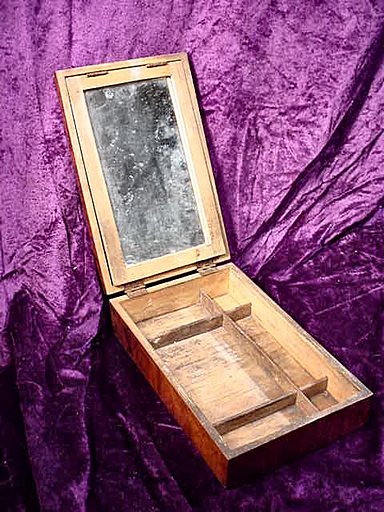
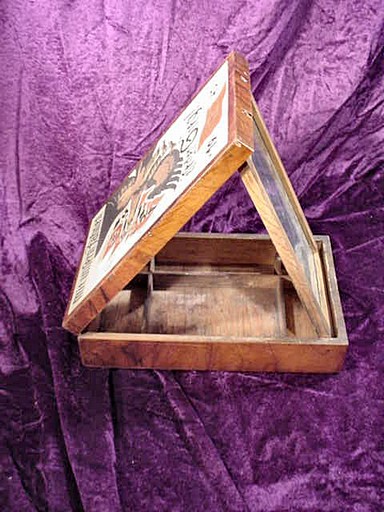
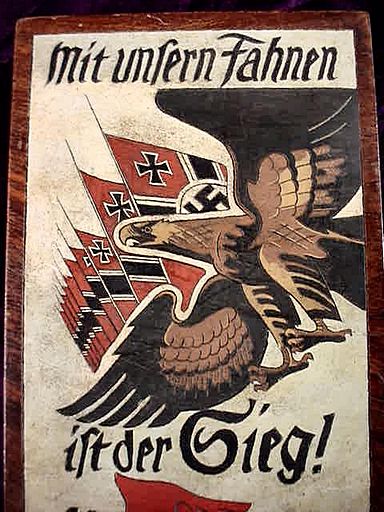
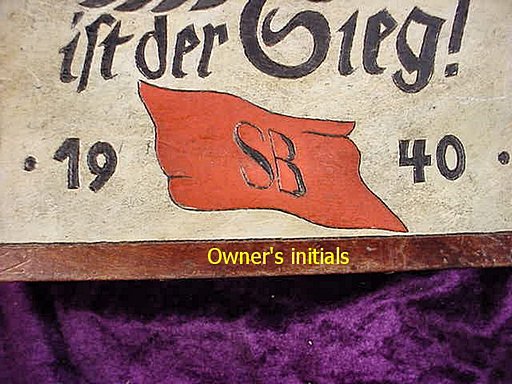
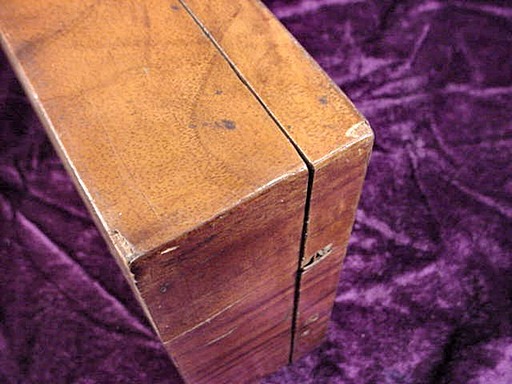
| DESCRIPTION: This is a great NS-period box hand carved and painted probably by a soldier somewhere at the front. The artwork is first cut into the surface outlining the subjects then the artist painted by hand each section of the entire box lid. The box is actually a man’s field toiletry kit with compartments for shaving gear, soaps, etc. When the lid is lifted there is a mirror that can be fixed into position for the officer’s personal use in daily routine. The saying: “Mit unser Fahnen ist der Sieg!” was commonly used by the German army after a speech by Chancellor Adolf Hitler in 1939. Later it was incorporated in a popular wartime song sung often by soldiers at the front. The name of the song is “Flieg Deutsche Fahne, Flieg.” In the second stanza the words “Mit unsern Fahnen ist der Sieg” appear followed by “Flieg Deutsche Fahne, Flieg , “With our flag is victory. Fly German flag, fly.” The eagle is shown in flight along with Kriegsfahnen (war flags) and the date 1940. The red banner has ‘SB’ engraved upon it. This could be the initials of the German officer who owned it. The box measures 11 x 7 inches and is about 2 3/4 inches deep. The material is sort of a burled mahogany with a few minor chips here and there. It’s in generally good condition. It’s a very dramatic-looking item of importance to the early history of the Second World War. Victory was not with this flag, but history is a continuum: “Der Mann darf fallen; die Fahne nicht!”
PRICE: SOLD |
|
||||||||||||||||||||||||||||||||||||||||
|
||||||||||||||||||||||||||||||||||||||||
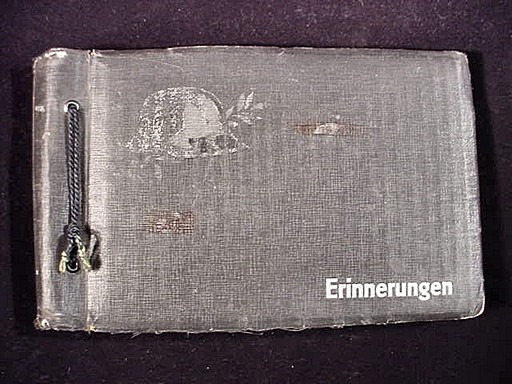
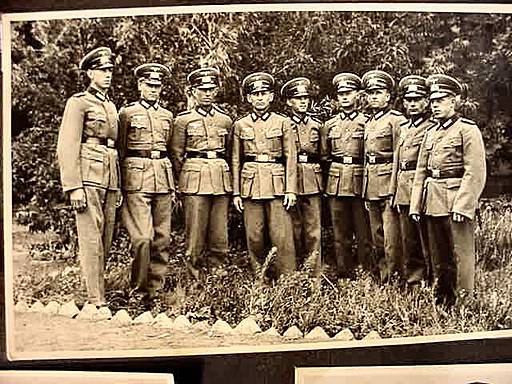
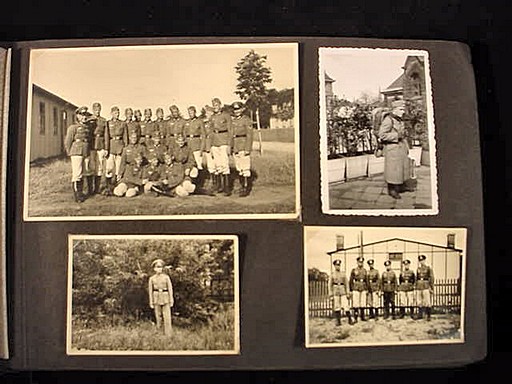
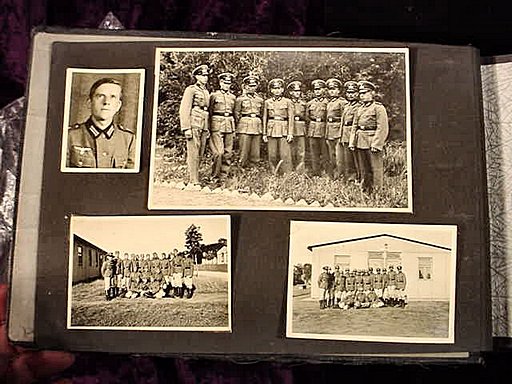
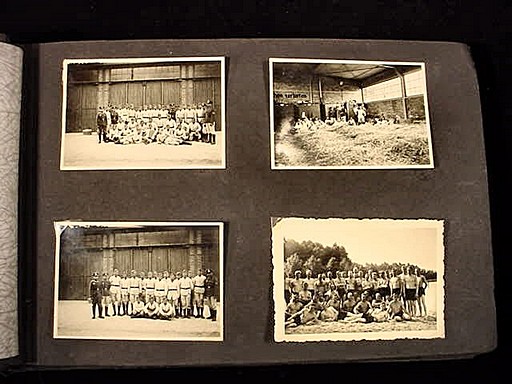
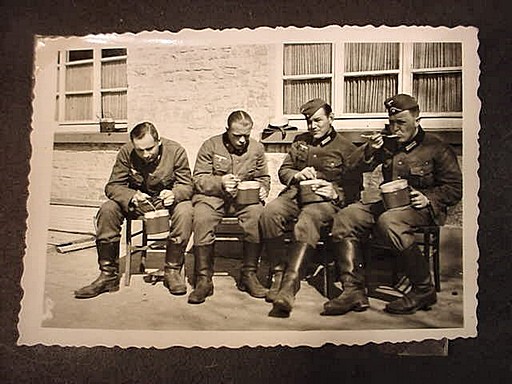
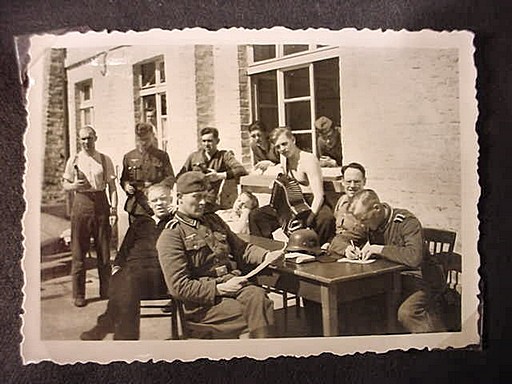
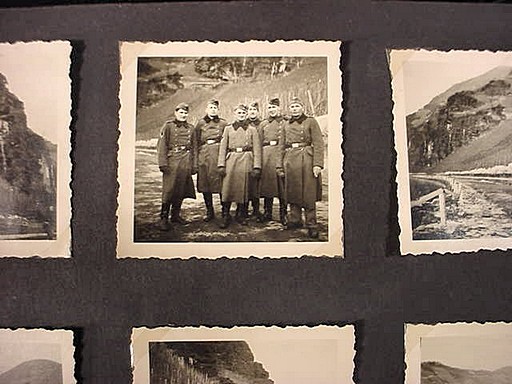
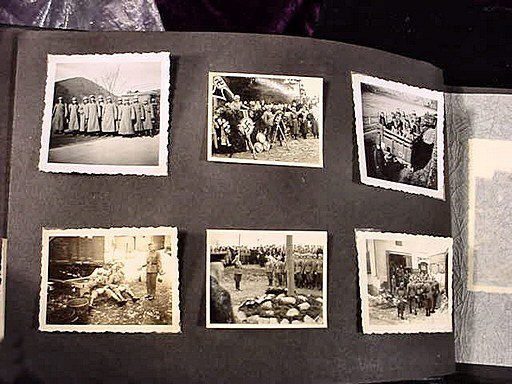
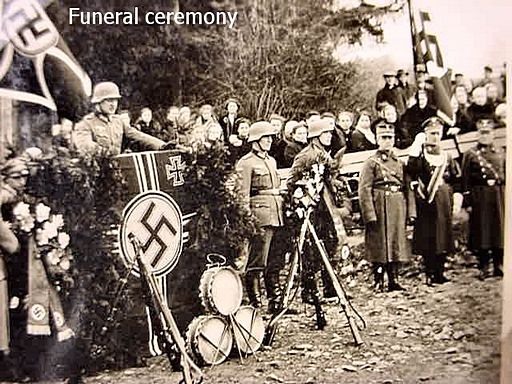
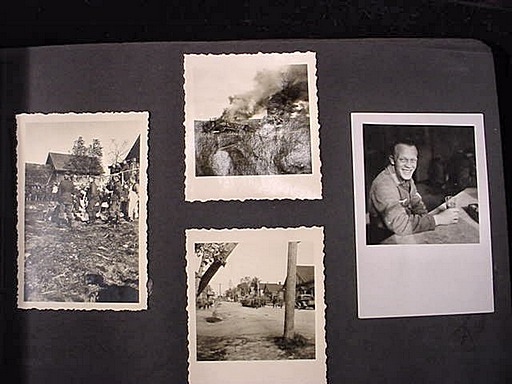
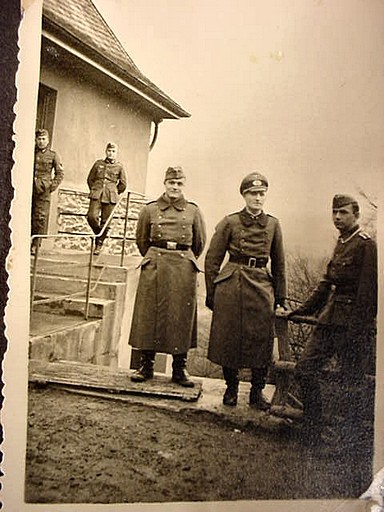
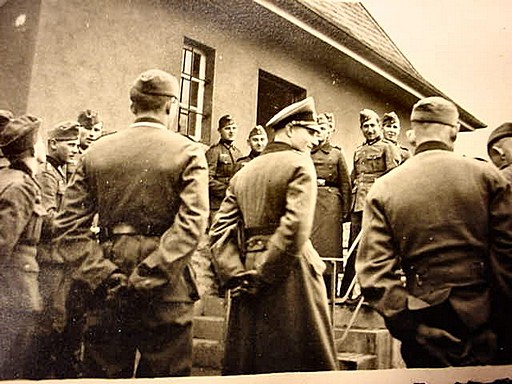
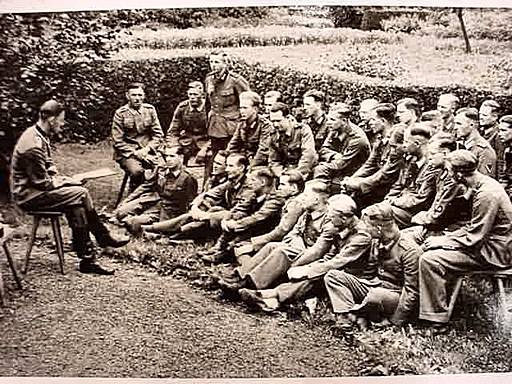
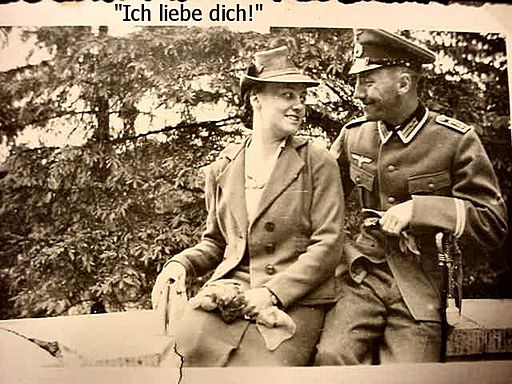
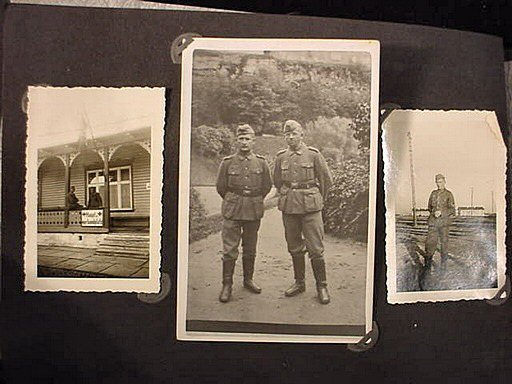
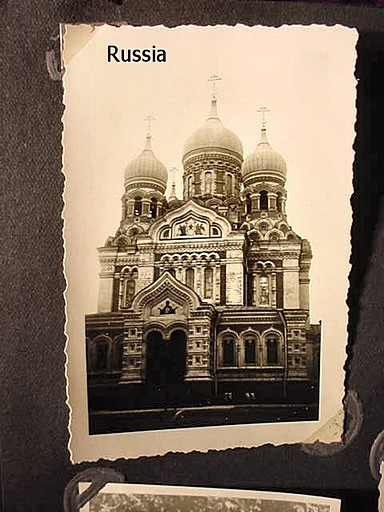
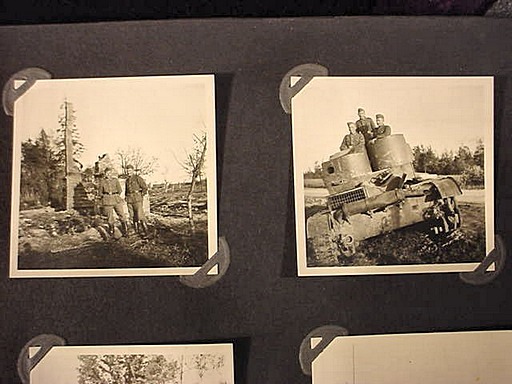
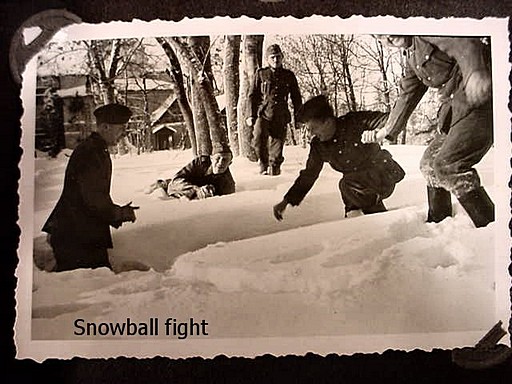
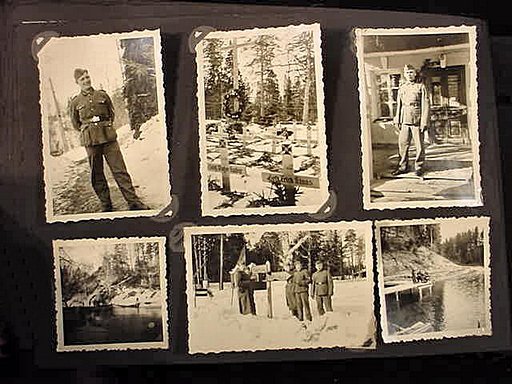
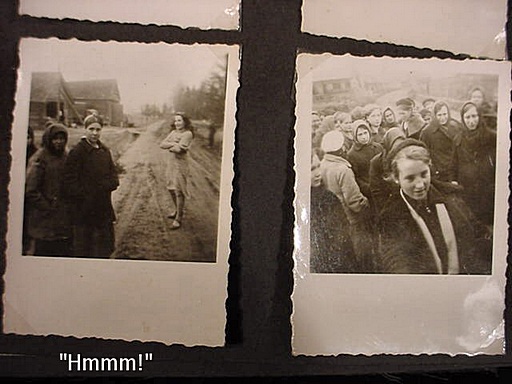
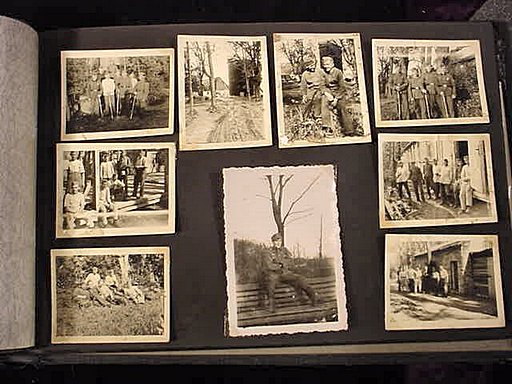
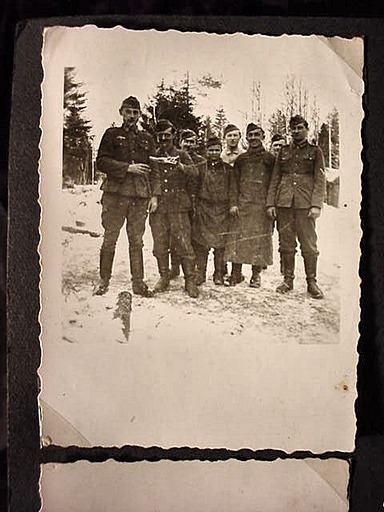
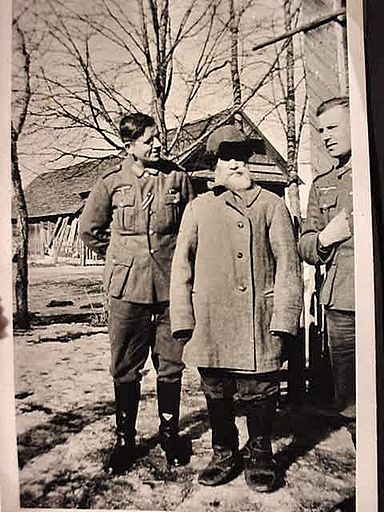
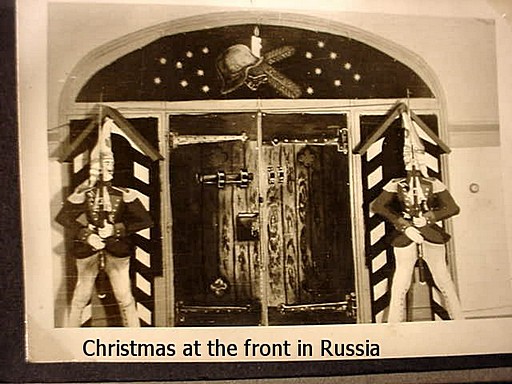
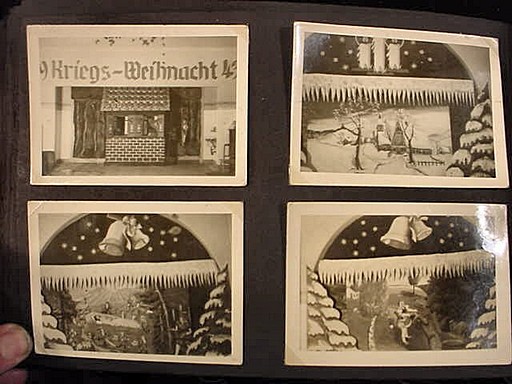
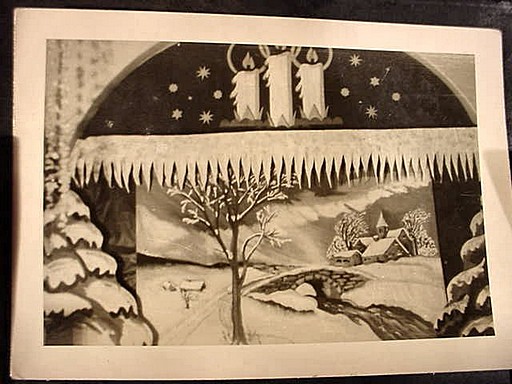
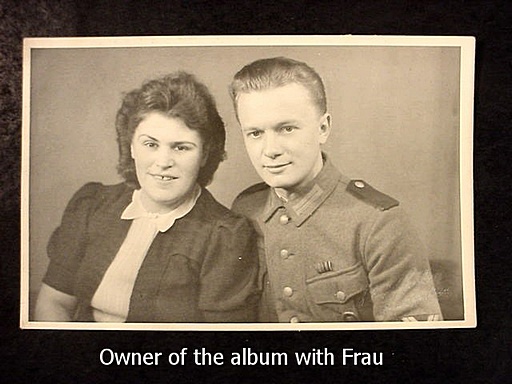
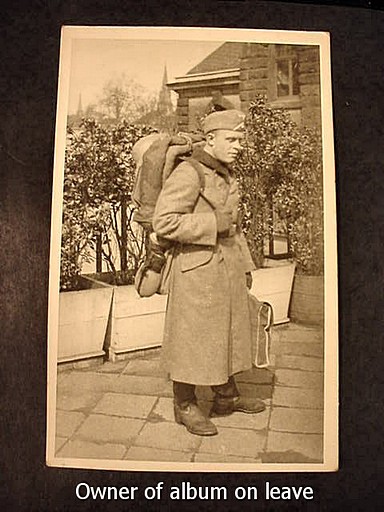
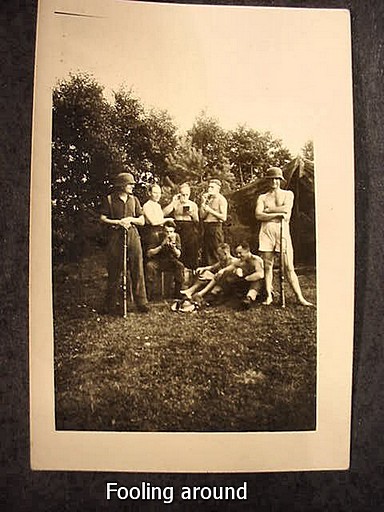
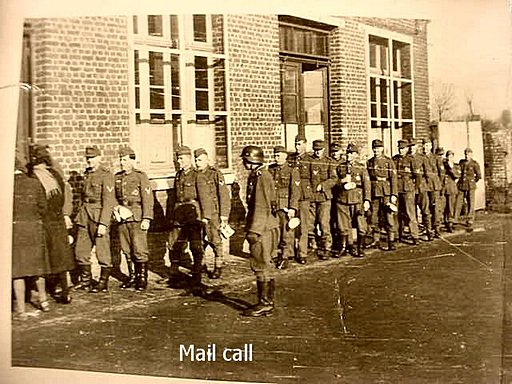
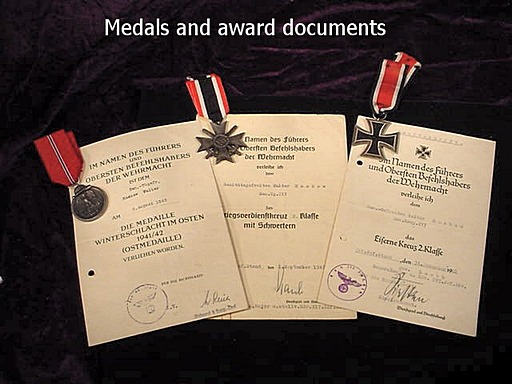
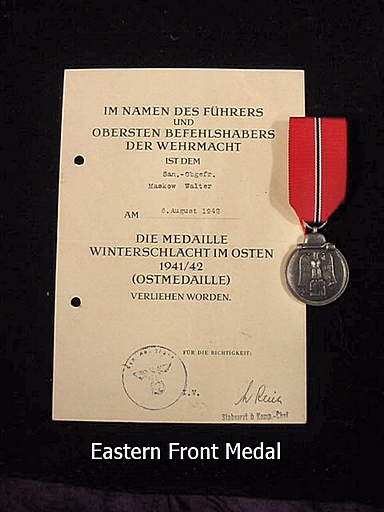
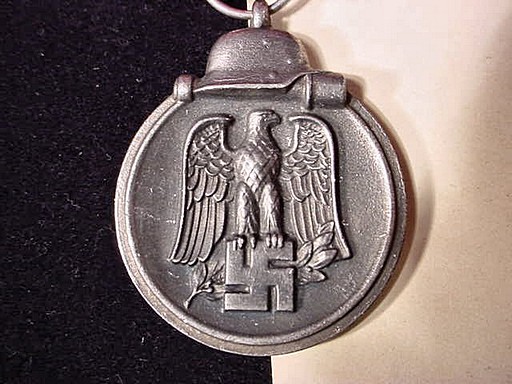
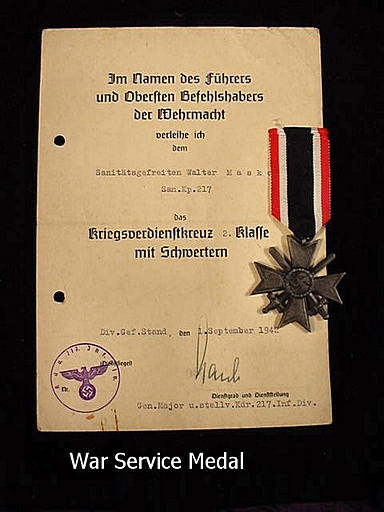
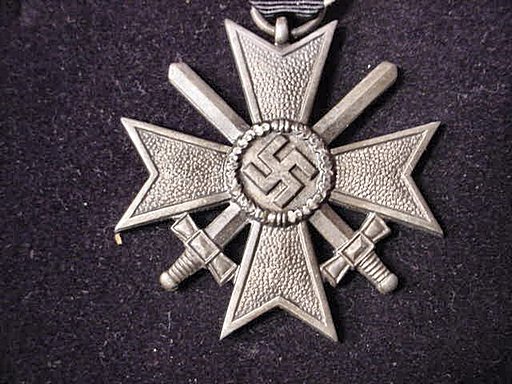
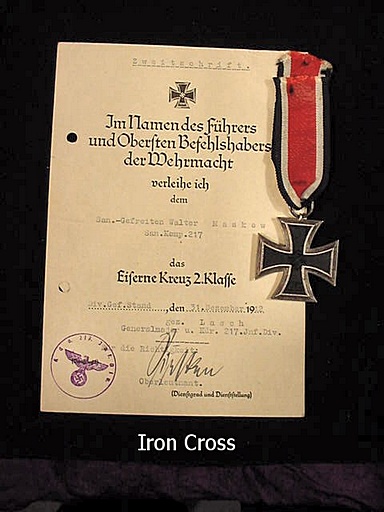
| DESCRIPTION: This is what we would consider a little WWII treasure with all of 259 photographs inside; mostly all uniform pictures on several fronts, including Russia. He was a Sanitatsgefreiten assigned to Sanitatats Section 217. This translates to a medic or medical private in a first-aid detachment. A “Gefreiter” is a private. In 1939 a private in the infantry was called a “Shütze. In 1942 Hitler personally replaced the term ‘Shütze’ with the term ‘Grenadier’ as an homage to the armies of Frederick the Great. A Gefreiter was essentially a grenadier in the course of the horrible fratricidal war, WWII. Probably the most dangerous duty in the Wehrmacht, especially the infantry, was being a medical orderly, especially on the eastern front as the Russian snipers were delighted to have one of these people in their crosshairs because killing one of these brave men would ostensibly deprive wounded soldiers of any chance of combat survival. This was the way of that terrible conflict. In contrast to the actions described in the last paragraph, here is a special note: PRICE: SOLD |
|
||
|
Commemorative Medal of 13 March 1938; Medallie zur Errinnerung an den 13 Marz 1938 (Item WEHR 26-15; NSD 15-1) |
||
| DESCRIPTION: This little aluminum spoon is actually a rarity among Andenken, or souvenirs, of the Reichsparteitag items that were sold at the souvenir stands that were to be found scattered about the grounds and also in the old city itself. For the collector of NS-period spoons this is a tiny, but tremendous find. We have never seen another anywhere in the hundreds of collections we have viewed. It is very petite--4 1/2 inches long. The widest part is an inch wide. Stamped on the back are the words “Aluminium-Germany” with the handcraft symbol of Nuremberg in the center of the words. This is cute, rare, and important to a prewar collection. With it was another Nuremburg souvenir spoon. This one with enameled Nuremburg city arms is included free along with the NS one.
PRICE: $175.00 |
|
||
|
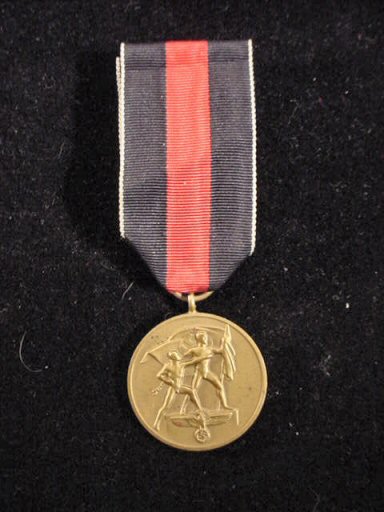
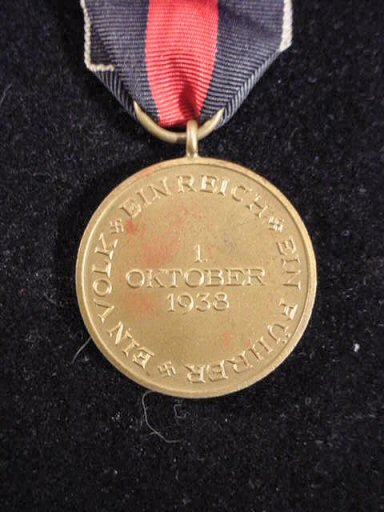
Commemorative Medal of 1 October 1938; Medaille zur Erinnerung an den 1 Oktober 1938 (Item WEHR 26-16; NSD 15-2) |
||
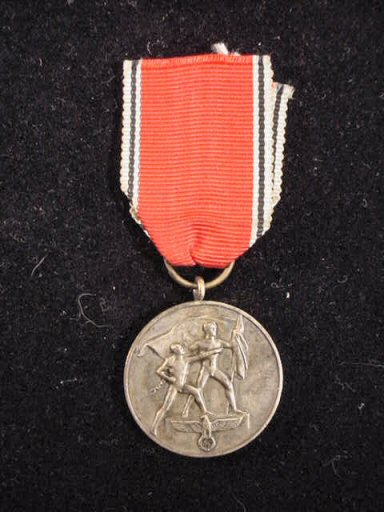
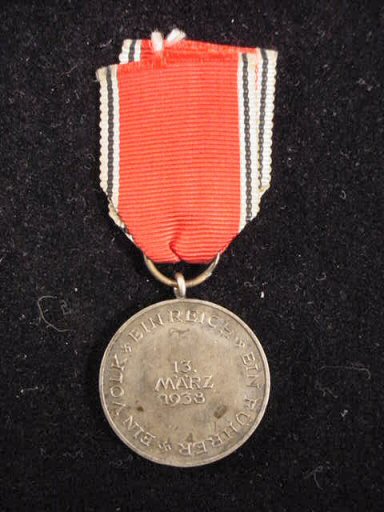
| DESCRIPTION: The medal of remembrance of the “Entrance and Liberation of the Sudetenland” is Hitler’s greatest “bloodless conquest.” This virtually freed the ethnic population of almost 3 million souls from the domination of the Czechs and it was the subject of the famous meeting of Hitler and British Prime Minister Chamberlain along with the French Premier and Italy’s Benito Mussolini, who all tried to settle the Sudeten question. This is the famed “Munich Conference.” Three days after the successful annexation of Bohemia and Moravia and the seizure of Slovakia as a German satellite Hitler instituted the commemorative medal. It was designed by Prof. Richard Klein. The medal is in bronze. It was awarded to those persons who took part in the entry into the Sudetenland on May 1, 1939. Award of the medal was extended to those who participated in the creation of the Protectorate of Bohemia and Moravia. A total of 1,162,617 were presented. Artistically, the medal is just great with the German national leading the Sudeten German out of Czech bondage, while holding the swastika banner high. Below this is the national eagle. On the back is the date and the words: “Ein Volk, ein Reich, ein Führer” with swastikas at every word ending. The words translate to: “One people, one national government, one leader.” This example is in really fine condition.
PRICE: $125.00 |
Page Twenty-six |
Please refer to item designator in parentheses in all correspondence.
Please E-mail for any additional information you may need.