

|
|
|
|
Third Reich Art
Page 10
|
|
|
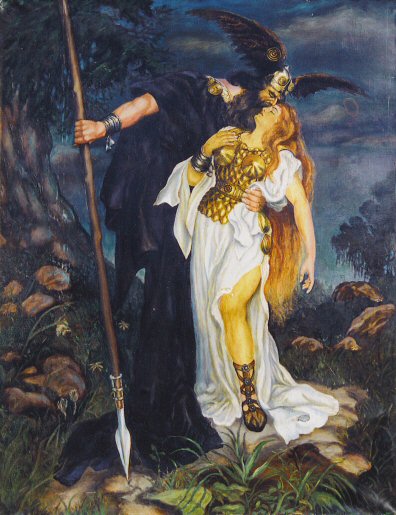
Wagnarian Painting in Oil (gigantic proportion) (Item ART 10-1; OLD 4-10) |
|
| DESCRIPTION: Well here is just the thing for the compleat Germanophile, a wonderful rendition of the Siegfried and Brünnhilde sequence from Der Ring des Nibelungen by the immortal Richard Wagner, 1813-1883, who was the greatest composers of German opera. “The Ring” was based on the 12th-century, middle-high-German epic poem of the Nibelungenlied or sometimes referred to as the Volsung Saga and is one of the oldest Norse epics. This very definitely influenced “The Ring” cycle in Wagner’s repertoire. The love affair between Siegfried and Brünnhilde, the maiden, who was one of the daughters of Wotan, the Norse god. Brünnhilde was one of the daughters of Wotan known as Walkyries among whom she was known to be the noblest of all the sisters. Siegfried the Volsung comes into the possession of the magical rings, slays, the evil dragon Fafner with his father’s broken sword. He also slays the dwarf Mime, takes the cursed ring, frees Brünnhilde from the spell that has kept her asleep and falls deeply in love with her; and here begins the tale of intrigue, high adventure, betrayal, and noble purpose. The portrayal of the lovers is very Germanic of course and certainly dramatic in the Teutonic 19th-century art manifestation and symmetry. This is for the true Germanophile. The picture is not framed and the buyer might even want to take it off the stretcher for shipping. It is magnificent rendering of the immortal story. It measures 43 x 56 inches and would be a very wonderful addition to your estate or castle. On the other hand it could even beautifully grace even a small apartment—reserve a whole wall for it, however. Remarkably, the work is unsigned.
PRICE: SOLD |
|
||
|
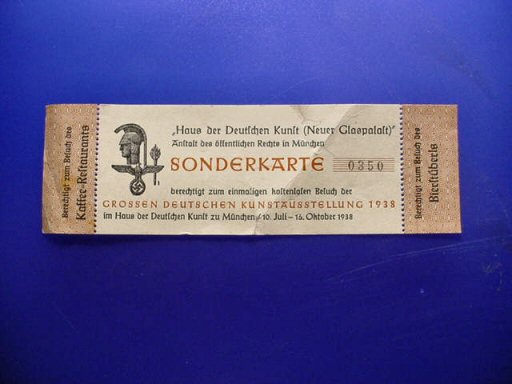
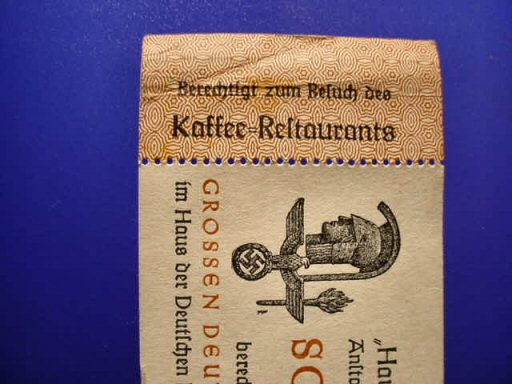
Special Entrance Certificate to Haus der Deutschen Kunst (Item ART 10-2) |
||
| DESCRIPTION: Here is a Sonderkärte number 0350 for a special visit to this famed House of German Art and the exhibit known as the “New Glass Palace” on 10 to 16 July 1938. There are separate ticket stubs at each end that could be detached for credit in the coffee restaurant and the beer hall (can you imagine a German facility without a beer to be had?). Something like this is rare because practically no one in those days would preserve it—they would use it. This is a tiny, but important, piece of Third Reich history.
PRICE: SOLD |
|
||||
|
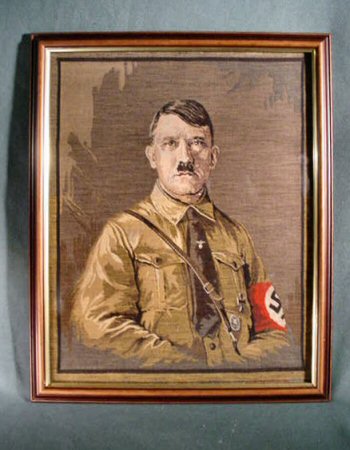
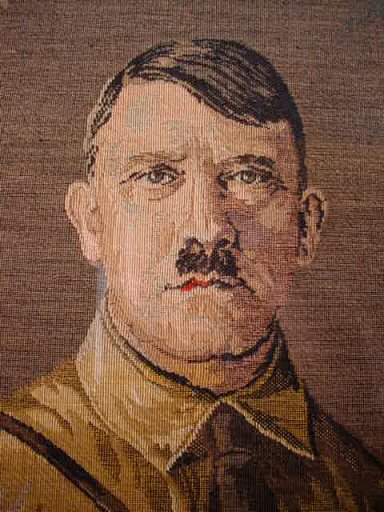
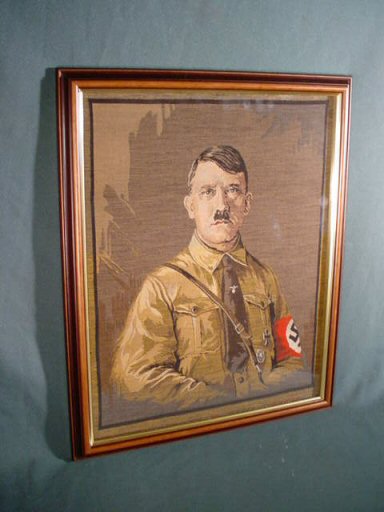
Tapestry of the Führer (Item ART 10-3; AH 15-7) |
||||
| DESCRIPTION: Here is an actual period tapestry depicting Adolf Hitler in the uniform of the Deutsches Kampfzeit 1922-1933. This was the time that the NS Party was in the greatest struggle. This is the young Hitler and the artist has captured all the leader’s youthful exuberance and ironclad determination. The manner of capturing not only a true likeness in this art form, but also the vibrant colors and treatment of fabric and accouterments is truly phenomenal. Seldom have we seen better. The shadowing is superb. It measures 16 x 20 inches in the frame. The actual tapestry is 14 x 17 1/2 inches. The frame is new, but in keeping with the type that would have been used. This is a fine historic treasure from the saga of the Third Reich.
PRICE: $1,500.00 |
|
||||||||||||
|
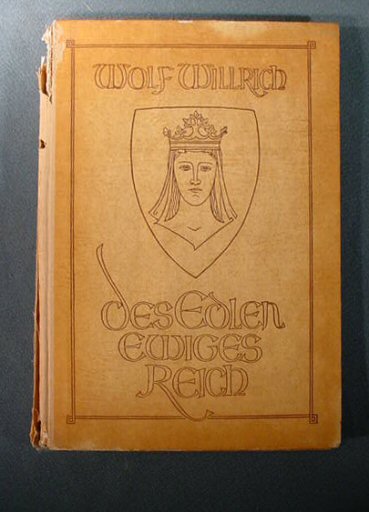
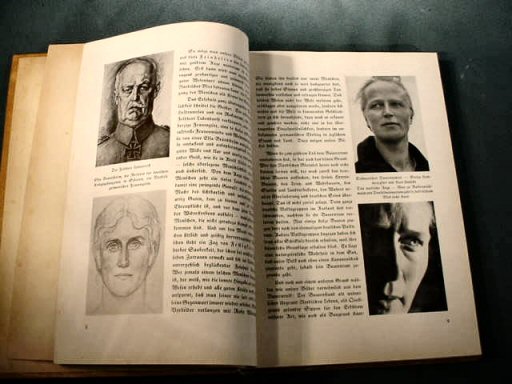
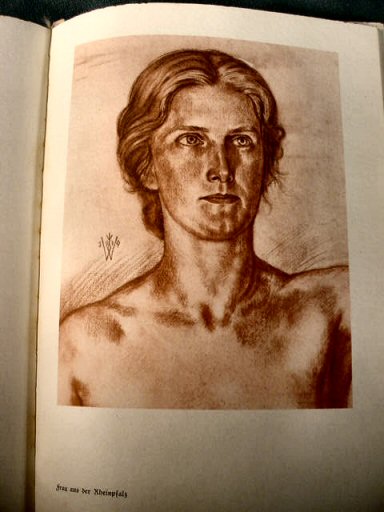
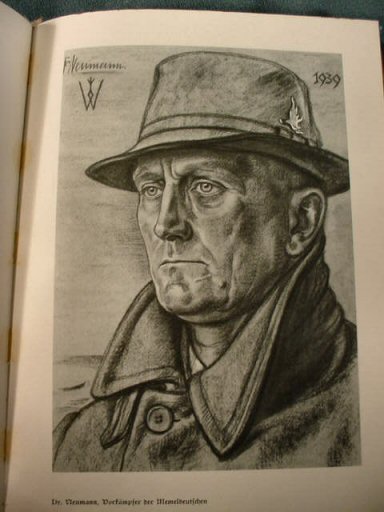
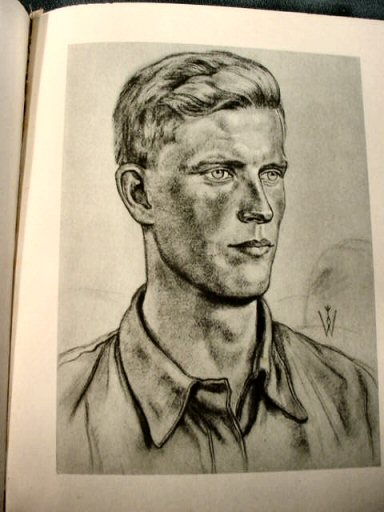
Book Wolfgang Willrich, Des Edlen Ewiges Reich, The Nobility of the Eternal Reich (Item ART 10-4; AHN 3-1) |
||||||||||||
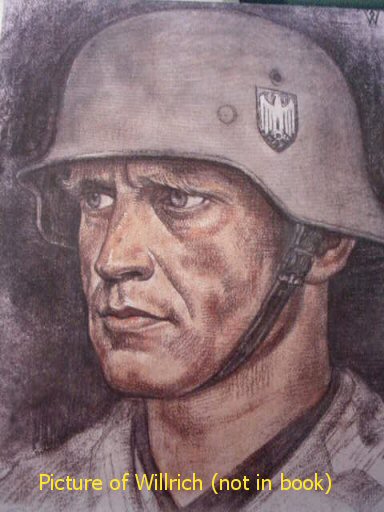
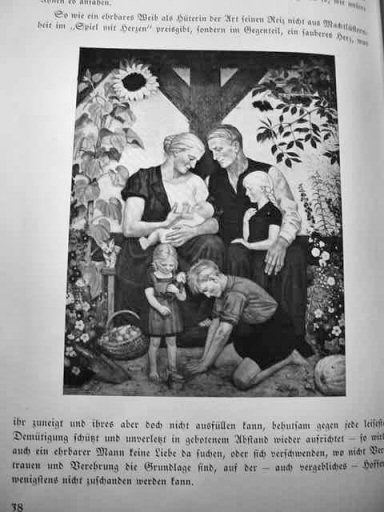
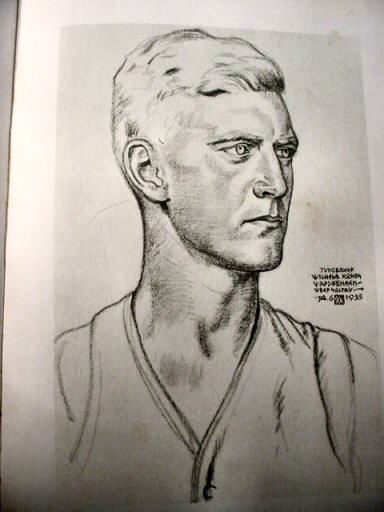
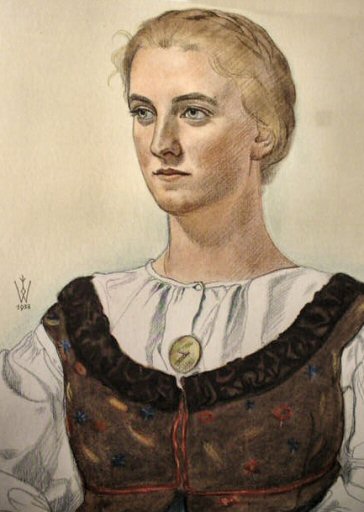
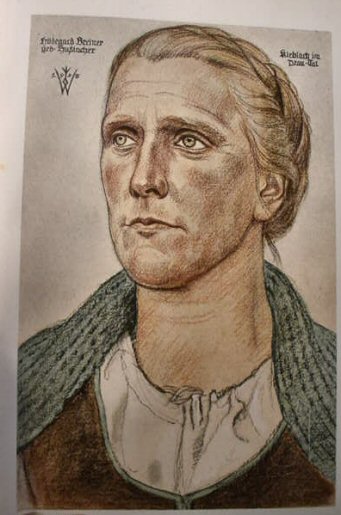
| DESCRIPTION: When we speak of nobility, here it is before the eyes of the reader. Willrich said it best in his depictions of the German Volk in all their Aryan beauty. In no era in history was Schöenheit beauty more revered by artists such as Sepp Hilz, Thorak, Richard Klein, Brecker, and our Wolf Willrich. This grand work has 40 pages of text mixed with pictures of Germanic women through the ages. And then 48 pictures in full-page presentation of German young and old from all walks of endeavor; from all the sections of the German Fatherland. The decency, the resolve, the intellectual countenance, and, yes, the nobility shows in each face. No pot smokers, no shirkers, no one in need of a therapist, no hussies, no Cola-Cola culturists; just the faces of Teutonics in all the glory of the species. The book was printed in 1941 by the Grenze und Ausland Verlag in Berlin. On the opening page is the Irminsul as used by the Deutsche Ahnenerbe as its logo. This publisher was a subsidiary of the Heritage Foundation, the section for racial study. In some of the pictures runic letters are employed with the name of the person depicted and the section of Germany he or she represents. The cover of the book is quite distressed unfortunately, with damage to the spine (but holding). The dustcover was gone, but the front part of it is glued in the inside front page within. The pages and pictures are all in perfect shape; however, and the book is considered extremely rare and is a prodigiously important archival treasure for the historian of the Third Reich. It measures 11 x 8 inches and is 1/2 inch thick.
PRICE: $395.00; very reasonable |
|
||||||||||||
|
The Oath of the Sword, “Schwert-Schwur,” Bronze Sculpture (Item ART 10-6; OLD 4-13) |
||||||||||||
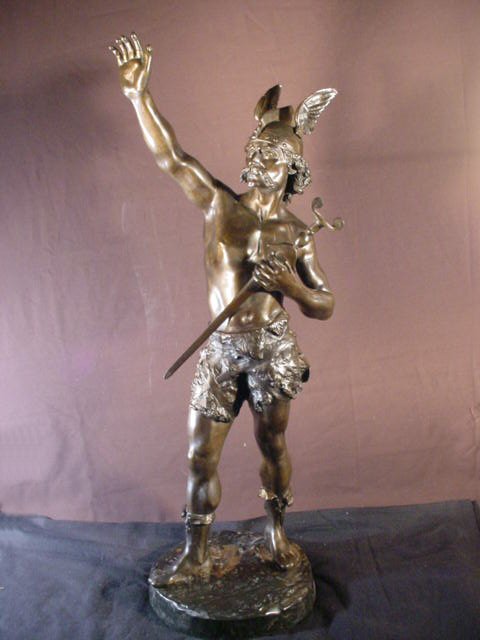
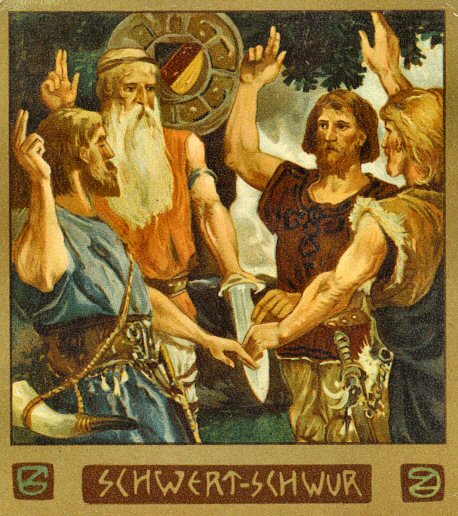
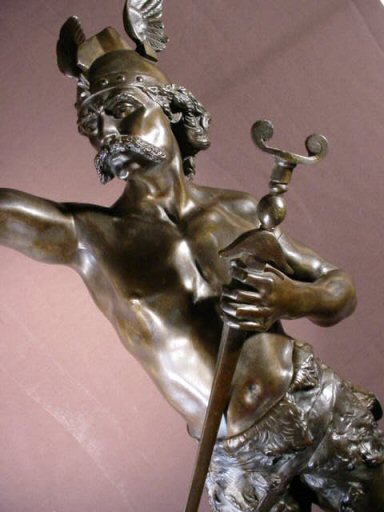
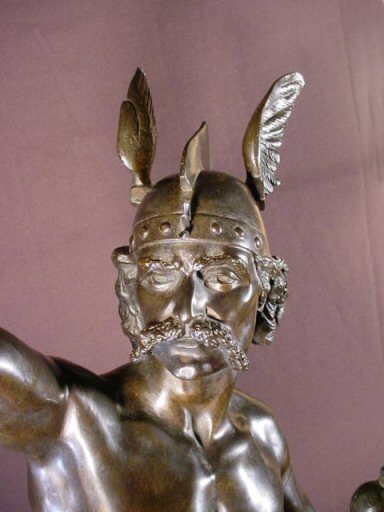
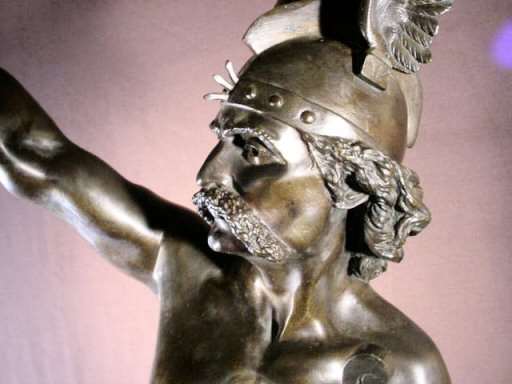
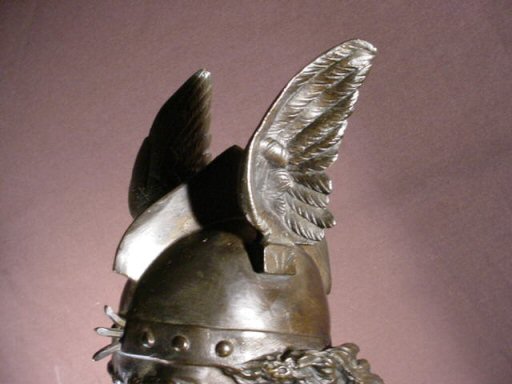
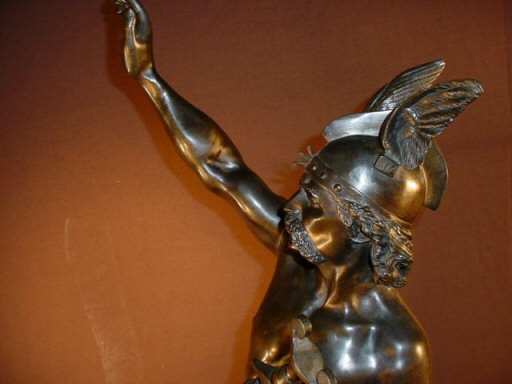
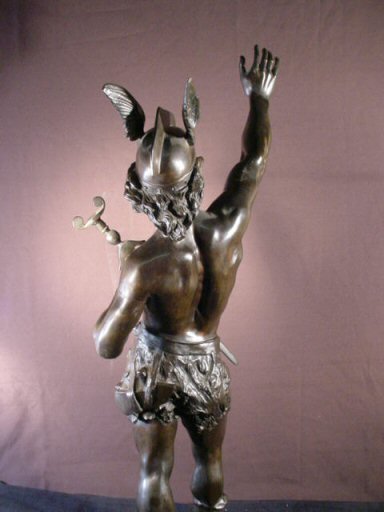
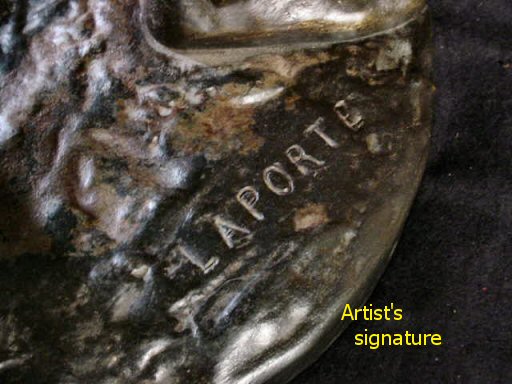
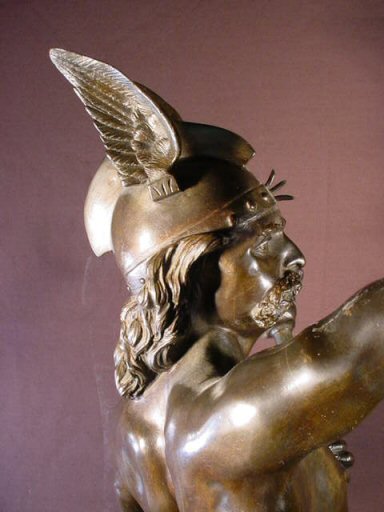
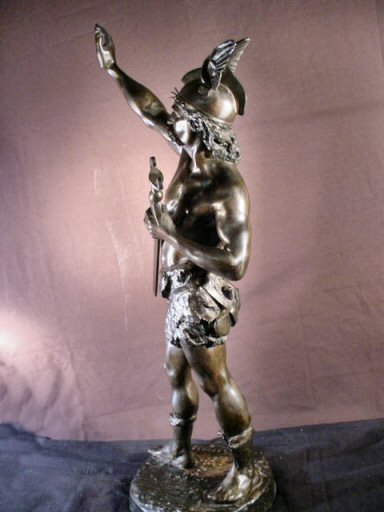
| DESCRIPTION: This is an utterly magnificent bronze sculpture created by a master artist. It depicts in startling reality the sacred oneness that the old Teutonic tribes felt for the sword. The Schwert-Schwur or Eid der Klinge personified this infinity with the weapon. This was the oath of the sword or blade. In this ceremony the brotherhood of warriors pledged their loyalty and fidelity to folk and community. All the tribes observed this sacred oathing, the Cimbri, and the Teutones and the Istavones, who after war, became the Franks. The Chauci, who became the Saxons, all were united in the importance of the oath. The Germanic tribes regarded each other as brethren and equals and they were united under great leaders. Everyone enjoyed personal freedom and had an exclusive right over his own property. “Liberty,” said the Roman poet Lucanus, “is the German’s birthright.” “It is a privilege,” wrote the Roman historian Florus, “which nature has granted to the Germans and which the Greeks with all their great art knew not how to obtain.” Hume, the great English historian, says, “If our part of the world would maintain sentiments of liberty, honor, equity, and valor superior to the rest of mankind, it owes these advantage to the seeds implanted by these generous Barbarians.” “Liberty,” observed Montesquien, “that lovely thing, was discovered in the wild forests of Germany.” “Who,” asks Seneca, “is braver than the German?” Sidonius says, “Death alone subdues them.” The emperor Titus said, “Their bodies are great, but their souls are still greater!” And we know that the prevailing thought of these men at arms was always that “an existence devoid of strength and beauty appeared to him to be worthless and according to their religion the joys of Walhalla (heaven) would only be granted to those who fell by the sword. Valerius Maximus relates that they sorrowed when dying on their beds and rejoiced while expiring on the field of battle, sword in hand. The old Germans despised as effeminate the refinements of civilized life and every wall appeared to them as a prison. The sword was the usual marriage gift between a bridal pair and the woman also learned to use it and the sacred sword oath was also used in the wedding ceremony when swearing to marital fidelity. The old song of Wieland in the northern Edda has the words “thou shalt swear to me by the deck of the ship and the rim of the shield, by the withers of the horse, and the point of the sword.” The sword was also considered as proof of illustrious descent and was handed down from one generation to another. In the popular religion war was regarded as a sacred and imperative duty. The gods were even supposed to ride daily on the plains of Ida and do battle with each other, after which they held a joyous carousal in Walhalla, “The Hall of the Dead,” where the souls of warriors who had fallen honorably by the sword were received and permitted under the name of Eiheriar to join in the battles and drinking feasts of the gods. Thus, a warrior’s death was the aspiration of every German, as that alone could unlock for him the gates of the blessed abode. The sword occurs in practically all Germanic legends. The Walkyren, or celestial women, were believed to be heavenly maidens, who hovered over every battlefield and chose expiring heroes for their companions in the eternal joys of Walhalla, a belief which caused German warriors to look upon death as a nuptial festival in the skies. Earthly maidens were also regarded as Walkyren, when they girded on the sword. The saga of Siegfried made famous by Richard Wagner features the sword “Nothung” with which he slays the dragon Fafner. The sword (his father’s) is reforged. It was originally the magic sword of Siegmund that was shattered by Wotan as punishment, but after the reforging by Siegfried it becomes Nothung and symbolically cuts the iron anvil in half as the first test of the magic sword once more lifted in the joyous sign of victories to come. So, the sword to these Teutonic heroes of history and legend was obviously the pivotal object with no comparison for reverence, tradition, and even spiritual power. The magnificent sculpture we offer seems to sum up all these ancient Germanic values and sacred beliefs. The figure stands 33 inches high from the bottom of the base to the raised fingertips. The base is 10 1/2 inches in diameter. The Teutonic sword is 13 1/2 inches long. It was sculpted by Emilie LaPorte, 1858-1907, a master artist in bronze sculpture of the mid-to-late 19th century. LaPorte was especially known for his creations of heroic Norsemen, Teutons, and other Germanic warriors and leaders such as Veacingetorix and Hermann, Arminius, hero of the Battle of the Teutoberg Forest, and other notables of Germanic history. The sculptor was French by nationality he loved the Teuton in all his artistic perspectives. The statue depicts the warrior holding the typical Alte Germanen sword, while his other hand is raised in the Schwert-Schwur, the oath of the sword. He is dressed in the Tracht, costume, of the Cheruski, the tribe of Hermann the Befreier (the liberator). For more on this see Item ART 7-12 and Item KSTEIN 1-8. The winged helmet was used by chieftains of these tribes and it is accurately depicted. This is an awesome sculpture: dramatic and exquisite in the greatest degree of pictorialization and simulation possible. It brings thoughts of glory, bravery, reverence, and extreme fidelity. This is truly a museum piece worthy of honorable presence in the forefront of any special collection.
PRICE: $18,000.00 |
|
|||||||||||||
|
Fighting the Beast of Bolshevism, NS Plaque 1941/42 (Item ART 10-7) |
|||||||||||||
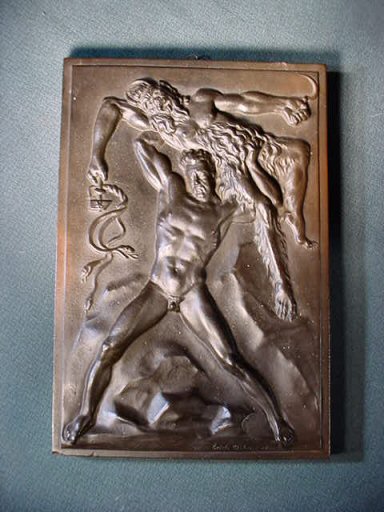
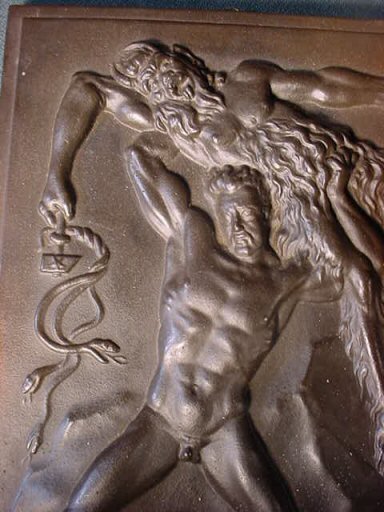
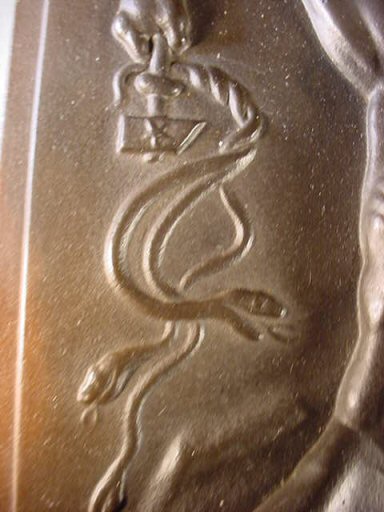
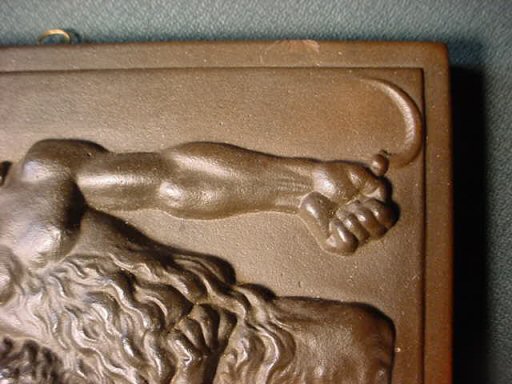
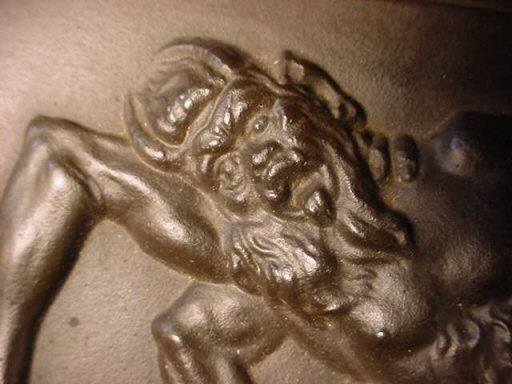
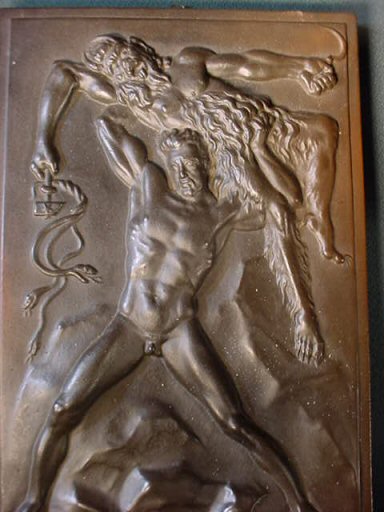
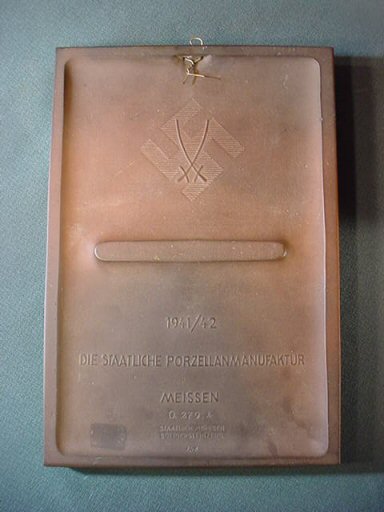
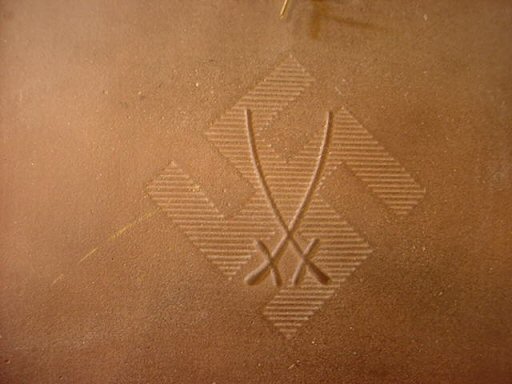
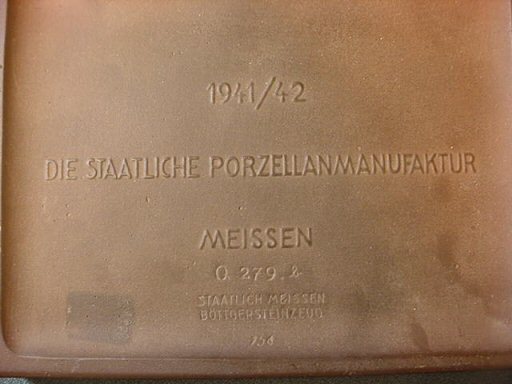
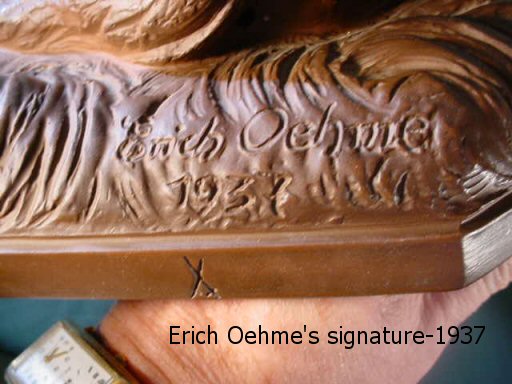
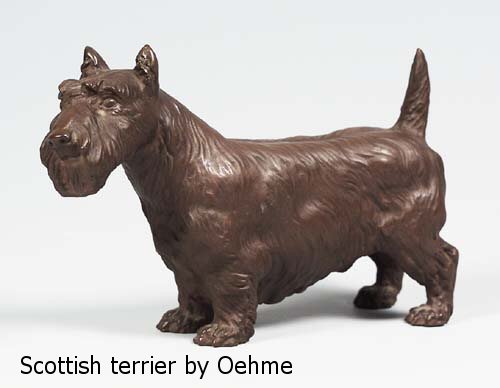
| DESCRIPTION: Here is an extraordinary rare, unique porcelain plaque. It is from the world-famous Meissen State Works in Germany. It depicts the Aryan man in victorious death struggle against the ‘Beast of Bolshevism,’ which also represents other dreaded enemies of European life and culture. The plaque says it all and is by the famous artist and sculptor Erich Oehme, who specialized in working in the brown-clay sculpture known as Böttgersteinzeug. See our other Oehme offerings: Adolf Hitler plaque, Item AH 16-1, the European Bison on this page, the Scottish Terrier, Item ART 8-3, and, the Anschluss piece, Item GEN 7-9. Also see the great Oehme creation ‘Die Alarm’ at Item SS 7-4. This historically important item is one of Oehme’s greatest creations for meaning. The Teutonic warrior, who puts us in mind of Arno Brecker’s works, lifts the horrible beast as to throw him against the rocks and crevices of the Ural Mountains that divide Asia and Europe. The beast clutches in his hands the hammer and sickle of communism along with the snakes representing a racial group rather disdained by the National Socialists. The plaque measures 6 1/4 x 9 1/2 inches and is very heavy. On the back are the crossed Meissen swords superimposed over the symbol of the swastika. This is large 2 1/4 x 2 1/4 inches in size. You can also see the dates for the design ‘1941/42’ and the words “Staatliche Porzellanmanufaktur Meissen.” Below this is “Q279” and then “Staatlich Meissen Böttgersteinzeug.” This is the most dramatic piece of fine porcelain artwork we have ever seen and by the most prestigious firm that has ever produced such masterpieces. The signature of Erich Oehme is at the bottom right.
PRICE: SOLD |
|
|||||||||||
|
Meissen Plaque from the Third Reich (Item ART 10-8) |
|||||||||||
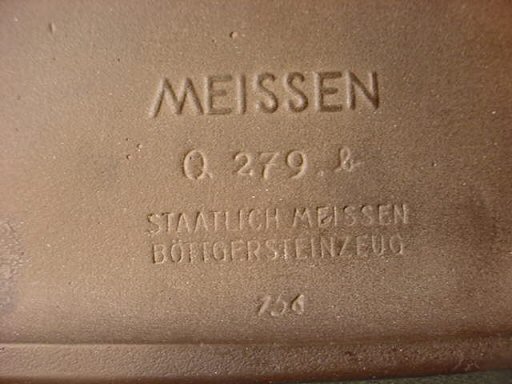
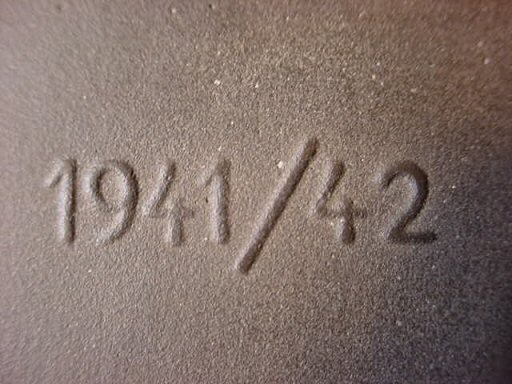
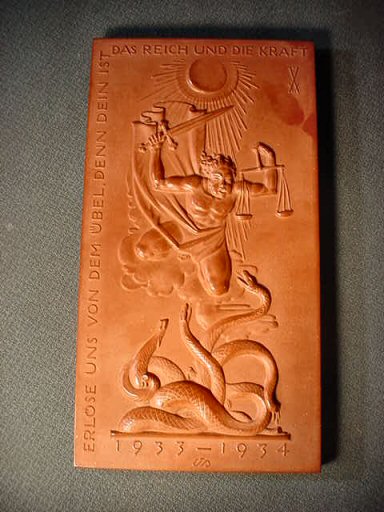
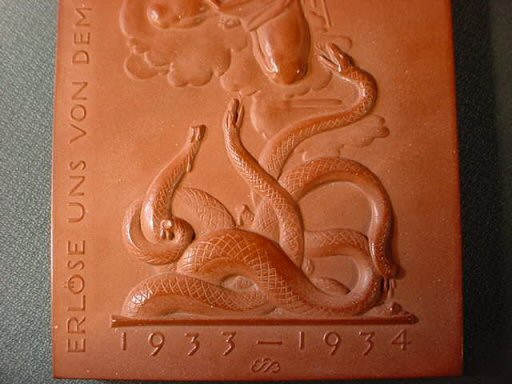
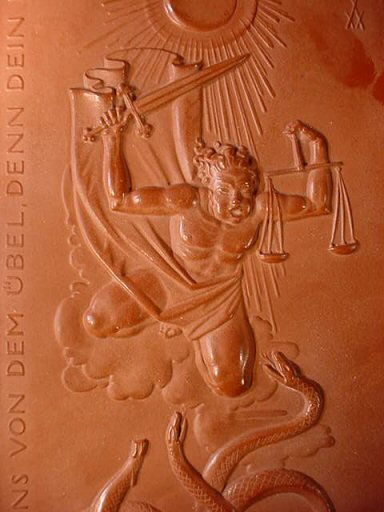
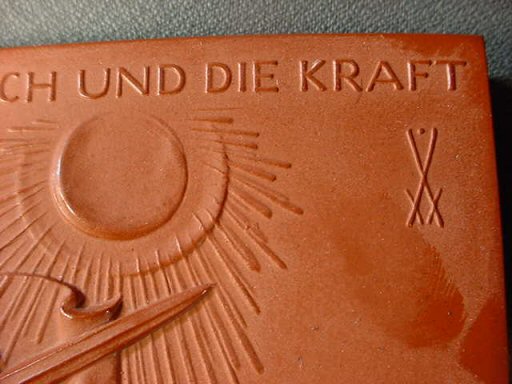
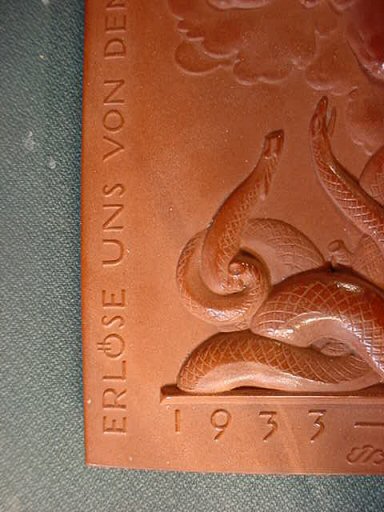
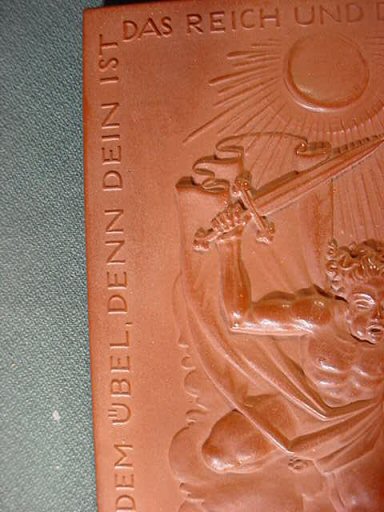
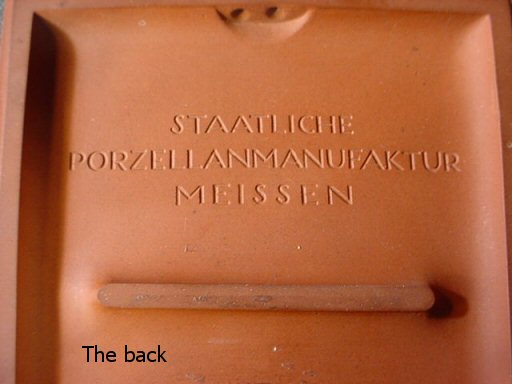
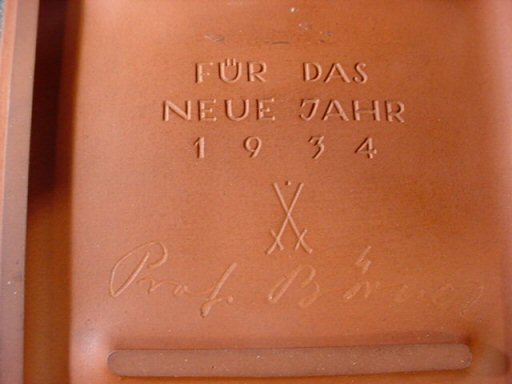
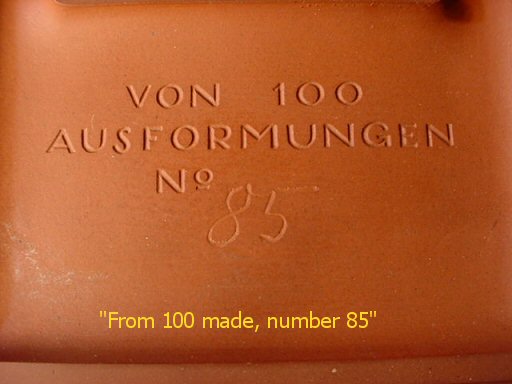
| DESCRIPTION: This is an absolutely beautiful plaque depicting possibly an avenging angel descending from the heavens with very angry countenance. He brings the sword of punishment and the scales of justice as he intends to strike at the snakes of dissention and reaction. Historically, the reptile has symbolized other entities as well: personal, racial, political. The words along the edge are “ERLOSE UNS VON DEM ÜBEL, DENN DEIN IST DAS REICH UND DIE KRAFT,” translated: “Save us from all harm for Thine is the kingdom and power (strength).” Behind the angry figure is the sun symbol symbolizing light as opposed to darkness personified by the snakes. The dates 1933-1934, Hitler’s first years in power, are at the bottom of the plaque. On the back of this heavy piece it is marked “Staatliche Porzellanmanufaktur Meissen,” and another phrase translated: “For the New Year 1934” and then the company’s famous crossed swords are seen. Below this is “von 100 Ausformungen Nr. 85.” This indicates that this is no 85 of 100 made--Talk about rare!!! This piece, although there is no written indication of it, seems to be produced in the Böttgersteinzeug style. See other similar pieces, especially the plaque by Erich Oehme’s “The Beast of Bolshevism” being destroyed by Aryan (on this page). This also is a very important Meissen artwork and we are proud to offer this wonderful evidentiary porcelain masterwork on our pages.
PRICE: SOLD |
|
|||||||||||||
|
Meissen Bison by Oehme (Item ART 10-9: GOR 8-6) |
|||||||||||||
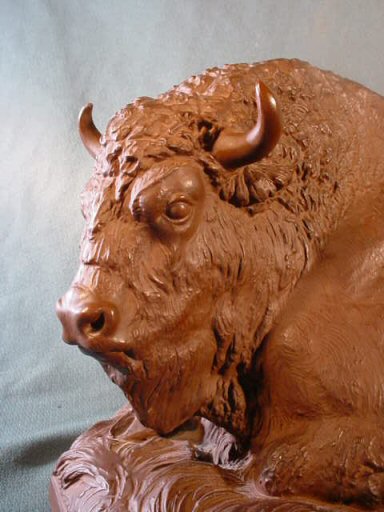
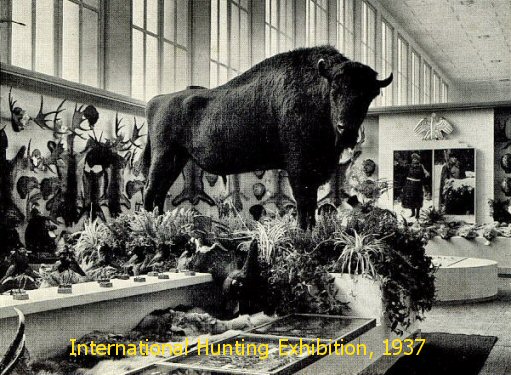
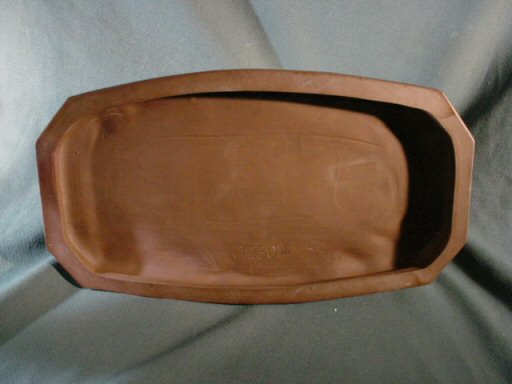
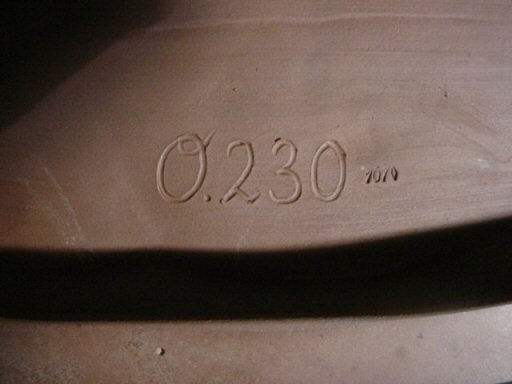
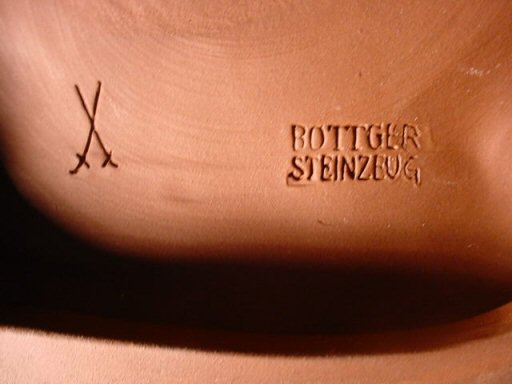
| DESCRIPTION: This is utterly magnificent. Here, by the famous Meissen artist Eric Oehme, is a buffalo (bison). Many people think the bison is strictly an American-based animal, but contrary to this opinion, the bison roamed all through northern Europe. Hermann Göring raised these magnificent beasts on a ranch near Carinhalle, his estate in the forest of the Schorfheide. It is thought that bison came to North America during the Peistocene Epoch via the Bering land bridge, but they originated in their present form in Europe. European bison, Bison bonasus, once roamed the great temperate deciduous forest that stretched from the British Isles through most of Europe and into Siberia. Though time has taken its toll on the continuous distribution of bison, which now exist in a few isolated areas, it is fortunate that ecologists like Göring were able to preserve the species through responsible stewardship of specific hunting ranges and wildlife shelters. Many of the breeding stock for Göring’s buffalo came from the ranch at Bialowieza in Poland, where some of the finest of the breed were raised. The Europeans have always been enamored and enthralled with the huge beast and many paintings and sculptures of note have been executed over the years. Such is the case with the sculpture we offer here. The piece was created by Erich Oehme, who was a specialist in the brown clay that was used for many special Meissen figurines. This was called Böttgersteinzeug. The formula for this clay was discovered by Johann Fredrich Böttger, the man who is credited for being the first in Europe to discover the secret of hard-paste porcelain in 1709. The quality of this special brown clay provides for a soft, glowing finish with excellent molded detail. This medium saw a revival of interest during the period of the Third Reich and Herr Oehme was the leading exponent of this wonderful artistic expression. Eric Oehme was born in Neuberthelsdorf in 1889 and died in 1970. He studied at the Academy of Fine Arts in Dresden since 1913 as a modeler (sculptor). He named this bison (his most famous work) ”Wisent Cow Sonja.” On our pages you will see other Erich Oehme porcelains and in our thumbnails above you will see other magnificent pieces that he created. Of particular note is the wonderful SS sculpture at Item SS 7-4. This is called “Die Alarm.” The other was a similar group by the same name depicting SA Storm Troopers in the same pose. The Third Reich art by Oehme is also represented by a great Böttger plaque depicting the bust of Adolf Hitler at Item AH 16-1. Also, see the Meissen plaque commemorating the Austrian Anschluss at Item GEN 7-9. Item ART 10-7 depicts the Aryan Teutonic man in the struggle against Bolshevism. There is no doubt that this amazing artist was to be considered one of the greatest Third Reich-period creative sculptors; perhaps, never reaching the status of Thorack or Brecker, but nonetheless, famous in his own right. This buffalo is one of his greatest achievements and we are markedly proud to offer this and other Oehme masterpieces. This particular piece was owned by Reichsmarschal Hermann Göring, who, like Goebbels, with “Alarm,” had it specially ordered. The value we place on this very special art masterpiece does not reflect Hermann’s ownership, even though it came from Veldenstein, the Göring castle. The piece stands on its own in value. In perfect condition it measures 16 x 9 inches across its base and from the bottom of the base to the highest point of the animal’s hump is 10 inches. This truly is a museum piece extraordinary. It has all the proper Meissen marks for the period. Here is a chance to own one of the very finest of Third Reich period art.
PRICE: SOLD |
|
|||||||||||
|
Meissen Plaque of Adolf Hitler (Item ART 10-10: AH 16-1) |
|||||||||||
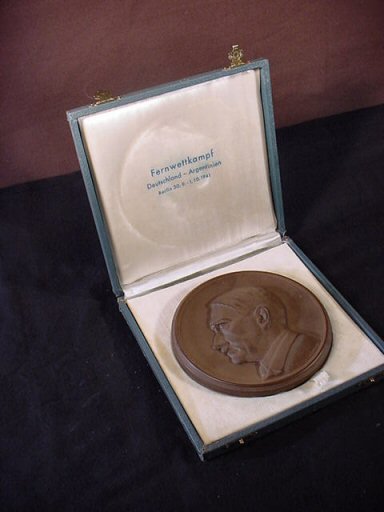
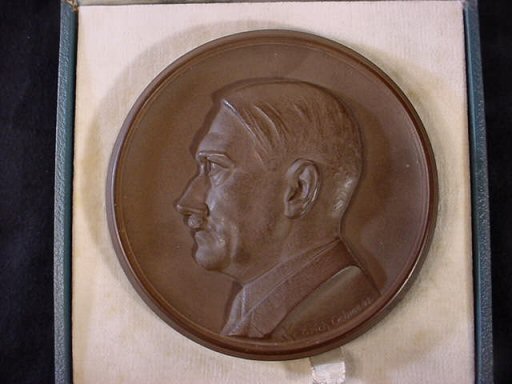
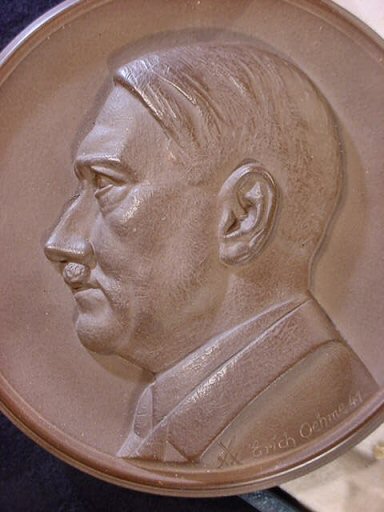
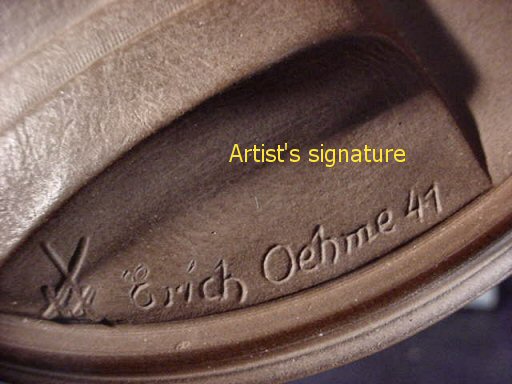
| DESCRIPTION: Here is the greatest Hitler plaque we have ever seen. Struck by the famous firm of Meissen, it is in Böttgersteinzeug from the Staatlich Porcelain Manufacture Meissen. It is cased and seems to be an award to a German competitor in a sports match between Germany and Argentina at Berlin September 30 to October 1, 1941. The words inside the case are: “Fernwettkampf Deutschland-Argentinien. The plaque was sculpted in the brown stoneware by Erich Oehme in 1941. Evidenced by the two holes in the top back, the plaque was designed to hang on a wall. Erich Oehme was the Meissen specialist in this particular porcelain technique and it was he who brought back the early 18th century form of porcelain manufacture that was developed by Meissen, but basically dropped by the company in the mid 19th century in favor of the white, hard-paste porcelain that found such favor in the populace and in the European courts. Oehme thought that the detail of important sculptures such as this one could be better appreciated when detail was the prerequisite. His figures and plaques are some of the finest ever done. To create a face that is realistic in a painting in oil or a watercolor is certainly a great accomplishment, but to sculpt such a face is a task left to artistic genius. Oehme was clearly such an artist. For further information about this cultural master please see some of his other works listed on our site. See the other Meissen items on this page. Also, don’t fail to see the great Oehme creation ‘Die Alarm’ at Item SS 7-4 and the Scottish Terrier, Item ART 8-3. This plaque is 6 inches in diameter and is quite heavy as Steinwerk always is. The likeness of the Führer is possibly the best we have ever seen. On the back is a large swastika outlined and in high relief. The case is in blue leatherette and measures 8 x 8 inches and is in very fine condition. This is just a great Object d’Kunst extraordinaire and priced very reasonably for such an important historically, valuable piece.
PRICE: $1,800.00 |
|
|||||||||||||||
|
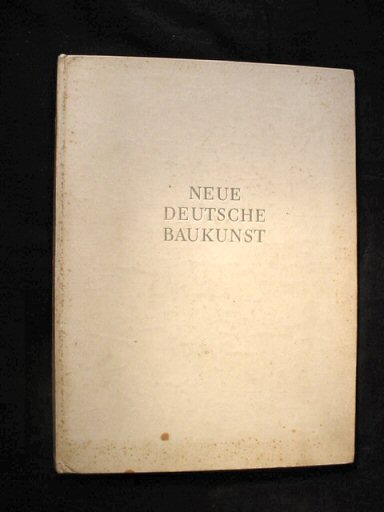
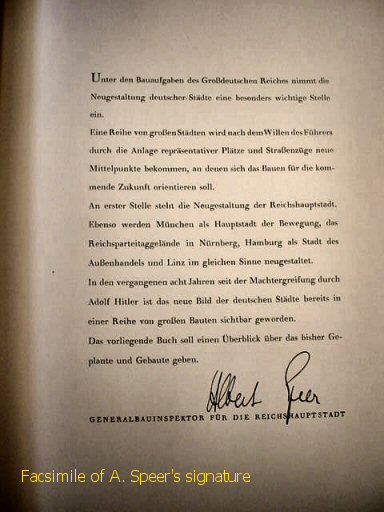
Book Neue Deutsche Baukunst, New German Architectural Art (Item ART 10-11; NSD 10-19) |
|||||||||||||||
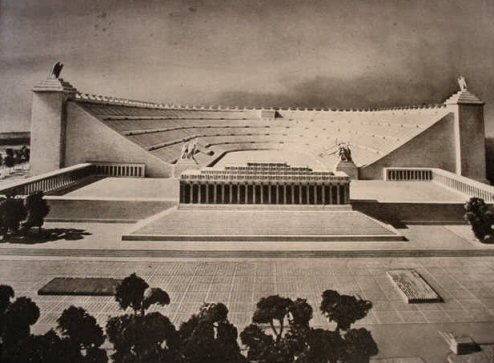
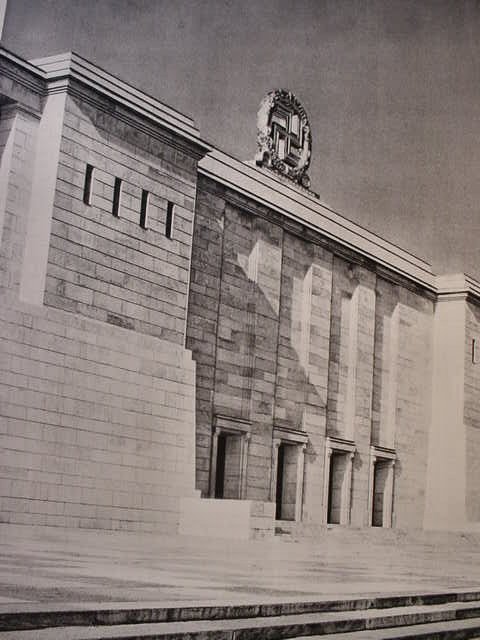
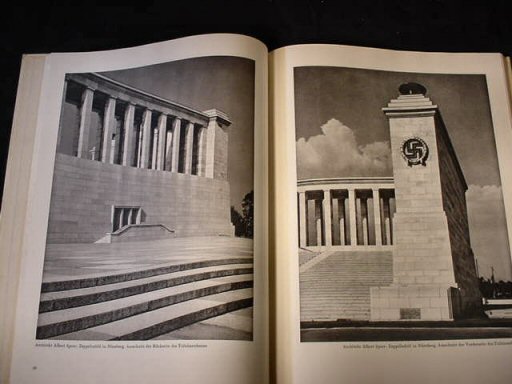
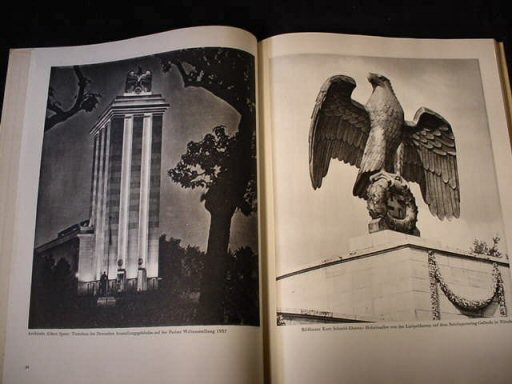
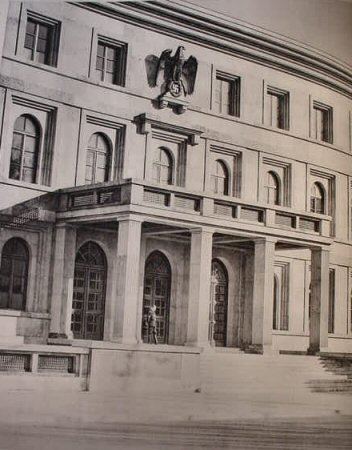
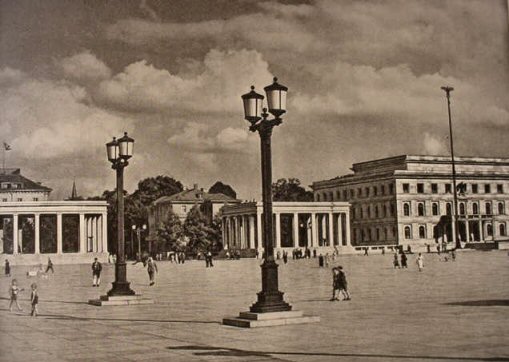
| DESCRIPTION: This could be said to be the book of Albert Speer, who at the time of this printing (1941) was the general building inspector for the Reich’s capital of Berlin. The book opens with the statement made by Adolf Hitler at the Reichsparteitag in Nuremberg in 1936: “Kein Volk lebt länger als die Documente Seiner Kultur,” “Now people live longer than the documentation of their culture.” Thus, the buildings of the Third Reich were sound and beautiful, but reminiscent of the glory of early culture groups: Greeks, Romans, and Germanics. In the 96 pages of this marvelous book you will see such magnificent structures as the bridges of the autobahn, the ships of the KDF, Luftwaffe headquarters in Berlin, the Reich’s Chancellery, theaters, the 1936 Olympic Stadium, the Brandenburg Gate, the planned stadiums, honor halls, etc. The party grounds at Nuremberg, the German building at the Paris Exhibition, the Führerbau in Munich, along with the Erhentemples are depicted. The photography is astounding and is on 12 x 8 1/2-inch pages with full-page photographs. Here is the Third Reich as it was meant to be. The book is extremely rare and especially in this great condition. Except for a few minor stains on the off-white cover, the book is in great shape and is a treasure to the architecturally interested collector or any true Germanophile, who would like to at least bask momentarily in the greatness of Speer’s architectural genius and of others, as well.
PRICE: SOLD |
|
|||||||||||||||||||||||||||||||||||
|
Grouping of Mounted Pictures from Dr. Arthur Seyss-Inquart (Item ART 10-12; PERS 3-1; YOUTH 5-6) |
|||||||||||||||||||||||||||||||||||
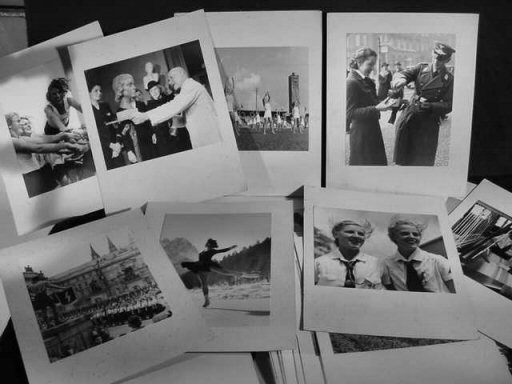
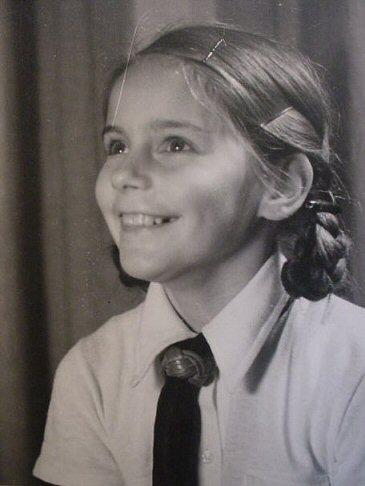
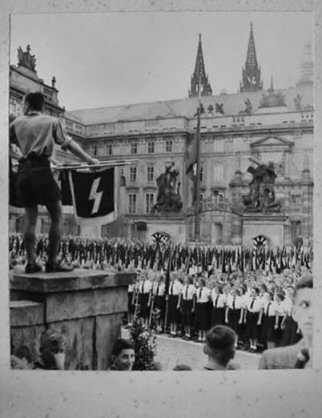
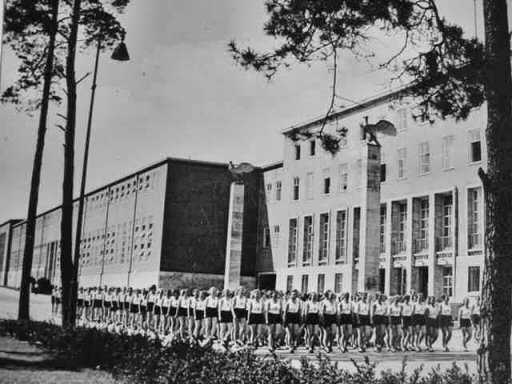
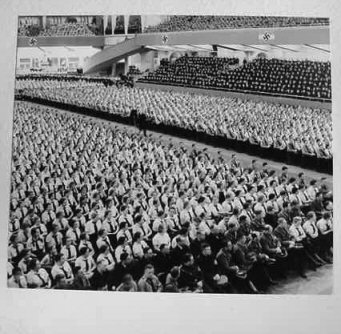
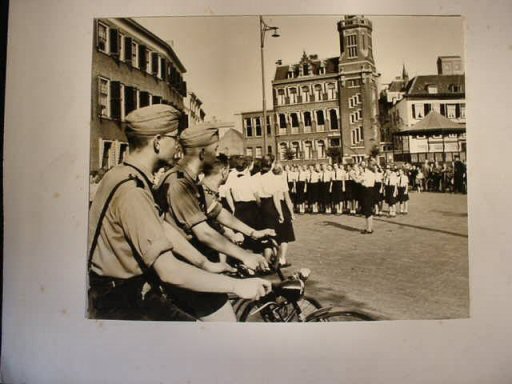
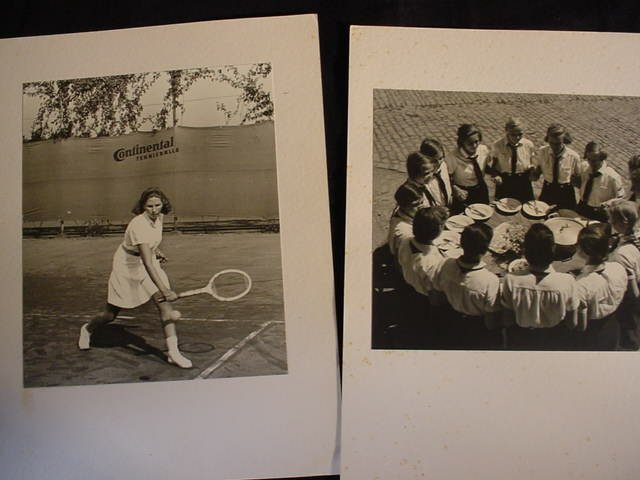
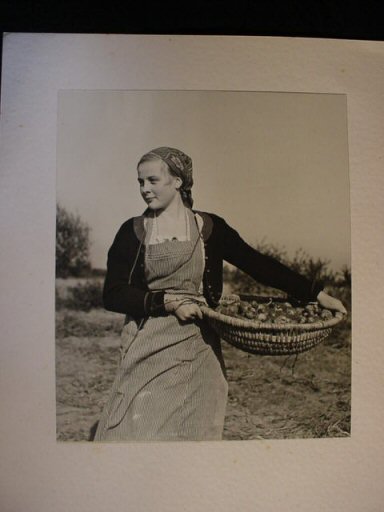
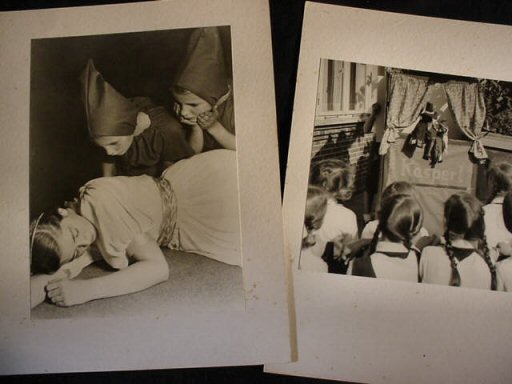
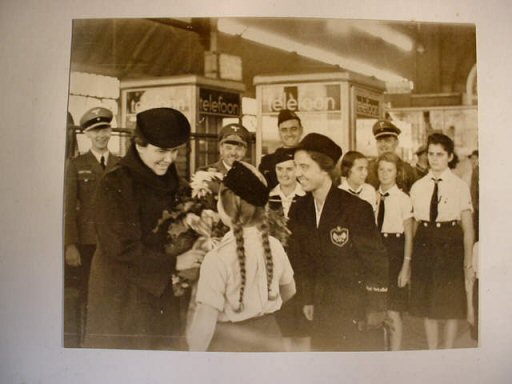
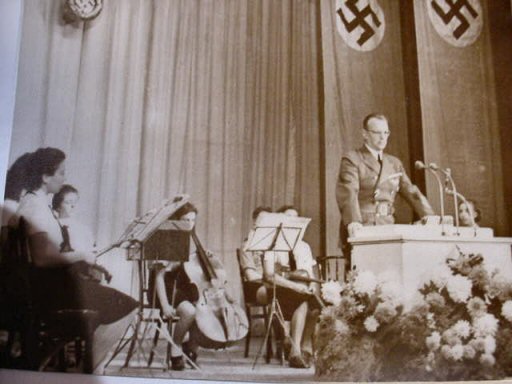
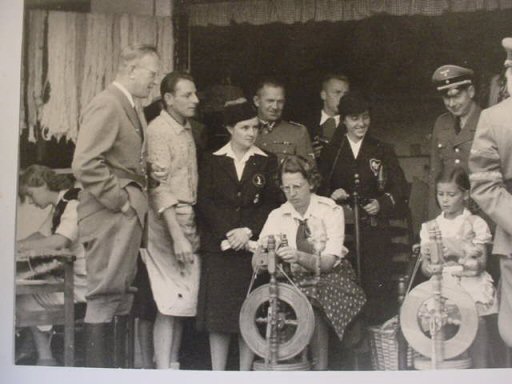
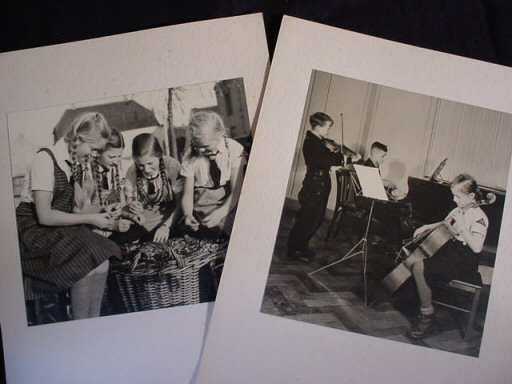
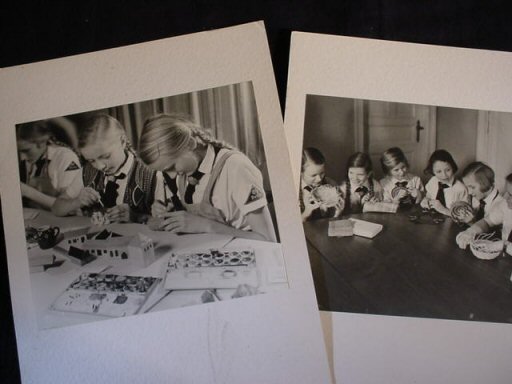
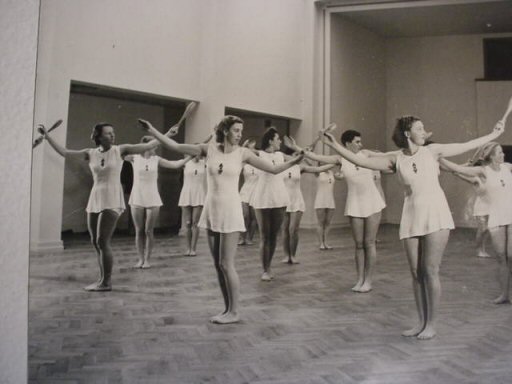
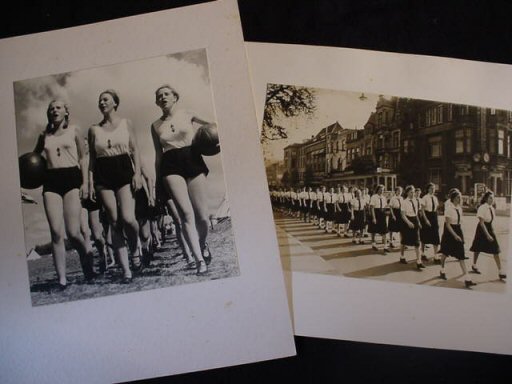
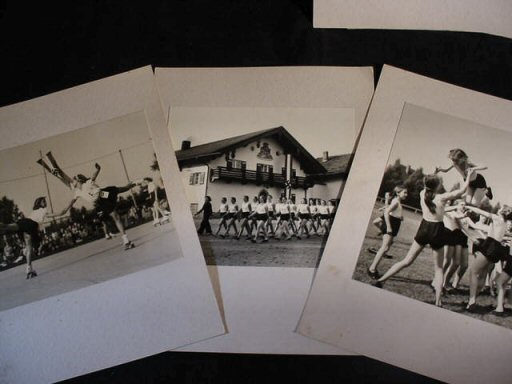
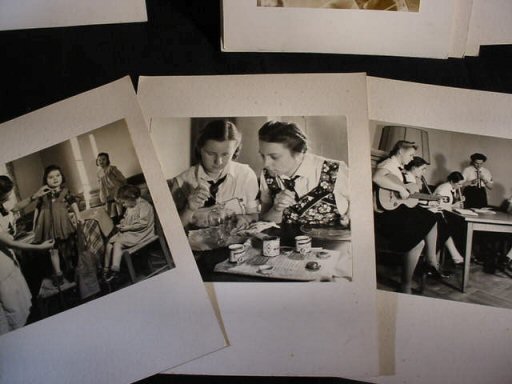
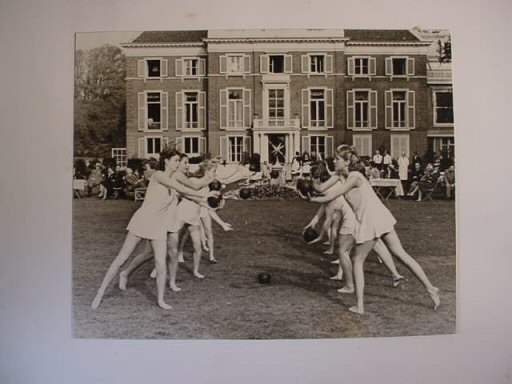
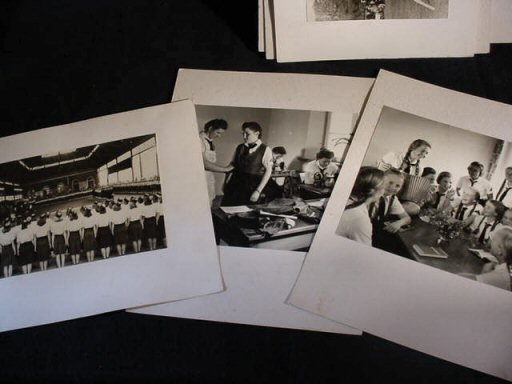
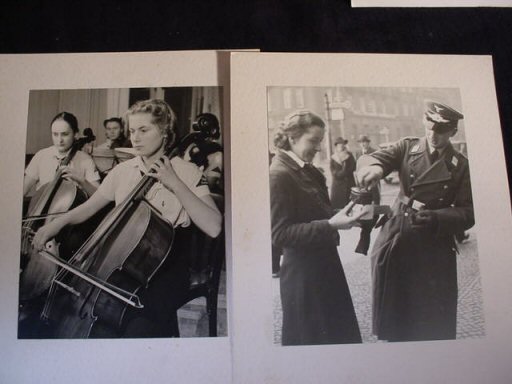
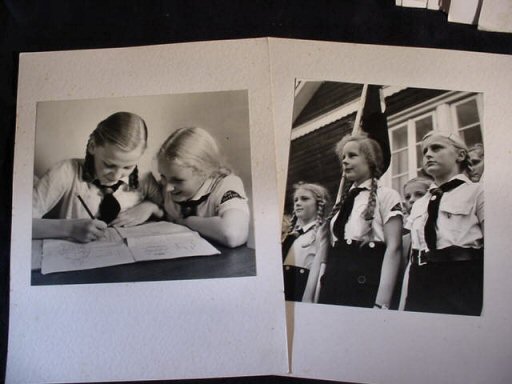
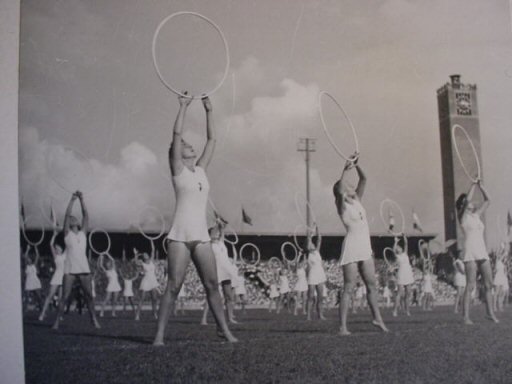
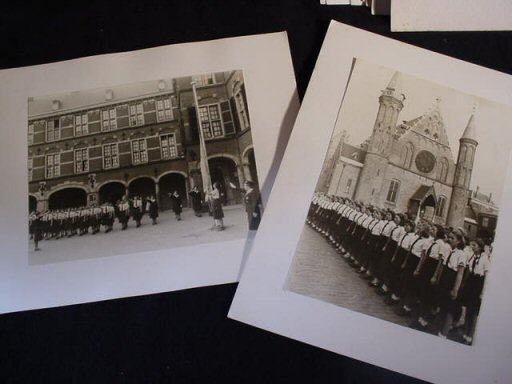
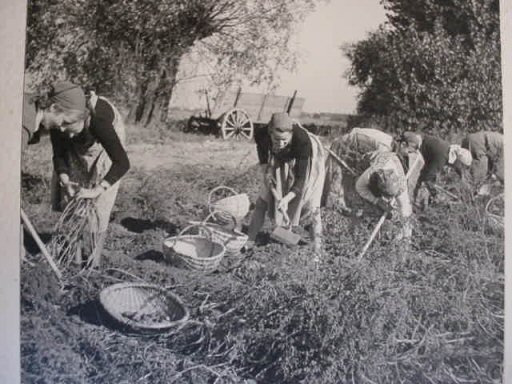
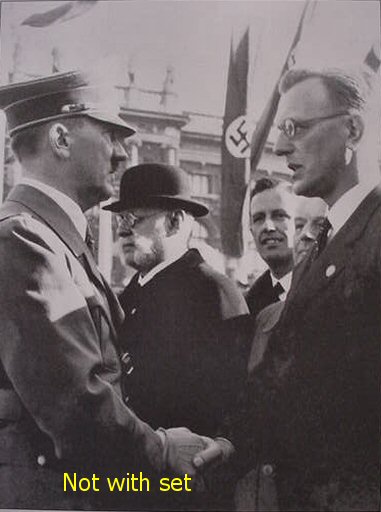
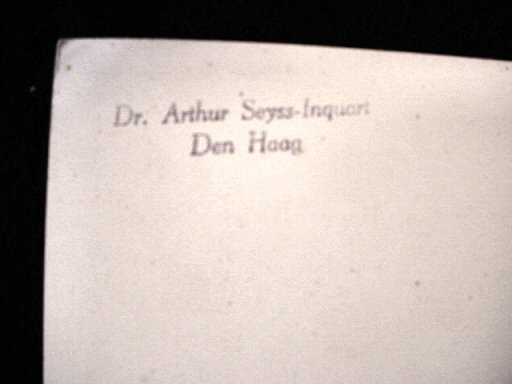
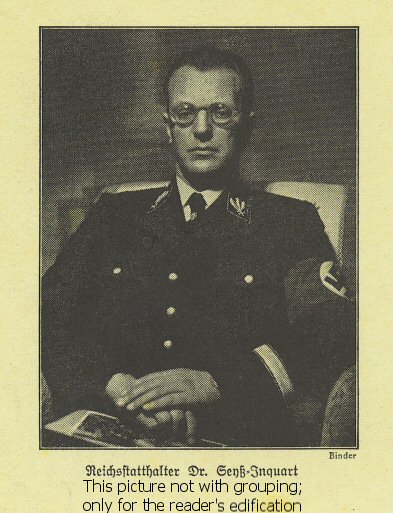
| DESCRIPTION: Here is an astounding collection from the personal collection of Dr. Arthur Seyss-Inquart. He was a prominent National Socialist official in Austria. He was born in Stannern Moravia, then part of Austria-Hungary. He studied law at the University of Vienna and served valiantly in WWI and was decorated for bravery on a number of occasions. He went into law practice in 1921, joined with the Chancellorship of Dollfuss in 1933, later was appointed Minister of the Interior by Kurt Schuschnigg, when the German Führer announced intentions of marching into Austria. Schuschnigg suddenly resigned as chancellor and Seyss-Inquart was appointed Chancellor of Austria. He was more than happy to greet the German troops as they gloriously crossed the border after the Anschluss. He, like millions of Austrians, gloried in the union once more of Germany with what was the Ostmark (eastern territory of the once-proud Germanic Reich). It was he who signed the legislative act of reuniting Austria with the Reich. He received the honorary rank of SS-Gruppenführer from Reichsführer Himmler and in May 1939, he was made minister without portfolio in the NS government. Later in 1939, he was made administrative chief for southern Poland, but did not take up that position before the general government was created and then he became a deputy to the Reich’s Governor Hans Frank. Following the capitulation of the low countries, he was appointed Reichskommissar for the liberated Netherlands, and was charged with the civil administration, with creating close economic cooperation with Germany, and with defending the interests of the Reich. The actual administration of the Netherlands was largely controlled by Seyss-Inquart, himself. He oversaw the politicization of cultural groups right down to the Chess Players’ Club through the Kulturkammer, and set up a number of politicized associations. He never tired of indulging in efforts to better the community doings and lent much support to the Hitler Youth and girls’ NS groups. He introduced measures to combat terror and revolution from the left by imposing huge fines on groups and individuals who tried to bring down the legal government, he executed murderers and some potential murderers (reds). He took measures to remove Jews from the government, the media, and leading positions in the economy. When the allies advanced into the Netherlands the NS regime attempted to enact a scorched-earth policy, and some docks and harbors were destroyed. Seyss-Inquart, however, greatly limited these actions, which would have destroyed much of the Netherlands. He remained Reichskommissar until May 8, 1945, when, after a meeting with Grand Admiral Dönitz to confirm his blocking of the scorched-earth orders, he surrendered to the Americans in Hamburg. At the Nuremberg trials he was found guilty of a whole shopping basket of the “star chamber” crimes similar to what the U.S. Government indulges in now, like planning aggressive war, crimes against peace, crimes against humanity, etc. He was sentenced to hang. His last words were: “I hope that this execution is the last act of the tragedy of the Second World War and that the lesson taken from this world war will be that peace and understanding should exist between peoples. I believe in Germany.” The pictures are almost a memorial to this energetic and resourceful man. They reflect his interest in the youth of Holland and the remarkable culture that they so markedly mastered at that pivotal point in history. The pictures are all mounted on 9 x 12-inch very heavy stock cardboard. Most of the pictures are 6 1/4 x 8 inches. There are also some 9 x6-inch pictures. There are 59 pictures altogether. Of all of the young girls’ organizations and BDM (Bund Deutscher Madel), two pictures have Dr. Seyss-Inquart in them. There are pictures of the girls and maidens working at various crafts, indulging in various sports activities, playing at music, enjoying theater, collecting donations for the WhW, learning cooking, participating in ceremonies, hiking, studying the arts, tilling the soil, reading poetry, sharing lots of fellowship, engaging in acrobatics, painting, and involvement in health care, performing aerobics and ballet, etc. It is not known if this group of pictures is all, if any, from the Netherlands or if Dr. Seyss-Inquart had them for training and indoctrination purposes, but on the back of each picture card is the stamp identifying them as his property. The stamp reads: “Dr. Arthur Seyss-Inquart Den Haag.” This may be one of the most important groups of archival photos ever offered on line and Germania once more is proud to offer it to the genuine collector of fine memorabilia.
PRICE: SOLD |
Page Ten |
Please refer to item designator in parentheses in all correspondence.
Please E-mail for any additional information you may need.