
|
|
|
|
|
|
Third Reich Art
Page 16
 |
 |
 |
 |
 |
 |
 |
 |
 |
 |
 |
 |
 |
 The artist |
 |
 |
 |
 Roman officer captive |
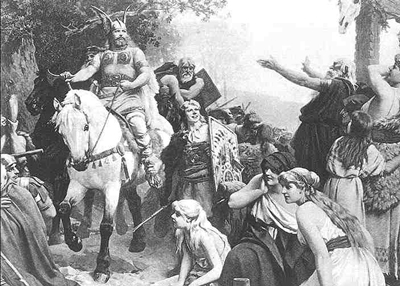 Original painting |
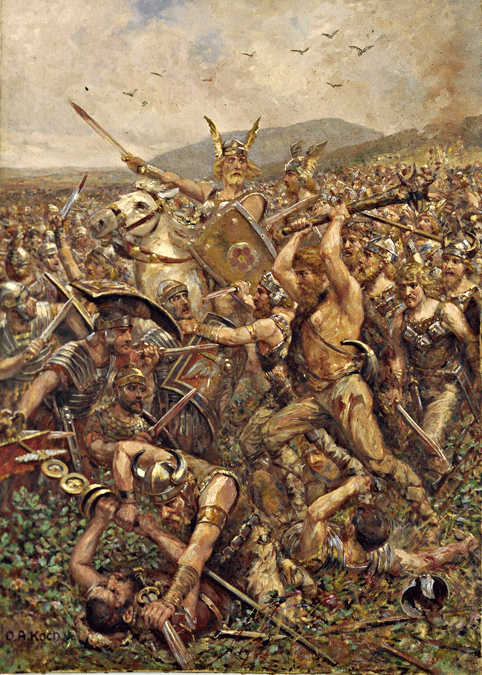
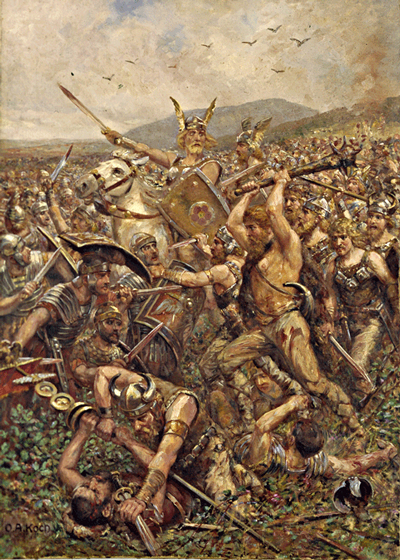 Der Schlacht im Teutobergerwald in the midst of battle |
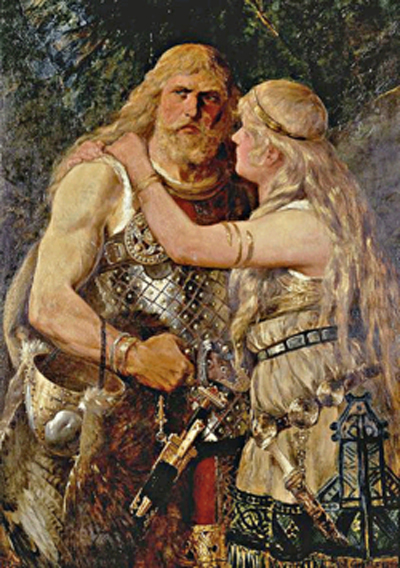 Thusnelda says farewell to Hermann before battle |
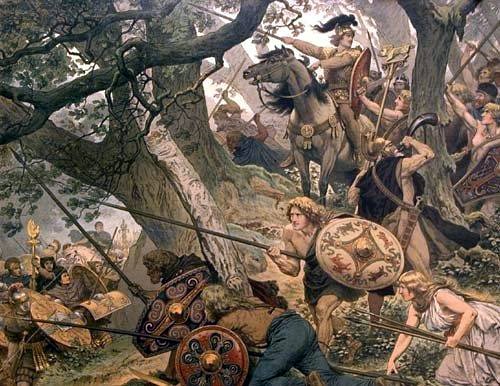
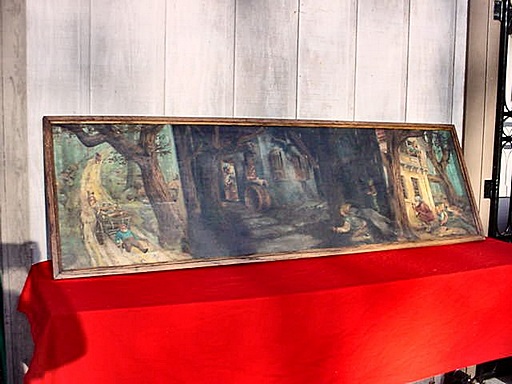
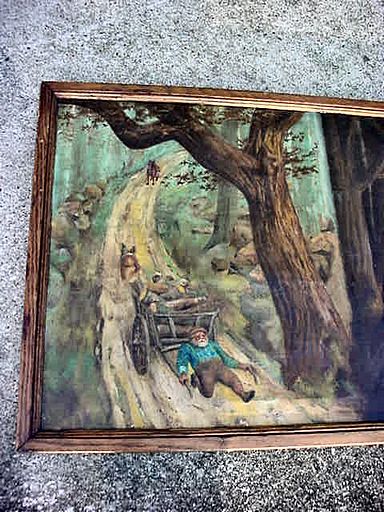
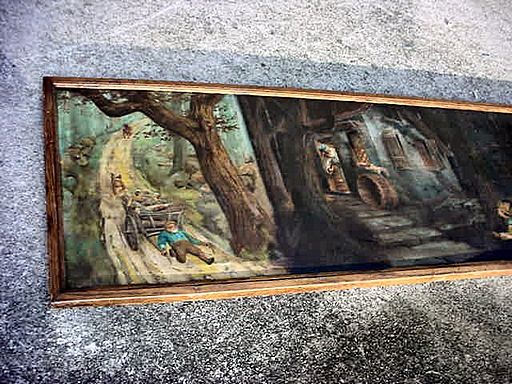
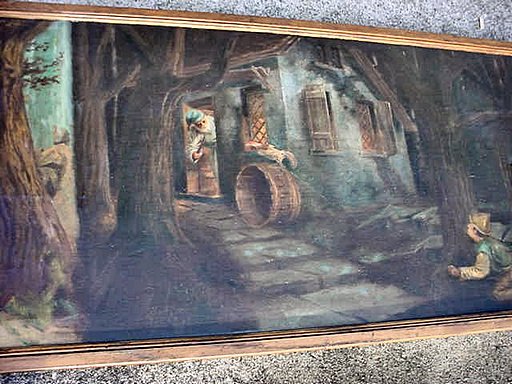
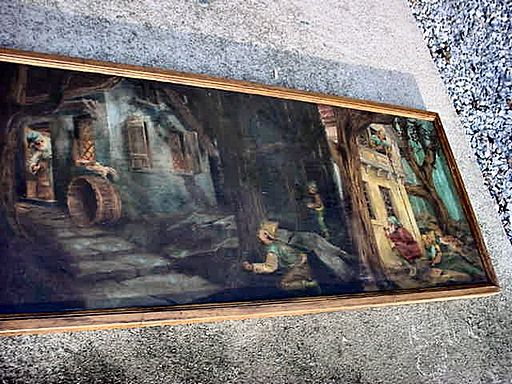
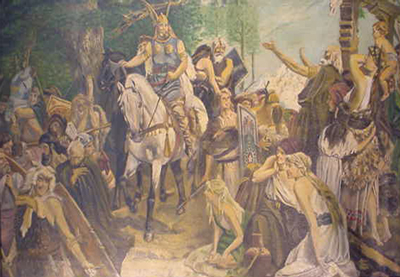
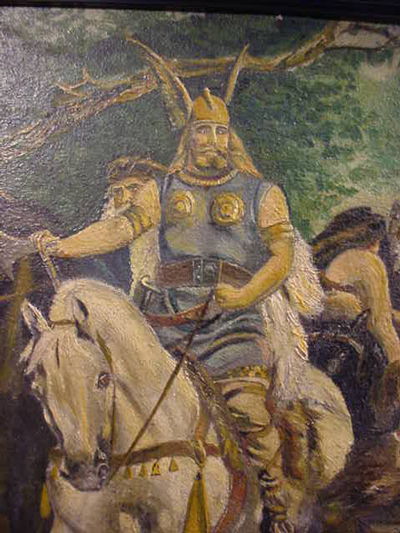
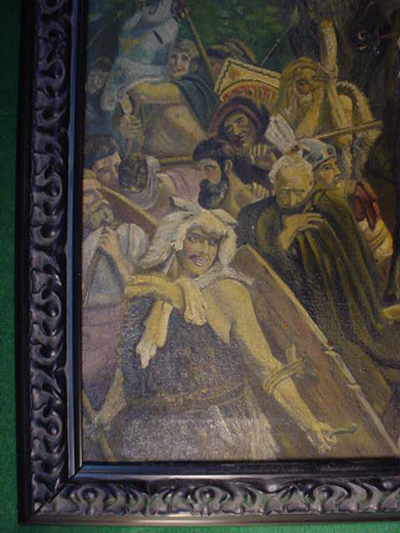
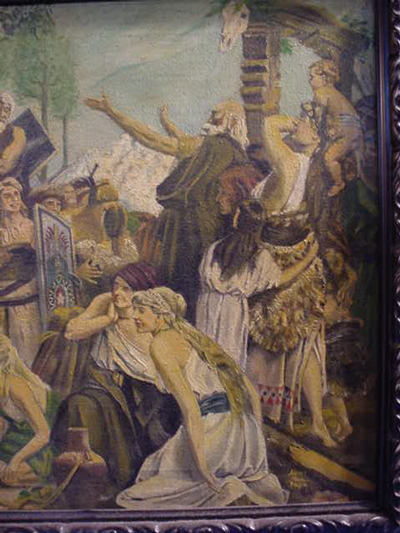
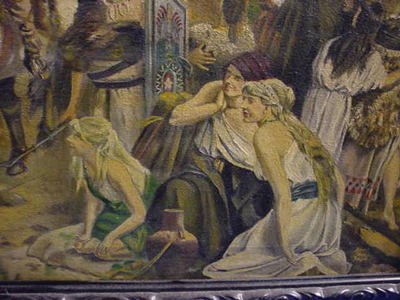
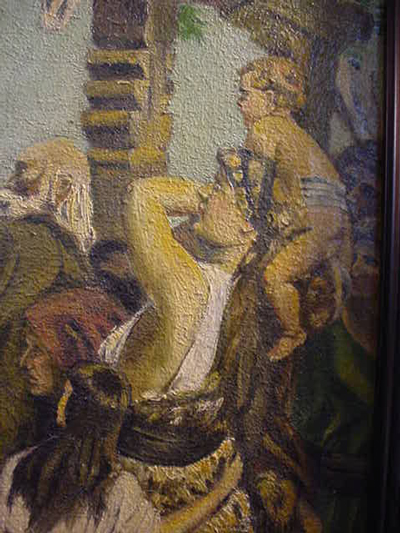
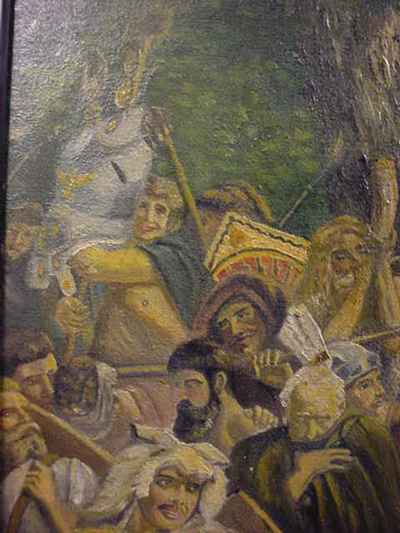
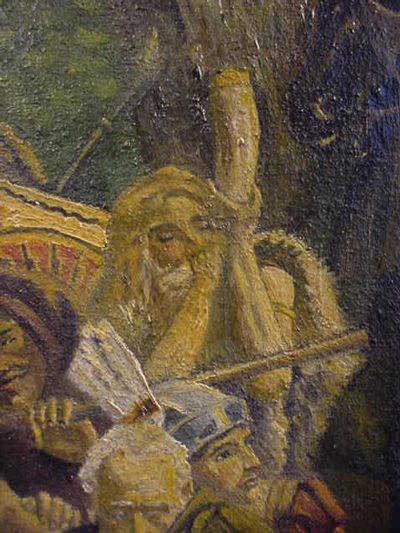
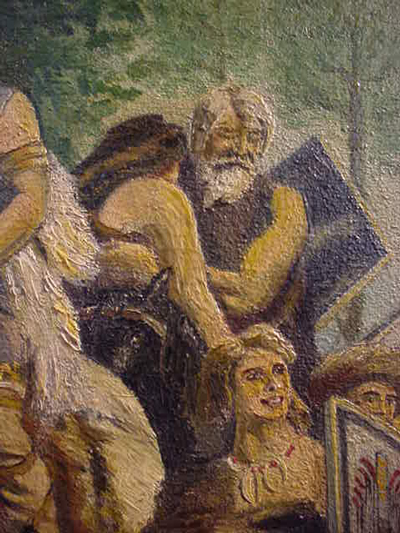
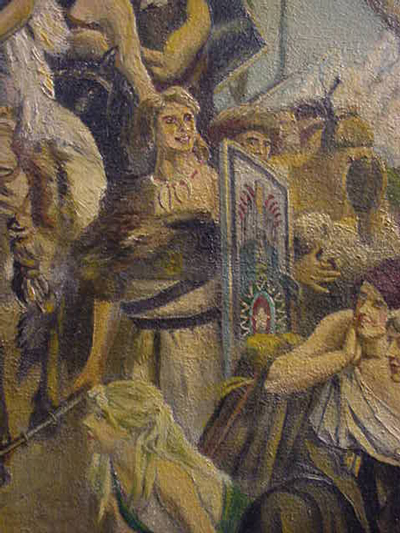
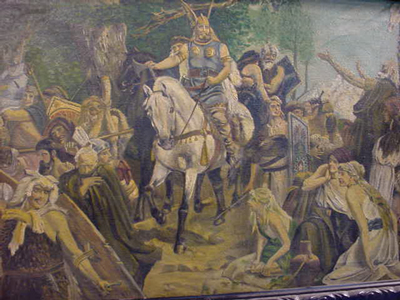
A Painting on Canvas of Hermann the Cheruscan Chieftain Returning from Battle with His Men (Item ART 16-1 & OLD 7-2) |
|||
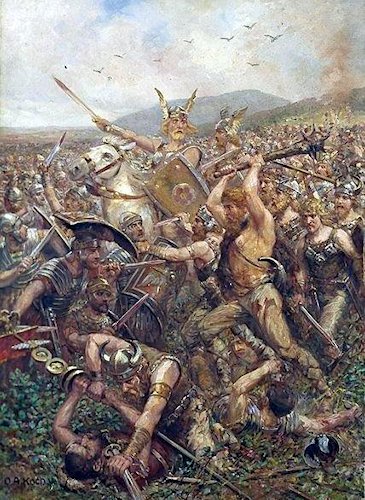
| DESCRIPTION: This is a painting in oil of the return of Arminius (Hermann) to his Cheruscan village after the defeat of the Three Roman Legions commanded by Publius Quinctilus Varus in the year 9 AD in the Teutoburg Forest. This was one of the most severe defeats ever suffered by the Roman army and it ultimately forced Rome to abandon its plans for conquest of the German territories west of the Rhine.
This year, 2009, marks the 2,000 anniversary of one of the most important battles of all history. The utter destruction of three Roman legions was definitely the turning point for the Roman Empire and all of Europe. Please go to Old 3-2 on our pages for more descriptions of the battle.
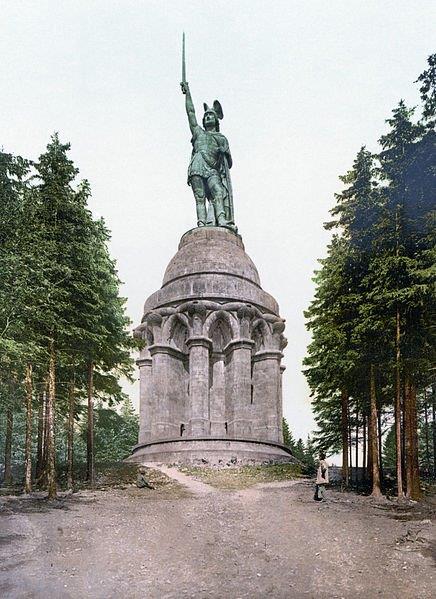
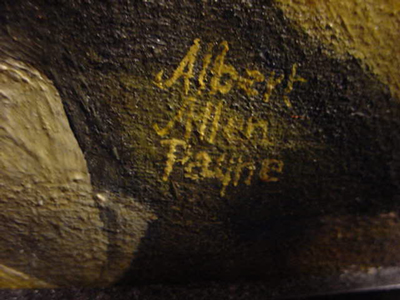
Also see Old 4-7. This painting we offer is in a large size with a frame that is new but nice. It measures 35" x 22 ½". The frame is about 2 ½" wide. The painting is a copy of the original that is in a German museum. The work was executed in the time of the Third Reich. This can be extrapolated by painting style of the era. The painting itself looks like the style of the artistic predilection of the Third Reich; however, the artist's name does not sound German, Allen Payne. But the painting was found in Germany -- could this rendering have been executed by a “Germanophile” art student in 1930's Deutschland? There was a definite “Hermann cult” worldwide during this time as it was the era of heroism! Hermann was celebrated almost with as much popularity as the Fuhrer himself. He represented for the German people resistance against foreign invaders and they hoped to break the occupation by the arrogant armies who in the 20’s were so evident, especially in the Rhineland, “Hermansland.” The historic correlation was blatantly evident and Arminius became a symbol of freedom and even vengeance. He also became the beacon of vigilance as the “Hermannsdenkmal,” the statue near Detmold stood defiantly with upraised sword! Arminius also stood for German unity. On the upraised sword are the engraved words “Deutsche Einigkeit Meine Starke, Meine Starke Deutschland’s Macht!” Translated this says “German Unity my Strength, My strength Germany’s Might.” Down through the ages the words of this liberator are remembered. The words that he used when he assembled Tribal Chieftains to hear his appeal for German unity,
he said, "As long as the enemy defies us upon German soil, hatred is our law and our one duty revenge!" That statement echoed down through the ages and the SS and SA men of the NSDAP truly took it to heart and when the German army marched into the Rhineland in March 1936 the French occupation Senegalese Negro troops were fleeing in horror before the swastika banner. The German soldiers were singing “Als Die Romer Frech Geworden” also known as the Hermannsleid. The transition of the song's title is "When the Romans became cheeky!"
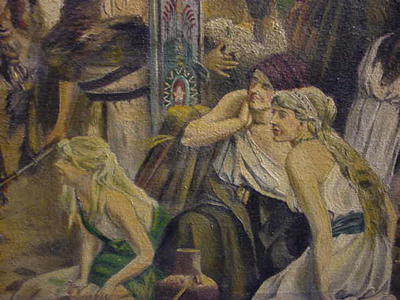
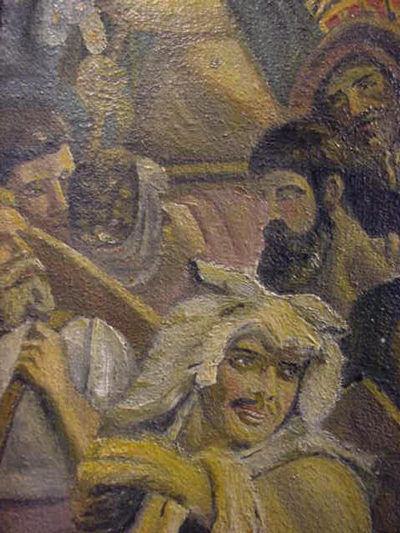
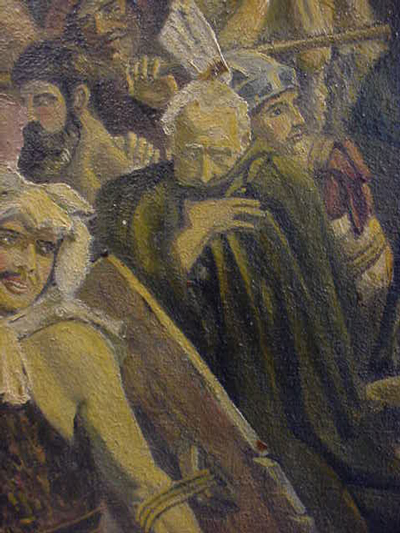
The painting is truly dramatic with the liberator himself mounted on his white steed as he receives the adoration of his Cheruscan tribe. All around him are his warrior comrades carrying trophies of war such as Roman shield, Roman breastplates, even a captured Roman officer who holds his blanket up around his neck and chin. He is being led to grim and horrible death through torture.
A warrior sounds up the entrance call on a steer horn announcing the glorious return of Hermann with his proud Warriors. A tribal elder throws his arms open in appreciative greeting . Golden haired Rhine maidens stand with glowing pride in their men folk returning with“Unser Hermann “Der Befreier.”
This is to us a Germanophiles dream painting. If you are like us, a lover of Germanic (Kutur), then this rendering will thrill you. Heil Hermann! Heil und Seig! PRICE: SOLD |
|||
|
|
|
|
|
|
|
|
|
|
|
|
|
|
|
|
|
|
|
|
|
|
|
|
|
|
|
|
|
|
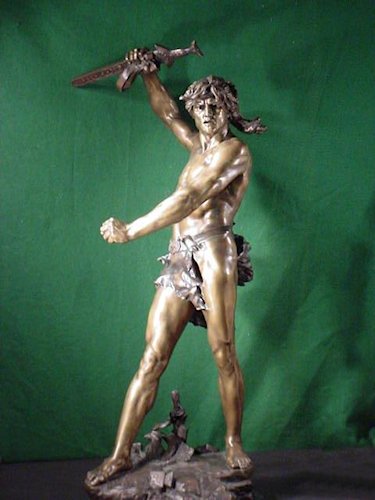
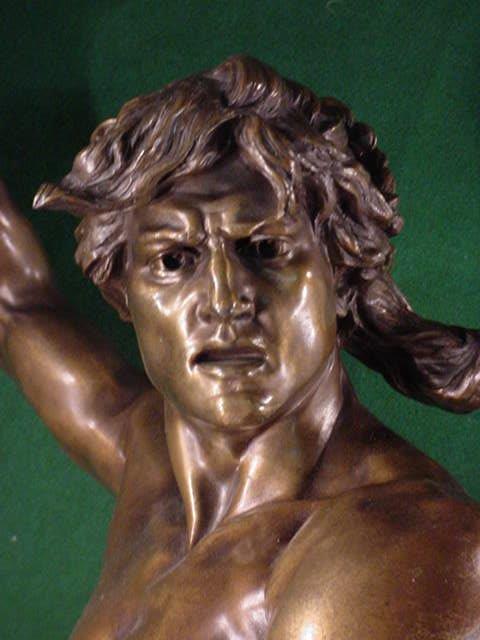
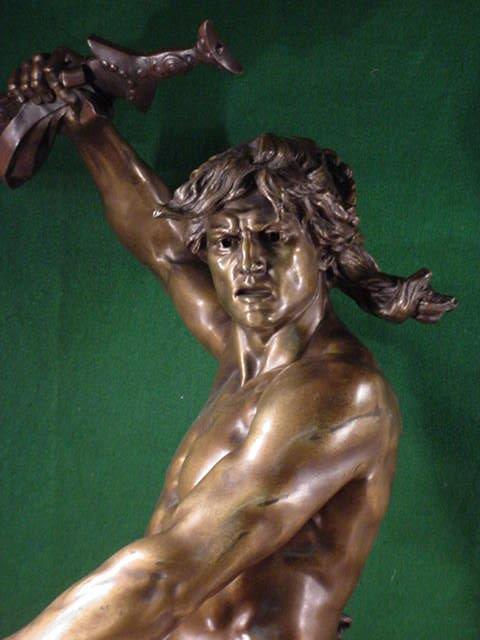
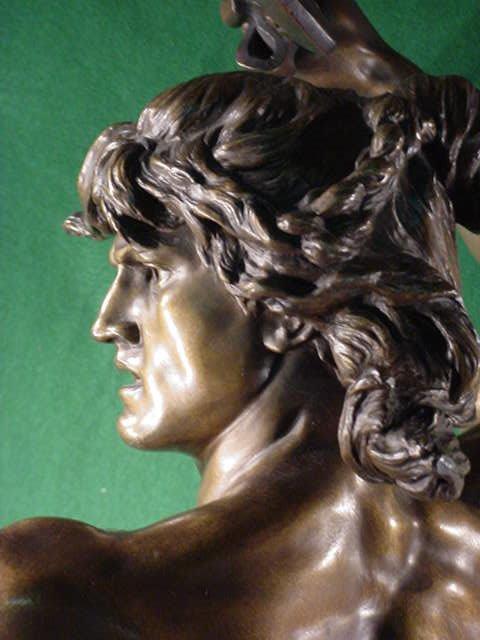
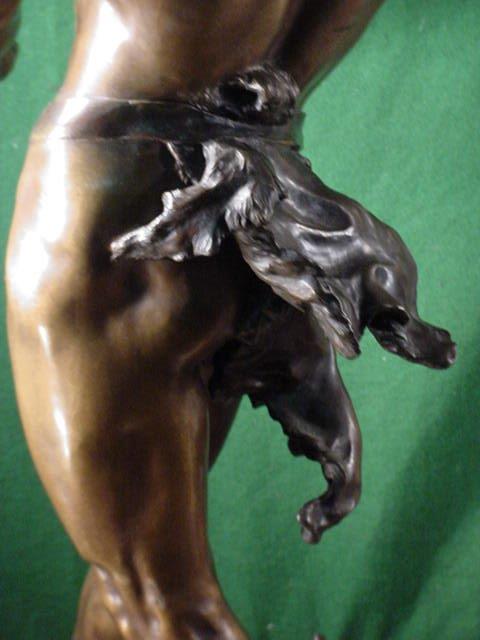
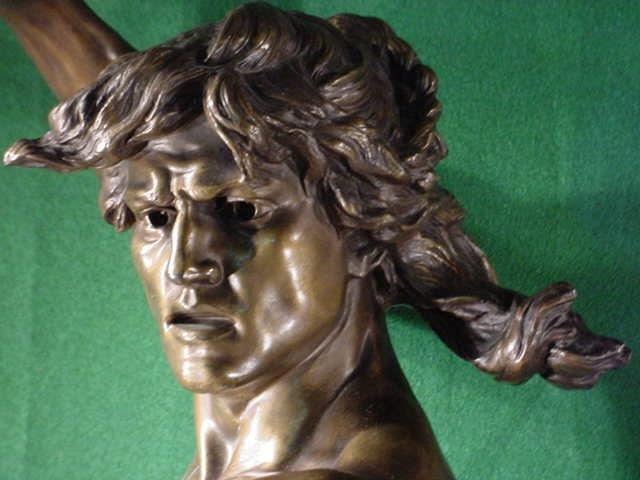
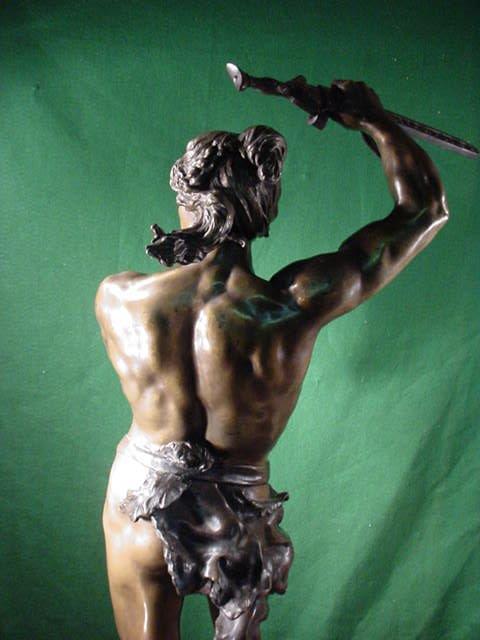
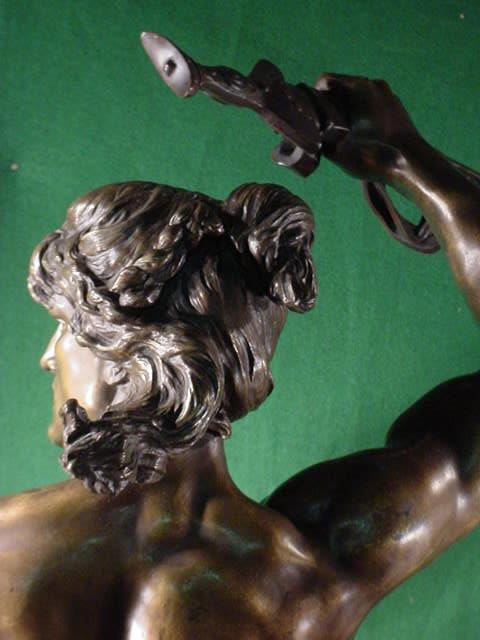
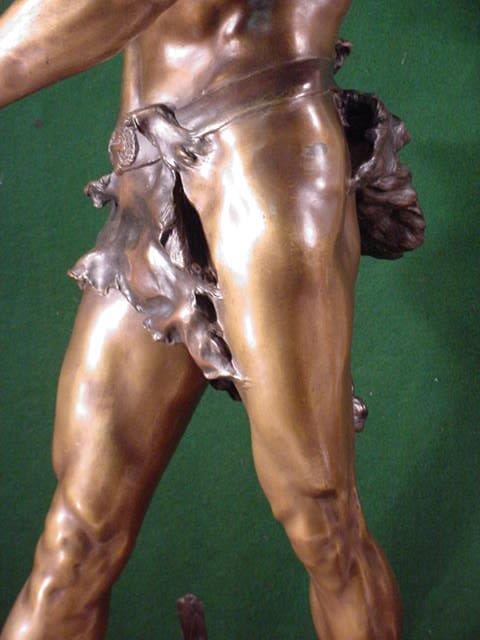
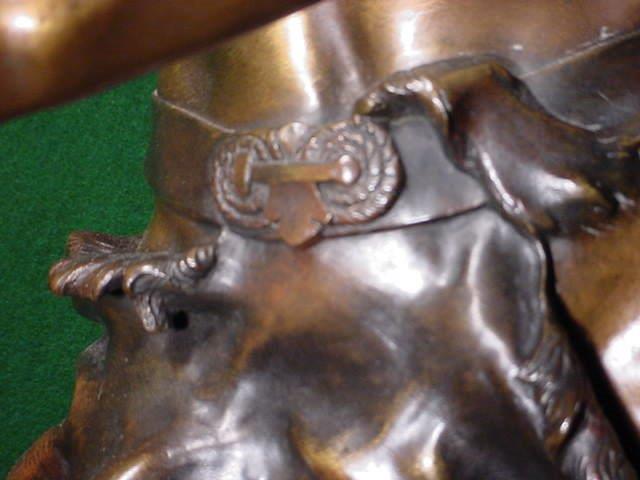
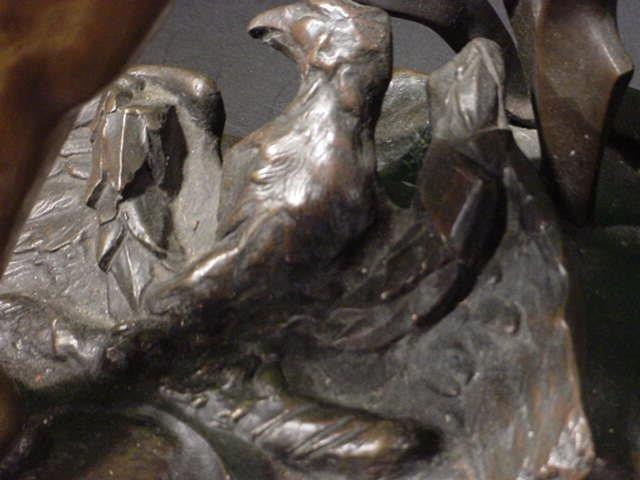
Bronze Sculpture of a Teutonic Warrior by Henri Désiré Gauquié (Item ART 16-1a; OLD 7-2a; BRONZEMET 3-13) |
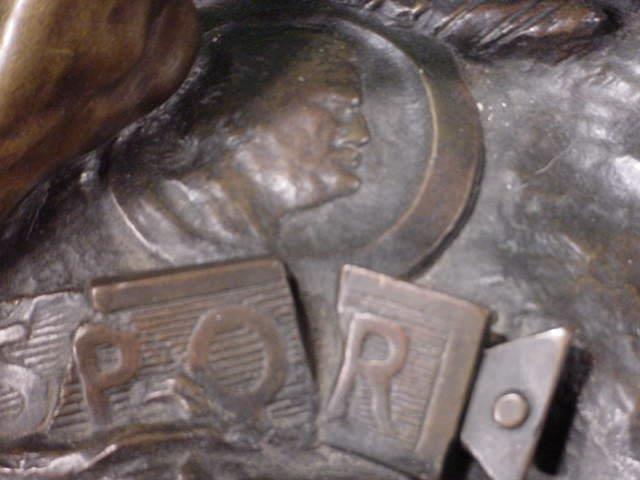
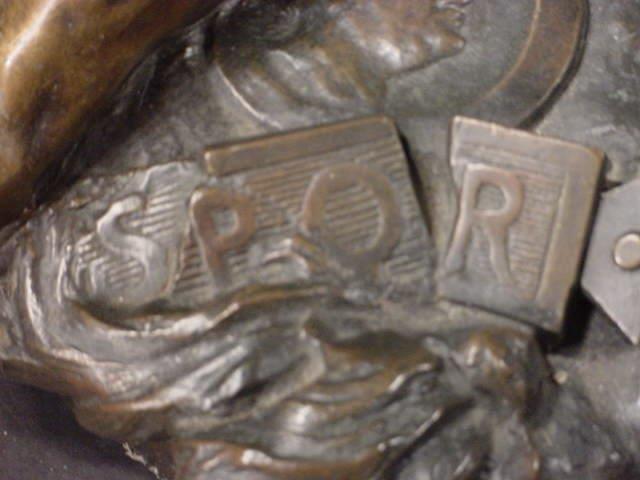
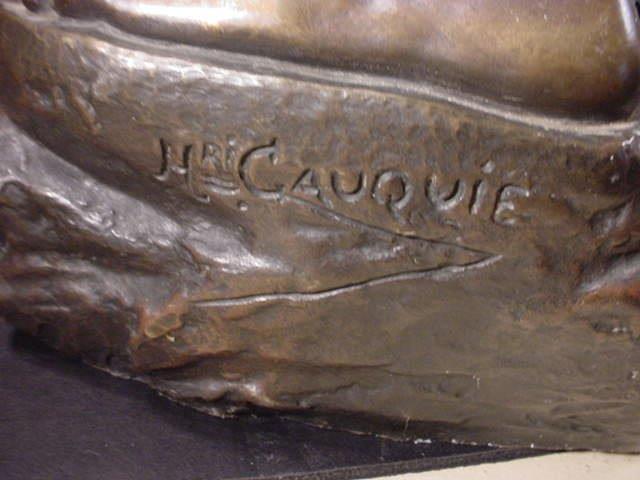
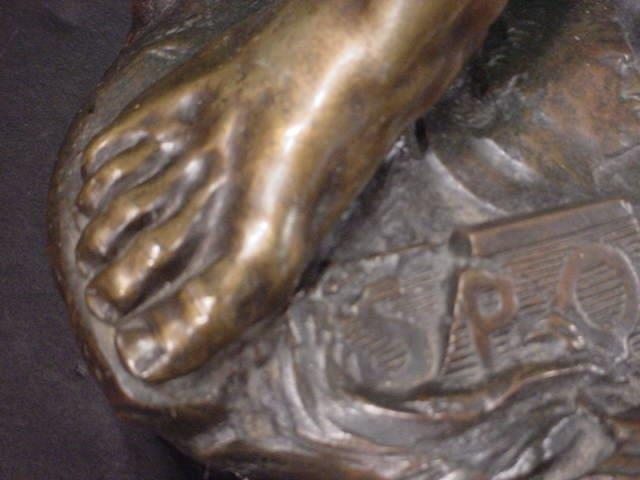
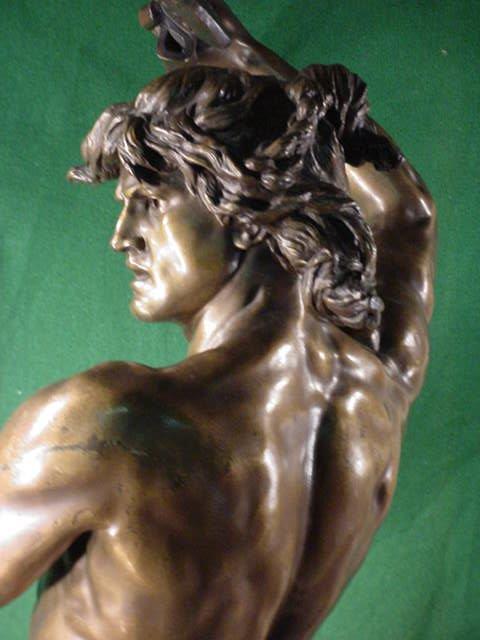
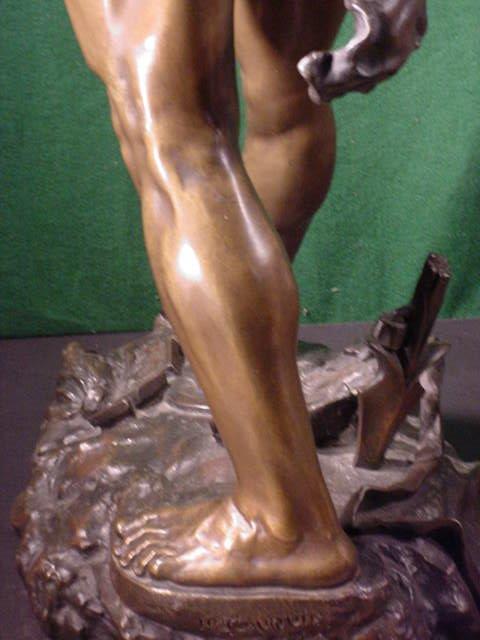
| DESCRIPTION: Here is what I would have to say is the sculpture that is my favorite of all the magnificent bronzes that we have ever acquired or owned in our personal collection. The subject is known as “Vae Victus” by famed sculptor Henri Désiré Gauquié (1858-1927). Born in the ancient French village of Flers-lez Lille, Henri Gauquié is well known for producing a number of small bronze statues and a large number of life-size monuments of people and animals in France. One of his famous horse sculptures is the equestrian statue of Marshal de Villens in Denain, a town between Lille and Valenciennes. It commemorates the Marshal’s victory at the Battle of Denain on 24 July 1712. A well-known monument to the French Baroque painter Jean-Antoine Watteau was created by him in 1896 in the Jardin du Luxembourg in Paris as collaboration in marble and bronze with the architect Henri Gillaume. Henri Gauquié died in Paris in 1929. He was certainly one of the finest and greatest sculptors that France ever produced and it was certainly the nation of sculptors. The Sculpture The depiction here by Gauquié is of a warrior of the Teutonic tribe known as the Cherusci, which, under the brilliant leadership of the chieftain Arminius, or Hermann, ambushed and decisively annihilated three Roman legions and auxiliaries which were led by Publius Quinctilius Varus. Varus was a noble from a patrician family which was related to the Imperial family. Varus’ name and deeds were well known beyond the Roman Empire because of his ruthlessness and crucifixion of insurgents. While he was feared by the people he was highly respected by the Roman Senate. On the Rhine he was in command of the XVII, XVIII, and XIX Legions. The great and bloody battle ensued after Varus attempted to enter and raid the Germania territory east of the Rhine River. After the tremendous loss during the Schlacht im Teutoburger Wald, the Battle of the Teutoburg Forest, the Roman Legions never again attempted to conquer the people in the east of the Rhine. Arminius was the son of the Cheruscan chief Segimerus and trained as a Roman military commander. He had lived in Rome as a hostage in his youth where he received a military education and obtained Roman citizenship and the status of equestrian knight before returning to Germania and defeating the Romans and after seeing to the unity of the Germanic tribes and to thwart Roman efforts to incorporate the German lands into the Empire. Then, in the year 9 AD, the Romans fell into a trap and ambush set by this ex-soldier of Rome who was still loyal to his original people. Twenty thousand of Rome’s finest soldiers were totally annihilated. Their commander, Varus, committed suicide by falling on his sword. Arminius’ success in destroying three crack legions and driving the Romans out of Germany was the single most devastating defeat that Rome had ever suffered in its history and was a high point of Germanic power for centuries. Roman attempts to reconquer Germany failed in every instance. The sculpture is magnificent. I have always been an ardent admirer of the sculptor Arno Brecker and Josef Thorak who were the official sculptors of the Third Reich. Thorak always created grandiose monuments and statues intended to represent the folk life of Germany that was under the NSDAP government. These works tended to be heroic in scale up to 65 feet in height. His official works from this period included a number of sculptures erected at the Berlin Olympic Stadium of 1936. His preference was for heroic statuary of Aryan man in the neoclassical nude and seminude depictions that practically portrayed these Aryan heroes as gods upon the earth. Certainly, this was the elite of the races of man. Perhaps it is because of my love of the art of Thorak and Brecker that I am transfixed and awed by this sculpture by Gauquié because I have never seen any bronze work of art that is so reminiscent of the work of those two German masters. The style is exactly the same right to the Aryan features and general physiognomy. The Teutonic warrior triumphantly holds high the captured Roman sword (gladius) as he treads into the forest floor. At his feet is the broken Roman-eagle standard with the letters “SPQR” the meaning of which in Latin is “The Senate and People of Rome” “Senatus Populus que Romanus.” Also thrust to the ground under the Teutonic feet is a plaque with the effigy of Emperor Augustus, who was so shaken by the news of the battle’s result that he stood butting his head against the walls of his palace repeating “Quintili Vare, legiones redde!,” “Quintilius Varus, give me back my legions!” This is a very large bronze. It measures 40 inches from the bottom of the base to the hand holding the sword. The measurement from the bottom of the base to the top of the warriors head is 36 inches. This statue summons all the utter ferocity of one of the world’s greatest and most prodigiously important battles that essentially stopped the moribund Roman empire from its eastward expansion and I think it shows the mettle of the German fighting men who many centuries later would be recognized in the German WWII Wehrmacht as we now know them. This statue can be a tribute to bravery and the constant struggle for freedom for western man. PRICE: SOLD |
/tr>
|
|
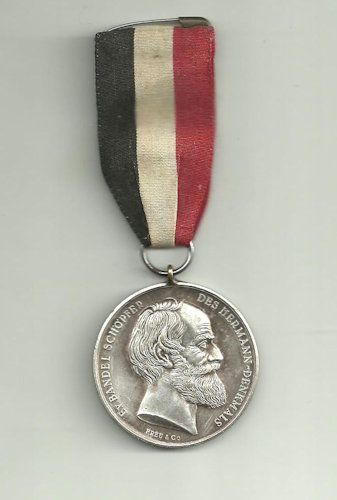
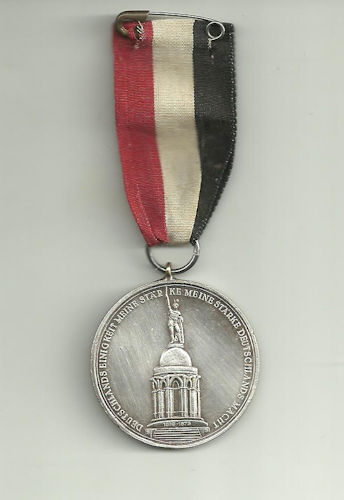
Medal Commemorating Ernst von Bandel, Creator of the Statue of Hermann the Liberator (Item ART 16-1b) |
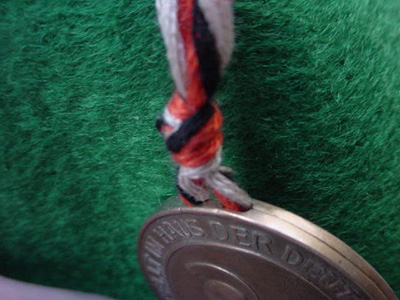
| DESCRIPTION: This is a beautiful medal in silver that commemorates one of the most dedicated sculptors of German history, Joseph Ernst von Bandel. This highly talented artist worked intensely for 38 years on the monumental Hermannsdenkmal (Hermann's Monument) near Detmold. It commemorates the Cherusci war chief Arminius (in German, Hermann) and his victory over Rome at the Battle of the Teutoburg Forest in 9 AD. Among the many highly prestigious projects von Bandel worked on were the Walhalla Memorial near Regensburg and the Berlin Royal Palace. He contributed to the interior of the palace and the Schlosskirche from 1837 to 1846. He worked on this lifelong dream of building the great statue. Bandel had to use his entire personal fortune to complete the monument. He went through many terrible hardships. But after the era of the Franco-Prussian War and the creation of the German Empire, the Reichstag and Emperor Wilhelm I provided the necessary funds for completion. König Wilhelm I awarded him a lifelong stipend of 4,000 thalers (German silver coins of the Holy Roman Empire) per year. However, Bandel had been weakened by intensive exposed work on the gigantic statue in heat and cold and he contracted kidney disease and died 25 September 1876. The Hermann Denkmal is deeply revered by admirers in Germany and throughout the world whenever courage, loyalty, and patriotism are respected and highly venerated. Hermann the Liberator and the great dedicated artist von Bandel will be gloriously lauded by the people of Imperium!!! The Medal The detail is most refined and is about the size of an American silver dollar: 1½ inches in diameter. On its observe is a bust portrait of E. v. Bandel that is accomplished in perfection, and around the edges is the inscription "E.v. BANDEL SCHÖPFER DES HERMANNS-DENKMAL" ("Creator of the Hermann Monument"). On the reverse is a gorgeous depiction of the monument with the words “DEUTSCHLANDS EINIGKEIT MEINE STÄRKE MEINE STÄRKE DEUTSCHLANDS MACHT" ("Germany's Unity is My Strength-My Strength is Germany's Might"). At the base of the monument, we see the date range 1838-1875. The medal is in next-to-mint condition and is suspended from a ribbon that contains Germany’s true patriotic colors: black, white, and red. The medal is signed "F.REU & Co." This is a very important historical collector's piece for the true Germanophile. PRICE: $375.00 |
 |
 |
 |
 |
 |
 |
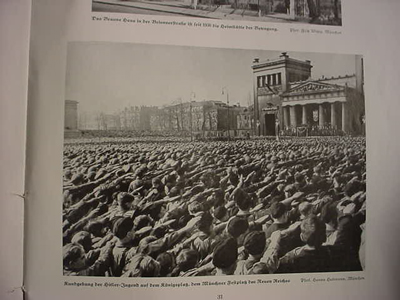
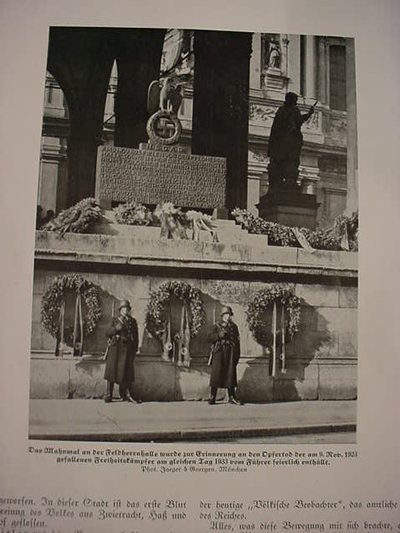 Feldherrenhalle - Sacred to the NSDAP |
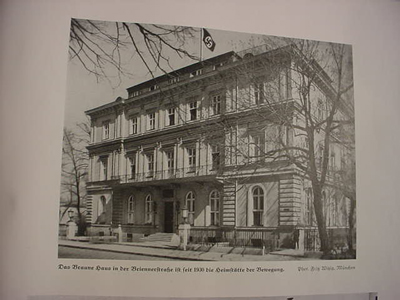 The Braunhaus |
 |
 |
 |
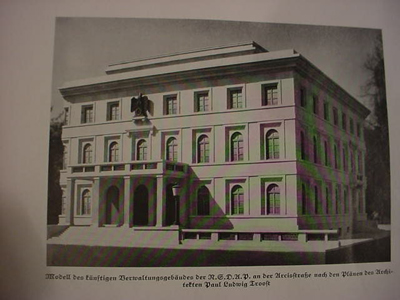
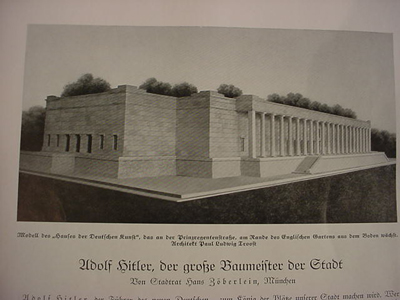 Model house of German art |
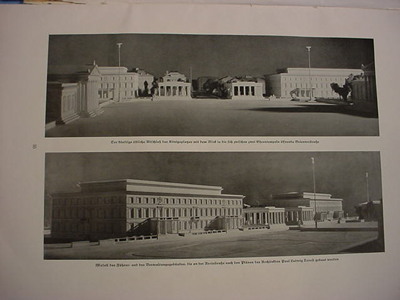 Der Heldenplatz |
 |
 Hitler's favorite artist |
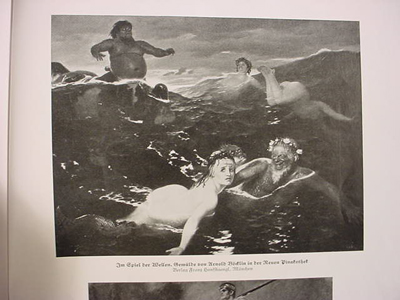 Sport of Waves -- Goebbel's favorite |
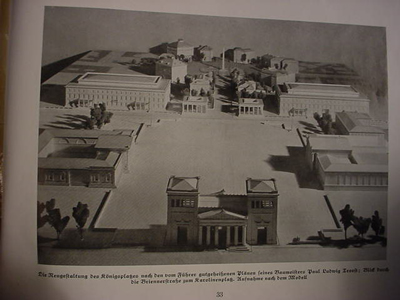
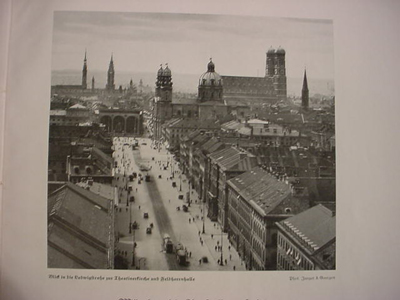 The route to Feldherrenhalle |
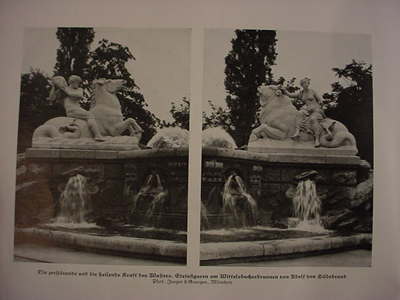 |
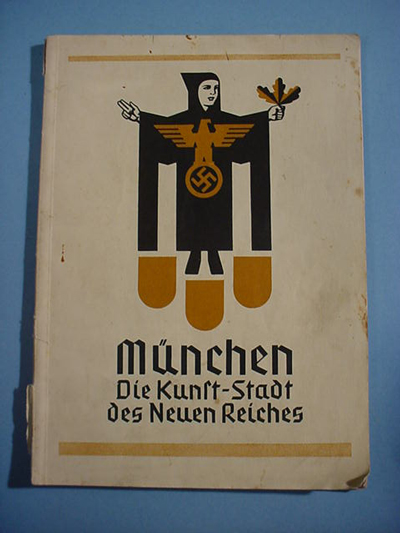
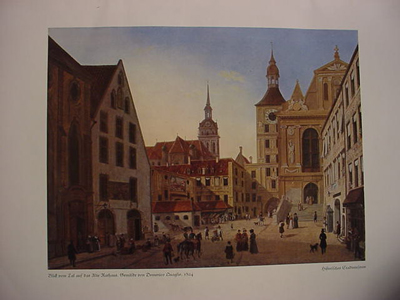
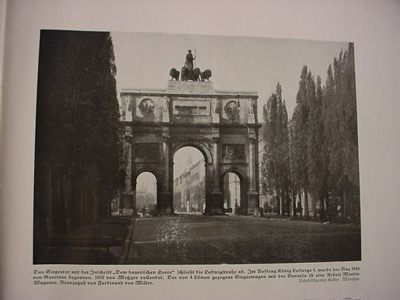
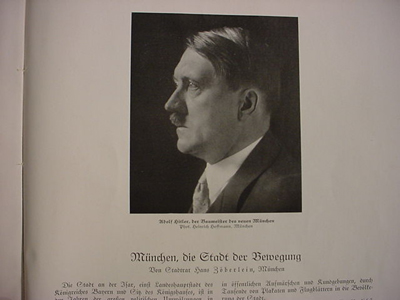
Book: Munchen Die Kunst-Stadt Des Neuen Reiches (Item ART 16-2 & GEN 14-7) |
|||
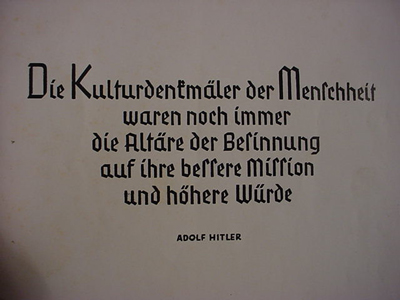
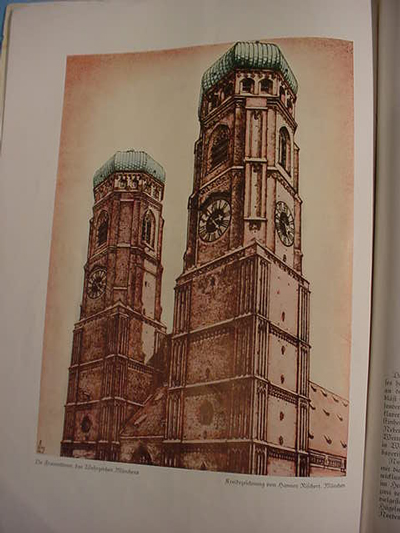
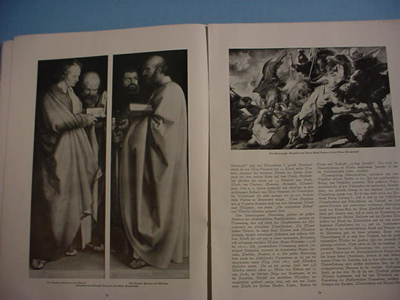
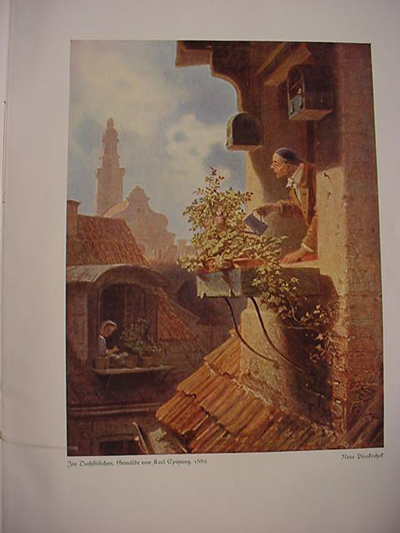
DESCRIPTION: Translated this means Munich the Art City of the New Reich. It contains 113 pages in a soft cover version measuring 9" x 12". The pages display scenes from Wagner’s operas, statuary, paintings, architecture of the old and the NS era. Several pages of Munich ads, etc. etc. This is really a beautiful volume just filled with the arts associated with this the “Hauptstadt der Bewegung” (Head city of the Movement-- by the way -- “My favorite city”). Some great color pages and spectacular clear black and white photos throughout. PRICE: SOLD |
|||
 |
 |
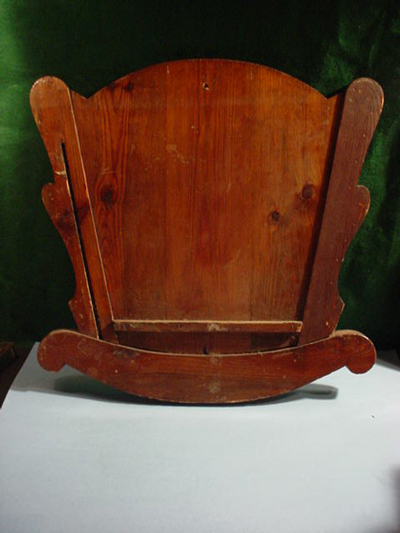 Backside view |
 |
 |
 |
 |
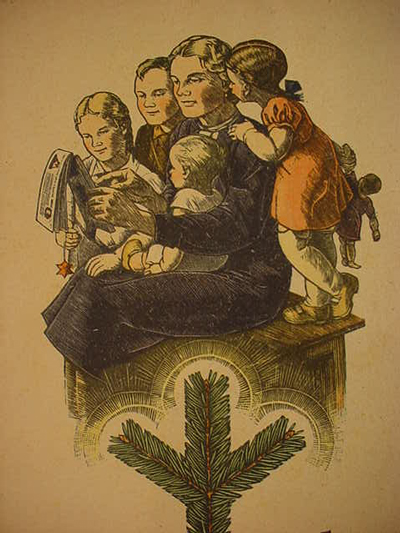
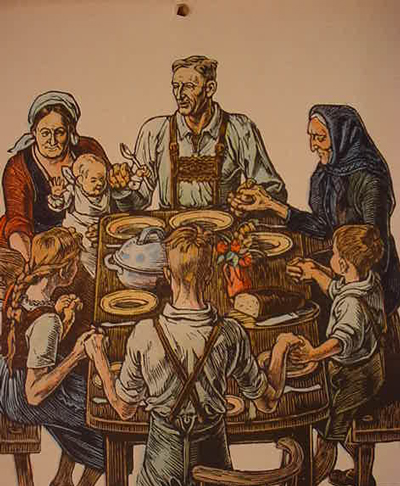 The German Family |
 |
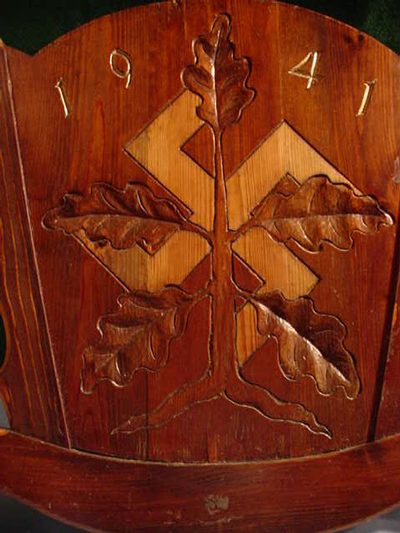
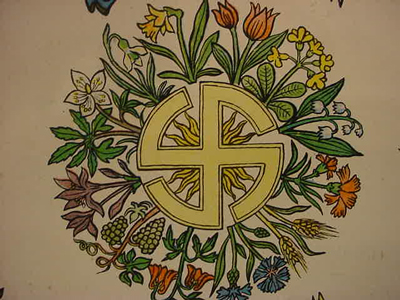 Der Sonnenrad Swastika |
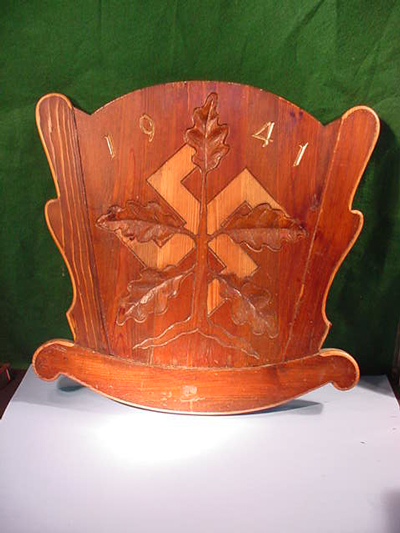
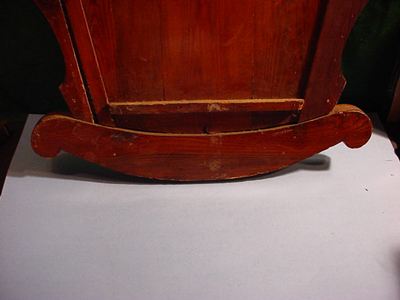
NS Baby Cradle (Item ART 16-3 & NSD 17-8) |
|||
DESCRIPTION: This is a real rarity and a treasure of a N.S. cultural item. To the National Socialists of the Third Reich nothing meant more than family and children. In essence, this was what it was all about -- the pride that German folk had in nurturing health, and Aryan perfection was the number one factor in art, music, and general culture -- it was of tantamount importance. (Raising supermen? Why not? Is not the striving for perfection a human desire? Wasn’t it practiced by the ancient Egyptians, the Spartans, the African Masai, and the Sioux Indians of the Plains, the Jews?) The idea is only degraded in liberal circles when it comes to Germans. Why? Well, we won’t go there at this point in time. Suffice it to say that liberalism has brought us the late unlamented Michael Jackson -- that is unlamented by those who do not admire child molesters and freaks of nature. “Tiny Tim” ... remember him? Here was a fine product of the new World Order. Stop! Don’t get me going! Now back to the cradle. This is not the complete cradle; it is only the important piece -- the foot of the child’s bed. This part was ordered to be made by a local village carpenter who was also a fairly good wood carver. The deep meaning is there for all to see. It was decorated with the theme of the National Socialist mythos and it was hoped that the symbolism might make a mystic and powerful totem that would transcend the usual mundane humanism and give glory to Nordic heritage and Aryan beginnings. This cradle board was produced in 1941. So the child, if still alive, would today be 68 years old. Lets hope he made it through al the bombing of the German cities and the massacre of German men, women and children in 1945 when the “gentle” Russian Allies began their devil dance of murder and mayhem throughout Europa. The theme of the decoration is the sprout of the young oak tree growing and being nurtured to the future when it would be a giant sturdy oak. The oak tree was sacred to the ancient Teutons and to the NS culture as well as the symbol of strength and nature’s beauty. The Hackenkreutz (Swastika) behind it symbolizes the spirit of the N.S. mythos that is tightly tied to the oak in meaning and presence. The message is quite clear that these parents were loyal Party members and wished that their child would also be imbibed with the spirit of the Party and loyalty to his Germany in his/her life. This is true NS culture. We speak from a historian’s viewpoint. This NS item is full of deeper meaning than any pair of Wehrmacht jackboots or an SA dagger. Unlike these rather usual and mundane objects or collectibles; this piece talks to us -- it is possibly the only remnant of the life of a Bewegungskinder “a child of the movement.” The piece measures about 32" wide and about 35" high for the educated collector of important NS cultural items, this is an incredible find. PRICE: SOLD |
|||
 |
 |
 |
 |
 |
 |
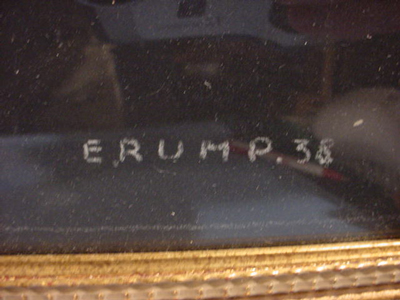 Artist's signature |
 |
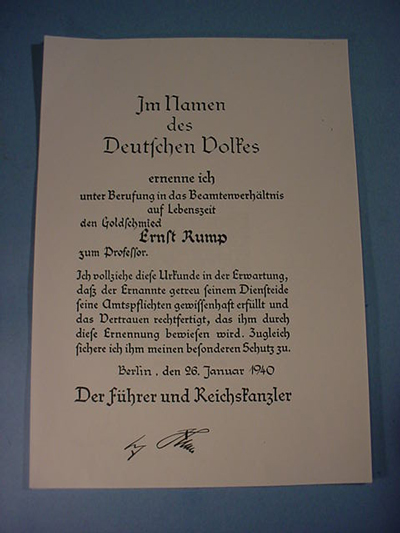 Professorship for Herr Rump |
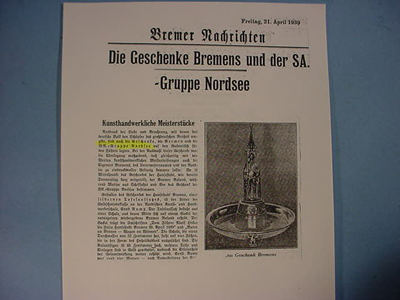 "The Gift from Bremen and the SA Group" |
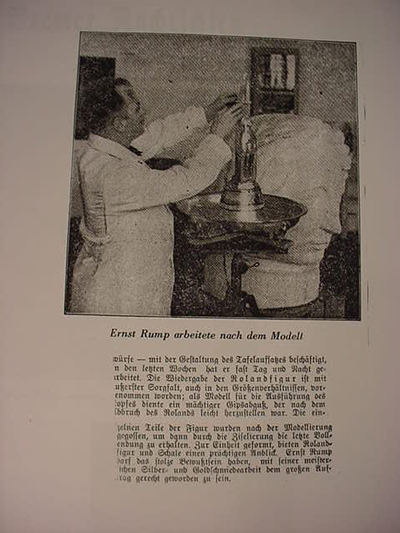 The artist at work on Hitler's birthday gift |
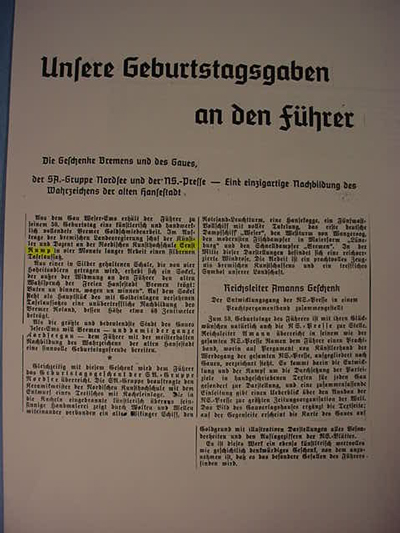 The story of the gift and Rump's artistry |
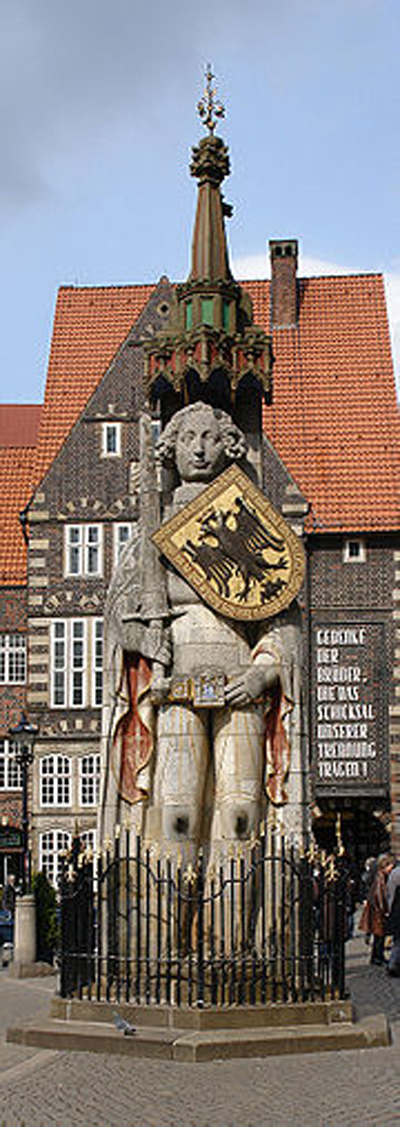 A great view of Roland |
 Another view of Roland |
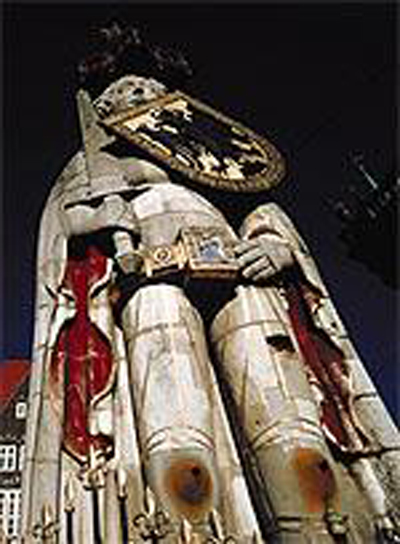 |
 Closer view of Roland |
 Roland statue in Bremen town square |
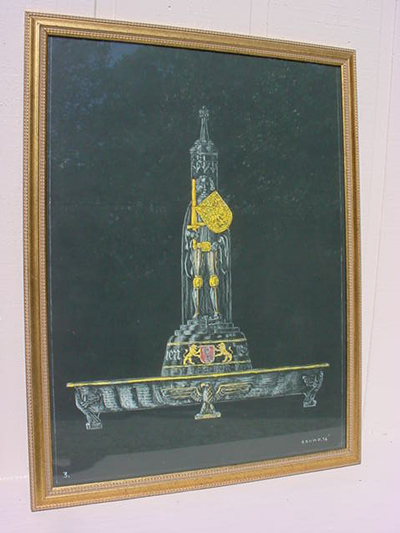
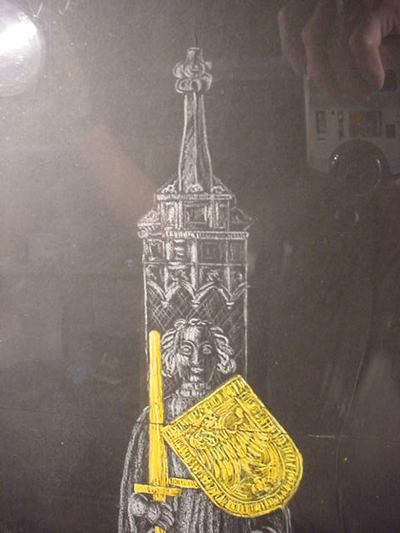
(Entwurf) Original Drawing by the Artist |
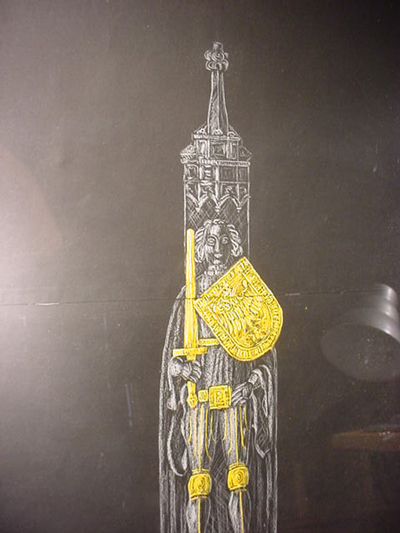
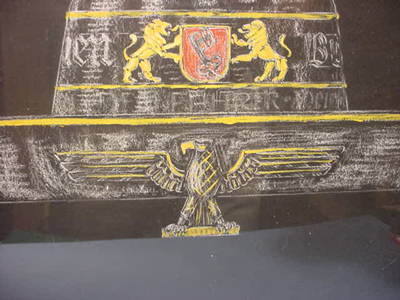
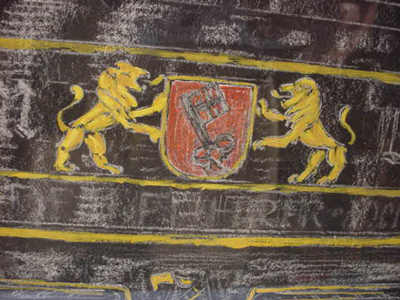
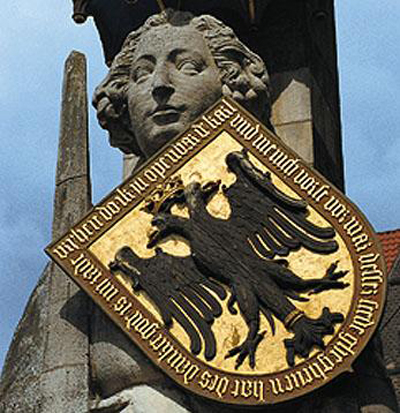
DESCRIPTION: This is for the true Germanophile. It is the original design hand rendered by the artist Herr Professor Ernst Rump. The statue that the drawing depicts is of a proposed sculpture of the hero Roland of Bremen that was about 60 cm in height and was crafted in silver. It was absolutely unique; no other was ever done. It was presented to Adolf Hitler on the occasion of his 50th.birthday. It was commissioned to be created by Ernst Rump, a quite famous gold and silversmith, by the Bremen Government and the dean of the north German art school. Rump created it in four months of intensive artistry. The Roland figure stood in the middle of a silver bowl with four legs and in front of the bowl you can see an eagle. The plinth bears the shield with the Bremen Wahlspruch. Several copied documents and news releases accompany the picture -- in one of them it is announced that “The largest city of Gau Wessser Ems wishes to please our Fuhrer with this magnificent creation, along with this we present to our leader a tea table with ceramic inlay from the SA Gruppe (Nordsee”). These ceramics depict clouds and waves with a Viking ship. The red-sand light house, a ship that is a 5 master sailing ship. And the first German steamer “Wesser”plus the western tower of the island of Wangerooge, the modern trawler “Luneberg” and the fast steamer “Bremen” in the center is a compass rosette. In another clipping it reads “New from Bremen April 21, 1939 concerning the presents from Bremen and the SA Sturm (Nordsee) masterpieces of art work made by hand. These presented yesterday were an expression of love and honor from the German people to the creator of the Greater German Reich” and thus are the presents that ended up on the presentation table for our Fuhrer. Great consideration was given to the idea and final selection of these particular presents to represent the relationship that Gau Wesser area had to North Sea area. The center piece is of course the model of Roland the Giant and other impressive items to show Bremen's connection to the North Sea. The creator of the present from the Hanse City Bremen is the silver table decoration produced by the leader of the North German Goldsmiths Guild, Ernst Rump. This piece consists of a bowl with a figure of Roland in the center and has the inscription: To our Fuhrer from the Free Hanse City of Bremen on April 20, 1939 this is “Buten und Binnen-Wagon und Winnen! This is Bremen dialect...it means – On seas and on land, on wagons, and ships! The bowl has a diameter of 52 cm. Several of the pieces are clad in gold to make it even more admirable. The framed “Entwurf” is huge, really huge 33 ½" x 26" and the frame is about 1 ½" thick all around. It is beautifully framed in a gold leaf frame. The glass is non-glare and it is backed with museum grade backing (using preservation methodology). Something about Roland: According to legend, Bremen will remain free and independent as long as the Roland statue stands watching the city. Roland was Charlemaignes Knight Errant. He was erected in 1404. He bears the sword Durendart (Justice)” and a shield decorated with the two headed Imperial Eagle. The statue is 5.47 mm tall and stands on a 60 cm rostrum. This brings the combined height to 16.21 m. Roland is the symbol of civil liberty and freedom. It is a great symbol and it can be understood clearly why the city and Ernst Rump chose this subject for the sculpture in silver to be presented to the Fuhrer. Ernst Rump was a celebrated artist in his time and even worked with the Deutsches Ahnenerbe on several projects. We are very proud to offer this original drawing from this talented artist of the 3rd Reich Remember: it is unique, one of a kind and should be in a museum or in a first class collection. PRICE: SOLD |
 |
 |
 |
 |
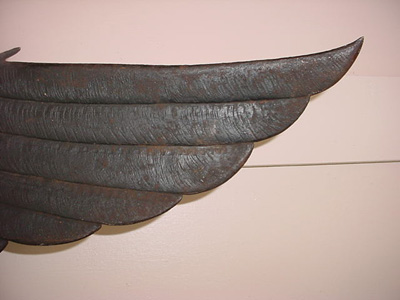 |
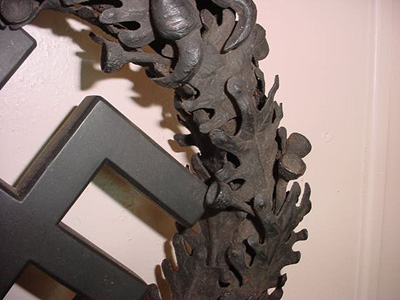 Look at superb detail |
 |
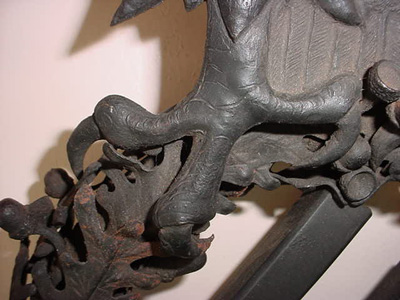 Look at the left claw |
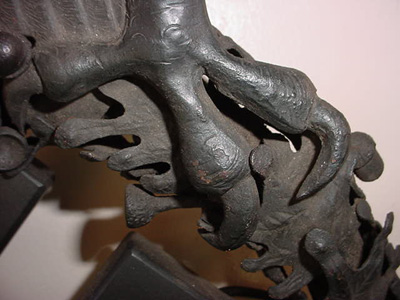 The right claw |
 Vertical bottom wreath tie |
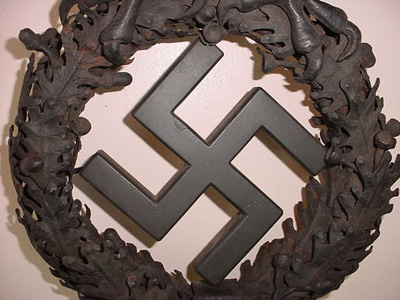 |
 Look at feather detail |
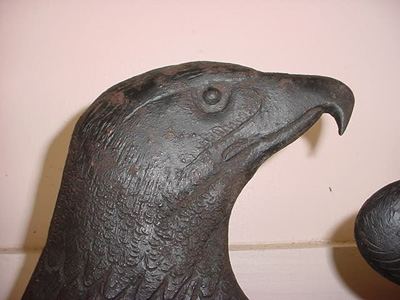 |
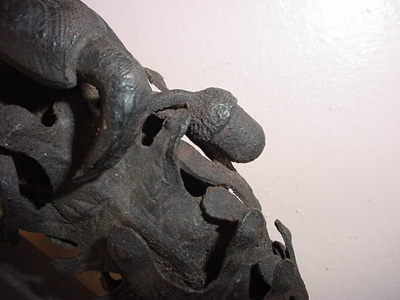 Acorns |
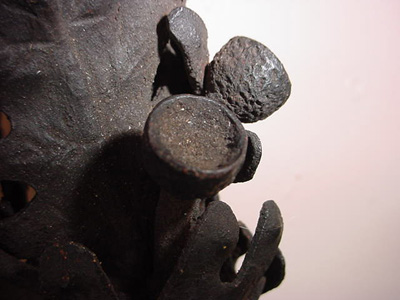 Opened acorns |
 |
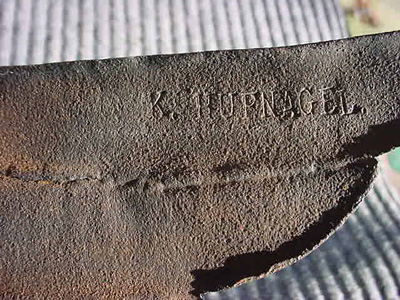 K. Hufnagel signature |
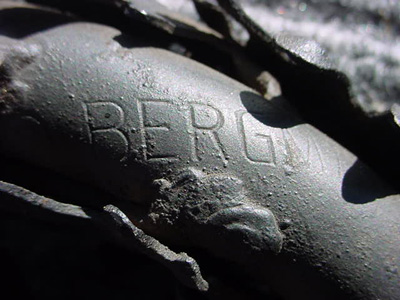 Bergmann signature |
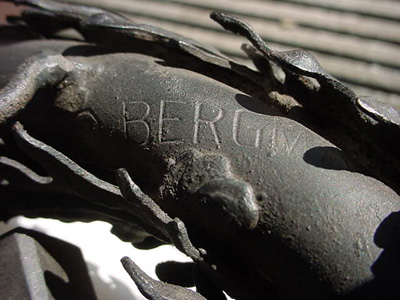 |
 |
 Backside |
 Vertical |
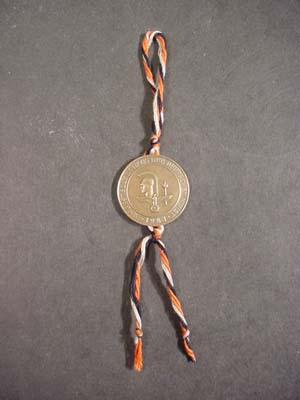 The proof medallion |
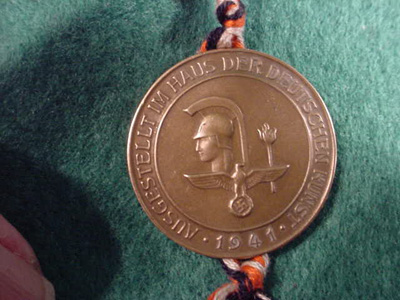 The medallion |
 |
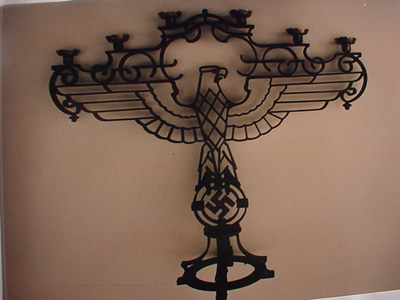 More NS iron art |
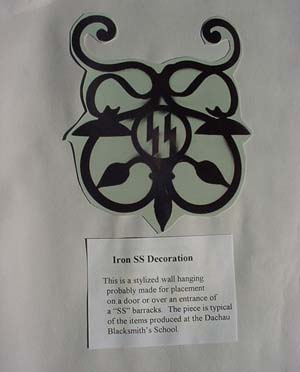 |
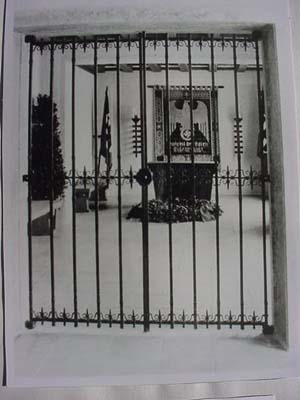 Town of Dachau SS Memorial |
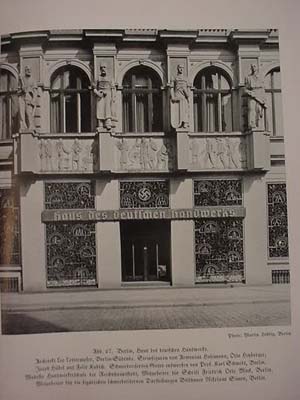 DHV offices in Berlin |
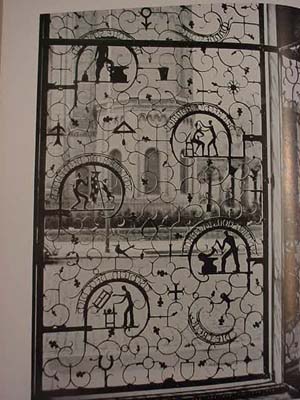 Wrought iron gate at DHV |
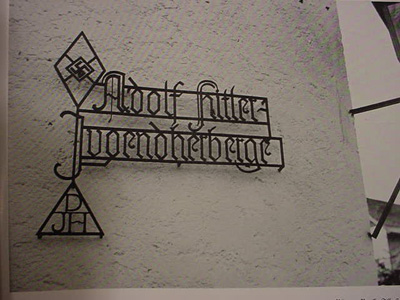 Iron art for H.J. |
 More iron work in 3rd Reich |
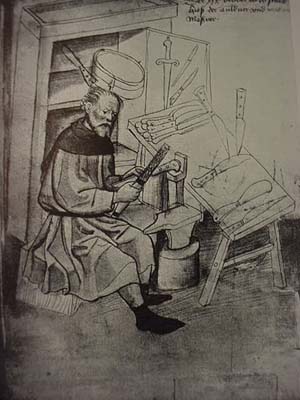 Iron art in middle ages |
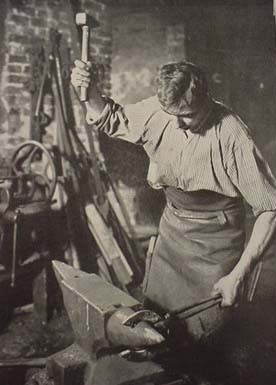 Iron worker |
 President of DHV with other officers |
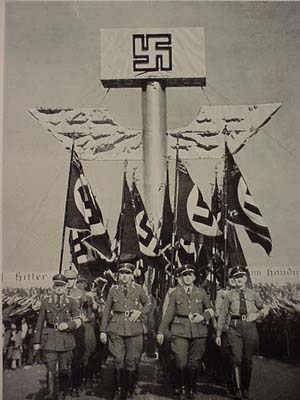 Hand Craftsman Day 1934 |
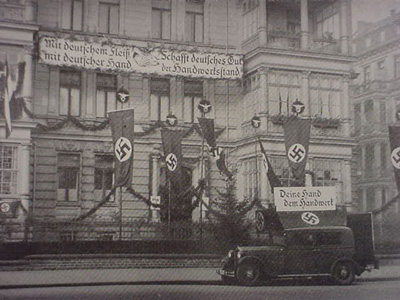
 Slogan of DHV |
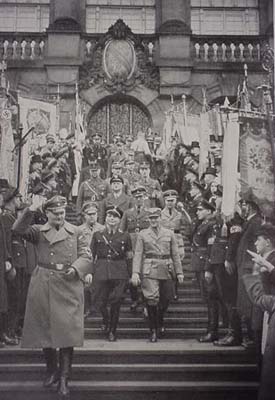 Leader of DHV at celebration |
 |
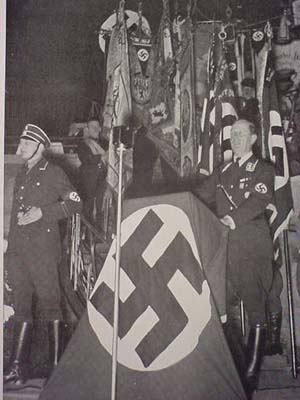 Dr. Schmidt at DHV meeting 1933 |
|
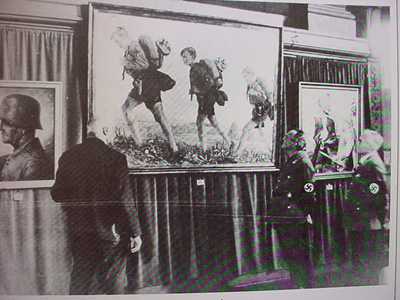 Inside museum |
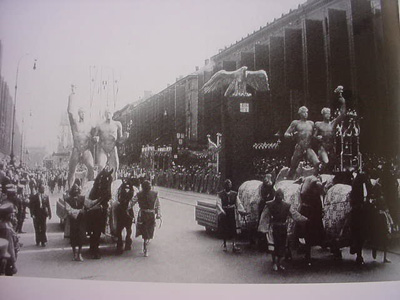 Parade for opening museum |
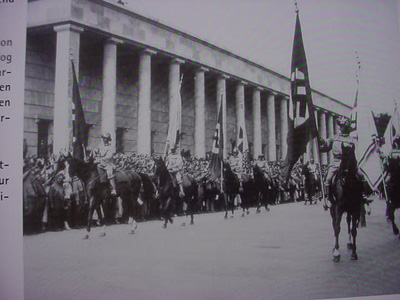
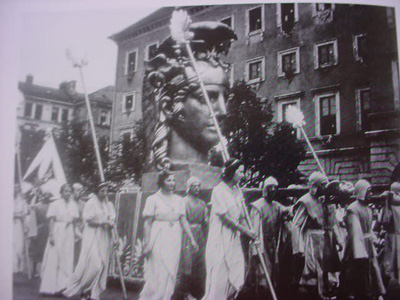 Parade: 2000 years of German art |
 |
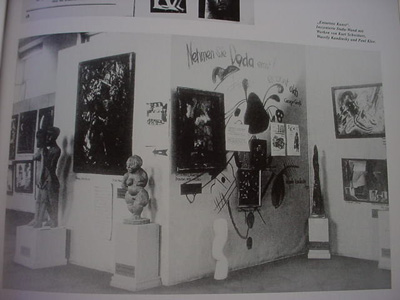 Display of degenerate art |
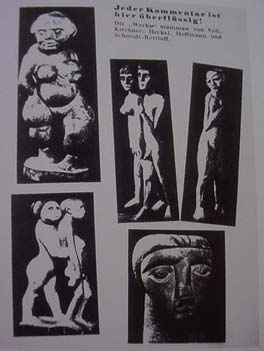 Degenerate art |
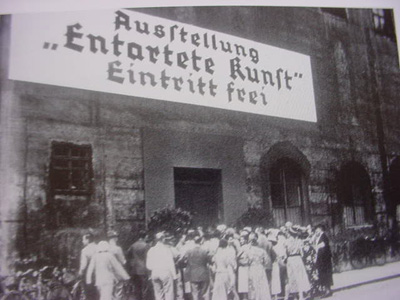 Exhibition of Degenerate Art -- Entrance Free! |
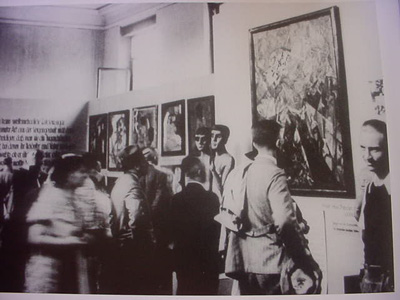 The garbage can art |
 Dedication opening in 1937 |
The Associated Degenerate Art Exhibition |
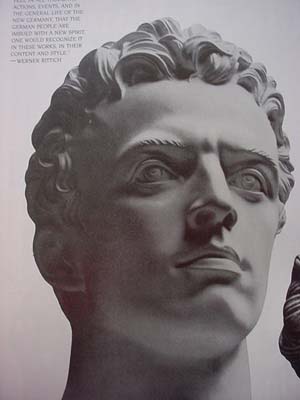 NS Art personified |
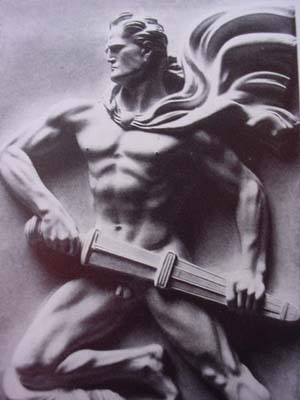 |
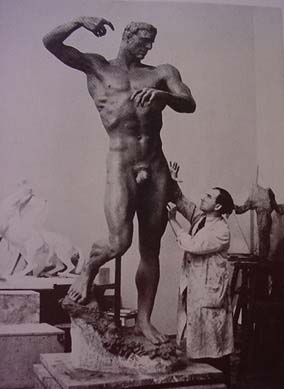 |
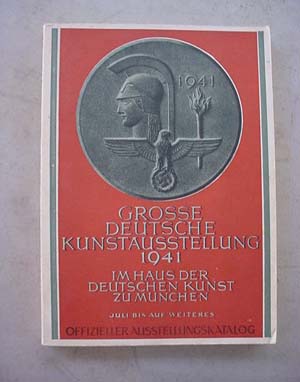 Museum exhibit book 1941 |
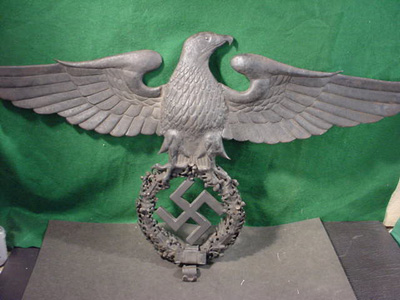 |
Iron Crafted Eagle (ITEM ART 16-7) |
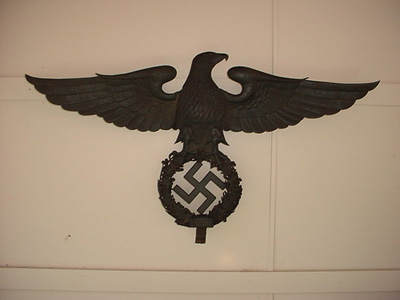
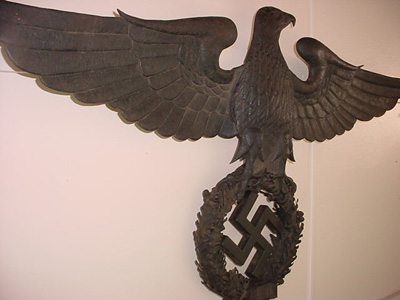
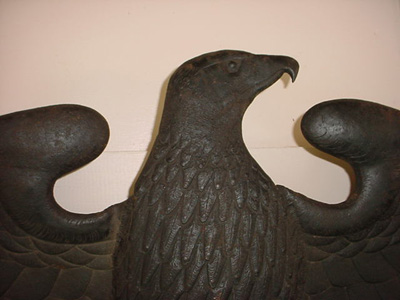
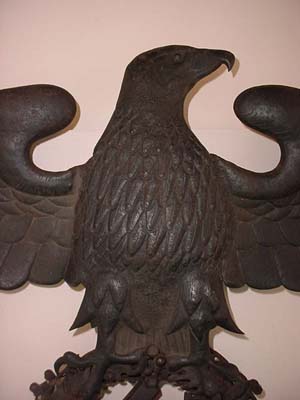
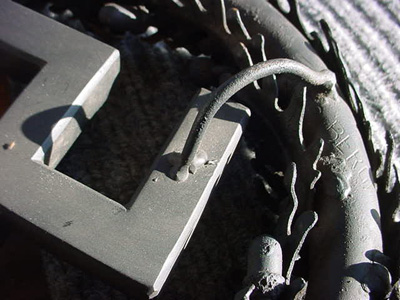
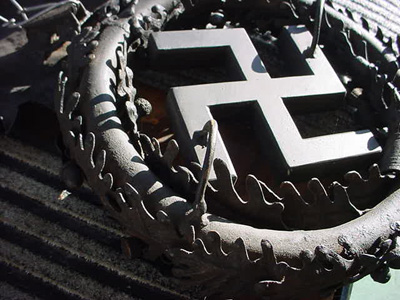
| DESCRIPTION: Tremendous!!! We now present what we feel is the absolutely greatest find in National Socialist inspired art to date. This iron crafted eagle is possibly one of the greatest pieces of German metal work art ever produced in the Third Reich. We have period books showing examples of such masterpieces but none are as fine as this one yet. This piece shows artistic mastery throughout, and we are sure it is entirely unique. It’s possible the eventual purpose was to hang in someone of the the official office's of the NSDAP, SA or SS eventually, but it also enjoys the fact that because of its artistic significance and consequence to the mythos of the Party and the fame of the artists involved, it was included in the collection and probably displayed at the Der Haus der Deutschen Kunst (House of German Art) in Munich. There is attached to it a special bronze tag that shows that this ironwork eagle was from this veritable treasure house of true realistic art (at that time!). Unfortunately today at that museum designed by Prof. Paul Troost one can expect to see the ultra modern art garbage that was referred to as “Entartete Kunst” (degenerate art).in the Third Reich. This was the trash that Hitler called a breeding ground of ‘cultural Bolshevism,’ “Political and cultural anarchy” on canvas and statuary. In other words some of the “dreck” produced by Picasso, Beckman, Kirchner and Grosz. After the assention of the NSDAP these ugly manifestations of filth and degeneracy were taken all through Germany to be displayed.with the purpose of comparison with true Aryan art. It was shown alongside the first annual ‘Great German Art Exhibition of National Socialist.' Inspired and approved art that was thoroughly traditional in concept and technique. Wonderful canvases showing Nordic humanity, heroism, and the glory of the Aryan race. Bronze statues by Professor Thorak, Arno Brecker and other famed sculptors. were revealed to an adoring German public. There was an important wing in the museum and in the traveling exhibition that included the ornamental and culturally important themes that were created in iron. ‘Iron’ the very word ‘Eisen’ in German invokes deep significance in the German psyche. Iron Cross, Iron Chancellor, Iron Time, songs, and poems are brought to mind at the mention of the word. More than in any other nation Iron was revered and considered sacred in the sagas of the Teutonic peoples, and the artistic pursuits while working with this sacred metal, in jewelry, sculpture, architectural offerings were almost exclusively ‘Germanic’. A great patriotic song is heard wherever True Teutons would gather ‘Der Gott Der Eisen Wachsen Liess. (The God who let Iron grow!) And it goes on to say that this God will tolerate no slaves. This song by Ernst Moritz Arndt personifies the patriotic fervor incited by even the thought of Iron. So with this said perhaps we can get a grasp on the importance of this manifestation of the iron craft. The piece is doubly significant in that it is not only a great artistic achievement but it also depicts the national symbol embodied in the earliest form of the N.S eagle. This was the eagle of the ‘Kampfzeit’ the turbulent time of the struggle for power by the NSDAP. We believe it was meant in this form to commemorate that early time but also to be a reminder of the fallen of the movement to Red Front and Reaction to quote the main stanza from the “Horst Wessel anthem” DieFahne Hoch (Raise the Banner). The eagle is fashioned from various separate pieces of strip iron all welded together in the finished master work. The two artists who produced it were surely quite noted in this style of iron work. They belonged to the N.S. group known as the German handworkers organization Deutscher Handwerkers Verein (DHV). This was a very important functionary organization that was a great and respected branch of the National Socialist program of cultural achievement and education. The group was a section of the parent organization known as the DAF, Deutsches Arbeits Front headed by Dr, Robert Ley who said in a early speech and we quote “ The duty of the labor service Arbeitsdienst would inculcate in the German people the realization that manual work was anything but disgraceful, in fact labor actually ennobles our people so the NS government did everything to encourage the propagation of skilled workers and especially gifted artists who produced hand wrought artistic items and such items that glorified the mission and agenda of the Third Reich were especially valued! In our attached images is a rare picture of the main office of the DHV and pictures of the NS officials that headed this organization. The two artists who produced this Iron national eagle were certainly such skilled artisans ‘The tip of the eagles wing at the back is signed K. Hufnagel and in the wreath it is signed Bergmann. The eagle is huge! Measuring 47 inches from wing tip to wing tip the measurement from the top of the eagles head to the bottom of the scroll that is part of the wreath is 23 inches the work that was all done by hand is really astounding, every one of the chest and wing feathers are detailed to the full extent. The wreath is wonderfully incredible with every single oak leaf worked, affixed and engraved by these artists. We hope with our pictures that we are able to help you to perceive the absolute artistic genius that went into this effort. The acorns are completely realistic with some closed and others with their tops open just as they would be in nature. The swastika is cut from one thick sheet of metal and is bold and ultimately dramatic. The eagles claws are lethal looking and beautifully depicted. This artistic achievement is probably the most important piece historically and the most beautiful we have ever acquired or even seen. PRICE: SOLD |
 |
 |
 |
 |
 |
 |
 |
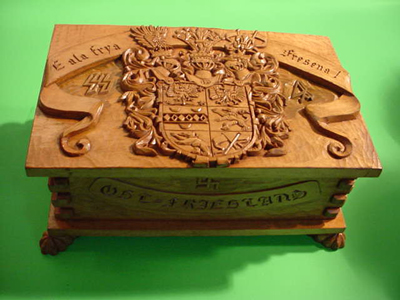
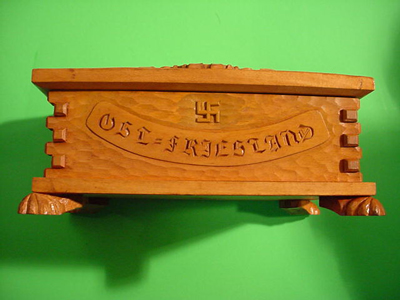
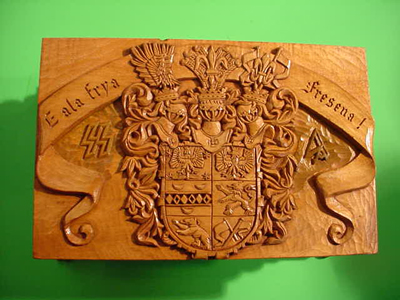
Carved Box from Ost Friesland (Item ART 16-8 & GEN 14-12) |
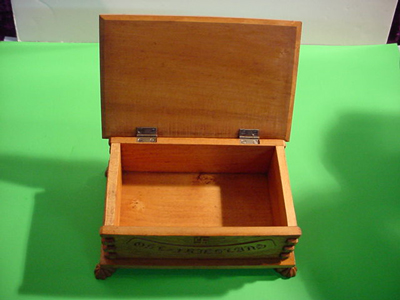
DESCRIPTION: This beautiful hand carved wooden box is from east Frisia in Northern Germany. The motto on the top of the box over the Frisian Coat of Arms is interpreted as “Stand Up Free Frisians.” According to 16th century sources it was first spoken at the “Upstalsborn” in Aurich where Frisian Judges met during Pentecost and is traditionally answered with “lever dood as Slav” or in English rather dead than slaves. Tthe motto refers to the legendary “Frisian Freedom,” a right to accept no rule besides that which comes from the Holy Roman Emperor and the Christian God! In 1933 however the Frisians still obeyed their God but now the Emperor was replaced by Adolf Hitler who they adored and of course their motto stayed the same. This box was owned by a loyal NSDAP member who serve in the SA Standarte commanded by Anton Bleeker in Aurich in Oldenburg Ostfriesland. He was as his family relates involved in the raids against the ritual slaughter establishments in Aurich, all the “Schachtmesser” establishments named after the killing knife were all were burned to the ground. This was orchestrated on the orders of the Gauleiter Karl Rover later this man was transferred to the SS and served as a guard at the Sachsenhausen concentration camp. The box was according to his family used to store his letters that he received while a guard at the camp and some pins and awards he received while in the SA and SS. The family for personal reasons retained all of this and destroyed some of it for fear of post war edicts. The measurement is 9 ½ inches long across the top, 6 inches wide and 4 inches deep. Besides the beautiful Coat of Arms on the top, the front panel has a scroll with Ost Friesland under a swastika. The box is beautifully dovetailed with decorative feet underneath. The carved SS and SA symbols are carved as a matter of his intense pride of membership in both organizations. The carving was accomplished by a master and of course the historical importance is obvious. It was hidden away for 65 years and only recently did members of the family decide to sell it. The intense pride of their ancestor was long gone among these modern reeducated Slav’s and they made a decision that perhaps it was better to be a slave than to stand up for those old Friesian values in this “New World Order” generation! PRICE: SOLD |
 |
 |
 |
 |
 |
 |
 |
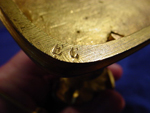 The only markings |
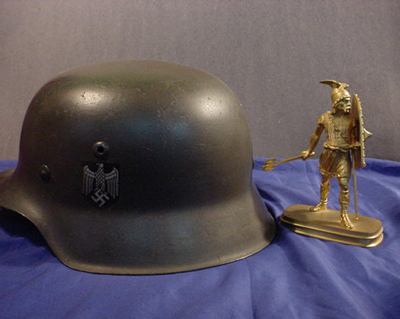 Helmet placed for perspective |
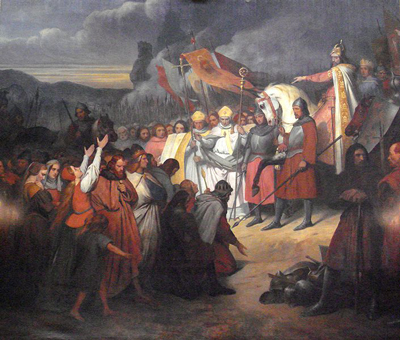 Charlemagne receiving the submission of Witukind at Paderborn in 785 |
 Widukund the Blessed after his conversion |
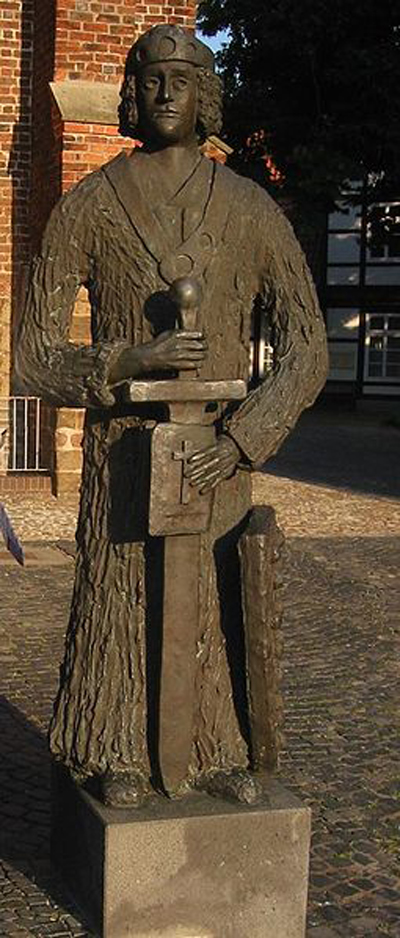
 Statue of Widukund in Herford |
 Widukund in the Hall of Battles at Versailles |
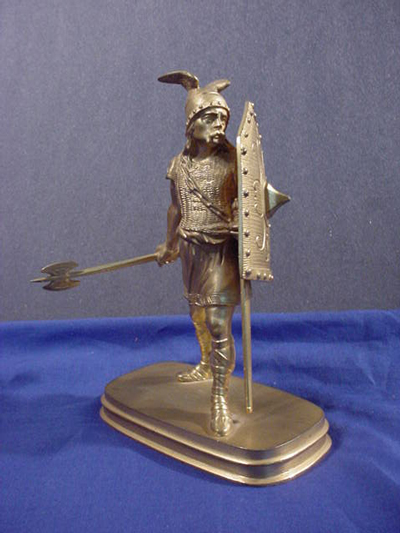
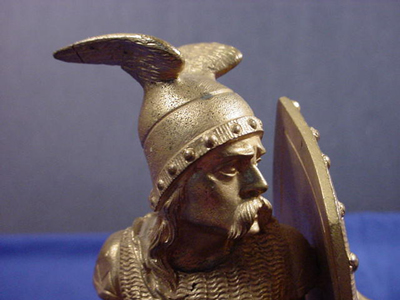
Widukund Saxon Chief Statue in Bronze (Item ART 16-9 & OLD 7-6) |
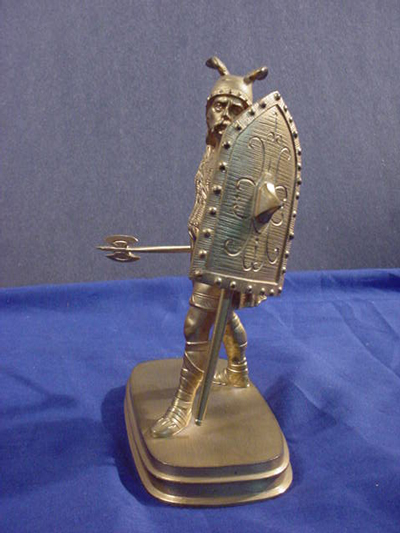
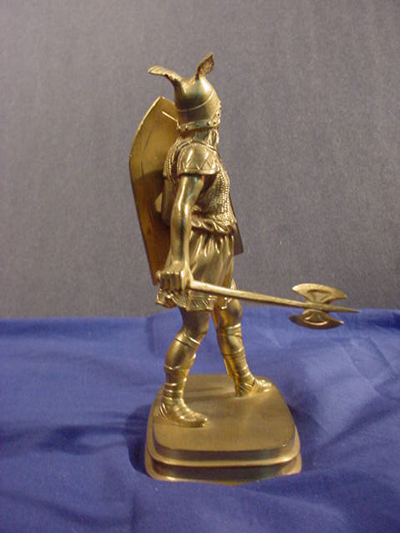
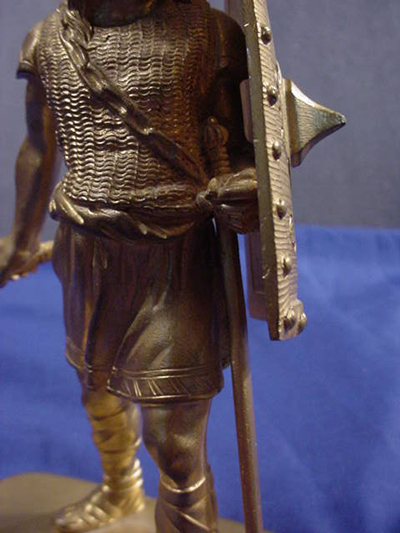
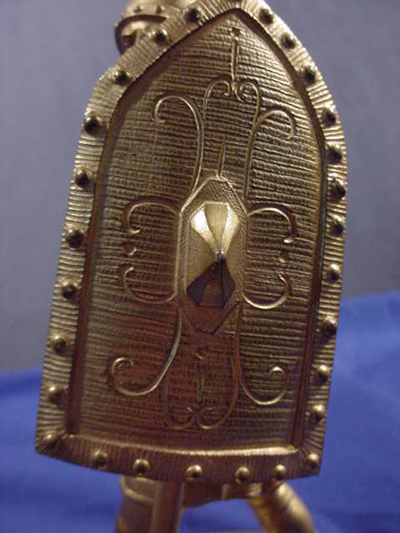
DESCRIPTION: A beautiful gold washed bronze of the Saxon Chief Widukund. Very little is known about the life of Widukund. All sources about him stem from his enemies, the Franks, who painted a negative picture of him as an insurgent and a ‘traitor.’ He was first mentioned in 777 when he was the only one of the Saxon nobles not to appear at Charlemagne's court in Paderborn. His circa is 730-808 and after the Saxon Frankish wars and forced baptism he became known as “Blessed Widukind.” He was the chief antagonist of Charlemagne during these bloody wars. He married Geva of Westford c.770-800, daughter of the Danish king Goimo I and sister of the Danish kings Ragnar and Siegfried. Widukund was the moving spirit in the struggles of the Saxons for their independence and continuation of their traditional faith. Frankish accounts of the Saxon wars give only scant outlines of his character. After Charlemagne subdued the Saxons in 777, Widukund found refurge with his wife’s relatives in Denmark. When Charlemagne went to Spain in 77, Widukund returned and revived the rebellion, and the Saxons raided Frankish regions. Several more times Widukund had to flee, and eventually Charlemagne subdued the Saxons and inflicted terrible punishment at the Blood Verdict of Verden where 4,500 tribal leaders were allegedly beheaded. The bitter struggles involved Wends and Frisians as well and continued until Charlemagne succeeded forcefully with threats of genocide against his people, persuaded Widukund to accept Christianity. Widukund was baptized in 785 along with many of his people at Attigny. The Pope ordered a general feast of thanksgiving. Widukund took no part in further Saxon wars. He soon became one of the heroes of legend and eventually appeared as a saintly figure becoming “Blessed Widukund” and the builder of many churches. He is believed to have been buried at Engernea Herford around 808. However, the monumental tablet in the church of Enger is not from the 9th century, and so it is doubtful if the corpse inside is actually that of Widukund. This once bitter foe of Charlemagne, thus became his friend and godson. His feast day is commemorated on January 7. According to myth, Widukund rode a black horse before his baptism and a white horse afterwards. The black horse is depicted in the coat of arms of the district of Hereford, while his white horse is depicted on the flags of the North Rhine-Westphalia and Lower states of Germany. Widukund is also a Dutch fraternity located in Nijmegen which was founded in 1945. The controversy reached into the conversations between Adolf Hitler and SS Reichsfuhrer Heinrich Himmler. Hitler thought that Charlemagne’s deeds were necessary so as to advance civilization and intellectual progress of the Aryan race at that point in time. Certainly it marked an event that did much to change the course of history. This bronze statue of the Saxon hero is quite beautiful indeed. He is shown with axe and shield standing defiantely against the usurpers of Germanic ‘Kultur.” His winged helmet is almost a declaration of war in itself! He wears a tunic of chained mail, his sword hangs at his side under the shield suspended by a chain hanger. He stands about 6 inches high with the base. The gilting is 100% intact. A beautiful bronze sculpture and a beautiful symbol of righteous defiance against a cruel and powerful enemy. “The Tea Party on steroids!” Widukund only knelt before Karl the Great to save his people from anillation. His honor, bravery, and selfless leadership will be remembered in the annals of history. He was like Hermann the Cheruskin -- a hero of the Volk! Small but dynamic! One of the better bronzes we have ever seen. PRICE: $2,150.00; Special sale! Consigner is willing to take $1,650.00 |
 |
 |
 |
 |
 |
 |
 |
 |
 |
 |
 |
 |
 The artist |
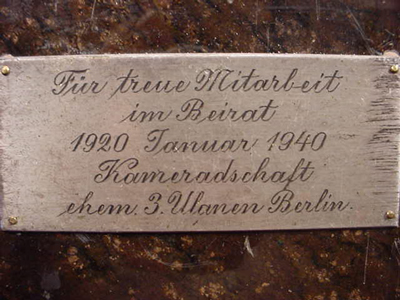 The plaque |
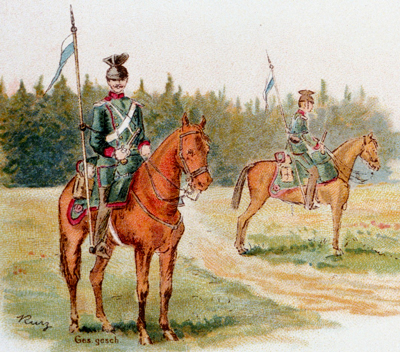 Ulanen on patrol |
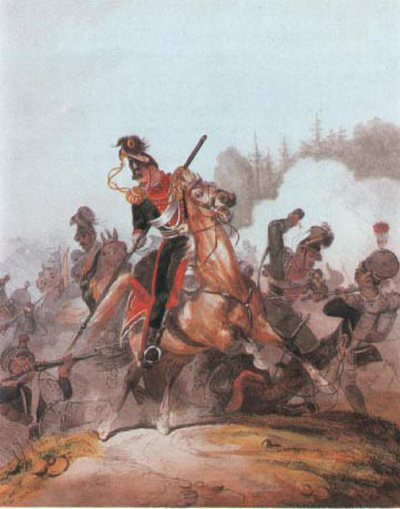 Ulan in early combat |
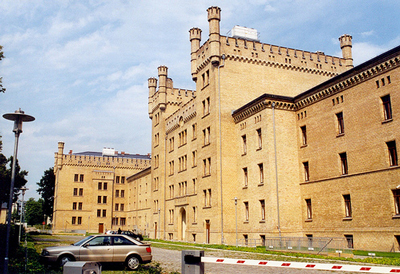 Third Garde Ulanen Kaserne in Berlin |
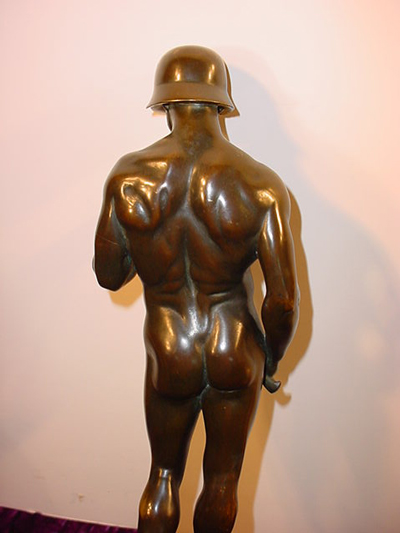
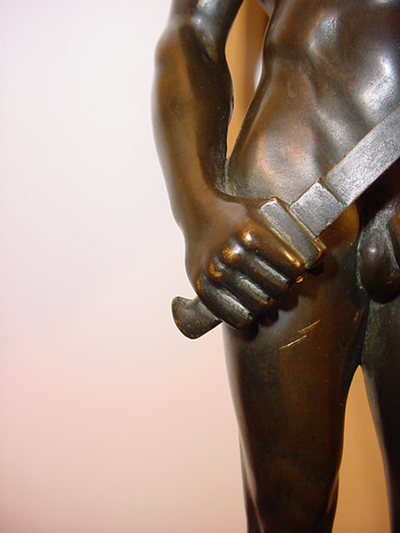
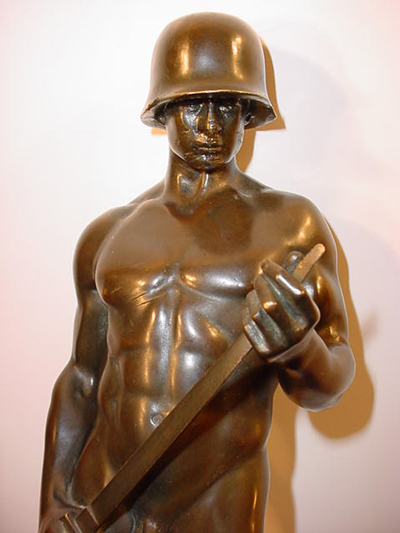
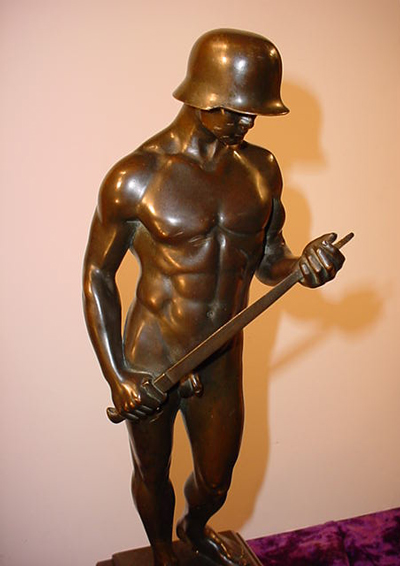
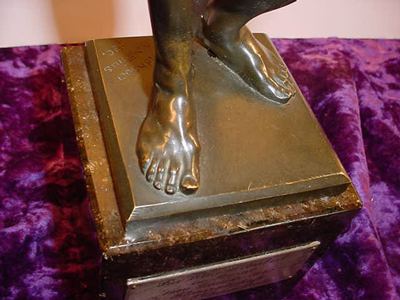
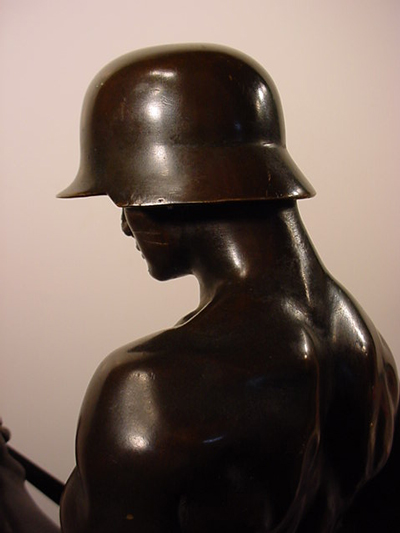
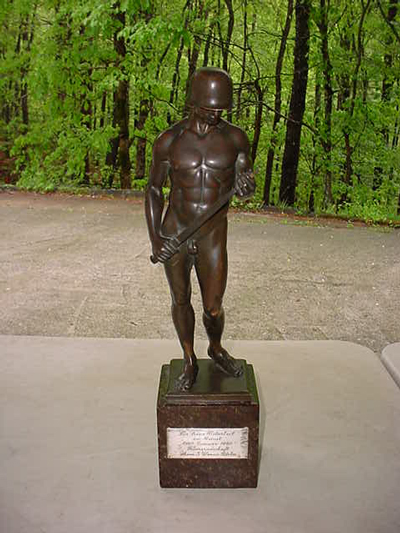
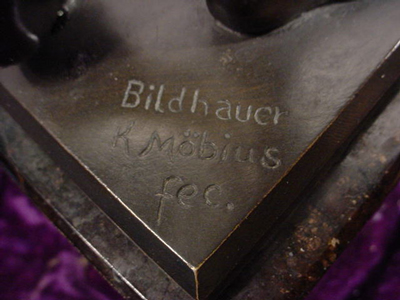
Bronze Soldier of the Reich (Item ART 16-10, WWI 12-2, KSTATUE 5-6, WEHR 31-14) |
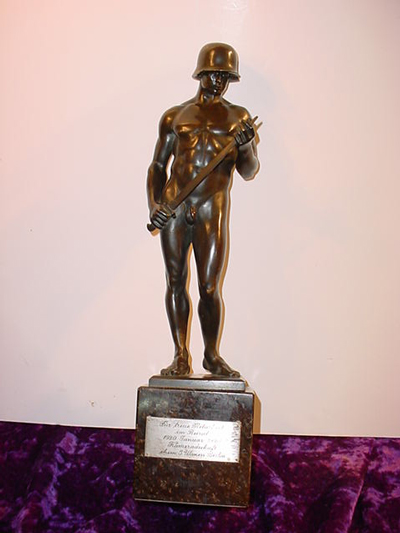
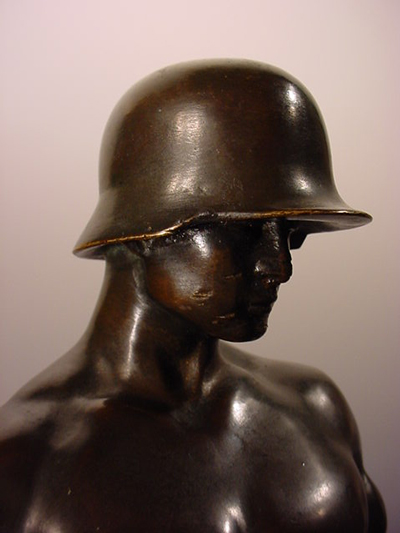
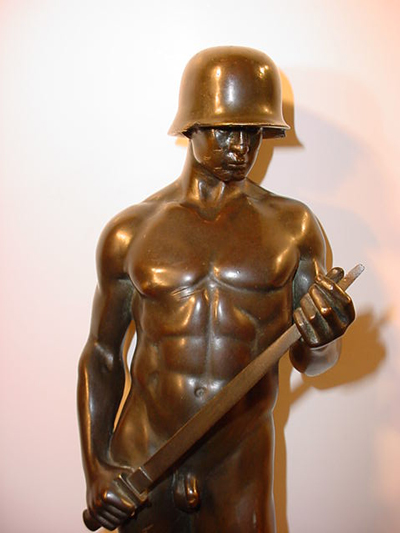
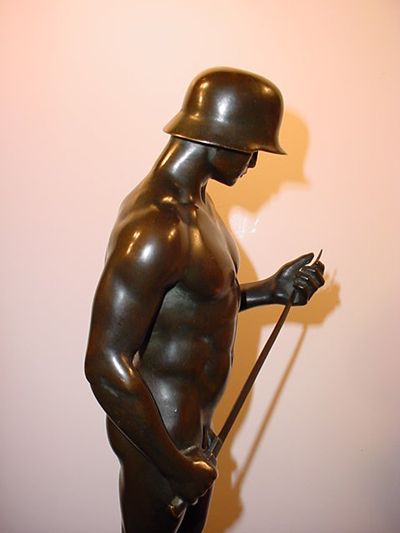
DESCRIPTION: This marvelous statue measuring 13 ½ inches high with a base 4 ½ inches square (length and depth) personifies the strength and determination of the “Deutscher Soldat” from the time of the battle of the Teutoberg Forest up through the pages of history and into the 2nd World War. The slogan that might go with this wonderful sculpture could be “Die Ganze Welt Gegen Uns”! The whole world against us! Yes, Germany in the embodiment of the Heilege Vaterland was always to protect Europe against the constant incursions from the east against the Magyars, Huns ,Goths, and Visagoths and even the moribund Roman Empire. The land of Germania and its Teutonic Volk took on all comers. It was no different in the 2nd World War when Germany with a few allies stood against the Maelstrom in what was a German led crusade to destroy the beast of Bolshevism before all of Europe was disseminated by what President Regan later called the Evil Empire. Tthis was truly “evil personified! “ And in this author's perception, all the nations who joined in the fight to preserve communism and crush Germany were the acolytes of Stalin and Tito and obviously Satan*. (*Authors historic opinion.) The statue you see here tells of a saga that we have briefly touched upon in the forgoing narrative. As this Warrior stands naked before the world, the artist who sculpted him conveys in statuary the defeated yet proud and militant German soldier who wears the Stalhelm (steel helmet) and makes ready the sword of Siegfried known as Nothung for the next time the call of the besieged Fatherland is heard. We readily admit that all of this will only be understood and honored by Germanophiles, but we can envision all the deep meaning that this artistic masterpiece conveys. Nothing else that we have ever offered or seen offered comes up to the artistic expression and important significance of this prodigiously important piece. Its historical importance is magnificently conveyed. This statue which may actually be unique; it is a presentation piece to an officer who was “Beirat” (military advisor) to the Third Ulan battalion in Berlin. This wonderful gift was from the Kameradschaft (comrades) and presented to him for his true service to the Batt. From 1920 to 1940 this illustrious unit was the Third Guard Uhlan regiment and in WW 2 the Uhlans became armored divisions and covered themselves with glory in the early campaigns in Poland and the military engagements against France and Russia. The sculpture weighs about 14 pounds with the marble plinth and is in perfect condition with a gorgeous patina throughout. Deutschland Uber Alles ! PRICE: SOLD |
 |
 |
 "Unity of the German People |
 and the Direction |
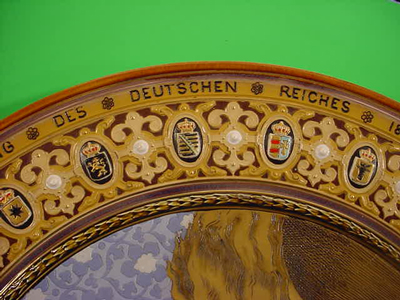 of the German Reich" |
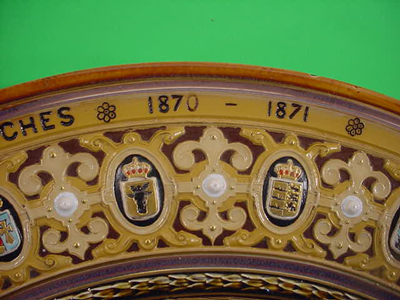 |
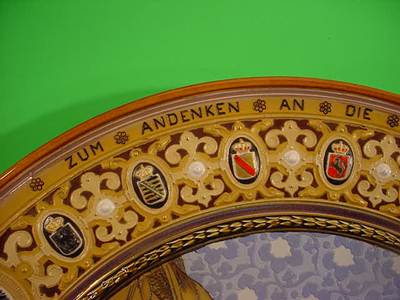 "The Memory of the |
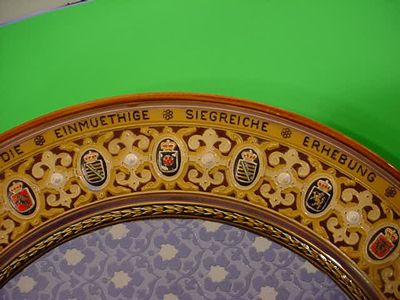 Emergence, Victorious, Unity" |
 |
 German Reich 1870 |
 The various municipalities |
 |
 |
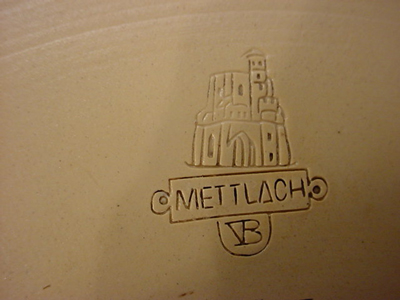 The Mettlach mark |
 |
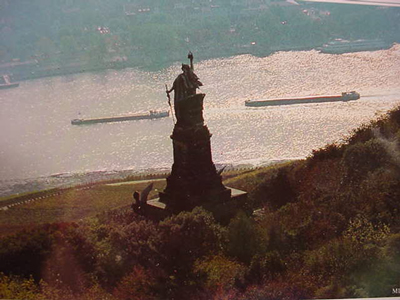 "Wacht am Rhine" |
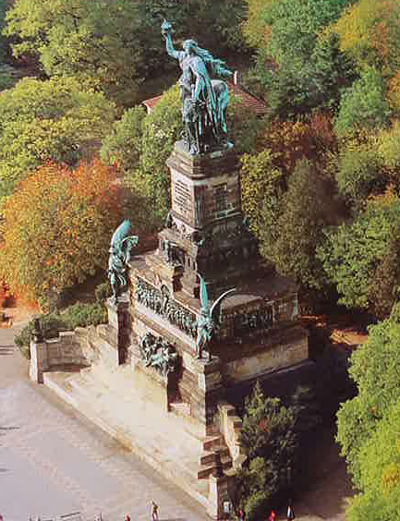 |
 |
 |
 |
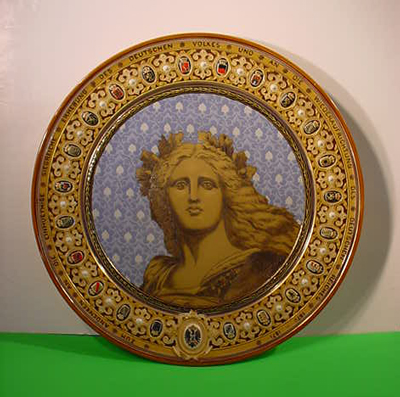
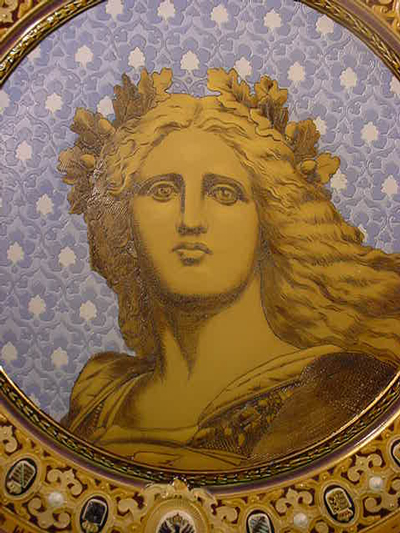
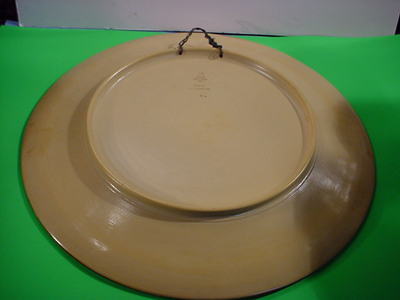
Germania International, LLC Presents a Mettlach Charger Depicting Germania (Item ART 16-11 & KGLASS 3-8) |
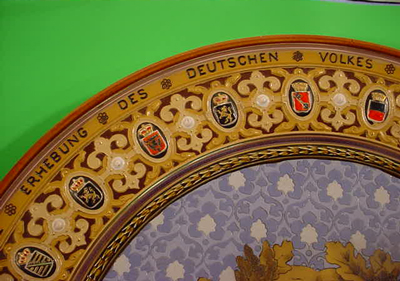
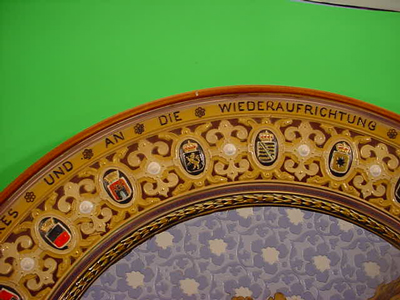
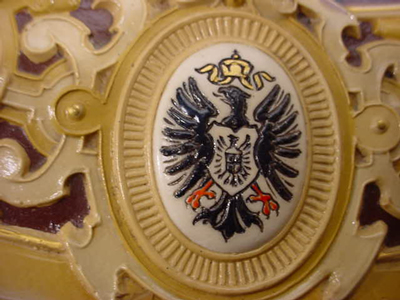
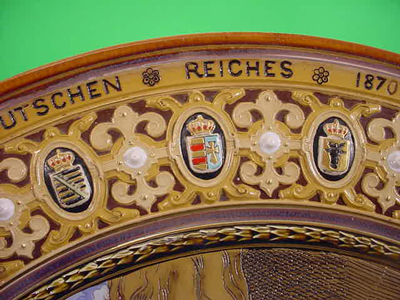
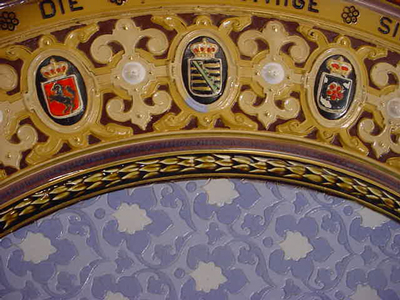
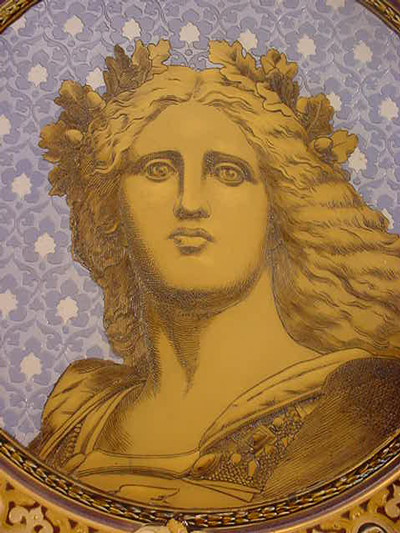
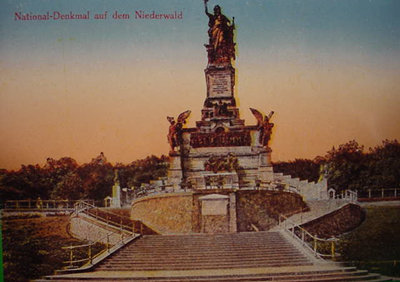
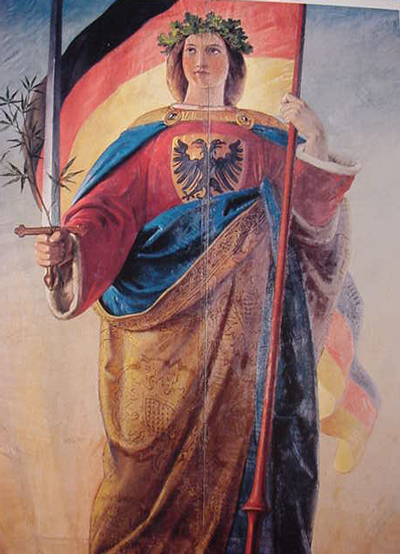
DESCRIPTION: Here is an item that although it is not that expensive, it is practically precious to our hearts. “Germania” (even the name) inculcates a feeling of extreme pride and glory that can only be felt by a true Germanophile! Her beauty, her noble expression, her proud defiance and regal stature all join in a beholder's celebration of what it is to be a proud German or an ardent admirer of all things Teutonic. The monument was constructed to commemorate the foundation of the Geman Empire after the end of Franco-Prussian War. The first stone was laid on September 16, 1871 by Wilhelm I. The sculptor was Johannes Schilling, and the architect was Karl Weisbach. The total cost of the work is estimated at one million gold marks. It was inaugurated on September 28, 1883. The 38 meter tall monument represents the unity of all Germans. The structure...The central figure is the 10.5 meter tall Germania figure. In the sculptured impression, Germania holds the recovered crown of the emperor in the right hand and in the left the imperial sword. Beneath Germania is a large relief that shows emperor Wilhelm I riding a horse with the Prussian nobility, the army commanders and soldiers. The relief has the Wacht am Rhein (Watch on the Rhine) lyrics engraved upon it. On the left side of the monument is located the peace statue. The war statue is located on the right. The momunent’s main inscription is engraved in the pedestal where the Germania statue is located. “ZUM ANDENKEN AN DIE EINMUETHIGE SIEGREICHE ERHEBUNG DES DEUTSCHEN VOLKES UND AN DIE WIEDERAUFRICHTUNG DES DEUTSCHEN REICHES 1870- 1871." These words..."In memory of the unamimous victorious uprisings of the German People and of the reinstitution of the German Empire 1870- 1871" are the same words as used on the plaque we offer here. The original idea was by sculptor Johannes Schilling. To commemorate the victory of the united German People, but it also admonishes the German people to be vigilant against the arch enemy, France. She faces France and this placement was purposeful as an act of defiance. We have visited her on numerous occasions. Once when I went there on sort of a pilgrimage I was appalled to see that some bastards had put graffiti all over the base. I remarked to one of the attendants that in other “better times” in Germany, the ‘artists’ would have been duly arrested and made to remove their stinking grafitti with a toothbrush and should be in ‘protective custody’ until the cleanup was successfully concluded. If the graffiti was Communist or Leftist inspired, then a rope and the nearest tree might be a good place to dispense justice (Authoritarian? Nationalistic? Yes, emphatically so! Germanophile? Absolutely!) This statue is the personification of nationalistic German pride and it still exists today although the German nation is betrayed by liberals and Leftist goons. “Kommt Der Tage Der Rache!” Okay, anyway "a thing of beauty is a joy forever" and both the actual statue of Germania (Niederwalddenkmal) and this plaque are both gorgeous to my way of thinking and as a true Germanophile I’m sure you will agree. The charger is large --19 ½ inches in diameter. Around the edges are the "Wappen" or Coats of Arms of the various German districts that were now united into a cohesive nation “Der Deutsche Vaterland ” at the bottom is the Prussian eagle representative for the head State of the unification. And all around are the historic words of “Enigkeit” (unity) from 1871 when Wilhelm I presided over the defeat of France and the formation of Deutchland. At one point it says Zum Andenken – ‘Memory of --- Yes dear collector the plaque or charger is certainly a memory of the days of Glory and Majesty. Germania’s face says it all! The charger was produced by the Villory and Boch Company who used the title Mettlach on their beautiful stone wear chargers and plaques. This piece was produced in the golden age of stein production between 1885 and 1916. The name Mettlach is synonymous with quality and value. The most noteworthy innovation of Mettlach during this period was the introduction of what we call today etched steins and plaques. The term “etched” derives from the look and feel of the decoration where the outline and details of the design are formed by incised black lines. These lines can easily be felt by fingertip or fingernail. The design was made from colored clips of clay, which are separated and given detail by the incised lines. These lines were actually formed by mold and no ‘etching’ of the surface was actually involved. The artistic merit and constant high quality of Mettlach, makes it known worldwide and today their products are the best and most sought after in decorative stone worldwide when it comes to stein collecting. Many these were produced -- elves, hunting scenes, soldiers, castles, tavern scenes and many designs feature the “Muchner Kindl” or “prunch child” but above all the varied designs the practically ‘sacred’ one was this depicition of Germania; it had a limited production and we believe this was a decision of the company to keep her pure and not to be sold and scattered over all of Germany in souvenir shops. So, she was seldom carried in authorized Mettlach outlets and she was expensive in those years. To find one today is truly a great find and the collector who buy it can consider themselves very fortunate. PRICE: SOLD |
 |
 |
 |
 |
 |
 |
 |
 |
 |
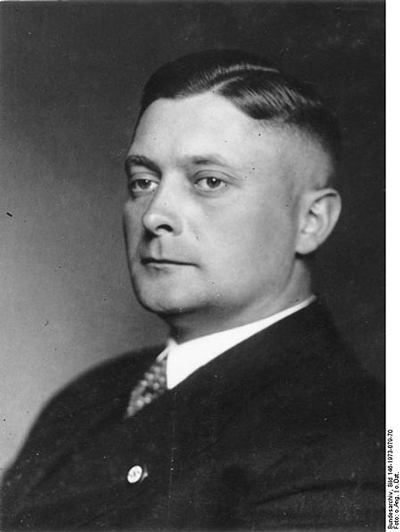
 Early picture of Karl Kaufmann |
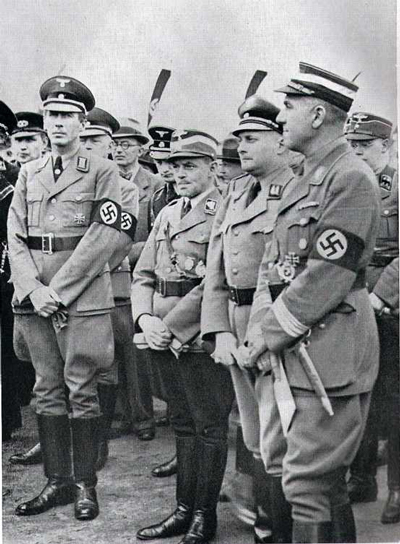 Gauleiter Kaufmann with other party officials |
 Hans Adolf Prutzmann, Gruppenfuhrer |
 Kaufmann, Gauleiter of Hamburg, presenter of box |
 Prutzmann directly behind Heydrich |
 Prutzmann second from left |
 Prutzmann with Reichsfuhrer Himmler |
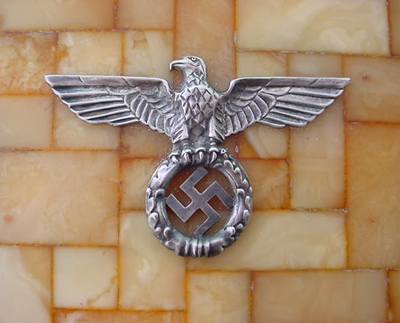
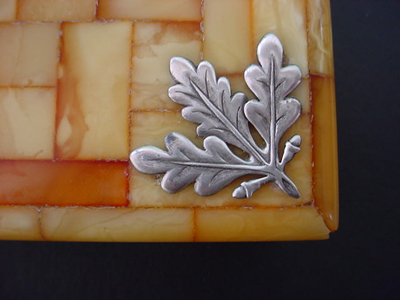
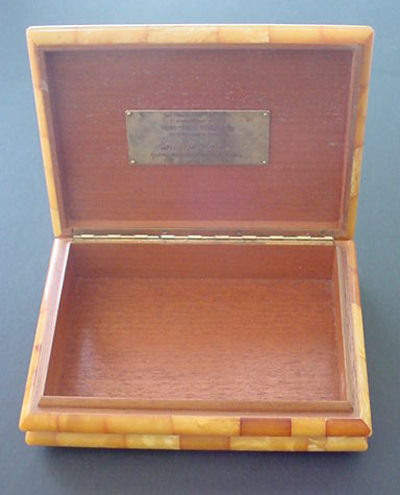
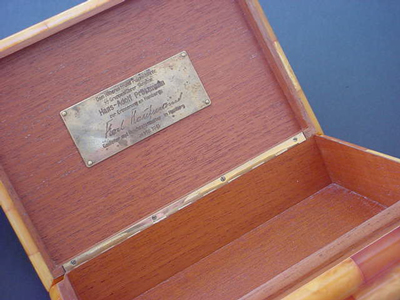
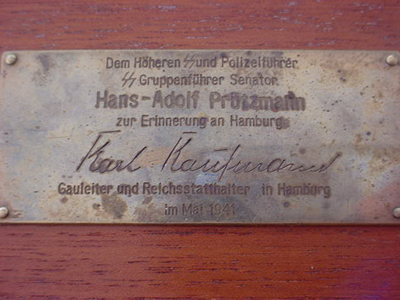
“Utterly Spectacular” Presentation Chest to Hans-Adolf Prutzmann SS Obergruppenfuhrer (Item ART 16-12 & SS 35-8) |
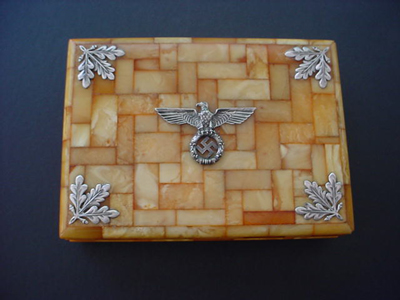
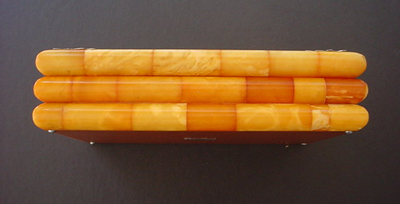
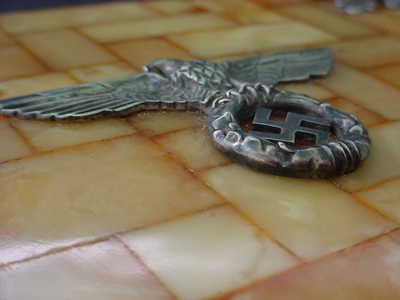
DESCRIPTION: Hans-Adolf Prutzmann -31 Aug 1901-21 May 1945 was a superior SS and police leader. As an SS Obergruppenfuhrer. He was the senior N.S. official administrator of Latvia. After completing his studies at the Gymnasium, Prutzmann studied agriculture, before he became a member of various Freikorps between 1918 and 1921. Despite being a member, he nevertheless avoided military and typical Freikorps-related aggressive situations. This however, changed in 1923, when he interrupted his studies to accompany a Freikorps involved in the Upper Silesian uprising. Afterwards he worked for seven years as an agricultural official in Pomerania, Brandenburg, and East Prussia. He joined the SA in 1929. Since Prutzmann had become quite a radical soldier as a result of his Freikorps experiences, and since his own personal goals did not match the clearly milder thinking found in the SA, he left the organization in 1930 and transferred in the same year to the SS. At the same time, he was admitted to the Nazi Party. As of this point in time, Prutzmann’s career began a steep rise. While functioning as a Member of the Reichstag, he was appointed SS Brigadefuhrer in November 1933, and in February 1934 he was given the rank of SS Gruppenfuhrer. At the same time, Prutzmann was appointed leader of the SS Upper Division Southwest in Stuttgart. From March 1937 until May 1941, Prutzmann led the SS Upper Division Northeast whose headquarters were in Konigsberg (now Kaliningrad). By April 1941, Prutzmann had been appointed Generalleutnant (Lieutenant General) of the Police. From June until October 1941, he was Hoherer S.S. und Polizeifuhrer (Higher SS and Police Leader) of Russia-North, the post being responsible for internal security and combating the murderous red partisans. He held the same position in the Ukraine and Russia-South until the summer of 1944. He also commanded Kampfgruppe “Prutzmann” in the Ukraine during the early summer of 1944, and was awarded with the German Cross in Gold for his action. From June to November, 1941 Prutzmann held the post of higher SS and Police Leader. Hoherer SS und Polizeifuhrer or HSSPF for Latvia; effectively this made him ruler or with Hinrich Lahse, co-ruler of Latvia. His office was moved to the Latvian office of the S.S. Sicherheitsdienst or security service as HSSPF Latvia. Prutzmann was in charge of the SD. It is known that Prutzmann was responsible for removing the Jews of Latvia into Ghettos. One of his last promotions came in September 1944 when Prutzmann was appointed by Heinrich Himmmer as Generalispekteur fur Spezialabwehr (General Inspector of Special Defense) and assigned the task of setting up the Werewolf force’s headquarters in Berlin and organizing and instructing the force. The Werewolves were volunteers that should have formed a nucleolus of resistance fighters. Prutzmann had studied the guerrilla tactics used by Russian partisans while stationed in the occupied territories of Ukraine and the idea was to teach these tactics to the member of Operation Werewolf. As originally conceived, the Werewolf units were intended to be legitimate uniformed military formations trained to engage in clandestine operations behind enemy lines in the same manner as Allied Special Forces such as Commandos. In early 1945, under orders from Himmler, he directed the assassination of the Allied-appointed mayor of Aachen, Franz Oppenhoff. Shortly before the war ended, Prutzman was captured by the Allies and became a prisoner of war. While in their custody, he ended his own life. Whether his suicide happened in Luneburg, or as another account has it, at an interrogation came at Diest in Belgium is not quite clear, but it seems certain that his date of death was 21 May 1945. Dates of Ranks Earned: Notable Decorations: This was the career of one of the highest placed SS officers of the 3rd Reich. A German tragedy while he lived, he actually lived the words of the song - - - Wenn alle untreue werden so bleiben wir doch Treue ! The box or chest made of Prussian amber was presented to SS Gruppenfuhrer and N.S Senator Prutzmann by none other than the Gauleiter and Reichstatthalter Karl Kaufmann who was also famous in his own right. A Reichstatthalter is a Governor and Gauleiter would be the supreme Party Leader of a regional branch of the NSDAP (made up of many such districts.) Karl-Kaufmann (20 October 1900 – Dec 4 1969) was the NS Gauleiter in Hamburg. He was born in Krefeld. He served as a war volunteer in WWI and in the Freikorp’s Brigade Ehrhardt 1919-1920. He was a founding member of the NSDAP in 1921. He quickly became one of Adolf Hitler’s favorites. He was appointed Gauleiter of the Gau’s Rhineland and Ruhr in 1922-29, he then was appointed Gauleiter of Hamburg in 1929, a post that he would hold until 1945. He was also a member of the German Reichstag. After Hitler gained power on 16 May 1933 Kaufmann was appointed Reichstattthalter (Regional Governor of Hamburg with absolute power over 1.8 million people. One of his past accomplishments was to turn over control of the city’s Fuhlsbuttel Prison to the SA and SS where it became the nucleus of the Kila-fu concentration camp. Adolf Hitler declared Hamburg a fortress, similar to Festung Warshau. The cities of Posen or Kolberg. In April 1945, Kaufman wanted to capitulate without further struggle. After negotiations and the publication of a pamphlet that Kaufmann prepared, suddenly (without Kaufmanns consent) - Hamburg was declared an open city by Admiral Karl Donitz. We mention this because it is ironic that Prutzman and Kaufmann were close associates and friends (This will be borne out when we describe the box.) The amazing thing was that due to Kaufmann’s attempts at the Hitler forbidden capitulation he could possibly have been on Prutzmann's hit list kept by the short lived Werewolf units. He could have ended up like Franz Oppenhof the Mayor of Aachen who was assassinated by the order of SS Obergruppenfuhrer Prutzmann. But the fact remains that their friendship had seen happier days! When in early May, 1941, Himmler appointed Prutzmann to HSSPF this was an extremely high office however he was never able to challenge (even if he wanted to) the power of the formidable Hamburg Reichsstatthalter and Gauleiter Karl Kaufmann. So, he was content to work closely with him shoving further ambition aside for the good of the Third Reich. Now to the box. It has occurred to us after many years of historical study and observing the habits of the German leaders from Kaiser Wilhelm to the men who helped to administer N.S. Germany that when it came to giving gifts to colleagues, generally a painting or porcelain would be the choice; however, even more often a chest or box was the gift of choice especially if you were giving a gift to Hermann Goring (who had everything!). Why not give him a fancy box to keep some of it in? This was very often done. This box is no exception and what a box! There is probably no more sacred a substance to the German mythos than “Bernstein” (amber) exits. It was a sticky resin that oozed down the sides of trees when the earth was young. As geologic time progressed, the forests were buried and the resin hardened into a soft warm golden gem (petrified) known as amber or bernstein in German. Most of the world’s amber is in the range of 30-90 million years old. Bernstein means “stone of the bear.” The ancient and even modern Germanic people believed that having pieces of Bernstein near you not only gives you courage and great personal strength but would allow the warrior to teach others to build strength and stamina and to strengthen faith and discipline. The finest of this amber is the Prussian Bernstein. Unlike Baltic amber from Poland, it is clear and practically always clear of fossils and prehistoric bugs. So sacred was amber in the Third Reich that special editions of Hitler’s book Mein Kampf were presented to important officials with a cover decorated in small plainchants of pure Prussian Bernstein. We produce a picture here showing such a book and you will note the similarity of the cover of the Kaufmann-Prutzmann box to the design of the Mein Kampf. The same silver party eagle is used and the pattern of the amber layout is quite similar. The box measures across its top 5 ½ x 6 inches and is two inches deep. Incredibly, it looks to be three tiered. All the amber is 100% perfect. On the bottom is a small silver plaque that proclaims – Angefertigt in Den Werkstatten Der Stattlichen Beanstein Manufaktur Konigsberg Pr. This translates to: Manufactured in the workshop of the state owned amber works of Konisberg Prussia. Since Bernstein was considered a national treasure, the government subsidized and controlled the use of it and also the harvesting of this precious commodity. We have subsequently also ascertained that the amber used here is Samland Bernstein and another name for the manufactory was SBW – GmBH “Samland Bernstein Werk.” The absolute beauty of this box is also manifest by the three tier assemblage that gives a ‘stacked look’ and the effect is extremely pleasing to the eye of the beholder. The absolute precision workmanship in the shaping and placement of each planchet of amber is a magnificent consummation of artistic accomplishment probably never to be seen again! The amber craftsmen of Konigsberg were the supreme artisans in this ’lost art.’ Yes, there are amber objects from Poland and Russia that could be compared but nothing approaching the perfection of symmetry and sheer elegance of design and exquisiteness. The amber artists of old Konigsberg, that grand old city," the ‘Pearl of the Reich," the city founded by the Teutonic Knights in 1255. The once beautiful city that was beloved by its Prussian citizenry was renamed “Kaliningrad” after the Communist hordes took it over in 1945. Most of the people fled Konisgberg ahead of the Red army’s advance in October1944 particularly after word spread of horrible Soviet atrocities at Nemmersdorf and Neustettin. No massacre in history could compare with the wanton murders committed against the common German citizenry and the last of the heroic Wehrmacht defenders -- even to read about it is sickening, we will say no more of this. You can research it on search engines on the web. We mention it in passing only to give some insight into the horrid fate of this one of the most beautiful and cultured cities of “Old Germania.” This practically priceless work of art stands in testimony to the excellence of German craftsmanship the eminent historical importance notwithstanding. PRICE: WITHDRAWN |
| ||||||||||||||
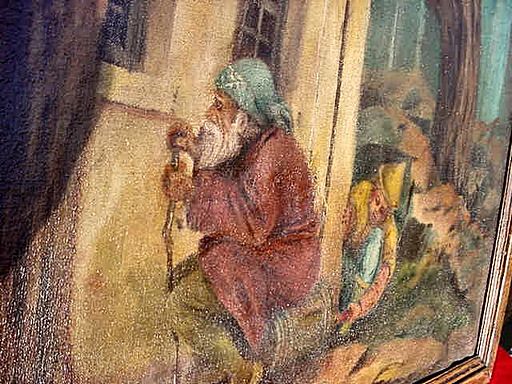
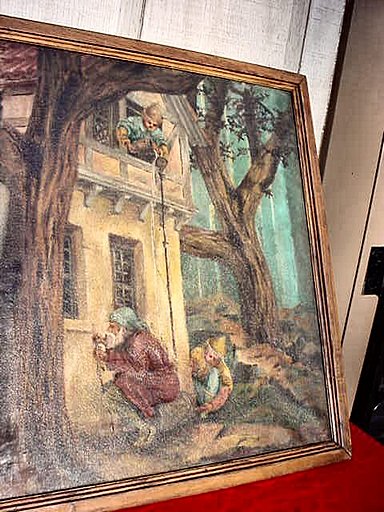
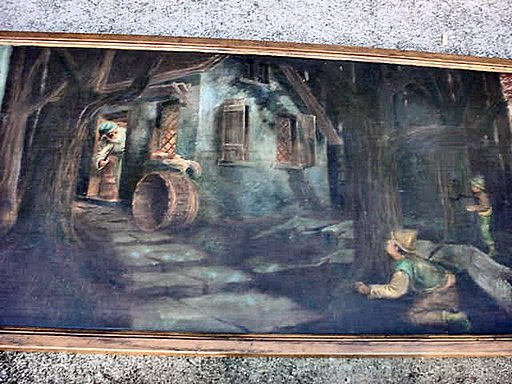
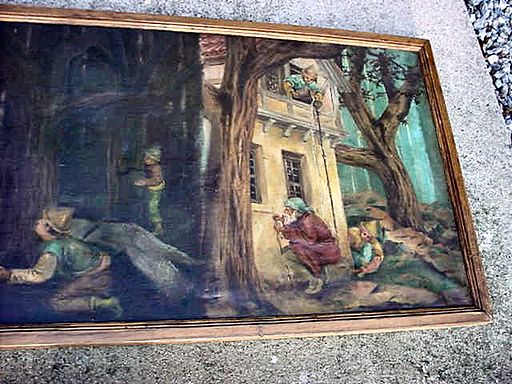
Painting of Germanic Elves (Item ART 16-13 & SS 31-7) |
||||||||||||||
| DESCRIPTION: OK. You ask why this painting is situated in the Allgemeine-SS and Personalities categories. Well, it’s because of who painted it and why. In 1945 a certain Dr. Kajetan Mühlmann was captured by the U.S. Army in Seewalchen on the Attersee in the Austrian Alps on June 13, 1945. On 20 July he was transferred to the American POW camp at Payerbach in upper Austria where he was interrogated by the CIC, that so called ostensively (“worked-on culture”), also known as “culture intelligence.” They induced him to discuss the so-called deeds of Hermann Göring, Seyss-Inquart, Hans Frank, and Kaltenbrunner. He himself was charged with being responsible for (again so-called) art plundering in Poland and the Netherlands. He held the title during the Third Reich special commissioner for the safeguarding of art in the occupied territories. He actually was responsible for purchase or in some cases confiscation of Germanic art in the hands of those persons identified as (enemies of the Reich). Much has been written about these accusations from negative and positive viewpoints. In any case, our narrative is about the art historian Mühlmann. He was an
PRICE: SOLD |
 |
 |
 |
 |
 |
 Albrecht Durer self portrait |
 |
 |
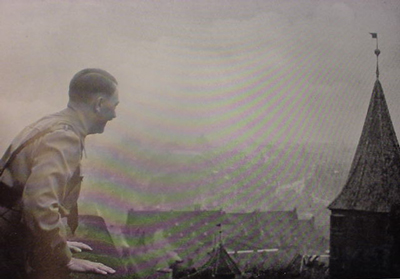 The Fuhrer and his favorite city below |
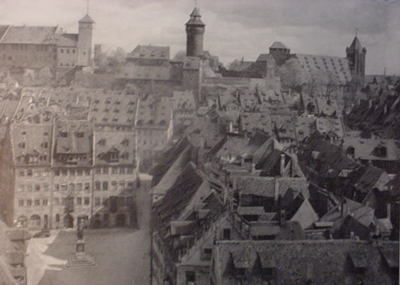 |
 The Party Tribune |
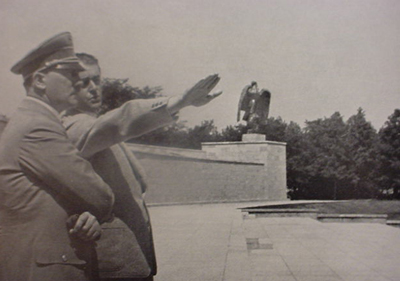 Fuhrer and Speer |
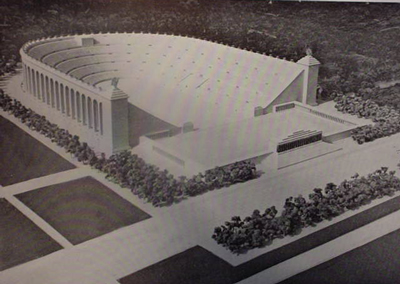 Planned Party Congress |
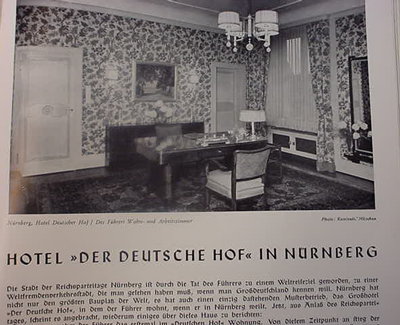 My favorite hotel |
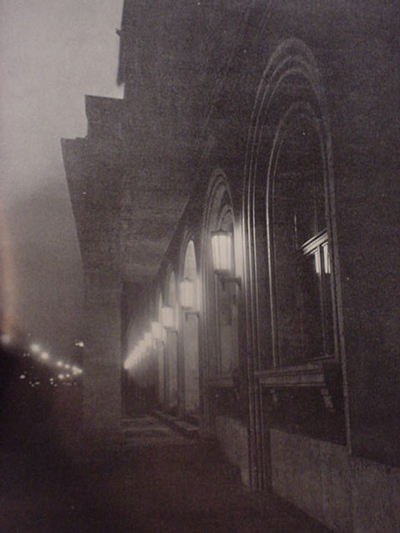 The hotel by night |
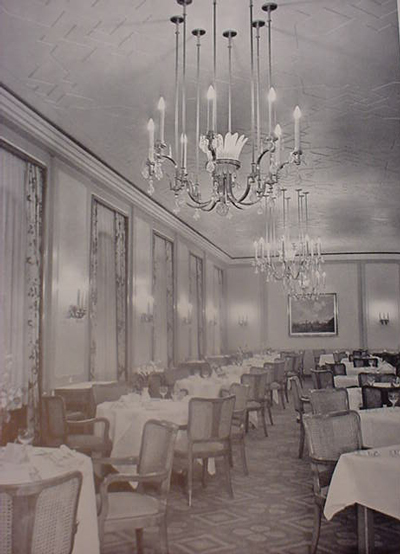 The dining room |
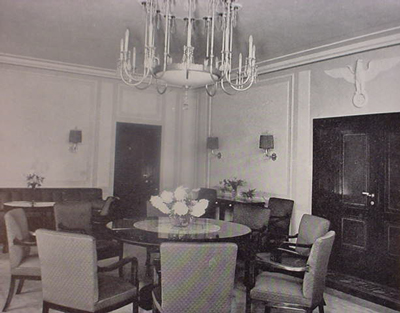 The Fuhrerzimmer (note eagle) |
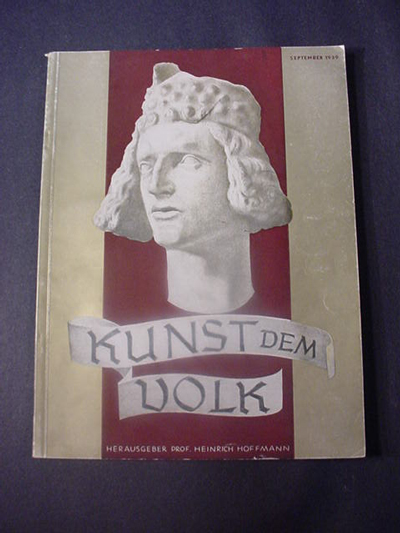
Art Magazine Kunst Dem Volk Sounderheft Nurnberg (Item ART 16-14) |
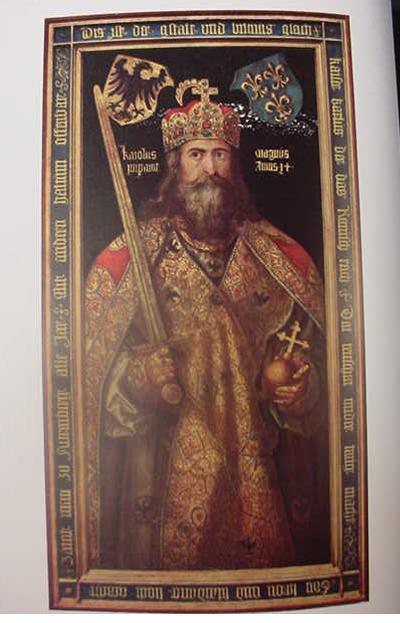
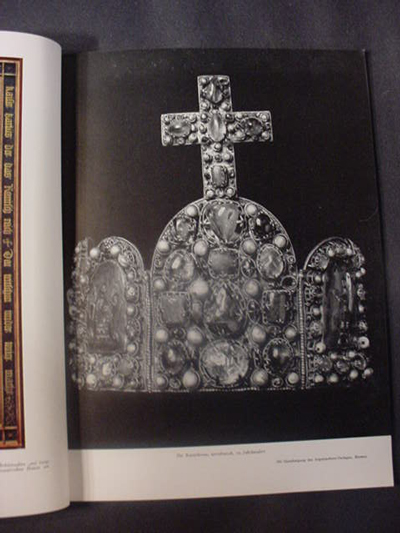
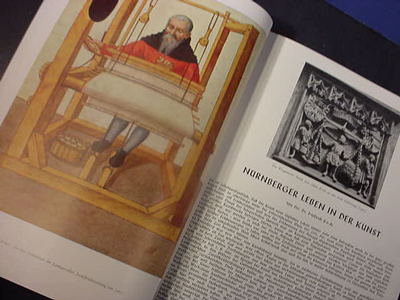
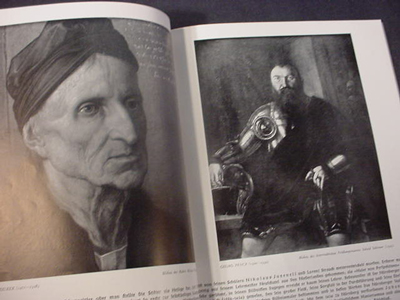
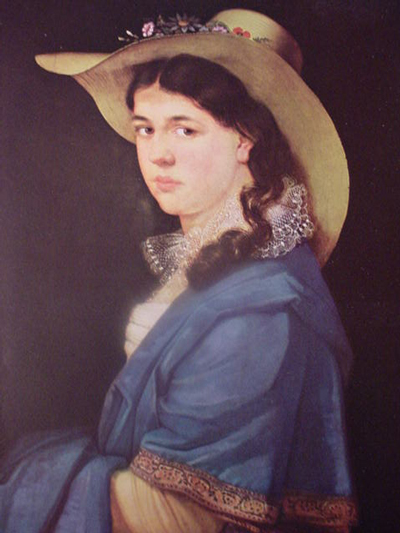
DESCRIPTION: This is an excellent art magazine published by Prof. Heinrich Hoffman in Vienna. This was a special issue devoted to the art treasures of the city of the Reich's Party Congress Nuremberg (my favorite city!). 64 pages in a magazine that measures 9" x12", dated September 1939. The name of the magazine is Kunst Dem Volk (Art of the People). This special issue (Sonderheft) is devoted to the greatest art of this ancient city, both antique and modern (Third Reich). Beautiful depictions in color and stark black and white; most of them full page to include the wonderful portrait of Karl Der Grosse (Charlemagne) that still hangs in the Germanische National Museum and on the next page appears a wonderful photograph of the “Kaiserkrone” (Crown of the Germanic Empire). I have visited this museum several times and the things on display there are utterly astounding, We can thank God that the collection survived the horrible maelstrom that was visited up this holy city of the Reich by Deutschland's enemies in 1944-45. The museum remains intact although bombed by the culture distorters on purpose. The purpose being to destroy all of Germany’s art centers to demoralize the citizens. War crime??? Yes, this was true war crime in the truest sense of the word. The section Nurnberg Leben in Der Kunst (Nurenberg Lives in Art) is particularly interesting with beautiful wood blocks sketched by famed Nuremberg artists to include the famed self portrait of Albrecht Durer. Then you see the section of pictures from 1500 to the 19th century with portraits by Durer who lived 1471-1528. Look at the portrait of Eine Schone Nurnbergerin (the beautiful Nuremberg maiden) by Johann Dietrich Karl Kreul 1804-1867. Look rather closely and appreciate realism in its finest form (“No Picasso here”). Then there is a great section on the building style of old Nuremberg in the 14th through 18th century. Finally there comes Nuremberg in the new century of German History. That opens with a great picture of Adolf Hitler who gazes at the famed castle of Nuremberg, and then there is a panoramic view of the castle that is better than any present day travel brochure can duplicate. Here are fantastic views of the interior of the Saint Sebaldskirche and the Saint Lorenzkirche. Pictures of the Fraunkirche and the famous hangman’s house. Here arch criminals were hung, not the defeated leaders of their people! Not like in the 1945 murder fest! Then we emerge in the 20th century with pictures of the beautiful buildings of the Reichparteitag under National Socialism. Some great views, not published elsewhere. And in the last pages some unique pictures in the Hotel Deutscher Hof where the Fuhrer stayed during the party Congress and I had the pleasure of staying in the very room in which he resided in 1969-1975-1999. Quite a strange but exhilarating feeling attended me as I resided there. The nighttime view of the front of the hotel is almost spiritual and is extremely nostalgic to me as I have seen this view many times as I returned from a walk through this beautiful Stadt der Reichsparteitag. Why the long dissertation for an item selling for so low a price? Because that city is so meaningful to me historically as well as spiritually. (Es Lebe Nurnberg!) You couldn’t find a better book that so effectively brings forth the true spirit of eternal Germany! PRICE: $165 |
 |
 |
 |
 |
 |
 |
 |
 |
 Germania |
 |
 |
 |
|
|
|
|
|
|
|
|
|
|
|
|
 Tom Johnson's Book No. 6 |
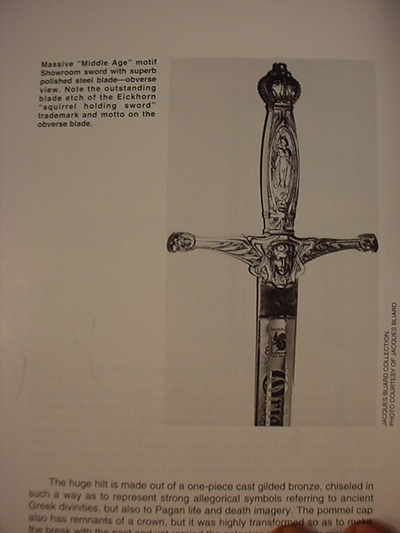
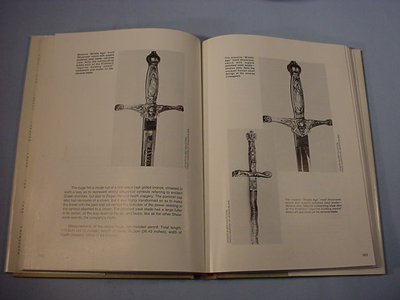 Our sword |
 |
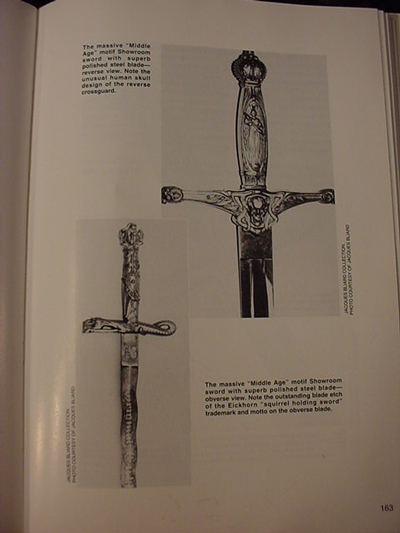 |
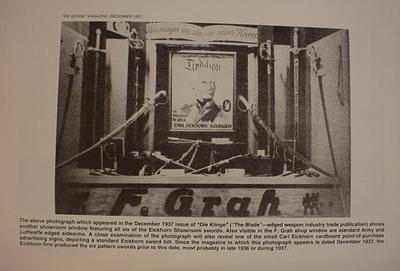 Showroom window 1937 - note our sword second from right |
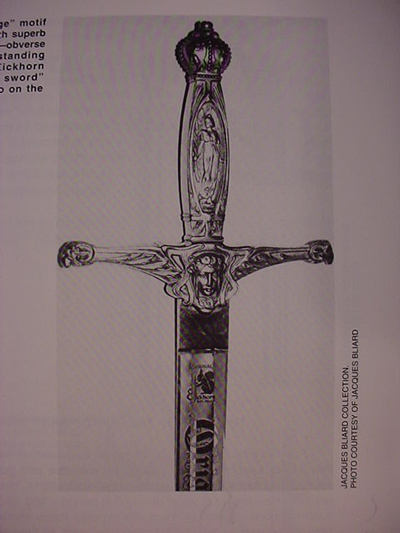 |
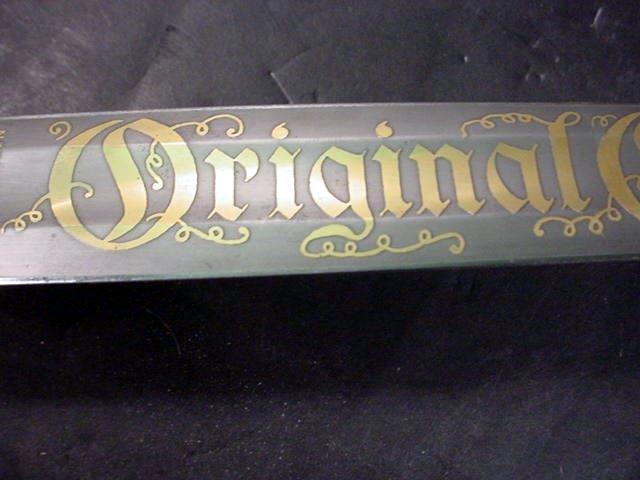
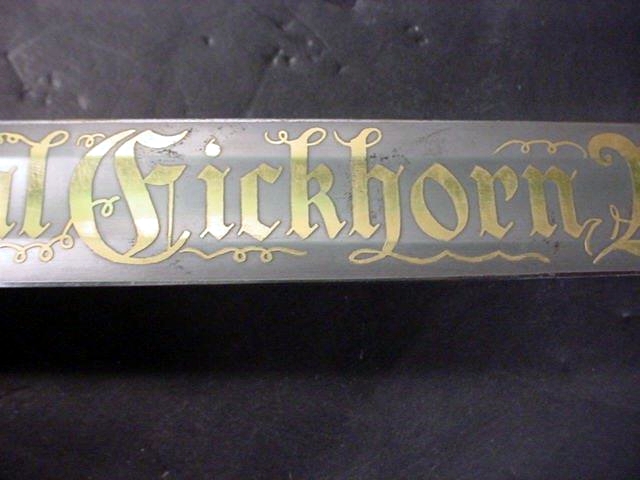
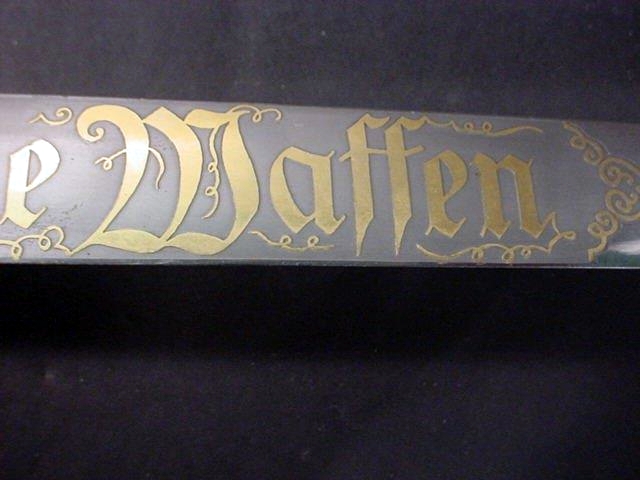
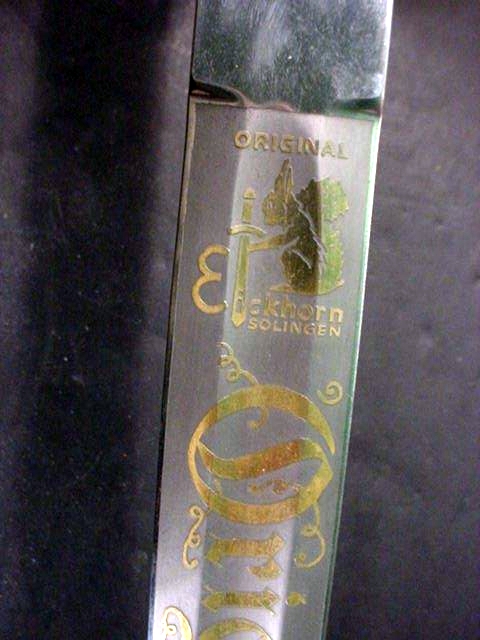
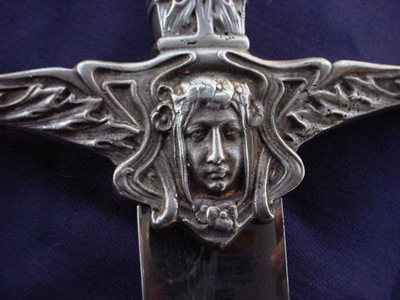
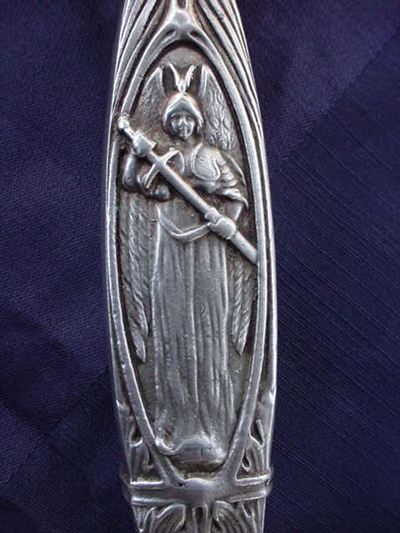
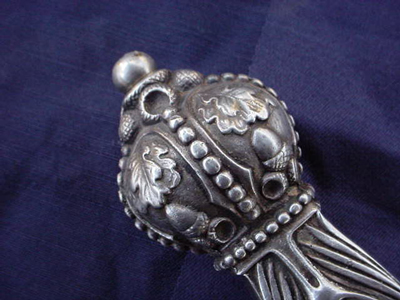
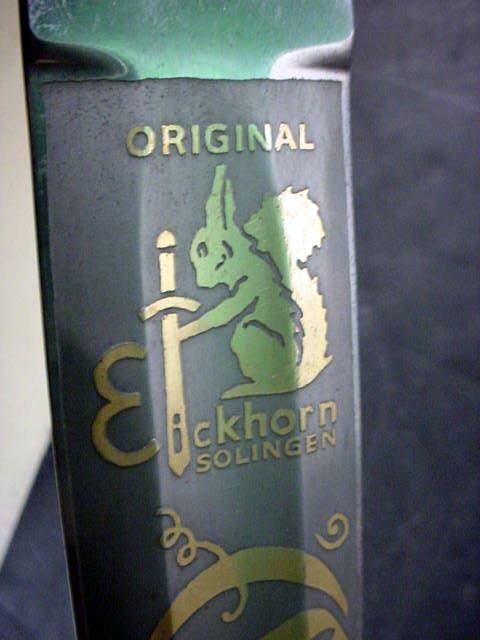
Massive Motif Showroom Sword by Eickhorn (Item ANTWEP 2-33; ART 16-15) |
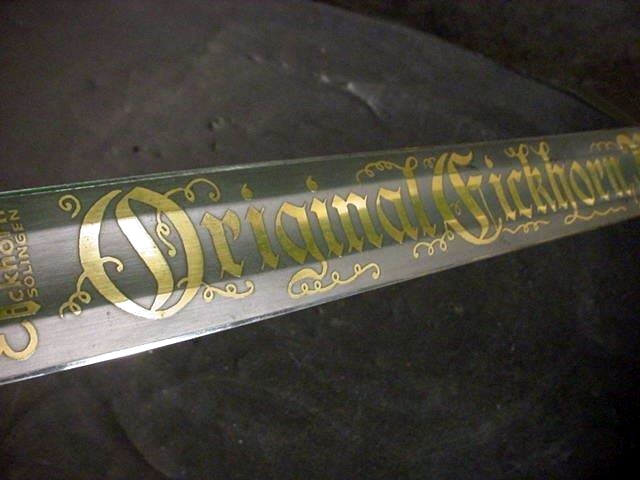
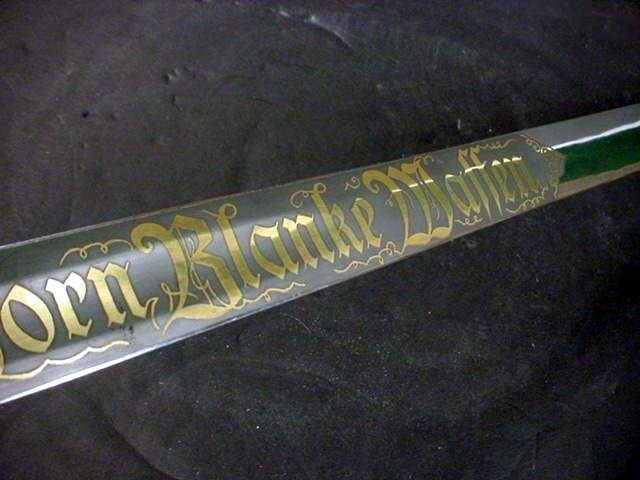
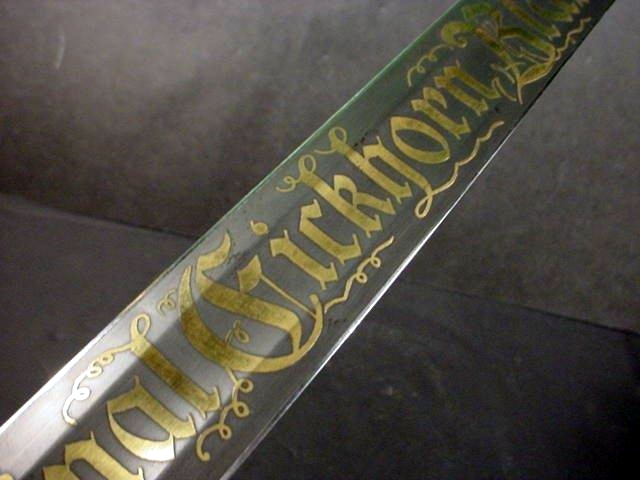
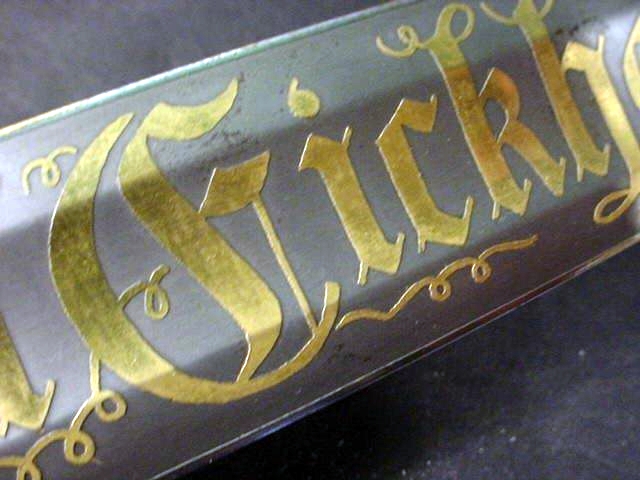
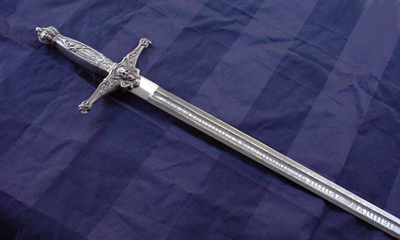
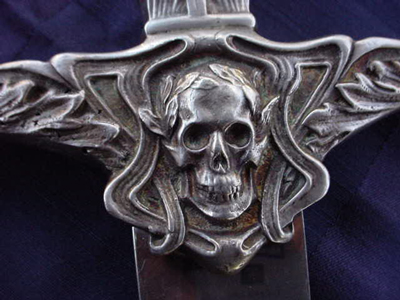
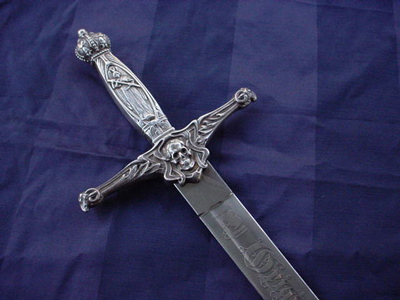
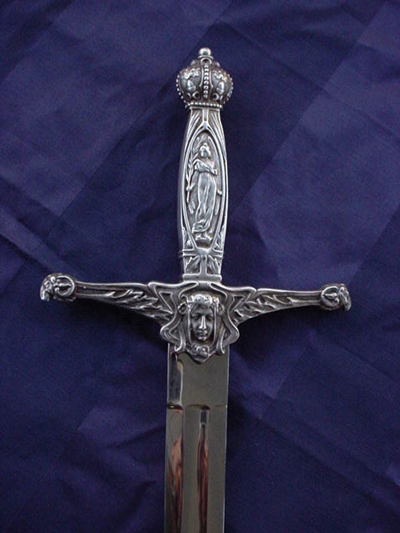
DESCRIPTION: This wonderful display (austellung) sword is featured on pages 162 and 163 of Thomas Johnson’s volume 6 of his Collecting the Edged Weapons of the Third Reich. Take notice of the interesting wordology in his description that is on page 161. He beautifully praises the architectural realizations and supreme artistic aplomb of the Third Reich while entering comments dear to the hearts of Germanophiles about the accomplishments of Richard Wagener and Arno Brecker. He quotes Reichsfuhrer SS Heinrich Himmler who said “May the spirit of the most ancient past be the spirit of the future” and Mr. Johnson then observes that there are countless specimens of this spirit throughout the artistic expression of the period and the firm of Carl Eickhorn chose to contribute to that trend in the form of six famous swords, all with allegorical scenes different but all of them conforming to that spirit. They were made for display to demonstrate the proficiency and excellence of Eickhorn’s designers and the steel craftsmanship of its art staff and sword smiths. These swords were never intended for sale to the public. They were only for visual presentation in the factory headquarters. They were a source of intense pride in the art of ‘klingenmachen” in the city of the swords Solingen. From time to time the display swords were loaned to dealerships in Solingen who would feature them in their shop windows for a limited amount of time but they were never sold. The other sword that is referred to as this one is as the “Middle Age Motif “and it is also shown in Mr. Johnson’s book on pages 103, 164 and 165. Both swords are described with this Middle Age motif. There were six display swords. The others were billed as the “Old Timers” and two of them are shown on pages 166 through 172; we believe the one we have procured is by far the nicest of them all with its allegorical motifs. Tom says it reminds him of the two handed swords of the Middle Ages -- this one we have is indeed massive and the largest of the six Eickhorn display swords. Tom’s description couldn’t be better so I do hope he will not object that we use it here with many thanks to him for being there in Germany when we bought it and advising us that this was a great purchase. “The hilt is made out of a one piece cast silvered bronze. Chiseled in such a way as to represent strong allegorical symbols referring to the ancient Greek Divinities but also to the pagan life and death imagery. The pommel cap also has the remnants of a crown, but it was highly transformed so as to make the break with the past and yet remind the onlooker of the power residing in the symbolism attached to the crown. The highly polished steel blade has a large fuller in its center all the way down to the tip and bears like all the other showroom swords the company’s motto." The measurements of this huge sword is as follows: 111. OCM (43.70 inches) length of the blade 90 OCM 35.43 inches. The width of the blade (ricasso) 3.9 cm (1.54 inches). The Eickhorn squirrel holding sword is the type used during the Third Reich Period. The ends of the beautiful cross guard has rams heads possibly representing Jason and the Golden Fleece. The grimacing skull wears the leaf motif wreath as worn by the Imperial Roman Caesars. On the other side is a figure that probably depicts with its feminine form one of the norms of Grecian Saga. The female figures in the center of the grip represent undoubtedly Germania holding the sword of war on one side and the olive branch of peace on the other. In high relief on the blade are letters in huge form that spell out – Original Eickhorn Blanke Waffen – which means “Original Eickhorn Edged Weapons.” This huge sword is without a doubt one of the most beautiful pieces we have ever offered and certainly would be the center piece and dazzling star of any WWII blade collection and the fact that is an important, published item in the Johnson books makes it not only a noted item but completely unique and spectacular. PRICE: SOLD |
Page Sixteen |
Please refer to item designator in parentheses in all correspondence.
Please E-mail for any additional information you may need.