
[ Home Page ] [ Third Reich ] [ Old Reich ] [ Kaiser Reich ] [ Imperial Russia ] [ Axis Powers ] [ Italian Fascist ] [ WW I ] [ Landsknecht ] [ Kaiser Wilhelm ] [ Frederick the Great ]

Kaiser Reich

Kaiser Reich

Kaiser Reich

Third Reich Art

Page 12


Third Reich Art

Third Reich Art

Third Reich Art

Third Reich Art

Third Reich Art

Third Reich Art

Third Reich Art

Third Reich Art

Third Reich Art

Third Reich Art

Third Reich Art

Third Reich Art

Third Reich Art

Third Reich Art

Third Reich Art

Third Reich Art

Third Reich Art

Third Reich Art

Third Reich Art

Third Reich Art

Third Reich Art

Third Reich Art

Third Reich Art

Third Reich Art

Third Reich Art

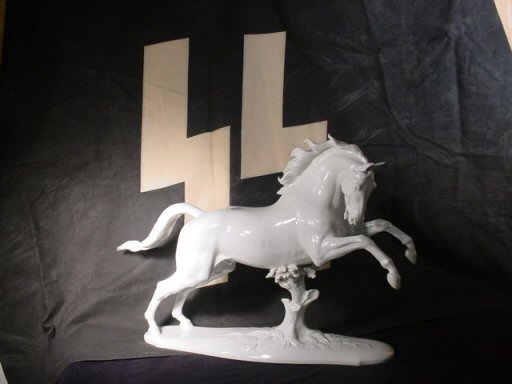
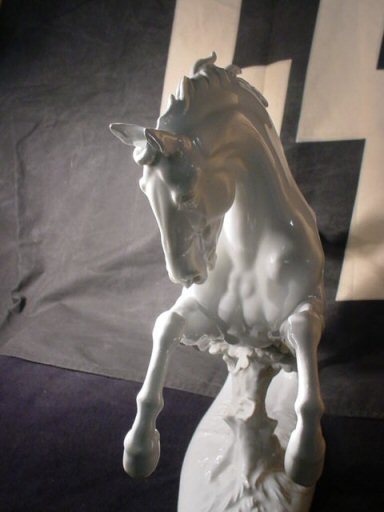
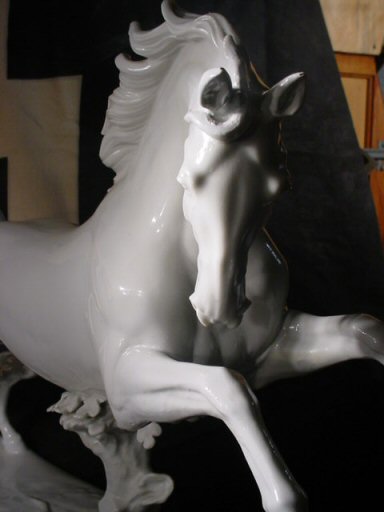
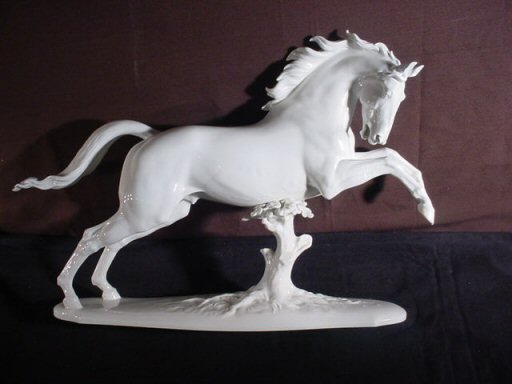
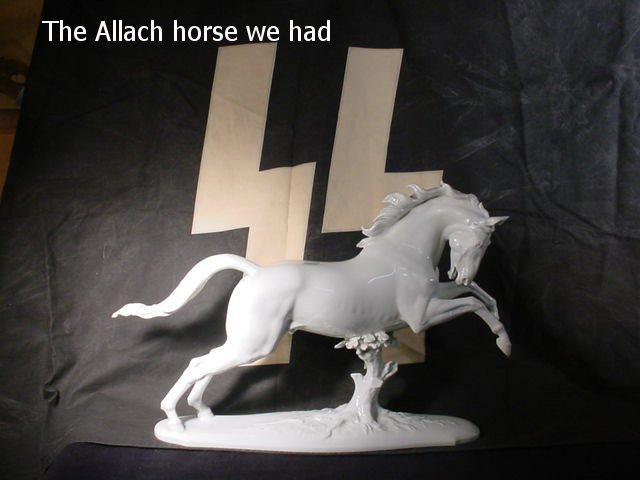
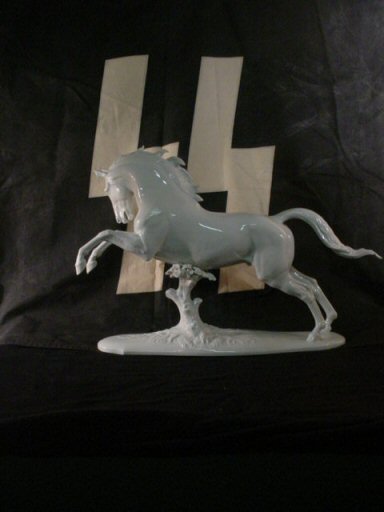
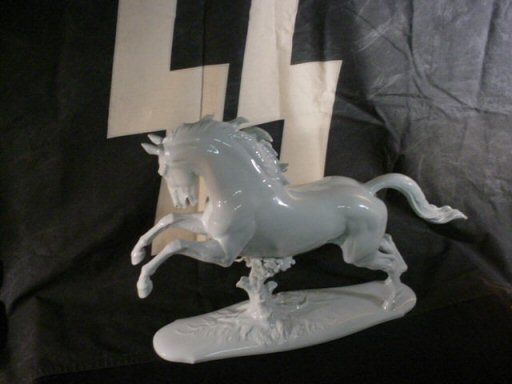
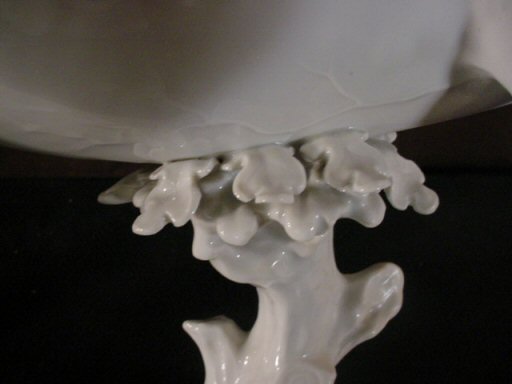
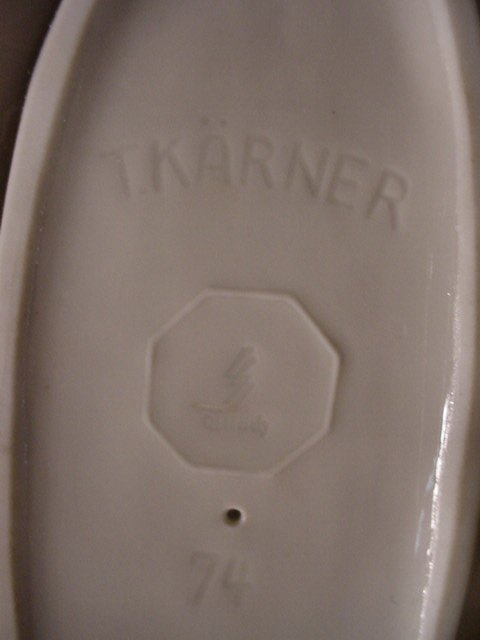
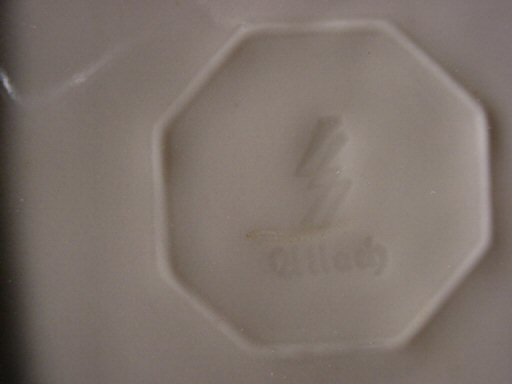
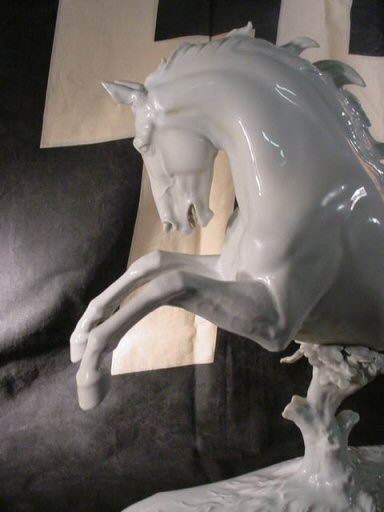
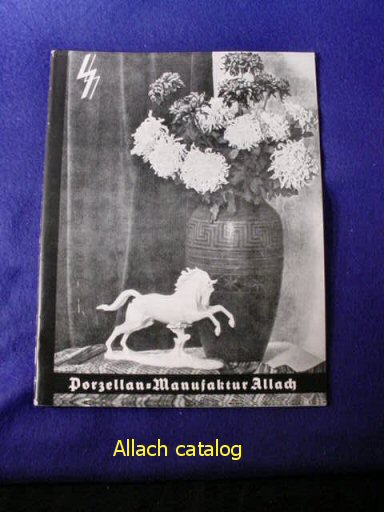
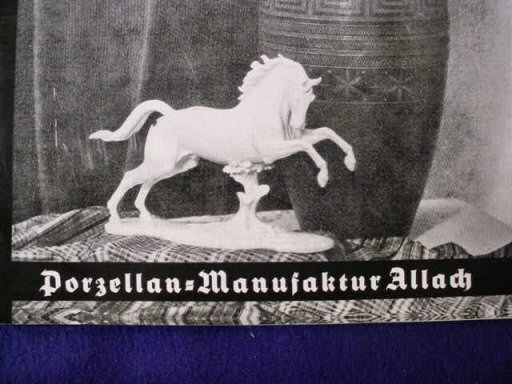
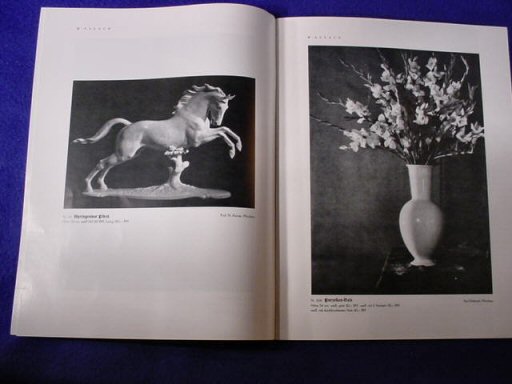
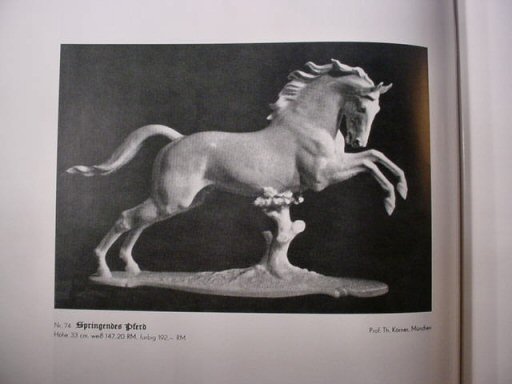
SS Allach Porcelain Horse (Item ART 12-1; SS 27-9)

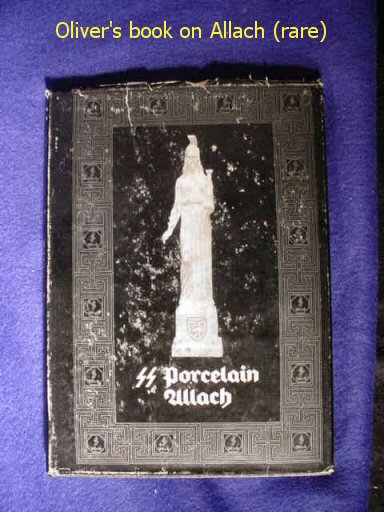
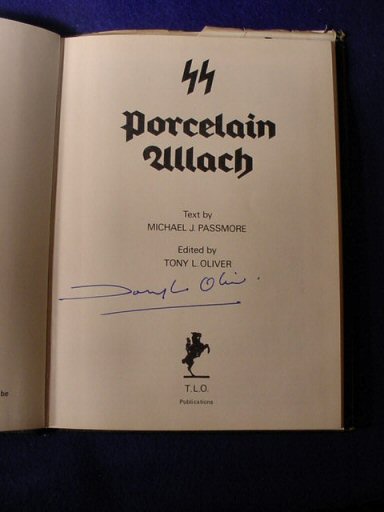
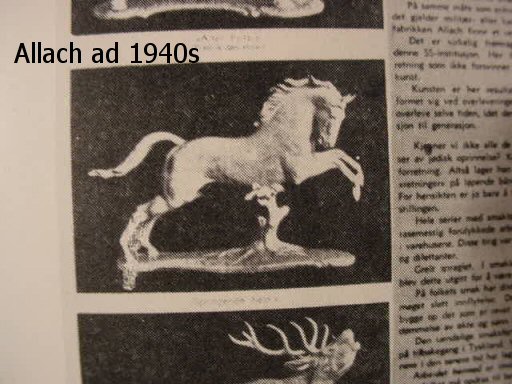
DESCRIPTION: Here is the piece that Professor Diebitsch, the originator of Allach, said was the finest model ever turned out by the Allach firm. Certainly, the stance, the lines, the actions, are exemplary. This was the figure known as the “ Springendes Pferd,” “Jumping Horse,” by the famous Prof. Theodore Kärner of Munich, one of the greatest of the Allach artists. This piece was so favored of the SS Allach factory that it ended up being featured on the cover of their 1938/39 catalog. “A thing of beauty is a joy forever.” If ever this saying could be ascribed to an inanimate object, here it is in all its dramatic glory and this is without even knowing that it is a very important historic piece, as well, in that it is a superbly manufactured item from the benches of the all-important SS Allach firm located in the hamlet of Allach on the Dachauer Strasse below Munich. Our historic advisor actually met with Prof. Carl Diebitsch in 1979 in Tegernsee and at that time the professor told him that this was also his favorite sculpture of all that were produced. This is a large horse that measures 14 inches from the bottom to the highest point of the mane. The base is about 18 inches long and 5 inches wide from the tip of the front, forward. Hoof to the tip of the tail is 21 inches. The consigner said that there was previous damage to the front legs (cracks), but we cannot see it, even under magnification. Perhaps a black light might show it. He said he took it for repair to a professional porcelain studio and when it came back it seemed as good as new! The book by Tony Oliver shown in our images and the copy of the Allach catalog are long out of print and we are unable to procure either one. They are shown only to illustrate the importance of this horse sculpture. The buyer of this item will need to understand that it must be very specially packed by professionals and the cost could be rather heavy. It must be packed with special ‘popcorn’ filling and a box within a box and maybe another box around those. This is a very precious item and must be handled as such! Only a very few of these pieces have ever been offered since 1945, and the production was extremely limited at the SS studios.

PRICE:  TEMPORARILY WITHDRAWN


Third Reich Art

Third Reich Art

Third Reich Art

Third Reich Art

Third Reich Art

Third Reich Art

Third Reich Art

Third Reich Art

Third Reich Art

Third Reich Art

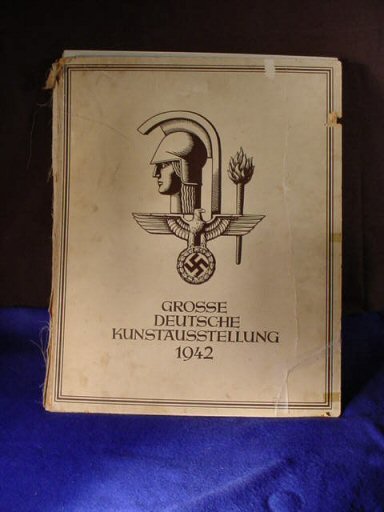
Portfolio of German Third Reich Art (Item ART 12-2)

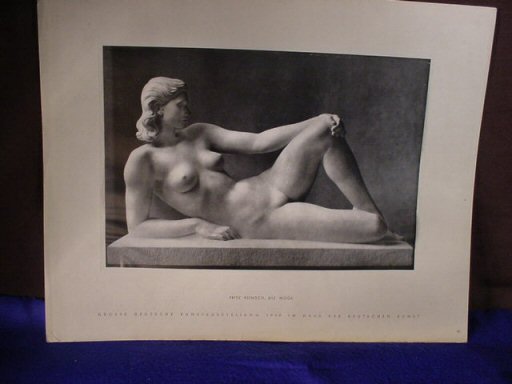
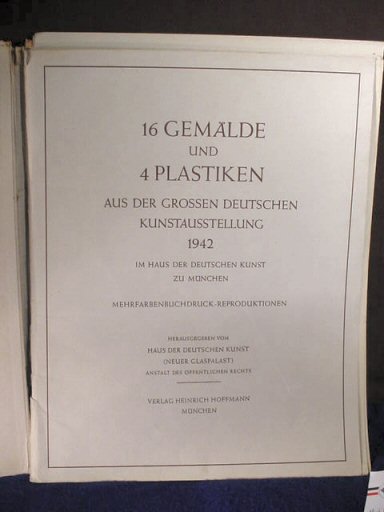
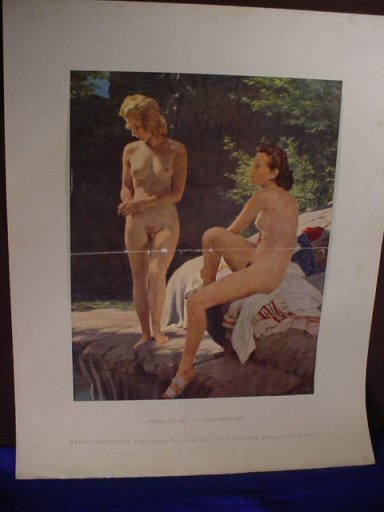
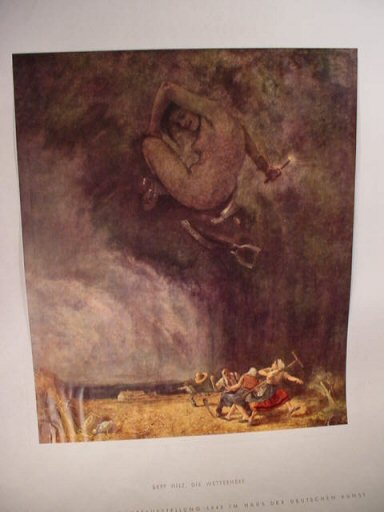
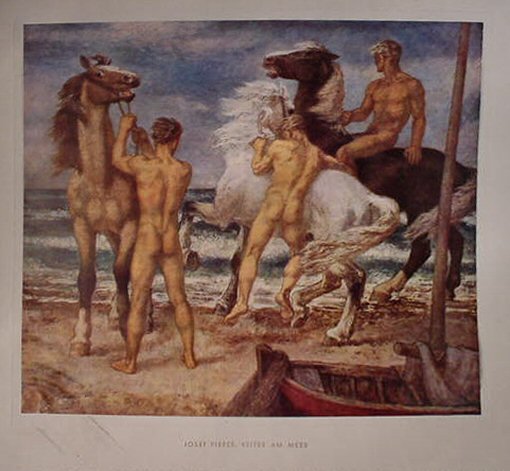
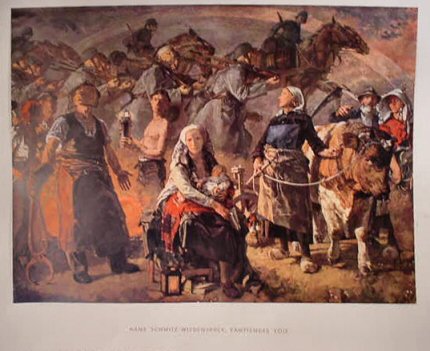
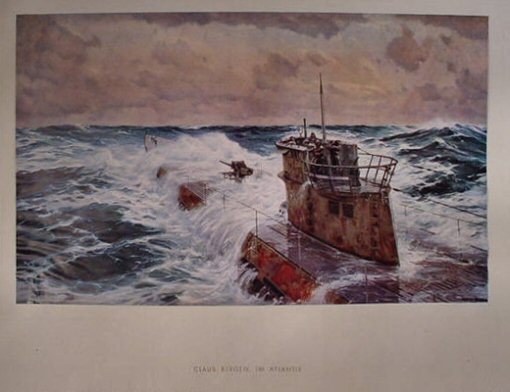
DESCRIPTION: This is what is referred to in German as a Mappe. To start with, it is not complete. Originally, it had 16 prints of famous Third Reich paintings and 4 pictures of sculptures. It now has 10 pictures of paintings and 3 pictures of sculptures. It is just as looted by an American GI and he said that buddies of his were given the rest, but he in his own profound words “…wanted to keep the ‘nekkid wimmin.’” He gave away the picture of the Führer, Adolf Hitler, and the ceremonies at the Feldherrenhalle and some pictures of German soldiers. The folio was produced by the House of German Art (Haus de Deutscher Kunst in Munich and the publisher was none other than Hitler’s photographer Heinrich Hoffmann. The folio’s cover and pictures are 16 x 20 1/2 inches (huge). The pictures that are left are fantastic and would be great to frame, especially Arno Brecker’s <:I>’Der Wächter Sculpture,’ and ‘Der Wetterhexe,’ by Sepp Hilz. My favorite has always been Hans Schmitz Wiedenbrück’s ‘Kampfendes Volk,’ and the realism of Claus Bergen’s ‘Atlantik’ is phenomenal as the U-boat surfaces in the turbulent sea. The 10 pictures are great. The cover is in rough condition with a gouge and a snapper edge at the bottom, but it is what it is, a wonderful opportunity to own not reproductions of these immortal renderings, but an official, original portfolio of some of the finest contemporary art this world has ever seen. No, it’s no Picasso, it’s real art, as art was meant to be.

PRICE:  SOLD


Third Reich Art

Third Reich Art

Third Reich Art

Third Reich Art

Third Reich Art

Third Reich Art

Third Reich Art

Third Reich Art

Third Reich Art

Third Reich Art

Third Reich Art

Third Reich Art

Third Reich Art

Cased Goethe Medal for the Arts and Science (Item ART 12-3; NSD 12-22)

DESCRIPTION: This is the “big” one. It’s considered the most prestigious and rare of all German awards almost without exception. The Goethe Medaille für Kunst und Wissenschaft was founded in 1932 to reward outstanding service during the Goethe centennial. It was initially intended to be a one-time award, but President Hindenburg retained it as a national award and this practice was continued by Hitler. The medallion is in genuine silver measuring 2 3/4 inches in diameter and has the profile of Goethe on the obverse and the name “Goethe” on the right. On the reverse is the stylized national eagle over the inscription “Für Kunst und Wissenschaft,” “For Art and Science.” Engraved around the outer edge is the inscription that translates to: “Founded by Reich President von Hindenburg 1932.” The Berlin sculptor Hanisch-Concee was responsible for the design of the medallion and his signature is found immediately under the neck of Goethe. The earlier-produced medals like this one have the recipient’s name engraved in large, block letters around the edge. The proof mark unfortunately is not clear. All that had to happen is that the strike was not strong enough and this is the result on coins, guns, etc., but the ‘835 PR ST. MB’ is there and can be perceived under magnification. This stands for the ‘835’ silver designation and the Prussian State Mint. The Goethe Medal continued to be awarded even after the introduction of the German National Prize for Art and Science in 1937. As of January 1943, a total of 467 had been awarded. The medallion is contained in a blue, simulated-leather hinged case with blue-velvet base interior. On the top of the case’s lid is an absolutely gorgeous national eagle heavily embossed in gold on the pebbled-finish case. The recipient was Friedrich Stahl and of course this is the name engraved along the edge. These medals were invariably personally presented by Adolf Hitler, himself, at a very grandiose ceremony and it certainly was the most respected civil award of the Reich next to the Eagle Shield of Germany and the National Prize for the Arts and Sciences, which was a replacement for the Nobel Prize since he had forbidden German citizens to accept the international prize. That medal encrusted with diamonds was of course the most coveted prize of all, but don’t sell this one short; the prestige of receiving the Goethe prize was extremely respected. Now, for the recipient of this Goethe Medal; the medal was presented personally by Adolf Hitler to Friedrich Stahl, who was likely the favorite artist of the Führer.

The following is an excerpt depicting Stahl’s adult life:
He was born on 27 December 1863, at Munich. He studied at the Munich Academy and Berlin and had a brief stay in England in 1900. Exhibits were already showing up in 1901 at Schulte's in Berlin. After living in Italy, mainly in Florence, between 1904 and 1913, he began working afterwards at Feldafing (Wiirmsee) for 12 years, then returned to Italy in 1925 and decided to settle in Rome for good. He had exhibits in 1919 at the Crystal Palace in Munich. He was a painter and illustrator inspired by the Mediterranean world, and was also influenced by Feuerbach and Bocklin, by the painting of the Italian Renaissance and in particular by the English Pre-Raphaelites. Stahl painted portraits, landscapes, groups, still lifes, flowers, allegorical and mythological compositions. Hitler, who was especially fond of him, bought 20 of his paintings after 1933. Stahl exhibited eight canvases at the GDK in 1937-38. In 1939, became a member of the Deutsche Kunstgesellschatt and of the Prussian Academy of Plastic and Graphic Arts. The same year, at the same time under the auspices of the Kaiser-Wilhelm-Institut in Rome and the Rosenberg agency, he exhibited at the Zuccari Palace in Rome (the Italian Minister Giuseppe Bottai attended the inauguration) and at the Kiinstlerhaus in Berlin. (This was his first exhibition in Germany since 1919). In April 1940, Stahl received the Goethe Medal at the proposal of the director of the Kaiser-Wilhelm-Institut in Rome, Werner Hoppenstedt, supported by Martin Bormann, who points out that the artist's state of health demands an urgent decision. The medal is presented by the German Ambassador in Rome, Hans Georg von Mackensen, at the command of Goebbels and Hitler. Stahl died on 12 July 1940, in Rome. He is buried in Rome in the cemetery close to the pyramid of Cestius. The tombstone, a work of the sculptor Walter Rossler, is done at the personal command of Hitler. A special exhibition in his honor, with 67 of his works (oils, watercolors, drawings) was immediately organized the same year on the fringe of the GDK.

Then we show a few of Stahl’s many paintings. He was certainly deserving of this auspicious award. The medal and the case it reposes on are both in perfect order and condition. It is a real pleasure and we are prodigiously proud to be able to offer this wonderful extremely important award with connection not only to this very great master, but the connection to Unser Hitler, as well. We have many important pieces on Germania and many are more costly than this one, but we would be hard pressed to ever say that any of them would be more important.

PRICE: $4,900.00


Third Reich Art

Third Reich Art

Third Reich Art

Third Reich Art

Third Reich Art

Third Reich Art

Third Reich Art

Goetz Medal “Invasion 1944” (Item ART 12-4)

DESCRIPTION: Here is a medal that tells it all: The tragedy of the German soldier and the abject terror brought to European civilization by the forces of the allies. The apocalyptical riders of England, America, and the Soviet Russian ride along with the Grim Reaper as they attack Europe, represented by the maiden on the bull. The flames abound as the “terrorists” ply their nefarious destruction and murder fest. On the front side is a depiction of the German, shown as a knight errant. The scene is a takeoff of Albrecht Dürer’s Knight, Death, and the Devil. The soldier is fighting for the existence of his nation and the European Motherland, while the reality of death transform him into a soldier laureate, while the devil’s chicanery tries to grasp the sword out of the soldier’s hand and we know he succeeded and with it ends a heroic, but futile struggle to beat back the forces of Bolshevism and rampant western imperialism. Europe was devastated and thrown back 100 years and the victorious allies were losers also in many ways. We should never forget the honorable German soldiers who fought and suffered for 6 years and those who died for their country during this horrible fratricidal war. We should also take pause to remember the hundreds of thousands that were murdered after WWII officially ended. Ich Hat einen Kameraden einen Besseren findst du nicht, “Once I had a comrade, a better one you would not find.” The words around the edges of the medal are: “Um des Reiches und Europas Schicksal,” “For the Reich’s and Europe’s fate.” The medal says in a few pictures what we couldn’t say in a thousand words. Karl Goetz, 1875-1950, was Germany’s master medalist. In 40 years he created 633 masterpiece medals. His work always aroused the enthusiasm of German patriots all through the great war for civilization that civilization lost. The medal is struck in bronze and is one of Goetz’s largest; nearly 4 1/2 inches in diameter. The condition is excellent, rare, and prodigiously important.

PRICE:  SOLD


Third Reich Art

Third Reich Art

Third Reich Art

Third Reich Art

Third Reich Art

Third Reich Art

Third Reich Art

Third Reich Art

Third Reich Art

Third Reich Art

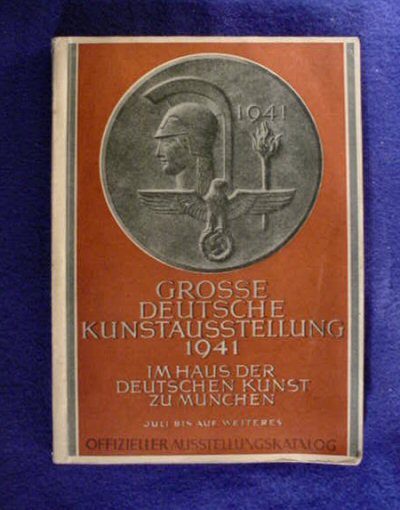
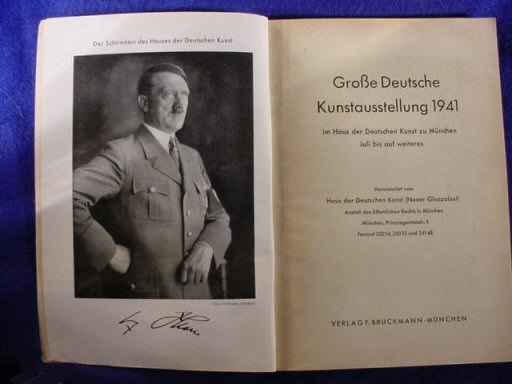
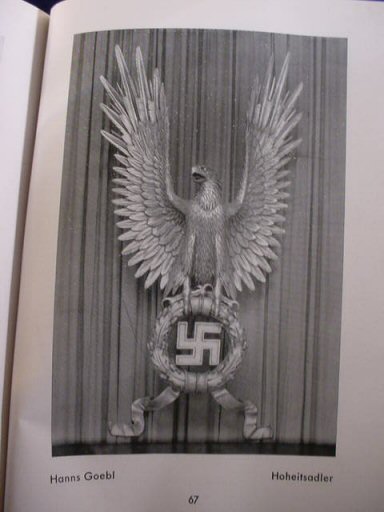
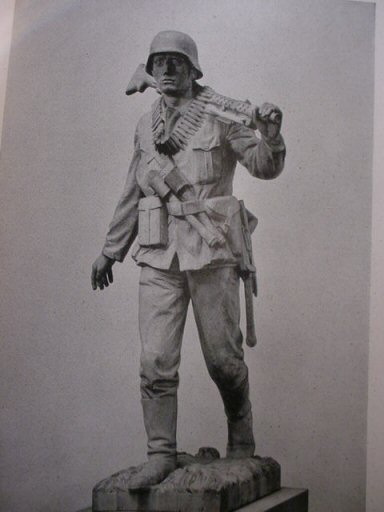
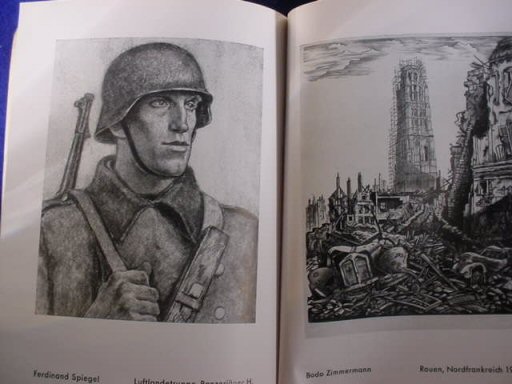
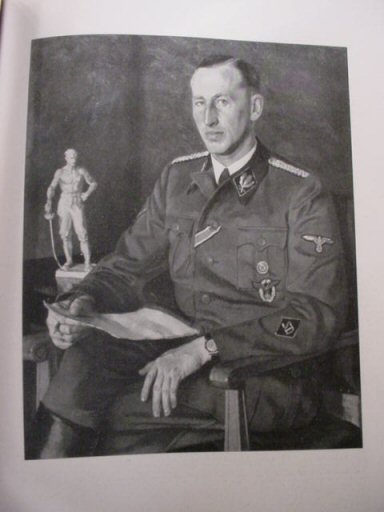
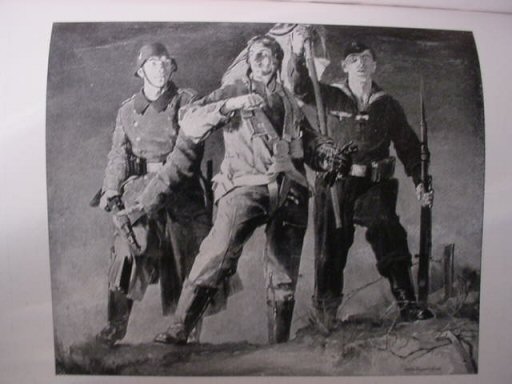
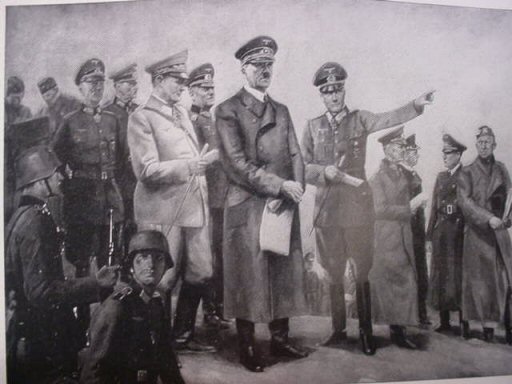
Book Grosse Deutsche Kunstausstellung, 1941 (Item ART 12-5)

DESCRIPTION: This is an official catalog of the Haus der Deutschen Kunst, House of German Art. It lists and displays many of the wonderful paintings and sculptures of the 1930s and 1940s, the art that is recognized more and more as the greatest of the 20th-century—masterpieces, all of them. Sculptures by master like Kurt Schmid Ehmen, F. Liebermann; paintings by such greats as Wolf Willrich, Sepp Hilz Franz Triebsch, etc., are included. These editions were issued each year, but this particular one is the most sought after because of its great content. See our thumbnails to see why.

PRICE: $95.00


Third Reich Art

Third Reich Art

Third Reich Art

Third Reich Art

Third Reich Art

Third Reich Art

Third Reich Art

Third Reich Art

Third Reich Art

Third Reich Art

Third Reich Art

Third Reich Art

Third Reich Art

Third Reich Art

Third Reich Art

Third Reich Art

Third Reich Art

Third Reich Art

Third Reich Art

Third Reich Art

Third Reich Art

Third Reich Art

Third Reich Art

Third Reich Art

Third Reich Art

Third Reich Art

Third Reich Art

Third Reich Art

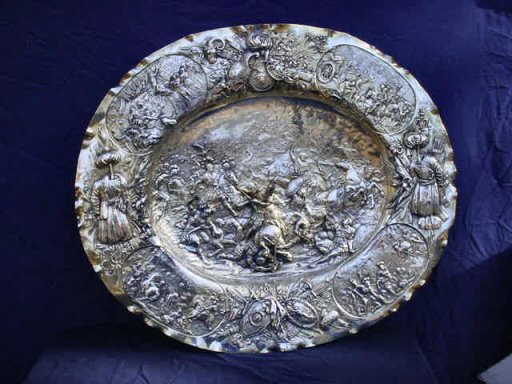
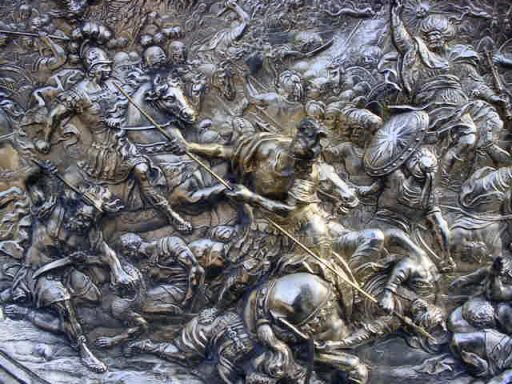
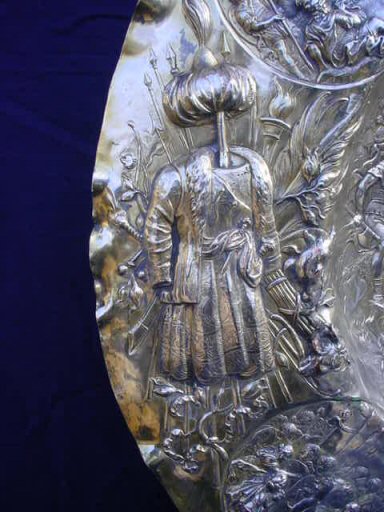
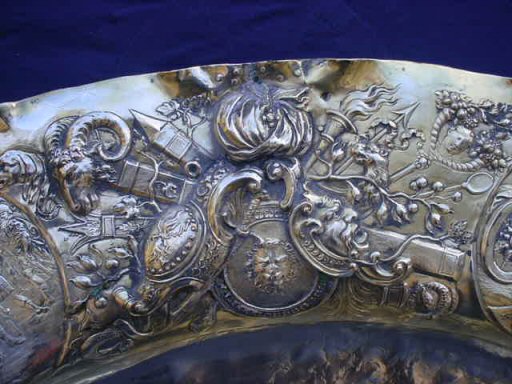
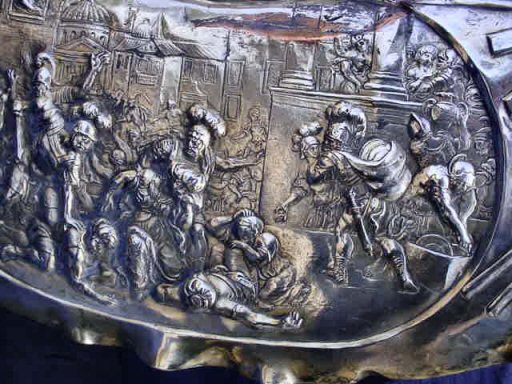
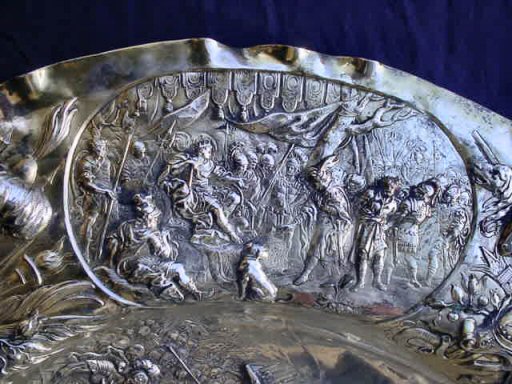
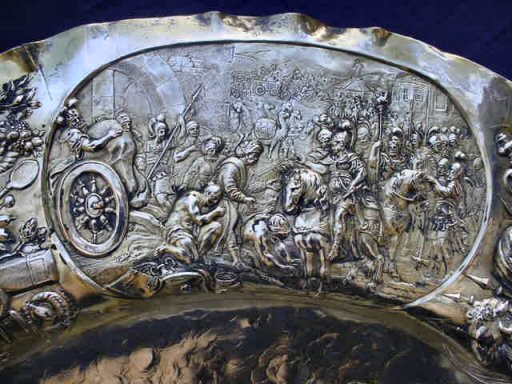
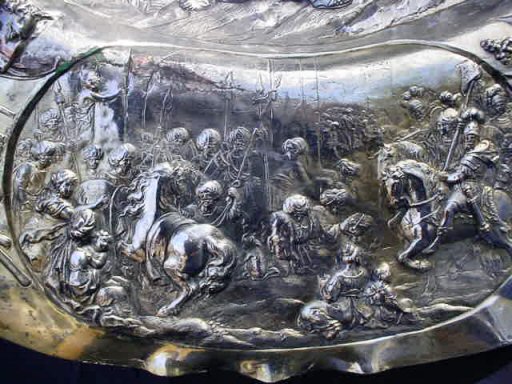
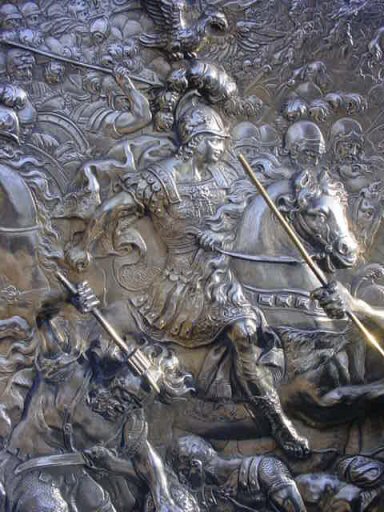
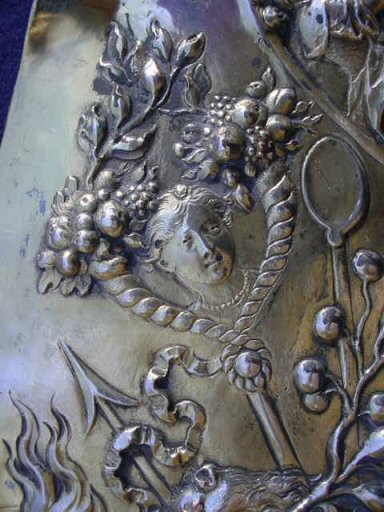
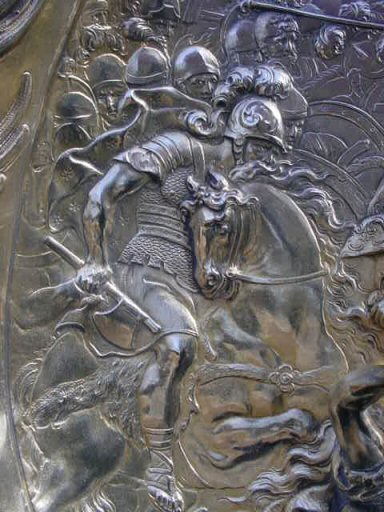
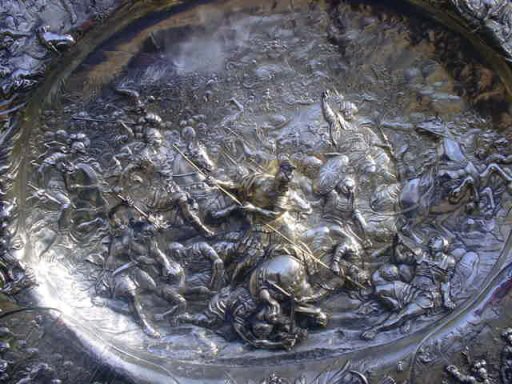
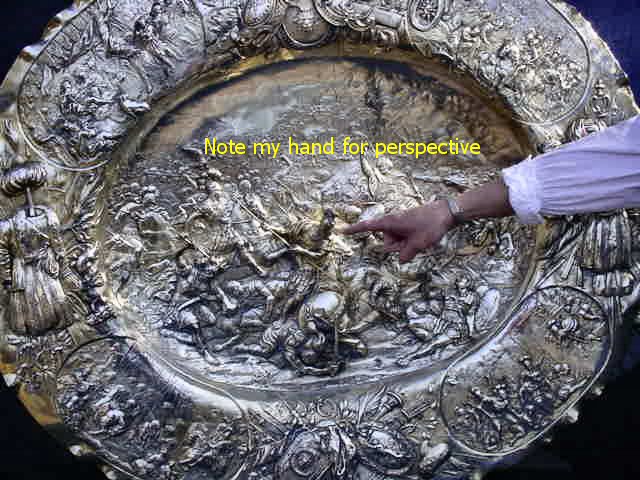
Giant Salver from Baronial Estate (Battle Scene) (Item ART 12-6; OLD 5-4)

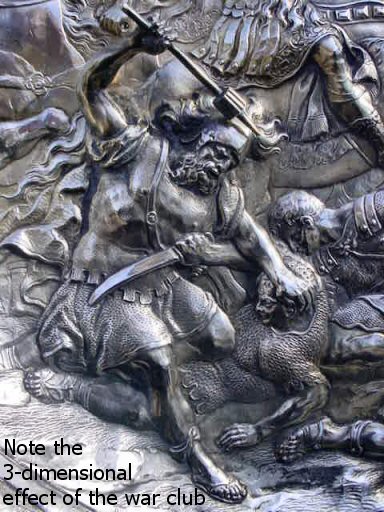
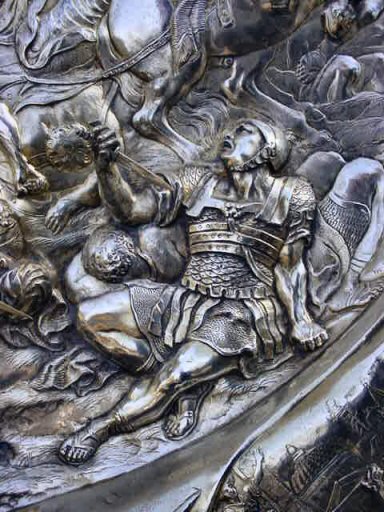
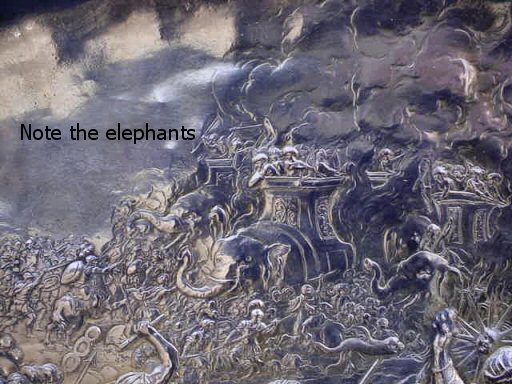
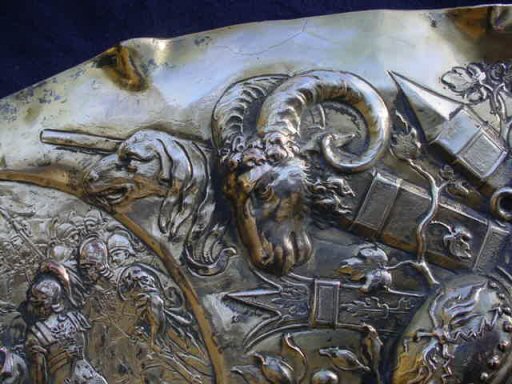
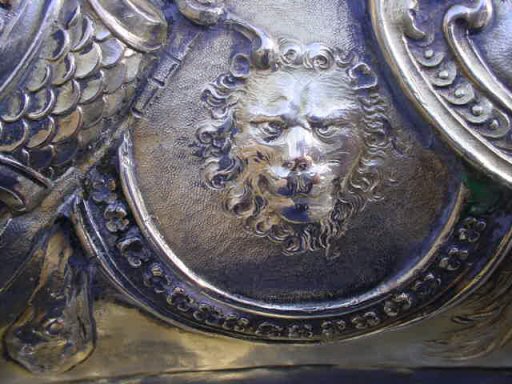
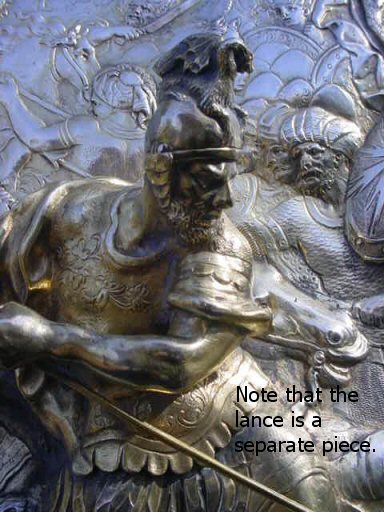
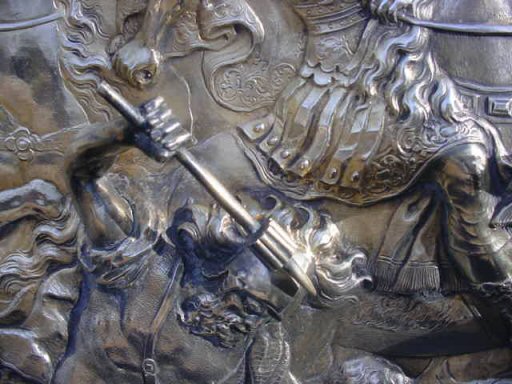
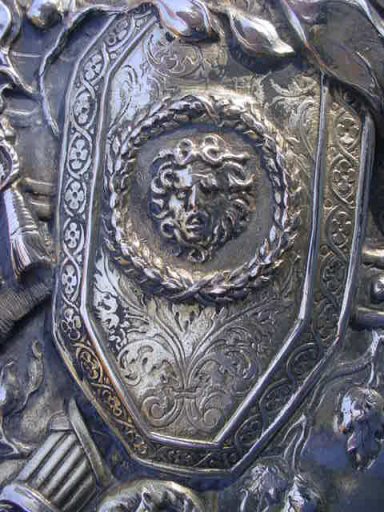
DESCRIPTION: This is the largest salver you may ever see unless you visit some European castle. This is definitely a royal appurtenance. It recently was brought out of Russia and by the look of it this was probably of Austrian origin by the historical subject matter at hand. We assume that this was carried off by marauding Russian looters at the end of the war in 1945. The people that it was received from aren’t talking. The utter magnificence of the piece is breathtaking! Austria was for centuries plagued by Turkish invaders, but under the generalship of such heroes as Prince Eugene of Savoy and others, they were driven out, but kept returning. Great battles were waged against the turbaned host as obviously is depicted here in this turbulent and bloody scene. You may note the use of elephants in one of the close-ups that we present. This obviously was a battle royal. Please understand, the artists of the 1700s were prone to poetic license and since historical accounts with pictures were not available the silversmith would borrow various uniform and weapon depictions from actual museum relics that they saw in famous collections. You are likely to see outfits and weaponry of various ages hundreds of years apart in these portrayals. All the same, the action and the saga do not lose any of their stark realism in the sculpture. This piece is gigantic. It’s probably copper with silver overlay plating done in the early form. The detail of the various individual fight scenes is fantastic. Around the edges are four scenes depicting various events that supposedly led to the great battle that followed at certain points. Hands, arms, and weapons project in decidedly realistic relief separate finely sculptured pieces that give a lifelike effect to the scene of ancient warfare. Through the whole of the battle scene and all around the edging are remnants of Muslim trappings. So the viewer immediately can see that this truly is rather a monumental work of art chronicling the great struggle for Europe’s freedom from Asian domination. This is truly a museum trophy without comparison. Germania International once more proudly offers the finest and most elegant of genuine art treasures of the west. Note the picture where my hand points to a detail on the salver. This is to give viewer perspective of the massive size of this wonderful relic of the time of grandeur and elegance.

PRICE: $13,500; probably worth many times this amount


Third Reich Art

Third Reich Art

Third Reich Art

Third Reich Art

Third Reich Art

Third Reich Art

Third Reich Art

Third Reich Art

Third Reich Art

Third Reich Art

Third Reich Art

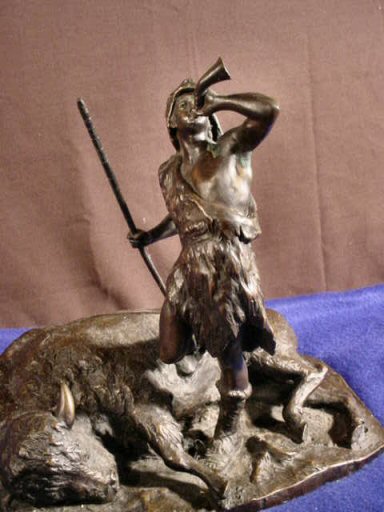
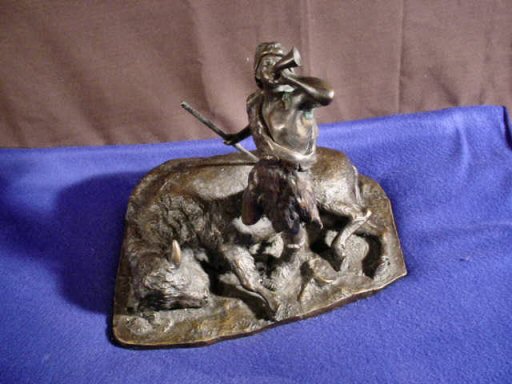
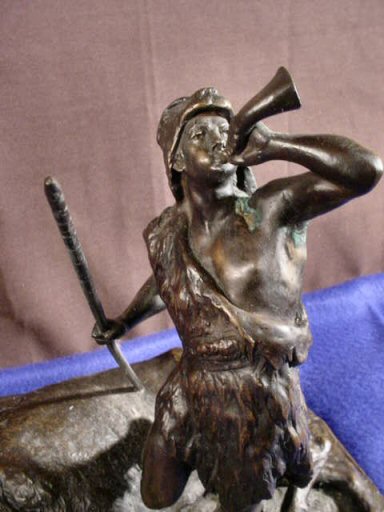
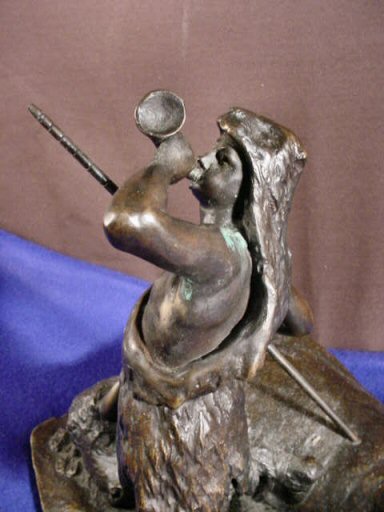
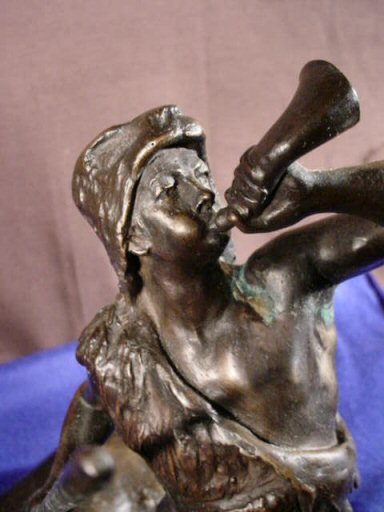
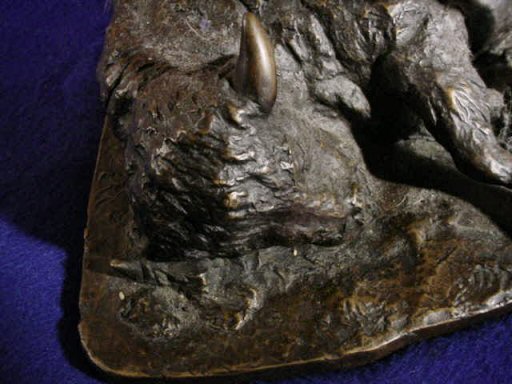
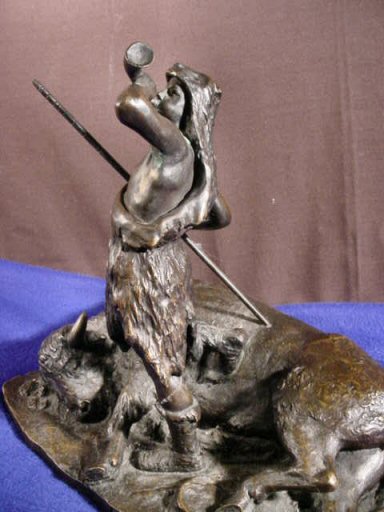
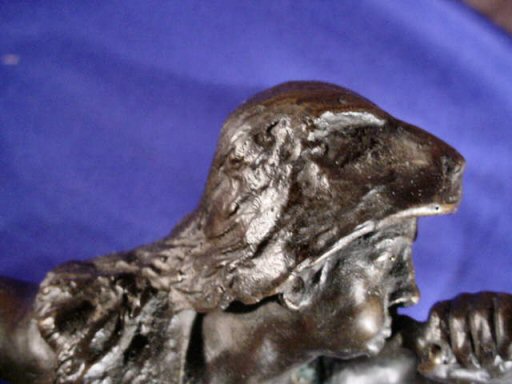
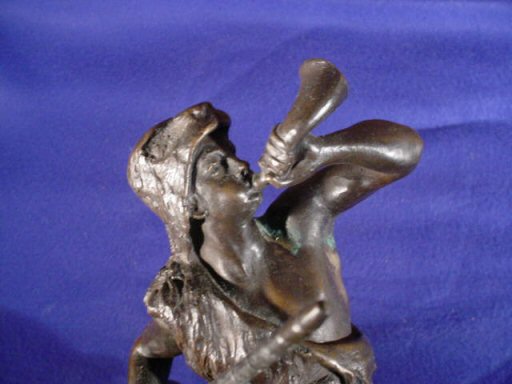
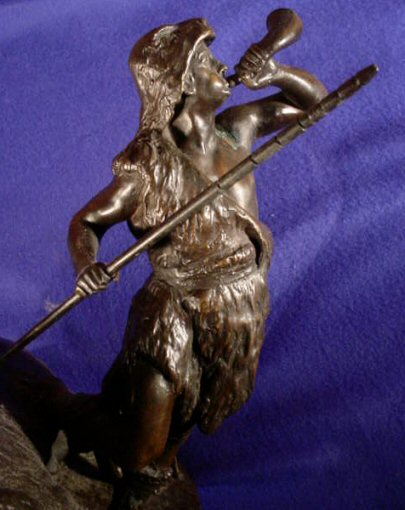
Germanic Hunter in Bronze (Item ART 12-7; OLD 5-5)

DESCRIPTION: Here is an original bronze sculpture of a Teutonic warrior with his kill (a buffalo). This is a very refined and greatly detailed work of art; probably late 19th century. The tribesman blows the call of the successful hunt, “Hallai!” This call harks back to centuries before even this hunter walked the German forests. The start of the hunt begins with the call of “Horido” and ends, if game is taken, with “Hallai!.” This is a very dramatic and descriptive sculpture—actually a museum piece of note. It is signed by the bronze master, who has “01” next to his name; is this the date 1901 or is this number 1 of a limited series? The artist’s name is hard to make out, but seems to be something like ‘Ottfer’ or ‘Ollfer.’ The length of the sculpture is about 14 inches measured across the base. The height from the bottom to the top of the hunting horn is 12 inches. The hunting spear is 9 inches long. This is a 100-percent original-period bronze sculpture dating from the turn of the 20th century. It would be something any museum devoted to European history would be proud to display. It’s in perfect condition and original.

PRICE: $3,200.00


Hitler

Hitler


Hitler

Hitler

Hitler

Hitler

Hitler

Hitler

Hitler

Hitler

Hitler

Hitler

Hitler

Hitler

Hitler

Book Bauten in der Stadt der Reichparteitage Nürnberg (Item ART 12-8; PARTEI 3-7)

DESCRIPTION: This is a beautiful book with practically mint-condition binding with bright gold lettering. It is a very special edition of a book that otherwise exists in a much more plain, brown, linen edition. This cover is exquisite! The book is devoted to the then-existing and planned buildings and various complexes of the grounds of the Nuremberg Party Rally area; in color pictures and in astoundingly beautiful black-and-white photos, a picture of what would have been the world’s most gorgeous communal compound is presented here. Many of the pages are in a thick, linen-composition material; some of the finest book-page material ever used. This type of paper is the style used on important documents or awards (parchment stock). Many plans are beautifully laid out in detail for future buildings, parks, and barracks. Wonderful art objects are shown including tapestries, wall paintings, bronze busts, flags, special furniture, etc. Architectural plans for an open-range zoo are show in detail with a great color map with numbered designations laid out including a Disneyland-type train that would transport people all around the zoo grounds. Much of this work had already been started before the terrible war stopped it all. The book was dedicated and presented to the public by Willy Leibel, the Oberburgermeister of the city of the Reich party rallies, Nuremberg. It’s not dated but we believe it is from 1937 or 1938. It measures 12 x 9 inches and has 94 pages of pictures and text and then there are 26 pages of architectural drawings at the back and the zoo foldout. This book is indeed a treasure and should be preserved in a good collection.

PRICE: $380.00; a bargain extraordinaire


France

France

France

France

France

France

France

France

France

Nymphenburg Porcelain Figure of 18th-Century Soldier (Bandsman) (Item ART 12-9; FRAN 2-11; KGLASS 2-7)

DESCRIPTION: This is an absolutely remarkable porcelain figure by the Nymphenburg Porcelain Manufactory of a drum major of the Régiment d’Erlach, 1762-1782, an elite French regiment of Cuirassiers. This figure probably dates from the period of the Third Reich. It’s of SS Allach quality and quality is always a keyword when speaking of Nymphenburg porcelain. It was one of the major companies producing fine porcelain. The first factory was established in 1747 at the castle of Neudeck, outside Munich, by Maximilian III Joseph, elector of Bavaria. The wares produced there are sometimes called “Neudeck–Nymphenburg.” In 1761, the factory was moved to Nymphenburg, on the outskirts of Munich, and has one of the most beautiful palaces of Europe. It was the summer residence of the Bavarian monarchs. In the palace is a wonderful collection on display of Nymphenburg porcelain. In fact, the porcelain started out by supplying the Wittelsbach monarchy. The company has the reputation and tradition of uninterrupted porcelain production of the very finest quality for 250 years. The porcelain figures turned out in the 1930s and 1940s are not only of Allach quality, but, in some cases, finer, but in this fineness, they are also subject to damage more than other companies’ figures. Why? Because Nymphenburg’s military figures had extended appurtenances such as rifles, bayonets, band leader’s staff; all being quite delicate and subject to breakage. Other companies shied away from this and molded their figures with a minimum of extended breakable items. The pieces that you see on this figure by all intents and purposes should be “gone,” because the collector in Germany took great care of them, and when we bought them he insisted they be specially packed in a box that was enclosed in another box that in turn was in another box. This figure is absolutely beautiful and represents accurately the uniform of the period. It’s in absolute perfect condition throughout and quite rare.

PRICE:  SOLD


France

France

France

France

France

France

Nymphenburg Porcelain Figure of an 18th-Century Fusilier (Item ART 12-10; FRAN 2-12; KGLASS 2-8)

DESCRIPTION: Here is a marvelous depiction in fine porcelain by the Nymphenburg Porcelain Manufactory of an 18th-century soldier in battle dress. He is a Fusilier of the Division Stachelm, 1792. We were unable to research this division, but are pretty certain it was a French line infantry division. This figure probably dates from the period of the Third Reich. It’s of SS Allach quality and quality is always a keyword when speaking of Nymphenburg porcelain. It was one of the major companies producing fine porcelain. The first factory was established in 1747 at the castle of Neudeck, outside Munich, by Maximilian III Joseph, elector of Bavaria. The wares produced there are sometimes called “Neudeck–Nymphenburg.” In 1761, the factory was moved to Nymphenburg, on the outskirts of Munich, and has one of the most beautiful palaces of Europe. It was the summer residence of the Bavarian monarchs. In the palace is a wonderful collection on display of Nymphenburg porcelain. In fact, the porcelain started out by supplying the Wittelsbach monarchy. The company has the reputation and tradition of uninterrupted porcelain production of the very finest quality for 250 years. The porcelain figures turned out in the 1930s and 1940s are not only of Allach quality, but, in some cases, finer, but in this fineness, they are also subject to damage more than other companies’ figures. Why? Because Nymphenburg’s military figures had extended appurtenances such as rifles, bayonets, band leader’s staff; all being quite delicate and subject to breakage. Other companies shied away from this and molded their figures with a minimum of extended breakable items. The pieces that you see on this figure by all intents and purposes should be “gone,” because the collector in Germany took great care of them, and when we bought them he insisted they be specially packed in a box that was enclosed in another box that in turn was in another box. This figure is absolutely beautiful and represents accurately the uniform of the period. It’s in absolute perfect condition throughout and quite rare.

PRICE:  SOLD


France

France

France

France

France

France

France

France

France

France

Nymphenburg Porcelain Figure of an 18th-Century (Drummer) (Item ART 12-11; FRAN 2-13; KGLASS 2-9)

DESCRIPTION: This again is a wonderful depiction by the Nymphenburg Porcelain Manufactory of an 18th-century of a French drummer of the Régiment d’Erlach, 1762-1782. This figure probably dates from the period of the Third Reich. It’s of SS Allach quality and quality is always a keyword when speaking of Nymphenburg porcelain. It was one of the major companies producing fine porcelain. The first factory was established in 1747 at the castle of Neudeck, outside Munich, by Maximilian III Joseph, elector of Bavaria. The wares produced there are sometimes called “Neudeck–Nymphenburg.” In 1761, the factory was moved to Nymphenburg, on the outskirts of Munich, and has one of the most beautiful palaces of Europe. It was the summer residence of the Bavarian monarchs. In the palace is a wonderful collection on display of Nymphenburg porcelain. In fact, the porcelain started out by supplying the Wittelsbach monarchy. The company has the reputation and tradition of uninterrupted porcelain production of the very finest quality for 250 years. The porcelain figures turned out in the 1930s and 1940s are not only of Allach quality, but, in some cases, finer, but in this fineness, they are also subject to damage more than other companies’ figures. Why? Because Nymphenburg’s military figures had extended appurtenances such as rifles, bayonets, band leader’s staff; all being quite delicate and subject to breakage. Other companies shied away from this and molded their figures with a minimum of extended breakable items. The pieces that you see on this figure by all intents and purposes should be “gone,” because the collector in Germany took great care of them, and when we bought them he insisted they be specially packed in a box that was enclosed in another box that in turn was in another box. This figure is absolutely beautiful and represents accurately the uniform of the period. It’s in absolute perfect condition throughout and quite rare.

PRICE:  SOLD


Page One

Page Two

Page Three

Page Four

Page Five

Page Six


Page Seven

Page Eight

Page Nine

Page Ten

Page Eleven

Page Twelve


Page Thirteen

Page Fourteen

Page Fifteen


Contact Us

Please refer to item designator in parentheses in all correspondence.

Please E-mail for any additional information you may need.

If you prefer surface mail, contact Paul Poole at PO Box 149, Mountain City, GA 30562
or call at 706.782.1668.