|
|
|
|


Hunting and Shooting in Germany
Page 7
|
|
| ||||||||||
|
Dagger of the German National Hunting Association, Reichsbund Deutsche Jägerschaft (Item HUNT 7-1) |
||||||||||
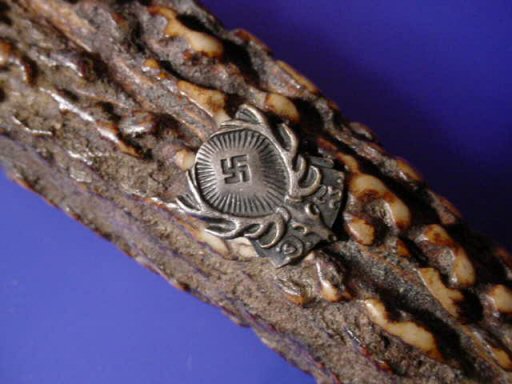
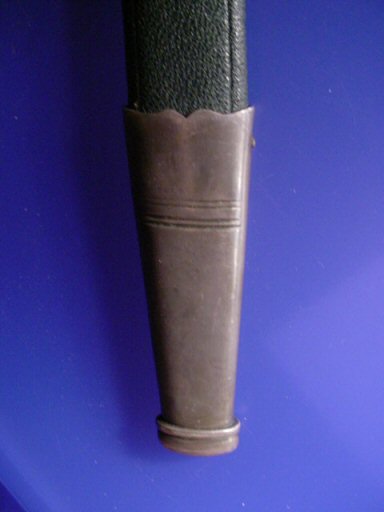
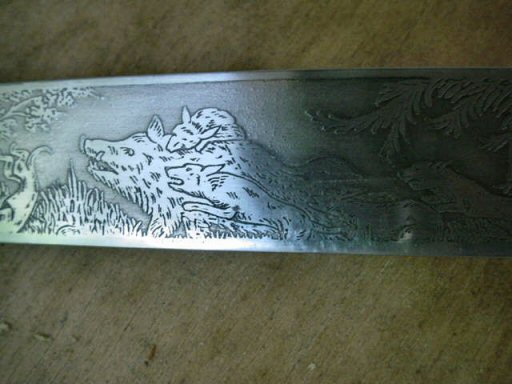
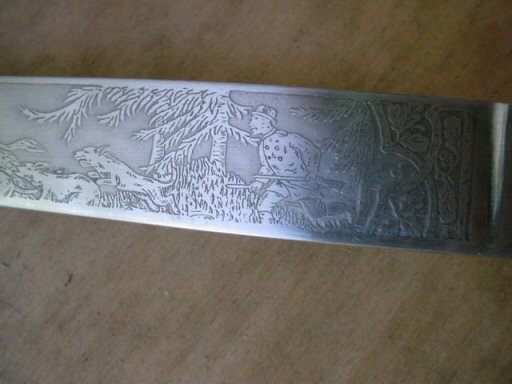
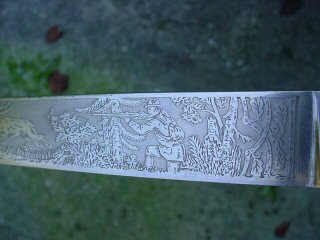
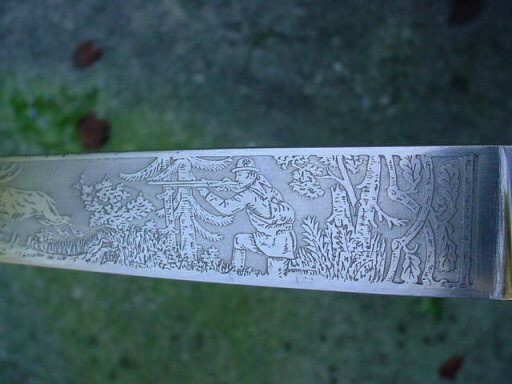
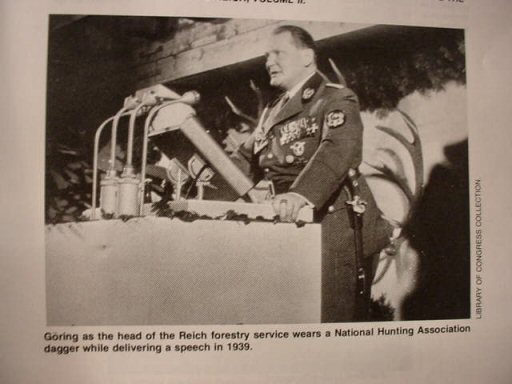
| DESCRIPTION: The German National Hunting Association was a public sporting organization under the direction and control of the National Hunting Master, Hermann Göring. The primary objective of the association was to advance game conservation through the enforcement of its own and national hunting regulations. Göring was the natural pick to head this association as his favorite pastime was stalking game in the beautiful and plentiful forests of the German homeland. The dire need to closely regulate wild game has extended to present-day Germany. The prospective hunter then, and now, is required to undergo a rigid written examination and if successful his trips to the filed were highly supervised. The dagger we offer here is the regulation National Hunting Association knife authorized for wear by all members of the NHA. The individual was given the option of purchasing the regulation or the deluxe version from an authorized commercial marker or directly from the Solingen factories. The regulation pattern was authorized in 1936. Tom Johnson, in volume one of his book Collecting the Edged Weapons of the Third Reich, states that collectors’ availability was “rare,” and the book was published back in 1982. The example we offer is in near-mint condition with a beautiful etched blade by E&F Horster Solingen. The stag grip and green leather-covered scabbard are in 100 percent perfect condition. The large fluted clamshell guard is with fine patina. The cross guard is recurved with two deer hooves. The hunting-association insignia is an elk’s head with swastika centered between the antlers. The blade is etched with beautiful hunting scenes and motifs. This is just as fine an example of the most elegant NS edged weapons that you will ever encounter.
PRICE: SOLD |


| |||||||||||
|
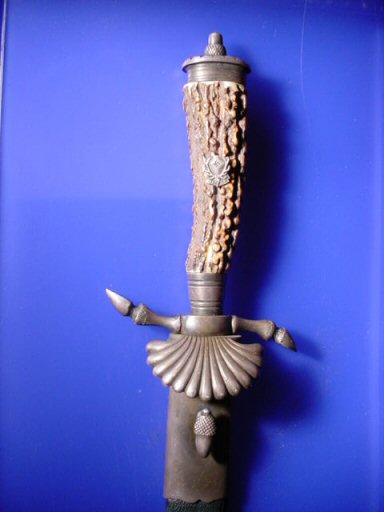
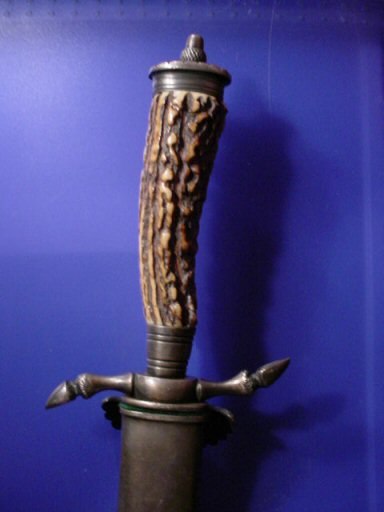
Dagger of the German National Hunting Association, Plain Blade (Item HUNT 7-2) |
|||||||||||
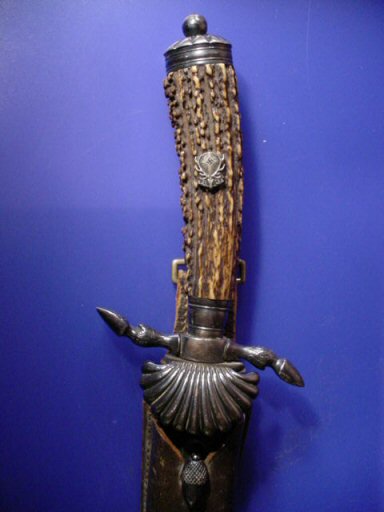
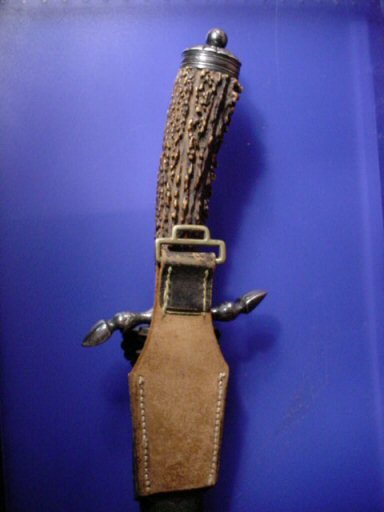
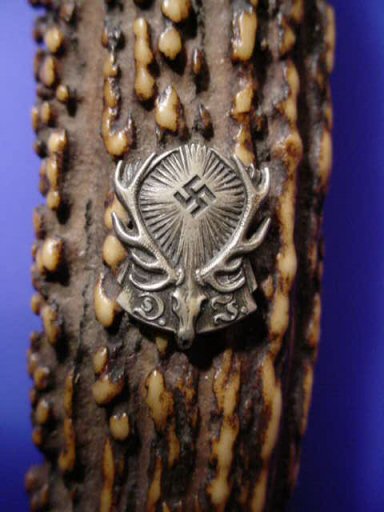
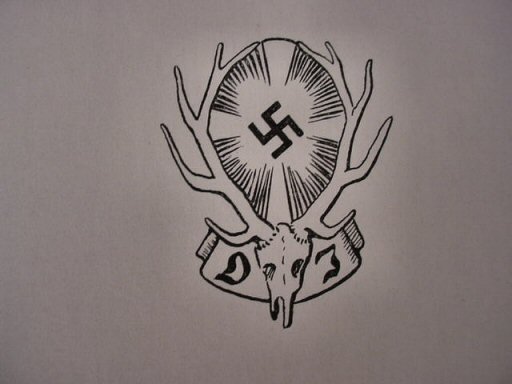
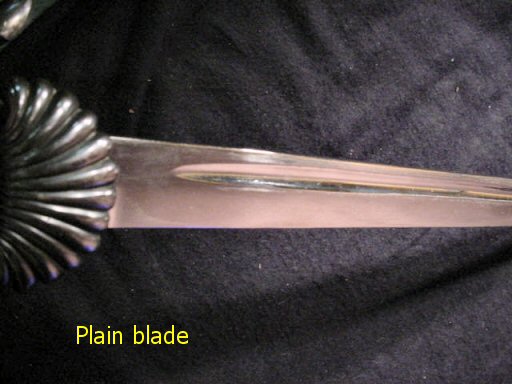
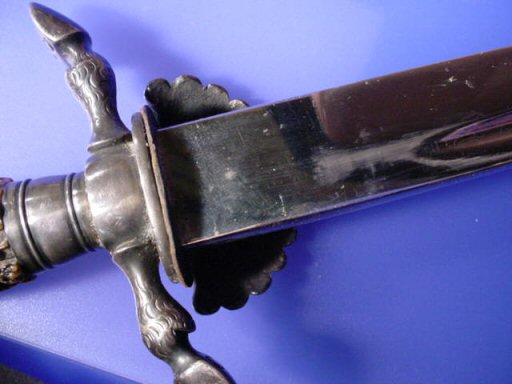
| DESCRIPTION: The German National Hunting Association was a public sporting organization under the direction and control of the National Hunting Master, Hermann Göring. The primary objective of the association was to advance game conservation through the enforcement of its own and national hunting regulations. Göring was the natural pick to head this association as his favorite pastime was stalking game in the beautiful and plentiful forests of the German homeland. The dire need to closely regulate wild game has extended to present-day Germany. The prospective hunter then, and now, is required to undergo a rigid written examination and if successful his trips to the filed were highly supervised. The dagger we offer here is the regulation National Hunting Association knife authorized for wear by all members of the NHA. The individual was given the option of purchasing the regulation or the deluxe version from an authorized commercial marker or directly from the Solingen factories. The regulation pattern was authorized in 1936. Tom Johnson, in volume one of his book Collecting the Edged Weapons of the Third Reich, states that collectors’ availability was “rare,” and the book was published back in 1982. The example we offer is in near-mint condition with a beautiful etched blade by E&F Horster Solingen. The stag grip and green leather-covered scabbard are in 100 percent perfect condition. The large fluted clamshell guard is with fine patina. The cross guard is recurved with two deer hooves. The hunting-association insignia is an elk’s head with swastika centered between the antlers. This particular example is with plain hunting blade. On page 128 of the aforementioned book by Tom Johnson, he says, “The blades are usually etched with various hunting scenes and motifs although a plain-blade model was also available to the purchaser.” Actually, the plain blade is scarcer than the etched ones and to some, more desirable, since they were thicker bladed with a blood groove; made so that it could be used in a hunting kill. This example is definitely in fine condition and has the dark-green leather carry frog that is so dark it looks brown. The scabbard tip is also a bit different and looks like the type used on the deluxe model. Personally, I believe these pieces to be the most classic-looking daggers of the Reich.
PRICE: SOLD |



| |
|
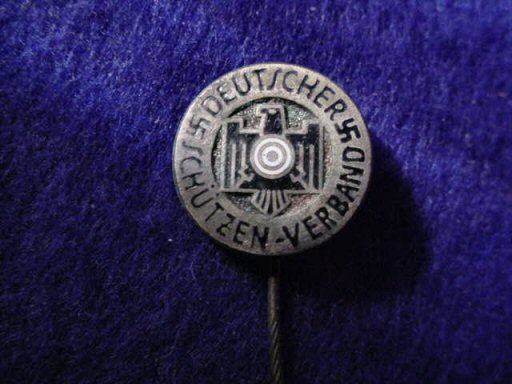
Stickpin of the Deutscher Schützen-Verband (Item HUNT 7-3) |
|
| DESCRIPTION: This is the official German Shooting Organization membership stickpin worn by those citizens who were involved in competition shooting sports. It shows the black eagle with target rings and two swastikas between the letters. It was founded in 1937 by Göring. This was the only official government-sponsored shooting club.
PRICE: SOLD |
| |
|
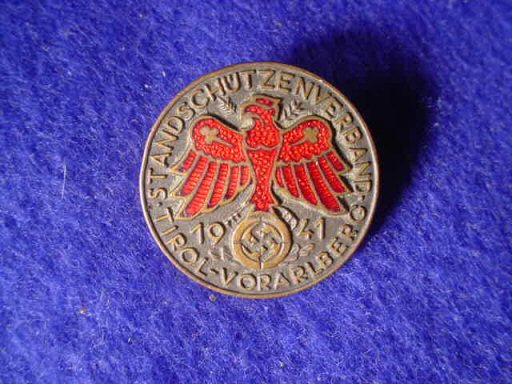
Tyrolean Shooting Badge Pin (Item HUNT 7-4) |
|
| DESCRIPTION: Dime-sized, this is a beautiful little membership pin for the Standschützenverband in the Tyrolean town of Vorarlberg. It’s dated 1941, with the wonderful Tyrolean red eagle in the center. The back is marked Iche Aklammer Innsbruck (the Co.). It about the size of a U.S dime.
PRICE: SOLD |
|
||||||||||||||||||||
|
Imperial Shooting Pokal Prize (Item HUNT 7-5; POKALS 1-1) |
||||||||||||||||||||
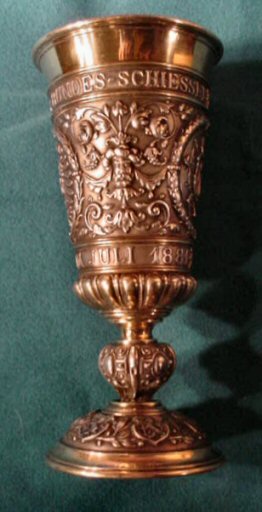
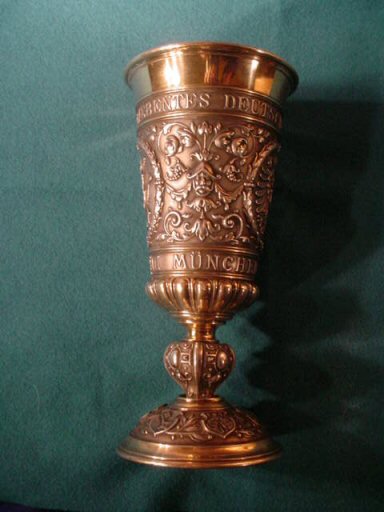
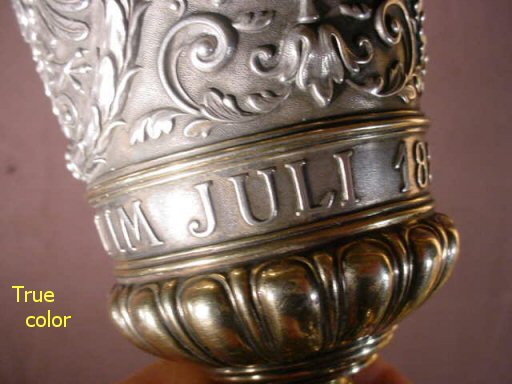
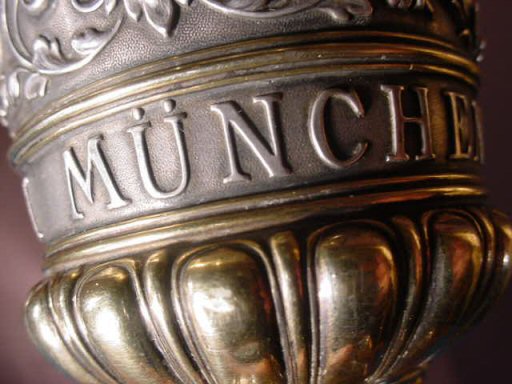
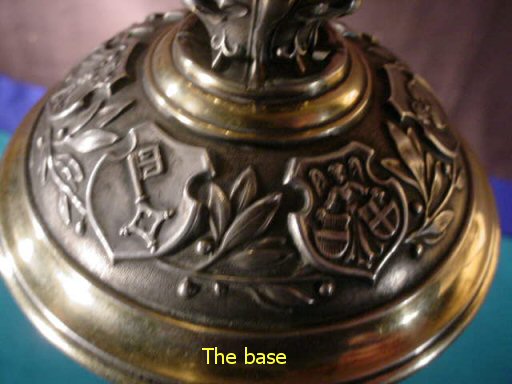
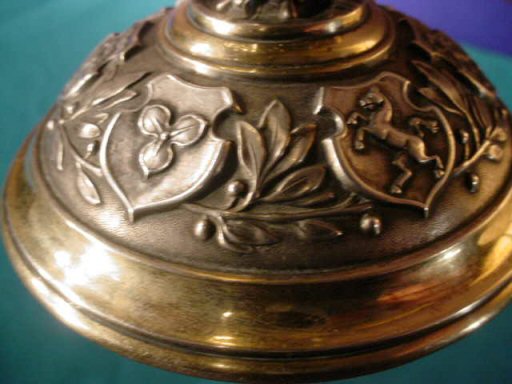
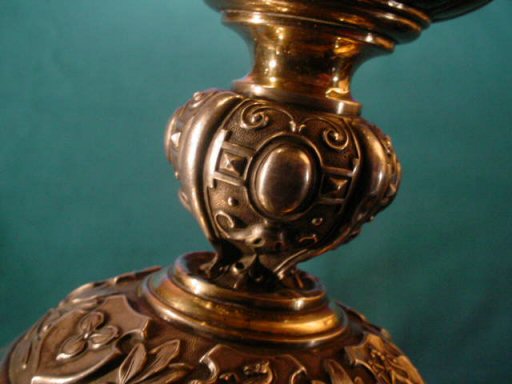
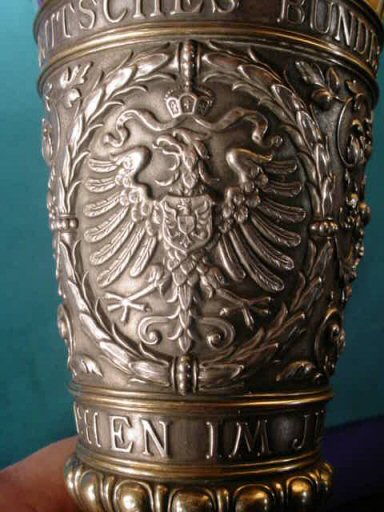
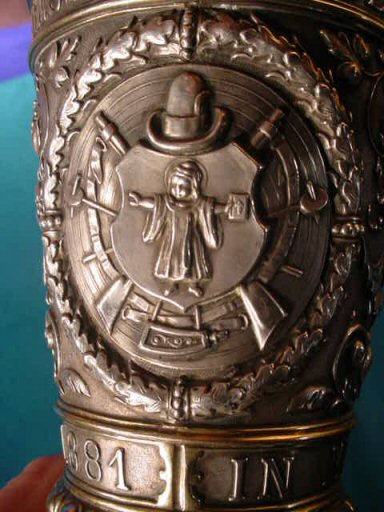
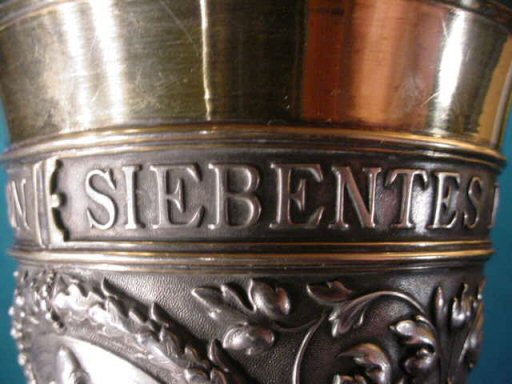
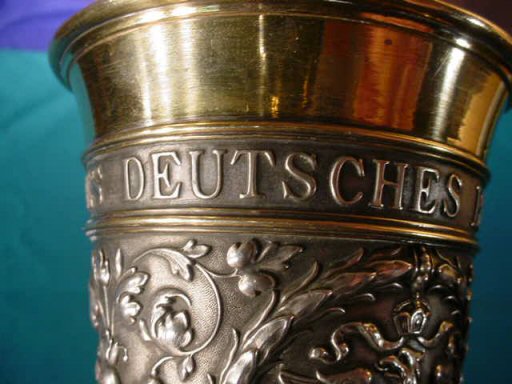
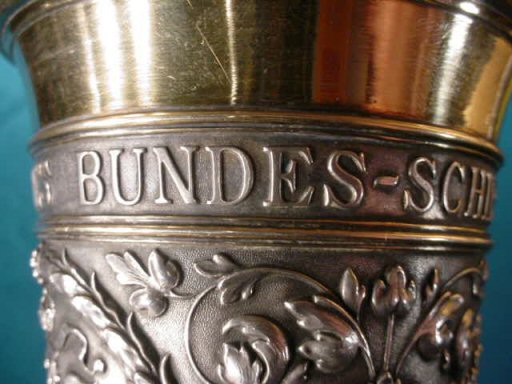
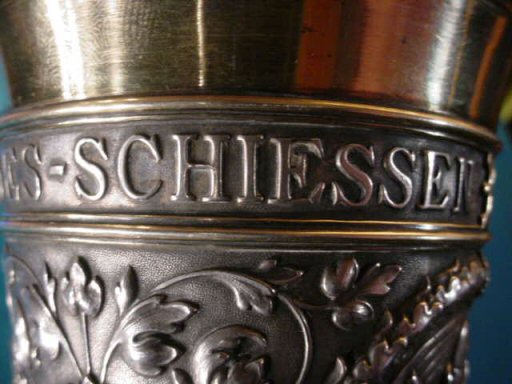
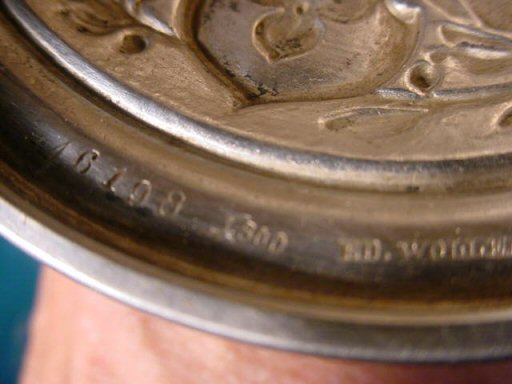
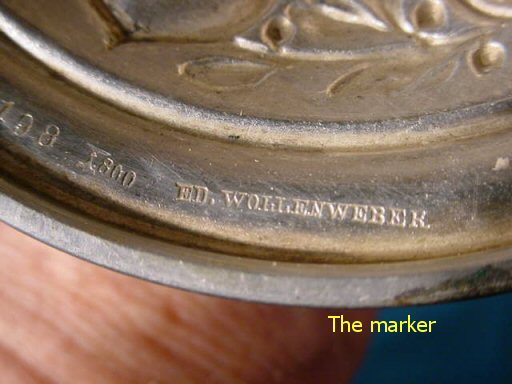
| DESCRIPTION: Here is one of the nicest little silver shooting goblets we have ever had the pleasure of owning. It’s a subject close to our hearts. We love these particular objects as no doubt the original winners and owners did. Of particular interest and value are the Schützenpokale for proficiency in the shooting sports. This was the major pastime of royals and landed gentry in the Kaiserzeit, or time of the German emperors in the Third Reich. It extended to the regular citizenry as well because of the efforts of such conservation-minded people such as Reichsmarschal and Master of the Hunt, Hermann Göring. The silversmiths of the Reich usually knocked themselves out in the production of these highly prized art pieces. This one is especially beautiful and highly chased and detailed. In the front-center panel is the national German eagle with the Hohenzollern eagle in the center of its chest. The crown of Prussia sits on its head. On the reverse side is the Munich Maid symbol surrounded by rifles, Jäger hat, target markers, etc. The sides and base are highly detailed with such depictions as grotesque faces, flora patterns, etc. The shield symbols of the various German states taking part in the shoot are also depicted. The name of this particular event is Siebentes Deutsches Bundes-Schiessen in München im Juli 1881 and this is found in raised form close to the top and midway around the body. The piece is numbered under the base and here is also found the maker and the required moon, crown, and ‘800’ silver designation. Without a doubt this is the finest and best we have ever encountered in this field. It measures 8 1/2 inches high with the opening being 4 inches wide. It’s in perfect condition throughout. The best of them are the delicate lightweight ones and this one fills the bill.
PRICE: SOLD |





|
||||||||||||||||
|
Bronze Sculpture of Teutonic Hunter (Item HUNT 7-6; KSTATUE 3-11; ART 13-5) |
||||||||||||||||
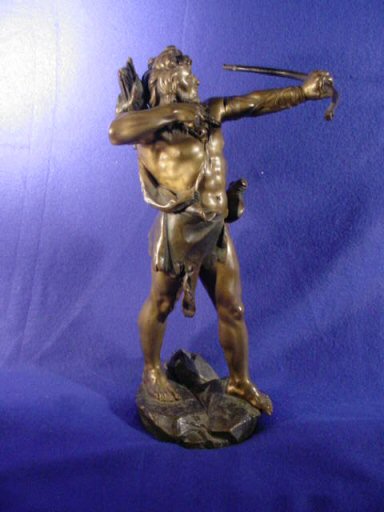
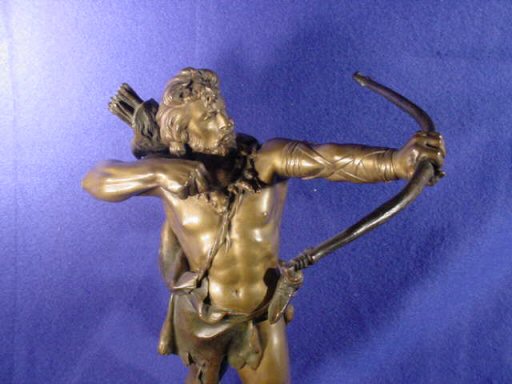
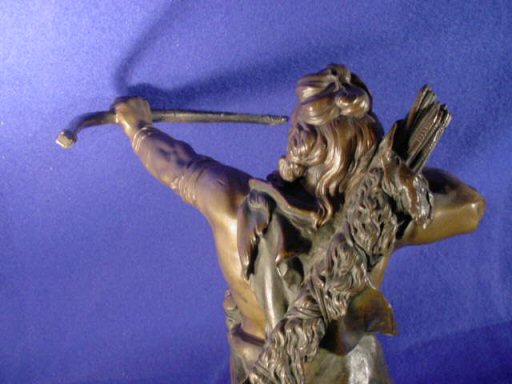
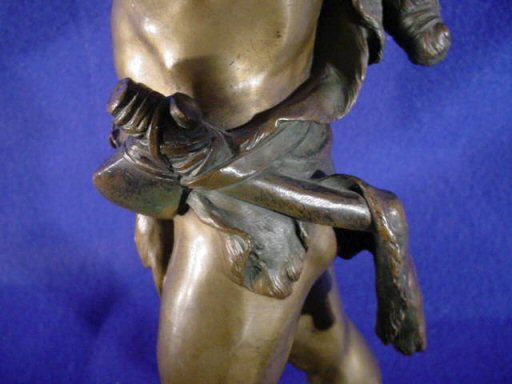
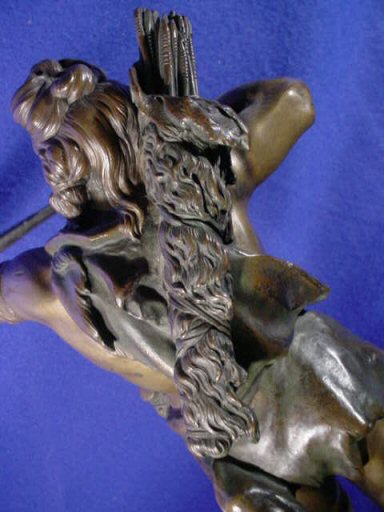
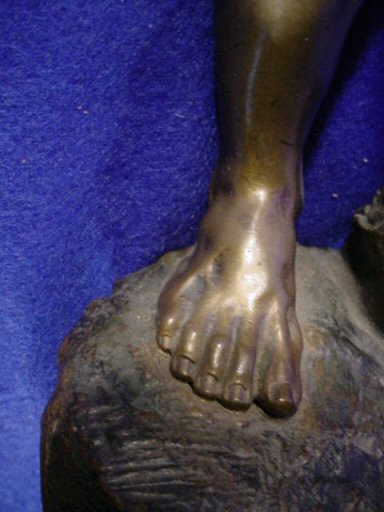
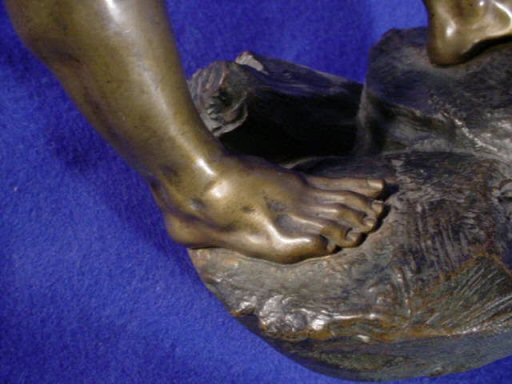
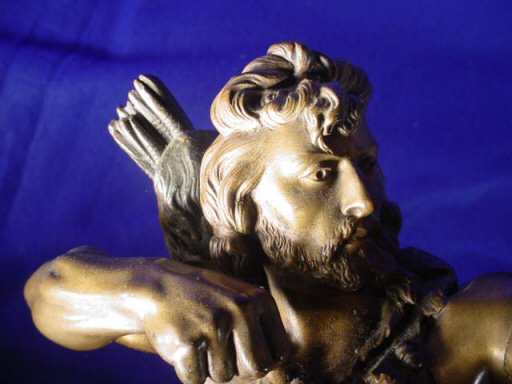
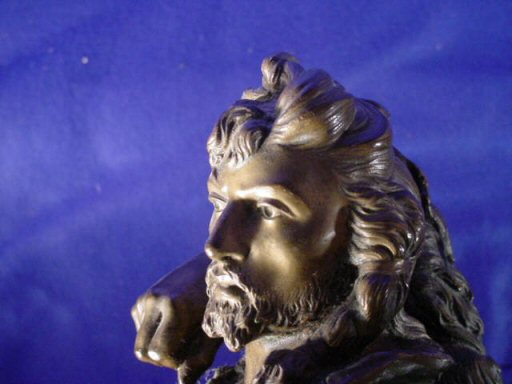
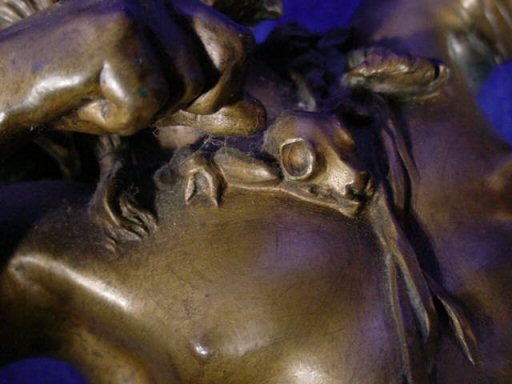
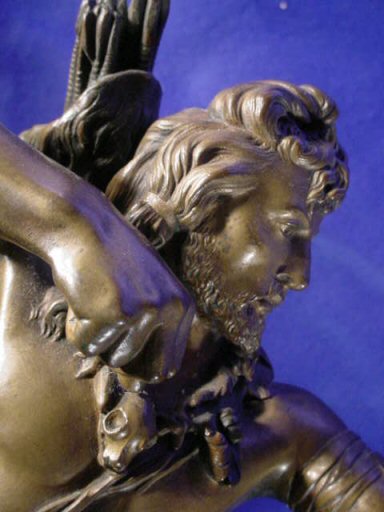
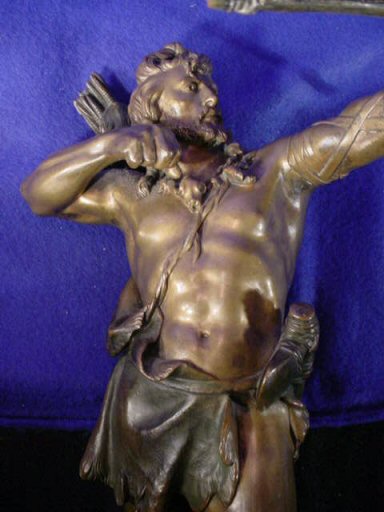
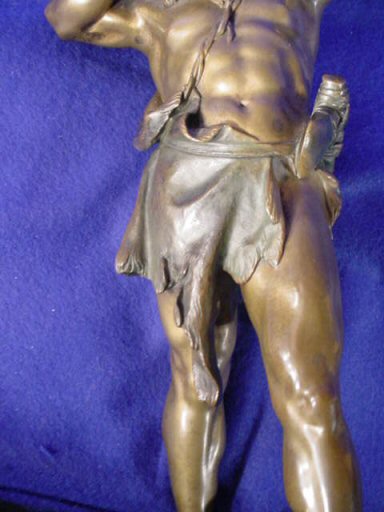
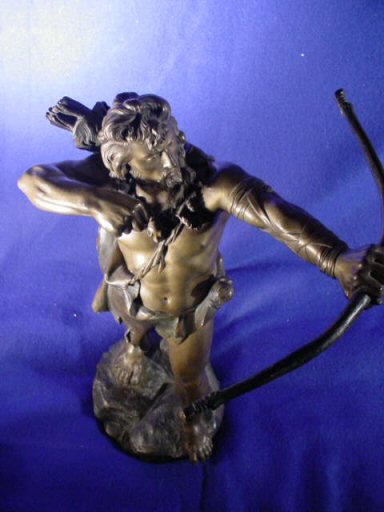
| DESCRIPTION: We have seen larger bronzes; we have seen bronzes by famous sculptors; we have seen bronzes that in themselves are famous; but, we have in all our years never seen a better bronze sculpture than this one. The artist who created this one was a master beyond comparison; an archeologist (at least in theory), and with a fantastic knowledge of human anatomy. Nothing touches this piece for sheer lifelike quality throughout. The statue is a depiction of an ancient Germanic warrior in the stance of hunting with bow and arrows. Every vein, every muscle tenses as he loosens the arrow at the game he hunts. He stands upon a rock formation that is also ultra-realistic. He wears animal-skin garments with an animal-skull necklace that adorns his chest. He has a sinew-wrapped stone-head ax at his waist. The quiver on his back and the bow are so realistic as to make the viewer sure that he has just seen the arrow in flight. The Aryan face and typical top-knot hairstyle is Teutonic in every way. These were the warriors that defeated three Roman legions at the Teutobergerwald battle under the leadership of Hermann, the Churisi, in the year 9 AD. We cannot say enough about this magnificent sculpture. It is in pure bronze with a great patina. It stands about 14 inches high and is signed by Henry Weisse. Note: it has always been said that when an artist can portray hands, “he has arrived.” Hands are more difficult in paintings and sculpture than a face. Even more difficult are feet. Look at the images of the feet to comprehend the excellence of Weisse’s work. We have included with the overall pictures a group of detailed images that should be studied closely. You are in my opinion looking at one of the finest bronzes to ever come out of the Deutsches fatherland. We don’t know when Mr. Weisse worked, but the piece was typical of the romantic bronzes of the mid 19th century. However, the theme of the noble Germanic warrior was foremost in the mythos of the NSDAP (Nazi Party) and it could be as late as that period. It is a true treasure and an important art masterpiece indeed. This is for the ultimate connoisseur of realism, he that would reject the garbage called “modern art” as so much Dreck and Kitsch.
PRICE: $9,850.00; should be much more |


|
|||||||||||
|
Target Prize for Excellent Shooting (1940) Luftwaffe? Hunting & Shooting and Luftwaffe (Item HUNT 7-8; LUFT 14-13; EAGLE 1-1) |
|||||||||||
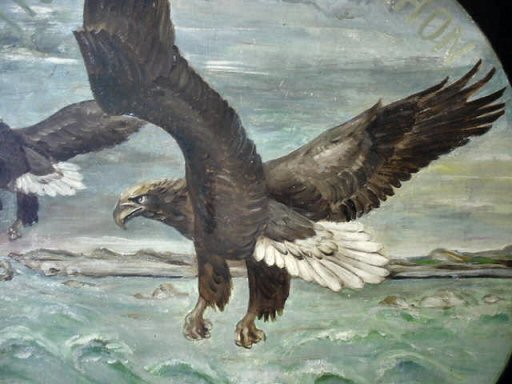
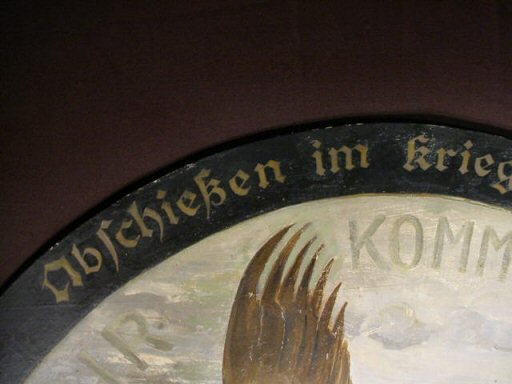
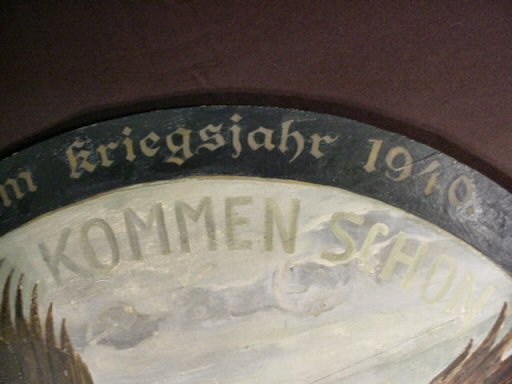
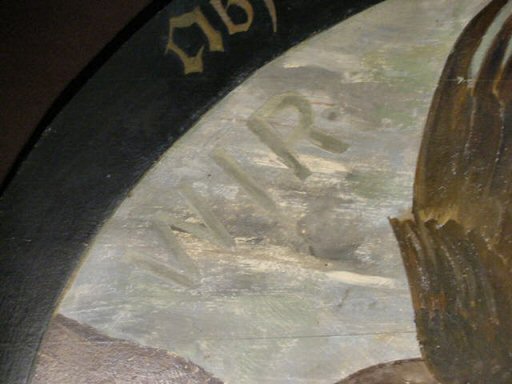
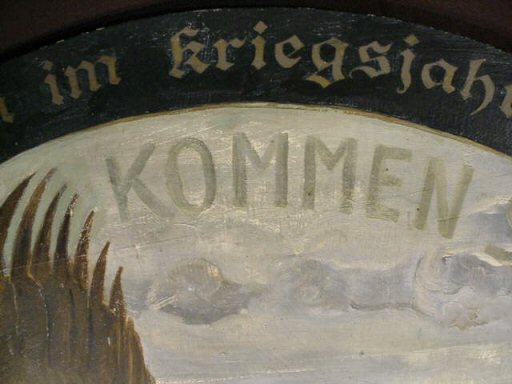
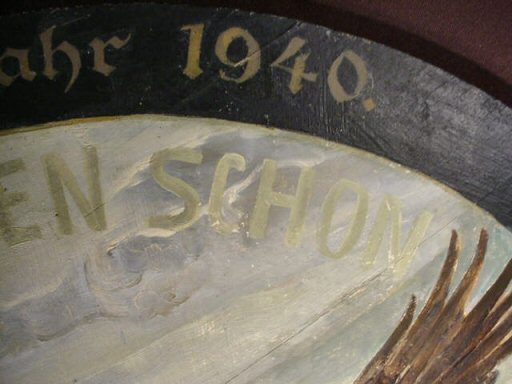
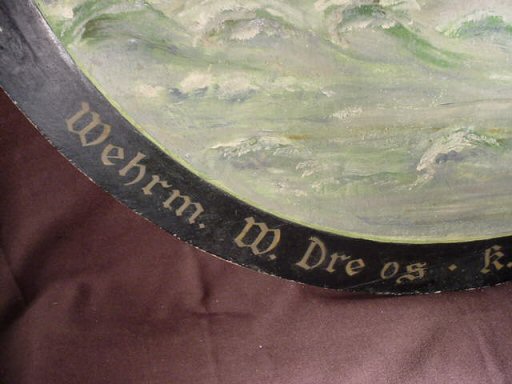
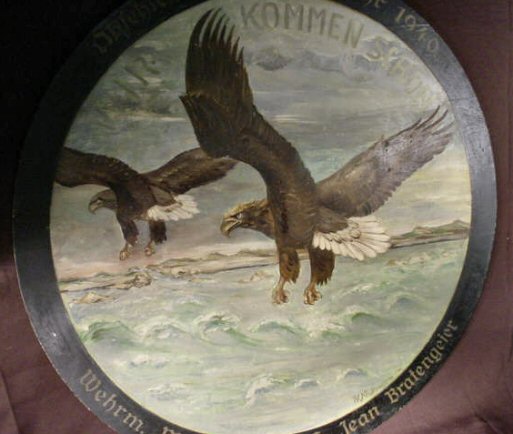
| DESCRIPTION: Here is one of the famed targets that were given as prizes at shooting competitions. This one was won by a Jean Bratengeier. It’s signed by the artist in 1940, when it was presented. This was the Kriegsjahr 1940 (War Year 1940). It says: “Abschiessen,” meaning “shooting down,” “downwind?” “downward?” Inside the black bezel it says: “Wir kommen Schon.” This seems to translate to: “We’re already coming.” We believe all of this refers to the Battle of Britain, August 1940 to May 1941. The obvious look of these white-tailed eagles flying westward over water and toward the banks or cliffs (Dover?) we think says it all! The determined looks on the faces of the birds also serve to make this assumption feasible. The “shooting down” statement would suggest that Jean may have been a bombardier or belly gunner on a German bomber aircraft. In any case this is an important WWII art object and historic relic that would look great in any good collection of the Luftwaffe or general Wehrmacht items.
PRICE: SOLD |



|
||||||||||||||||||||||||||
|
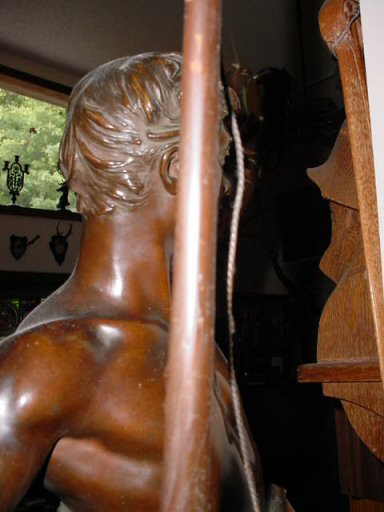
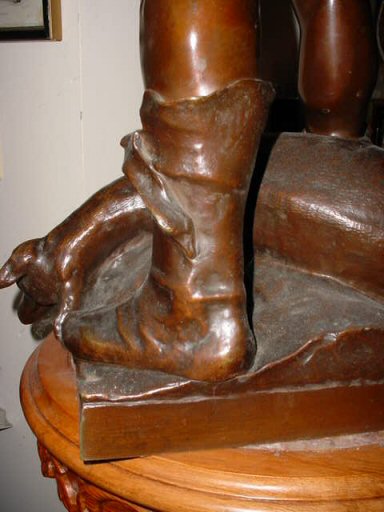
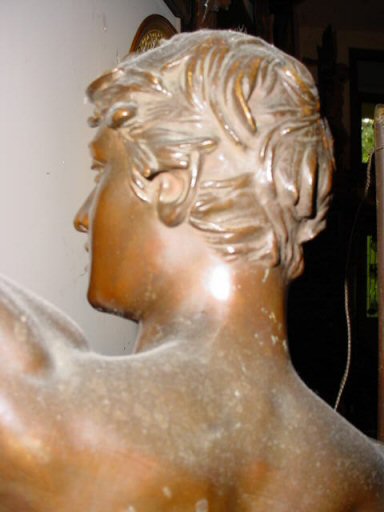
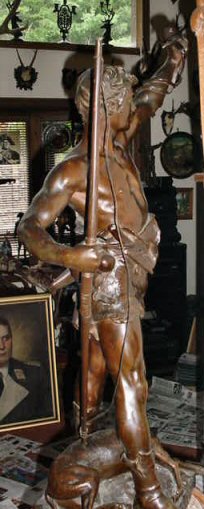
Massive Bronze Statue of a Germanic Hunter (Item HUNT 7-10; ART 14-3; KSTATUES 4-3) |
||||||||||||||||||||||||||
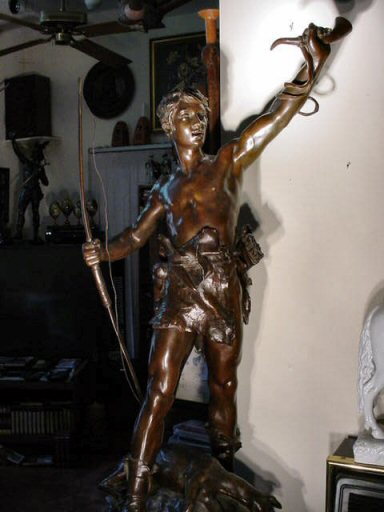
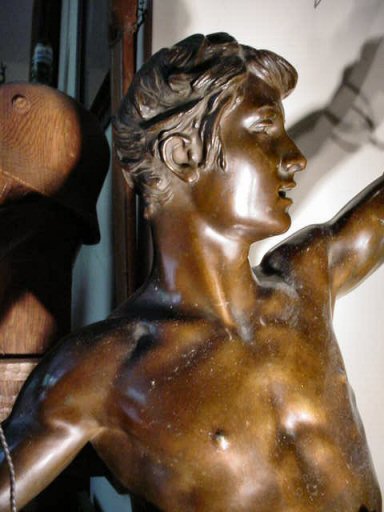
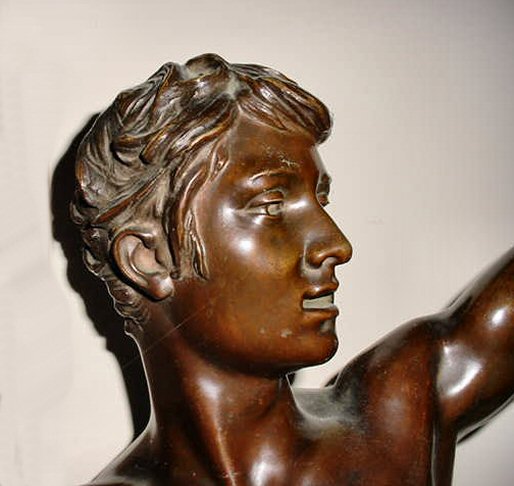
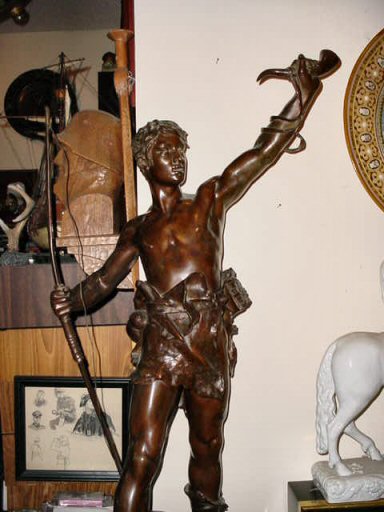
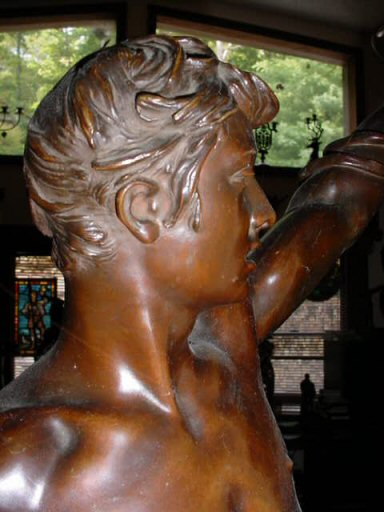
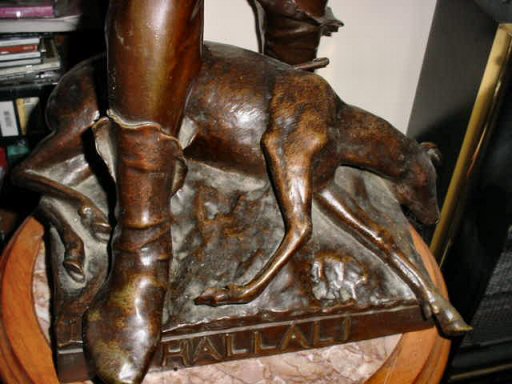
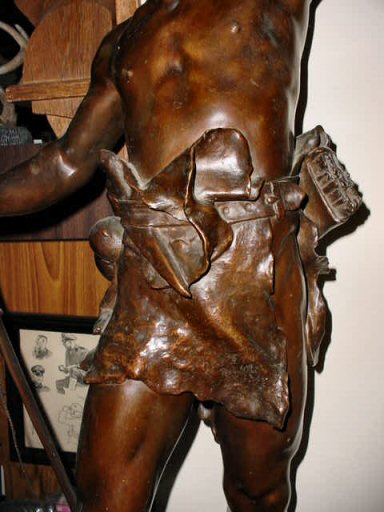
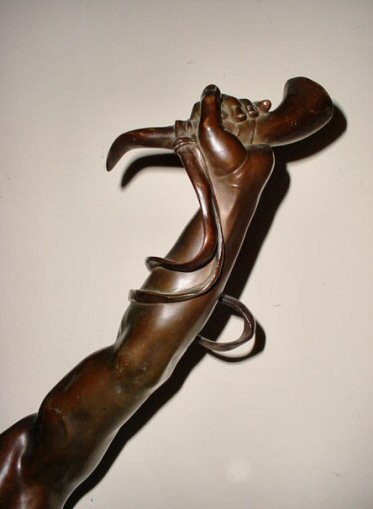
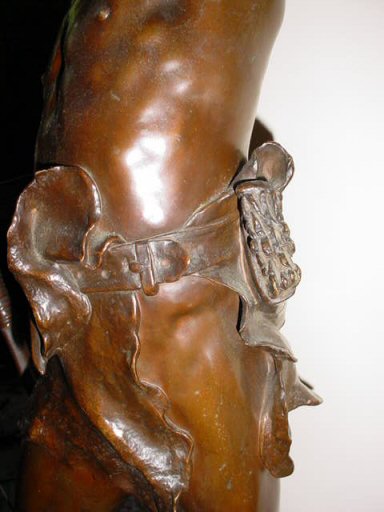
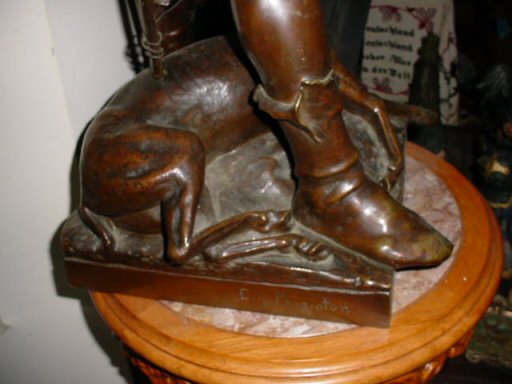
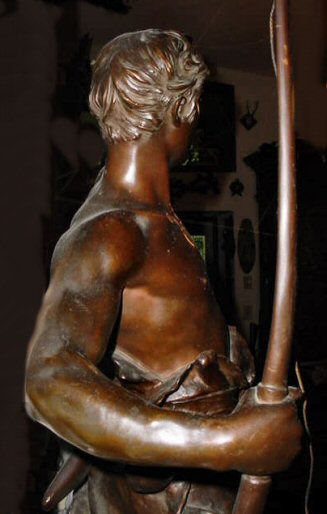
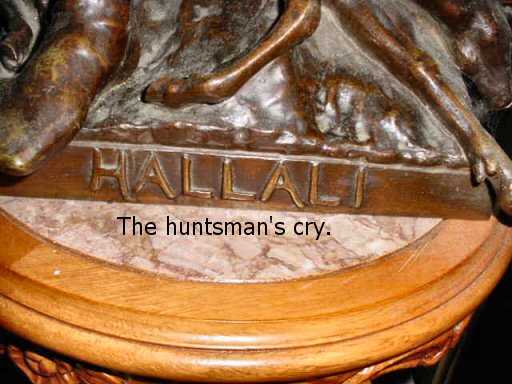
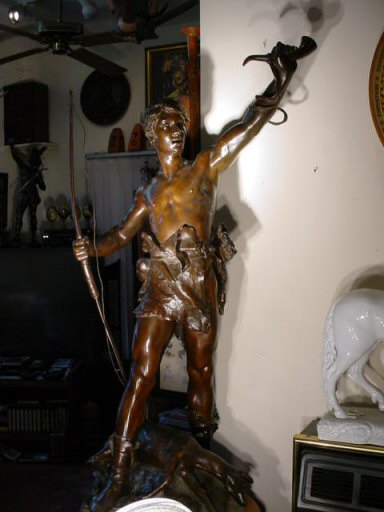
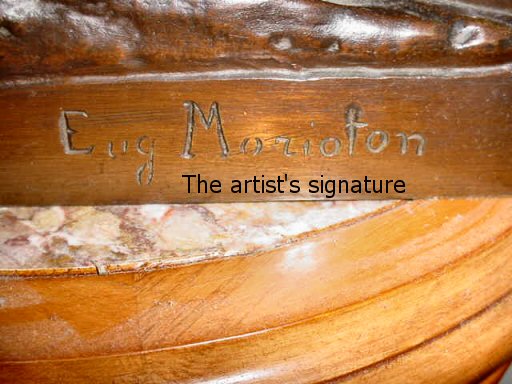
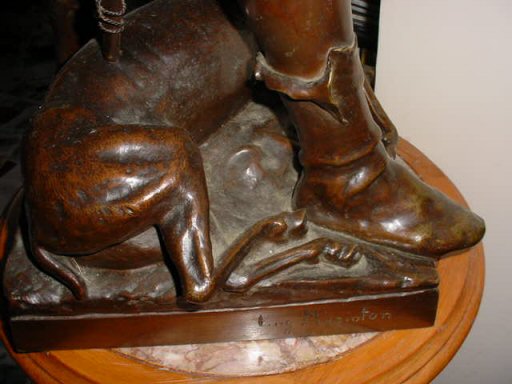
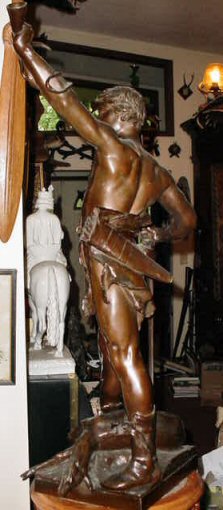
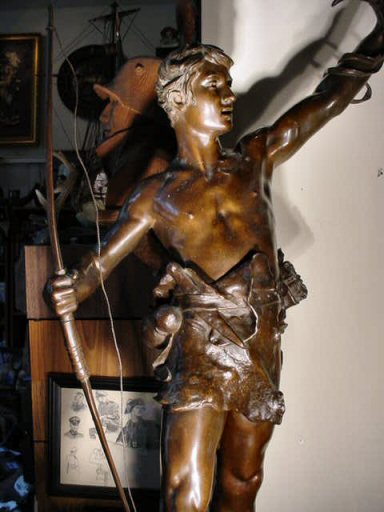
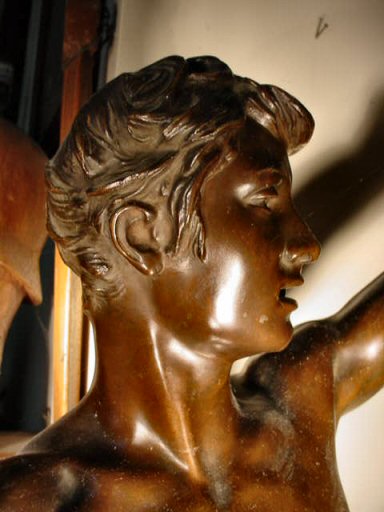
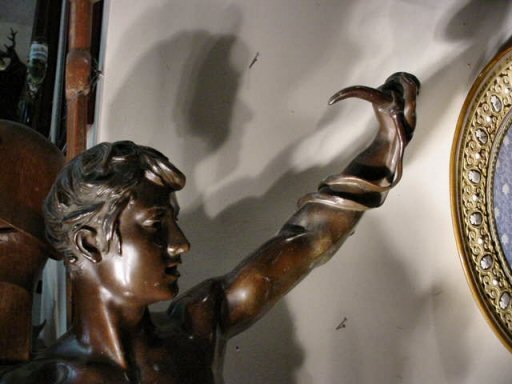
| DESCRIPTION: This is a massive bronze sculpture of a Teutonic huntsman proclaiming the centuries-old announcement of the successful kill. This is a typical Germanic theme in sculpture, but we have never encountered an example this large or this fine. Here is bronze statuary at the zenith of perfection. Big? Yes. It measures 35 inches from the bottom of the base to the top of his head, and 40 inches from the bottom of the base to the tip of the hunting horn held aloft. The slain animal measures 15 inches long. The base is about 11 x 11 inches. His bow is about 30 inches long, and naturally this is a very heavy sculpture. The soft patina is excellent; no casting holes. This is an excellent bronze sculpture. It is signed “Eug. Morioton.” That would be Eugene Morioton, who worked in the 1880s in both France and Germany; an artist of note who specialized in action figures in Germanic and Grecian studies. What is depicted so dramatically is the young hunter who gives the hunter a cry of “Hallali!” This is the German hunting cry given at the end of the successful hunt. At the start of the hunt the Jäger call is “Horrido!” So “Hallali” and “Horrido” are mutually the “Waldmann’s call.” This hunter killed his prey with the bow and arrow he bears. He also has his hunting horn with which he will summon the other hunters to tell them of his success. Have you ever thought of having that one ultimate bronze sculpture; that centerpiece that you can be deservedly proud of? Here is the best! The price we offer it for would easily be triple that amount at a first-rate antique show or a Madison Avenue gallery. Here is great opportunity. Don’t miss it.
PRICE: $19,000.00; extremely reasonable! |



|
|||||||||||||
|
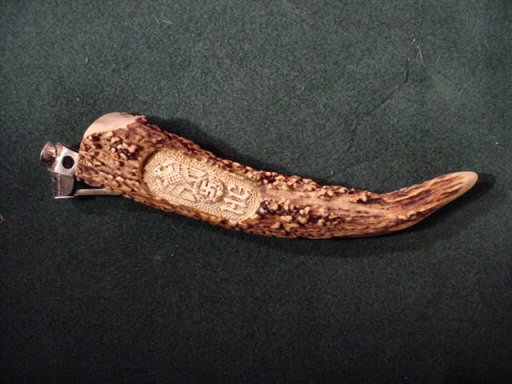
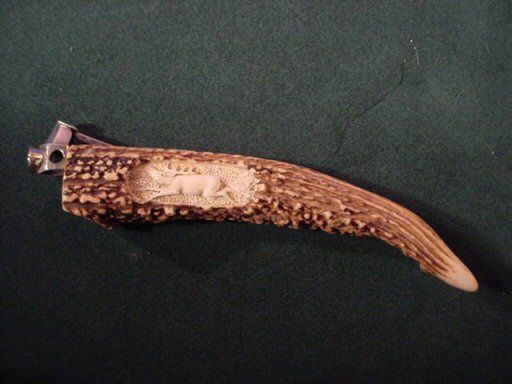
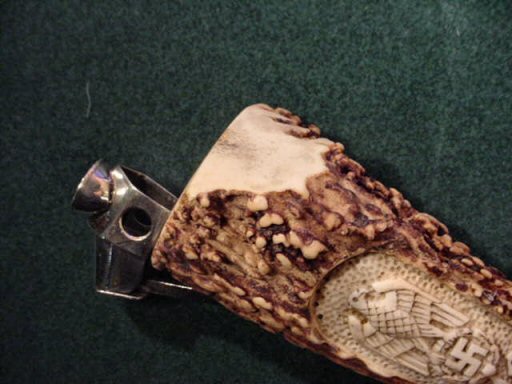
Carved Cigar Cutter (Item HUNT 7-11; GOR 8-11) |
|||||||||||||
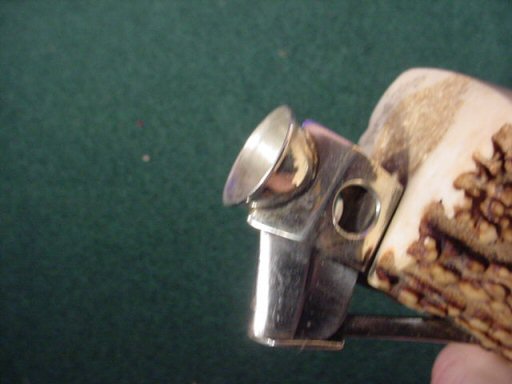
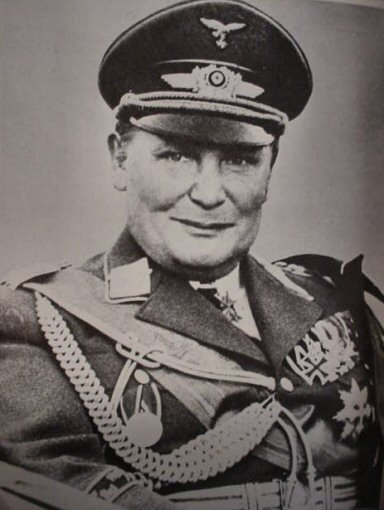
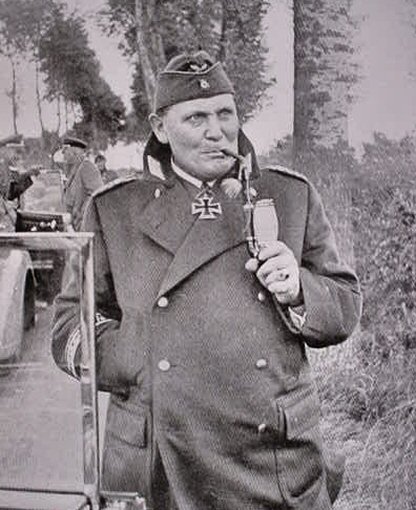
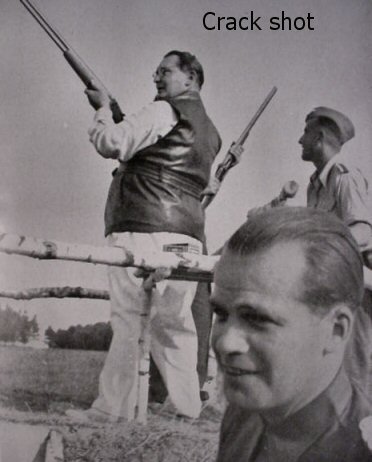
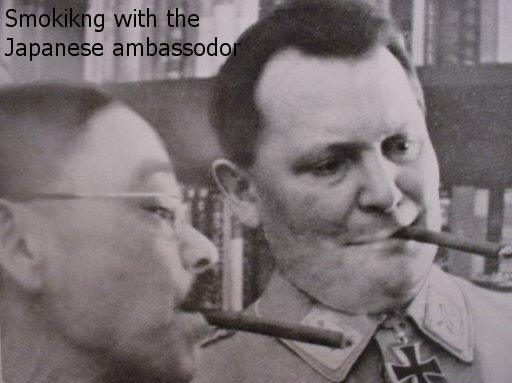
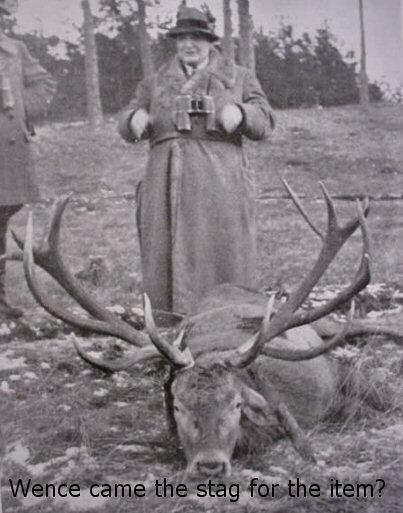
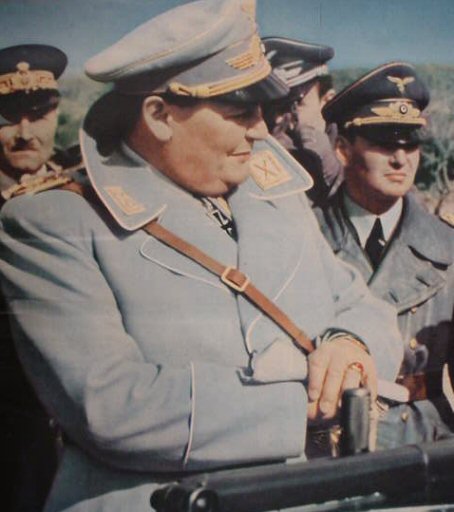
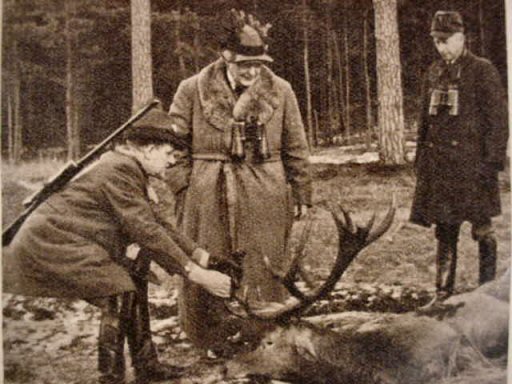
| DESCRIPTION: Here is one of the articles that have turned up in the area of Veldenstein, the castle that belonged to Hermann Göring’s adopted godfather, Hermann Ritter von Epenstein, a Christian of Jewish descent. Often it is said that the name Hermann was given to Göring to honor Arminius, who defeated the Roman legions at the Battle of the Teutoberg Forest. Hermann is the German name for Arminius; however, the name was far more likely chosen to honor his godfather von Epenstein. The young Göring admired—even worshipped—the older man. Ritter v. Epenstein sought always the trappings of the German aristocracy as well as the titles, thus setting the pace for his adopted godson. Hermann Göring tried to emulate the old knight in his every idiosyncrasy. Göring was partly raised and spent much of his childhood in the Ritter’s two magnificent castles: Burg Veldenstein in Bavaria, and Schloss Mauterndorf near Salzburg, Austria. Both castles were to be residences to the Göring family, their official caretakers until 1931, and both were tremendous influences on Göring’s childhood and fascination with military and romanticized notions of Germanic history. Both castles were also ultimately to be his property. Late in life Ritter v. Epenstein wed a singer, Lily, who was half his age bequeathing her his estate in his will, but requesting that she in turn bequeath the castles to his godson, Hermann, upon her own death. Göring often visited both Veldenstein and Mauterndorf during the 1930s and lived there part of the time all the way up into 1945. When it was obvious that the war was lost he shipped much of his treasures from Carinhalle and Romertin to Veldenstein. Göring hoped that a just reconciliation between the belligerent powers could be reached, and that his castles would be treated as private property, and he would be treated as a head of state and dealt with as the rules of civilized warfare dictate. This of course was not to be with haters such as Eisenhower and Churchill involved. So the castles obviously were to be robbed and sacked. Knowing this to be imminent the townspeople in the vicinities immediately upon the dismissal of the Luftwaffe guards descended upon the castles and stripped them bare of the articles that belonged to the Reichsmarschal, whom they still reverently referred to as “Unser Hermann,” and who can blame them? Why should they not do all in their power to save these priceless relics from the clutches of Ivan or GI Joe six pack? So here we have one of the art pieces that was “liberated” from Burg Veldenstein (thank goodness). We have negotiated several wonderful items from three families in the castles’ vicinity and one family that has a few things have introduced us to others and this is how we have been able to procure some significant items. This cigar cutter, however, is one of the most significant of all and quite gorgeous to boot. The carvings seen on the antler are very well executed and professional. It must have been one of the many such gifts bestowed upon him by an adoring public. The antler is about 10 1/2 inches long and is probably the tip of a huge rack from an elk. The one side shows such an elk in flight from the hunter’s gun. On the other side is a magnificent, carved German eagle presented in the style of the Reichsmarschal eagle minus the crossed batons. This eagle surmounts the “H.G.” initials. The carving is absolutely superb and stands out from the antler in exquisite detail and artistic perfection. It is a perfect example of the carving skills of the German folk. The cutting tool at the end is marked with a stamp and company logo. Göring and Heinrich Himmler were both smokers to the disdain of Hitler, who abhorred smoking. Goring is seen in pictures enjoying Cuban cigars and we have a cigar box of the Reichsmarschal’s favorite cigar at Item GOR 6-2. While in there you should read all the other write-ups about this phenomenon of our times. He truly was the modern-day Falstaff.
PRICE: NO LONGER AVAILABLE |


|
||
|
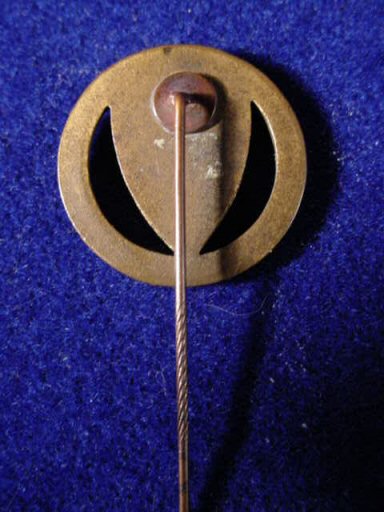
Deutscher Reichskriegerbund Kyffhäuser (DRKB) Shooting Award Stickpin (Item HUNT 7-13; PINS 7-8; VETS 2-6) |
||
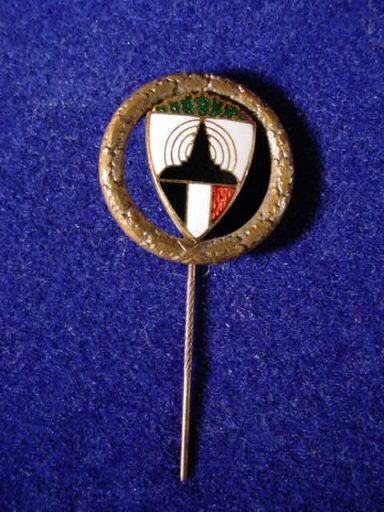
| DESCRIPTION: Here is the bronze class insignia that was actually an award for superior marksmanship in those official government-sponsored shooting contests for veterans. “Once a soldier, always a soldier” (at least in the “Vaterland”). This award came in bronze, silver, and gold and this one is the bronze class. It is a beautifully constructed stickpin with the image of the Kyffhäuser monument featured in the center with a target that shows up in the design. At the base is the shield with Germany’s national colors and above the Denkmal or monument is the green oak leaves of victory. Around the outside dimension is a bronze wreath. The badge is unmarked on its back. It is in 100-percent mint condition and unchipped in the enamel. It’s about the size of a U.S. 25-cent piece; perhaps a hair smaller. This pin is rare and most sought after by collectors.
PRICE: $90.00 |
|
|||||||||||
|
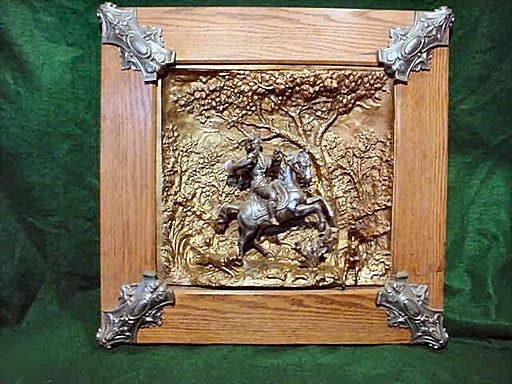
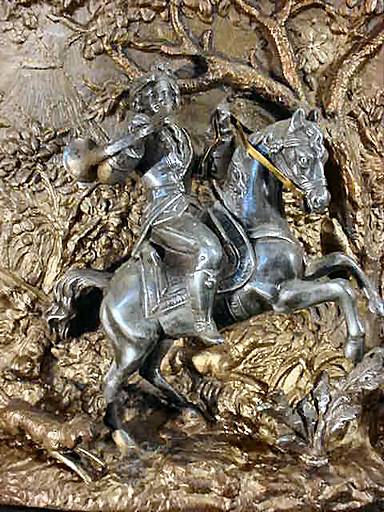
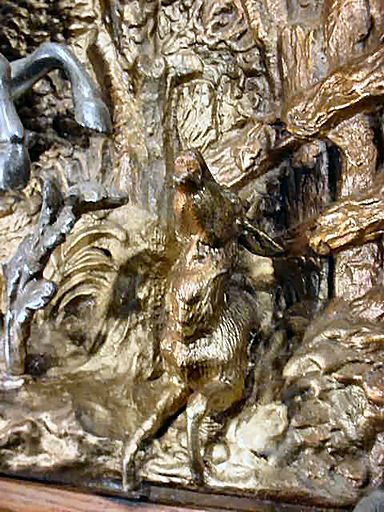
Germanic Hunting Scene (Item HUNT 7-14; OLD 6-10) |
|||||||||||
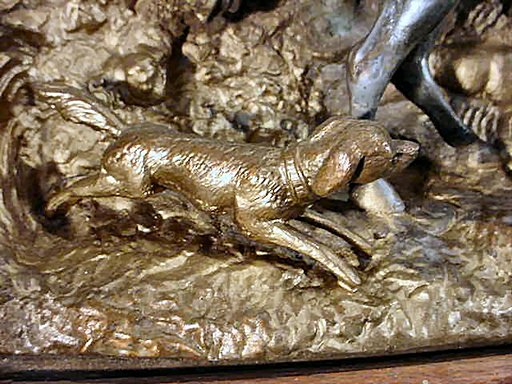
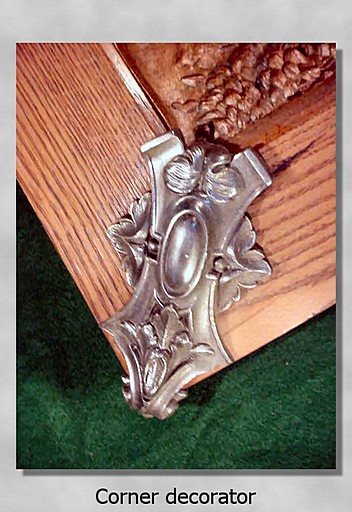
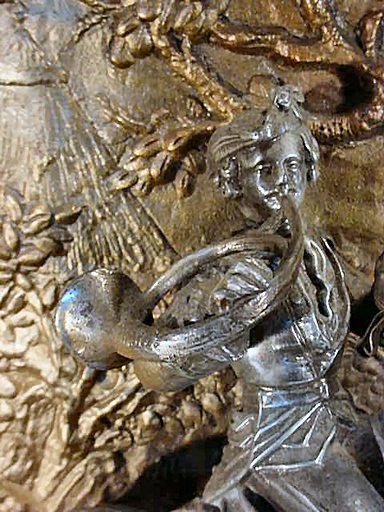
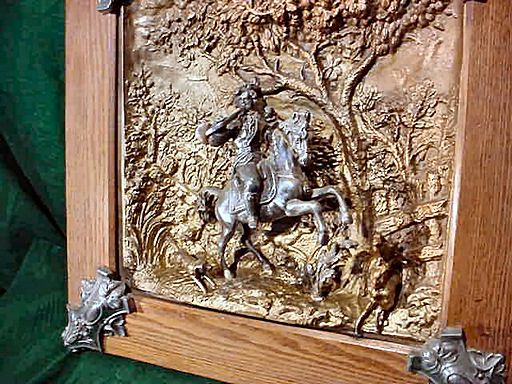
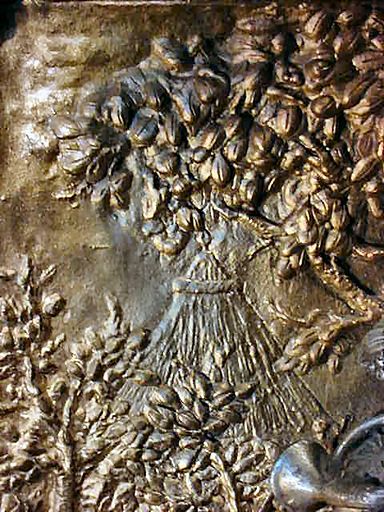
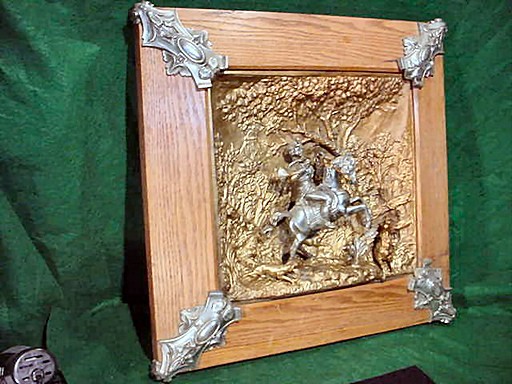
| DESCRIPTION: This is a beautiful Germanic hunting scene depicting a medieval huntsman blowing the “Horrido“ horn that signals the beginning of the royal hunt. The perception is the 16th century and the whole thing is built in a relief motif with the hunter, the hound, and the prey, all worked in white metal and bronze. We believe this scene is in its original massive frame. The piece is very heavy, seeing as the main body of it is solid bronze. We think it’s from a German hunting lodge of the 1860s or 1870s. The entire unit with its frame measures about 22 inches square. The actual scene is 15 x 13 1/2 inches. There are beautiful corner caps in white metal, possibly iron. The horseman is cast in white metal, also possibly iron, or it could be silver-plated bronze. This is truly a museum piece, or for a collector of Germanic furnishings or hunting-related items. The word that best describes it has to be “stunning!”
PRICE: SOLD |


|
||||||||||
A Hunter's Stein (Item HUNT 7-15; KSTEIN 2-5) |
||||||||||
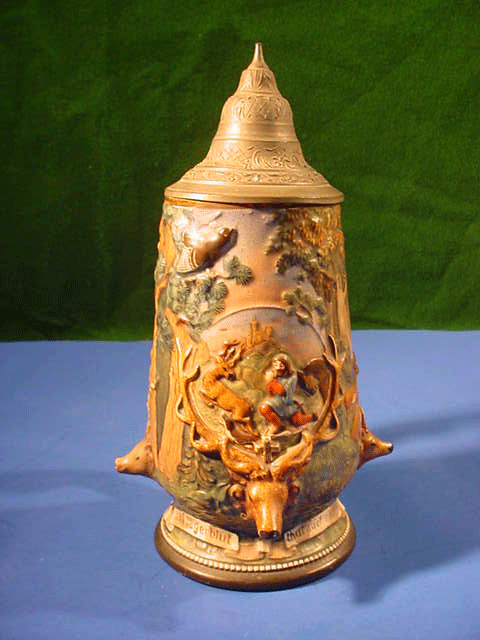
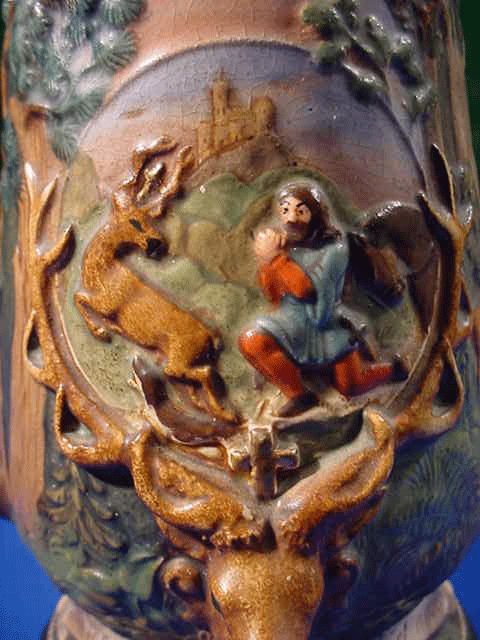
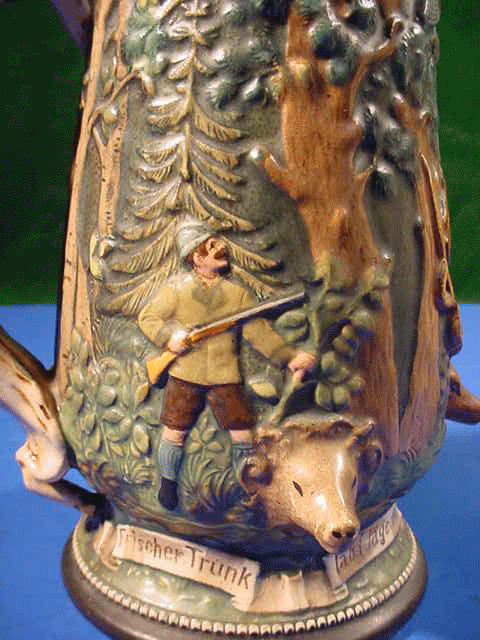
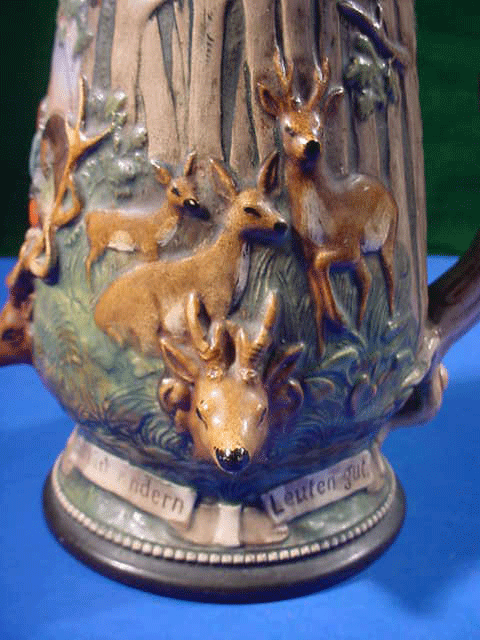
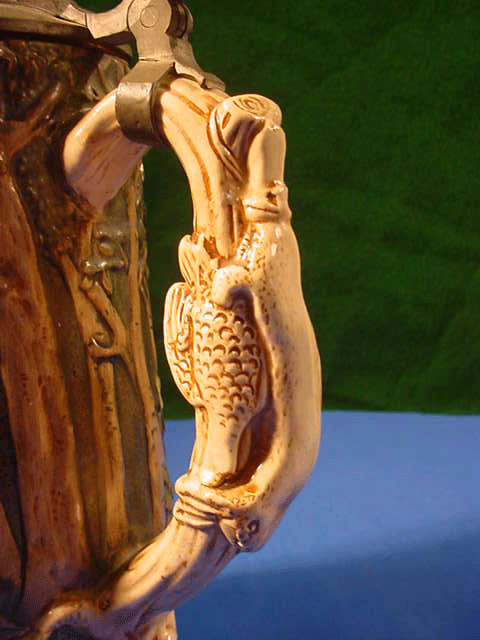
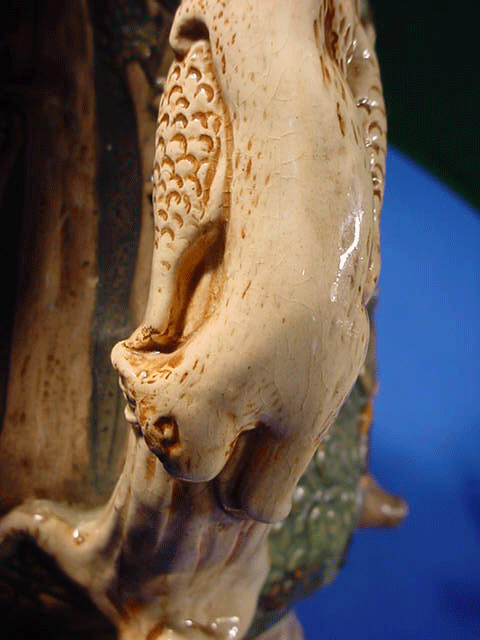
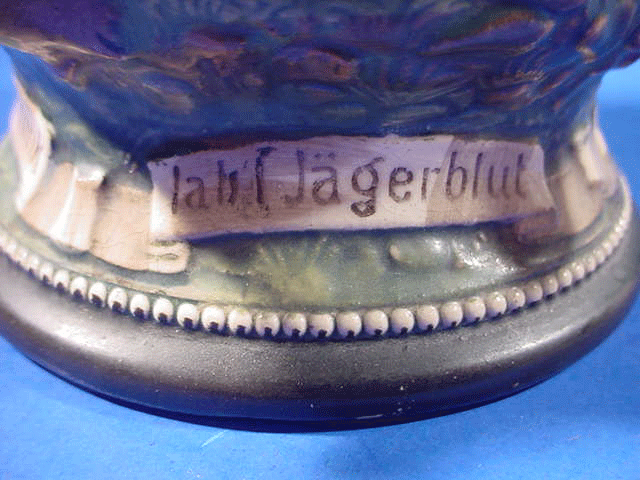
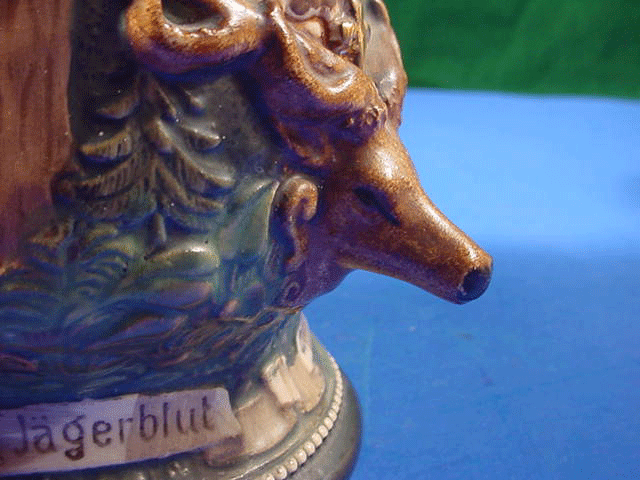
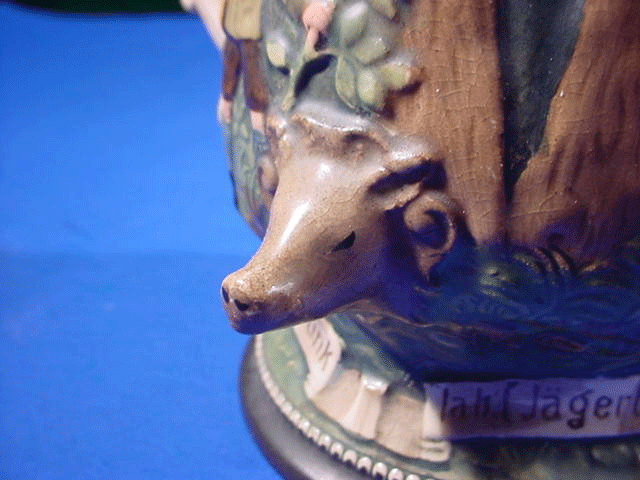
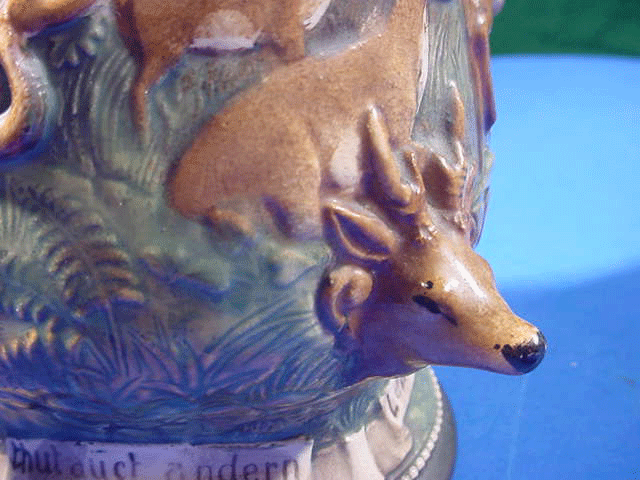
| DESCRIPTION: This is a beautiful little beer Stein done in a pottery style. It features that the front design depicting the legend of St. Hubertus (St. Hubert). There are various versions of this legend in Germany. He became the patron saint of German hunting. The telling of the story takes various paths and one can find several when going into the search engines. The great stag that is always depicted with him is shown and the Christian cross shown between the antlers. The bottommost portion of the Stein has three relief heads of dear peering out in third dimension - - a neat configuration indeed! One side has a gathering of dear in the forest. While the other side shows the approaching Hunter. The grip or handle has a trophy group of rabbi, and grouse displayed on a tree trunk. Around the bottom is an old German saying that translates to. "A fresh drink for the Jagers blood is better than for other peoples." It is 9 inches high including its pewter lid. A very handsome piece indeed.
PRICE: SOLD |
|
||||||||||
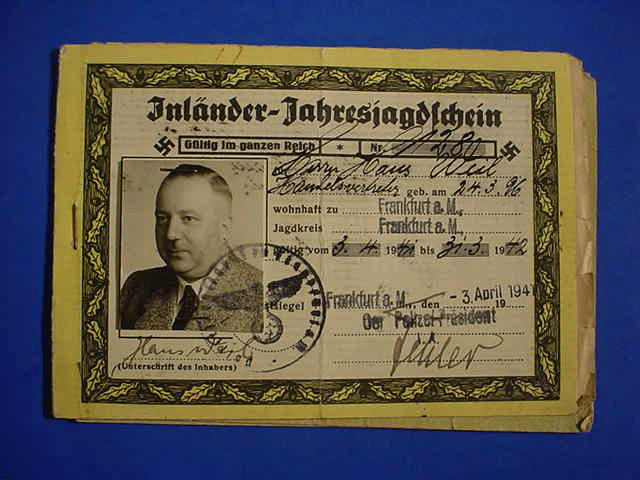
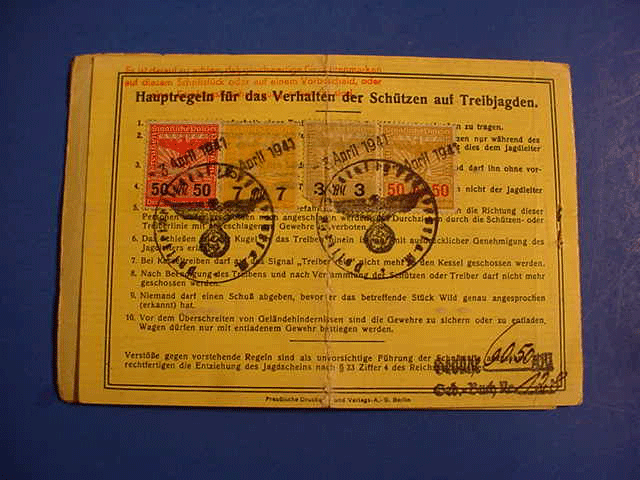
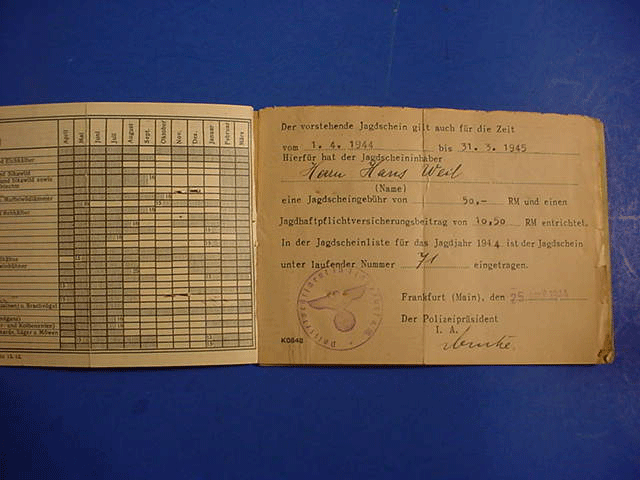
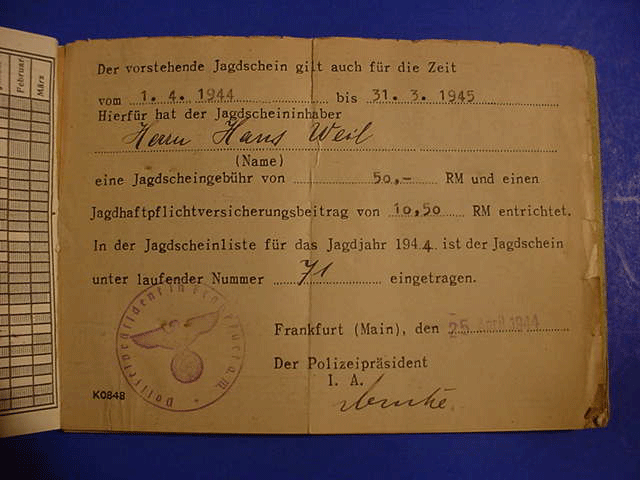
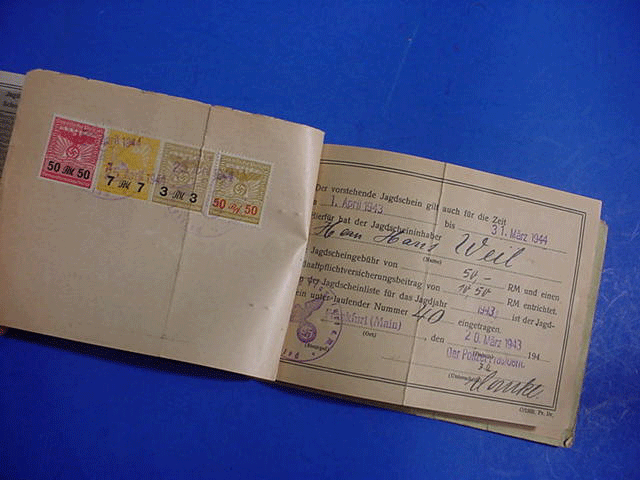
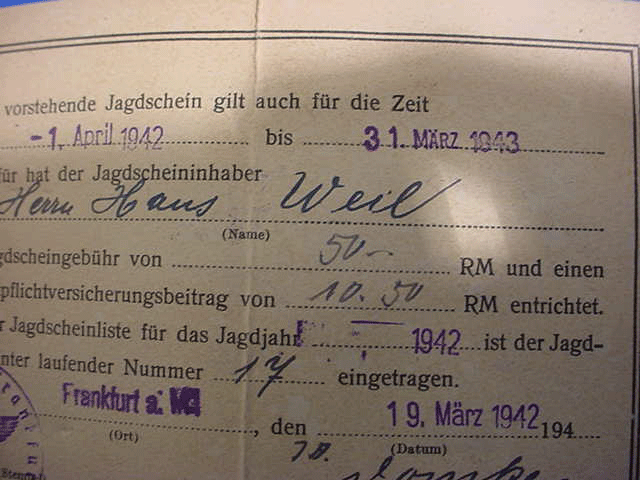
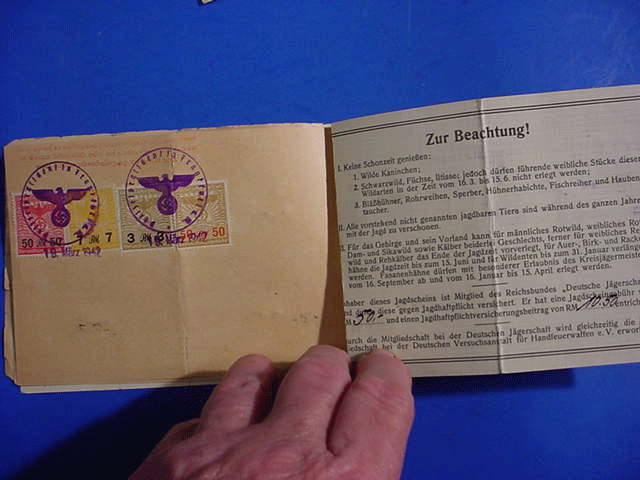
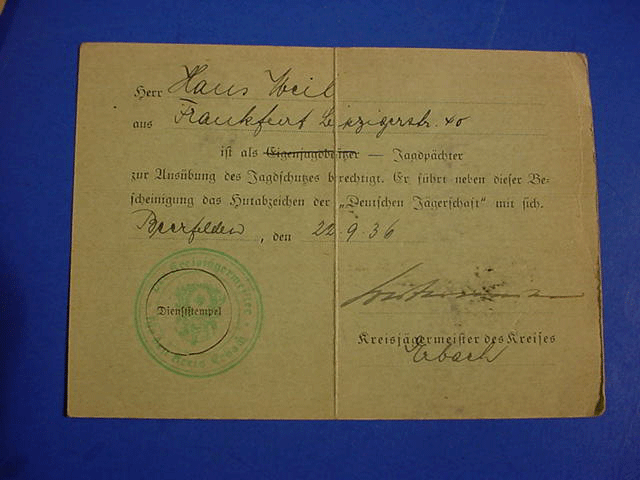
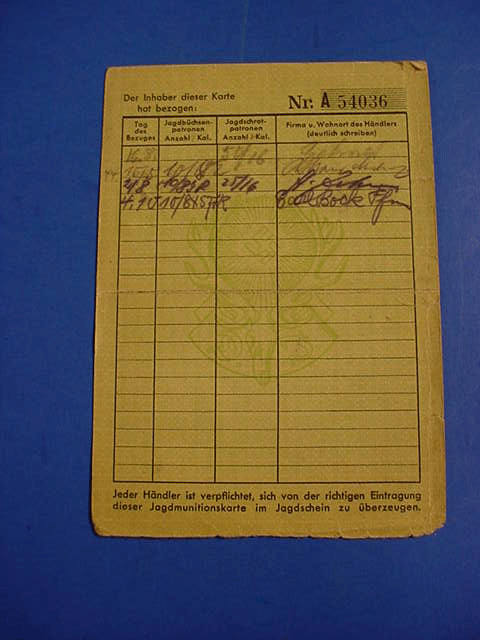
Hunting permit issued by the N.S. government and police (Item HUNT 7-16) |
||||||||||
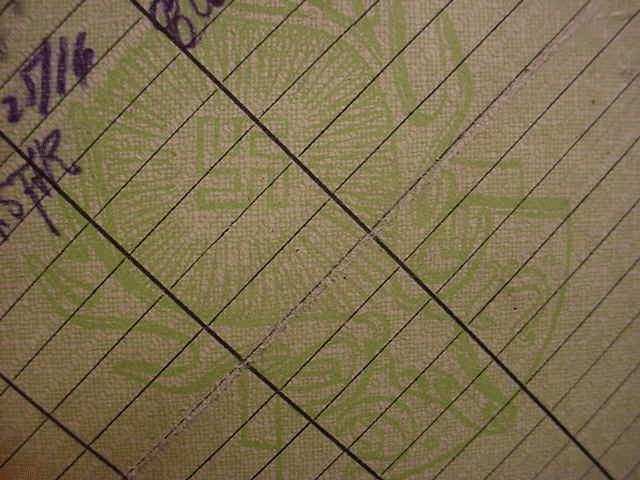
| DESCRIPTION: These are rare in every sense of the word. They were issued by the police and the various district directors. This one issued first on April 4, 1941 needed to be renewed by April 3, 1942 it was issued out of the Police headquarters at Frankfurt am Main. Inside are more old written receipts right up into March 1945 reading on their backsides the official permits on TRX stamps of approval of the police officer with the Eagles and swastika? There is also a renewal certificate with the design of the Jagd Association picture (national hunting Association. This was for a provisional directive certifying types of hunting ammunition allowed. Such ammunition was issued to German citizens even though the country was at war, and ammunition supplies were so desperately needed. This was the German nation's sport in the N.S.State. NS officials especially Hermann Goring made sure that the right of the German people to own guns and engage in the shooting pastime “shall not be infringed upon” so the honest Patriotic sportsman continued to enjoy his favorite sport right up to the time that he no doubt joined in the valiant efforts of the Volkstrum in the last desperate effort to save the most Sacred Europe!. From the foreign invaders who seemed to be bent on preserving Bolshevism. The permit consists of five parts that is also under a folded cover. In all the years we have never seen one so complete. A great historical item and one that speaks to the propaganda legends about the N.S. administration banning gun ownership. "Do you hear that NRA?" PRICE: $250. 00 a bargain! |
|
||
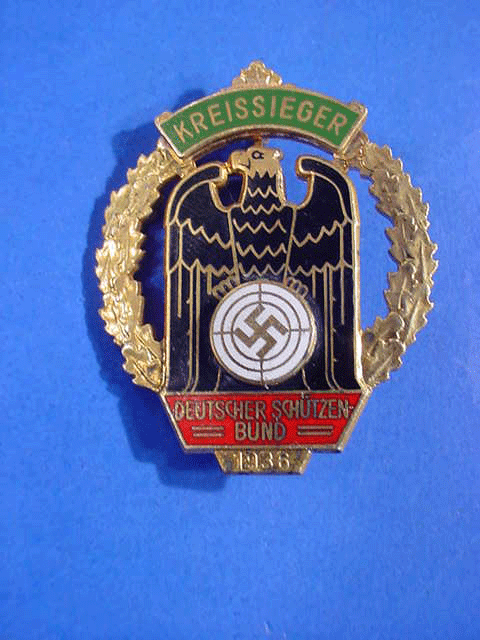
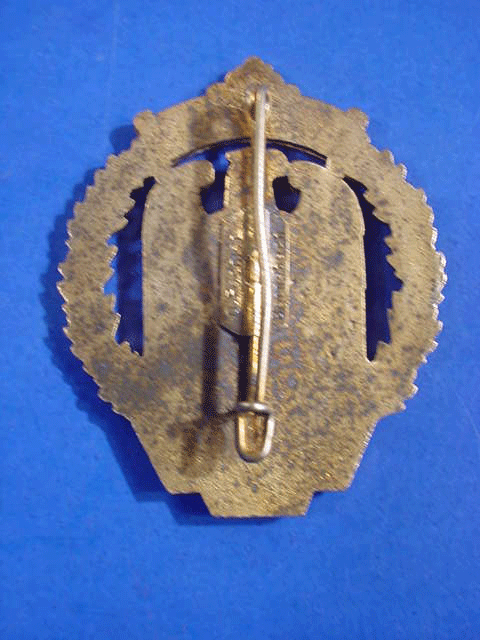
Kreissieger Shooting award 1936 (Item HUNT 7-17) |
||
| DESCRIPTION: This is a beautiful enamel badge that was given for excellent shooting, a prize to the various annual participants as part of the award for being the Kreissieger or (district winner) this particular match was given in 1936 as part of the national shooting contest Deutscher Schutzenbund. It measures 2" x 1.5" wide the enamel is great with black green gold and white colors. With the swastika the national eagle holds the target rings in a circle. An important third Reich period badge.
PRICE: $175.00 |
|
||
An absolutely great award pin for shooting excellence (Item HUNT 7-18) |
||
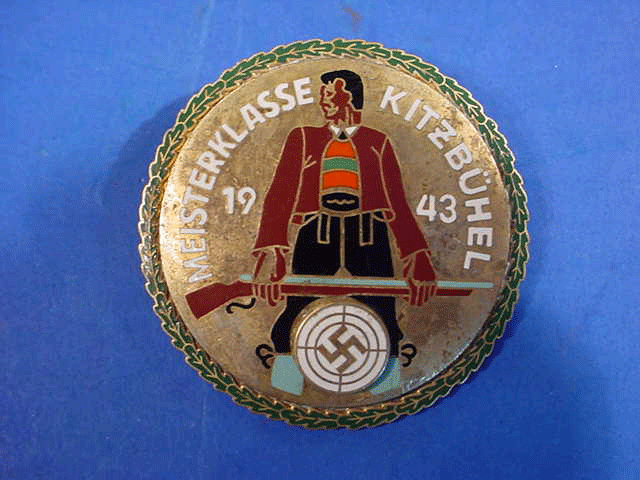
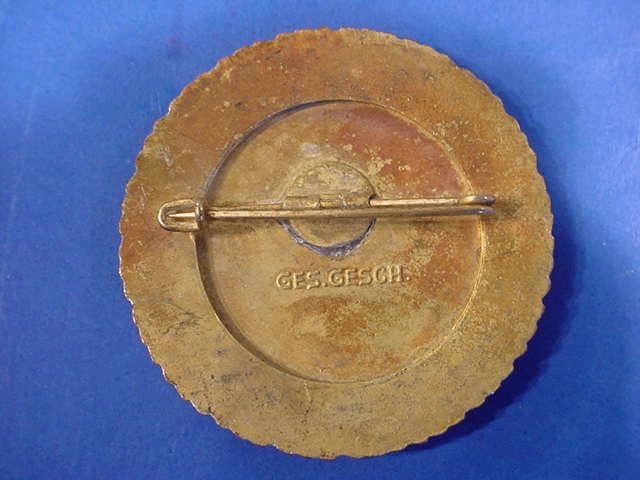
| DESCRIPTION: This is a big hefty badge struck in brass was set in colored enamel's in green, white, gold, brown, and red. A masterpiece of the jewelry arts. It was awarded to a marksman in the master class (Meister Klasse) in the Austrian "city of sports" "Kitzbuhel" in 1943. This was the annual shooting fest that is held even today. The badge is about 7 inches in diameter and is in fine condition throughout. The back has the Ges -Gesch Mark (patent noted). This has to be one of the most beautiful badges of the Reich.
PRICE: $195.00 you won't regret this expenditure! |
|
|||||||
Senior Forest Officials Dress Cutlass (Reichstforstamt) (Item HUNT 7-19) |
|||||||
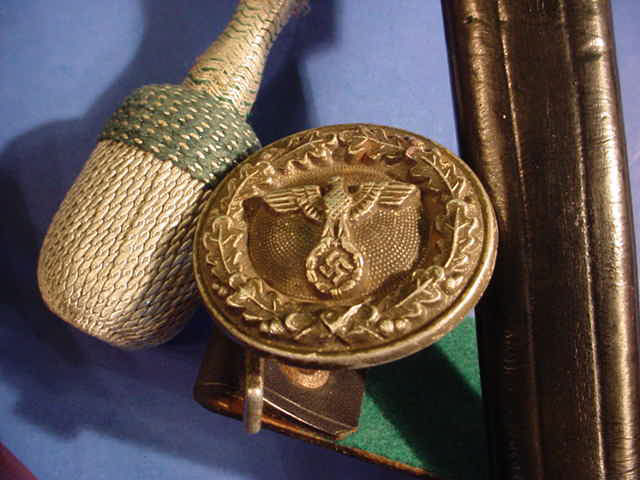
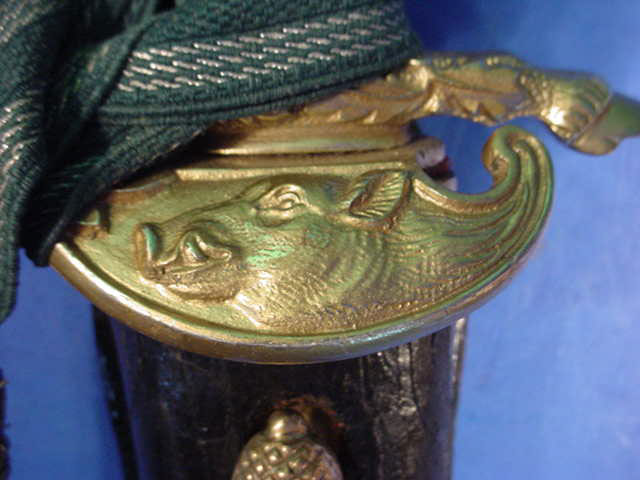
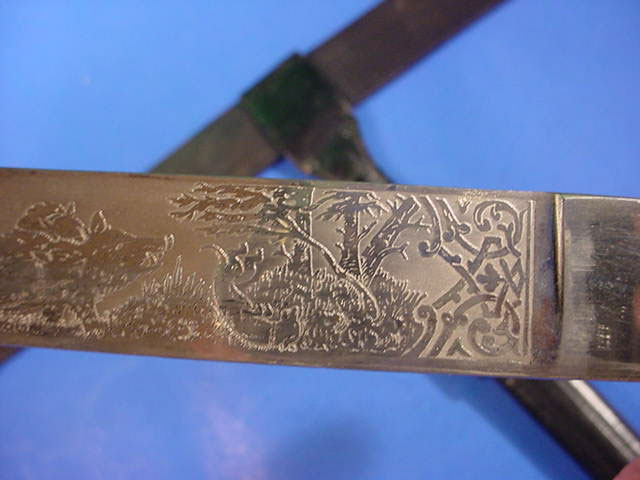
| DESCRIPTION:
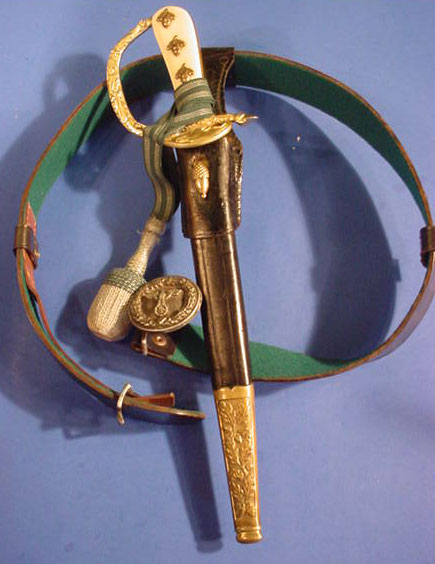
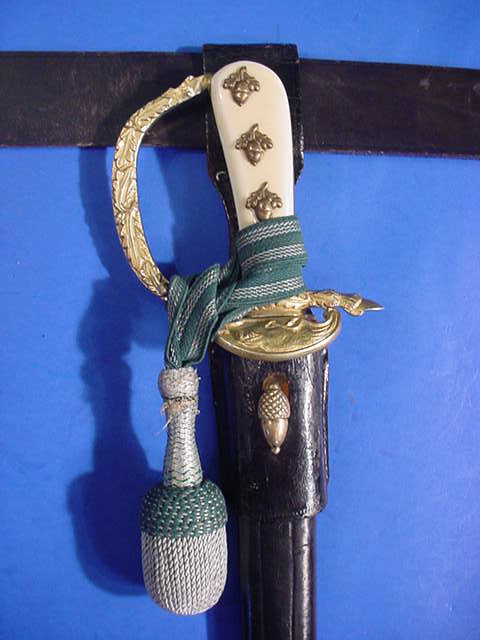
This is a senior forest officers’ dress piece. This was the official dagger or cutlass of the National Reich’s Forestry service that was under the supervision of Reichsminister Hermann Goring. The administration of all conservation measures pertaining to timber and wildlife was the major task of this governmental branch. This included preserving all the game laws and hunting regulations. Control was sub-delegated to regional or district forestry officials known as “foresters” who were highly trained fulltime government operatives expert in all fields of hunting and conservation. They wore an official green uniform and can be compared to the federal and Sate game wardens found in the U.S. The dress cutlasses they wore differed only in the material used in the grips. Stag grips for assistant forest masters and the white (ivory or celluloid) grips were for the senior Forestry officials. The National Forest Service’s cutlasses are among the most ornate and attractive of all the standard Third Reich edged weapons. The one we offer here is a particularly fine offering in that it is accompanied with the rare officer’s belt and buckle. This is the official rig and the buckle cannot be confused with any other buckle of the Reich (very rare!) The belt is in the black leather style fashioned from quality front quarter horse hide and has a green felt backing so as to not conflict with the color of the tunic .as something of another color might do The buckle and its keeper are of aluminum material and the oak leaf framing is distinct around the Reichsadler (National eagle) that also stands out in high relief. The cutlass is in fine condition with a practically mint condition blade beautifully etched with animal scenes. The cutlass is by Alcoso in Solingen. The scabbard is in fine shape. The Frog shows normal every day usage. The dagger knot is in fine condition and the cutlass is 16 inches long. To find one this good with the belt and buckle is rare and this is a fine investment piece. PRICE: SOLD |
 |
 |
 |
 |
 |
 |
 |
 |
 |
 |
 |
 |
 |
 |
 |
 |
 |
 |
 |
 |
 |
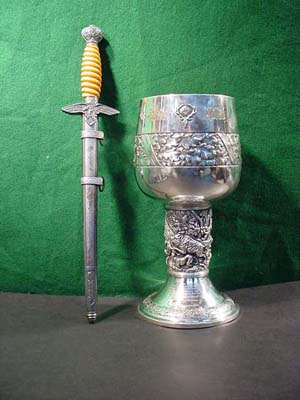 Dagger shown for size perspective only |
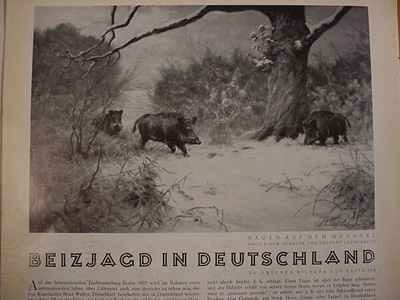
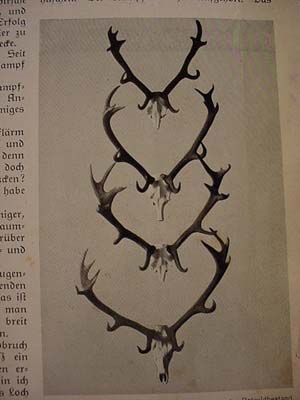
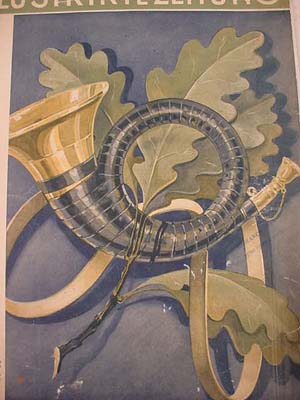 Spirit of the Hunt |
 Exhibition in 1937 |
 |
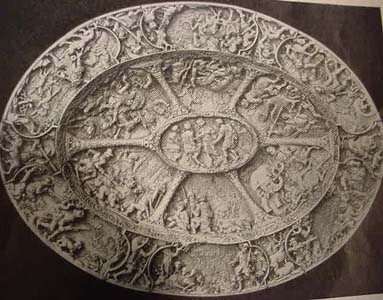
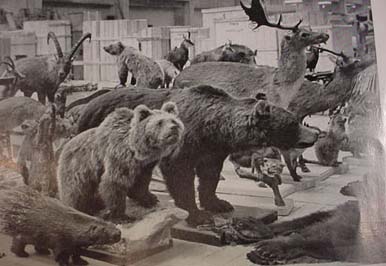 Displays |
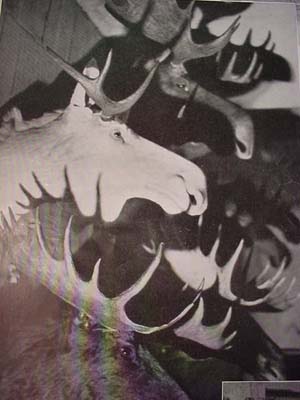 |
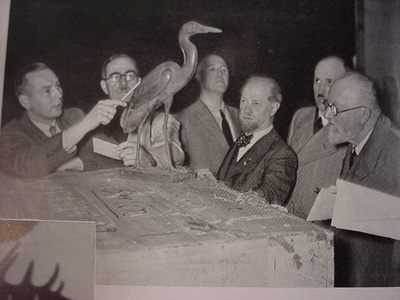 Expertise at Exhibition |
 Meetings at Exhibition |
 |
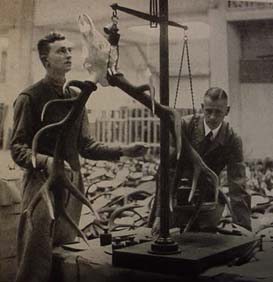 |
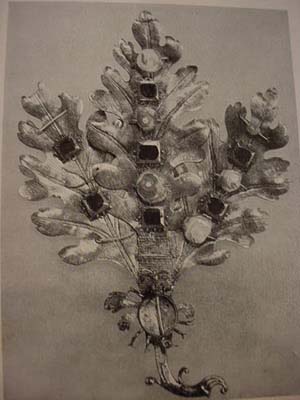
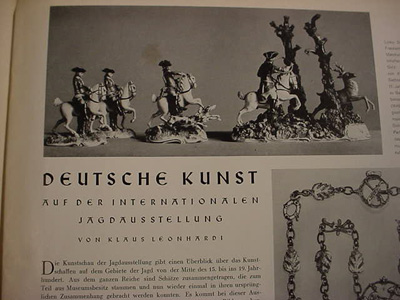 Jewelry with hunt theme |
 |
 |
 |
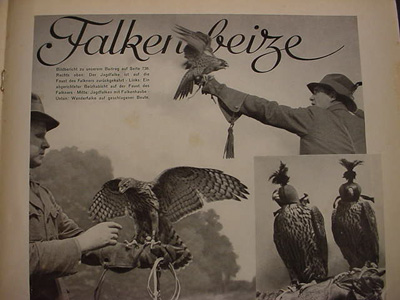 Falconry showings |
 |
 |
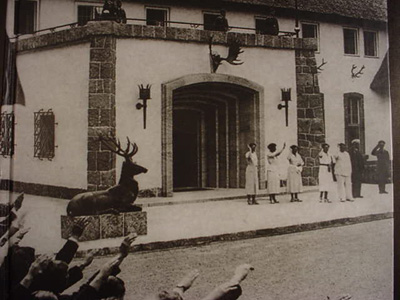 Goring's Karenhalle |
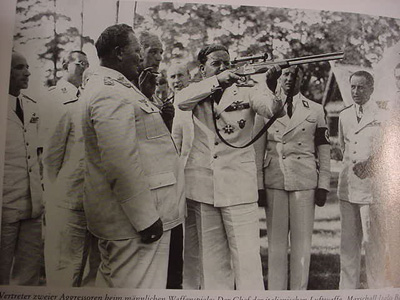 |
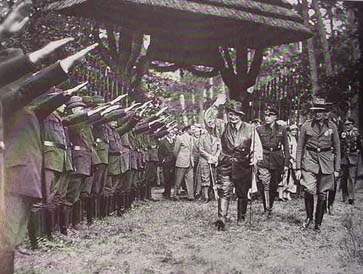 Begin the hunt with supporters |
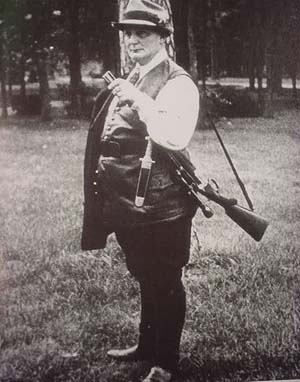 |
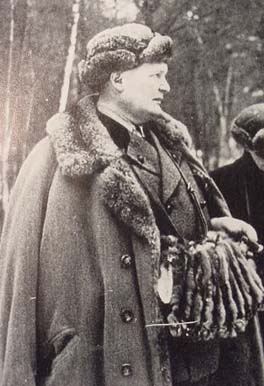
 The huntsman always |
 |
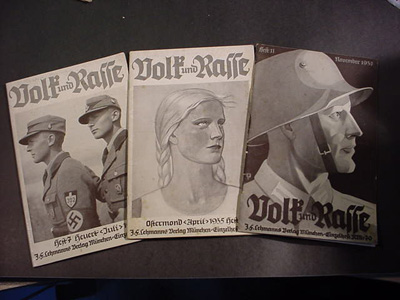 People and Race |
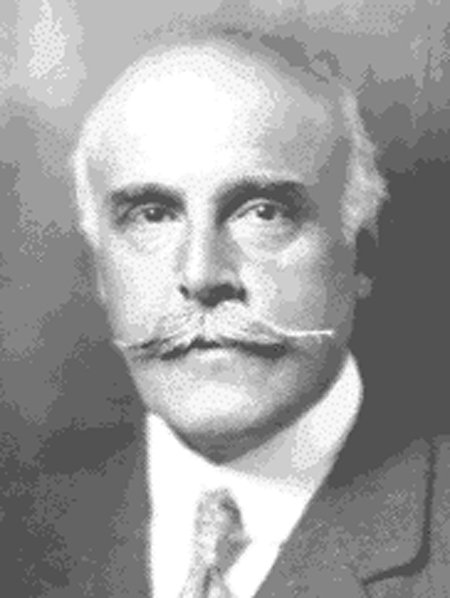
 Grant's great book |
 |
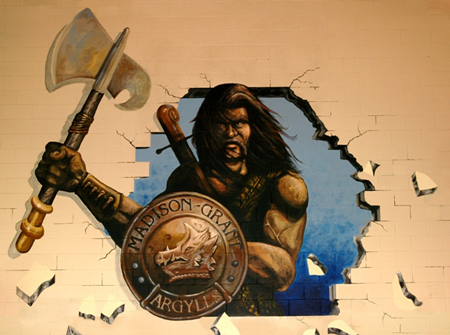 Madison Grant school system demonstrates the Nordic warrior spirit of its brave antecedents |
A Glorious Goblet from Hermann Goring to Dr. Madison Grant (U.S.A.) (Item HUNT 7-20 & GOR 10-12) |
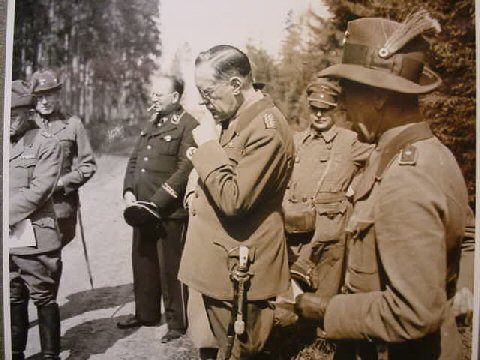
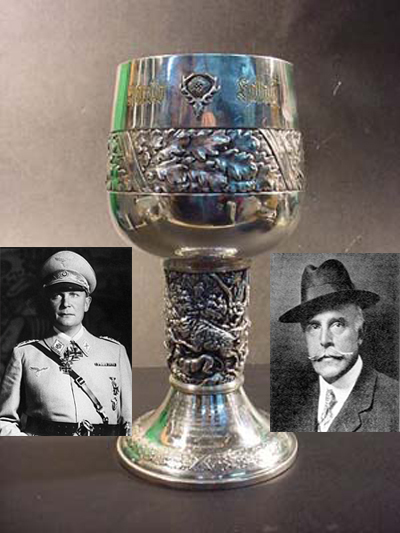
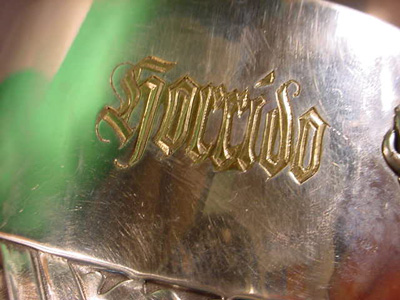
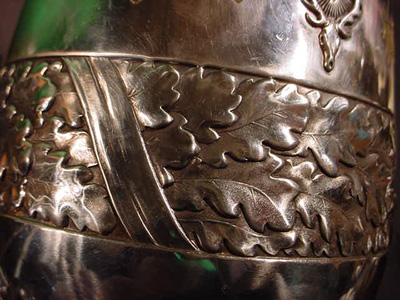
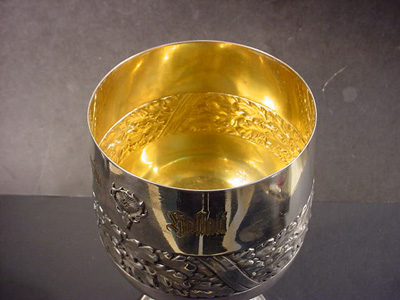
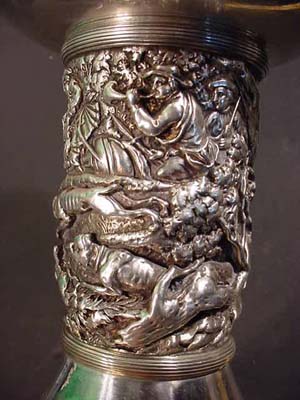
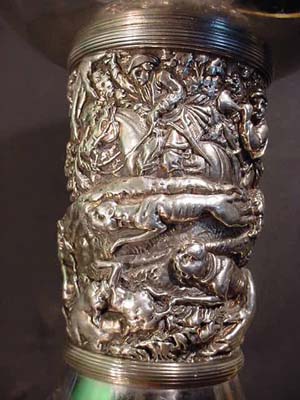
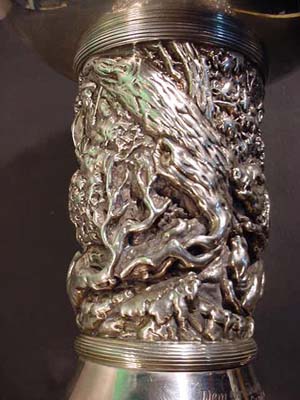
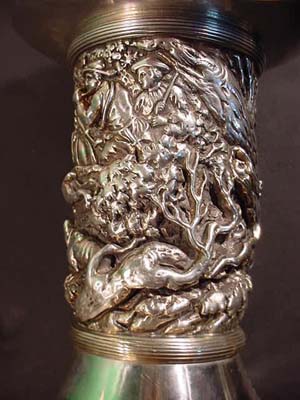
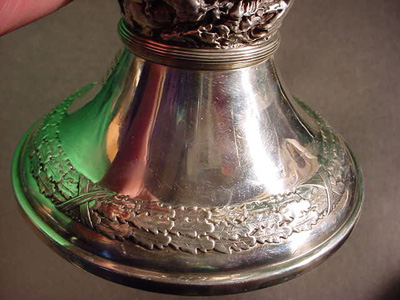
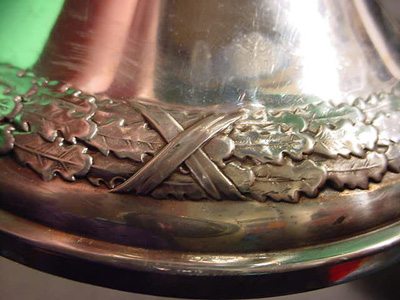
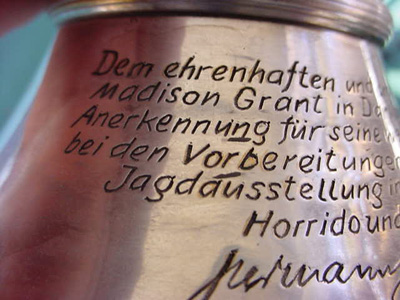
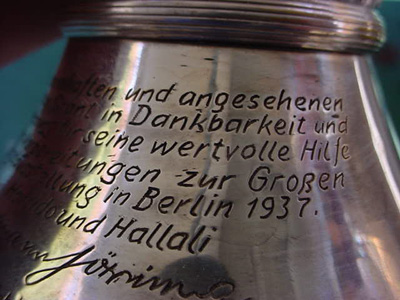
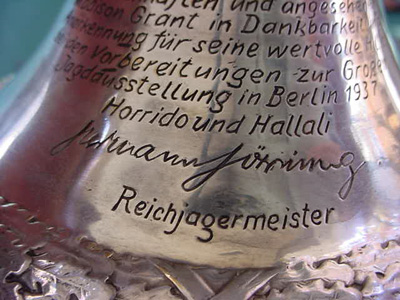
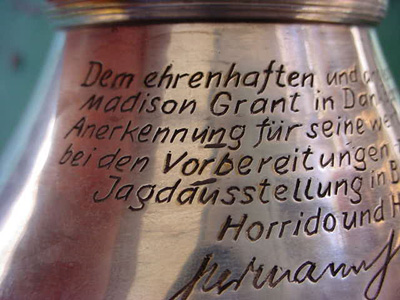
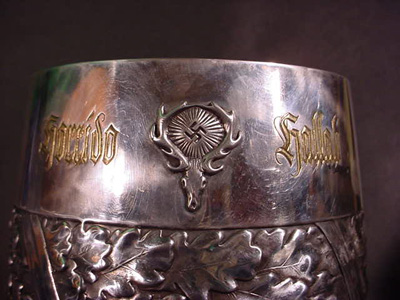
DESCRIPTION: This has to be one of the most incredible historically important relics that Germania International, LLC has ever offered. It is an “Ehrenpokal” or Honor Goblet that was made to be presented to Dr.Madison Grant who was one of the most important authors of the 20th century on the American literary scene. Madison Grant, born November 19, 1865 and died May 30, 1937; American lawyer, historian, racialist (not racist -- our opinion) and anthropologist known primarily for his work as a eugenicist and conservationist. As a eugenicist, Grant was responsible for one of the most famous academic works of scientific racial hygiene and played an active role in crafting strong immigration restrictions and anti-miscegenation laws in the United States. As a conservationist, Grant was credited with the saving of many different species of animals, founding many different environmental and philanthropic organizations and developing much of the American wildlife management disciplines that are observed even today. Meanwhile in Germany, Hermann Wilhelm Goring, who later became a close friend and colleague of Madison Grant, carried on almost identical tasks and projects. Grant born in New York City was a lifelong resident of that metropolis. He traveled Europe and the Middle East with his father. He attended Yale University graduating with honors in 1887. He received a law degree from Columbia Law School and practiced law after graduation; however, his interests were primarily those of a naturalist. He dabbled in politics to an extent, but only when political matters had a direct bearing on his own special interests. Grant is most famous for being the author of the extremely popular book "The Passing of the Great Race” in 1916. A very concise work of racial hygiene detailing the “racial history” of Europe. "The Passing of the Great Race" was a racially astute interpretation of contemporary anthropology and history, stating quite correctly (at least in our opinion) the theory that race was the basic motor of civilization. Grant promoted the idea of the “Nordic Race” as the key social group responsible for civilized human development. Thus the subtitle of the book was “The Racial Basis ofEuropean History." As an avid eugenicist he further advocated the separation, quarantine and eventual collapse of undesirable traits and worthless race types from the human gene pool and the promotion, spread and eventual restoration of desirable traits and worthwhile race types conducive to Nordic (White) Society. At this point we quote him on selection…"A Rigid system of selection through the elimination of those who are weak or unfit – in other words, social failures. This would solve the whole question in one hundred years, as well as enable us to get rid of undesirables who crowd our jails, hospitals and insane asylums. The individual himself can be nourished, educated and protected by the community during his lifetime, but the state though sterilization must see to it that his line stops with him, or else future generations will be cursed with an ever increasing burden of misguided sentimentalism This is a practical, merciful and inevitable solution of the whole problem and can be applied to an ever widening circle of social discards, beginning always with the criminal, the diseased and the insane, and extending gradually to types which may be called weaklings rather than defectives, and perhaps ultimately to worthless race types." In the book Grant recommends segregating "unfavorable races in ghettoes" by installing civil organizations through the public health system to establish quasi-dictatorships in their particular fields. In Grant's view, Nordics probably evolved in a climate which must have been such as to impose a rigid elimination of defectives though the agency of hard winters and the necessity of industry and foresight in providing the year’s food, clothing and shelter during the short summer. Such demands on energy, if long continued, would produce a strong virile and self contained race which would inevitably overwhelm in battle nations whose weaker elements had not been forged by the conditions of an equally severe environment. The Nordic was Homo Europaeus, “The white man par excellence”, (Germania’s opinion) characterized by certain unique specifications, namely wavy brown or blonde hair, and blue, grey or light brown eyes, fair skin, high, narrow and straight nose which are associated with great stature and a long skull as well as abundant head and body hair. He said that the Nordics all over the world are a race of soldiers, sailors, explorers and adventurers but above all of rulers, organizers and aristocrats; their chivalry and knighthood are peculiarly Nordic traits. They were and are the pinnacle of Western Civilization. They are the people who gave the world the great civilizations of Greece, Egypt, Phoenicia and most splendid of all civilizations, that of ancient Hellas and the most enduring political organization, The Roman State. According to Grant, Nordics were in dire straits in the modern world due to their abandonment of cultural values rooted in religious or superstitious proto-racialism. They were (and are still, in our opinion) close to committing race suicide by being miscegenated with and out-bred by more inferior stock who were taking advantage of transition. The book was extremely popular and went through numerous printings in the United States and was translated into a number of other languages, notably German in 1925. By 1937 the book had sold 1,600,000 copies in the U.S. alone. Nordic theory was strongly embraced by the racial hygiene movement in Germany in the early 1920’s and 1930’s. However, they typically used the term Aryan instead of Nordic though the principal National Socialist ideologist Alfred Rosenberg preferred the term Aryo-Nordic. Grant's work was embraced by proponents of the NSDAP in Germany. “Passing of the Great Race" was the first non-German book ordered to be reprinted by the N.S. leaders when they took power and Adolf Hitler wrote to Grant and said, "Your book is my bible.” Grant was attacked by various pseudo intellectuals but stood his ground and his book seemed unassailable in a more enlightened age (again, our opinion)! As far as his conservation efforts, he became a close friend of several U.S. presidents including Theodore Roosevelt and Herbert Hoover. Teddy, of course, was an avid hunter and conservationist. Besides saving many natural species from extinction, he is also credited with helping develop the first deer hunting laws in New York State .He was the creator of official wildlife management groups and co-founded the “Save the Redwoods League.” He helped found the Bronx Zoo, helped to create Glacier National Park, as well as other national parks. As secretary of the New York Zoological Society, he lobbied to put “Ota Benga,” a Congolese Pygmy from the Belgian Congo on display alongside apes at the Bronx zoo. This was to promote and display the concepts of human evolution and scientific racialism. And of course the Liberals had a flying fit over this as would be expected. Grant's many involvements in numerous eugenic and philanthropic societies are much too numerous for us to number. He was a very, very, busy man! Grant viewed the Nordic race lovingly as he did any of his endangered species. In Germany, Hermann Goring’s programs of conservation were practically identical to Grant's labors in the field, and certainly his view of race was identical to the letter with Goring’s. When a friendship grew and prospered and was reached between the American Grant and the German Goring, it was of course based upon admiration for each other's achievements in conservation and hunting practices but of course eugenics played a large part in their mutual admiration society. Goring was a brilliant conservationist and had the Hitler granted title of Master of the Hunt “Reichsjagermeister” -- he was certainly the ecologist's ecologist! In this office he instituted many regulations and laws dealing with forestry and hunting. He, for instance, forbade hunting with hounds and prohibited the age old practice of exhibiting dancing bears -- a terrible performance that necessitated abject animal cruelty. He was also Master of the German Forests and instituted many laws that were known as the “Reichjagdgesetz.” He told Scherping, his chief forest Master, to set up a uniform nationwide hunting association “Deutsches Jagerschaft” to regulate the sport, restock the lakes, tend the forests, and protect the various dying species of animal life. The association would levy taxes on huntsmen to pay for the upkeep of the forests and game parks. “I want a new hunting law for Prussia,” he had briefed Scherping on May 9, 1933 “one that can later serve for the entire German Reich." With one stroke of the pen he made it a criminal act to kill an eagle or hunt with poisons, artificial light or the steel trap that Goring called "that medieval instrument of torture." His Prussian game law passed on January 18, 1934 and was envied far beyond Germany’s frontiers. When Madison Grant saw this law enacted, he become one of Goring’s most ardent admirers. Like Grant, Goring insisted that the game officials must be animal lovers. Once he took a phone call from a forester asking for permission for local farmers to take their own action against what he called a plague of wild boars. “One more word from you," bellowed Goring after listening with mounting anger, "and I’ll blast a shotgun up your snout.” His proudest achievement was the Schorf Heath on Berlin’s doorstep. It was here on June 10th, 1934 that he had inaugurated his new bison (buffalo) sanctuary with two bulls and seven hybrid cows. He introduced elk as well -- successions of Prussian kings had tried and failed to restore this noble, ungainly beast to the Shorf -Heath. But it took Hermann to successfully accomplish it. Goring consulted zoologists, foresters, biologists all over the world and succeeded, though not without experiencing his own initial disappointments. The whole Shorf Heath experiment was finally crowned with success and by May, 1937, he had reared forty-seven local bison and his first native elks calved in May 1937as well. Goring introduced the rarer fauna into the Heath, like night owl, wood grouse, heathcock, grey goose, raven, beaver and otter. During 1936, 140,000 townsfolk forked out 20 pfennigs apiece to tour the wildlife sanctuary. It became a forerunner of the great national parks in other countries. He would tell huntsmen assembled for their Saint Hubertus Day Festival “The forest is God's cathedral.” Another Goring humane achievement was that he introduced a tough antivivisection law proceeded by a broadcast warning that he would throw each and every violator into a concentration camp. Dachau? Almost in every experiment mentioned except perhaps the vivisection laws, Goring consulted Madison Grant who he envisioned as the American conservation genius for advice and assistance. These two men were not only close friends but really two peas in a pod so to speak. Their interests and their accomplishments were practically identical. Love of the forest and animals was always mutually foremost in their minds and they became constant pen-pals. In January, 1937 Madison Grant presided over his forty-third, and what was to be his last, annual meeting of the American Zoological Society of which he was president. It was said by many of his colleagues that it took a lot of courage for Grant to have done that because he seemed to be in pretty bad shape. Even those in disagreement with him admired him for his measureless stamina and uncomplaining courage. He was still fighting for the causes he thought important until the day he died. Grant's final undertaking was helping to organize the International Hunting Exposition of 1937 in Berlin, sponsored and engineered by Master of the Hunt Hermann Goring. As Commander in Chief of the Luftwaffe, President of the Reichstag Prime Minister of Prussia and Adolf Hitler’s designated successor, the aristocratic Goring was possibly the world’s busiest man but as we have said he was also a committed conservationist and a compulsive hunter who never let his duties of state interfere with his sporting activities. In 1937, in his capacity as Reichsjagermeister, Goring planned the massive International Hunting Exposition in Germany's capital city, a three week long festival to promote comradeship, goodwill and understanding among the international hunting fraternity. The exhibition took place on the vast grounds of the newly built Berlin Exposition Center and featured shooting competitions, falconry, demonstrations, displays of hunting trophies, exhibits of archaic weapons and seminars on game preserves plus of course natural conservation. The highlight was when selected delegates joined in a hunting party with Marshal Goring himself. Madison Grant of course was invited as the number one featured personality and he intended to take with him to Berlin some of his record trophies but the greatest of all American conversationalists, unfortunately, did not live long enough to attend the grand hunt with his loyal friend Hermann Goring. Still, it is most fitting that Grant's final project had combined hunting and the Third Reich for those were the two poles of his brilliant intellectual development. He began as a big game hunter in the 1890’s and evolved during the course of his life into a scientific racialist and conservationist, and preservationist, with immense knowledge of wildlife management expertise and finally we know he embraced National Socialism in almost enthusiastic fervor. He felt its tenants were the path to the Aryan-Nordic Imperium that he envisioned. The great man passed away in his Park Avenue residence on Sunday, May 30th, 1937, at the age of 89 and after such a praiseworthy and sometimes complex life. The N.S. journal Volk and Rasse in Germany mourned the passing of this courageous researcher and their words of condolence mentioned him as a teacher and leader who stood up to International Jewry. Another famous individual said in part of an eloquent eulogy, “No more will his stalwart figure be seen among us, around our council fires, we shall sadly miss his deep voice, his ready will, his wise decisions and the inspiration to spur us on to high endeavor. Yet, believing with the poet that they who dwell in our hearts never died, we shall like the Norsemen of old carry him with us to the Halls of Valhalla!” Much of the above is extrapolated from the brilliant work titled Defending the Master Race by Jonathan Peter Spiro and the quotes used can be considered to be written by a reviewer who has quoted brief passages in admiring review. Most of the passages are original material by Germania International, LLC’s house historians and researchers The Goblet - The Ehrenpokal from Hermann Goring We now offer this incredible goblet that was to be presented to Madison Grant from the Reichjagermeister Hermann Goring. We emphasize was to be because it actually never was presented due to the unfortunate, untimely death of this great patrician, Grant would have joined Goring for the opening of the International Exhibition of Hunting on the second of November 1937. There was nothing in the world that he would have enjoyed more than this. He would have been the featured lecturer and the most honored guest of all. The strikingly beautiful pokal or goblet was prepared at the direction of Hermann Goring to honor his most revered mentor and fellow hunting enthusiast. And it would have been presented to him on the opening day of the Exhibition. The pokal is huge, standing 1 full foot high (12 inches). The mouth opening is 5 ½ inches in diameter. The pedestal is 5 ½ inches in diameter. The bowl is decorated in heavy overlapping oak leaves supported by banded ribbon -- this is in high relief done similar to the oak leaves on the Luftwaffe Ehrenpokal that was also designed by Goring, The stem is stamped out with an incredible 18th century hunt scent with hunters and horse, plus hunting hounds, that dash through the forest with trees and brush. All of this in extremely high relief. The pedestal is also artistically accomplished with a band of ribbon tied oak leaves, while above this is the dedication inscription to Madison Grant...“Dem Ehrenhaften und angesehenen Madison Grant in Dankbarkeit und anerkennung fur Seine Wertvolle hilfe Bei den Vorbereitungen zur Grossen Jadgausstellung in Berlin 1937. Horrido und Hallali. Hermann Goring Reichsjagermeister." Translation: The honorable and respected Madison Grant in gratitude and acknowledgment for your valuable assistance during the preparation for the great hunting exhibition in Berlin 1937. Horrido und Hallali. Hermann Goring, Reichs Hunting Master." Horrido is the Jagers call at the start of the hunt. Hallai is the call when the hunter is successful and has bagged his game. In World War II, the German fighter plane squadrons were called Jagdstaffel (Hunters squadrons) and when they spotted their target they would call Horrido! And when they shot down the enemy plane they would exclaim Hallali! At the very top rim of the goblet you can see these famed hunting calls of the sport. Between these words of Horrido and Hallali is the symbol of the National Socialist hunting association that Goring founded. This is individually jeweler crafted and is not one of the membership pins that has been adhered. This was certainly a great find and how could any hunting trophy be more important than this one? Madison Grant obviously never received the pokal unfortunately and it seems that Herr Goring kept it after hearing that Grant had died. Madison Grant had no relatives such as wife; he never married and of course had no children. I suppose that Marshal Goring could have presented it to the N.Y. Zoological Society but it would appear that he decided to keep it as a personal memorial to his friend. The goblet was taken from Goring’s Castle Veldenstein by neighbors that didn’t want it to fall in the thieving hands of GI Joe or Ivan! Hundreds of such treasures were taken into protective custody by townsfolk back then, and are just now being brought forward. Our German picker has made contact with many of these families and has been fortunate in procuring some great Goring items that otherwise would have possibly been destroyed or might be sitting in Moscow. (Better in your collection!) Veldenstein Castle was where Goring sent many of his treasures in 1945 hoping that after a just peace would be reached with the allies, he would go there and reclaim his precious items. This however was a dream that evaporated in the aftermath of the war and the Star Chamber court proceedings of the Nuremberg War Crimes Trial. So, today this pokal stands in mute testimony to both the notable men and sportsmen and regardless of what is said to demonize their memory there are some Americans and Germans who will remember the positive accomplishments of “Unser Hermann” and that great American author and sportsman Madison Grant. This is without a doubt is the most historically important relic ever offered by Germania or any other web site and that is our considered opinion! PRICE: SOLD |
 |
 |
 |
 |
 |
 |
 |
 |
 |
 |
 |
 |
 |
 |
 Maker |
 |
 |
 |
 |
 Note trigger |
 Original engraved screws |
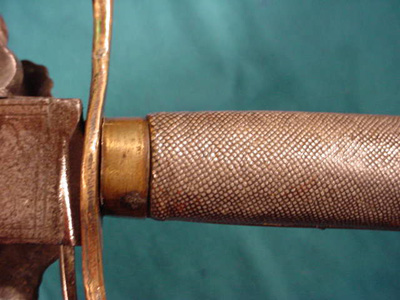 Ray skin grip |
 |
 |
 |
 |
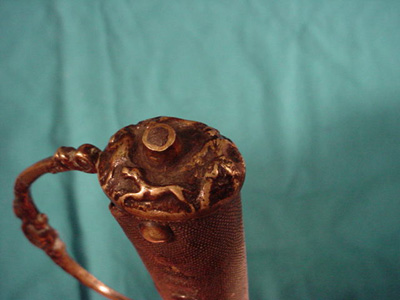 Hunting scene on cap |
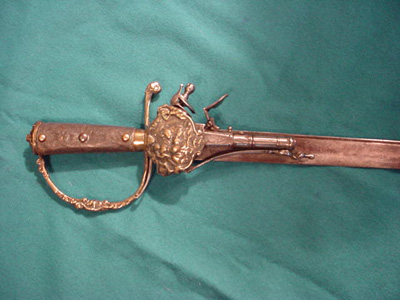
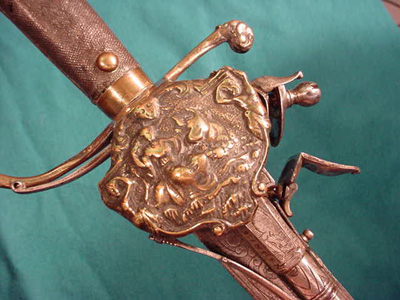
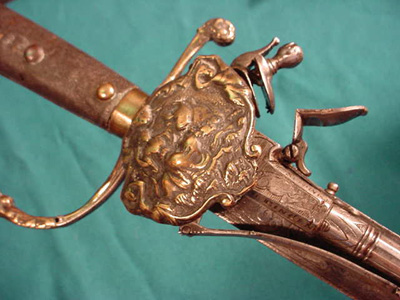
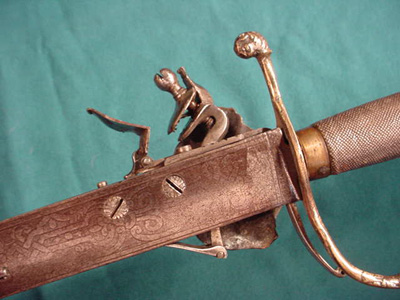
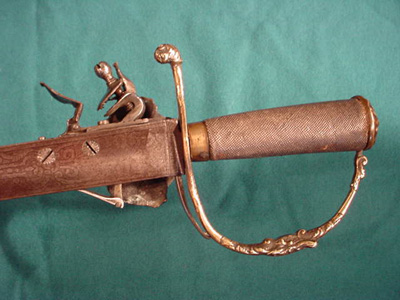
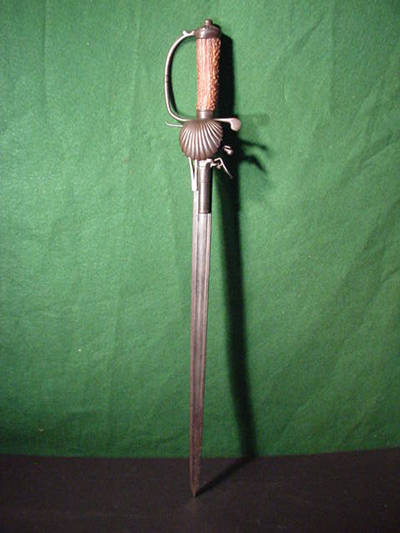
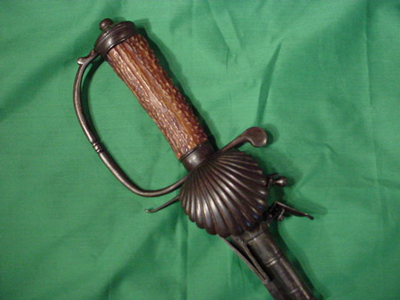
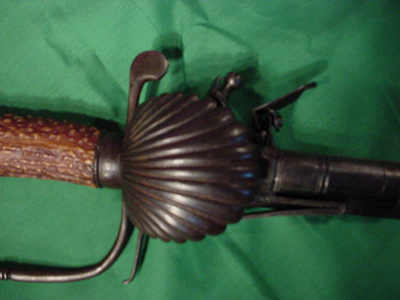
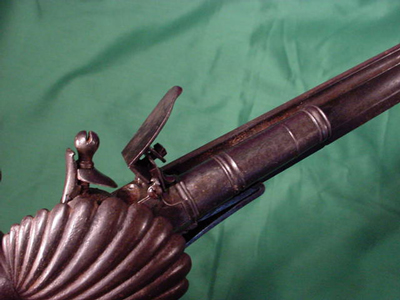
A Pistol Sword (Hirshfanger) (ITEM HUNT 7-21 & KWEPS 4-9 & OLD 7-4; ANTWEP 2-3) |
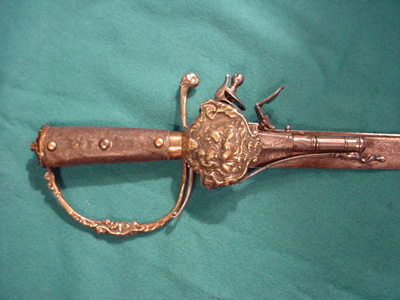
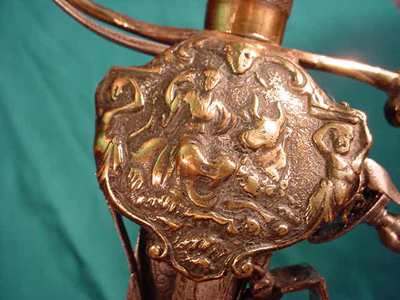
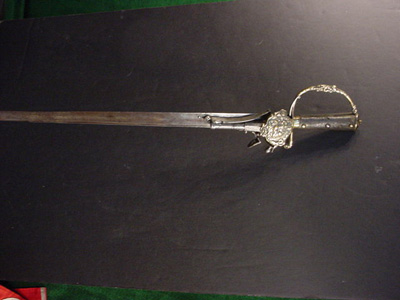
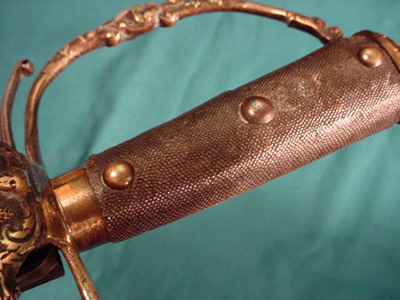
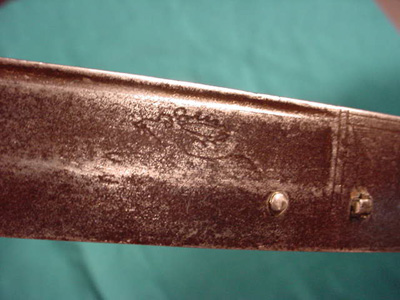
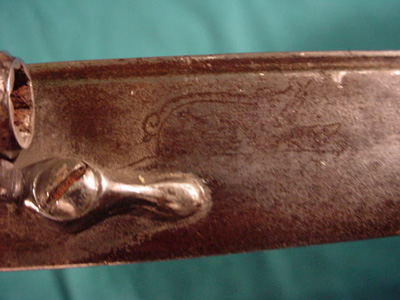
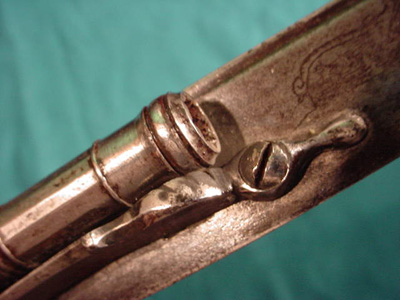
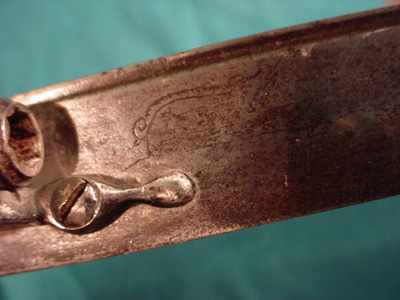
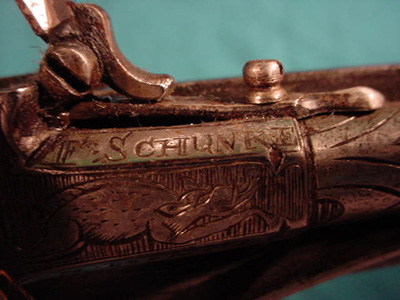
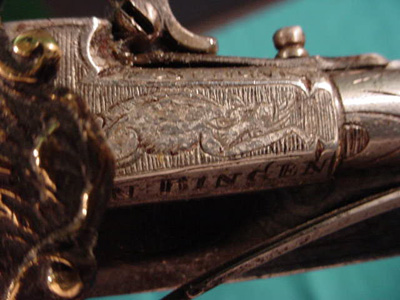
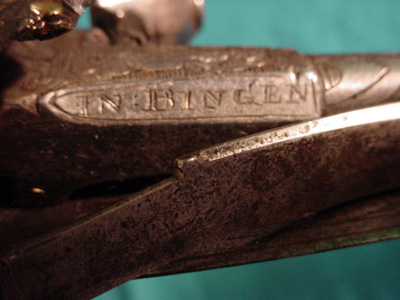
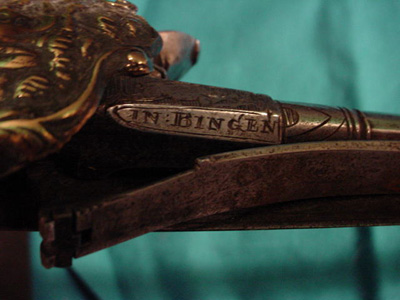
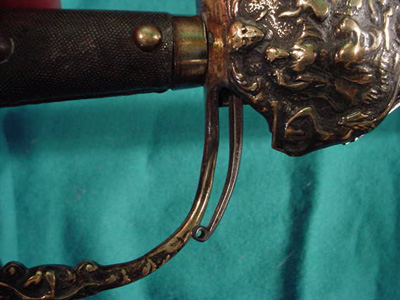
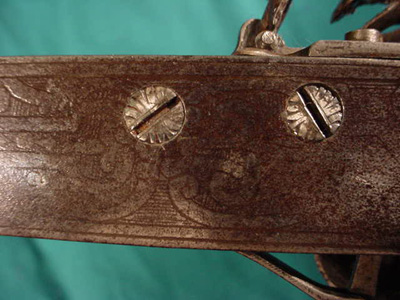
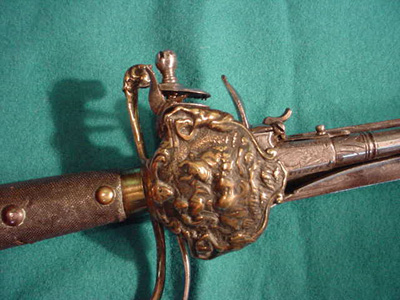
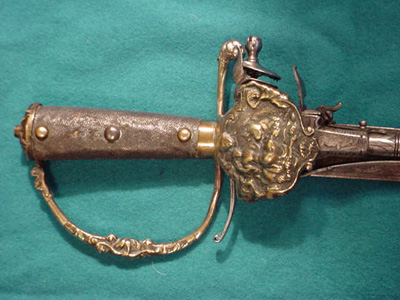
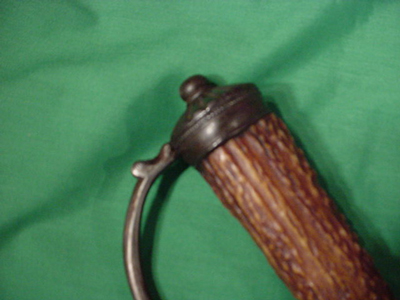
DESCRIPTION: This is an utterly magnificent example of this combination weapon, a true museum piece in every sense of the word. A pistol sword essentially is a sword with a pistol attached usually alongside of the blade. It differs from a rifle with bayonet in that the weapon is designed primarily as a sword and the firearm component is typically considered a secondary weapon, designed to be an addition to the blade rather than the sword being a secondary addition to the pistol. In addition, the two components of the weapons typically cannot be separated, unlike most bayonet fixed rifles. Historically, some early flintlock pistols were constructed as gun-swords with the barrel of the pistol attached to the side of the blade of a short sword or dagger. A shell guard protected the firing mechanism when it was employed in battle or in the hunt. These combination weapons were used by German and French hunters to kill wounded wild boar. Examples of these hunting weapons can be found in the armory of Wawel Castle at Krakow, Poland and several great ones can be see at the Jagdmuseum in Munich. Their collection is the best. Hunting with this type weapon was mostly enjoyed by royalty or landed gentry; such fine hunting weapons such as these were not used by the peasant class. These items were masterfully made by the finest weapon cutlers of the age. They were very expensive in their time thus their usage was pretty much limited to the rich and affluent. This magnificent example that we offer is exceptionally well made with straight blade. The grip is covered in ray skin. The clamshell guard that protects the action is in brass with a central human figure with a bull that may have been a riding mount within “poetic saga.” This could possibly be the familiar portrayal of Europa with the bull. To each side of this pair are figures of mythical men that would put you in mind of Hercules or the Titans. These figures are all very worn (good wear) from many years of usage. The blade shows some engraving of game, deer and boar that are also quite worn down; there is also some vestige of Celtic or Teutonic design at the base of the blade. The D Guard and the finial are also in decorated brass. The weapon undoubtedly dates from the early 18th century. The flintlock pistol that is attached is of steel and is engraved with a running wild boar nicely offered in typical artistic style of that century. The firearm component is finished like a fine weapon not crude like other specimens we have seen. The pistol is signed F Schunke in Bingen -- this would be the hamlet of Bingen am Rhein. The entire mechanism functions perfectly, the gun is in practically perfect condition with the engraving on it much finer and very noticeably un-worn, unlike the sword. This is because the gun is virtually protected from wear by the clamshell guard and was not exposed to the wear that the sword was. This weapon in German is a Hirshfanger: the traditional sidearm of the German hunter. Only a few were ever made in this combination style and thus are extremely rare and seldom found today. The greater preponderance of them have been snapped up over the centuries by museums and prestigious collectors. To have one as fine as this wonderful example makes us very proud to be able to offer it -- this is possibly one of the greatest weapons we have ever offered. A collector of German hunting weapons would do very well to add this one to his collection and it almost would have to be the “Alpha Addition” at least. PRICE: SOLD |
 |
 |
 |
 |
 |
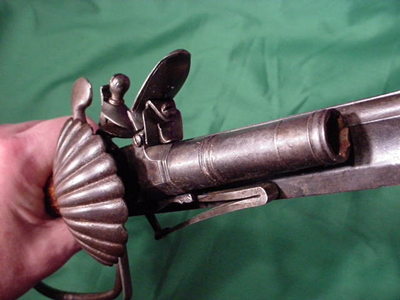 Good size caliber - 45? |
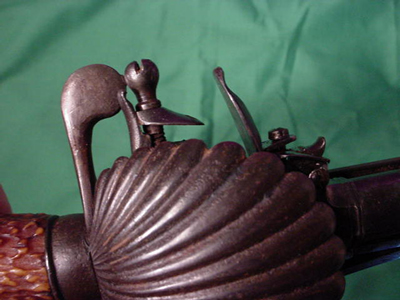 |
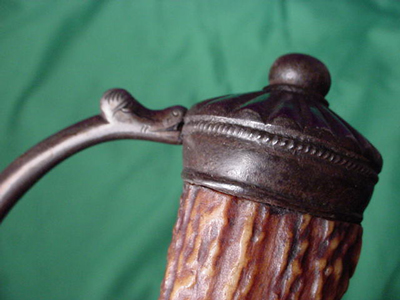 Note serpent face |
 |
 |
 |
 |
 Back side |
 |
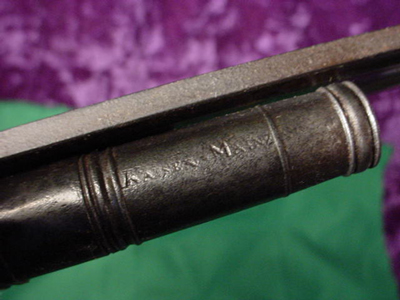 Maker - Kaiser Mainz |
 |
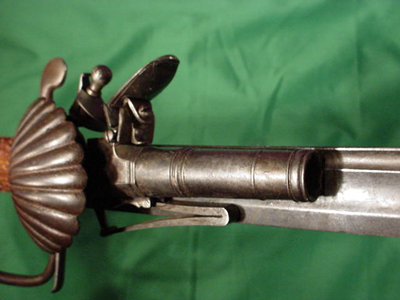
Pistol Sword (Hirshfanger) (Item HUNT 7-22 & KWEP 4-11 & OLD 7-7) |
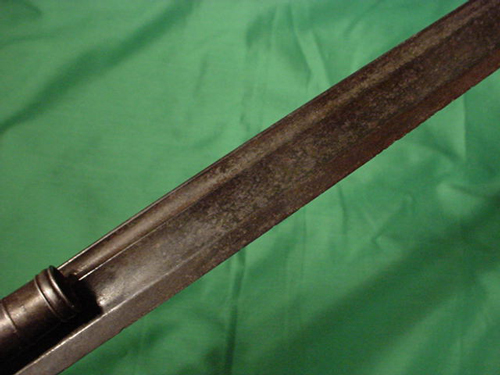
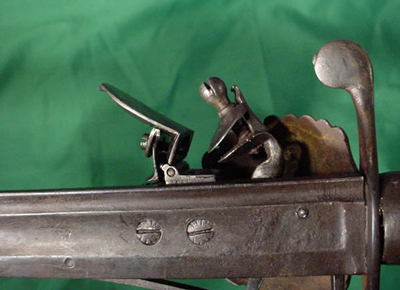
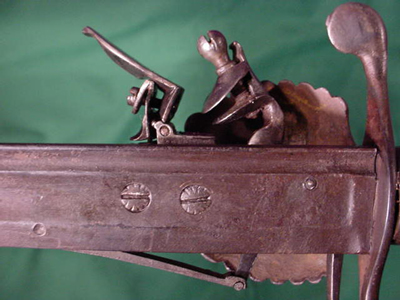
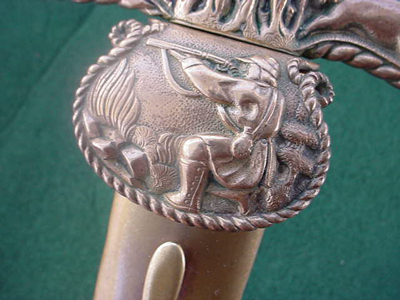
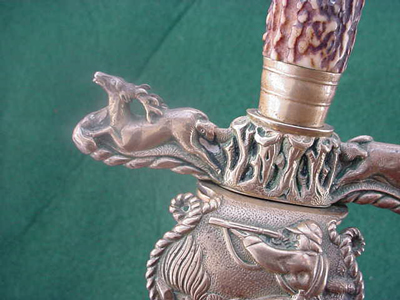
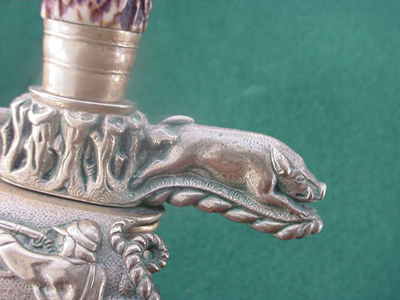
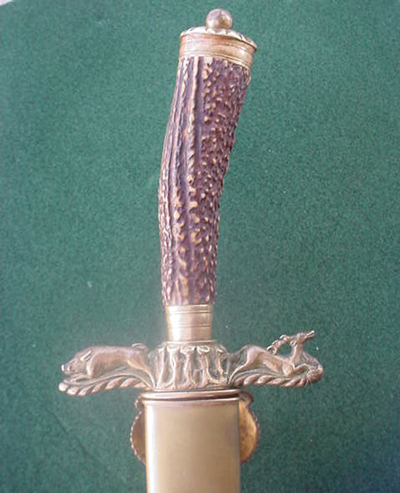
DESCRIPTION: Another wonderful example of the German Hirschfanger that was a combination defensive weapon and hunting arm. To read more about this style of sword go to the specimen above at KWEP 4-9 and see it at HUNT 7-22 and OLD 7-7. This particular piece differs in that is has a stag horn grip and a clam shell guard. Plus the barrel is of steel and the side locks are plain (not engraved). The piece is signed by the maker, Kaiser in Mainz. It has the d- guard as most of this type of weapon invariably has. All grip and guard fittings are finely crafted iron or steel. The piece is in firing condition and functions perfectly. The period would be in all probability early 18th century. Today most examples of this combination weapon are in museums or special collections. They are highly sought after but seldom found. This is an excellent example and is prodigiously interesting as well as historically important. PRICE: SOLD |
 |
 |
 |
 |
 |
 |
 |
 |
 |
 |
 |
 |
 |
 |
 |
 |
 |
 |
 |
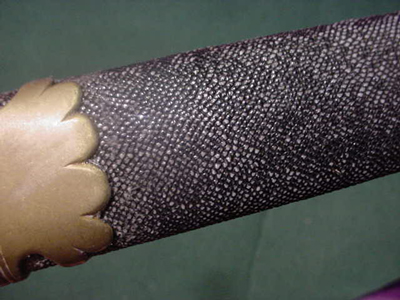 Serpent skin wrap |
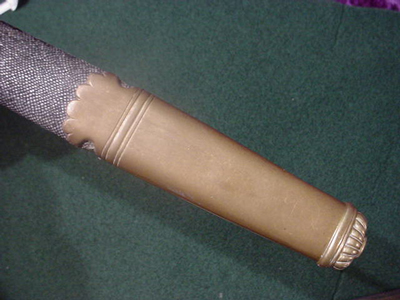 |
Unusual Hirshfanger or Hunting Sword (Item HUNT 7-23 & KWEP 4-12) |
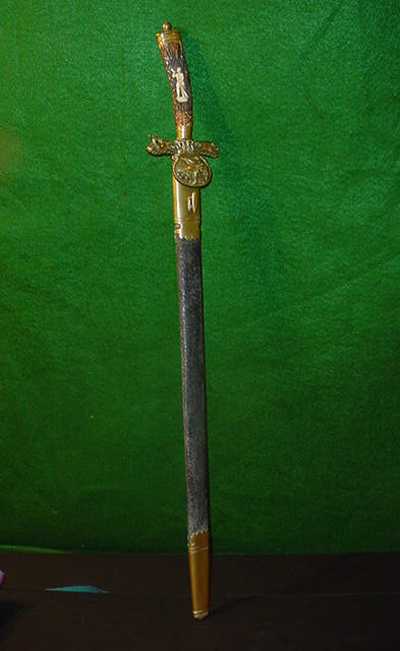
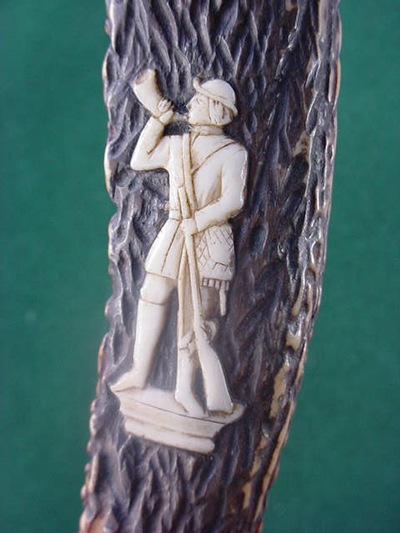
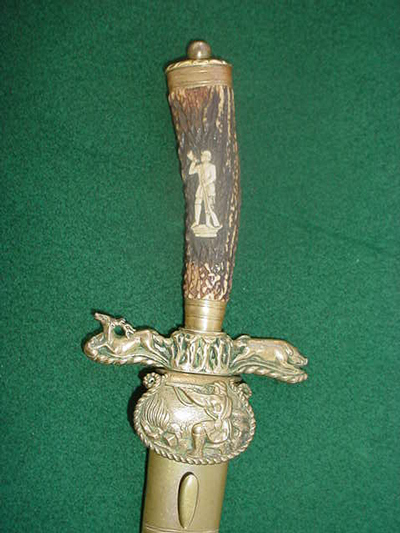
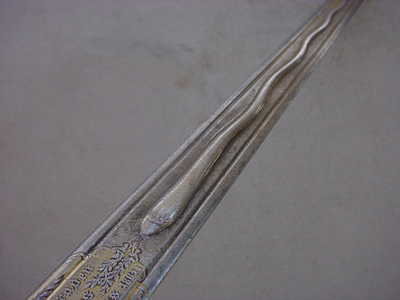
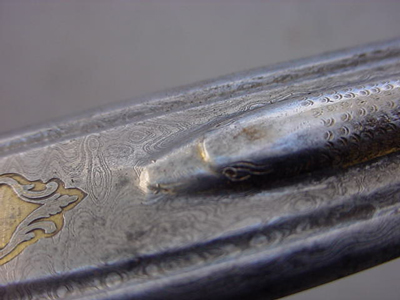
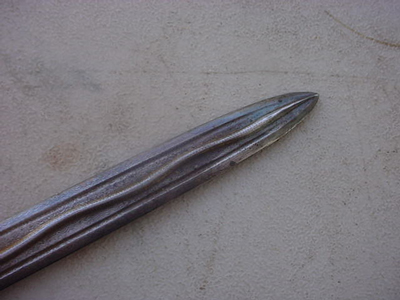
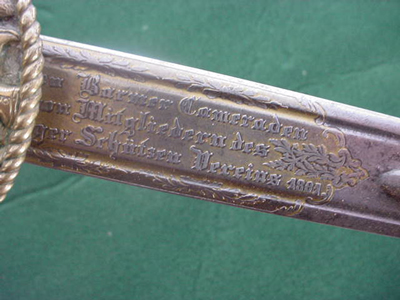
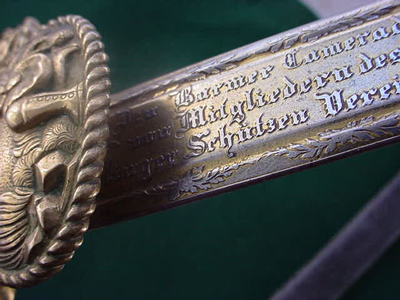
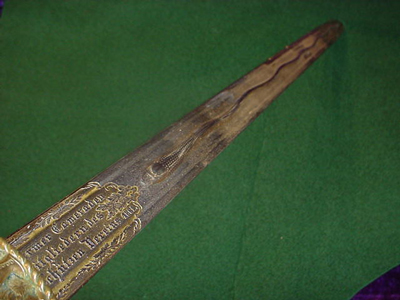
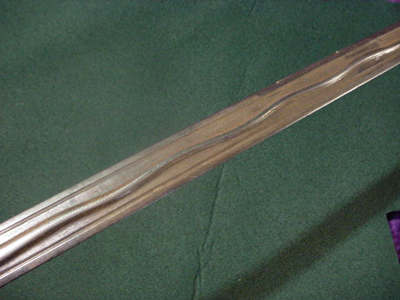
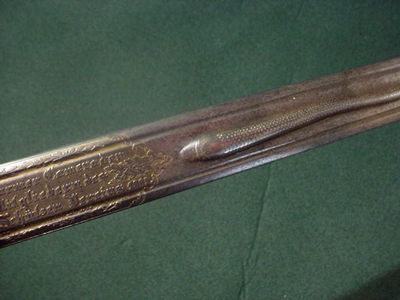
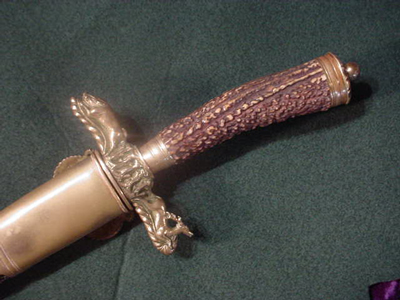
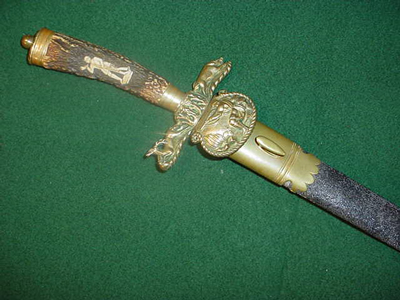
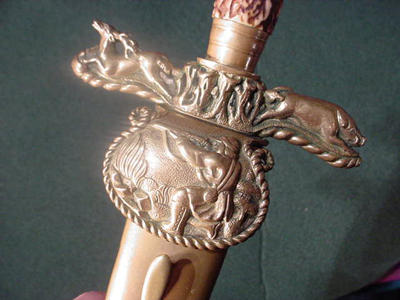
DESCRIPTION: This should titillate the collector of hunting weapons to no end! It is one of the most beautiful yet important Germanic Hirshfanger (Hunting Sword) that we have ever had the pleasure to offer to the public. It is positively unique and I am absolutely sure there have been no others with a blade like this one. The length of this piece definitely makes it a sword rather than a hunting knife (25 inches long when in the scabbard); it is a presentation made by the Shutzen Verein of the city -- none other than the German cutlery city of Solingen. It was presented in 1861, 150 years ago while patriotic Southern Americans were fighting against invading Yankees in the War of Northern Aggression. The grip is of stag antler with a beautifully carved depiction of a hunter with game call and musket. Decidedly top-grade carving. The brass crossguard is formed with a fully cast stag and wild boar, while in the center of this motif is a depiction of the dark forest. The clamshell guard has a relief of another hunter who levels his musket at probably a targeted game animal. NOW, the very unique feature – The BLADE! Here we depart completely from any standard Hirshfanger. The blade is crafted in very fine Damascus steel with gold wash trim that includes a beautiful stag motif. This is on the backside of the blade while the other side has the presentation in relief letters that come out to “Der Barmer Comeraden von Mitgliedern Des Solingen Schutzen Verein 1861." (Translation: The Barmer Comrades and members of the Solingen Shooting Association, 1861.) We feel this was a presentation from the Solingen Club to comrades of the Barmer Club -- Barmer being a district. Probably given to its president to display in their club house in Barmer in Wuppertal. We have seen that there is in fact a Barmer-wald in the Provence of Wuppertal (Wald is a forest.) This is logical being that these men were hunters and shooters. Now! The very unique feature of this wonderful sword. The blade has a serpent (snake) that is seen traversing up the center of the blade -- 3/4 of the length. 16 inches long and he is in high relief as he slithers along heading for the grip and presentation legend. He is fully three dimensional on both sides of the Damascus blade. We have never heard of anything like this motif on a German sword or dagger. The scabbard is covered in reptile skin of some type. The entire sword is in wonderful condition throughout. This is a collector's treasure; extremely fine and historically important. PRICE: SOLD |
Page Seven |
Please refer to item designator in parentheses in all correspondence.
Please E-mail for any additional information you may need.If you prefer, contact 'Germania' at PO Box 68, Lakemont, GA 30552
or call at 706.782.1668.
Please! do not call during the wee hours of the morning. The best time for calling us is between 10 and 12 noon and between 9 and 11 pm eastern time.