|
|
|
|


Old Reich
Page 7
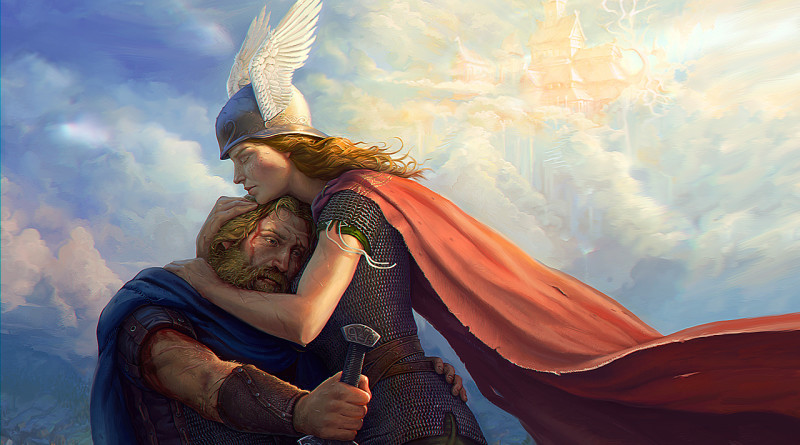
The beautiful daughters of Wotan would gather the brave warriors who died in battle and escort them to Valhalla.
 |
 |
 |
 |
 |
 |
 |
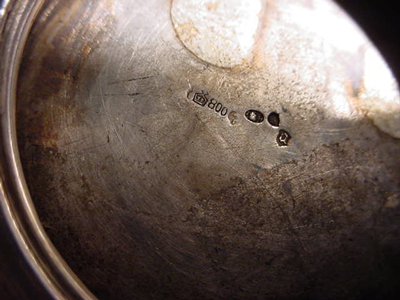 Markings |
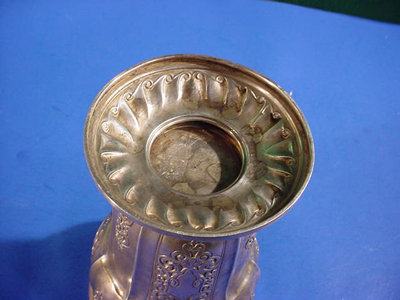 |
 Interior of goblet |
|
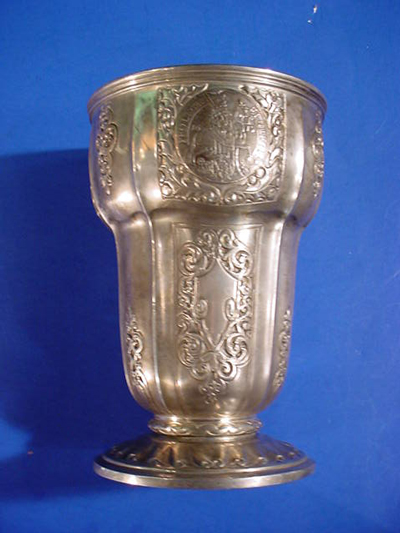
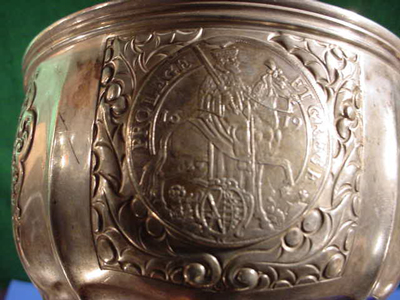
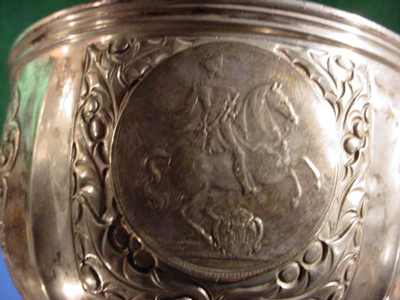
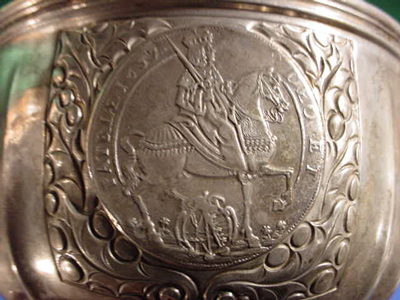
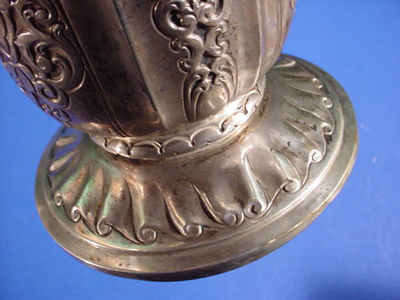
Munzen Krug (Coin Goblet) (Item OLD 7-1) |
|||
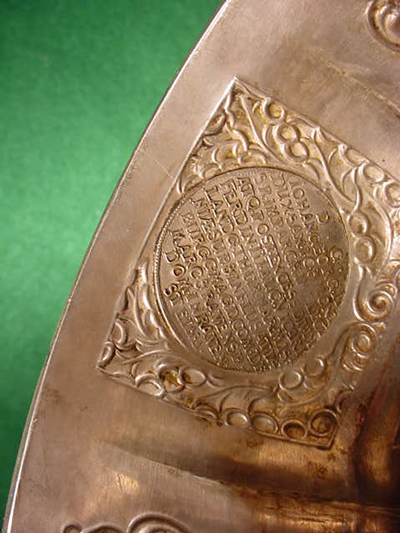
DESCRIPTION: Here is a solid silver pokal (goblet) that is a traditional German high art form dating back to the 12th century. This magnificent piece is probably from the 18th century or early 19th. The Krug has three magnificent large coins or medallions that are sealed in the lip of the pokal We will not be able to venture a guess as to the meaning of the medallions. We can see on the front of the ones with the equestrian figure the words along the edge “Prolege et Grege” and on the other is Patrie 1657 and then “Deo Et” all the figures on horses look like Royal personages. The reverse of the medallions have an abundance of words and one has pictures -- all of which I cannot translate -- too hard to make out. The shield at the horses feet is the Waffen-Amt of one of the Saxon Municipalities of either Sachsen Konigreich or Sachsen-Coburg and Gotha. One of the horsemen has the date of 1619 on the medallion. The goblet is 7 ½ inches high with a mouth opening of 5 inches in diameter. The bottom-most portion is 4 inches in diameter. It is clearly marked with crown and 800 stamped on the bottom along with a couple of other marks. The condition is excellent. The body of the piece has beautiful floral design (excellent). This is truly a museum piece and a wonderful example of the art of the German silversmith extraordinaire. |
|||
 |
 |
 |
 |
 |
 |
 |
 |
 |
 |
 |
 |
 |
 The artist |
 |
 |
 |
 Roman officer captive |
 Original painting |
 Schlacht im Teutoburger Wald in the midst of battle |
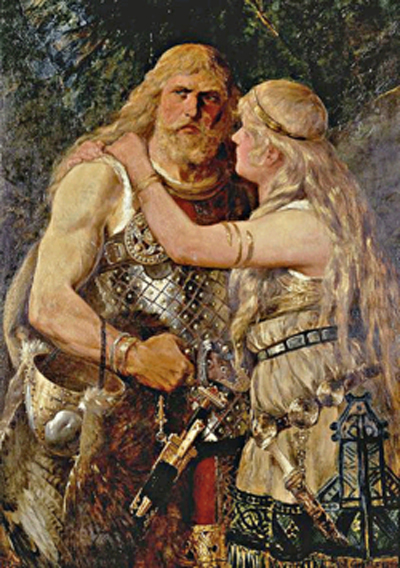 Thusnelda says farewell to Hermann before battle |
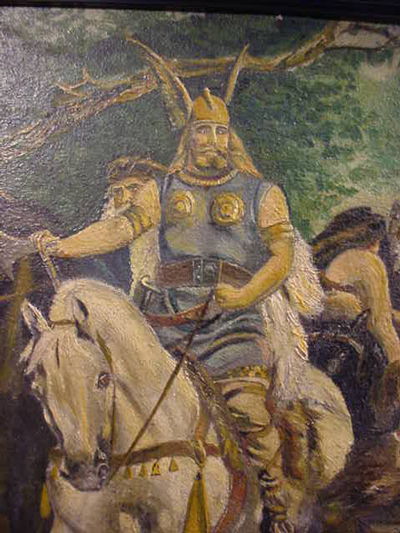
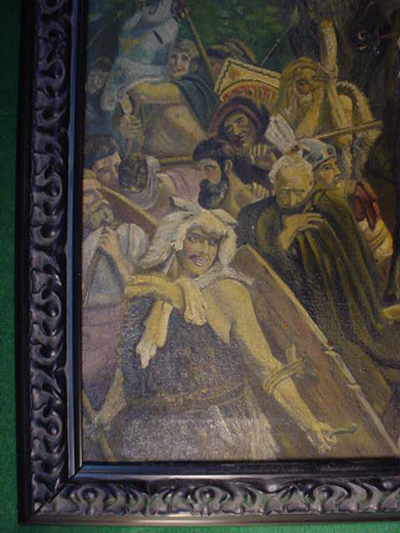
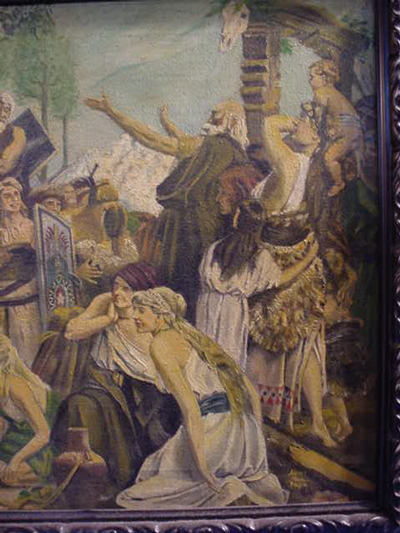
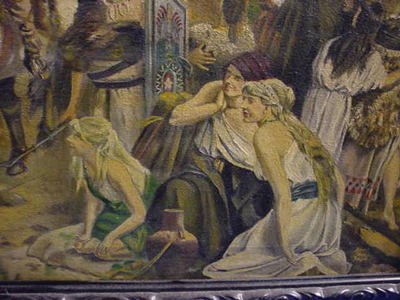
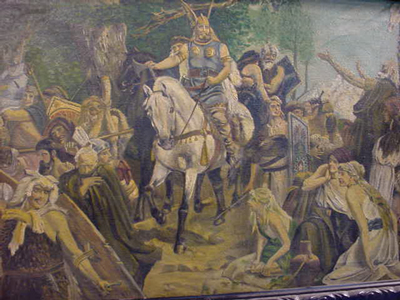
A Painting on Canvas of Hermann the Cheruscan Chieftain Returning from Battle with His Men (Item OLD 7-2 & ART 16-1) |
|||
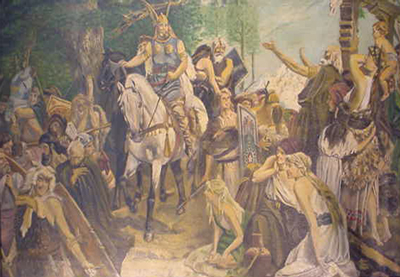
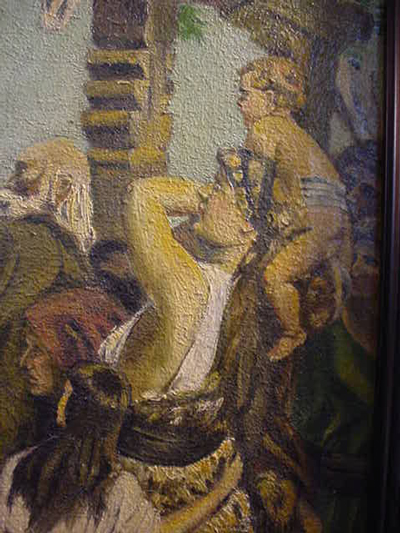
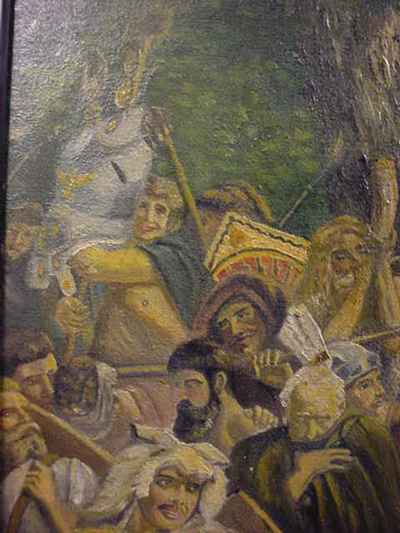
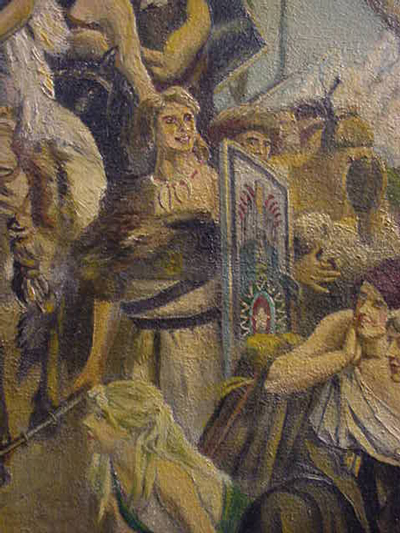
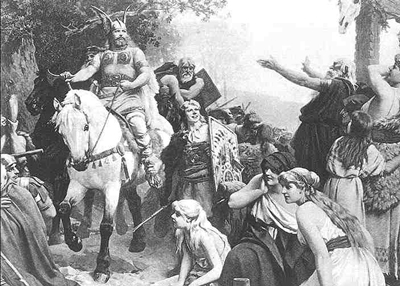
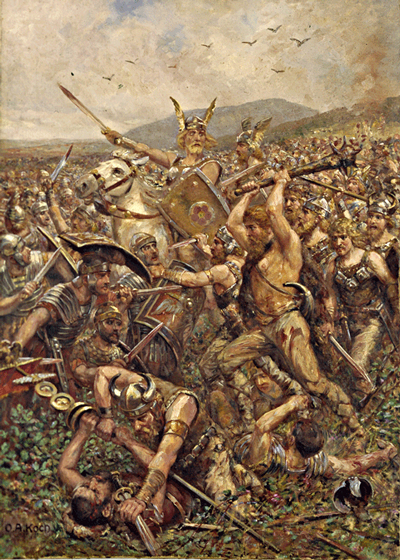
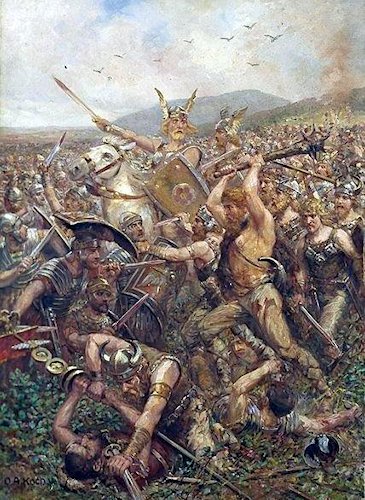
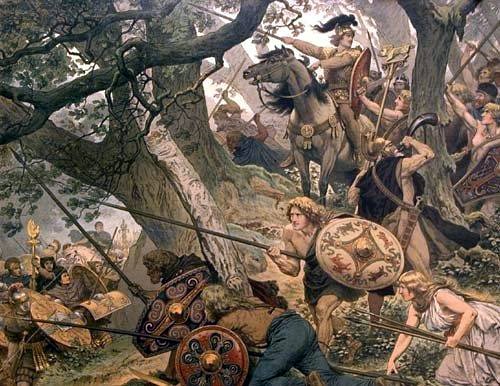
| DESCRIPTION: This is a painting in oil of the return of Arminius (Hermann) to his Cheruscan village after the defeat of the Three Roman Legions commanded by Publius Quinctilus Varus in the year 9 AD in the Teutoburg Forest. This was one of the most severe defeats ever suffered by the Roman army and it ultimately forced Rome to abandon its plans for conquest of the German territories west of the Rhine.
This year, 2009, marks the 2,000 anniversary of one of the most important battles of all history. The utter destruction of three Roman legions was definitely the turning point for the Roman Empire and all of Europe. Please go to Old 3-2 on our pages for more descriptions of the battle.
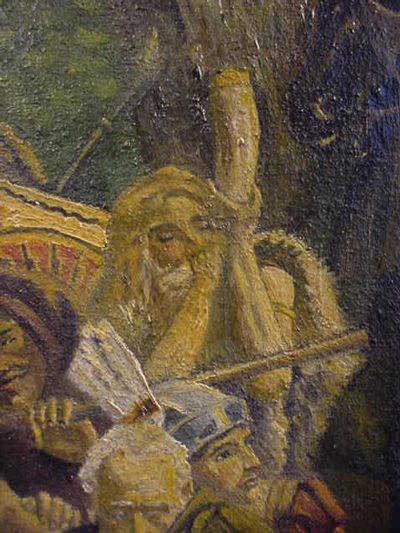
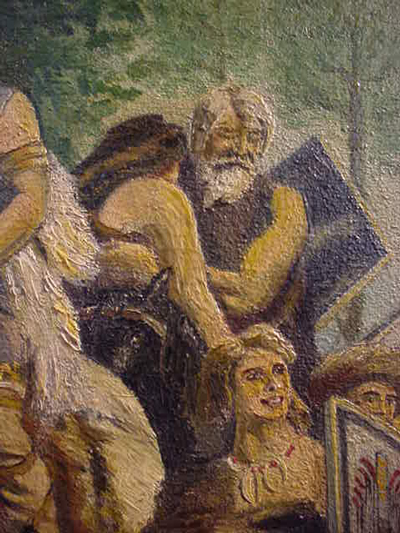
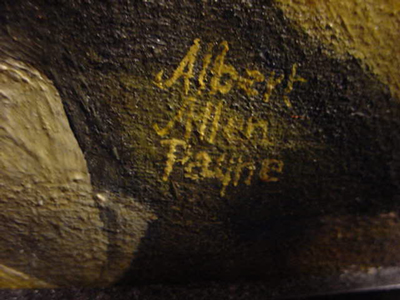
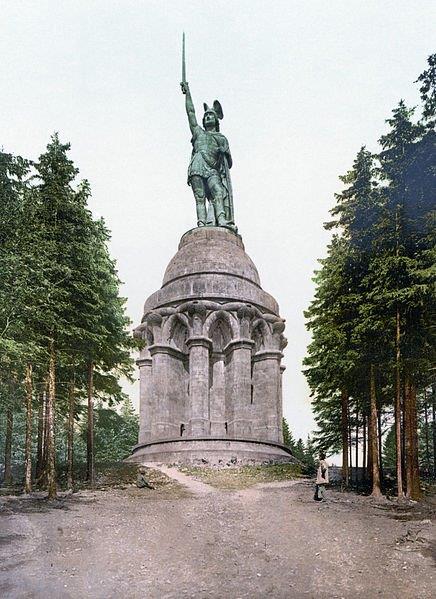
Also see Old 4-7. This painting we offer is in a large size with a frame that is new but nice. It measures 35" x 22 ½". The frame is about 2 ½" wide. The painting is a copy of the original that is in a German museum. The work was executed in the time of the Third Reich. This can be extrapolated by painting style of the era. The painting itself looks like the style of the artistic predilection of the Third Reich; however, the artist's name does not sound German, Allen Payne. But the painting was found in Germany -- could this rendering have been executed by a “Germanophile” art student in 1930's Deutschland? There was a definite “Hermann cult” worldwide during this time as it was the era of heroism! Hermann was celebrated almost with as much popularity as the Fuhrer himself. He represented for the German people resistance against foreign invaders and they hoped to break the occupation by the arrogant armies who in the 20’s were so evident, especially in the Rhineland, “Hermansland.” The historic correlation was blatantly evident and Arminius became a symbol of freedom and even vengeance. He also became the beacon of vigilance as the “Hermannsdenkmal,” the statue near Detmold stood defiantly with upraised sword! Arminius also stood for German unity. On the upraised sword are the engraved words “Deutsche Einigkeit Meine Starke, Meine Starke Deutschland’s Macht!” Translated this says “German Unity my Strength, My strength Germany’s Might.” Down through the ages the words of this liberator are remembered. The words that he used when he assembled Tribal Chieftains to hear his appeal for German unity,
he said, "As long as the enemy defies us upon German soil, hatred is our law and our one duty revenge!" That statement echoed down through the ages and the SS and SA men of the NSDAP truly took it to heart and when the German army marched into the Rhineland in March 1936 the French occupation Senegalese Negro troops were fleeing in horror before the swastika banner. The German soldiers were singing “Als Die Romer Frech Geworden” also known as the Hermannsleid. The transition of the song's title is "When the Romans became cheeky!"
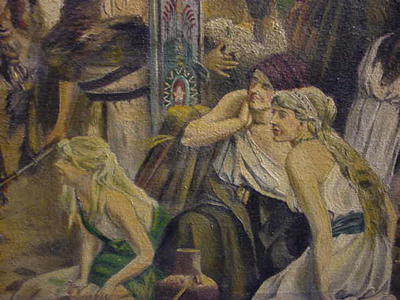
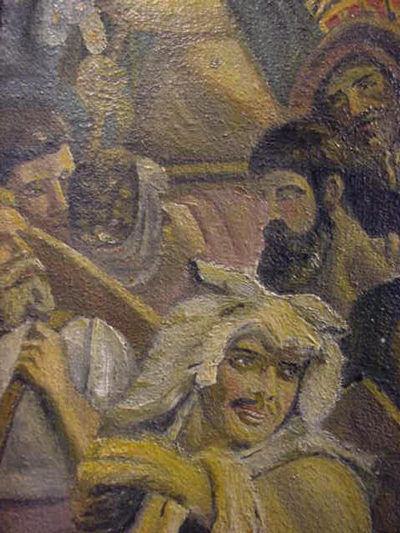
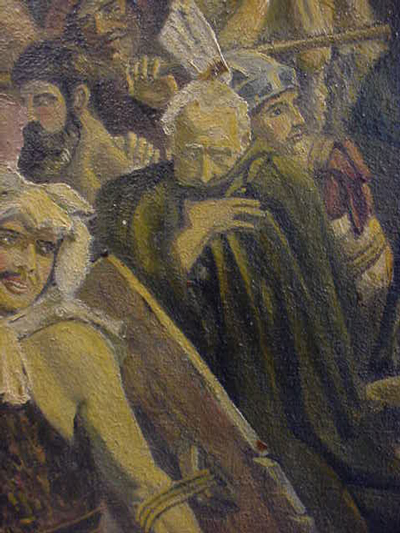
The painting is truly dramatic with the liberator himself mounted on his white steed as he receives the adoration of his Cheruscan tribe. All around him are his warrior comrades carrying trophies of war such as Roman shield, Roman breastplates, even a captured Roman officer who holds his blanket up around his neck and chin. He is being led to grim and horrible death through torture.
A warrior sounds up the entrance call on a steer horn announcing the glorious return of Hermann with his proud Warriors. A tribal elder throws his arms open in appreciative greeting . Golden haired Rhine maidens stand with glowing pride in their men folk returning with“Unser Hermann “Der Befreier.”
This is to us a Germanophiles dream painting. If you are like us, a lover of Germanic (Kutur), then this rendering will thrill you. Heil Hermann! Heil und Seig! PRICE: SOLD |
|||
|
|
|
|
|
|
|
|
|
|
|
|
|
|

|
|
|
|
|
|

|
|
|
|
|
|



|
|
|
|
|
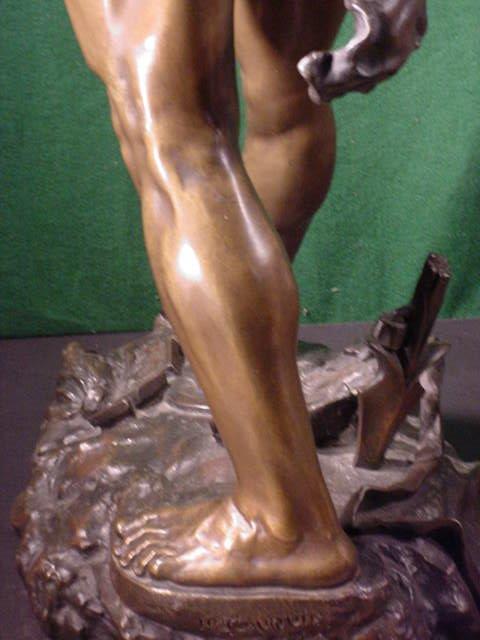
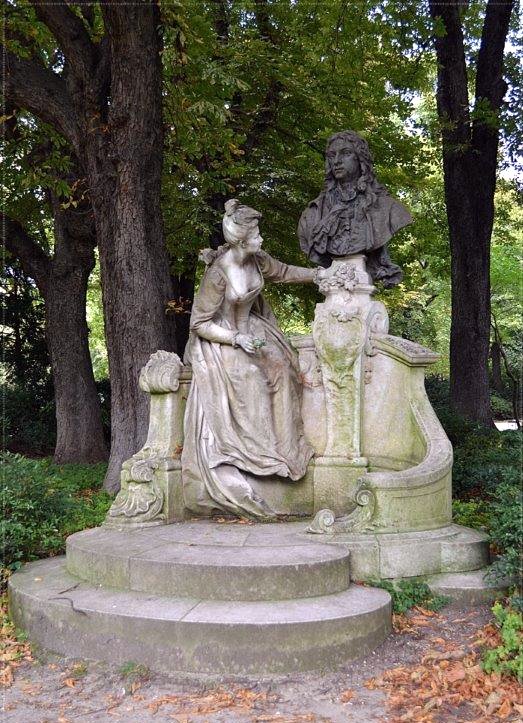
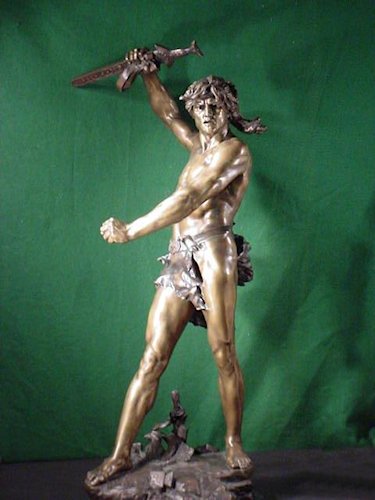
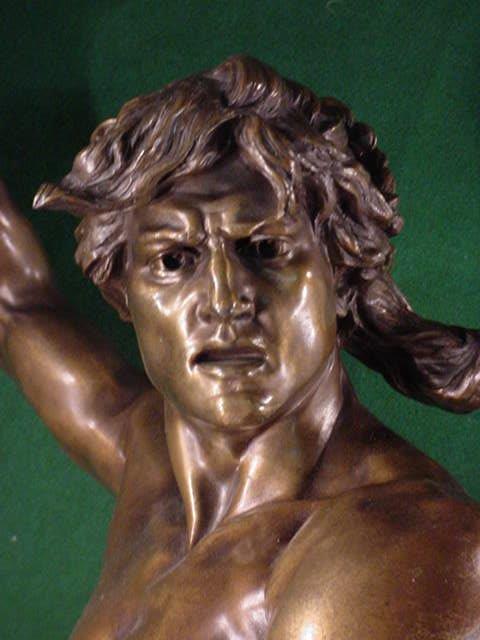
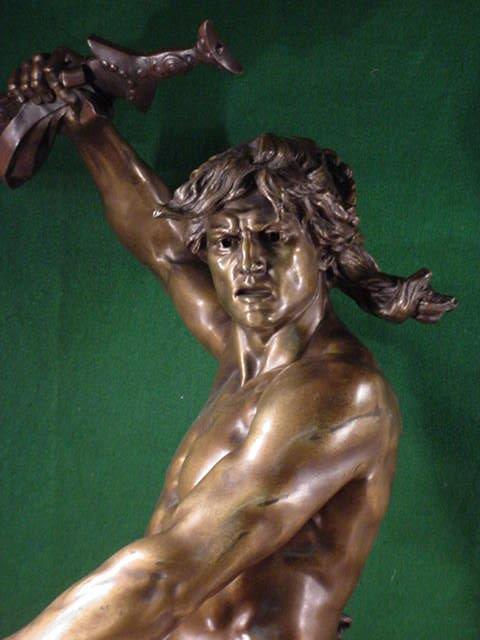
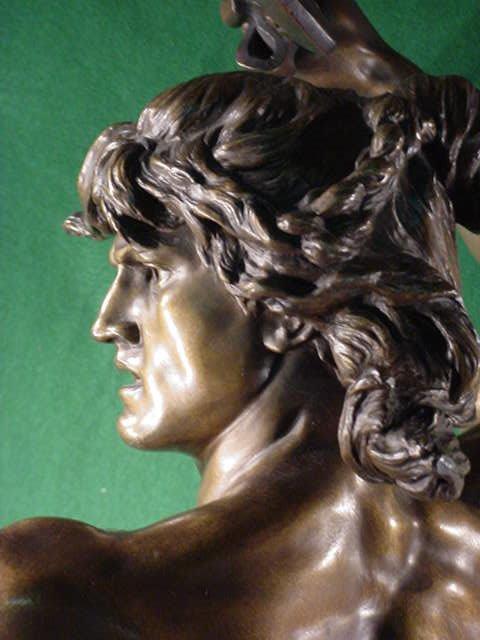
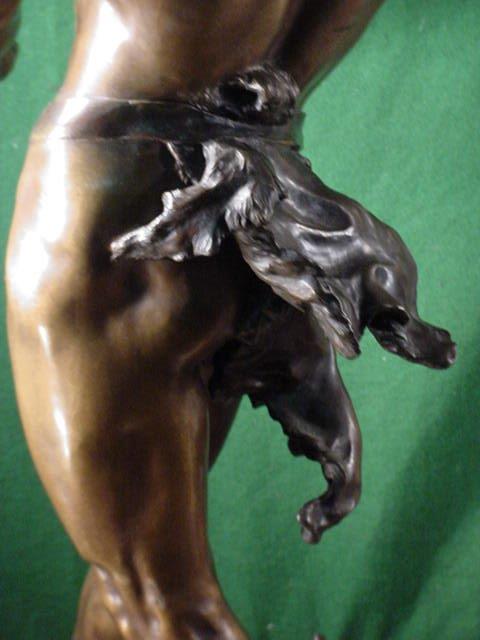
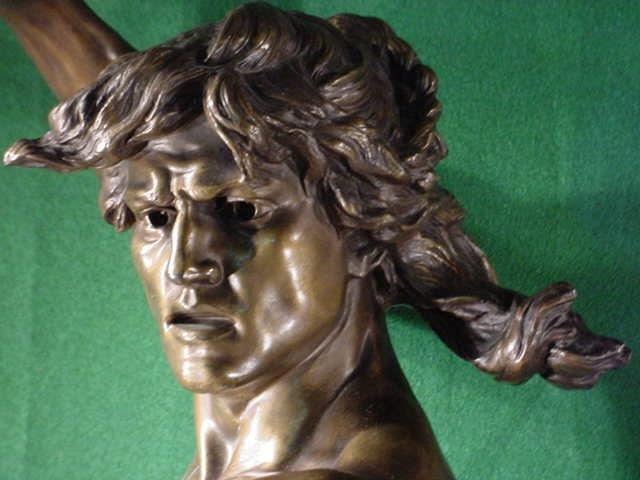
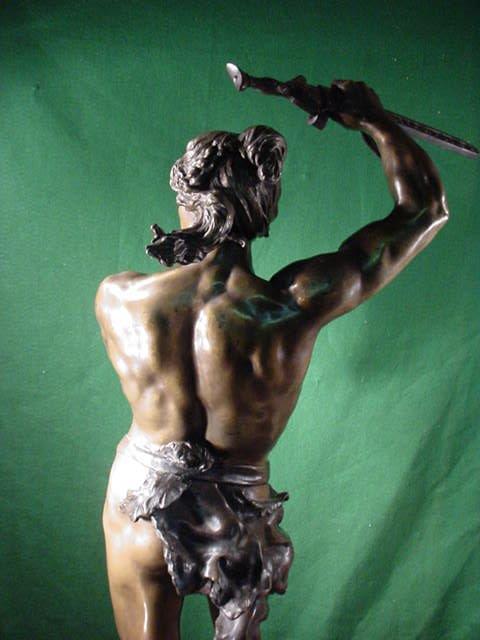
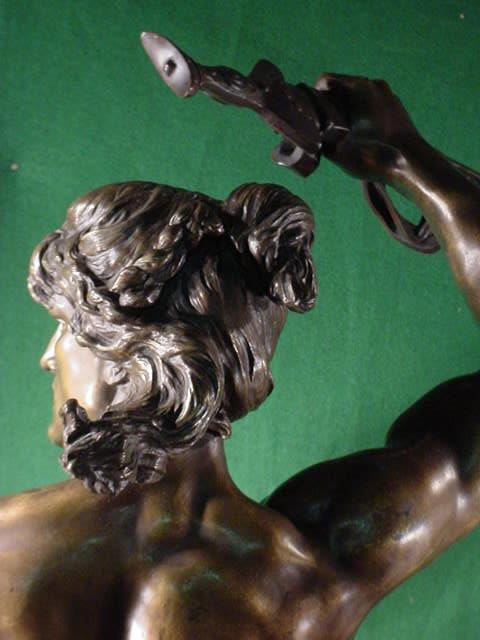
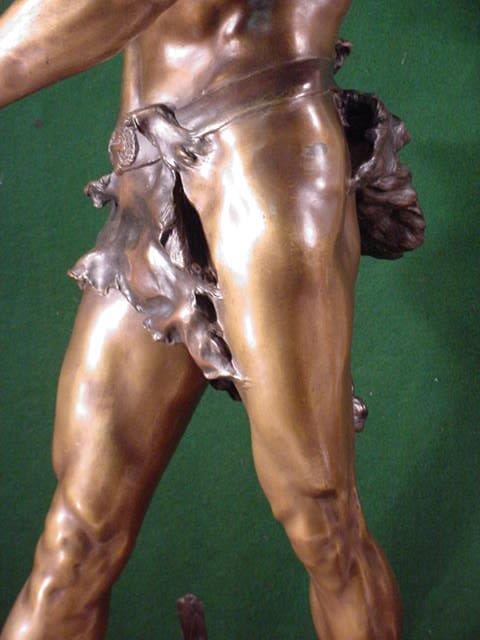
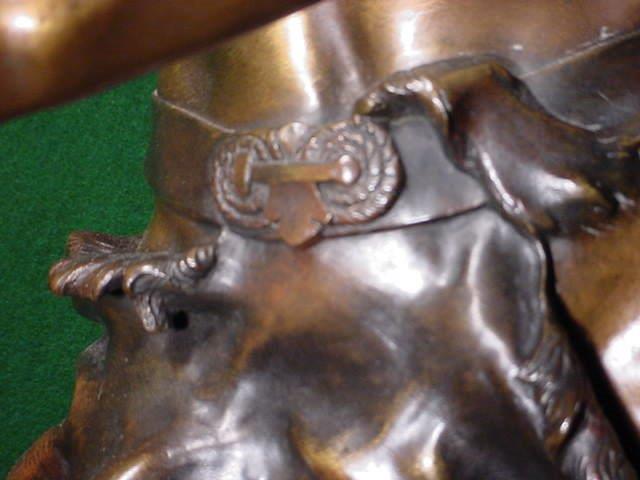
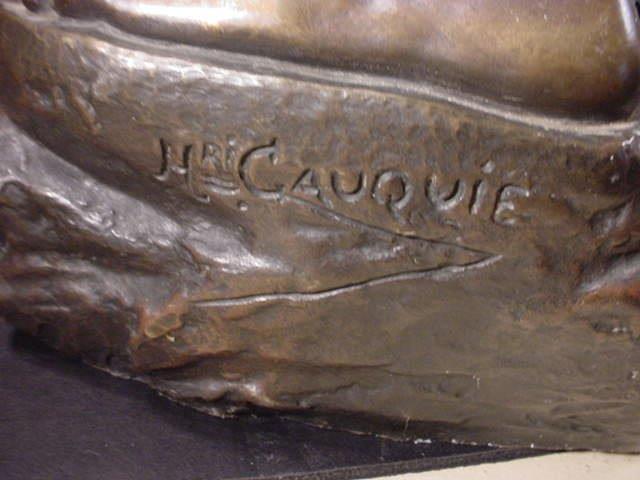
Bronze Sculpture of a Teutonic Warrior by Henri Désiré Gauquié (Item OLD 7-2a; ART 16-1a; BRONZEMET 3-13) |
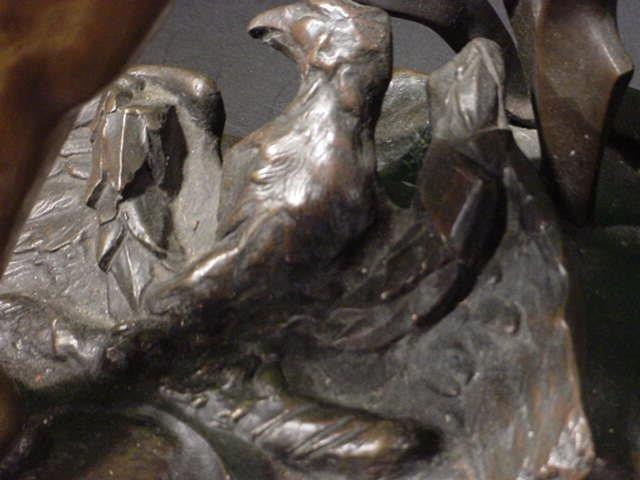
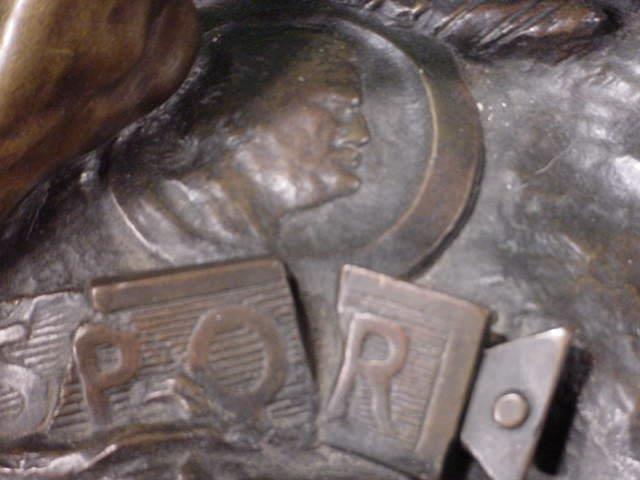
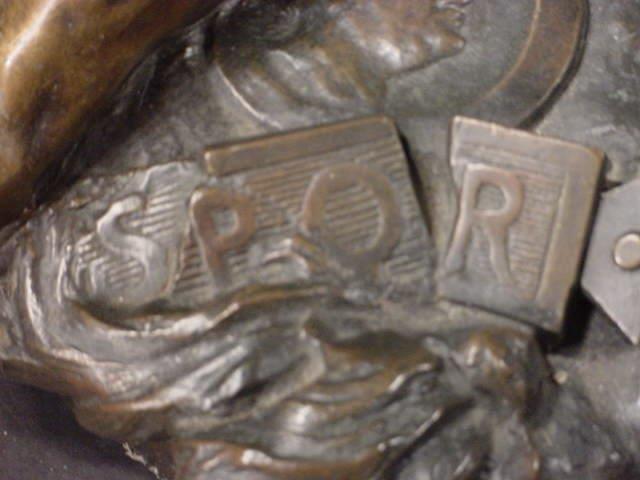
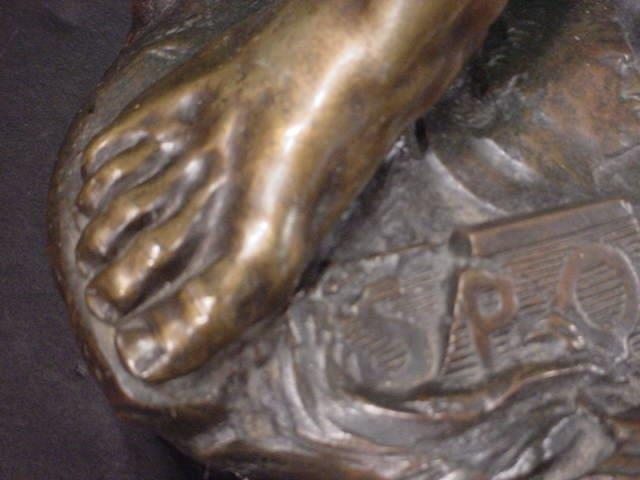
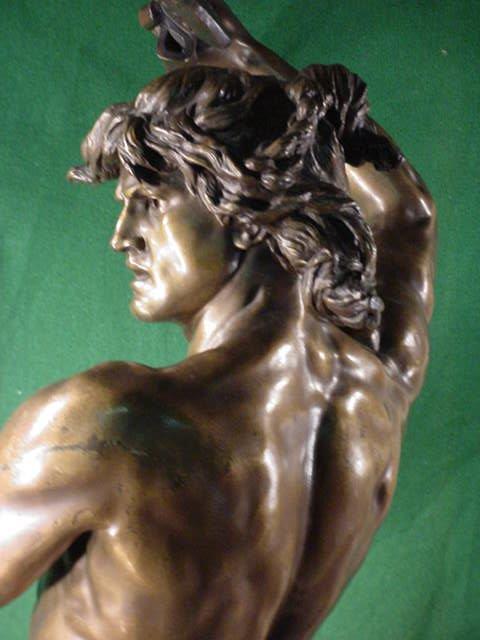
| DESCRIPTION: Here is what I would have to say is the sculpture that is my favorite of all the magnificent bronzes that we have ever acquired or owned in our personal collection. The subject is known as “Vae Victus” by famed sculptor Henri Désiré Gauquié (1858-1927). Born in the ancient French village of Flers-lez Lille, Henri Gauquié is well known for producing a number of small bronze statues and a large number of life-size monuments of people and animals in France. One of his famous horse sculptures is the equestrian statue of Marshal de Villens in Denain, a town between Lille and Valenciennes. It commemorates the Marshal’s victory at the Battle of Denain on 24 July 1712. A well-known monument to the French Baroque painter Jean-Antoine Watteau was created by him in 1896 in the Jardin du Luxembourg in Paris as collaboration in marble and bronze with the architect Henri Gillaume. Henri Gauquié died in Paris in 1929. He was certainly one of the finest and greatest sculptors that France ever produced and it was certainly the nation of sculptors. The Sculpture The depiction here by Gauquié is of a warrior of the Teutonic tribe known as the Cherusci, which, under the brilliant leadership of the chieftain Arminius, or Hermann, ambushed and decisively annihilated three Roman legions and auxiliaries which were led by Publius Quinctilius Varus. Varus was a noble from a patrician family which was related to the Imperial family. Varus’ name and deeds were well known beyond the Roman Empire because of his ruthlessness and crucifixion of insurgents. While he was feared by the people he was highly respected by the Roman Senate. On the Rhine he was in command of the XVII, XVIII, and XIX Legions. The great and bloody battle ensued after Varus attempted to enter and raid the Germania territory east of the Rhine River. After the tremendous loss during the Schlacht im Teutoburger Wald, the Battle of the Teutoburg Forest, the Roman Legions never again attempted to conquer the people in the east of the Rhine. Arminius was the son of the Cheruscan chief Segimerus and trained as a Roman military commander. He had lived in Rome as a hostage in his youth where he received a military education and obtained Roman citizenship and the status of equestrian knight before returning to Germania and defeating the Romans and after seeing to the unity of the Germanic tribes and to thwart Roman efforts to incorporate the German lands into the Empire. Then, in the year 9 AD, the Romans fell into a trap and ambush set by this ex-soldier of Rome who was still loyal to his original people. Twenty thousand of Rome’s finest soldiers were totally annihilated. Their commander, Varus, committed suicide by falling on his sword. Arminius’ success in destroying three crack legions and driving the Romans out of Germany was the single most devastating defeat that Rome had ever suffered in its history and was a high point of Germanic power for centuries. Roman attempts to reconquer Germany failed in every instance. The sculpture is magnificent. I have always been an ardent admirer of the sculptor Arno Brecker and Josef Thorak who were the official sculptors of the Third Reich. Thorak always created grandiose monuments and statues intended to represent the folk life of Germany that was under the NSDAP government. These works tended to be heroic in scale up to 65 feet in height. His official works from this period included a number of sculptures erected at the Berlin Olympic Stadium of 1936. His preference was for heroic statuary of Aryan man in the neoclassical nude and seminude depictions that practically portrayed these Aryan heroes as gods upon the earth. Certainly, this was the elite of the races of man. Perhaps it is because of my love of the art of Thorak and Brecker that I am transfixed and awed by this sculpture by Gauquié because I have never seen any bronze work of art that is so reminiscent of the work of those two German masters. The style is exactly the same right to the Aryan features and general physiognomy. The Teutonic warrior triumphantly holds high the captured Roman sword (gladius) as he treads into the forest floor. At his feet is the broken Roman-eagle standard with the letters “SPQR” the meaning of which in Latin is “The Senate and People of Rome” “Senatus Populus que Romanus.” Also thrust to the ground under the Teutonic feet is a plaque with the effigy of Emperor Augustus, who was so shaken by the news of the battle’s result that he stood butting his head against the walls of his palace repeating “Quintili Vare, legiones redde!,” “Quintilius Varus, give me back my legions!” This is a very large bronze. It measures 40 inches from the bottom of the base to the hand holding the sword. The measurement from the bottom of the base to the top of the warriors head is 36 inches. This statue summons all the utter ferocity of one of the world’s greatest and most prodigiously important battles that essentially stopped the moribund Roman empire from its eastward expansion and I think it shows the mettle of the German fighting men who many centuries later would be recognized in the German WWII Wehrmacht as we now know them. This statue can be a tribute to bravery and the constant struggle for freedom for western man. PRICE: $15,000 |
 |
 |
 |
 |
 |
 |
 |
 |
 |
 |
 |
 |
 |
 |
 Maker |
 |
 |
 |
 |
 Note trigger |
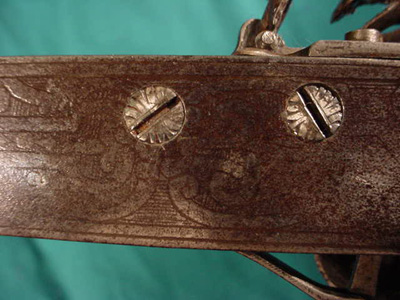 Original engraved screws |
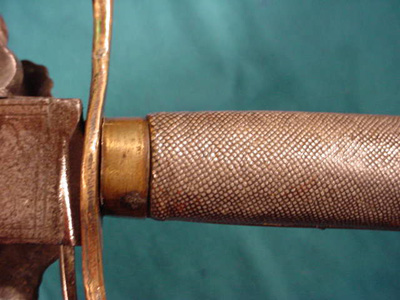 Ray skin grip |
 |
 |
 |
 |
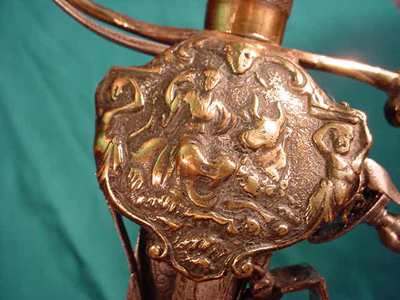
 Hunting scene on cap |
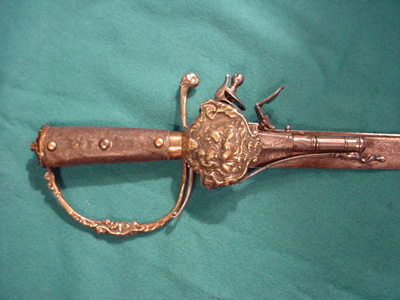
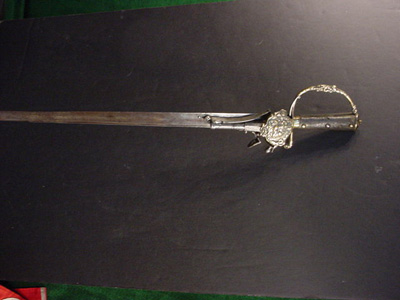
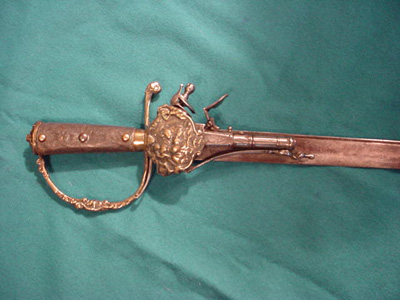
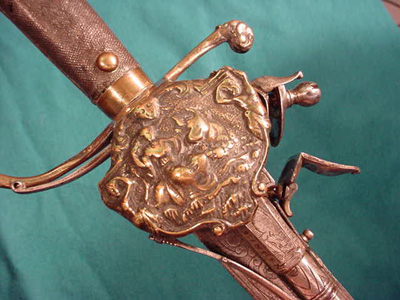
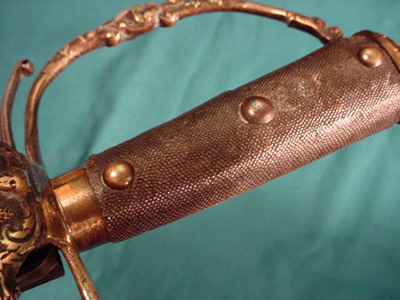
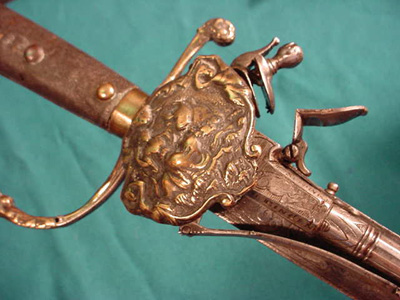
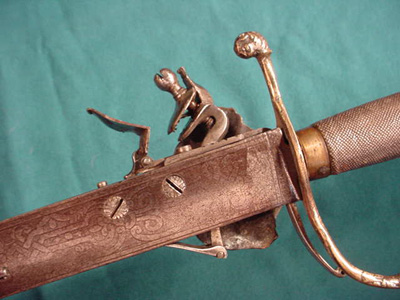
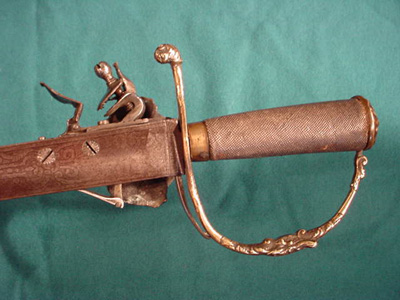
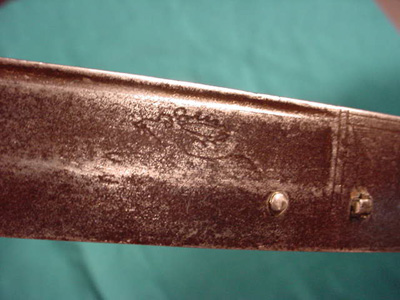
A Pistol Sword (Hirshfanger) (ITEM OLD 7-4 & KWEPS 4-9 & HUNT 7-21; ANTWEP 2-3) |
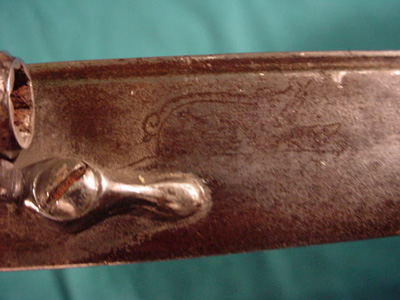
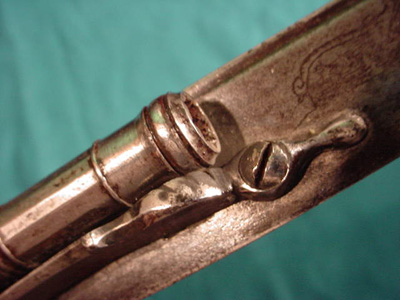
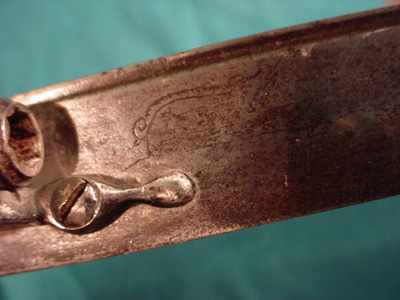
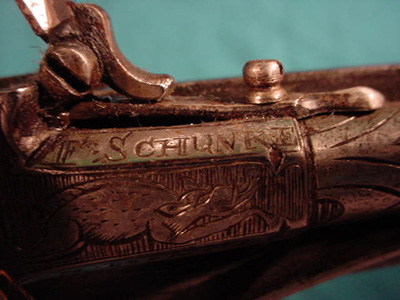
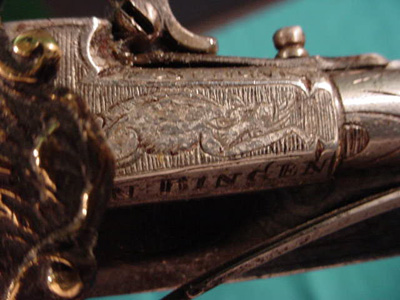
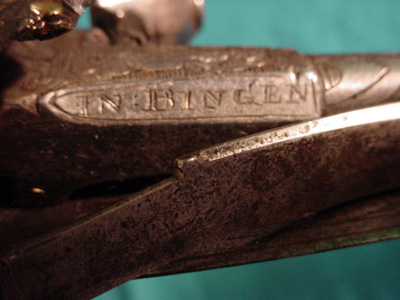
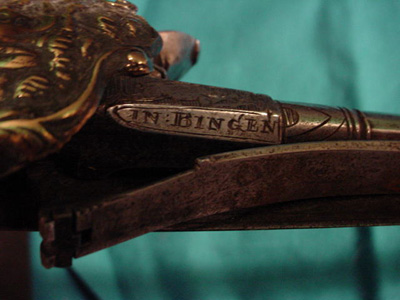
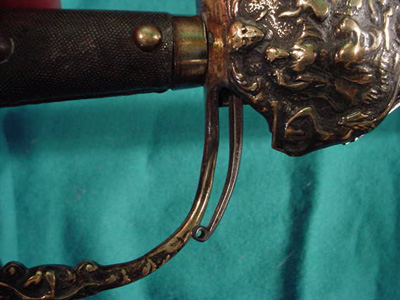
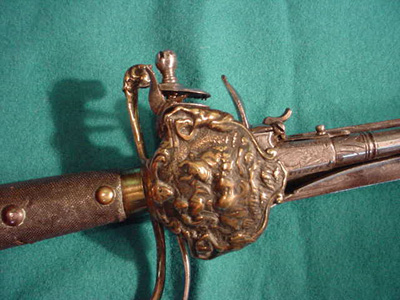
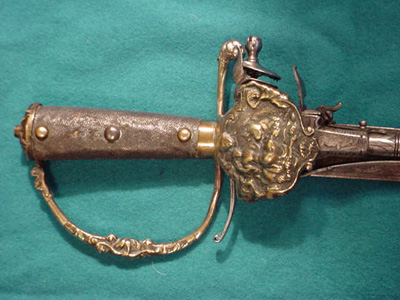
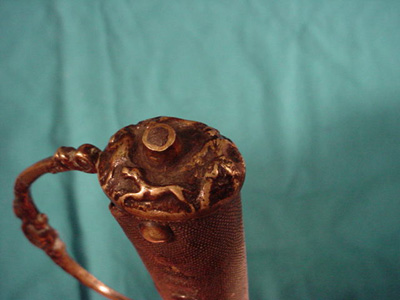
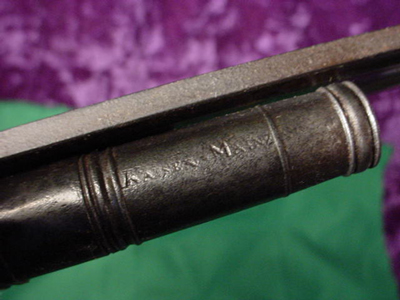
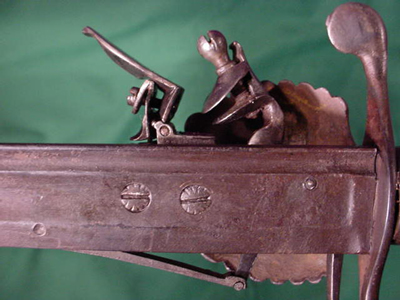
DESCRIPTION: This is an utterly magnificent example of this combination weapon, a true museum piece in every sense of the word. A pistol sword essentially is a sword with a pistol attached usually alongside of the blade. It differs from a rifle with bayonet in that the weapon is designed primarily as a sword and the firearm component is typically considered a secondary weapon, designed to be an addition to the blade rather than the sword being a secondary addition to the pistol. In addition, the two components of the weapons typically cannot be separated, unlike most bayonet fixed rifles. Historically, some early flintlock pistols were constructed as gun-swords with the barrel of the pistol attached to the side of the blade of a short sword or dagger. A shell guard protected the firing mechanism when it was employed in battle or in the hunt. These combination weapons were used by German and French hunters to kill wounded wild boar. Examples of these hunting weapons can be found in the armory of Wawel Castle at Krakow, Poland and several great ones can be see at the Jagdmuseum in Munich. Their collection is the best. Hunting with this type weapon was mostly enjoyed by royalty or landed gentry; such fine hunting weapons such as these were not used by the peasant class. These items were masterfully made by the finest weapon cutlers of the age. They were very expensive in their time thus their usage was pretty much limited to the rich and affluent. This magnificent example that we offer is exceptionally well made with straight blade. The grip is covered in ray skin. The clamshell guard that protects the action is in brass with a central human figure with a bull that may have been a riding mount within “poetic saga.” This could possibly be the familiar portrayal of Europa with the bull. To each side of this pair are figures of mythical men that would put you in mind of Hercules or the Titans. These figures are all very worn (good wear) from many years of usage. The blade shows some engraving of game, deer and boar that are also quite worn down; there is also some vestige of Celtic or Teutonic design at the base of the blade. The D Guard and the finial are also in decorated brass. The weapon undoubtedly dates from the early 18th century. The flintlock pistol that is attached is of steel and is engraved with a running wild boar nicely offered in typical artistic style of that century. The firearm component is finished like a fine weapon not crude like other specimens we have seen. The pistol is signed F Schunke in Bingen -- this would be the hamlet of Bingen am Rhein. The entire mechanism functions perfectly, the gun is in practically perfect condition with the engraving on it much finer and very noticeably un-worn, unlike the sword. This is because the gun is virtually protected from wear by the clamshell guard and was not exposed to the wear that the sword was. This weapon in German is a Hirshfanger: the traditional sidearm of the German hunter. Only a few were ever made in this combination style and thus are extremely rare and seldom found today. The greater preponderance of them have been snapped up over the centuries by museums and prestigious collectors. To have one as fine as this wonderful example makes us very proud to be able to offer it -- this is possibly one of the greatest weapons we have ever offered. A collector of German hunting weapons would do very well to add this one to his collection and it almost would have to be the “Alpha Addition” at least. PRICE: SOLD |
 |
 Seven Headed Beast |
 |
 |
 Rear crest |
 Front visor |
 |
 |
 Neck guard (back) |
 |
 |
 |
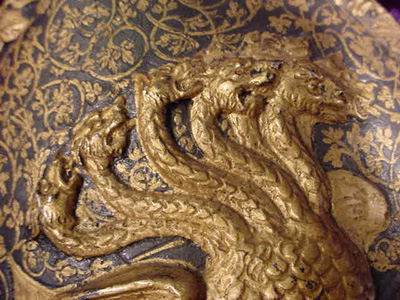 The beast of revelation |
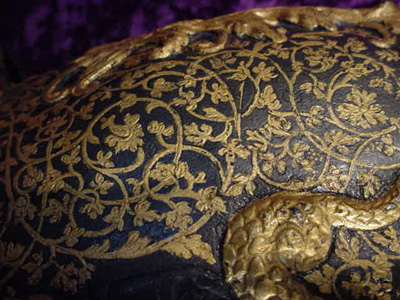 Very intricate workmanship |
 Age apparent |
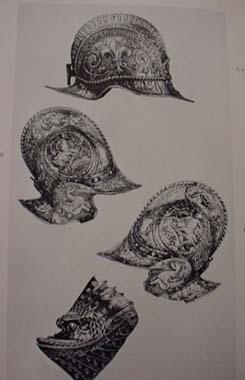 Open faced burgonets |
 |
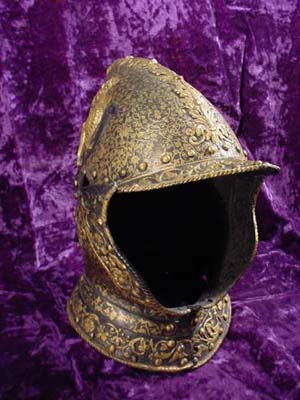
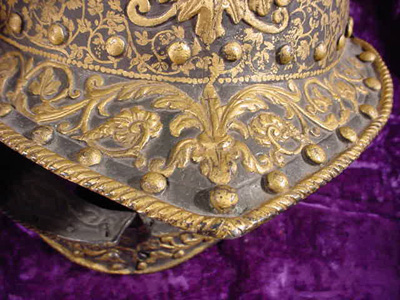
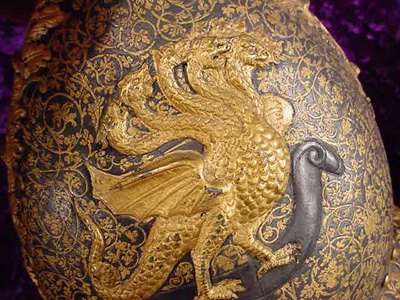
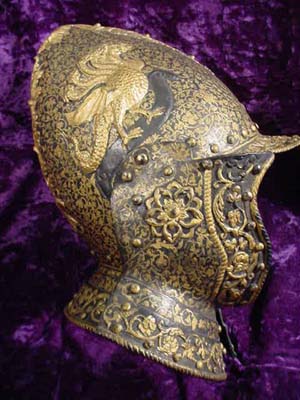
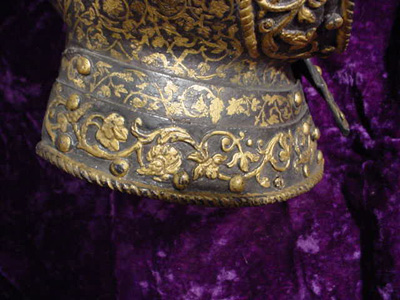
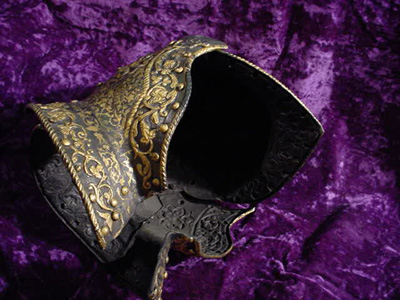
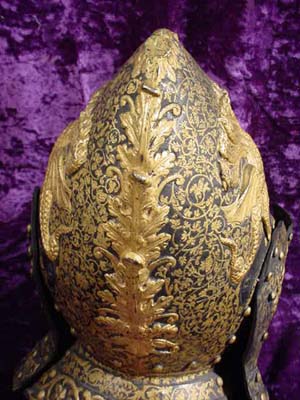
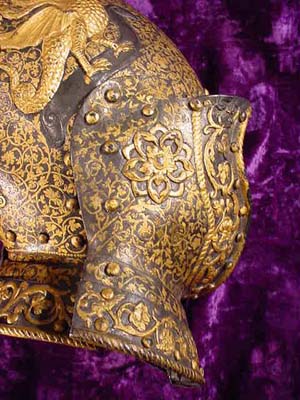
A Replicated 16th Century Burgonet Helmet (Italian Style by Elkington of Birmingham) (Item OLD 7-5) |
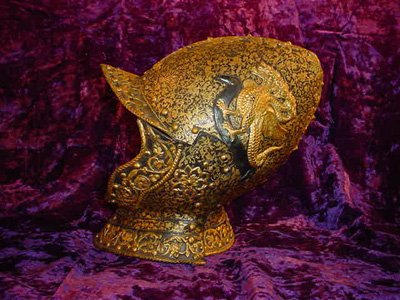
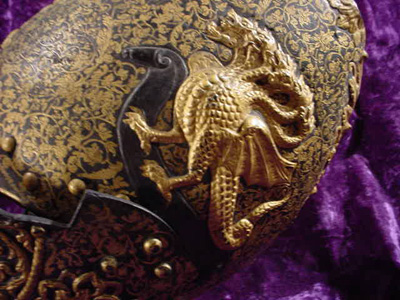
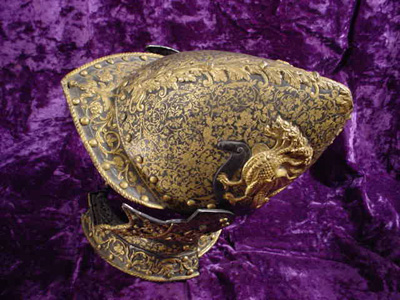
DESCRIPTION: This is an incredible looking Burgonet that would, if authentic, be a late medieval, early modern combat helmet. It came into popularity towards the end of the 16th century. It was worn by Cuirassiers demi-Lancers and Hussars typically open faced and often decorated with fins on the top. Burgonets were a very popular helmet type among regiments of Polish winged Hussars also common among Swiss and German Landsknecht Freebooters. Also very much used by Italian mercenaries in a version without the Morion comb as see here. The Italian models were much more decorated sometimes actually ‘gaudy.’ This helmet is a re-creation made for the Victorian and Albert Museum by the famous metalworkers Elkington in Britain founded in the 1840’s in Birmingham. They were the original pioneers of electroplate, electrotyping, Sheffield silver and other products. They were all the rage in the Victorian era making beautiful regal items usually of historic interest. The company had a special arrangement with the Victorian and Albert Museum and they turned out many swords and armor for the museum that were put on display as accurate representative examples of rare historic pieces. When an original piece would show up and be purchased the often magnificent replications usually found their way to the finer antique shops and galleries. Please note that a 16th century Burgonet of this quality would cost in the neighborhood of $300,000 to half a million. This is a faithful and identical museum copy with a quality of divine beauty personified. In the US the Corcoron Gallery of Art Museum in Washington, D.C. founded in 1869, has an entire gallery of art like this example made and manufactured by Elkington, many bronze replications of the great Renaissance armors and works of art are to be seen there. Inside the back neck guard of the helmet can be seen the plaque that has the Victorian Crown the Shamrock, Thistle and Rose with (V.R.) with the words Department of Science and art (Elkington). This is the authorization planchet that Elkington was authorized to use with exclusive permission of the museum. This helmet probably dates anywhere from the 1850’s to possible as late as the 1890’s. It is an incredible relic made in a better age to represent another earlier age. This is an opportunity to acquire a very rare and beautiful object d’ art that is 100% a true museum treasure. UNDER-PRICED AT: SOLD |
 |
 |
 |
 |
 |
 |
 |
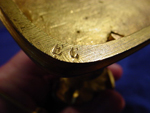 The only markings |
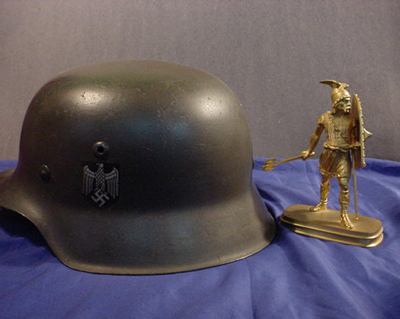 Helmet placed for perspective |
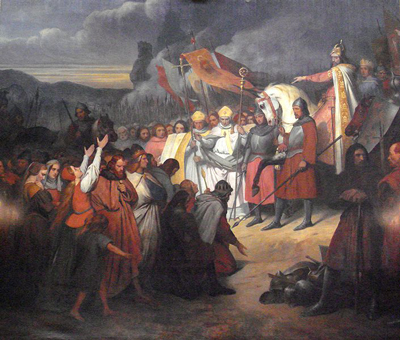 Charlemagne receiving the submission of Witukind at Paderborn in 785 |
 Widukund the Blessed after his conversion |
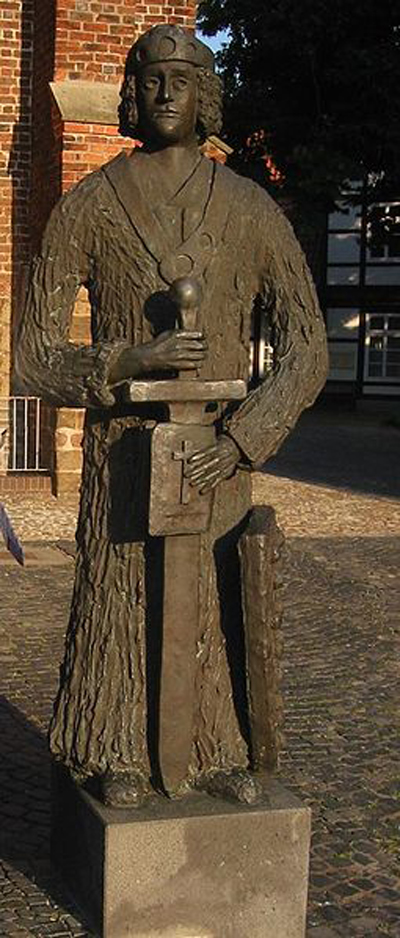
 Statue of Widukund in Herford |
 Widukund in the Hall of Battles at Versailles |
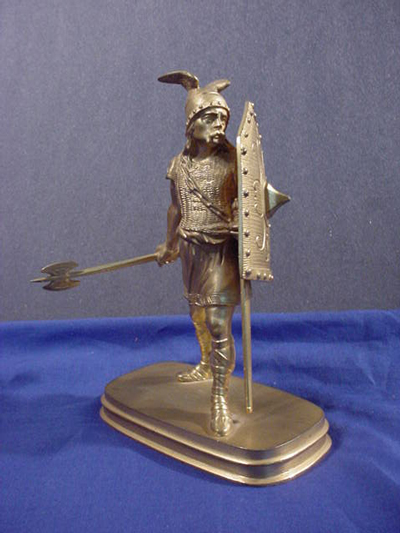
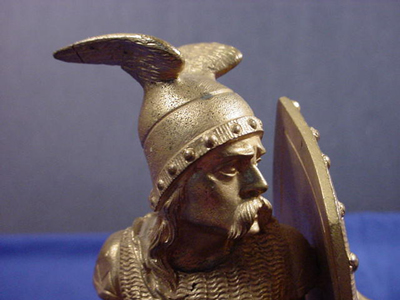
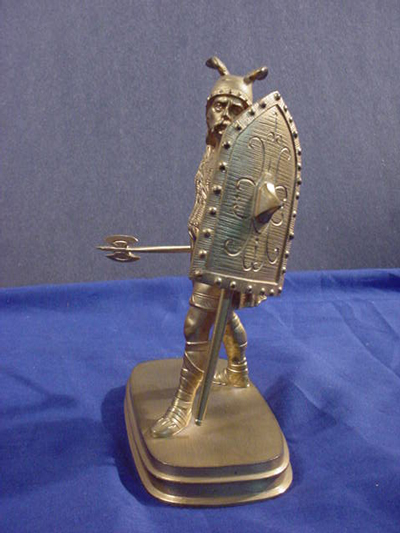
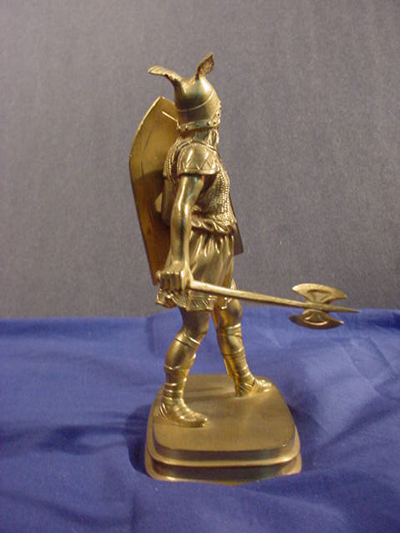
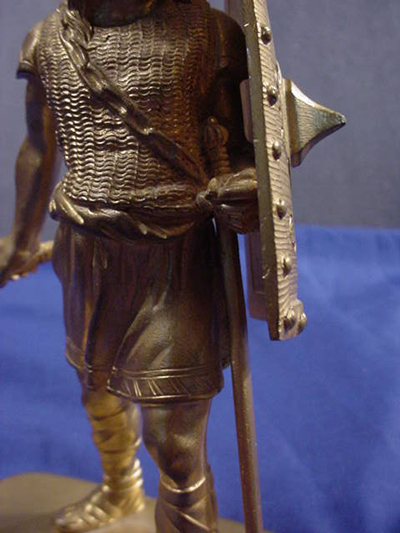
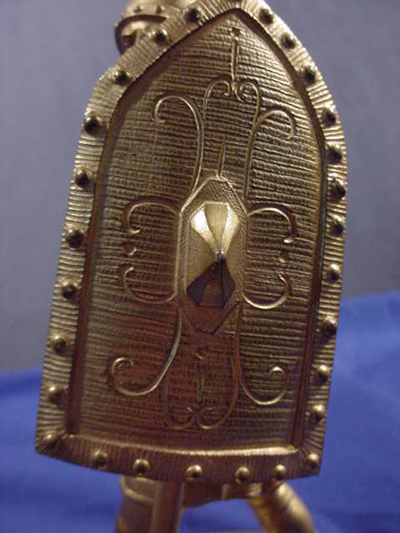
Widukund Saxon Chief Statue in Bronze (Item OLD 7-6 & ART 16-9) |
DESCRIPTION: A beautiful gold washed bronze of the Saxon Chief Widukund. Very little is known about the life of Widukund. All sources about him stem from his enemies, the Franks, who painted a negative picture of him as an insurgent and a ‘traitor.’ He was first mentioned in 777 when he was the only one of the Saxon nobles not to appear at Charlemagne's court in Paderborn. His circa is 730-808 and after the Saxon Frankish wars and forced baptism he became known as “Blessed Widukind.” He was the chief antagonist of Charlemagne during these bloody wars. He married Geva of Westford c.770-800, daughter of the Danish king Goimo I and sister of the Danish kings Ragnar and Siegfried. Widukund was the moving spirit in the struggles of the Saxons for their independence and continuation of their traditional faith. Frankish accounts of the Saxon wars give only scant outlines of his character. After Charlemagne subdued the Saxons in 777, Widukund found refurge with his wife’s relatives in Denmark. When Charlemagne went to Spain in 77, Widukund returned and revived the rebellion, and the Saxons raided Frankish regions. Several more times Widukund had to flee, and eventually Charlemagne subdued the Saxons and inflicted terrible punishment at the Blood Verdict of Verden where 4,500 tribal leaders were allegedly beheaded. The bitter struggles involved Wends and Frisians as well and continued until Charlemagne succeeded forcefully with threats of genocide against his people, persuaded Widukund to accept Christianity. Widukund was baptized in 785 along with many of his people at Attigny. The Pope ordered a general feast of thanksgiving. Widukund took no part in further Saxon wars. He soon became one of the heroes of legend and eventually appeared as a saintly figure becoming “Blessed Widukund” and the builder of many churches. He is believed to have been buried at Engernea Herford around 808. However, the monumental tablet in the church of Enger is not from the 9th century, and so it is doubtful if the corpse inside is actually that of Widukund. This once bitter foe of Charlemagne, thus became his friend and godson. His feast day is commemorated on January 7. According to myth, Widukund rode a black horse before his baptism and a white horse afterwards. The black horse is depicted in the coat of arms of the district of Hereford, while his white horse is depicted on the flags of the North Rhine-Westphalia and Lower states of Germany. Widukund is also a Dutch fraternity located in Nijmegen which was founded in 1945. The controversy reached into the conversations between Adolf Hitler and SS Reichsfuhrer Heinrich Himmler. Hitler thought that Charlemagne’s deeds were necessary so as to advance civilization and intellectual progress of the Aryan race at that point in time. Certainly it marked an event that did much to change the course of history. This bronze statue of the Saxon hero is quite beautiful indeed. He is shown with axe and shield standing defiantely against the usurpers of Germanic ‘Kultur.” His winged helmet is almost a declaration of war in itself! He wears a tunic of chained mail, his sword hangs at his side under the shield suspended by a chain hanger. He stands about 6 inches high with the base. The gilting is 100% intact. A beautiful bronze sculpture and a beautiful symbol of righteous defiance against a cruel and powerful enemy. “The Tea Party on steroids!” Widukund only knelt before Karl the Great to save his people from anillation. His honor, bravery, and selfless leadership will be remembered in the annals of history. He was like Hermann the Cheruskin -- a hero of the Volk! Small but dynamic! One of the better bronzes we have ever seen. PRICE: $2,150.00; Special sale! Consigner is willing to take $1,650.00 |
 |
 |
 |
 |
 |
 Good size caliber - 45? |
 |
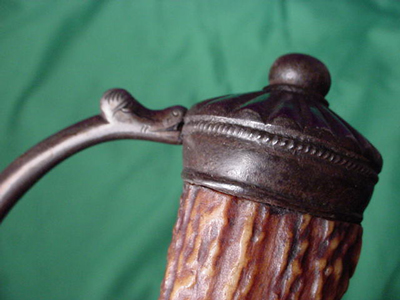 Note serpent face |
 |
 |
 |
 |
 Back side |
 |
 Maker - Kaiser Mainz |
 |
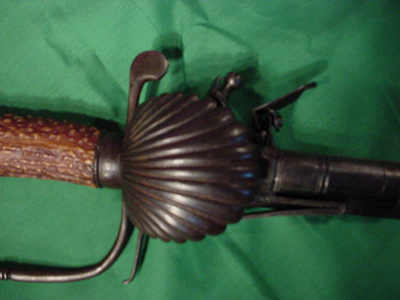
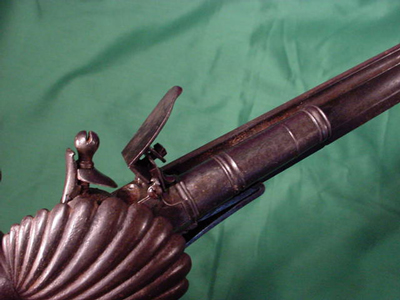
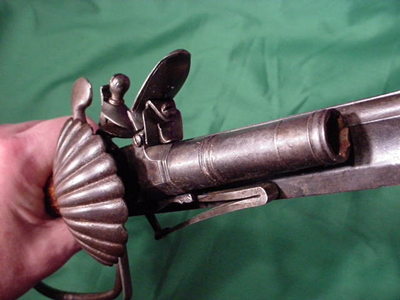
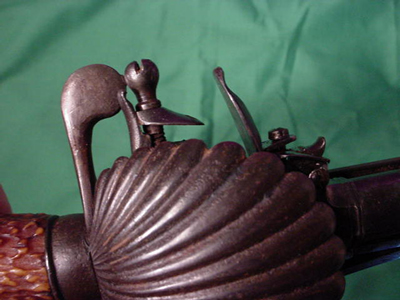
Pistol Sword (Hirshfanger) (Item OLD 7-7 & HUNT 7-22 & KWEP 4-11) |
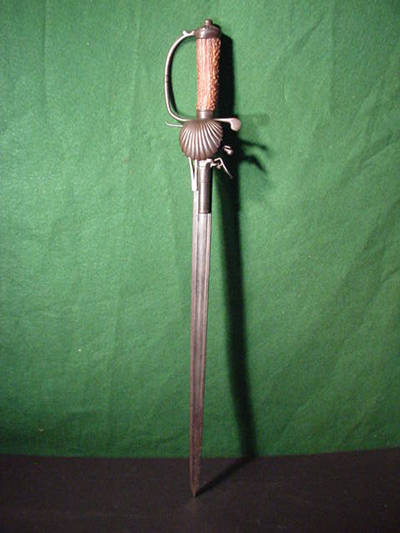
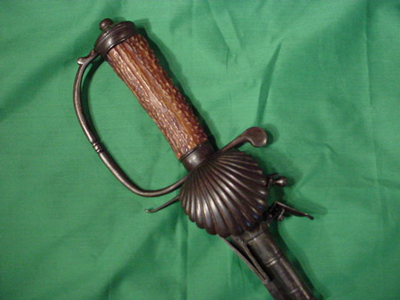
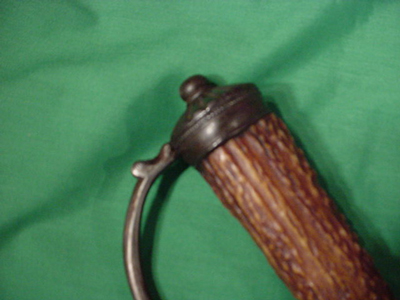
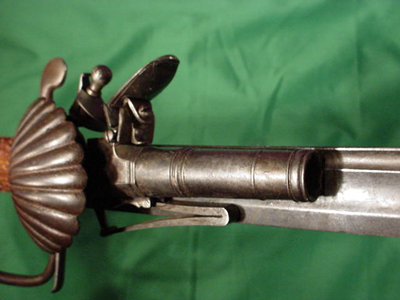
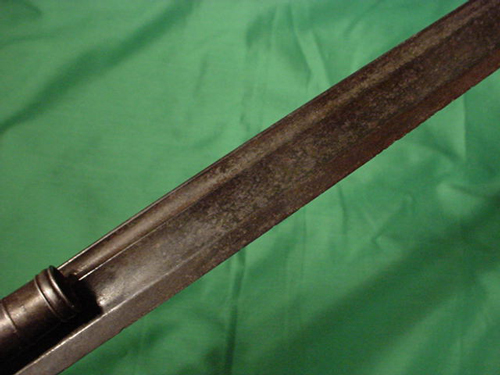
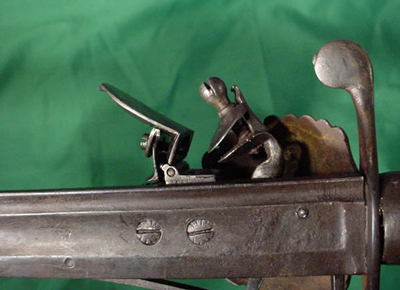
DESCRIPTION: Another wonderful example of the German Hirschfanger that was a combination defensive weapon and hunting arm. To read more about this style of sword go to the specimen above at KWEP 4-9 and see it at HUNT 7-22 and OLD 7-7. This particular piece differs in that is has a stag horn grip and a clam shell guard. Plus the barrel is of steel and the side locks are plain (not engraved). The piece is signed by the maker, Kaiser in Mainz. It has the d- guard as most of this type of weapon invariably has. All grip and guard fittings are finely crafted iron or steel. The piece is in firing condition and functions perfectly. The period would be in all probability early 18th century. Today most examples of this combination weapon are in museums or special collections. They are highly sought after but seldom found. This is an excellent example and is prodigiously interesting as well as historically important. PRICE: SOLD |
 |
 |
 |
 |
 |
 |
 |
 |
 |
 |
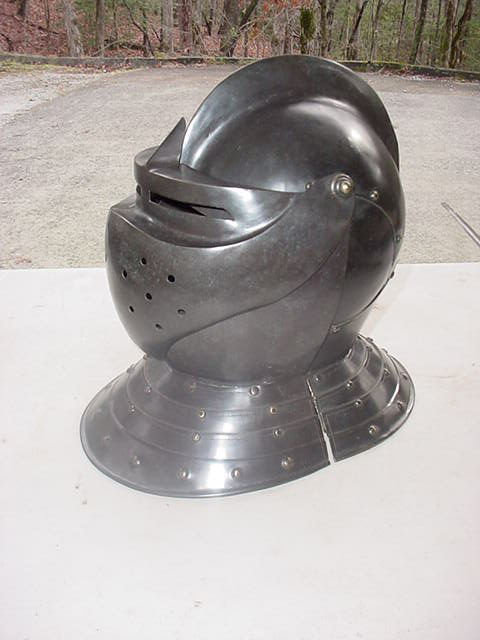
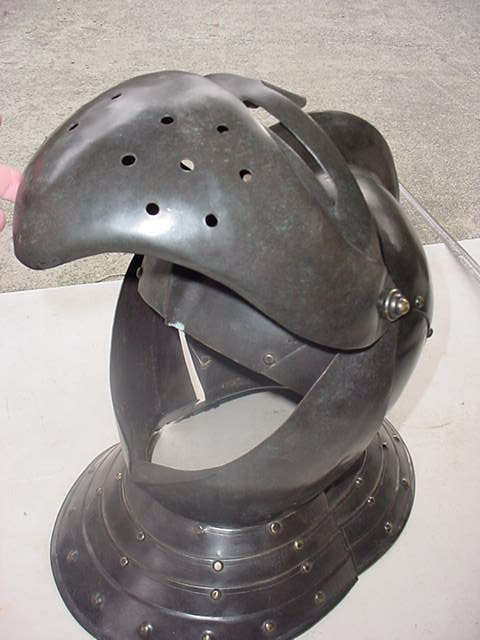
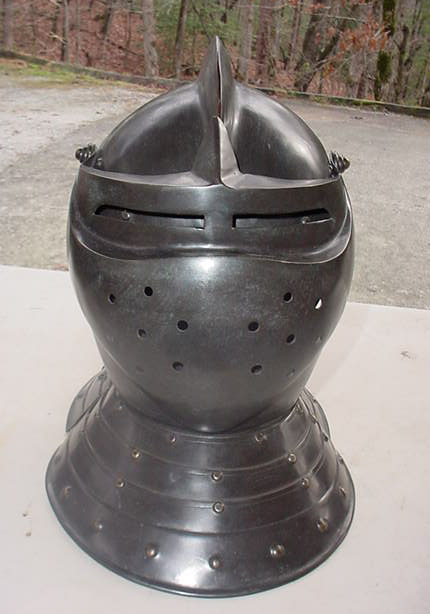
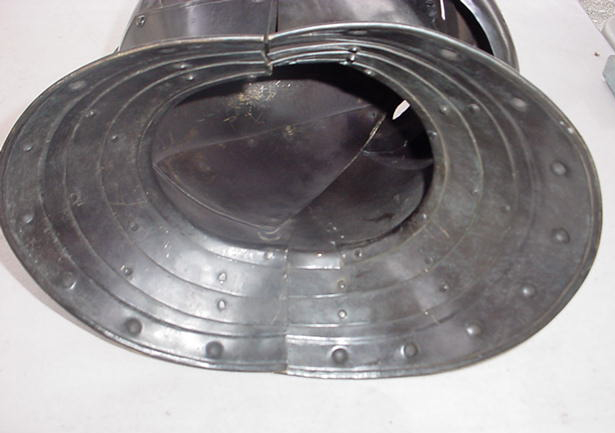
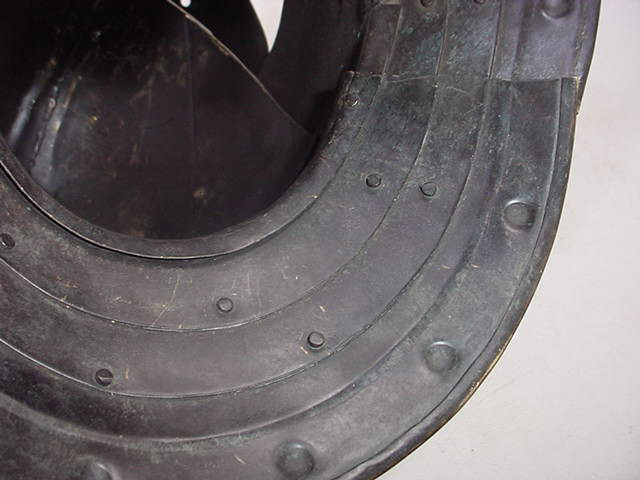
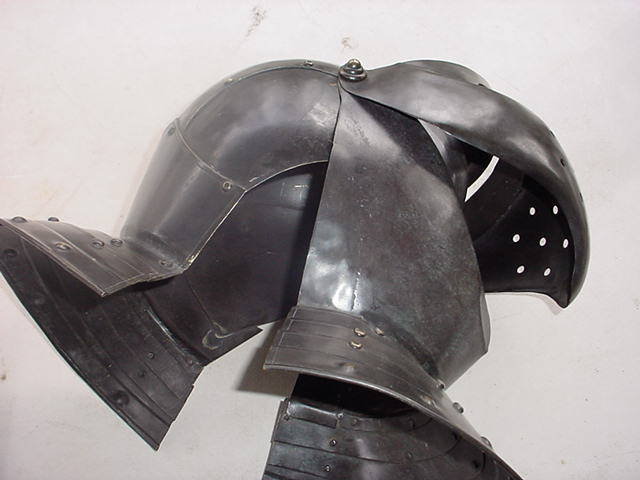
Close Helmet (SS Ahnenerbe Museum Recreation) (Item OLD 7-8 & AHN 4-19) |
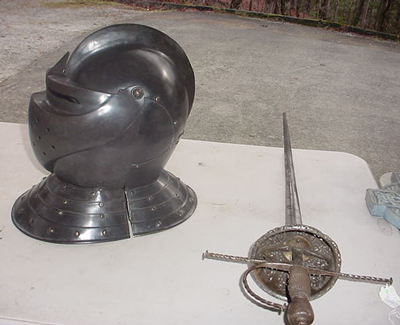
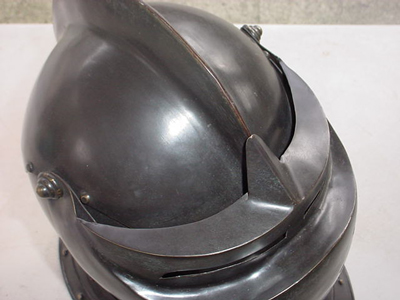
DESCRIPTION: The Close Helmet was originally a military helmet worn by Knights and other combatants during the late Medieval and early Renaissance era; it carried a visor that pivoted up and fully enclosed the head and neck area. Unlike other helms which sometimes may have left the wearer more exposed, the Close Helmet was used in battle but was also popular in tournaments. The Order of the Knight Templar and the Teutonic Knights adopted the Close Helmet as one of the basic pieces of combat armor. The one we offer is on heavy gauge steel and is the classic type. It is not from Medieval Times. It, in fact, is a copy but an accurate copy, produced in the workshop maintained be the Deutsches Ahnenerbe Stiftung which was the ancestral heritage foundation. This was a section of the SS organization that we have described in other narratives in this section of our site and the purpose of this helmet being accurately recreated was for museum display and as a teaching aid; this is not the modern junk made in India (far superior!). We let our pictures do this, for there is nothing much more we can say about this beautiful exhibition piece. It would make a great den decoration; this is true but its importance as a relic of the aesthetic involvement of the N. S. party and the SS in such important historical recreation and reenactment cannot be dismissed. In generally all over condition the helmet is practically immaculate and it came from a long time established collection that went to auction years ago. The collection was in fact in a German castle but due to the ravages of an unnecessary horrid war, the helmet was frankly looted by the “Liberators” and then found its way into the collection of a wealthy gentleman but when this original owner passed on, the display was broken up by the heirs who sent several items to auction. The piece was probably manufactured using old methods of metal work somewhere in the 1940s; the helmet is the closest to authentic that a collector might hope for without spending multiple thousands of pounds or dollars and its obvious importance to the history of the SS cannot be overlooked. PRICE: $1,850.00 |
|
|
|
|
|
|
|
|
|
|

|
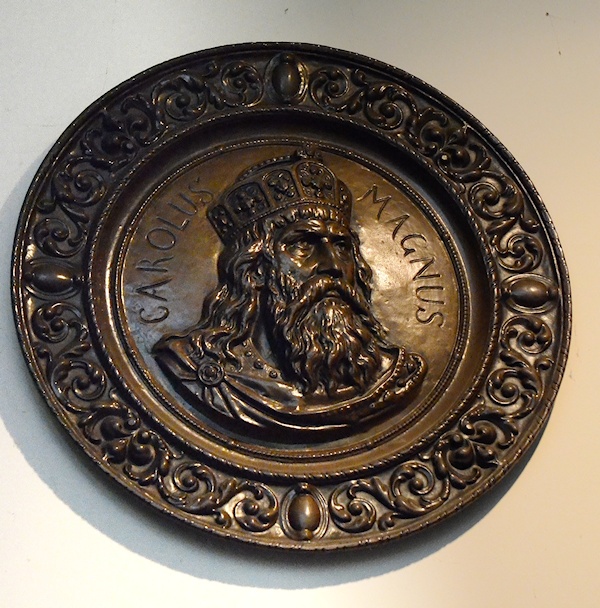
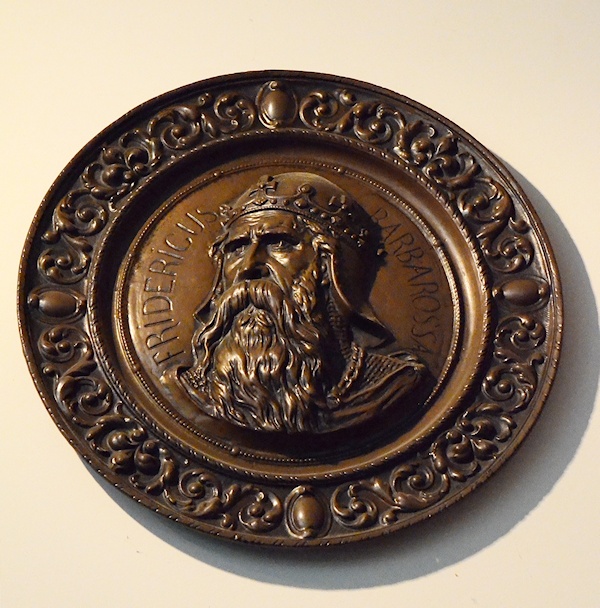
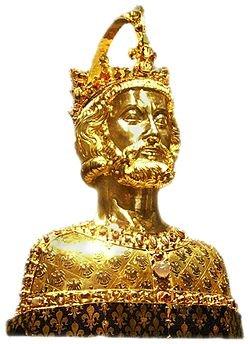
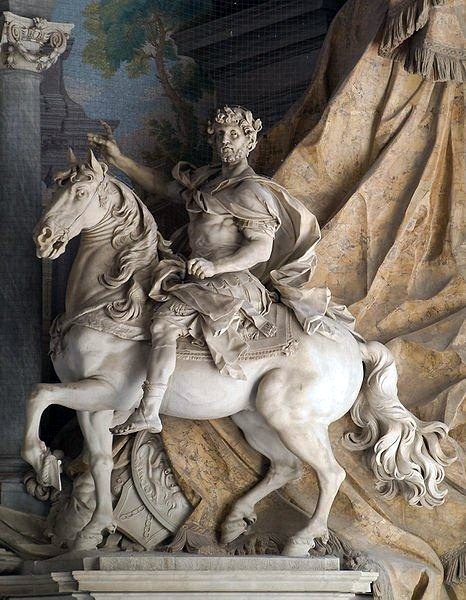
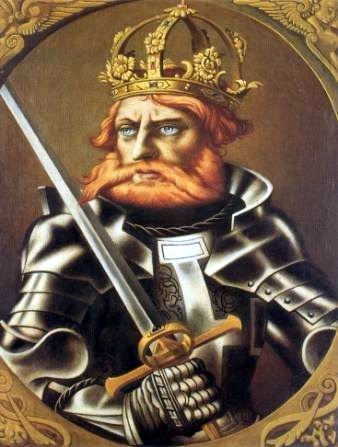
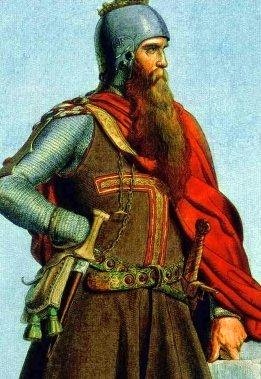
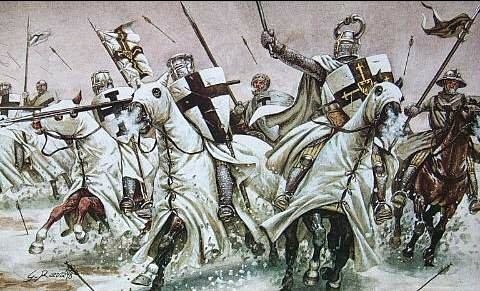
The Germanic Emperors Charlemagne and Barbarossa (Item OLD 7-9; BRONZEMET 2-16) |
|
DESCRIPTION:Here are two fantastic plaques depicting wonderful portraits of Germany’s mighty Monarchs, Karl der Grosse (Charlemagne) and
Frederick Barbarossa. Charlemagne (Karl der Grosse) was the founder of the Carolingian Empire, becoming the king of the Franks, and undisputed ruler of the Frankish Kingdom. Through his many military conquests he expanded his kingdom into an empire that incorporated much of western and central Europe. He is often called The Father of Europe, but he is still considered a great tyrant by the Saxon people and others whom he forcibly Christianized in a most brutal manner, while employing murder and horrific bloody warfare. He reached the height of his power when he was crowned emperor by Pope Leo III on Christmas Day. Both the French and German monarchies considered their kingdoms to be descendants of Charlemagne’s empire. Much about him can be found on the internet. He was an almighty powerful ruler who did so much good, but he did this good usually over the bodies of those he was doing good for. He broke the power of the Saxons by inviting 400 of their chiefs to a peace parley and then when they sat down to dine his Franks fell upon them and murdered them, and before the war that ensued was over, 4,500 Saxons were beheaded. Karl der Grosse did all of this in the name of the “Prince of peace”, but then I guess good-old Dick Cheney would do the same I believe in the name of empire building and the pursuit of riches beyond imagination! Frederick I Barbarossa reigned as Holy Roman Emperor from 1152-1190. A gifted leader he sought to restore glory to the empire and campaigned in Germania. He succeeded Conrad III, King of all the Germans in 1552 and was presented with the Imperial Seal. His desire was to bring back glory and majesty to Germany and the Holy Roman Empire. He played a huge part in the various crusades and even fought against the armies of Pope Alexander. He was a great warrior and leader and although he was granted the title of Holy Roman emperor his relationship with the Papacy turned sour when Alexander III became pope. He was fearless in battle and he had a long, red beard later in life. The name Barbarossa means “Red Beard.” He fought in the First and Second Crusades and in the Third Crusade he raised an army of one hundred thousand men and started for Palestine. He marched into Asia Minor, attacked the Moslem forces and soundly defeated them in two great battles. But before the brave old warrior reached the Holy Land his career was suddenly brought to an end! One day his army was crossing a small bridge in Asia Minor at a moment when the bridge was crowded with troops and Frederick rode up rapidly. He was impatient to join his son who was leading the advanced platoons. When he found that he could not cross immediately by the bridge, he plunged into the river hoping to cross with his horse, but both horse and rider were swept away by the current. Frederick’s heavy armor made him helpless and he was drowned. His body was recovered and buried at Antioch. In the empire he left behind, the dead hero was long mourned and for many years the people believed that Frederick was not really dead, but was asleep in a cave in the mountains of Germany with his gallant knights around him. He was supposed to be sitting in his chair of state with the crown upon his head, his eyes half closed in slumber, his beard as white as snow, so long, that it reached the ground. “When the ravens cease to fly ‘round the mountain” says the legend, Barbarossa shall awake and restore Germany to its ancient greatness. Interestingly enough the German invasion of Russia was named Operation Barbarossa and as Frederick fought against eastern forces that defied his God and his Fatherland, Adolf Hitler invoked Barbarossa’s name in the great crusade of the 1940’s and in the spirit of the earlier crusades he, like Frederick, broke the power of the beast with his preemptive strike. Had this not transpired, the Communists would have shortly breached the German borders and quickly overrun the entire western lands all the way to the Atlantic? History often repeats itself. History often would seem to be a continuum. We need another Emperor Barbarossa or perhaps even a less-murderous Charlemagne! The plaques are of bronze or brass and are fantastic in detail. They are large measuring about 2 ft. in diameter each. They are in perfect condition retaining all the fine original old patina. PRICE: SOLD |
|
|
|
|
|
|
|


|
|
|
|
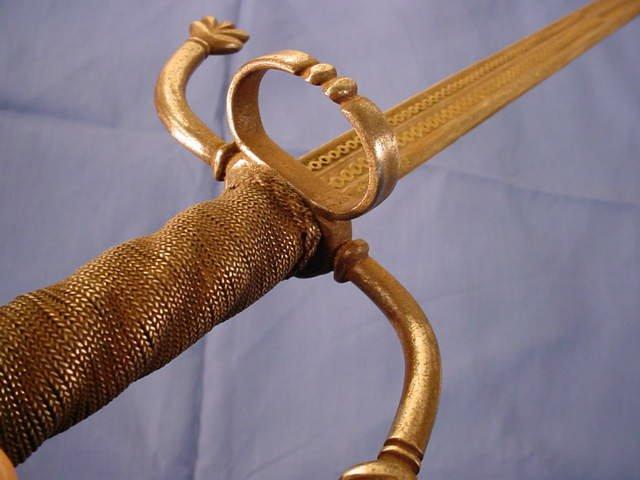
|
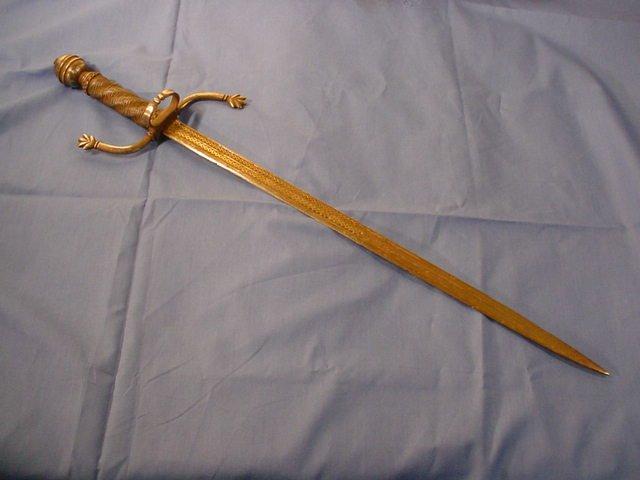
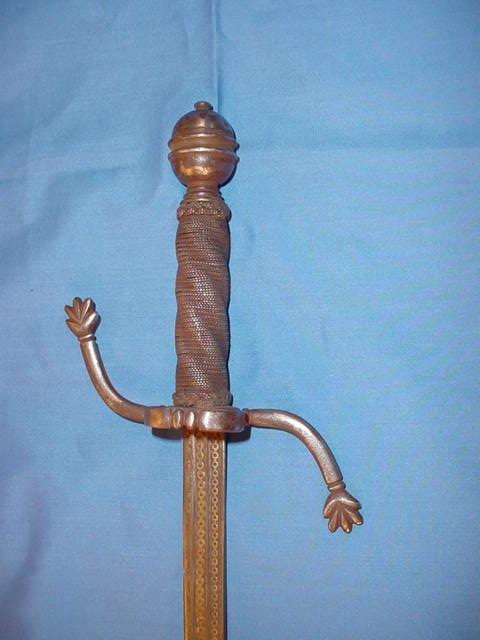
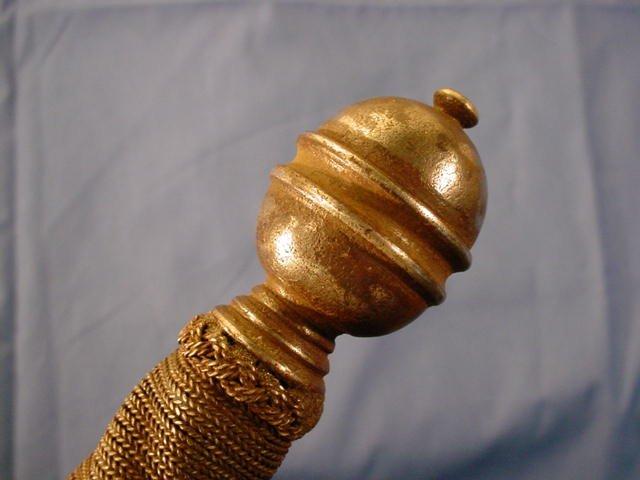
Long Dagger; Almost a Sword (Item OLD 7-10) |
|
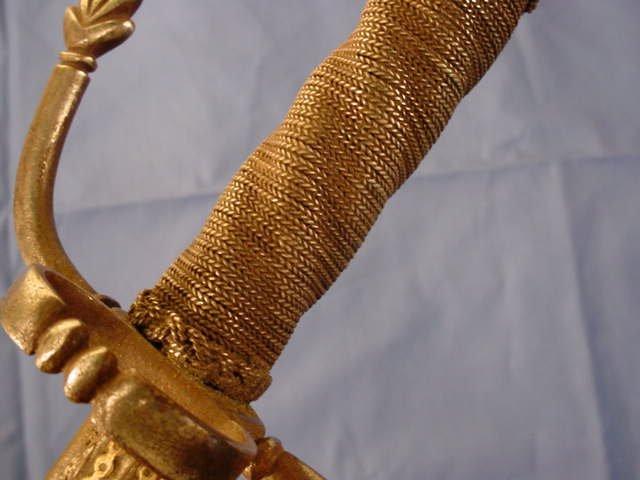
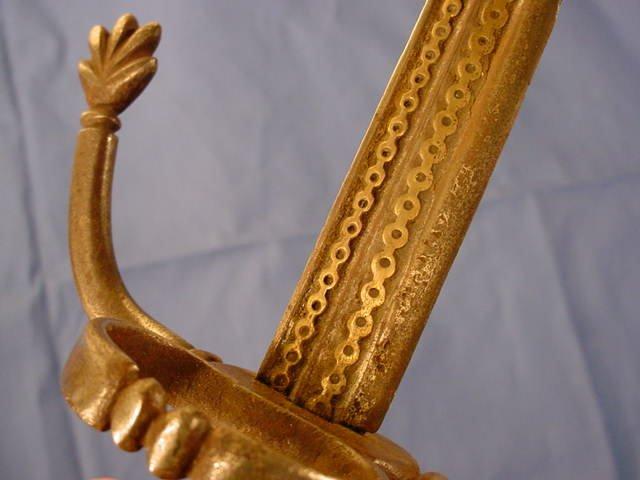
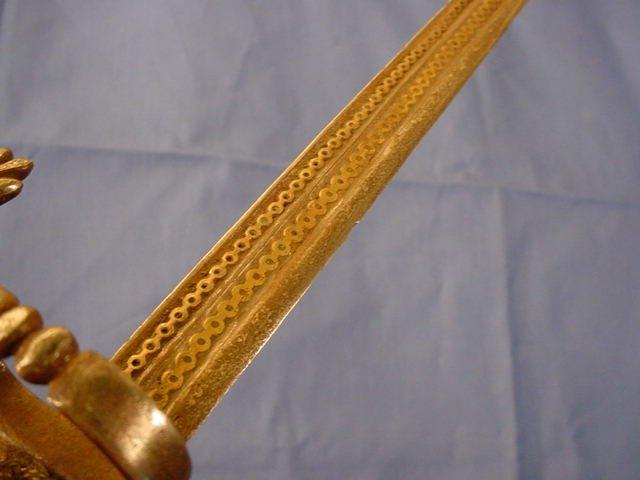
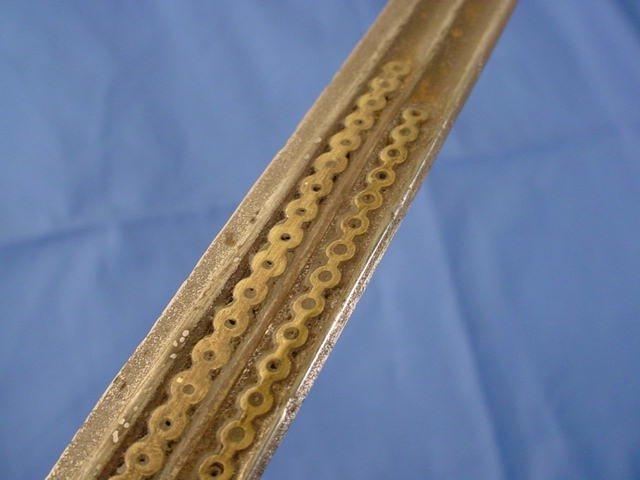
DESCRIPTION: Here is a truly handsome-looking dagger that is very unusual first in the fact that it is 22 ½ inches long; this is quite long for medieval-style daggers: It could almost be called a sword. The blade is 17 inches long and the second very unusual feature is that a gilded-chain-looking decoration was adhered to the blade. We have actually seen one piece like this in a German museum and it was labeled “An Italian Stiletto circa 1670.” We have mentioned in the narrative about the main gauche (above) that many of these weapons were hand forged in the Victorian era for decorative purpose or for display in museums; and also for display in banquet halls of stately mansions, etc. This could be one of those, but also there’s the possibility of its being a 17th-century weapon made for murderous intent. The pommel is typical northern-Italian style of that period and the wire wrap is over an Italian-style “warped”-shaped wooden grip. The cross guard has the upward-downward sweep so prevalent in European daggers, but it is the blade that sees this as being one apart from the norm, not to mention the very unusually long blade with the fantastic chain décor running all along its length.
The chain reminds one of the chainmail used in the armor of the medieval knights and men at arms. This is a worthy museum relic that will look great laying at your bedside ready to ride forth at dawn to slay the Saracens.
PRICE: $2,200.00 |
|
|

|
|
|
|


|
Crucifix Carved in Wood from the Early 18th Century (Item OLD 7-11; WOODMASTER 1-5) |
|
DESCRIPTION: Here is a large crucifix completely carved in wood that is veritably realistic. It depicts the last moments of Jesus on the cross; however, no cross, but it has a hook on the back where it was attached to a cross! We would say that this piece is from the beginning or the middle of the 18th century, or perhaps earlier. One of the reasons that would bring it to that period is the particular carving of the corpus and the very heavy soot in the wood indicate many years of being above lighted devotional candles; this is heaviest in the feet and legs. The nails and the wound from the spear of Longinus are plain to see. Jesus’ pain and suffering are evident in the depiction, but also the eternal transfiguration obviously shows through in a very touching manner. This probably hung in some monastery and how it became a trophy of war is not known, but we think it came back from the fratricidal war. We are sure it is something that would be considered an antique treasure of the western world. We know that in the war in Spain in 1936, the Communist thugs such as the Abraham Lincoln Brigade from the back streets of New York and Chicago destroyed many sacred art pieces and looted others so they could bring them here as trophies of their sacrilege. Since this showed up in the U.S. after WWII it is speculated that this could be the case. Obviously, the crucifix is of European origin carved in the typical Spanish or Italian style, but it also could be German. It measures from the head of Jesus to his feet 39 inches and hand to hand across the extended limbs, 14 inches. This is certainly a large crucifix; a true museum piece and a fine example of religious art in the tradition of the finest of western European art.
PRICE: SOLD |
|
|
|
|
|
|
|


|
|
|
|


|
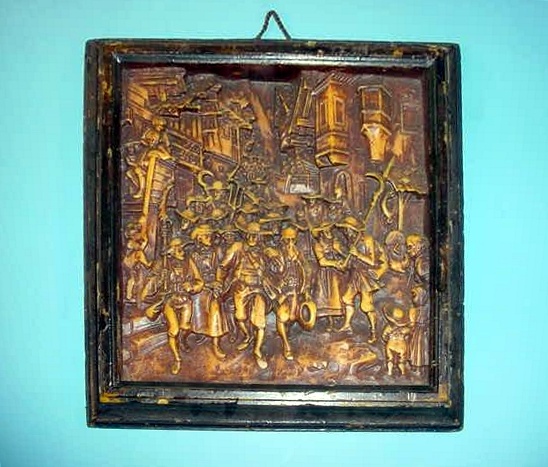
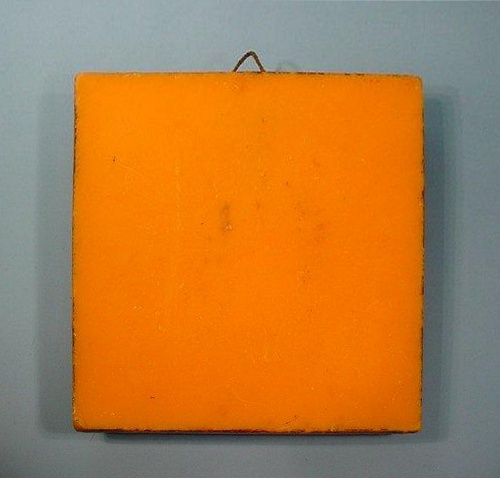
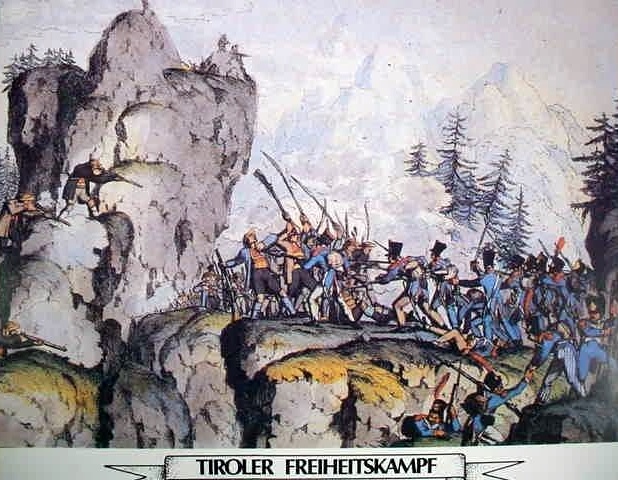
Wax Portrait of Andreas Hofer and his Tyrolean Patriots Marching Off to War (Item OLD 7-12) |
|
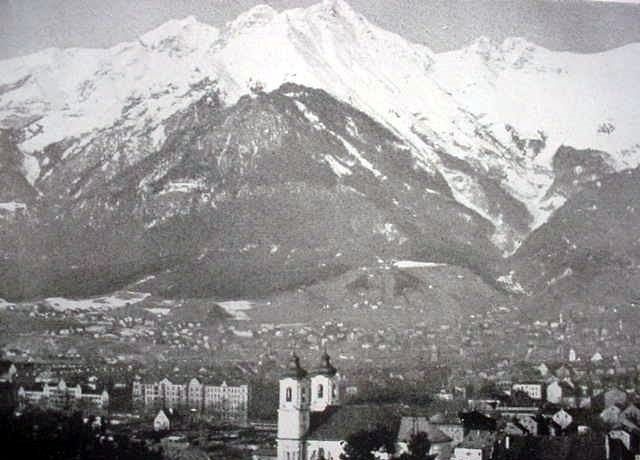
DESCRIPTION:Here is the famed Tyrolean freedom fighter Andreas Hofer, November 22, 1767-February 20, 1810, who was a Tyrolean innkeeper and patriot. He was the leader of a rebellion against Napoleon’s forces during the war of the Third Coalition in 1809. He became the leader of a rebellion against Franco Bavarian forces that sparked the war of the 5th Coalition. In Austria he is considered a national-celebrated hero, still today. He became a world symbol of resistance to tyranny. There is an ancient tradition in the Germanic lands of producing portraits in wax of famous people and historically important events.
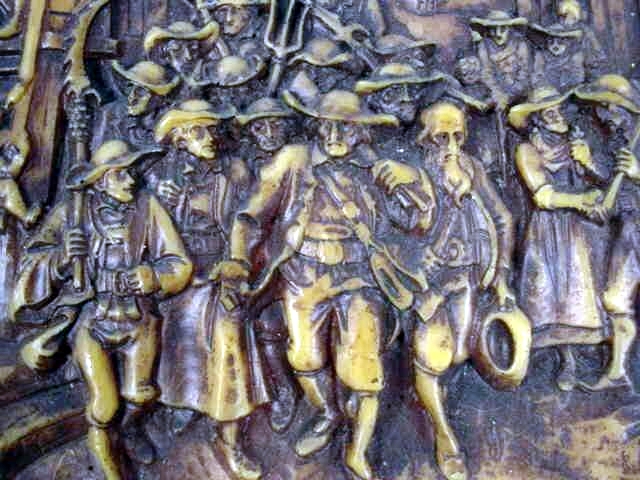
It is an art that began to die out in the 20’s and 30’s. It was at its artistic height in the 18th century up to the turn of the century. We offer a portrait of the great Andrea Hofer leading his Tyrolean farmers and tradesmen with their crude weapons made from farm tools as they go off to fight Napoleon in the first and second battles of Bergisel. Long may the memory of this simple man and his heroism be lauded through the centuries. He was executed by the French although Napoleon said later he did not order the firing squad. We need more Andreas Hofer’s today for we have no shortage of tyranny today!
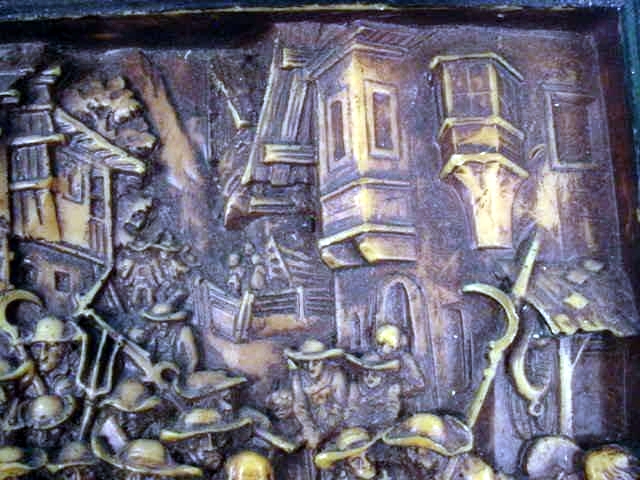
The wax depiction is quite dramatic and even the frame is molded of hard wax; this is a special wax as used in the figures at Madame Tussauds Museum. Actually, the figures and this scene are constructed using beeswax and items done in this medium mixed with other properties were used in the making of death masks in ancient Rome. The composition sets the form that is relatively resilient against normal temperature variations. This is evident with this portrayal as it has stood the test of time from the early 18th century. We do feel it is possibly that old. It measures 10 ½ inches square. The figures inside are all in fine condition. There is minor chipping on the frame. Gentlemen, this is a true museum piece worthy of a special showing or display in a fine notable collection—an example of an art long extinct.
PRICE: $950.00 Note: The cost of construction of one of Madame Tussaud's historic or personality figures today can be USD 150,000 to 300,000. The process was always expensive, even in days long ago. |
|
|
|
|
|
|


|
|
|
|

|
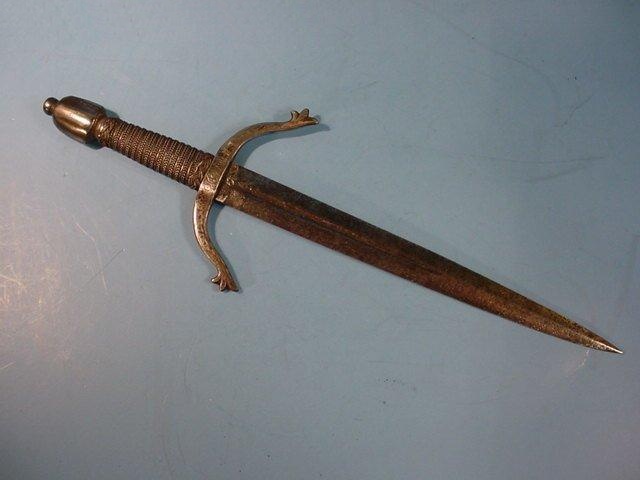
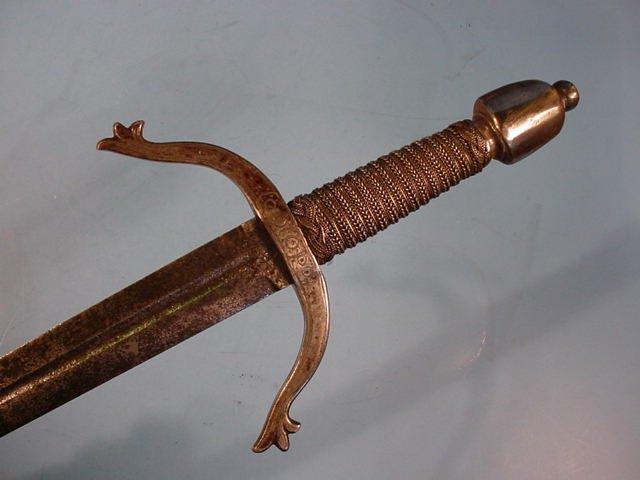
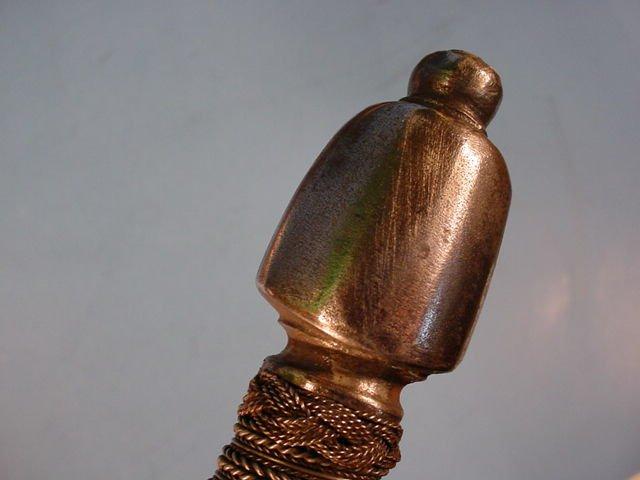
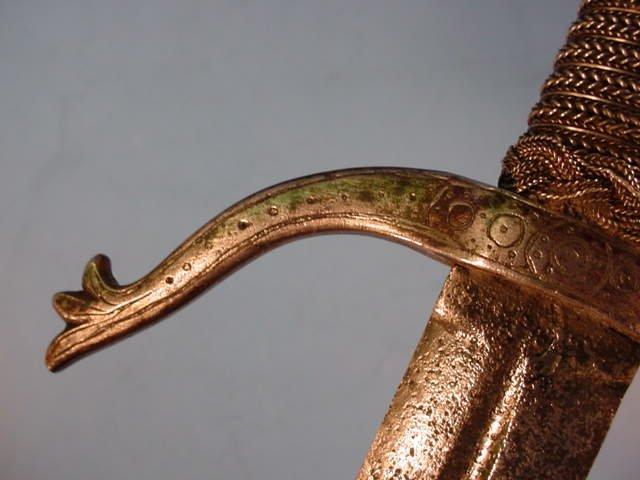
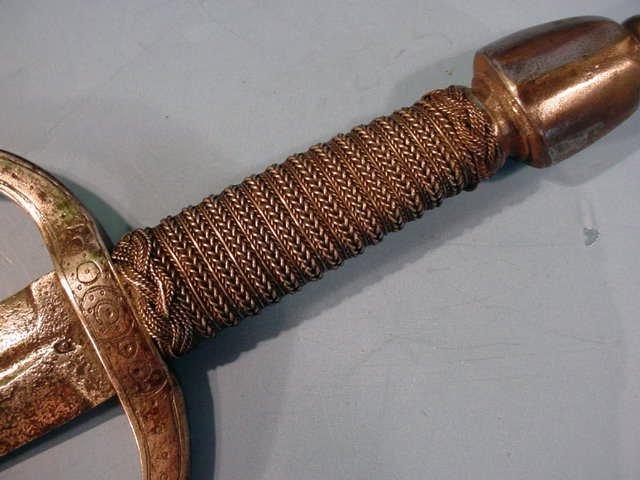
Main-Gauche or Parrying Dagger (Item OLD 7-13; KWEP 5-8; ANTWEP 2-1) |
|
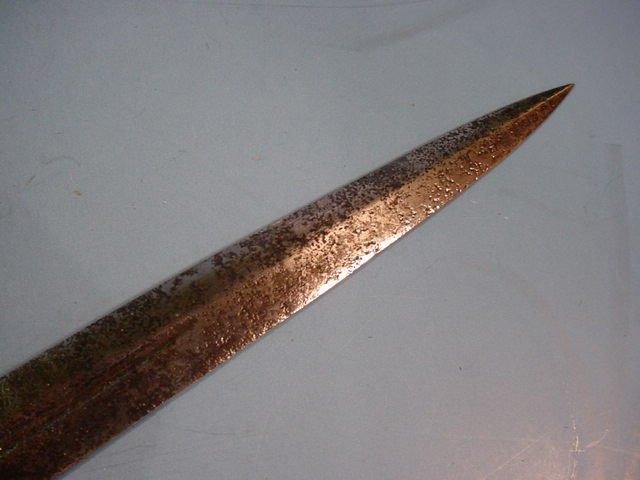
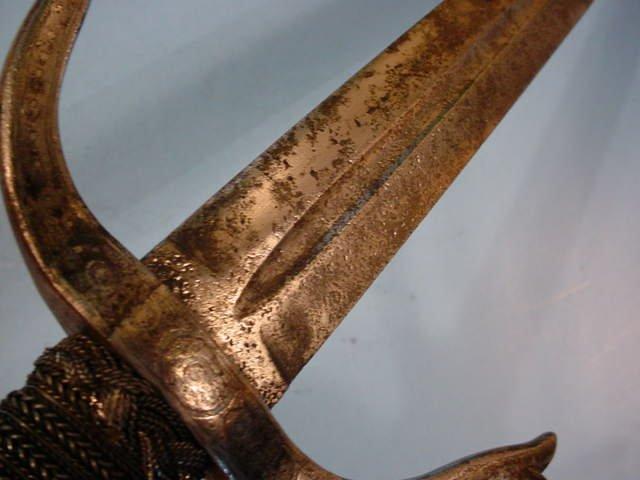
DESCRIPTION: Here is an early period Renaissance main-gauche, which is a handheld weapon used usually with a single-handed sword. As the name implies, these weapons were designed to parry or defend more efficiently than a simple dagger form; typically incorporating a wider guard and often some other defensive features to better protect the hand. The main-gauche (French for “left hand”) is used mainly to assist in parrying incoming thrusts, while the dominant hand wields a rapier or similar longer weapon. It of course may also be used for attack if an opportunity arises. This is not a Victorian copy. This is a genuine period piece that traverses the medieval to the Renaissance periods. It has lovely wire wrap on the grip. The crossguard is in Florentine style designed to catch a sword thrust and force the opponent’s sword down and enable the dagger’s owner to bring his sword to deadly conclusion and victory. The dagger measures 17 inches long and when held in the hand it exudes a feeling of combative high adventure (deadly in the extreme). The blade bears the evidence of pitting through the years (long worn!) Considering its age, this is well earned. The pommel is of the Germanic type looking like the pommels on the mighty swords of the Teutonic knights. The dagger has a Germanic look, but could be Italian. Except for the old noble rust marks, it’s in wonderful condition. The Gordian knot ties at the top of the crossguard and below the pommel are noteworthy in their strong appearance. With a weapon such as this a man could slay dragons or Polish knights with grace and gusto!!!
PRICE: $2,600.00 |
|
|
|
|
|
|
|
|
|
|
|


|
|
|
|
|
|
|

|
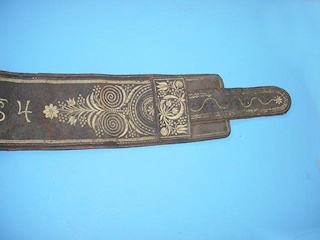
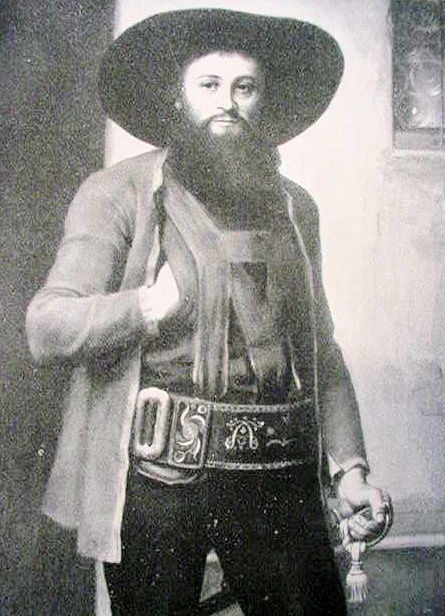
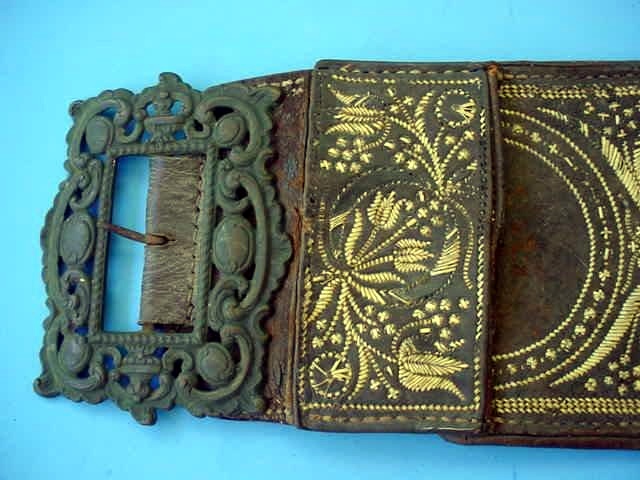
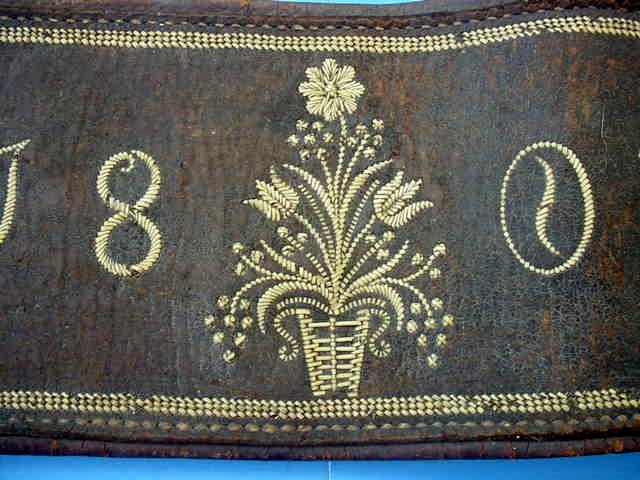
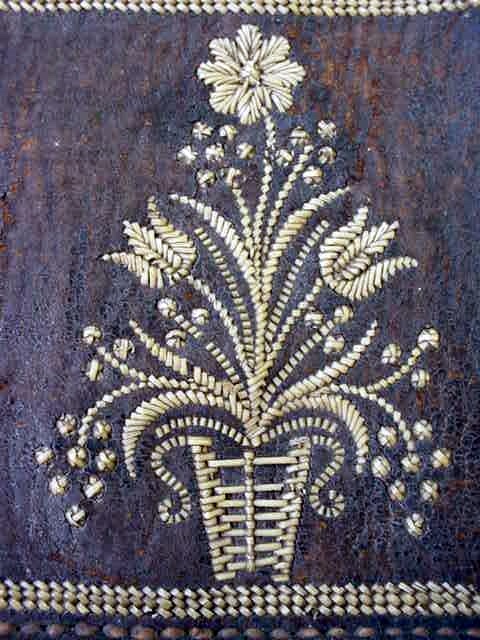
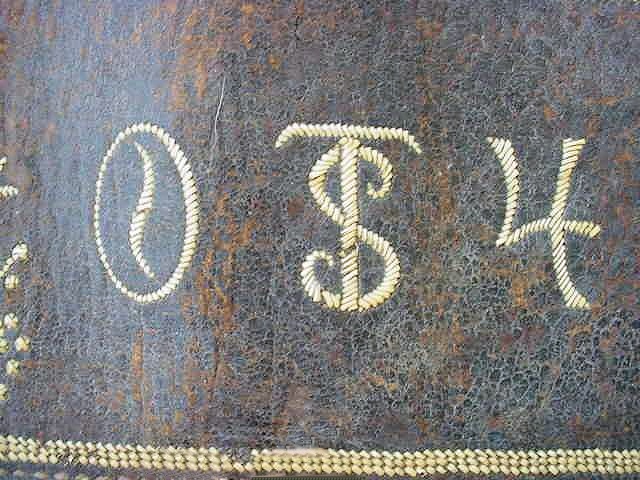
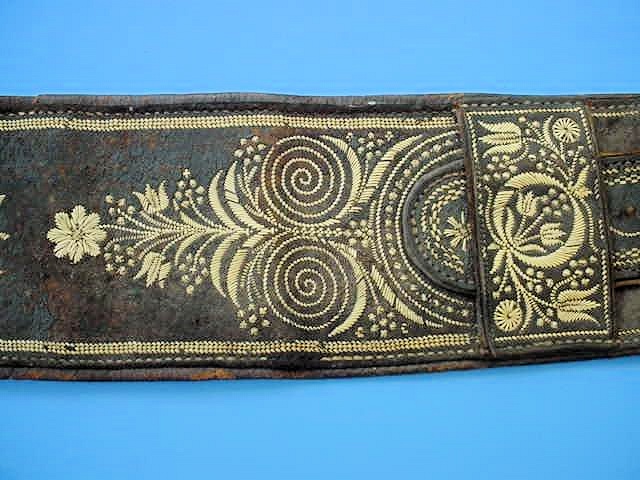
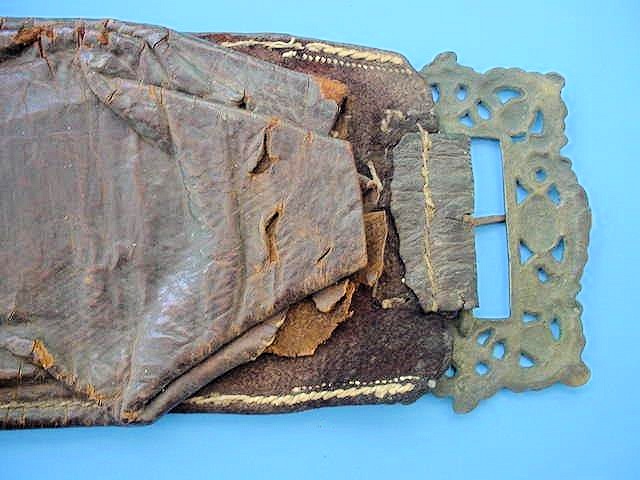
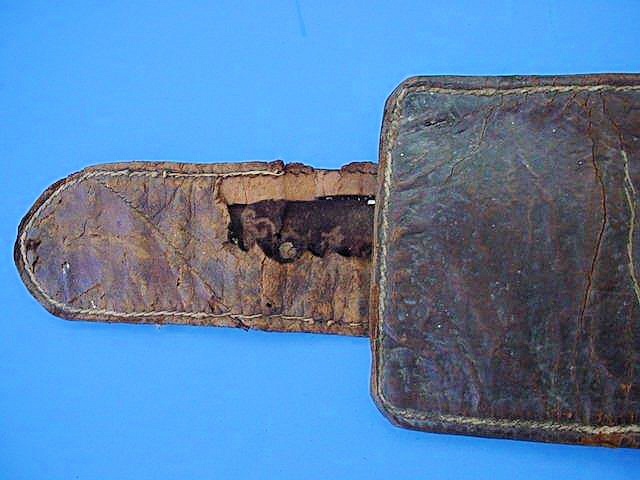
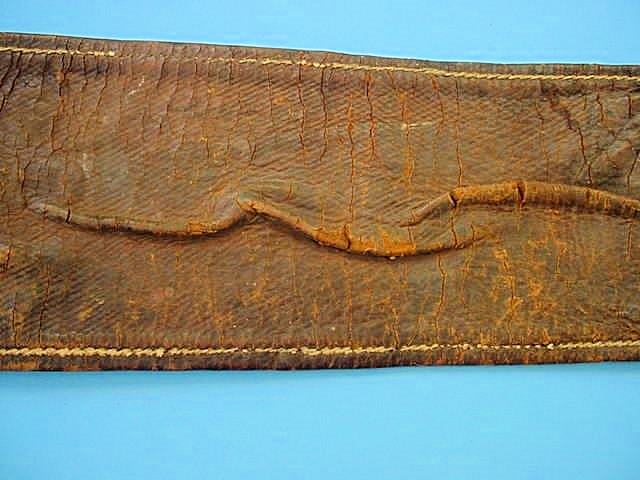
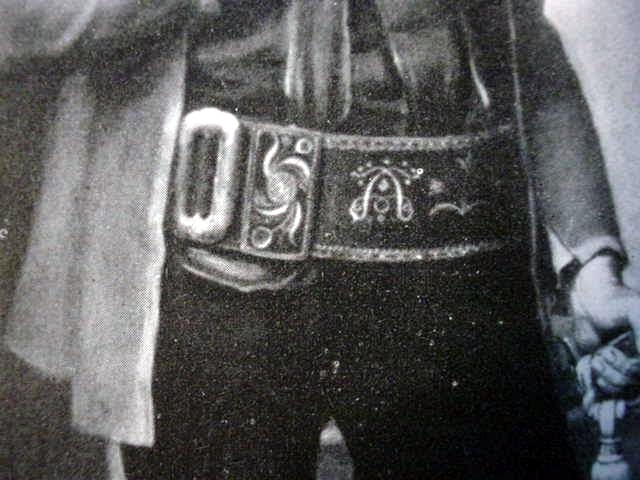
Austrian Tyrol Cummerbund of the Type Worn by the Patriot and Freedom Fighter Andreas Hofer (Item OLD 7-14) |
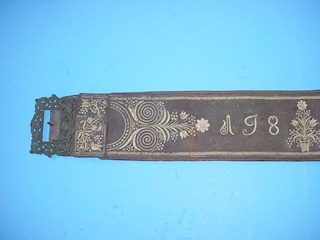
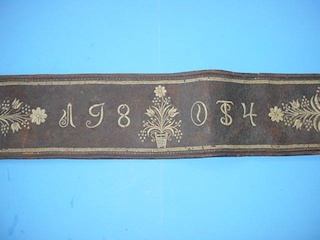
DESCRIPTION: Here is a genuine-leather cummerbund as used in the Tyrolean Mountains and as you can see in our images it was the type used by the Austrian Freedom Fighter Andreas Hofer, who was the Tyrolean hero who fought for his Austria against Napoleon’s forces. The belt is 48 inches long to include the buckle, and is 5 ½ inches wide. Look closely at the image and you can see an almost-exact resemblance to the one Hofer wore. All throughout the piece are numerals and floral designs that are weaved into the leather material. The nature of the off-white, stiff fiber almost looks like sinew from animals (stag?). We need help with this. Please contact us if you know anything about it and we will greatly appreciate it. We do not know what the letters and numerals stand for either, but we do suspect that it is from the early 19th century (1800-1810); the obvious age of the leather and the iron buckle tell us that. The buckle is made in the form of early iron art of that period. We suspect that this cummerbund is a right proper accouterment of Tyrolean mountain Trachten worn with Lederhosen. Perhaps it was worn in this fashion only by the partisans of Andreas Hofer, since it is a dead ringer for the one he wears in the picture. In any case, we believe it to be an important museum piece.
PRICE: P.O.R. |
|
|
|
|
|
|
|
|
|
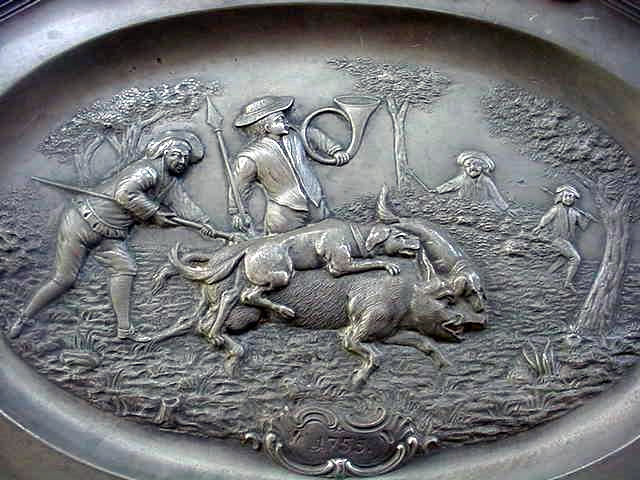
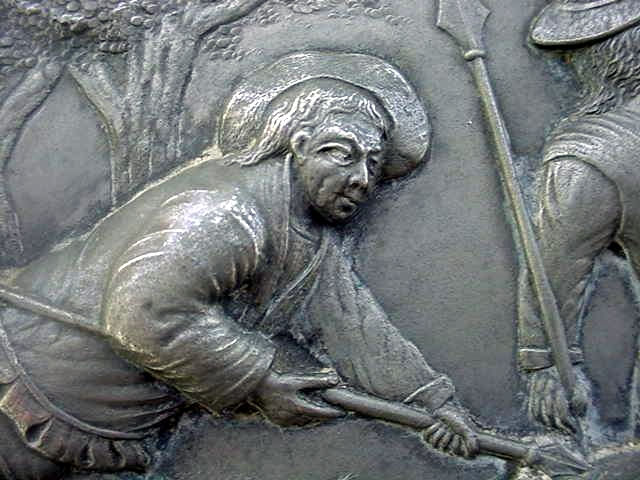
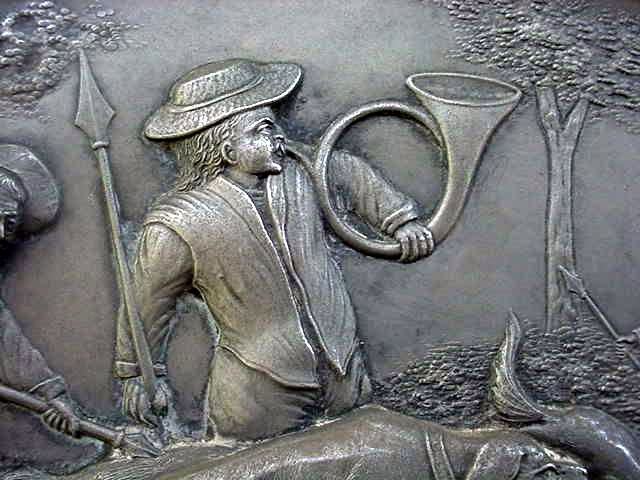
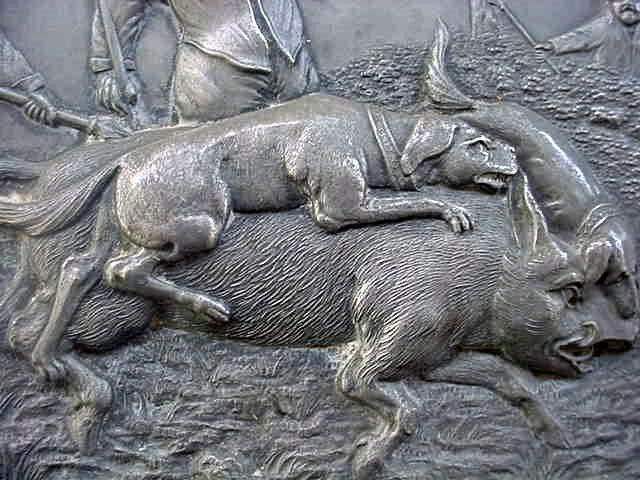
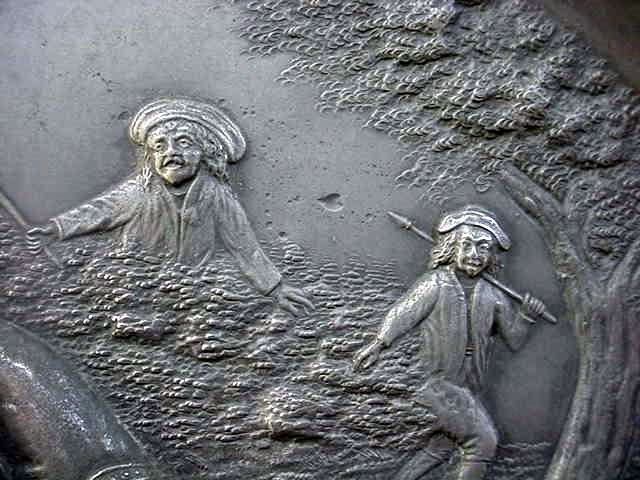
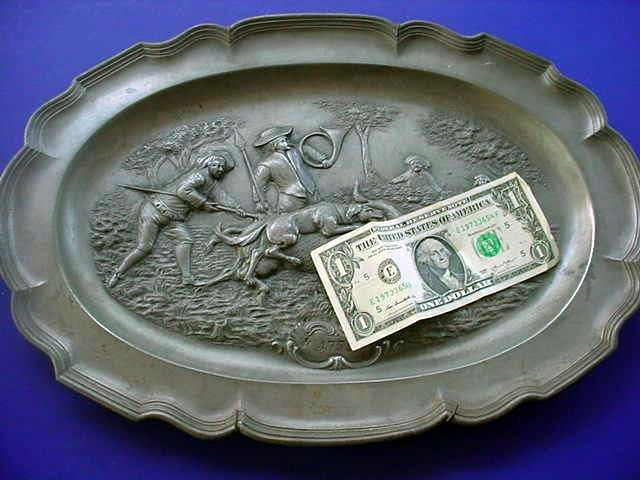
Nuremberg Medieval Hunting Scene on Pewter (Zinn) (Item OLD 7-15; HUNT 9-11; SPECIAL SALE) |
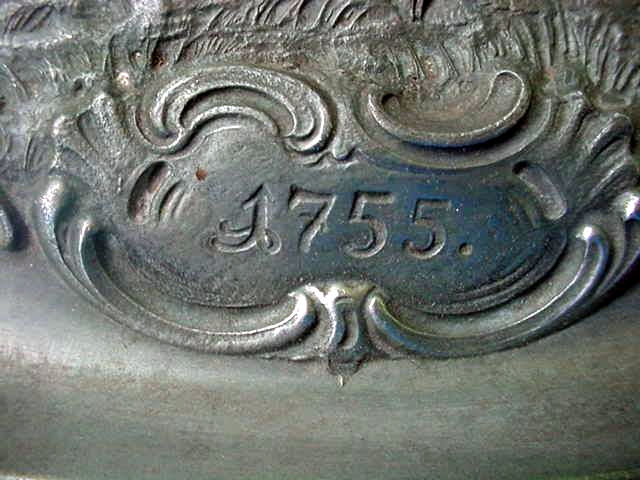
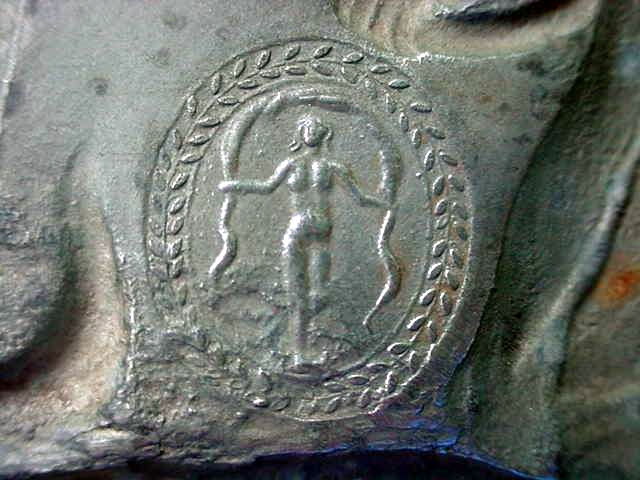
| DESCRIPTION: Here is a plaque or some would call it a wall plate that depicts an 18th century wild boar hunt in a German forest. The scene shows four hunters and two hunting hounds in the act of bringing down a huge wild boar. We say 18th century because there is a date at the bottom front framed in that says “1755,” but this may be the year the plaque was cast. We tend to believe it to be the case; it certainly is the style seen in early museum collections. It seems to be depiction of a mid-16th-century hunt. The action illustrates the kill stroke being delivered from a hunter to the left who is stabbing the animal with his boar spear while the hunter in the middle blows the hunting horn that sends the age old sound of “hallali “This is the old clarion call of the successful hunt. The detail of the sequence is phenomenal and typical Nuremberg pewter art that has been a noted art form in this city for myriad centuries. This art form was passed from father to son. On the back of this plaque is a stamp that depicts a nude female holding a wreath that is positioned above her head. This is evidently the logo of the maker. Zinn or pewter art goes back into the 10th century when a synod permitted its use as a substitute for gold or silver church vessels. For centuries the art of Zinn decorative arts has been a Nuremberg tradition and the artists in that field excelled in it beyond any European competitors. The plaque measures 16 x 12 inches and could be described as “deep dish” with artful, scalloped edges. This museum piece is in perfect condition and has been carefully preserved for a very long time. This is a dramatic historic scene and a great investment.
PRICE: Price $1,500.00; Special Sale: reduced to $1,200.00 |
Page Seven |
Please refer to item designator in parentheses in all correspondence.
Please E-mail for any additional information you may need.If you prefer, contact 'Germania' at PO Box 68, Lakemont, GA 30552
or call at 706.782.1668 or 706.782.4398.
Please! do not call during the wee hours of the morning. The best time for calling us is between 10 and 11 am and between 9 and 11 pm eastern time.