|
|
|
|


Africa Corps
Page 1
Achtung! |
|
|
|
|
|
|
|
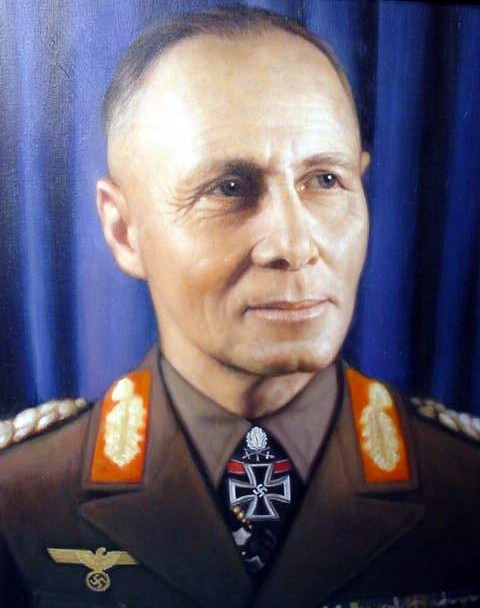
|
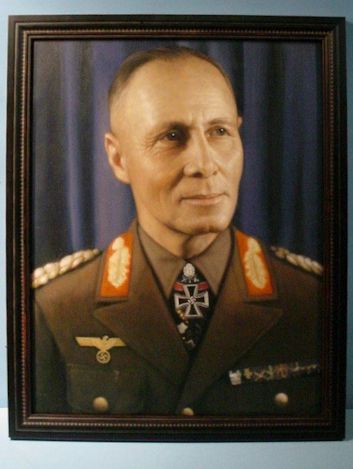
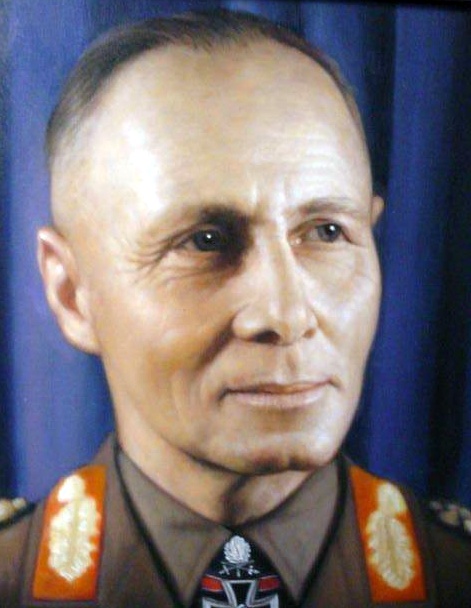
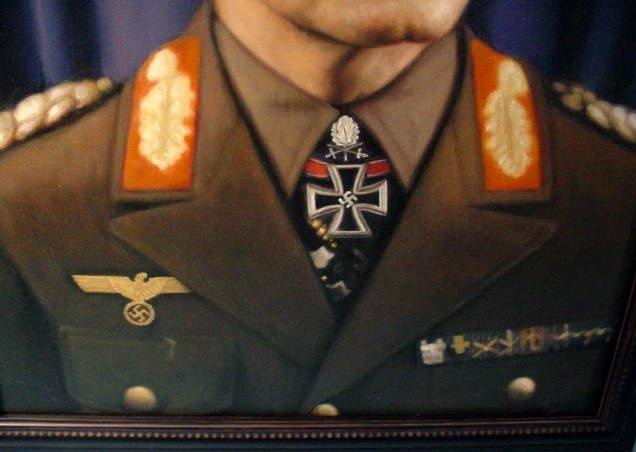
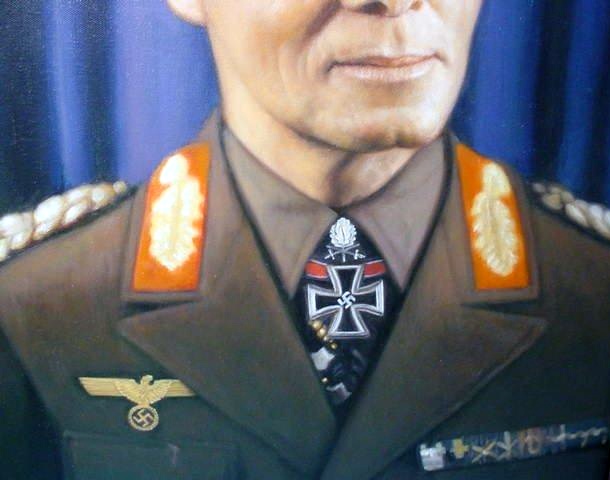
Magnificent Oil Painting of Field Marshal Rommel (Item AFRICA 1-1a; ART MASTER 1-12; WEHR 32-14) |
|
DESCRIPTION: This is a magnificent rendering in oils of the famed Desert Fox, the most-admired German officer of the Second World War by his German people and even the enemy. Read the description of these art pieces that we offer at Art Executed by a German Master on our Third Reich site. This portrait in oil measures 17 x 21 inches with a frame.
One and three quarter inches wide at each juncture this portrait is so fine a likeness of the great soldier that he looks like he could breathe! Please note in our pictures the artistic excellence and depth. NO finer a portrait has ever been done of man who was probably the greatest warrior leader of all historic times. We offer it for a very fair price. Compare against inferior examples by so-called artists for three times the money. The Africa Corps section is opened with a full-framed image of this wonderful painting.
PRICE: $995.00 |
|
||||||||||||||
|
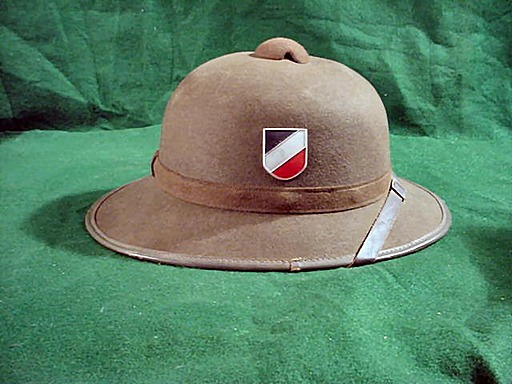
Africa Corps Pith Helmet; Officer’s Grade (Item AFRICA 1-1; WEHR 28-1) |
||||||||||||||
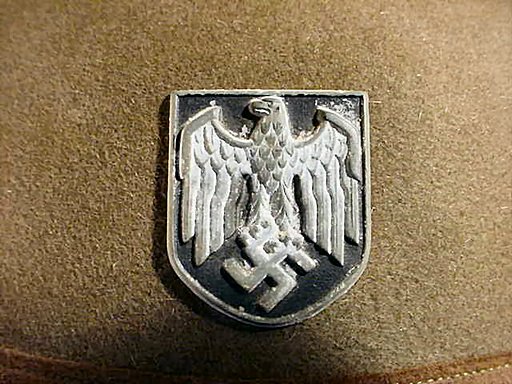
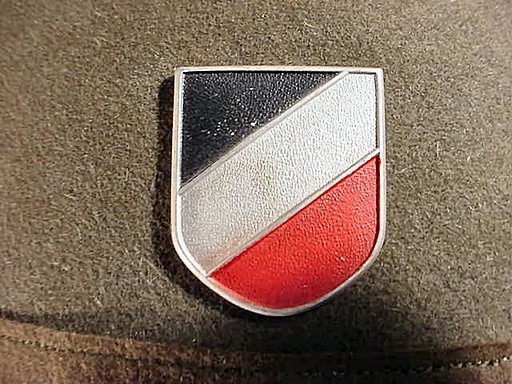
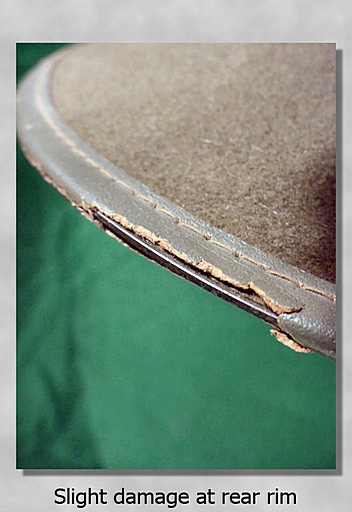
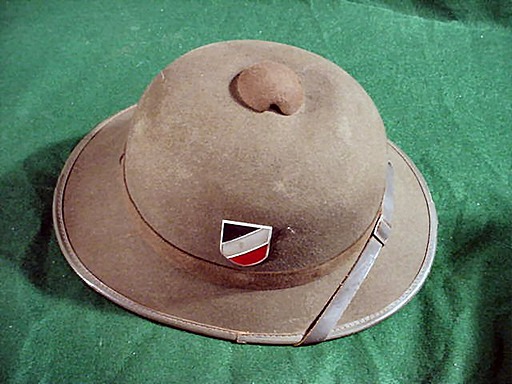
| DESCRIPTION: This is the classic velvet-finish helmet for tropical wear. It's 100-percent original, but the first thing a novice says is, “Why does it say ‘Germany’ inside?” The answer is that many more of these were made than ended up being needed by the time of the defeat of Rommel's Africa Corps the supply depot was jam-packed with these helmets and it was assumed that victory was inevitable and thousands of these would be issued to German occupation forces. We know that the Africa campaigns failed at no fault of the Desert Fox or his valiant men. It was a British entrepreneur who bought the whole lot from the British Government, but he was shipping them out of Germany to various dealers in England and America the requirement was the they had to say ‘Germany’ inside, just as porcelain crafted in 1950s Germany had to say ‘Germany’ in a stamping before being exported to America. So that’s why the word ‘Germany’ is stamped inside the sweatband. When they were first imported into the U.S., dealers sold them in magazine ads for as low as $35 back in the 1950s and early 1960s, but today you are lucky to be able to find one even for $1,000 from most web sites and military shops. We at Germania try to buy reasonably so we in turn can pass a bargain to our customers and we feel this one is truly a bargain. It is in generally good shape with some slight damage here and there on the edges, but it just doesn’t detract at all. The helmet is sound and except for that little edge damage it is in top condition, indeed. This is a very fine and (today rare!) piece of WWII history.
PRICE: SOLD |



|
|||||||
|
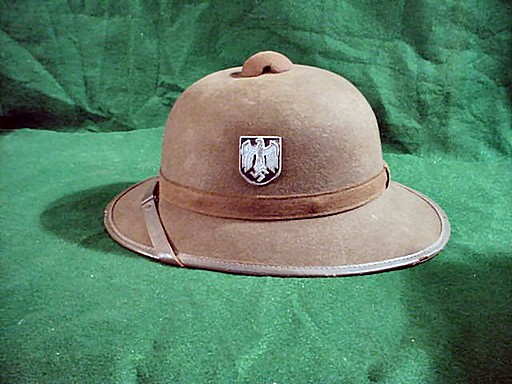
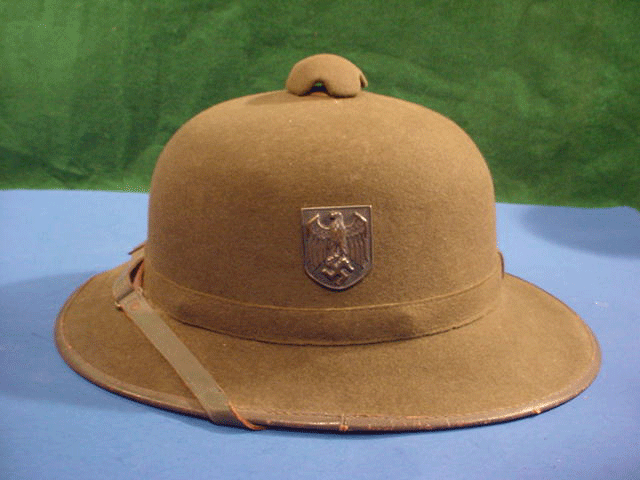
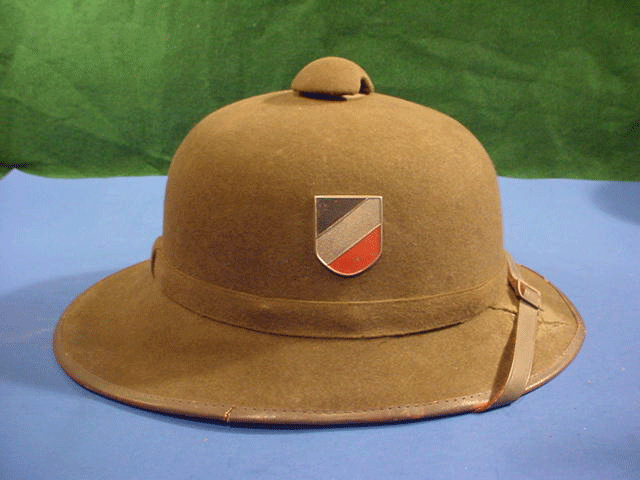
Africa Corps pith helmet (Item AFRICA 1-1a; WEHR 28-1a) |
|||||||
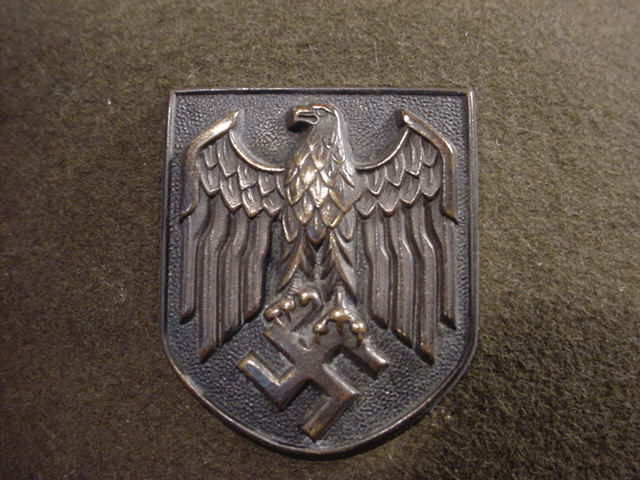
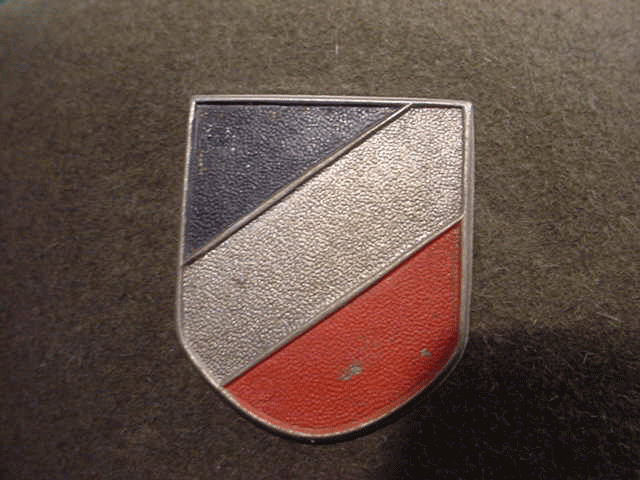
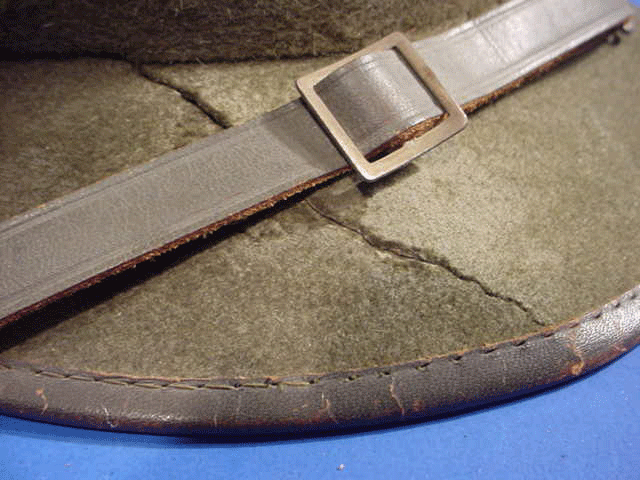
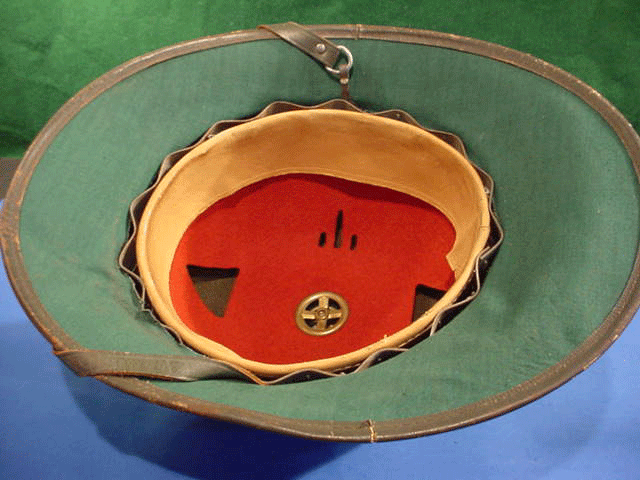
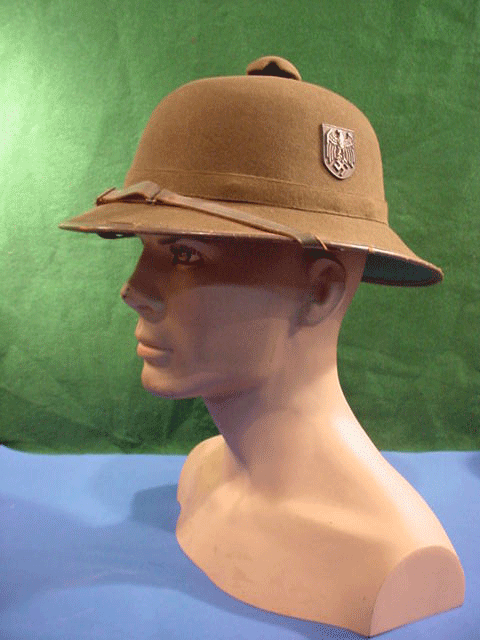
| DESCRIPTION: Here's another pith helmet (officer's grade). It is exactly the same as the one above except it does not say Germany in the liner and the shield with the eagle is in a darker hue. Also this one has a crack in the bill (noticeable) but it is cracked all the way through to the other side. But its not like it will drop off or anything so collector's if this doesn't bother you all that much here is a bargain, priced very reasonably. Remember it is what it is and it is after all an original rare helmet.
PRICE: SOLD |
|
||||||||||||
|
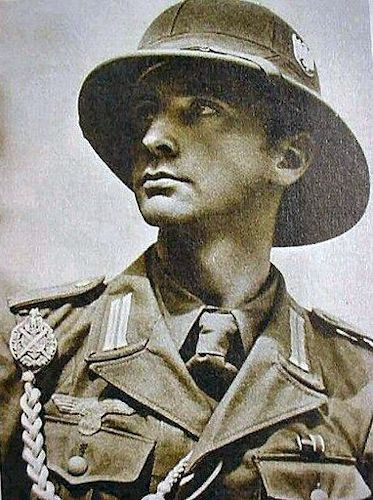
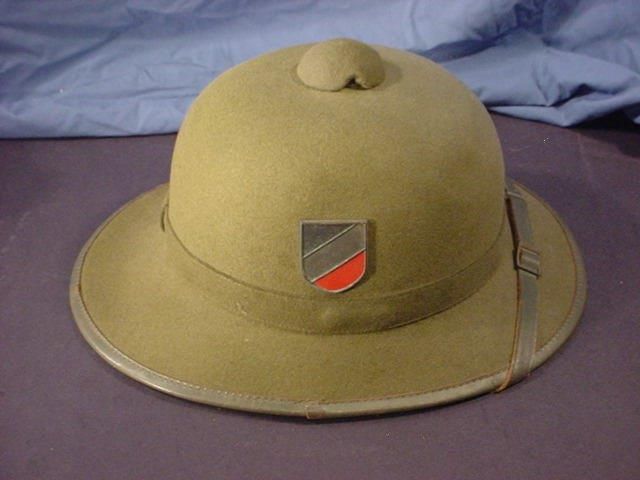
Africa Corps Pith Helmet (Item AFRICA 1-1b) |
||||||||||||
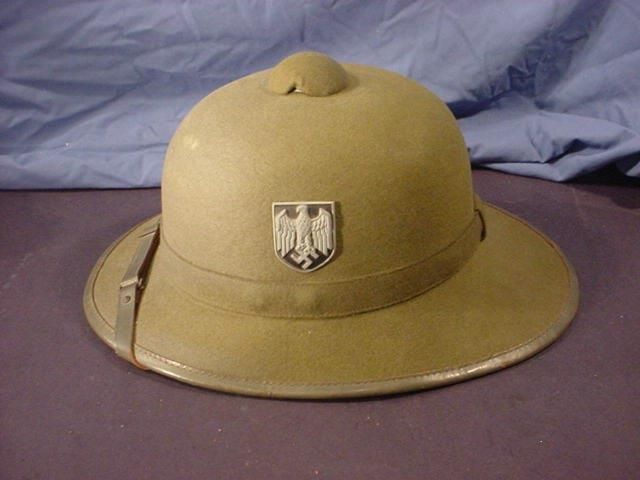
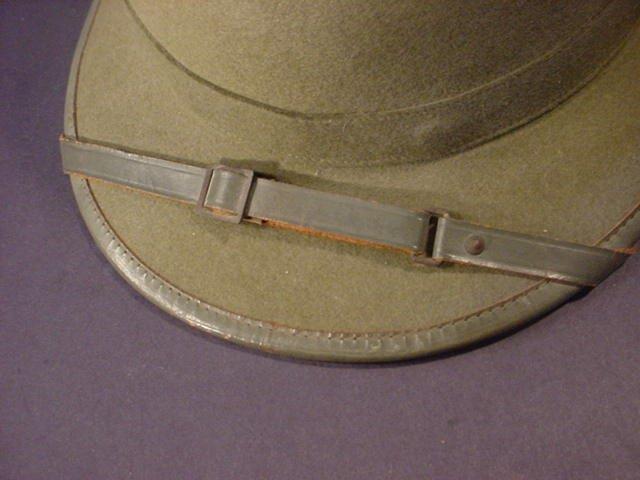
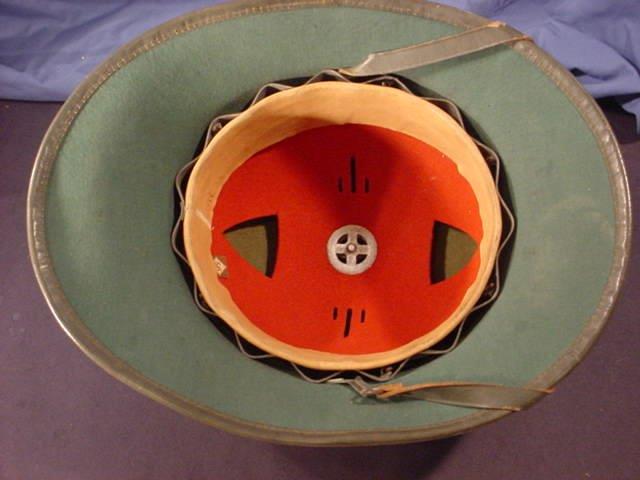
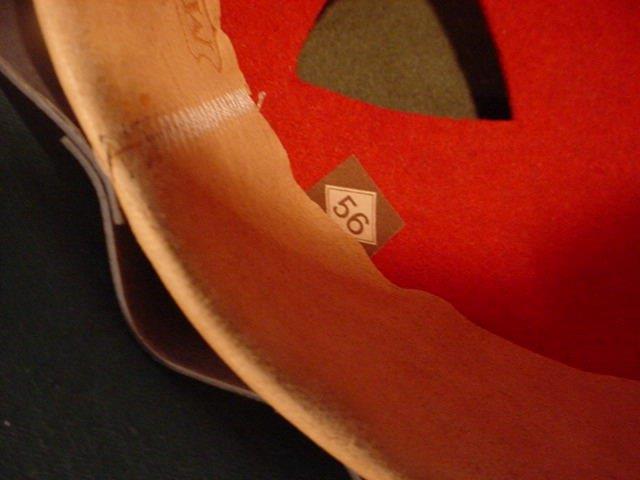
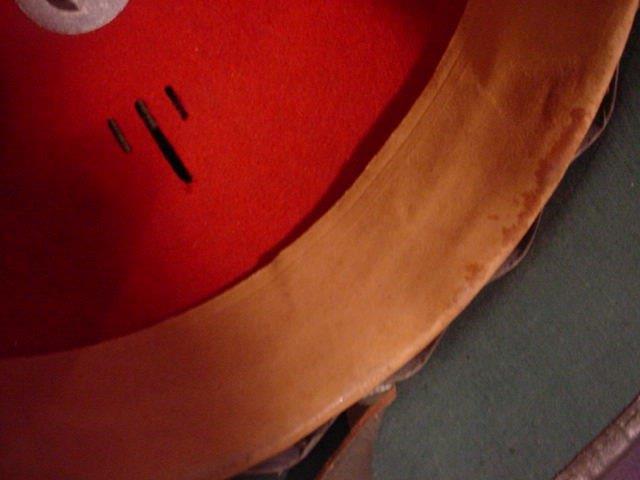
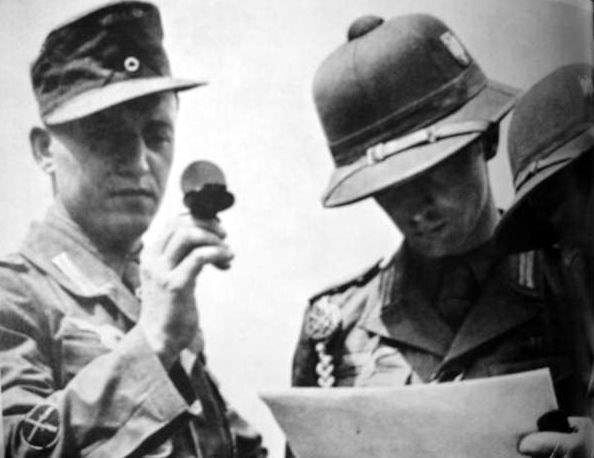
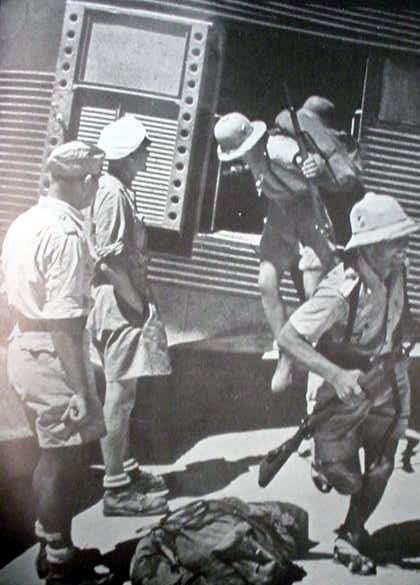
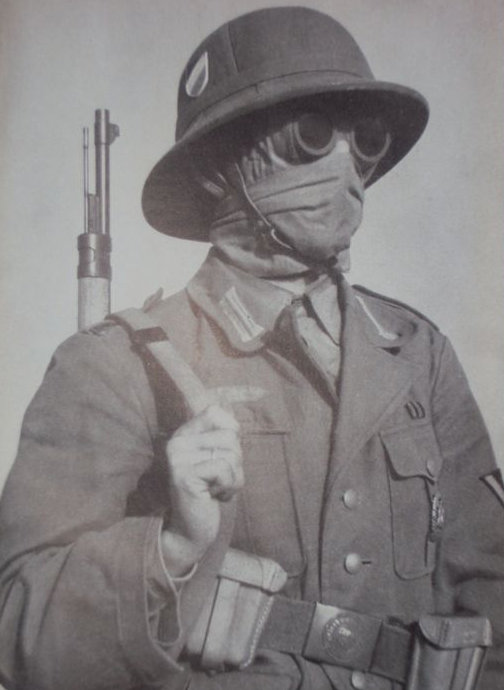
| DESCRIPTION: The soldiers of Field Marshal Rommel’s Africa Corps shielded their head, necks, and eyes from the sun with tropical helmets such as the one we offer here. OK, here is the best one yet found up to date. This oak tropical pith helmet is the second pattern and the exterior is in green felt that is in excellent condition. It has green leather trim around brim and the sweatband marked “M” within a shield. Size marked “56” and dated “1941” on the underside. The green-leather chinstrap is intact. Overall condition is excellent.
PRICE: SOLD |

|
||||||||||
|
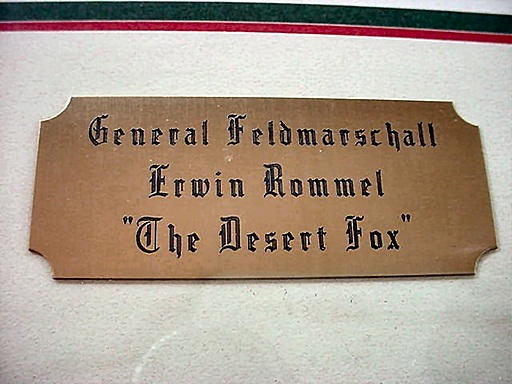
Hand-Signed Document from Erwin Rommel, the “Desert Fox” (Item AFRICA 1-2) |
||||||||||
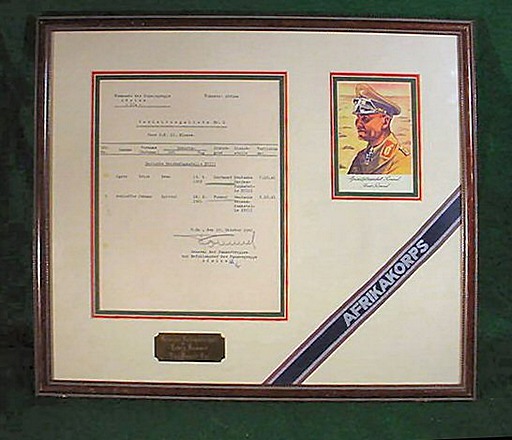
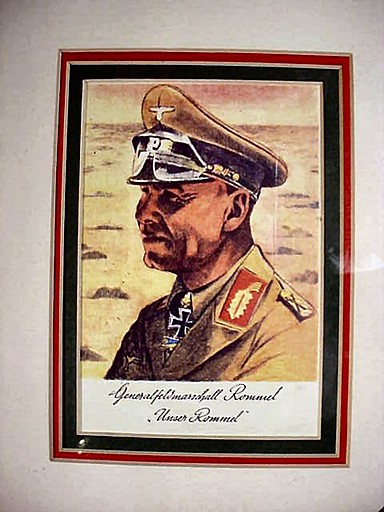
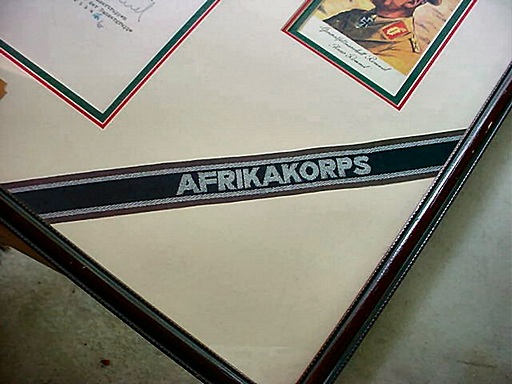
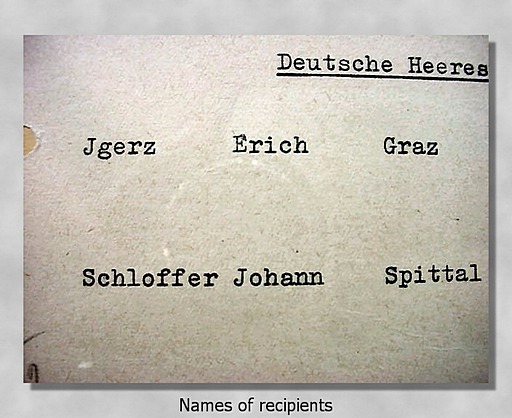
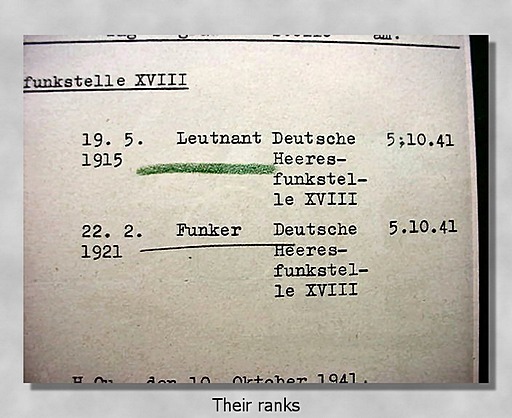
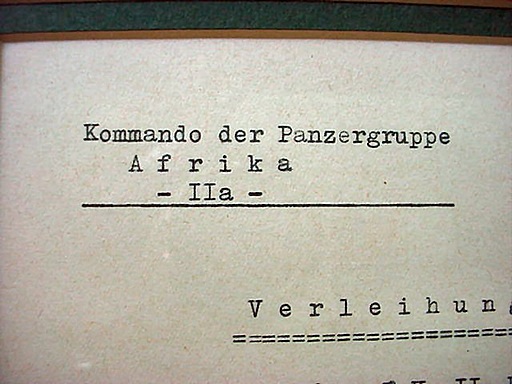
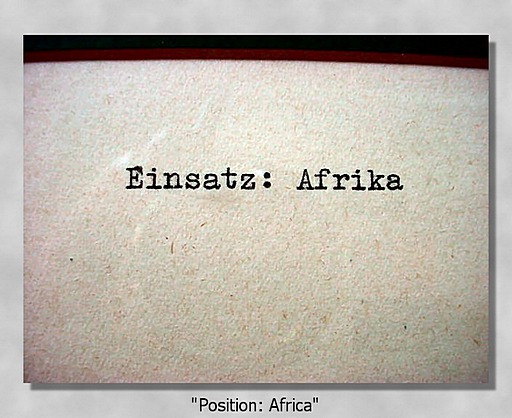
| DESCRIPTION: Field Marshal Rommel signed this order in 1941 as General of the Panzer troops and supreme commander of the Panzer Division, Africa. It is the recommendation for two officers to receive the Iron Cross Second Class. The word “Verleihungsliste Nr. 1” appears at the top and under it says: “Fuer E.K. II Klasse.” This translates to: “Award proposal number one for the award of a medal.” After this the form of listing for the named recipients in the Deutsche Heersfunkstelle XPIII. This was an official German Army radio network within the 18th command center. The awards were to go to a lieutenant and a radio operator. This is nicely framed and matted with a nice color picture of the Desert Fox and a very nice high-resolution xerox of the insignia of the Africa Corps. With frame this grouping measures 20 x 17 inches. The document measures 8 x 10 1/2 inches. This is a very rare and significant item of World War II history.
PRICE: SOLD |


| ||||||||
Presentation Set to a General (Item AFRICA 1-3; WEHR 1-5) |
||||||||
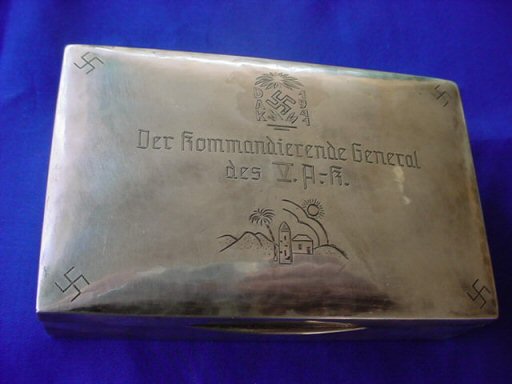
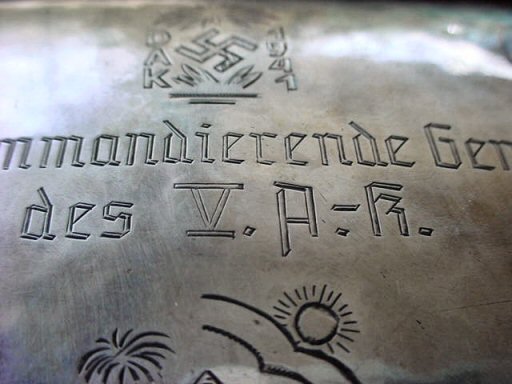
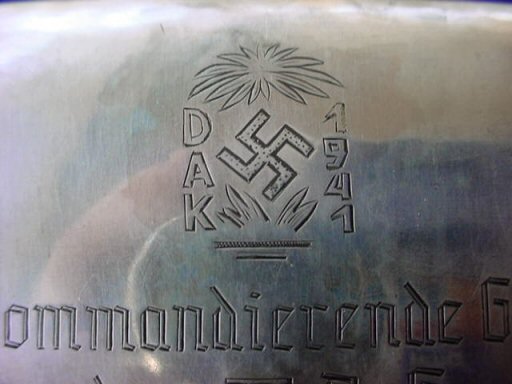
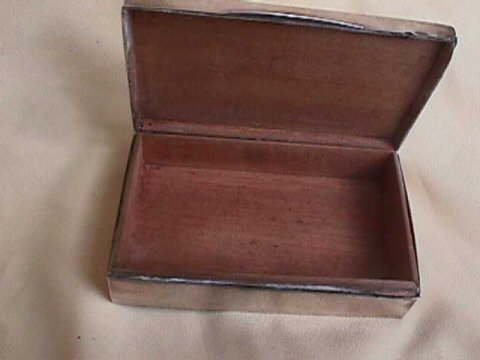
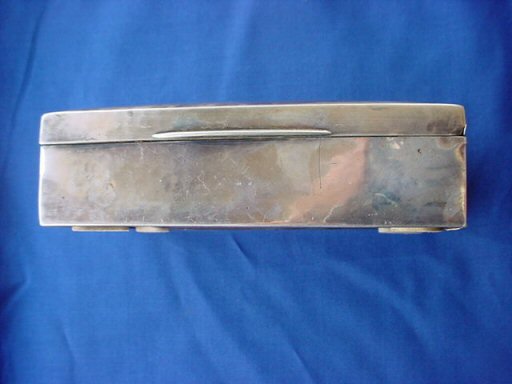
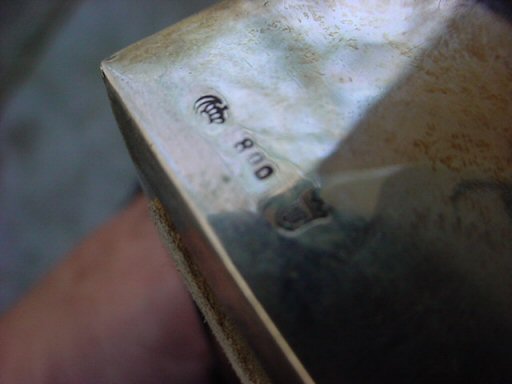
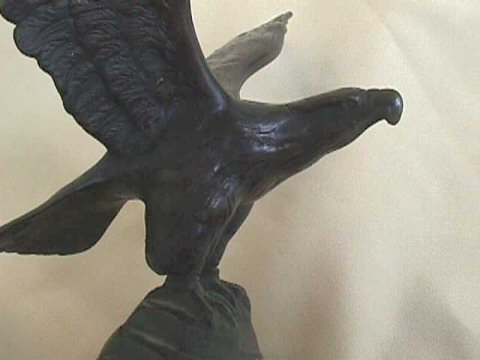
| DESCRIPTION: This is a great set of presentation items to the commanding general of Wehrkreis V. It is composed of a wonderful cigarette box in 800 silver and so marked on the top. It has the beautifully engraved words Der Kommandierende General des V. A.-K. The box measures 5 ½ x 3 ½ inches and is 1 ¾ inches deep. It has the traditional stamping of the crown , moon, and silver designation '800.' The other item, obviously to the same man is a magnificent bronze eagle desk piece. This is mounted on a beautiful marble base which measures 4 ¾ x 2 ½ inches and it 1 ¼ inches deep. The eagle has a 9 ½ inches wingspan and is 7 inches high from the bottom of the bronze base that rests in the marble plinth to the wingtip. The eagle from talons to the top of the head is about 2 ¼ inches; from tail to beak is about 4 ½ inches. This is a very nice-sized desk piece and considering its former owner and origin it is certainly a very important historical set of objects. The plate found on the marble plinth translates to "The Commander in Wehrkreis V (Army Sector 5)." This is in perfect condition and is quite beautiful. Now the "kicker"! From all the research that has been done on the set it seems that the Kommandierende der General des V. A.-K. was none other than Erwin Rommel, who later was promoted to Field Marshal by Hitler. ‘V’ stands for ‘5,’ and 'A.-K.' stands for Afrika Korps. Also, Der Befelshaber im Wehrkreis V seems to be Rommel, as well, and the fact that a veteran of the British 8th Army had brought it from Africa and stated it was found near an abandoned German tent site just after the Battle of El Alemein lends credence to the results of the research.
PRICE: SOLD |

|
|||||||
German Africa Corps Ring (Item AFRICA 1-4) |
|||||||
| DESCRIPTION: The title is almost a misnomer as there was no official Africa Corps (AC) ring. The ones that turn up are usually made by native Moroccans and were sold to the men of the AC as souvenirs of the great desert conflict.
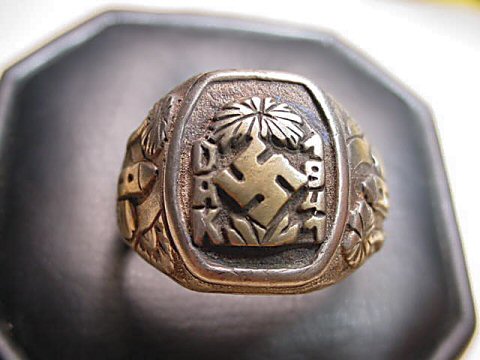
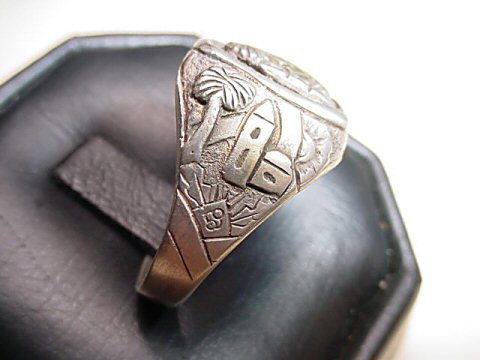
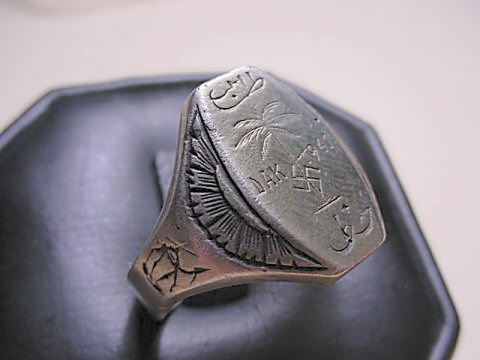
There were several types of these and hitherto they have been considered quite rare and of course highly sought after. Now, because of a find in Germany, it is now possible for collectors to have one of these very scarce rings. As you know, if you have read about some of our other rings and jewelry, we were able to procure several years back a large group of some of the finest rings, brooches, pins, and amulets produced in some of the famous workshops of the Third Reich. This fabulous purchase was made at the Stuttgart, Germany Waffenborse, or arms show, which we faithfully attend each year. (To learn more about this acquisition use this convenient link to read "About Our Rings and Silver Insignia.") He told us that after the Africa Corps returned to the Heimatland (Germany) at the end of its noble battles, many of the men, because of their particular deployment, never got a chance to purchase one of these native-made rings that were so coveted. Realizing this and being able to borrow one or two of these rings from AC veterans, our man decided that he would produce the very same ring while in the employ of Kramer in Ludenscheid. The ring he produced is exactly the same as the ones made by the Moroccans except that German requirements mandated that the silver content shows within the ring. The 835 is stamped in the interior of the shank. This ring is a fairly elaborate piece with construction in silver with an overlay in gold that seems to be separate pieces of silver soldered on with a palm tree and mosque on the sides in gold. The top has a palm tree with swastika and "DAK" (Deutsche Afrika Korps) all in a group in gold. The ring is German made, but except for the 835 mark, it looks exactly like the Moroccan ones. This item is an extremely historically important and beautiful relic of the desert war and the brave men who fought it. PRICE: SOLD |

|
|||||||
German Africa Corps Ring (Item AFRICA 1-5) |
|||||||
| DESCRIPTION: The title is almost a misnomer as there was no official Africa Corps (AC) ring. The ones that turn up are usually made by native Moroccans and were sold to the men of the AC as souvenirs of the great desert conflict.
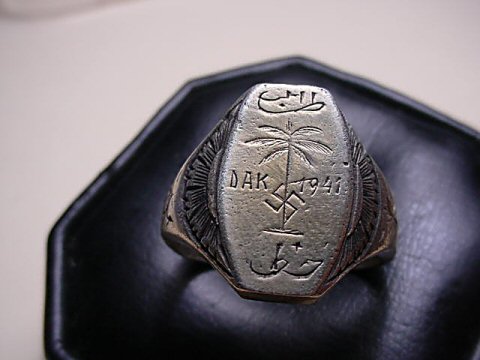
There were several types of these and hitherto they have been considered quite rare and of course highly sought after. Now, because of a find in Germany, it is now possible for collectors to have one of these very scarce rings. As you know, if you have read about some of our other rings and jewelry, we were able to procure several years back a large group of some of the finest rings, brooches, pins, and amulets produced in some of the famous workshops of the Third Reich. This fabulous purchase was made at the Stuttgart, Germany Waffenborse, or arms show, which we faithfully attend each year. (To learn more about this acquisition use this convenient link to read "About Our Rings and Silver Insignia.") He told us that after the Africa Corps returned to the Heimatland (Germany) at the end of its noble battles, many of the men, because of their particular deployment, never got a chance to purchase one of these native-made rings that were so coveted. Realizing this and being able to borrow one or two of these rings from AC veterans, our man decided that he would produce the very same ring while in the employ of Kramer in Ludenscheid. The ring he produced is exactly the same as the ones made by the Moroccans except that German requirements mandated that the silver content shows within the ring. The 835 is stamped in the interior of the shank. This is fairly simple ring and is the style that was sold by the Moroccans for a far cheaper price. It is the type most encountered in war-relic collections. It certainly was the ring most distributed in Africa. Our man faithfully produced some of these as well to every single specification of the native-made rings. The top is done in the Toledo gold overlay with the palm tree and “DAK” for Deutsche Afrika Korps 1941 with the swastika in the center of the tree. There is an inscription in Arabic above and below the palm. On the right side is a depiction of a camel and on the left a palm, again. A handsome ring and an important relic of the desert war. PRICE: SOLD |


|
|
|
|
|

|
|
|
|
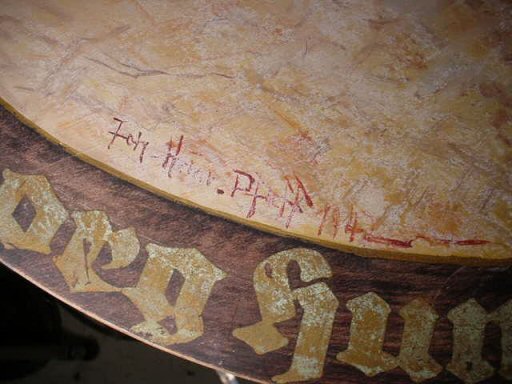
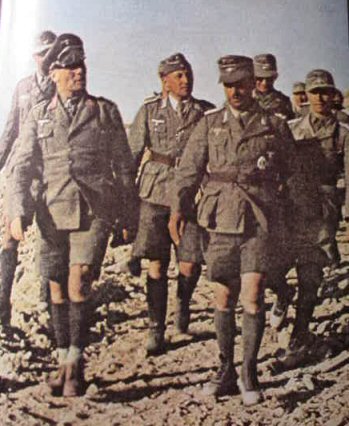

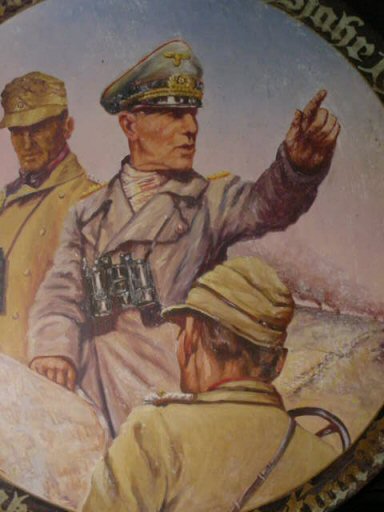
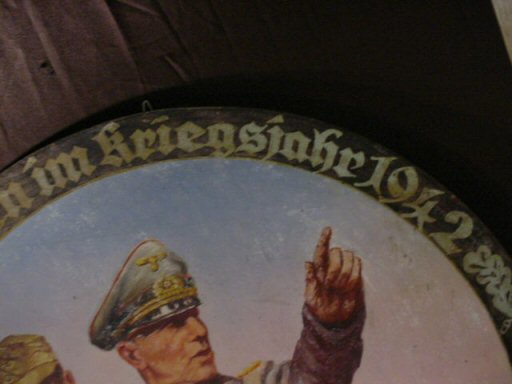
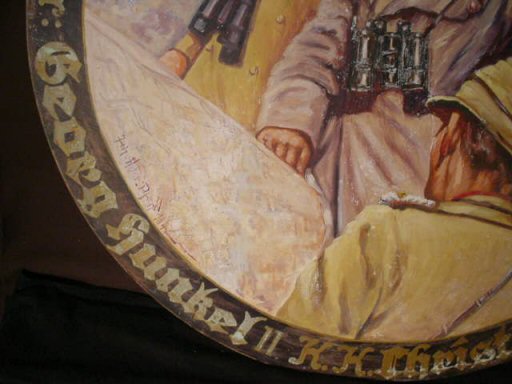
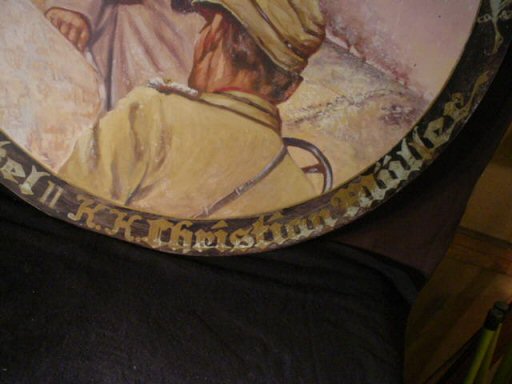
Shooting Prize for Africa Corps (Rommel) (Item AFRICA 1-6) |
| DESCRIPTION: This is in the style of the wooden targets used by the German Army and the custom was that the Schützenkönig, or top-scoring competitor, would receive the target as his prize. See Item WEHR 13-7. The same tradition was used by civilian marksmanship clubs, as well. See Item HUNT 6-3. This is the top prize of all of them in our estimation. It is historically important and it is obvious no one would shoot at this one as it is not only hand painted, but is historically important in that the great and beloved Field Marshal Rommel is depicted with a couple of his Africa Corps officers. The scene is the Battle of Tobruk, where the Italians had to call in the German forces of the 15th and 21st Panzer Divisions to save them from the British 7th Armour Division, which under the brilliant command of Rommel, drove the British back across Cyrenecia to Tobruk laying siege to it until June 21, 1942, when the allied forces surrendered, to include the Australian 9th Division, which fought with bravery and tenacity, but unfortunately spilling their blood for the British warmongers. The plaque that can be called a target through the tradition although not shot at is huge; much bigger than the usual one encountered. They would not shoot at a target containing the picture of the beloved”Desert Fox.” This is most definitely a great relic of the war upon the sands and a tribute to a gentleman soldier who will live in fame and glory as long as heroes are revered.
PRICE: SOLD |
|
|||||||
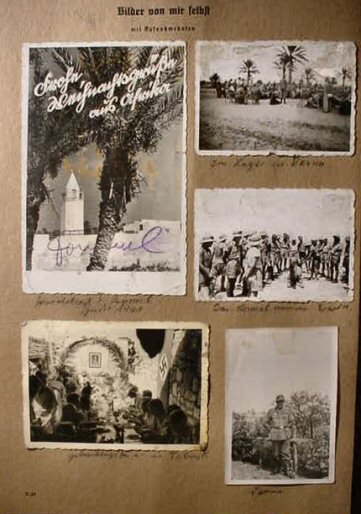
Group of Africa Corps Pictures with Card Signed by Rommel (Item AFRICA 1-7) |
|||||||
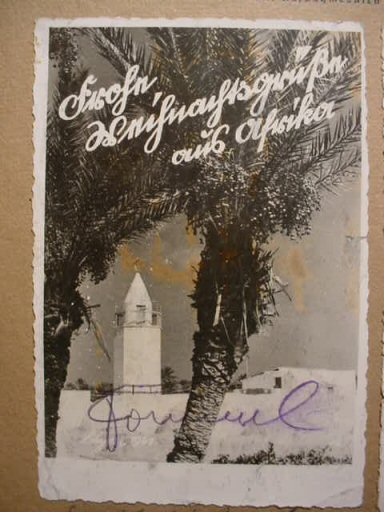
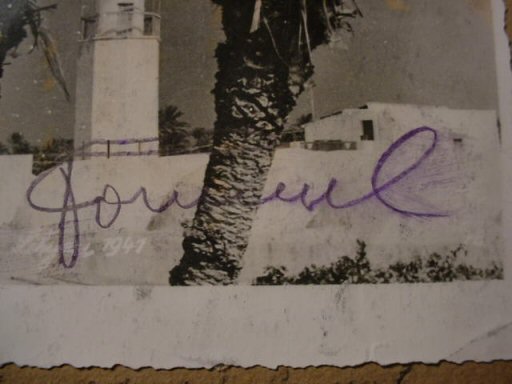
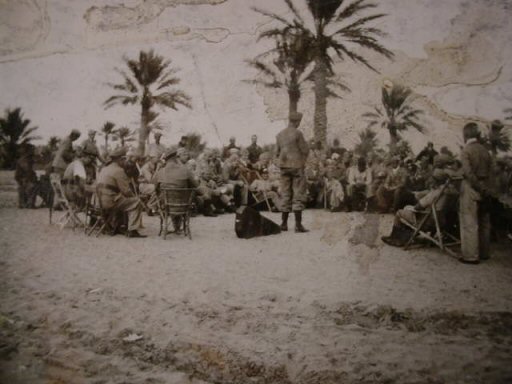
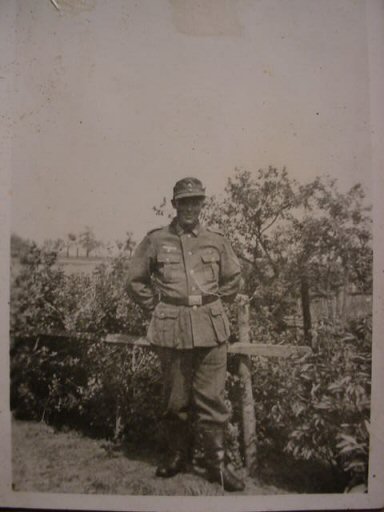
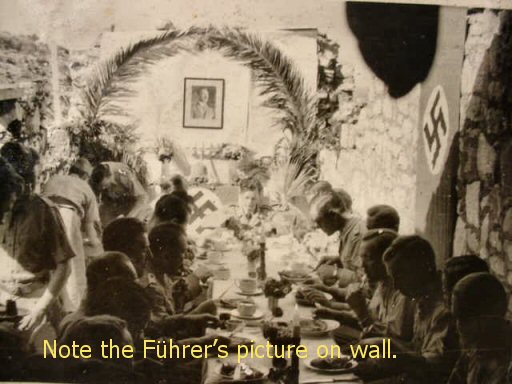
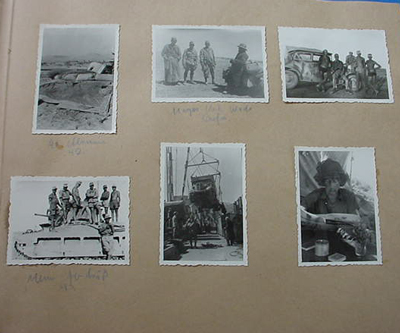
| DESCRIPTION: This is a page from a German soldier’s photo album. There are 3 photos measuring 3 1/2 x 2 1/2 inches and one that is 4 x 3 inches with scenes of duty in the African wastes. One of them is rather neat with the Africa Corps men trying to get a stubborn camel to get to his feet for duty. Another is a birthday party in Tobruk, another shows the album owner in full uniform, while the last photo is a conference of officers, but the big picture is a postcard souvenir in the type soldiers sent home and this soldier managed to get the signature of the commandant himself, Rommel. The signatures of the general are extremely rare and this one combined with these great Africa Corps photos makes for a fine historically important archival find.
PRICE: SOLD |

 |
 |
 |
 |
 |
 |
 |
 |
 |
 |
 |
| M-43 Cap of the Afrika Korps (Item AFRICA 1-9) |
|||
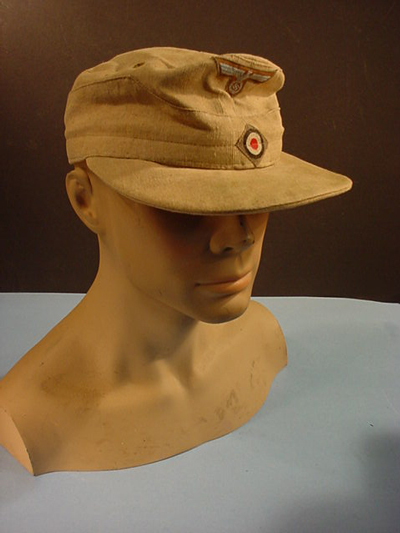
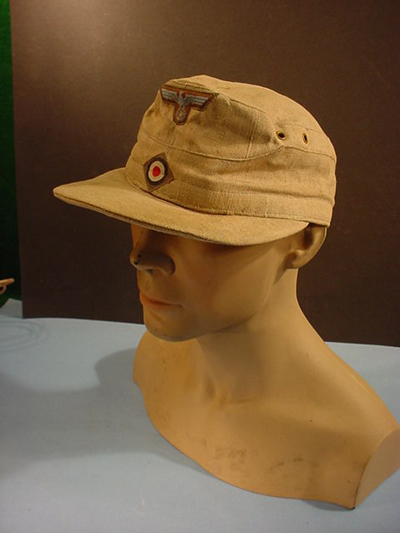
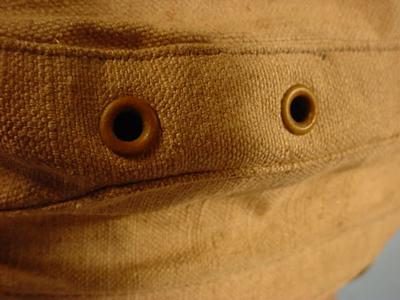
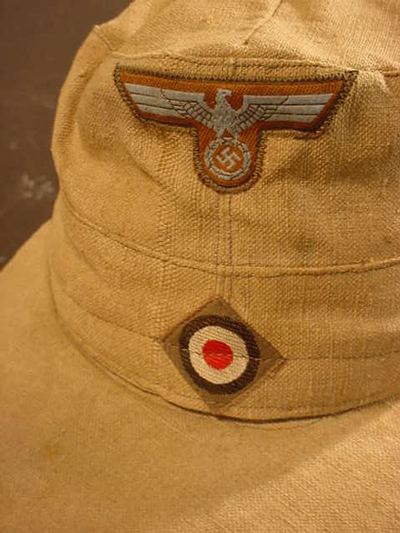
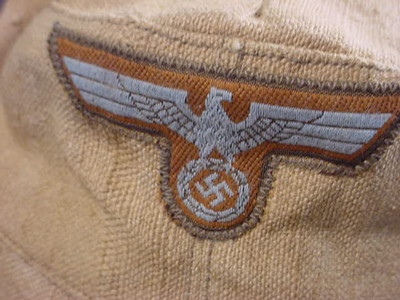
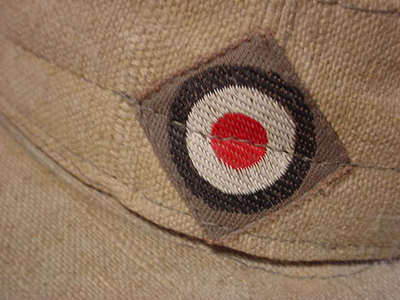
DESCRIPTION: An original cap of the famed Afrika Korps. It is a Model M-43 and is similar to other tropical issue Wehrmacht caps but his one is definitely Africa Korps. It is constructed from heavy gage cotton twill material with the grommet covered air holes at each side. It has the proper eagle and swastika and the roundel. It is a fairly large size (about 59) with the red lining peculiar to these caps. The condition is excellent, possibly issued just before the final tragic defeat and worn very little if at all. Although not at all necessary, the cap has been thoroughly ‘black lighted.’ And, it passes every test. This is the real McCoy and as nice a one as you will ever find. Everything about it is correct according to the experts. It is light tan in color and has the simulated turn up flap that does not fold down. You should be advised that originally issued Africa caps were not tan, they were of an olive tint according to Hal Marshman Sr, an advanced collector. He says that due to weather conditions in North Afrika, these medium cotton twill caps would take on a pale tannish color and Hal mentions that the troops would actually bleach these caps using thick anti-gas tablets; it seems they liked the ‘salty’ look of tan. Other information tells us that the Oberkommando der Wehrmacht in the last months of the Afrika campaign decided to issue uniforms in the light tan color since the soldiers liked them so much and we believe this is the case here. At this point the addition of the V shaped service color was no longer bothered with such as found on earlier examples. PRICE: SOLD |
|||
| ||||||||||||||||||||||||||||||||||||||
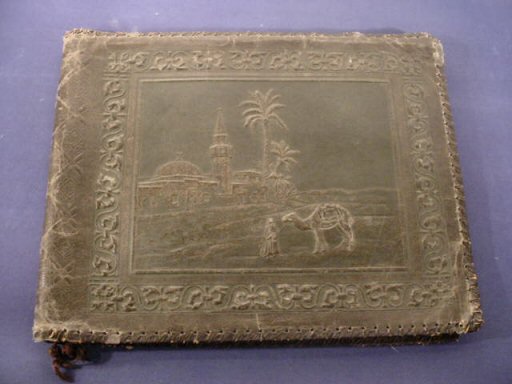
Africa Corps Album (Item AFRICA 1-10; ALBUM 1-4) |
||||||||||||||||||||||||||||||||||||||
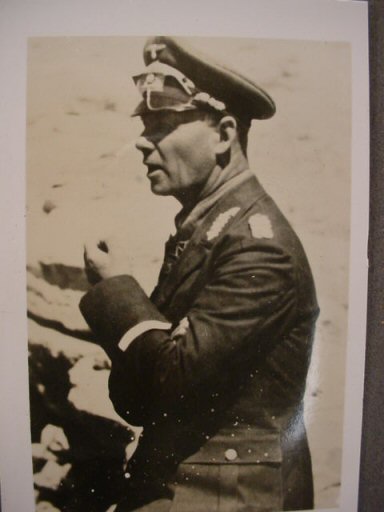
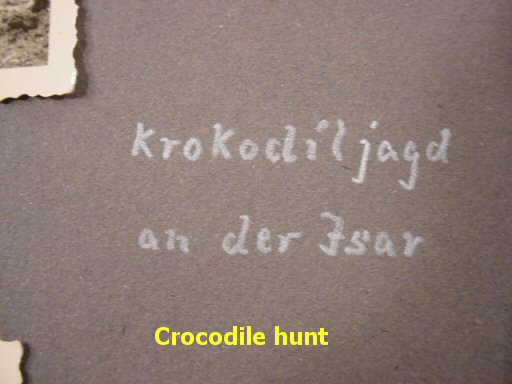
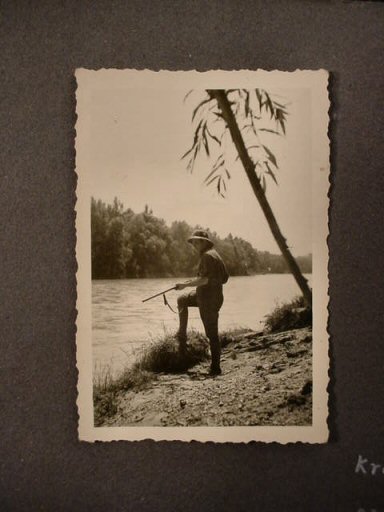
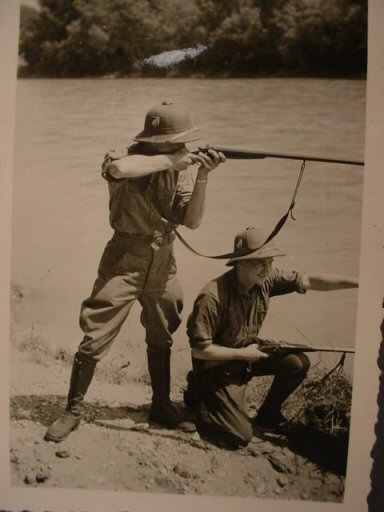
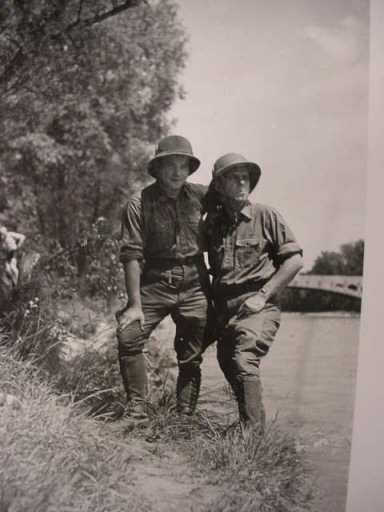
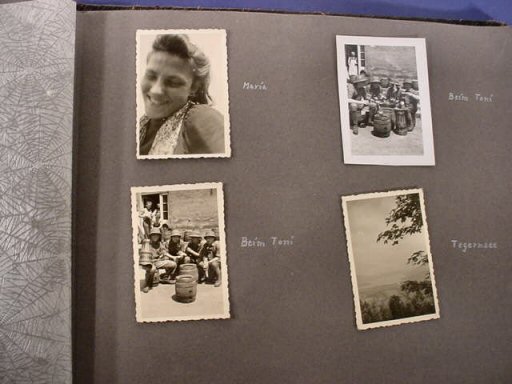
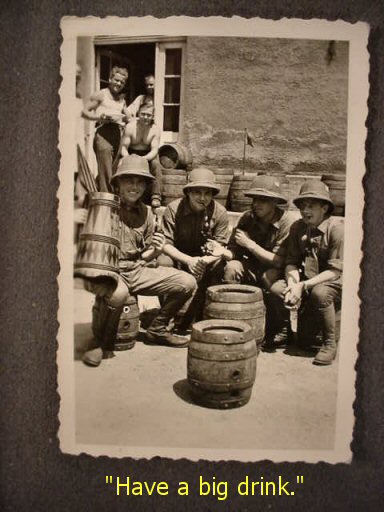
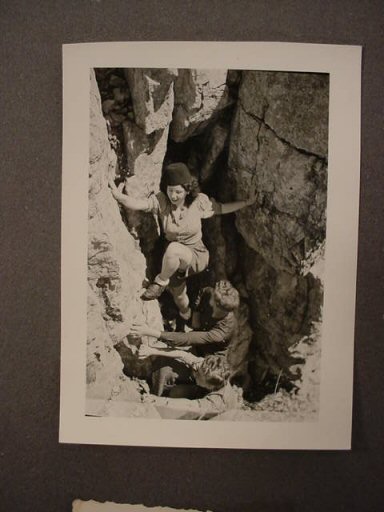
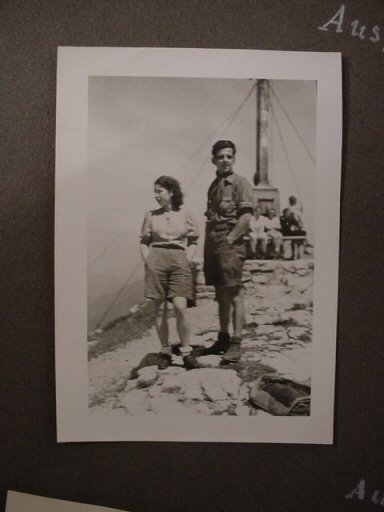
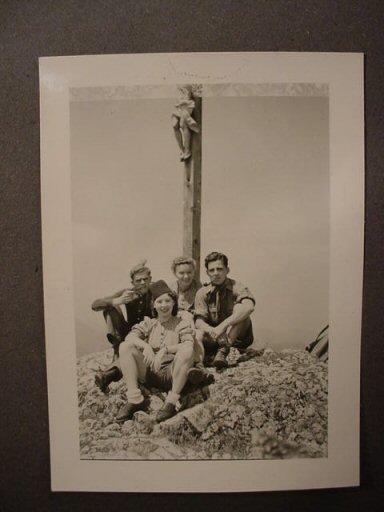
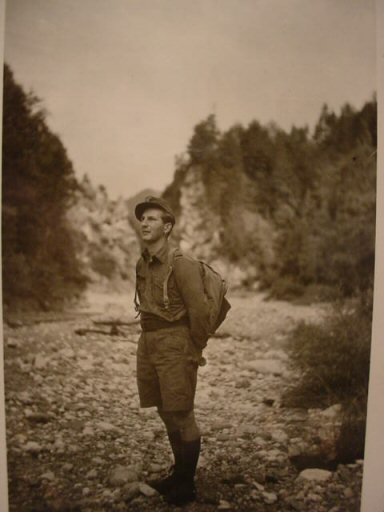
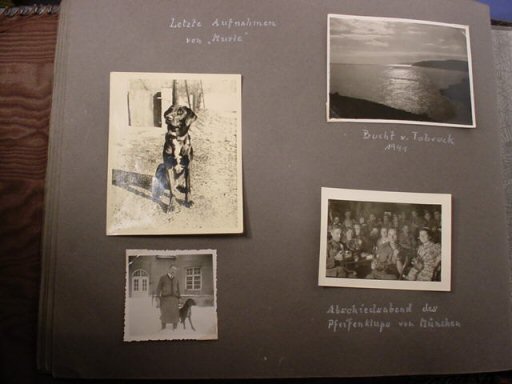
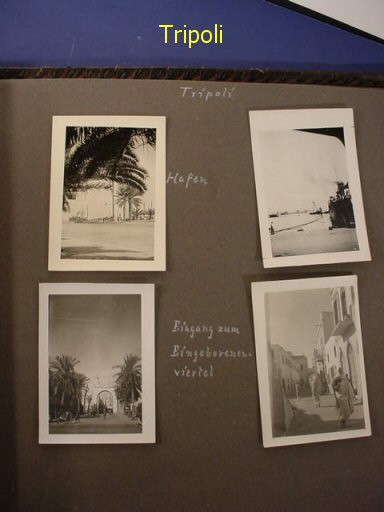
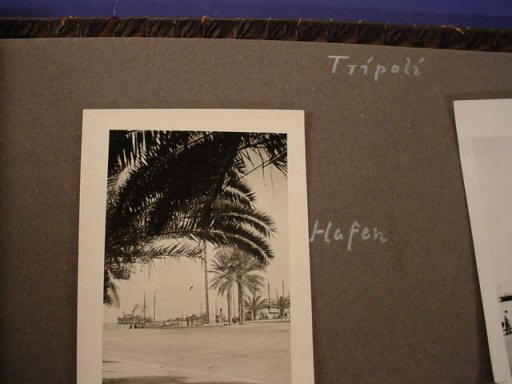
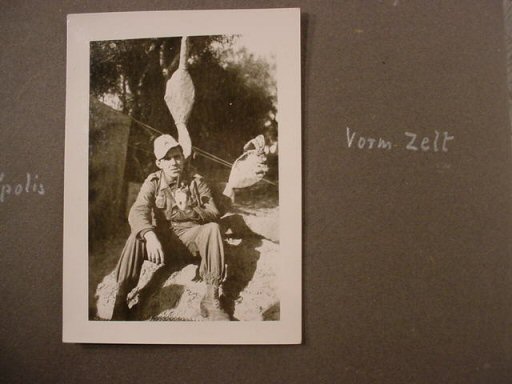
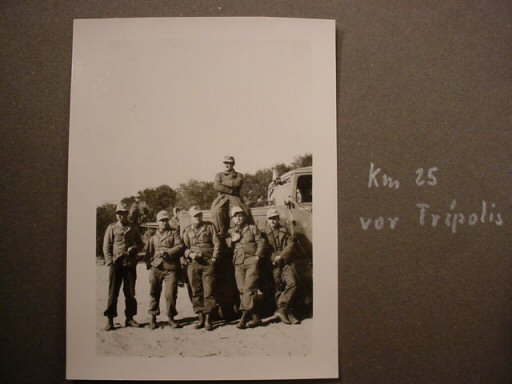
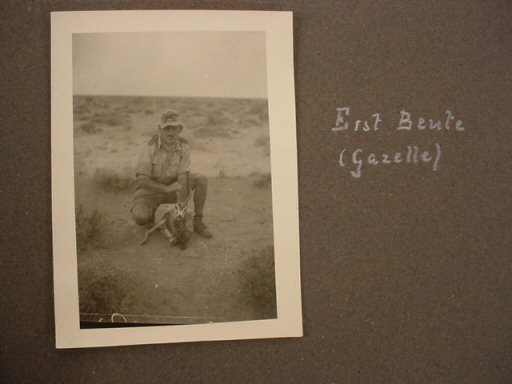
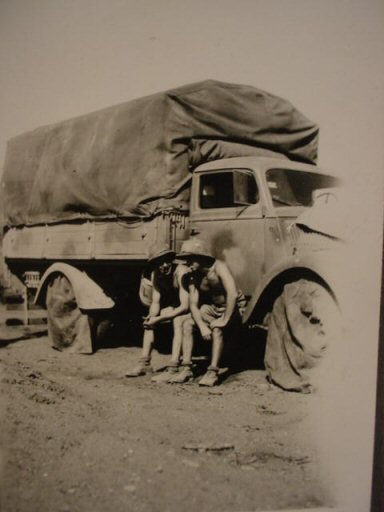
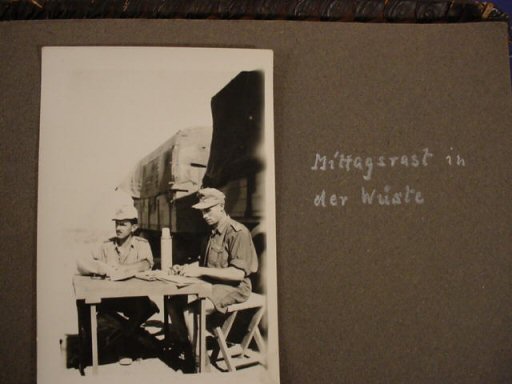
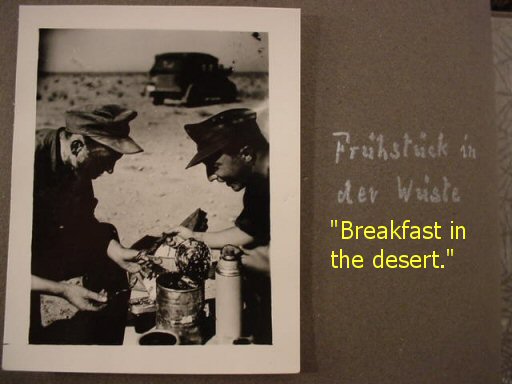
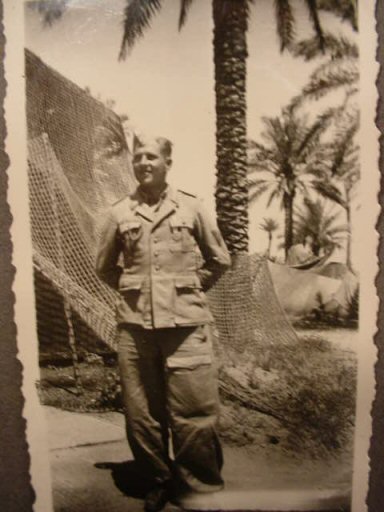
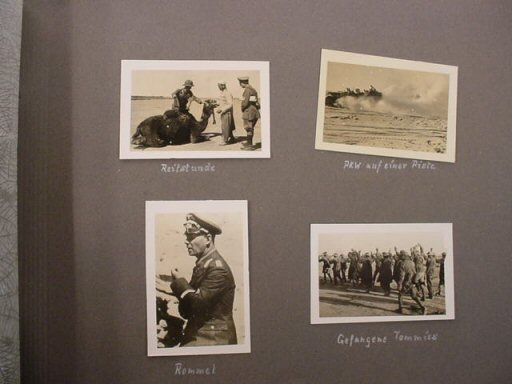
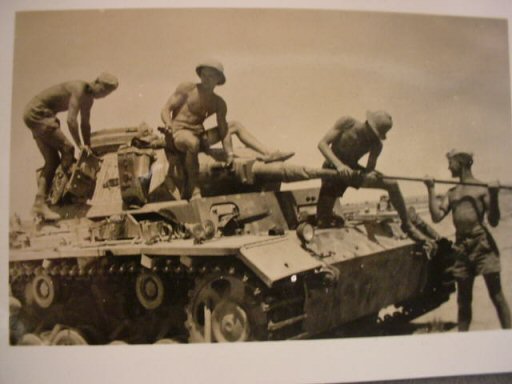
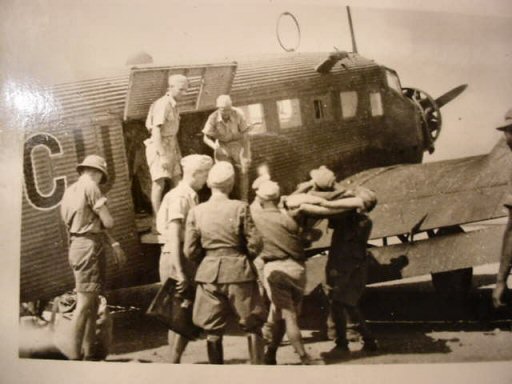
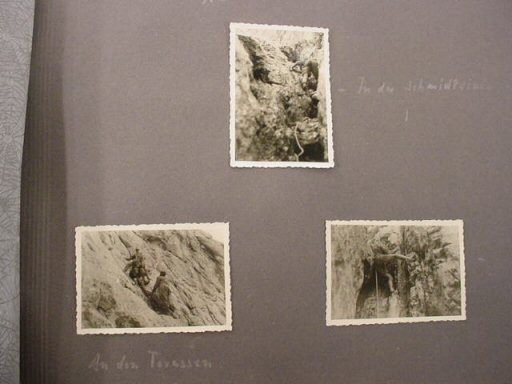
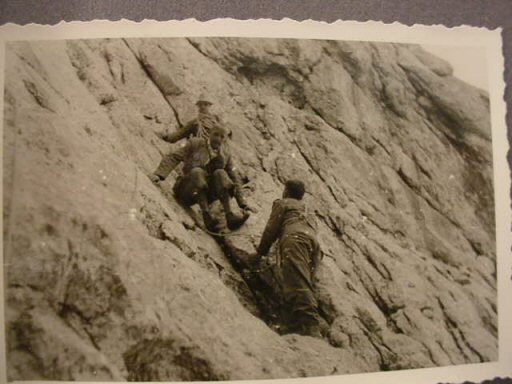
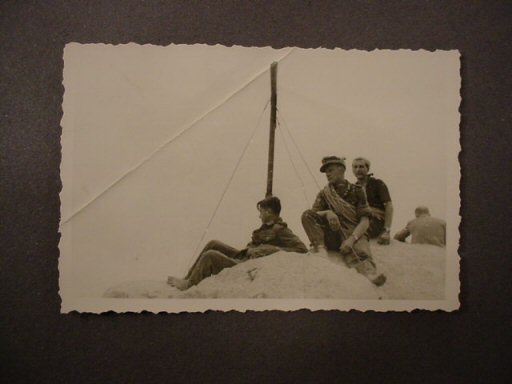
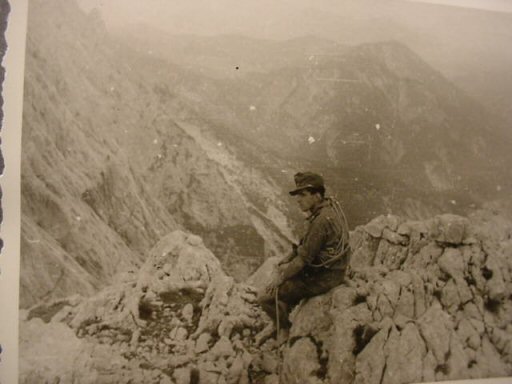
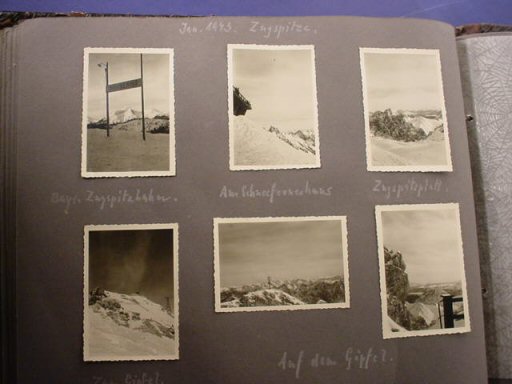
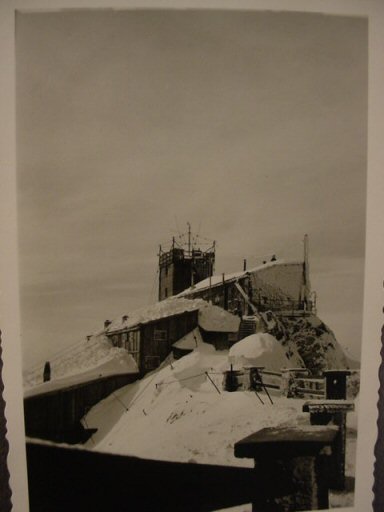
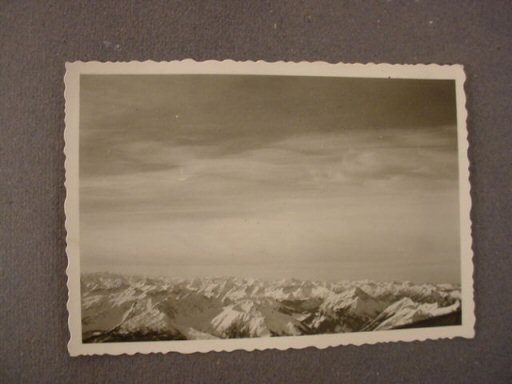
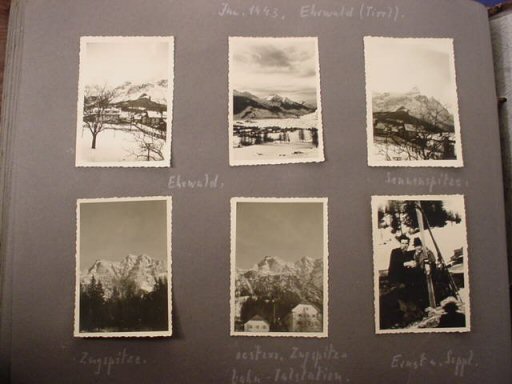
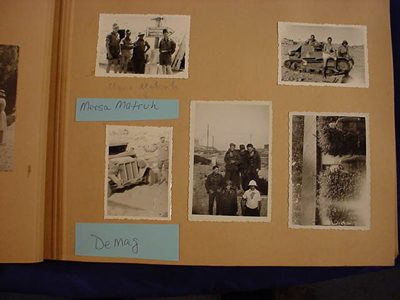
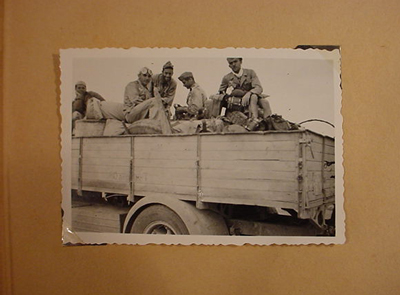
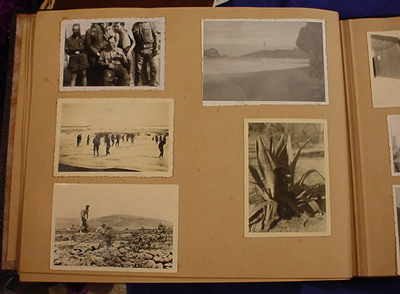
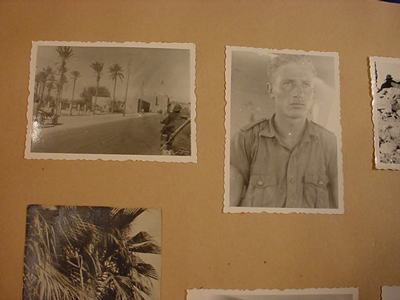
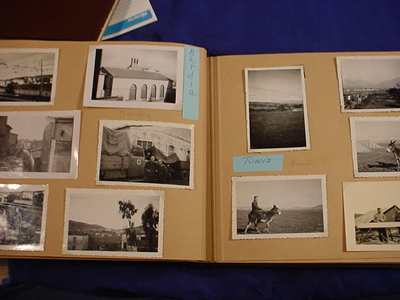
| DESCRIPTION: This is a large-format album put together by a German soldier of the Africa Corps. It measures 14 x 11 1/2 inches and contains about 140 snapshots. The first few seem to be from the time when he was in training for desert duty with the DAK and he is seen with other Kameraden. He is obviously a humorist and a ladies’ man from the content of some of the great pictures. There are pictures where the soldiers are in full Africa Corps Battle dress, but the captions indicate that this is in Germany. But then, later, he is in Tunis and also Tripoli. There are many pictures in the desert with Arabs’ camels, etc. Some of the pictures are professional; others are definitely homemade—personally taken. He must have been an avid mountain climber in civilian life as he takes to the African mountains that show up in a few of the pictures. There are some dramatic personal pictures here of Africa Corps men climbing among the rocks and peaks. In 1943, he must have been on leave, and he went skiing in the Alps—our kind of guy. He was a real adventurer and a member of the elite Africa Corps.
PRICE: SOLD |





 |
 Foreword by Rommel |
 |
 |
 |
 |
 |
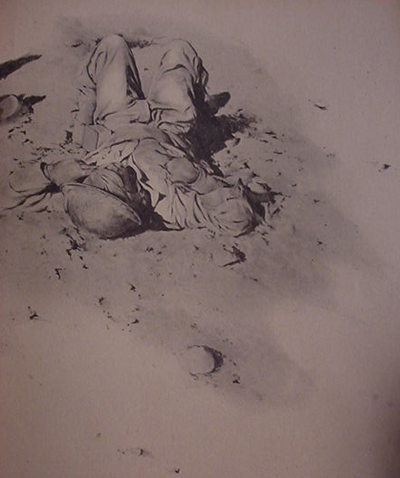 The horror of fratricidal war |
 Contrast! |
 |
 |
 |
 |
 |
 |
 |
 |
 |
 |
 |
 |
 |
 |
 |
 Leben heist kampfen! |
 |
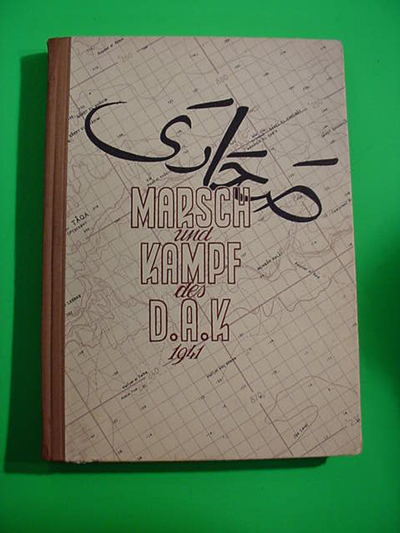
Book: Marsch und Kampf Des DAK 1941 (Item AFRICA 1-12) |
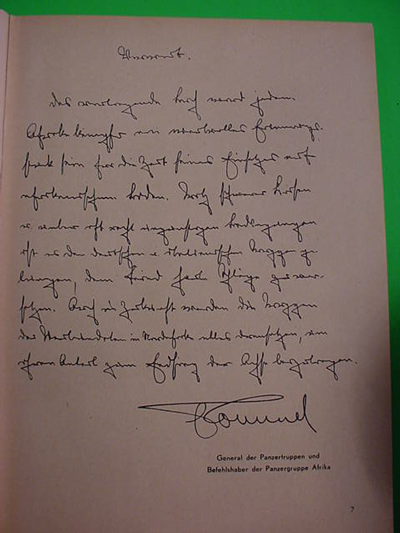
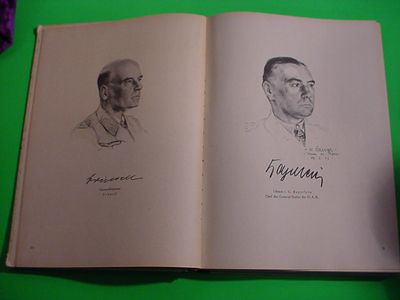
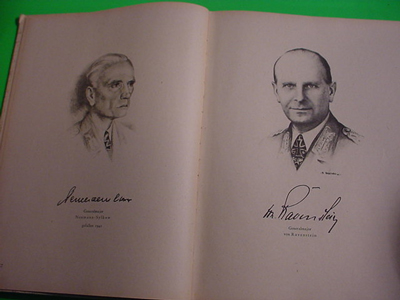
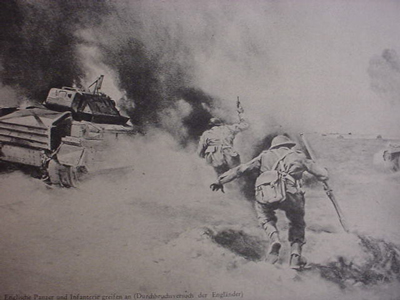
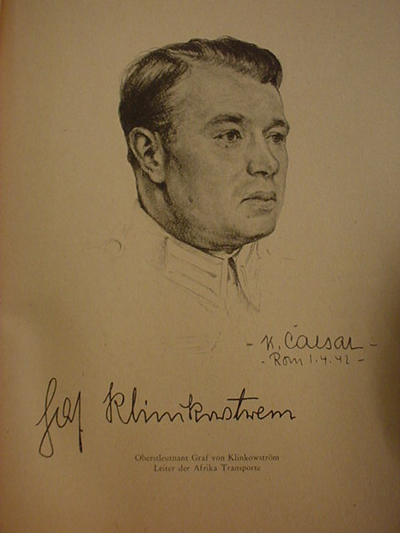
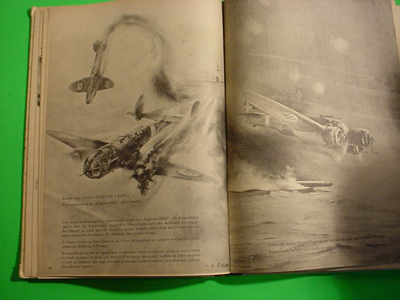
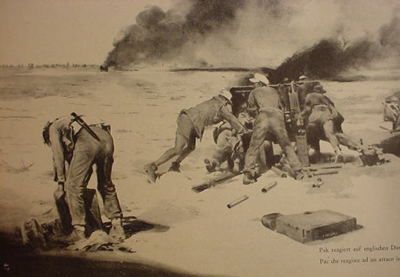
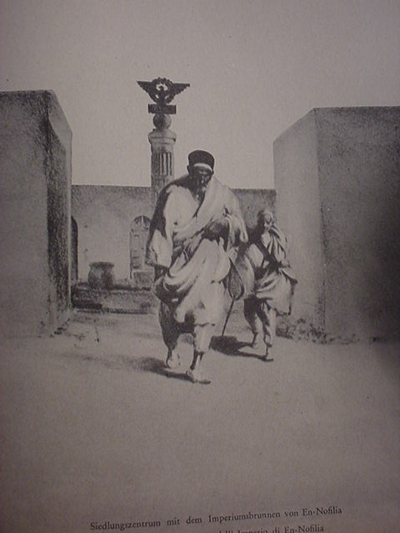
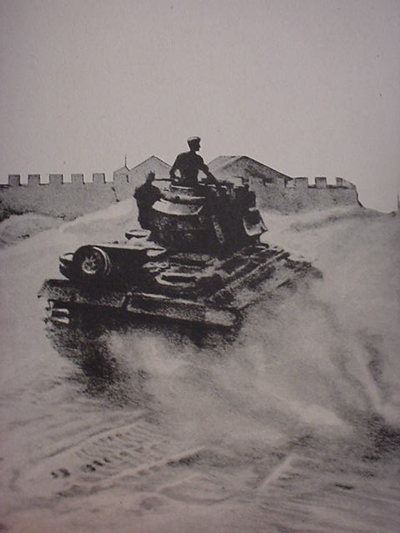
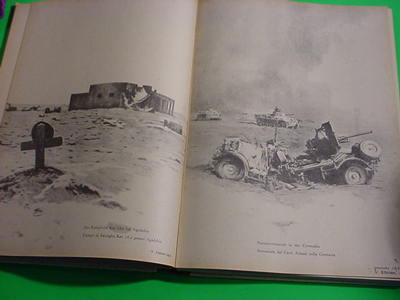
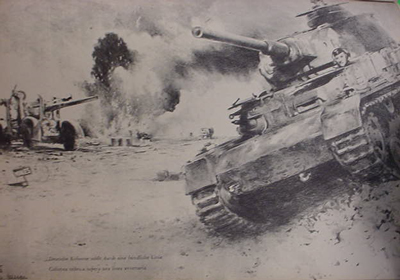
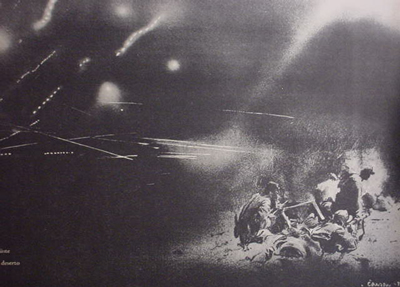
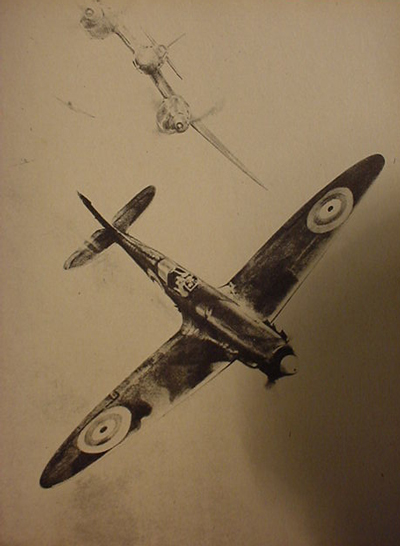
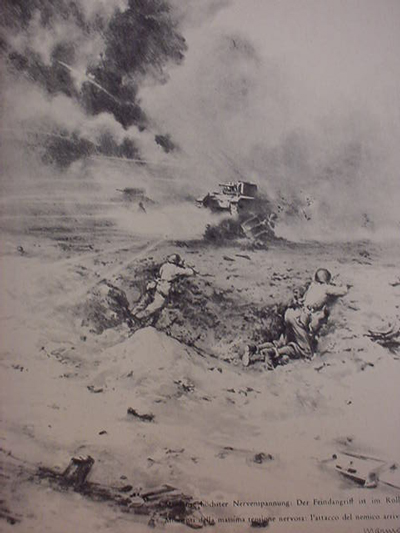
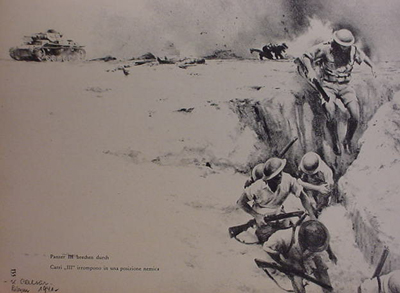
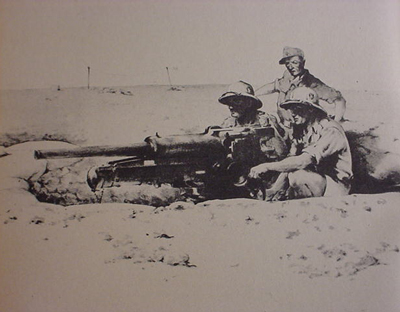
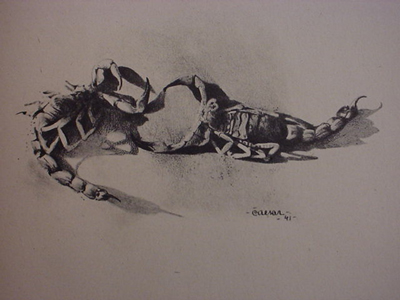
| DESCRIPTION: A very rare period art book about Rommel’s Afrika Korps. 215 pages of text and wonderful drawings. The book is in German and Italian. The pictures, many of them full page, are spectacular and the pictorials are by both German and Italian artists. This is Band 1 so there must have been a 2nd volume. The book was authorized by the General Command of the German Afrika Korps and it has a forward written by General of the Panzer troops and Supreme Commander of the armored group Afrika, Field Marshal Rommel. Tremendous portraits of Rommel, Cruwell, Bayerlean, Sylkow, and Summermann are shown in the first pages followed by a picture of a young dead Enlish soldier under which there is a statement from Adolf Hitler stating “What terror England has wrought is the terror that England now receives." The pictures are just great as they illustrate the trappings and horrors of war but also how the stark reality of modern warfare in a primitive country and with stone-age people who now see the might of these strange white men who kill their own brothers so efficiently! Air planes, Generals, other ranks, action scenes throughout, arabic culture, buildings, temples, tank assaults, 88 guns, night fighting episodes, Italian troops and their equipment, stukas, enemy casualties, ariel dog fights & many, many, pieces of fine artwork showing refined, realistic talent. Interesting that the last drawing is that of two desert scorpians in mortal combat done by the Italian combat artist Caesar. The book is in large format 12 by 8 ½ inches and is in absolutely perfect condition. A true archival treasure! PRICE: $450.00 |
 |
 |
 |
 |
 |
 |
 |
 |
 |
 |
 |
 |
 |
 |
 |
 |
 |
 |
 |
 |
 |
 |
 |
 |
 |
 |
 |
 |
 |
 |
 |
 |
 |
 |
 |
 |
 |
 |
 |
 |
 |
 |
 |
 |
 |
 |
 |
 |
 |
 |
 |
 |
 |
 |
 |
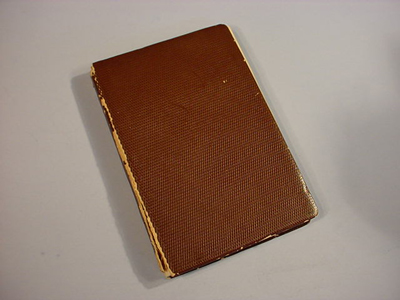
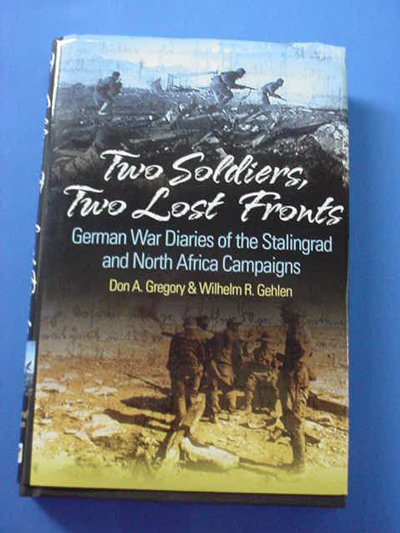
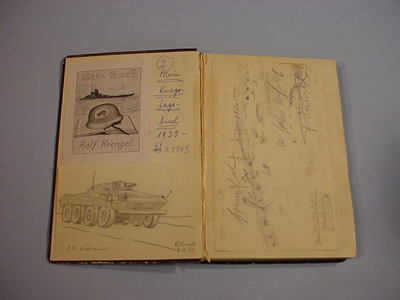
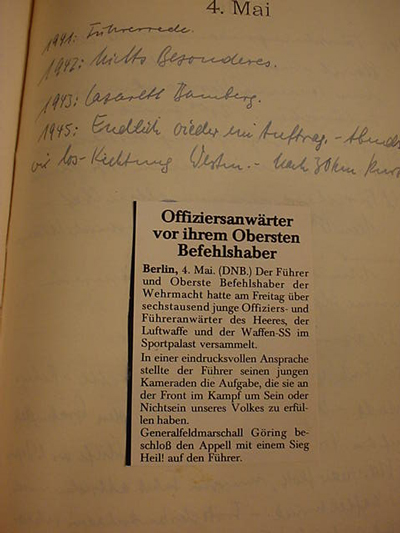
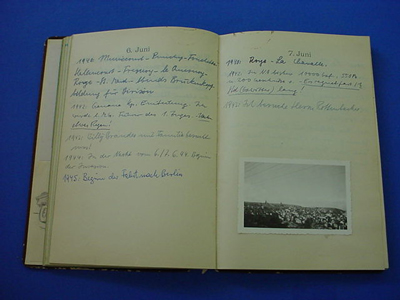
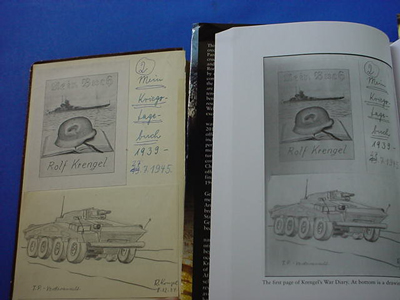
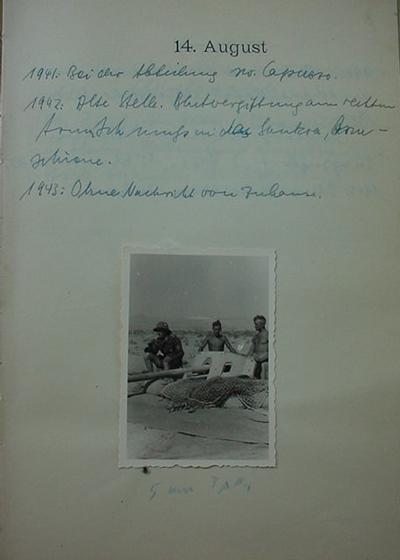
Album, Diary and a Published Book Concerning A Soldier of the Africa Corps FABULOUS! (Item AFRICA 1-13 & WEHR 31-15) |
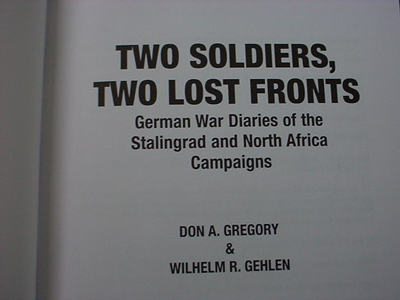
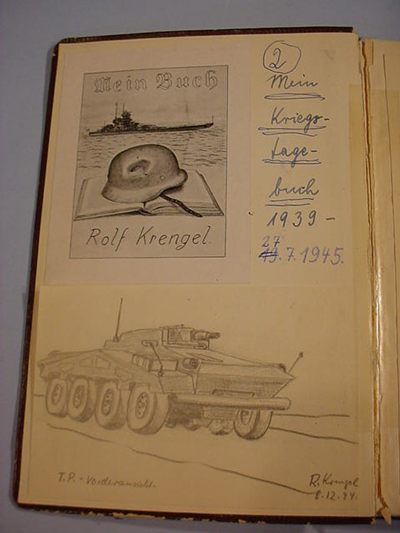
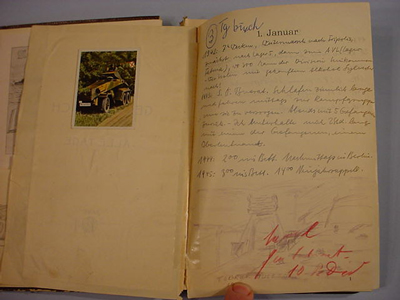
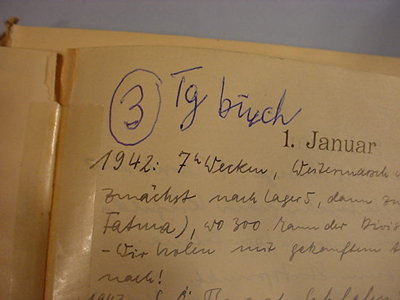
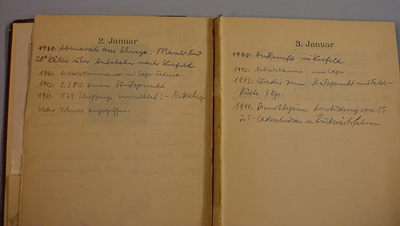
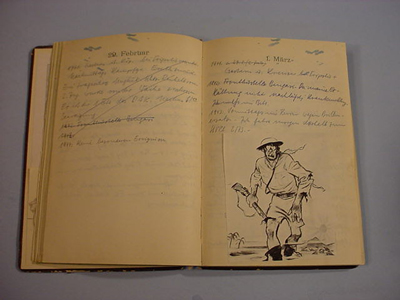
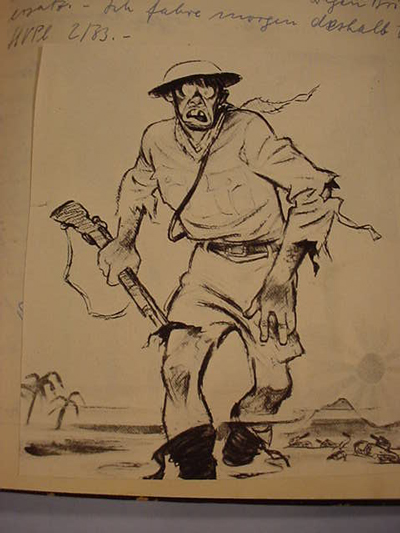
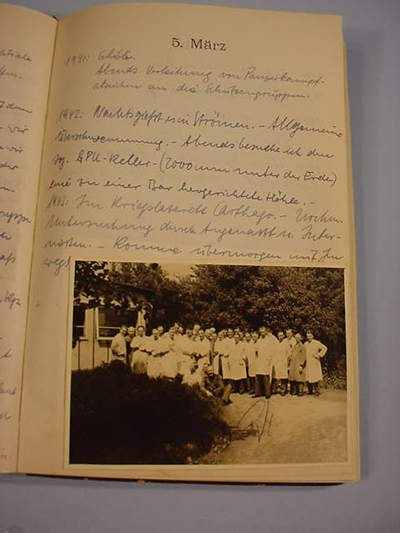
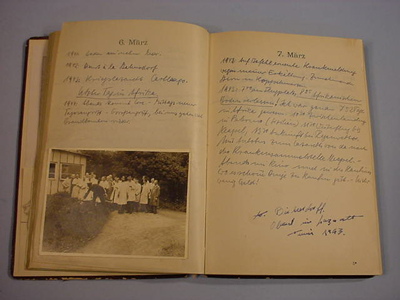
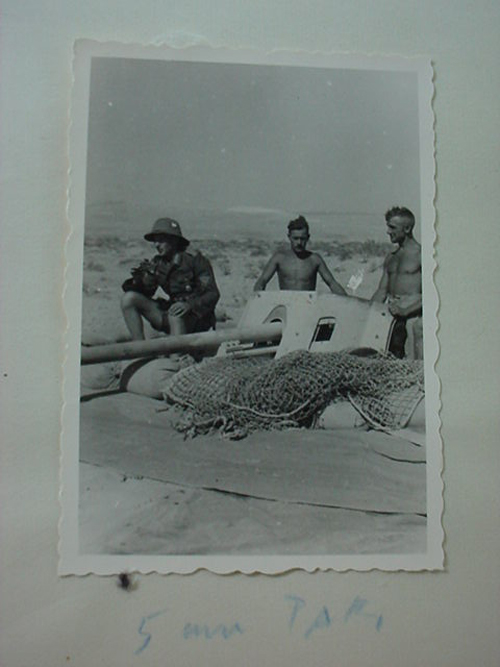
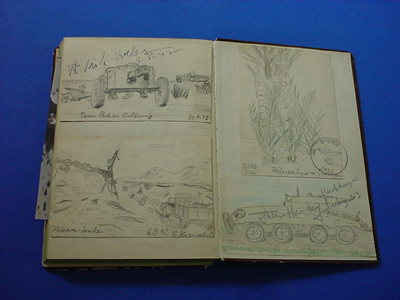
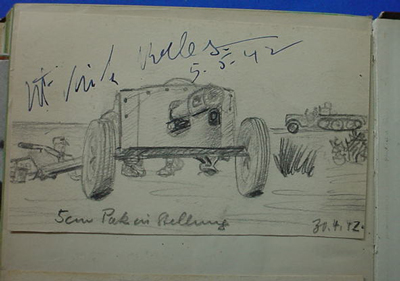
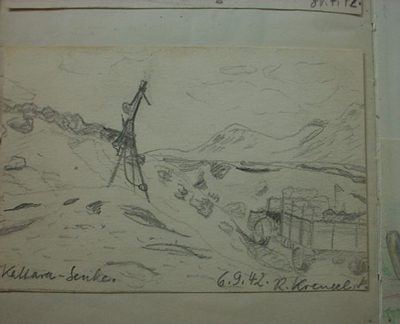
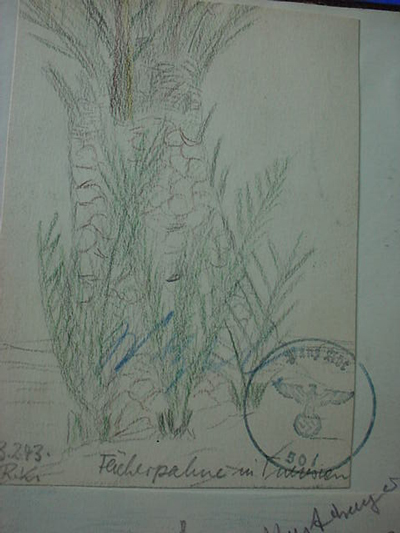
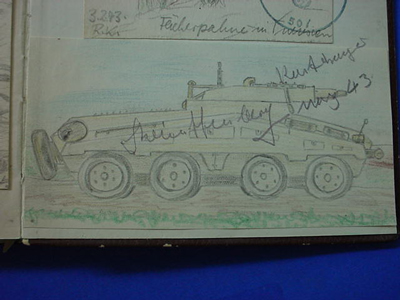
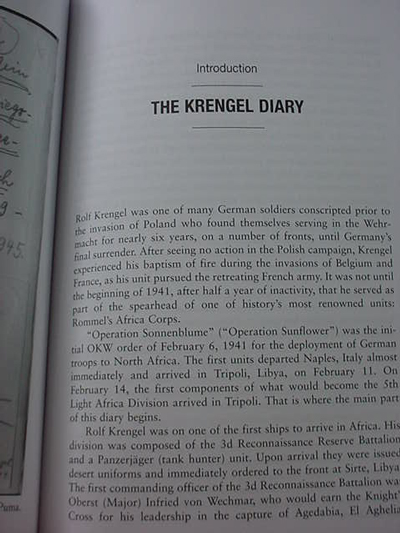
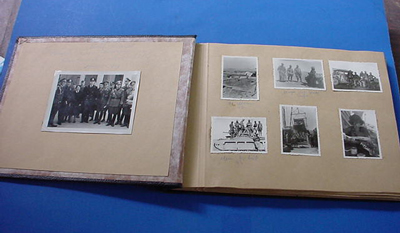
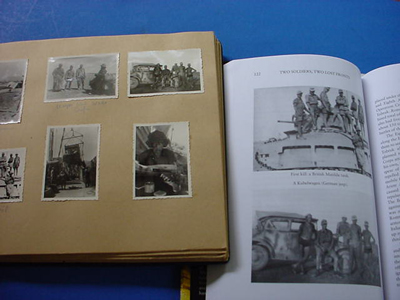
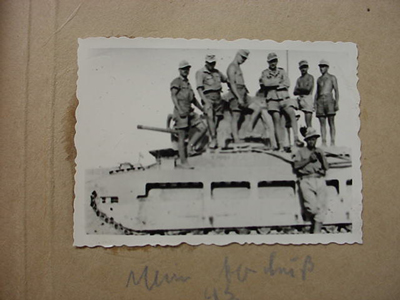
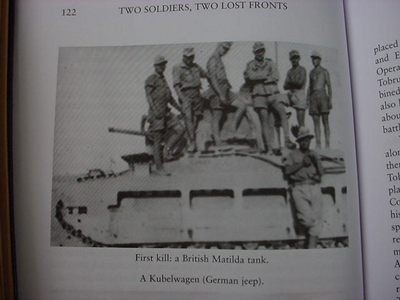
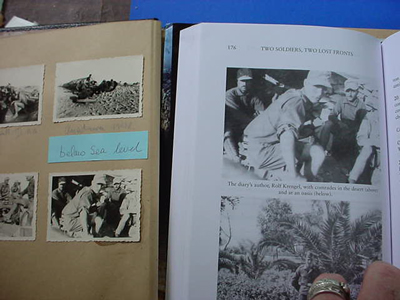
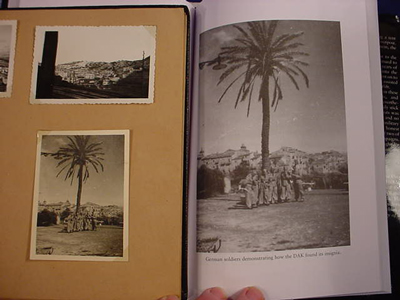
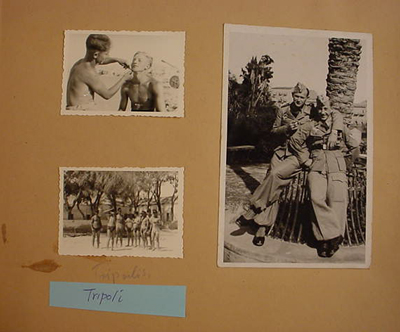
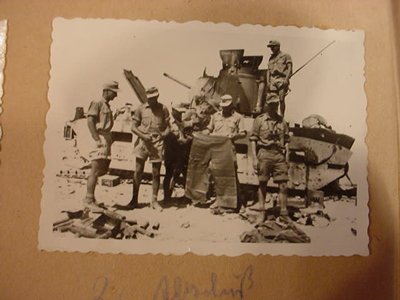
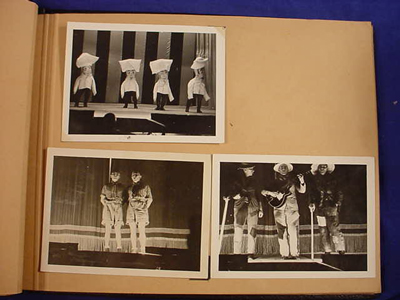
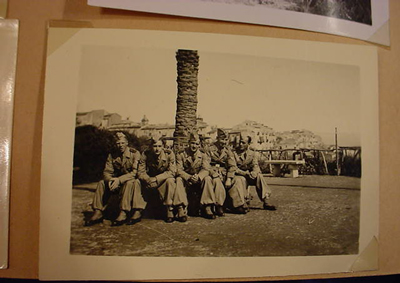
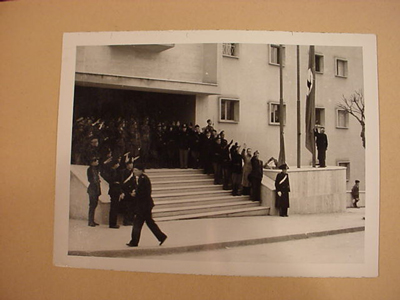
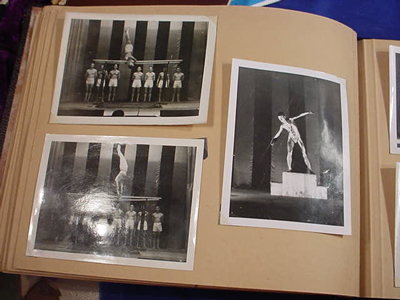
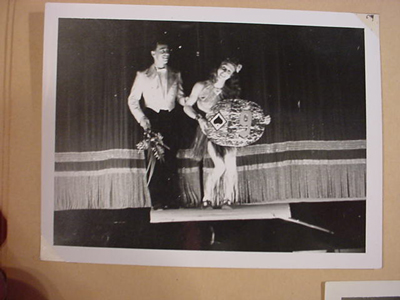
DESCRIPTION: Yes, fabulous and yet that may be an understatement. The diary and photo album were the property of Rolf Krengel Afrika Korps and the photo album is also from him. It is the saga of a brave and true soldier of the Reich. The diary is the actual original handwritten copy. It starts with the beginning of the war and ends shortly after the Occupation. Serving primarily in North Africa, Krengel recounts with keen insight and now and then flashes of humor the day-to-day challenges of the Africa Corps in the desert battle and the lines are seldom clearly drawn. The narrative reveals an ad hoc campaign in which the average soldier never knew who had the upper hand. During one of the swirling battles in the desert, Krengel found himself sharing a tent with Field Marshal Rommel himself at a forward outpost. However, after the Battle of El Alamein, the cards of fate seemed clear. Evacuated back to Germany prior to the unfortunate collapse in Africa, Krengel continued to keep his journal during the last two years of the war, providing further insight into the final throes of the N.S. regime. He went on to become a successful economist and assisted the Allies with the Post-war Berlin airlift. Here is a first hand account found in the pages of this diary. Here are overviews, illustrations, and timelines with -- get this! -- a book published in 2009 written by Professor Don Gregory of the University of Alabama and Wilhelm Reinhard Gehlen who was born in Germany and was in the “Deutsches Jungvolk” the equivalent of the American Cub Scouts in Hitler’s Germany. After WWII ‘Willi’ joined the French Foreign Legion and served in Indo-China and North Africa. These two authors previously collaborated on Mr. Gehlen's acclaimed memoir, “Jungvolk the Story of a Boy Defending Hitler’s Third Reich.” Now, here is the fabulous part. Not only do we have the actual Krengel Diary and photo album but what goes with it is the actual book that was published that gives the entire translation for the diary day by day, while Krengel was with the 3rd Reconnaissance Battalion. Then the 5th Light Division/21st Panzer Division German Africa Corps/Panzer Army Africa. A great and typical narrative of the Infantry soldier who fought bravely for Fuhrer and Fatherland. The book by Gregory and Gehlen is called Two Soldiers, Two Lost Fronts, subtitled German war diaries of the Stalingrad and North Africa campaigns. Actually, it describes the service of both Rolf Krengel and another German soldier whose diary R. Gehlen decided to keep at this point. This other soldier must at this point be considered the “unknown” warrior as he as author of the diary did not see fit to include his name but if you read the account of his war experiences on the Eastern Front it is just as exciting as Krengel’s accounts. That soldier was a member of the 2nd Batt. 201st Panzer Regiment 23rd Panzer Corps Army Group A. We think this diary and album of R. Krengel is practically unique in that here you not only have the original documentation, but a book in English that is written by a learned professor and a battle experienced veteran of the Wehrmacht telling it as it was directly from the account of this A.K. soldier. We know of no other instance that something as personal and historically important as this group is being offered. The diary measures 8 x 5 inches and ½ inch thick. It contains page after page of hand written accounts by Krengel and even several drawings that he actually sketched. One in particular is my favorite showing an artistic conception of the face of the British enemy as Krengel envisioned it. A familiar face to Scottish, Irish, American Revolutionists and others who faced the cruelty of the British Grenadiers. I believe it was the Iron Duke (Wellington) who said of his soldiers at Waterloo “I don’t know if they frighten the enemy, but they scare the Hell out of me.” There are several photographs pasted on the pages as well. The photo album measures about 12 x 9 and has about 134 photos in it. Most of the photos are of Africa Corp Personal, aircraft officers, stage presentations at Command HQ, Artillery, Sport, and some neat photos of Krengel himself. Many of the actual pictures in the album are copied into the book and explained therein. The book by Gregory and Gehlen is 262 pages long with many pictures of German and Italian Axis soldiers and officials. All the dates and summaries in the book match the dates of the entries in the diary. What a combination! -- diary, album, and new book that traces it all for the reader. Please understand just how unique this truly is! The authors are to be highly commended for putting all of this together and the collector or archivist who decides to purchase this marvelous assemblage will be fortunate indeed. When it comes to provenance on articles of military history we are often asked what the provonance is. And our usual answer is that the inanimate objects cannot speak for themselves unfortunately. But here is the exception surely because this diary and album does in fact speak clearly and distinctly through the explanations and revelations of these two gifted writers in the present and the A.K. soldier Krengel speaks clearly and lucidly from the past. PRICE: SOLD |
 |
 |
 |
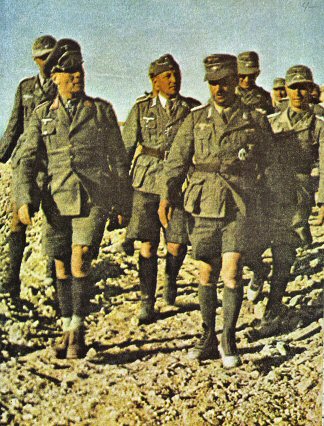
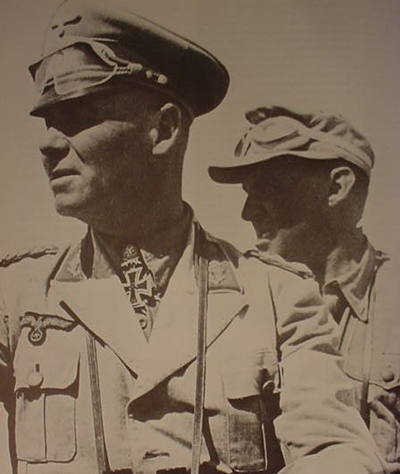
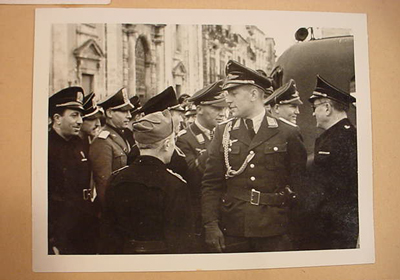
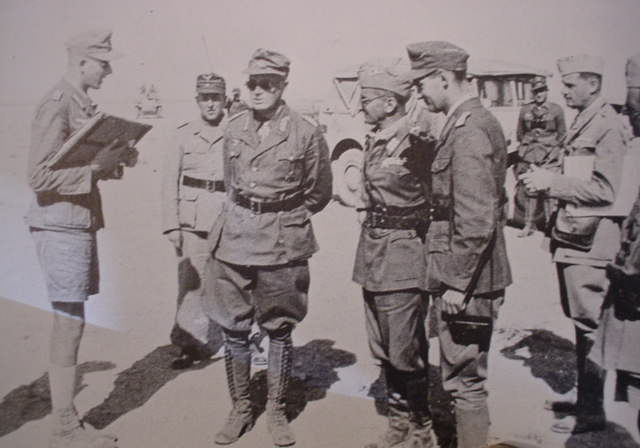
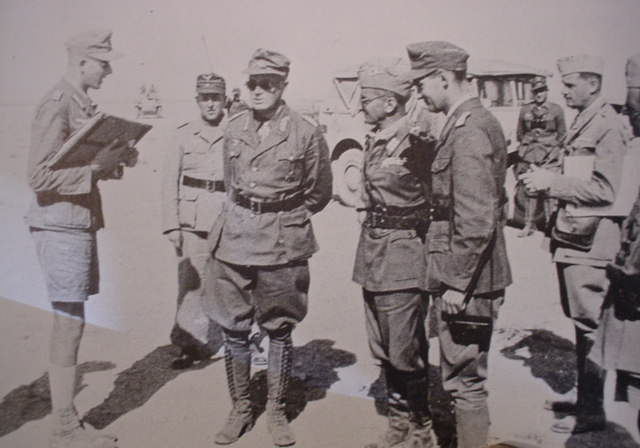
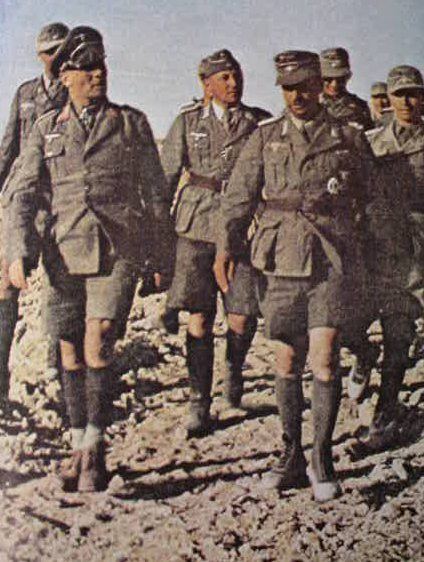
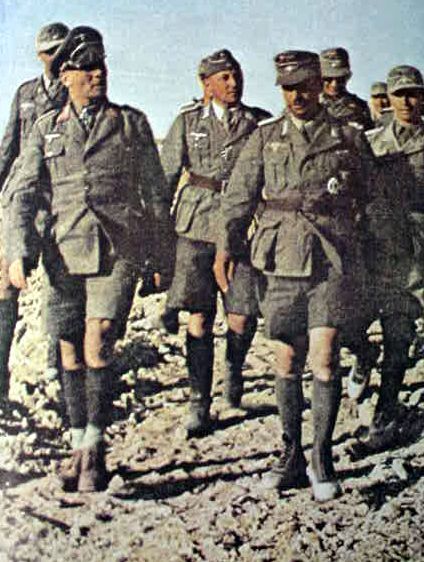
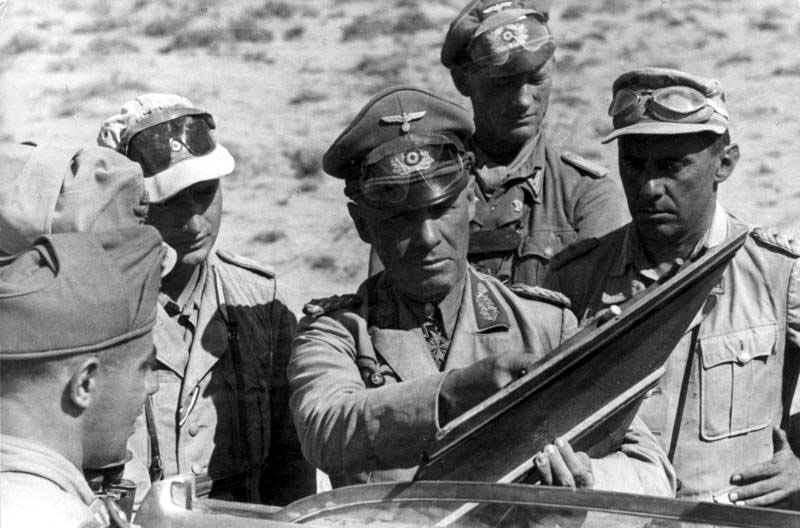
 Rommel with his officers |
 |
 |
 |
 |
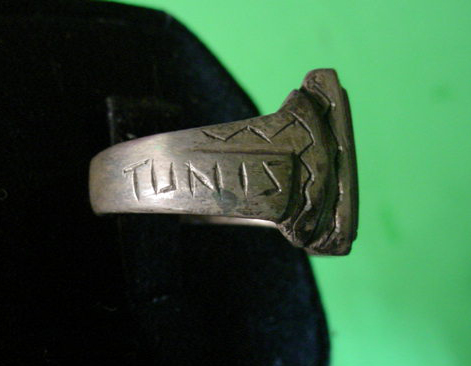
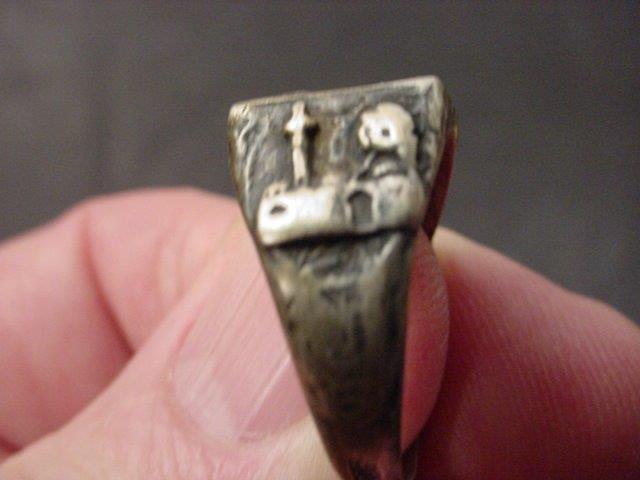
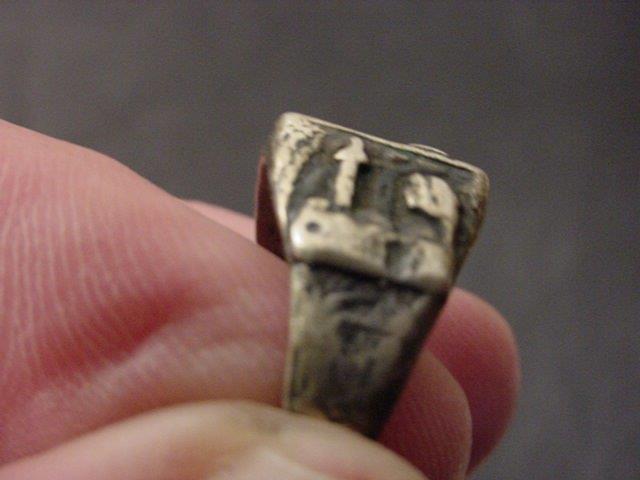
An Africa Corps Ring (Item AFRICA 1-16) |
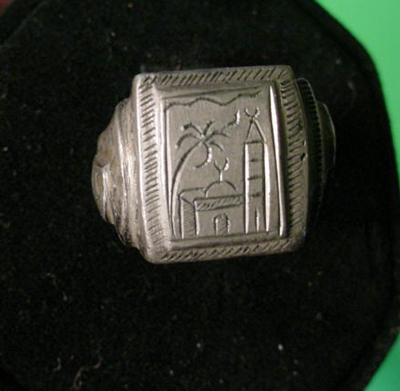
DESCRIPTION: Here is a genuine ring of the famed Afrika Korps (DAK); these rings were crudely made by native Moroccans and sold to the soldiers of the Africa Crops as souvenirs. This one like so many others shows the palm tree with a Muslim Mosque and on its one side is the date 1943 and on the other side is Tunis. The DAK was the German expeditionary force in Libya and Tunisia (Tunis). The rings sometime have the swastika impressed against the palm tree. This one does not. But it defiantly is a genuine AK ring. PRICE: SOLD |
 |
 |
 |
 |
 |
 |
 |
 |
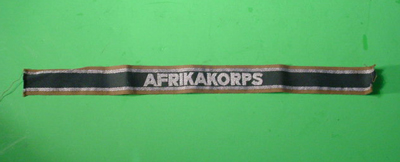
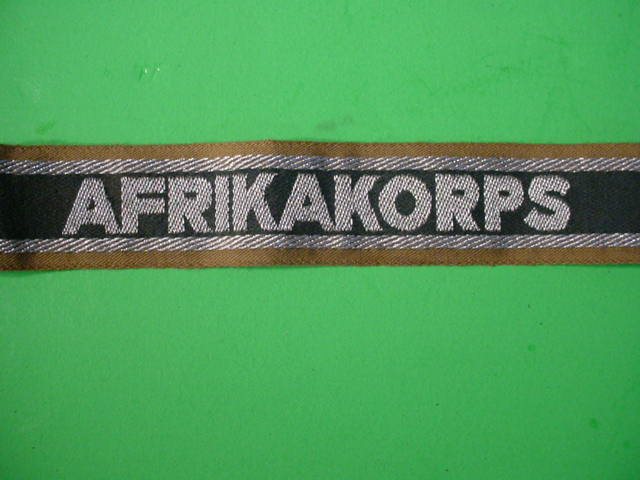
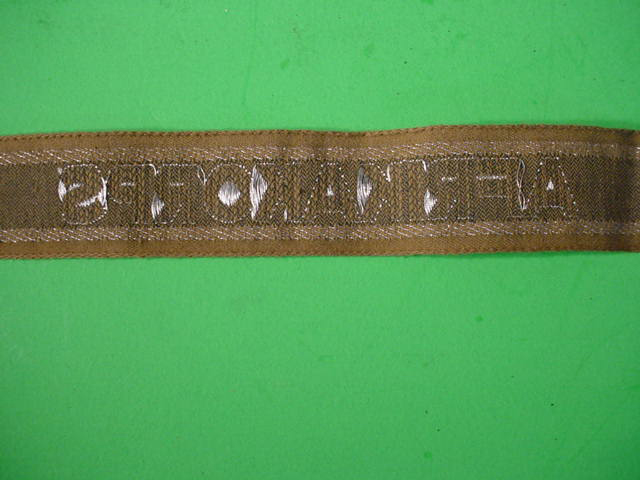
Original Sleeve Band from the Afrika Korps (Item AFRICA 1-17) |
DESCRIPTION: Here is a full length original sleeve title from the German Africa corps (A.K.) -- absolutely original! Not one of the fakes that are floating around. Beautiful condition (“minty”!) 15 inches long, 1/14 inch wide. PRICE: $295.00 |
|
|
|
|
|
|

|
|
|
|

|
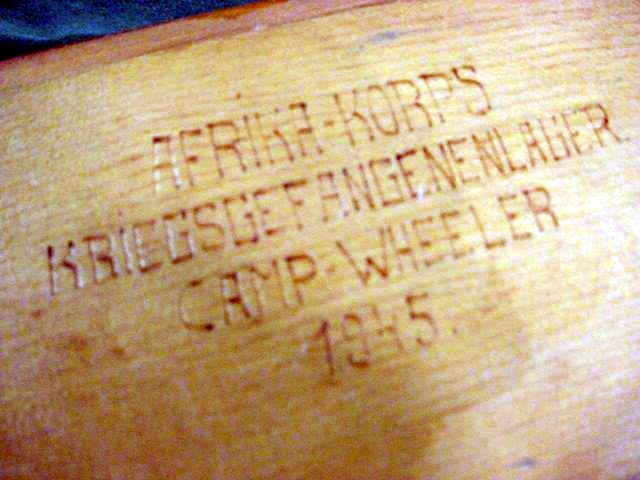
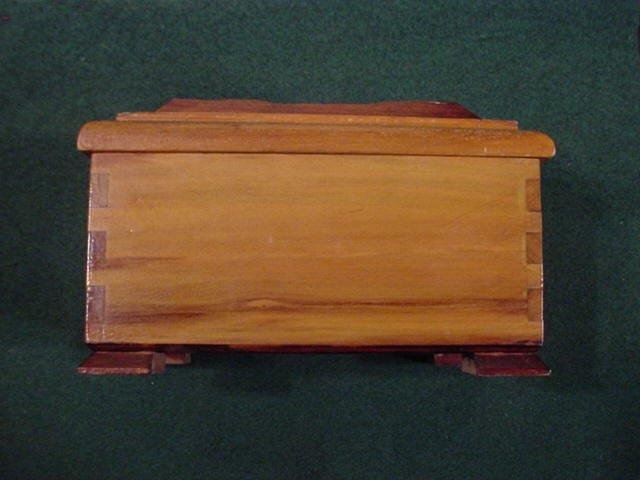
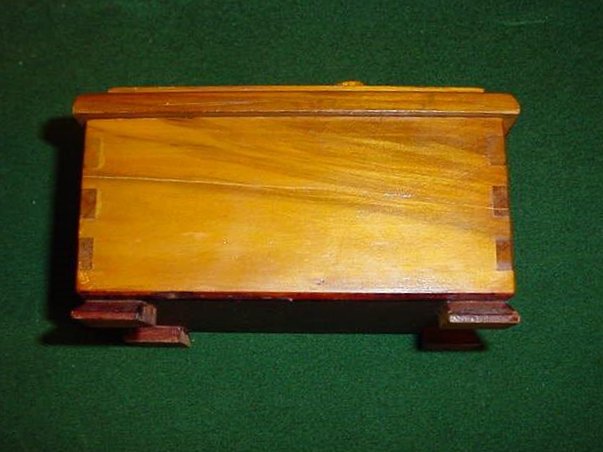
Wooden Box Made by a German Prisoner in a U.S. POW Camp (Item AFRICA 1-19) |
|
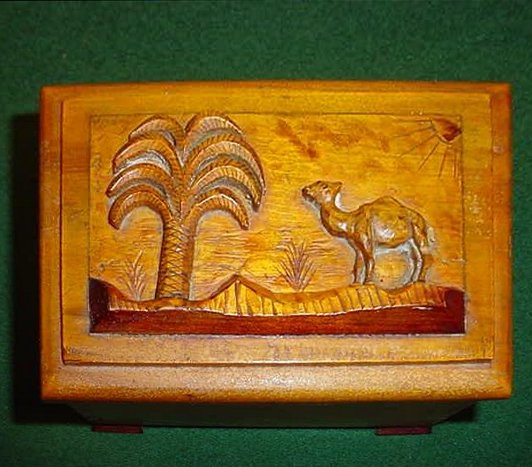
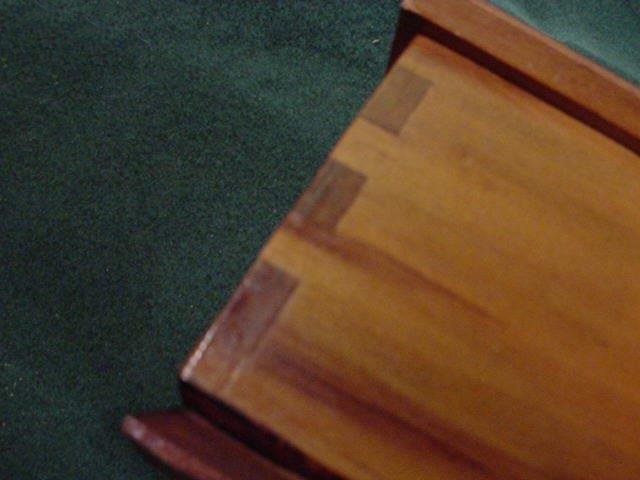
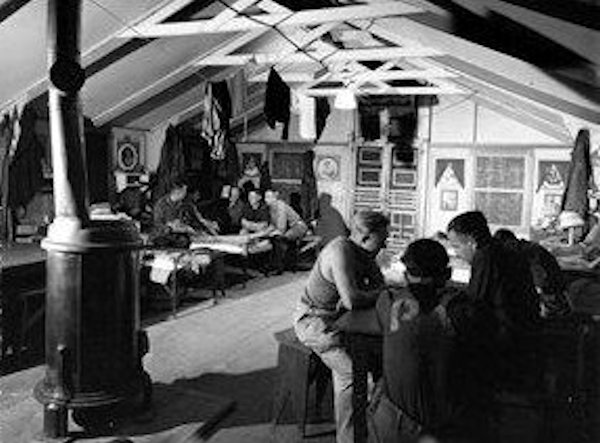
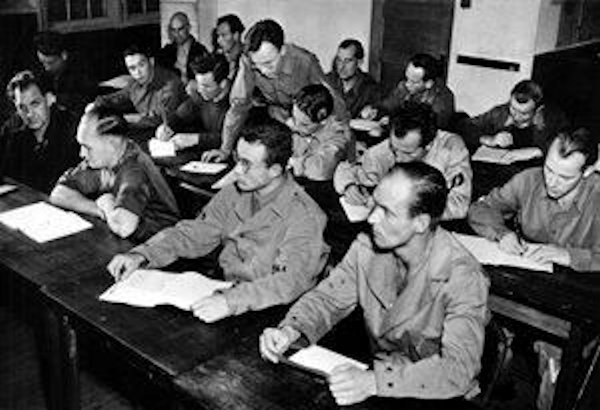
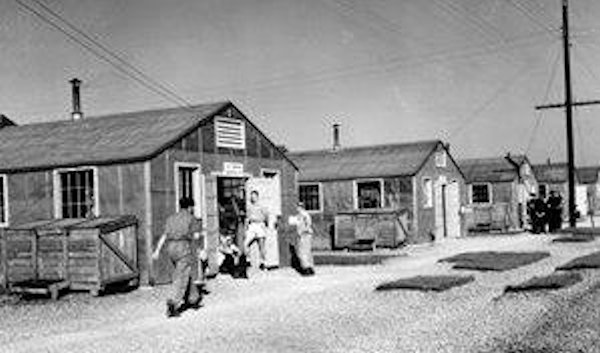
DESCRIPTION: This is a nicely constructed little whatnot box that was crafted in the workshop of POW Camp Wheeler that was situated in Macon, Georgia. The number of German POWs interned at the camp was about 4,700. Some prisoners worked as mechanics, typewriter experts, and tailors, but most worked as laborers in the sawmill and farm areas. They were allowed wages at a rate of about eighty cents a day. Among the prisoners were about 2,000 Afrikakorps soldiers. Many of these men were artisans and they made many articles from wood and metal constructed from materials purloined from various worksites—a common practice as guards looked the other way. The POWs that worked in the fields for local farmers were happiest and the farmers loved them to death because they were such good workers. This little box was made by one of the AK prisoners and it does show some crackerjack carpentry especially being constructed in such primitive circumstances. The joinery is superb and everything fits together like a glove. The removable lid has a neat little scene all in hand carving showing a palm tree and camel and inside this lid the artist wrote “Afrika-Korps Kriegsgefangenenlager Camp Wheeler 1945.” The little box measures 6 1/2 x 4 1/4 inches across the top and 3 ½ inches deep. It appears to be constructed from cherry wood or perhaps pine. Here is a true memento of the unfortunate fratricidal war between two white Christian nations. In the future “let there be no more brother wars.”
PRICE: SOLD |
|
|
|
|
|
|
|
|
|
Native-Made Ring of the Afrikakorps (Item AFRICA 1-20) |
|
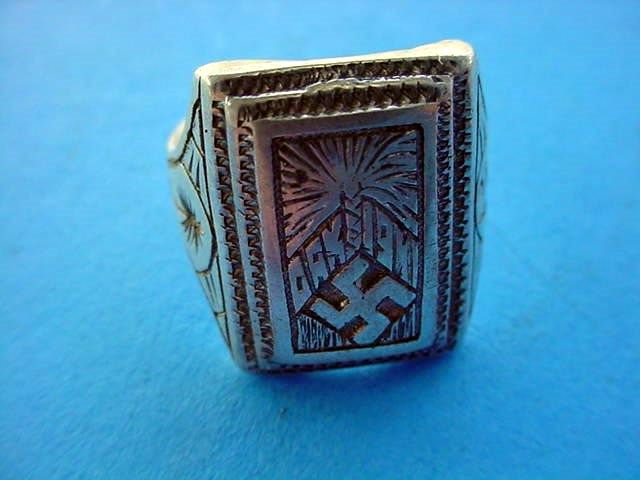
DESCRIPTION: Here is another of the native-made/Moroccan-made pieces. These are just about all different having been made with primitive tools. Go to Item AFRICA 1-11 and see the detailed explanation and you can know that another one similar to this one is as described there, but naturally with a different design, but practically all of them have the “DAK” (Deutsches Afrikakorps) and practically always the palm tree.
PRICE: SOLD |
|
|
|
|
|
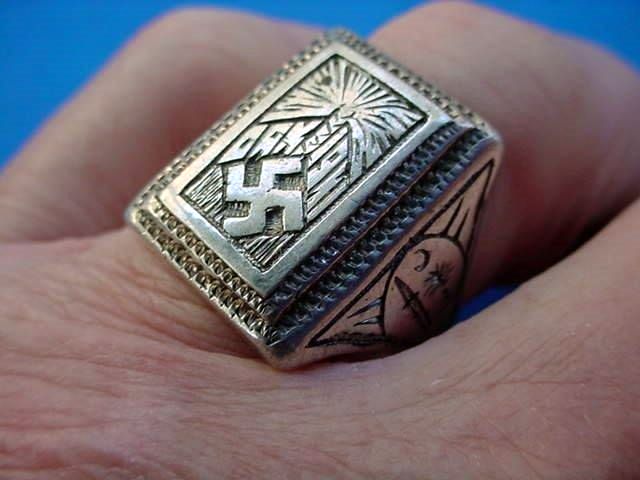
|
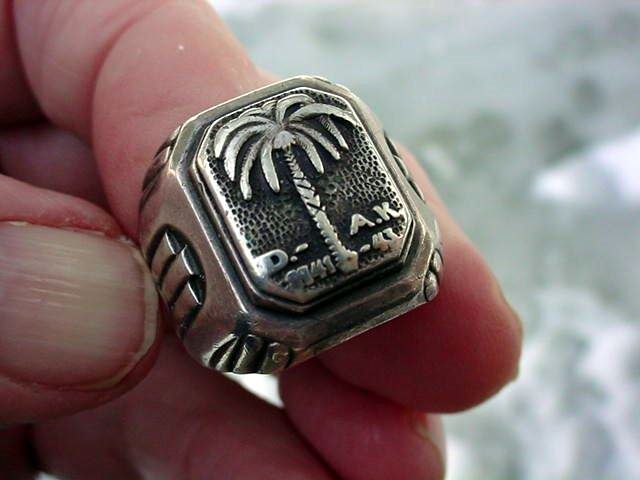
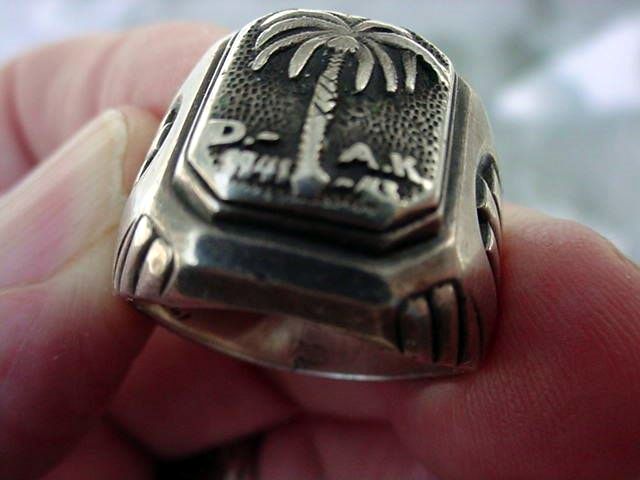
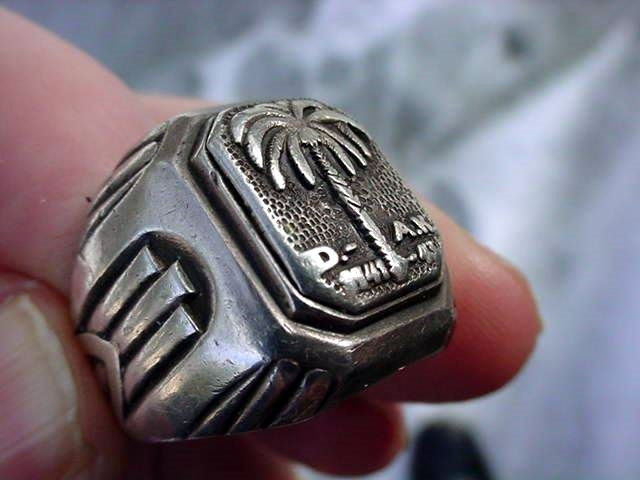
Ring of the Africa Corps (Item AFRICA 1-21) |
|
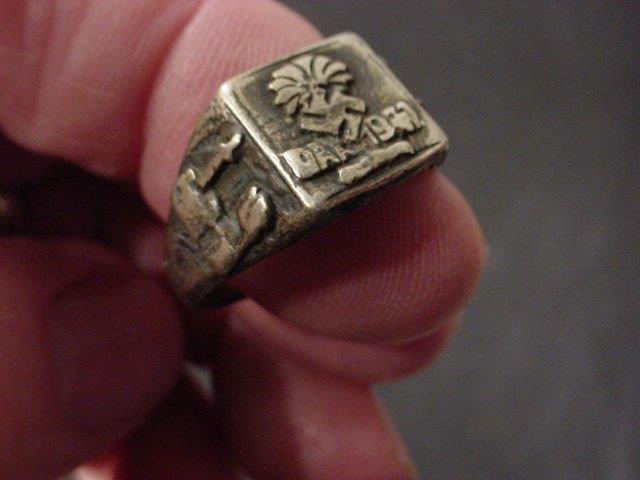
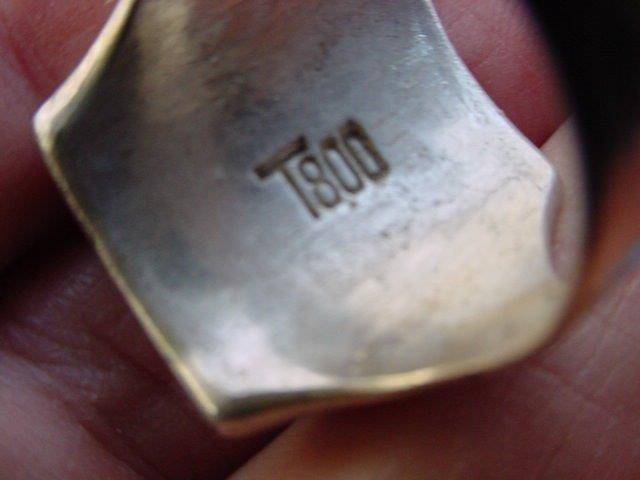
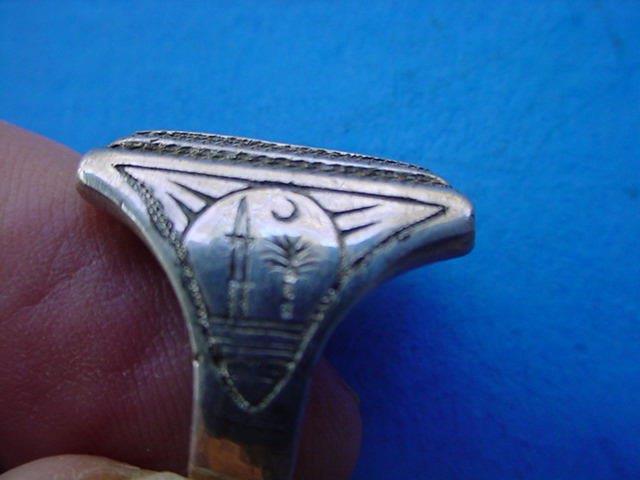
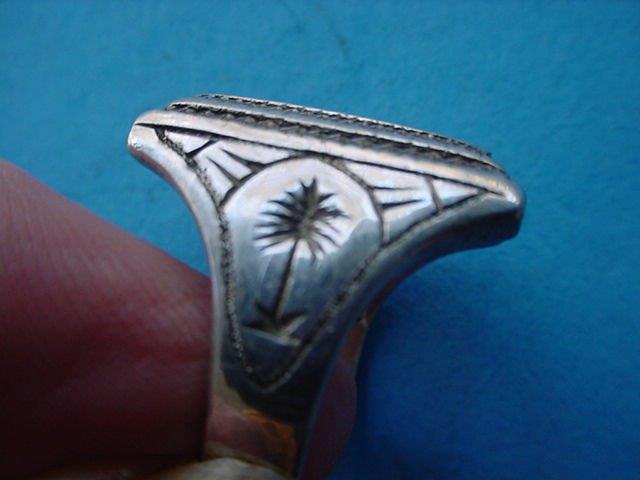
DESCRIPTION: Here is another extra-fine finger ring of the A.K. (Afrikakorps). It seems that the ones actually made by native Arabic people and sold to AK soldiers were unique and seldom do we ever see two alike. This is really a magnificent one in our considered opinion. It is art deco personified in its design. The face or top of it is raised so to speak and has a very stylistic palm tree with “DAK 1941” (slanted) in style and under this is the swastika. All of this is in high-relief lettering; obviously created by a trained jeweler and engraver. On the left side (shank) is a panel with another palm tree and on the right side the crescent moon, a mosque tower, and yet another palm tree. The ring is in genuine 800 silver and so marked inside.
These native craftsmen knew that their German customers would want to see that the rings were in genuine silver and most of them used the German silver mark in their artwork. The size is about 10 ¼; maybe slightly larger. All in all, this is very fine and beautiful ring with important historical value.
PRICE: SOLD |
|
|
|
|
|
|
|
|
|
|
|
|
|
Best Africa Corps Ring Ever Found! (Item AFRICA 1-22) |
|
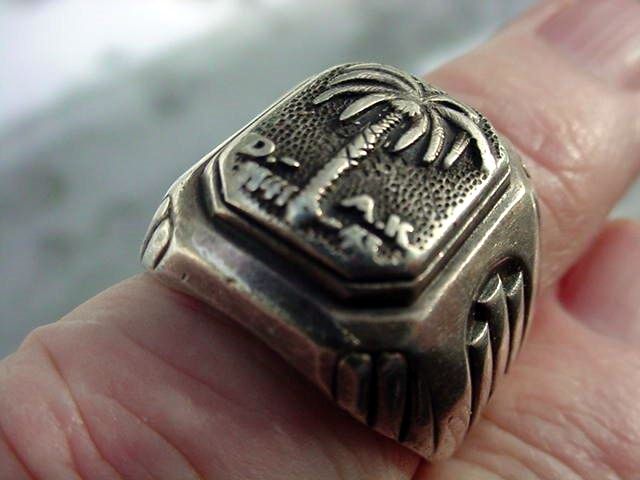
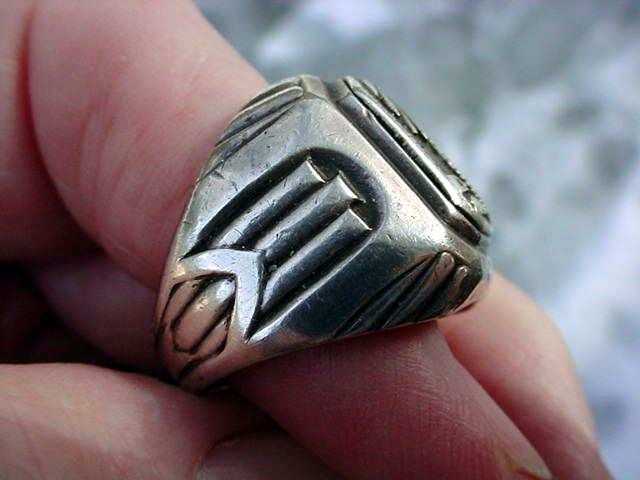
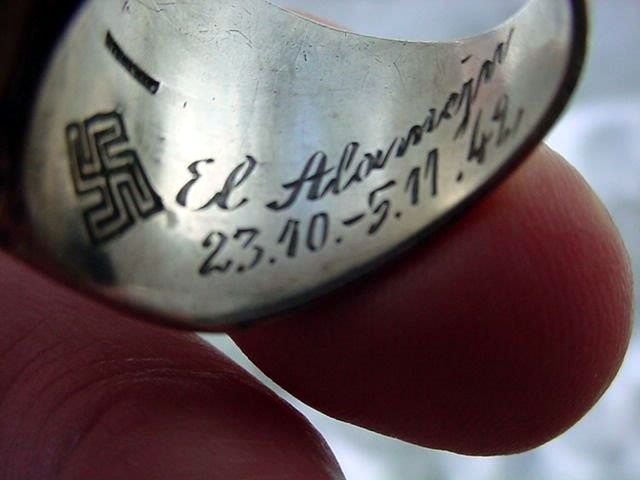
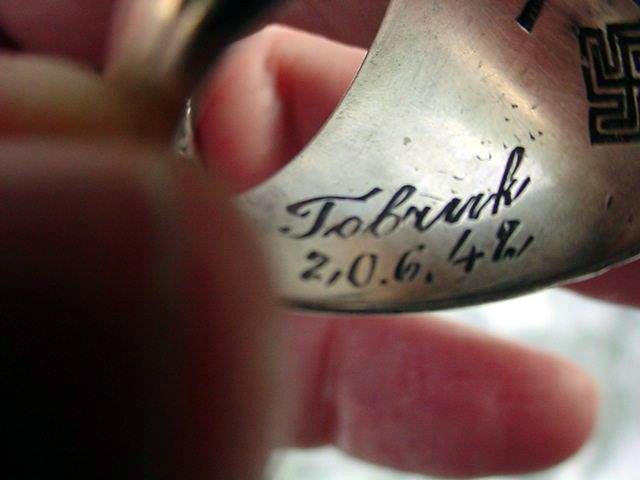
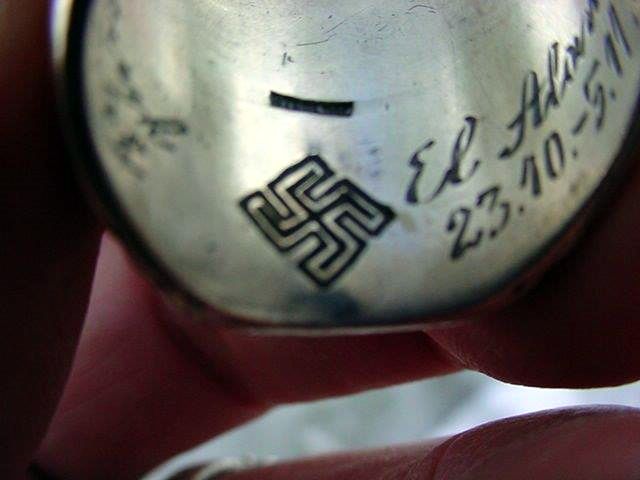
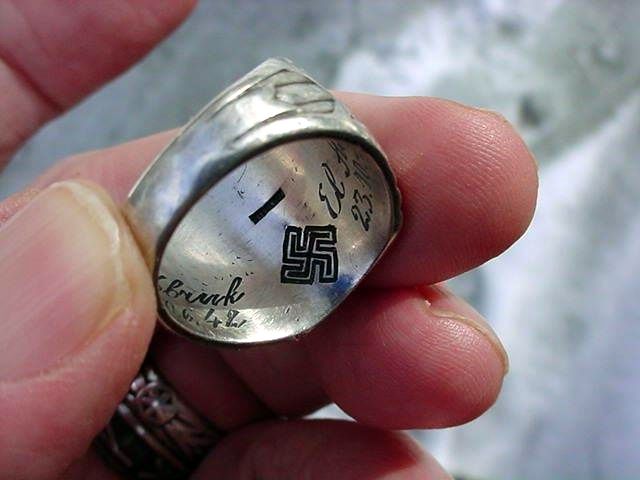
DESCRIPTION: Here is a honey of a Deutsches Afrikakorps ring. This is completely unique and we would wager that it belonged to an officer in the A.K. The quality is superb. The size is 9 1/2 and it is absolutely one of a kind. The central theme is the traditional palm tree raised on a silver plaque and below the fronds are the initials “D.-A.K.” and under this the dates; they are quite blurred, but appear to read “1941-43.” (From what? From where?!). This ring was definitely worn by the elite officer who proudly wore it. The sides or shank of the ring have deeply cast designs that are 100-percent art deco. As to the theme motif of the ring, dead center in the inside of the ring can be seen a Third Reich swastika in the particular design as used by the Luftwaffe on the tail section of its aircraft. Above this is possibly a word that was obliterated, maybe an artist name in Arabic? These rings were after all made by hand by native craftsmen in North Africa and sold to the German soldiers. This one must have been made by a very superior artisan indeed! Inside from side to side can see the engraved names and dates of the major battles of the desert war along with the dates. The name “Tobruck” is accompanied with the numerals “2,0.6.42.” This could be the date this officer received some award for his heroic action for the 241 days at the Siege of Tobruck in 1941. The other side has the words “El Alame[i]n” and the numerals (dates?) “23.10.-5.11.42.” The ring is heavy in genuine silver and as you can see in our images, it’s a real beauty! This the absolute best A.K. ring ever to be found!
PRICE: SOLD |
|
|||||||||||
|
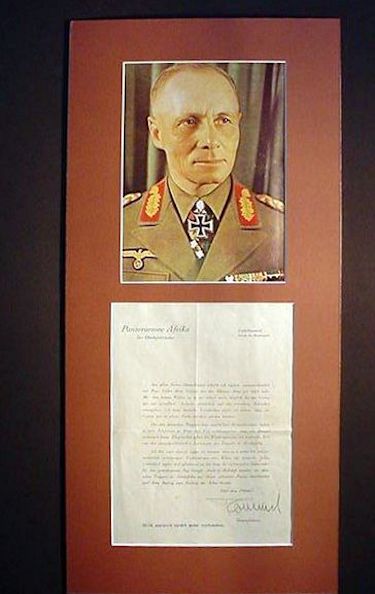
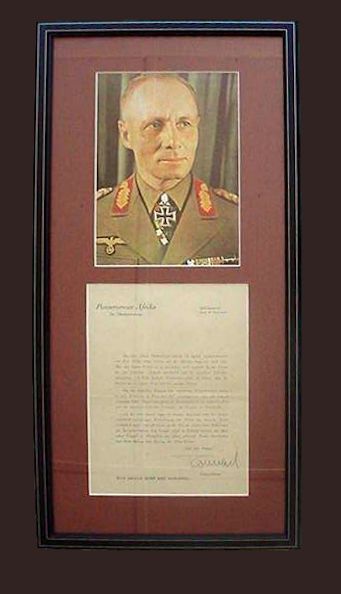
Signature of Field Marshal Erwin Rommel on Panzerarmee Afrika Stationary (Item AFRICA 1-23; WEHR 34-1; PERS 5-28) |
|||||||||||
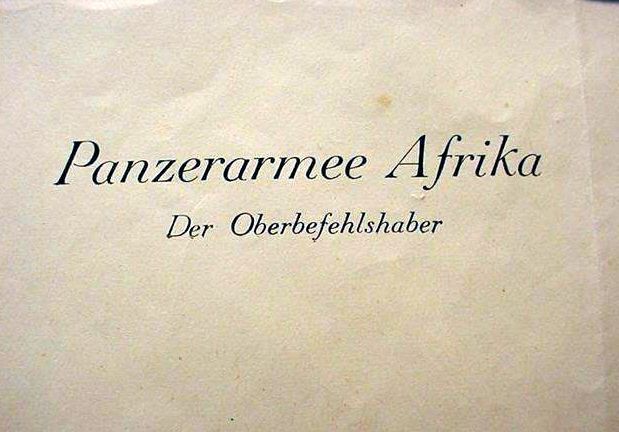
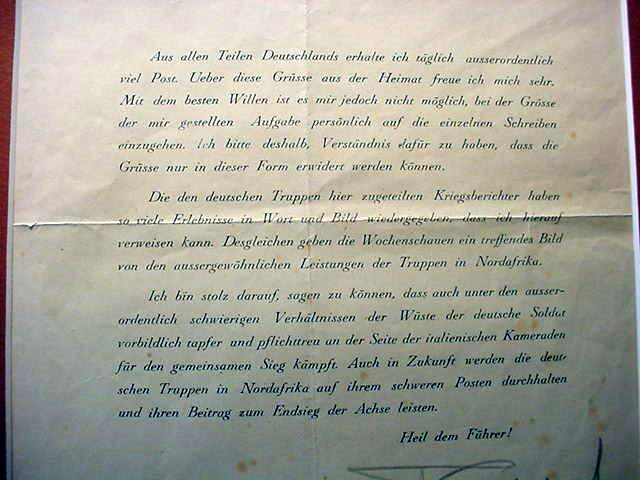
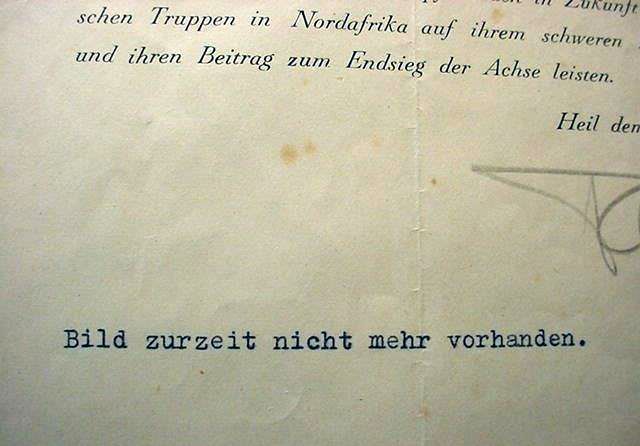
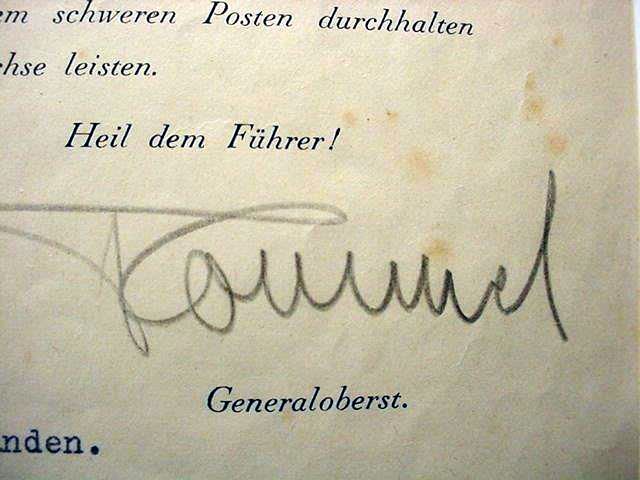
| DESCRIPTION: Here is a great Erwin Rommel letter and signature. Here was the most-famed German WWII leader whose valiant Africa Corps threw back repeated British and American assaults in North Africa. Later, he commanded the German troops at Normandy. He was said to be involved in the Hitler bomb plot of 1944, but very probably, he was not. The information we continually see on this comes from the “court historians” so therefore it is shady and dodgy, at the minimum. Rommel was loyal to Adolf Hitler and the National Socialist movement. Most Wehrmacht generals were never members of the Party, but Rommel certainly was and was proud to be. He had connections to the Hitler Youth movement as well. He was a patriotic German and thus he felt it was his duty to affiliate with the political apparatus of his country and he felt this to be the right direction for Europe in those crucial times. He was one of the most beloved officers to the thinking and the hearts of the German people. Even in today’s liberal Germany where traitors are lauded and heroes vilified, the name Rommel is respected and even revered. This document is an 8 x 11-inch form letter that is signed in hand by Generaloberst Rommel. The message is printed on official stationary headed with the words “Panzerarmee Afrika Der Oberbefelshaber.” The subject is a letter to all of his supporters and admirers thanking them for their letters. In part, it reads: “. . . from all parts of Germany I receive daily an extraordinary amount of mail. With the best of intentions, it is not possible for me to personally handle the magnitude of the task of answering each letter. I ask, therefore, for your understanding that your greetings can be answered in this form. In newsreels, you will find a striking picture of the unusual service given by the troops in North Africa. I am proud to say that even under extremely difficult desert conditions, the German soldier fights bravely and dutifully alongside our Italian comrades for our common victory. In the future, the German troops in North Africa will preserve in their heavy efforts and contribute to the final victory of the Axis.” The letter is boldly signed at the conclusion in pencil. There are folds and slight foxing and chipping at the folded-over left edge; otherwise, it’s in very good condition and nicely framed with a stunning picture of the “Desert Fox.” Rommel's signatures are extremely rare.
PRICE: SOLD |


|
||||
|
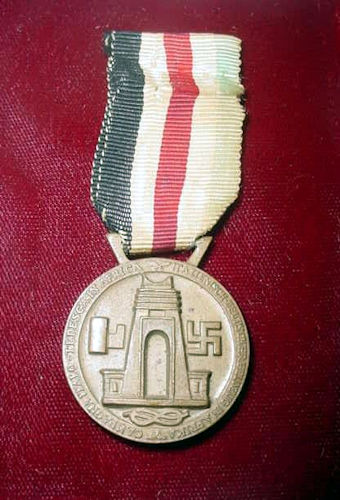
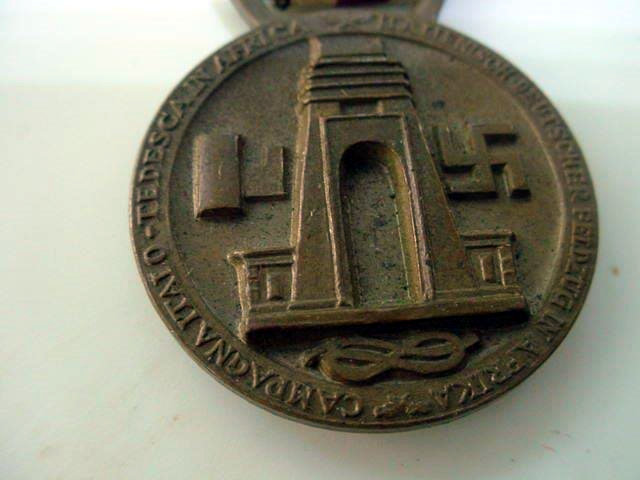
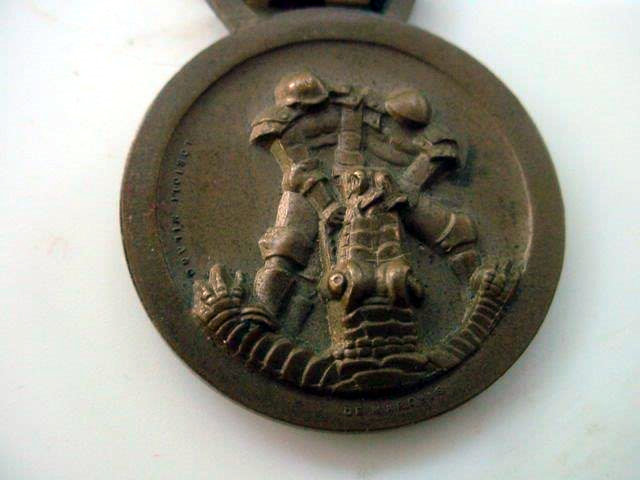
German-Italian Medal for the North African Campaign (Item AFRICA 1-24; I-FAS ) |
||||
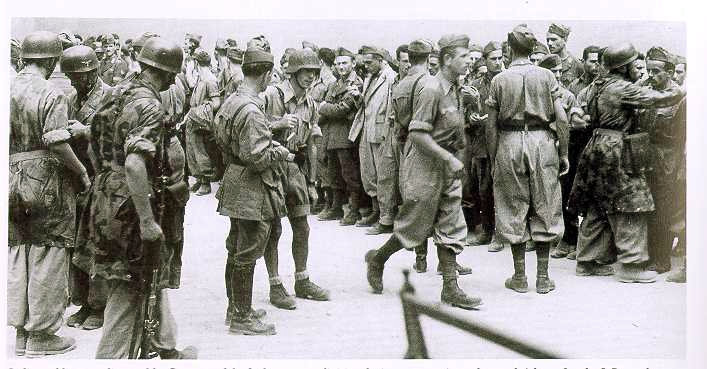
| DESCRIPTION: This medal was presented to soldiers who participated in the combined campaign of German and Italian soldiers in North Africa. The front of the medal shows the Arco dei Fileni, the royal unit of the House of Savoy, a fasces, and a swastika. Roughly 32mm in diameter, the die-struck bronze medal features on the back two high-relief, stylized gladiators representing Germany and Italy. They are slaying a Nile crocodile representing Great Britain. The outer border has embossed script in both German and Italian that says: “Italian-German Campaign in Africa.” The obverse of the medal has the embossed designer and manufacturer’s names at the bottom. The medal comes with a multicolored ribbon with the colors of N.S. Germany and Fascist Italy. The ribbon is intact, but honorably battle worn. That is how most of the collectors like to see them, isn’t it? This is a good, historically important piece.
PRICE: $240.00 |
|
||||||
|
Special Africa Corps Ring (VERY Special!) (Item AFRICA 1-25 ) |
||||||
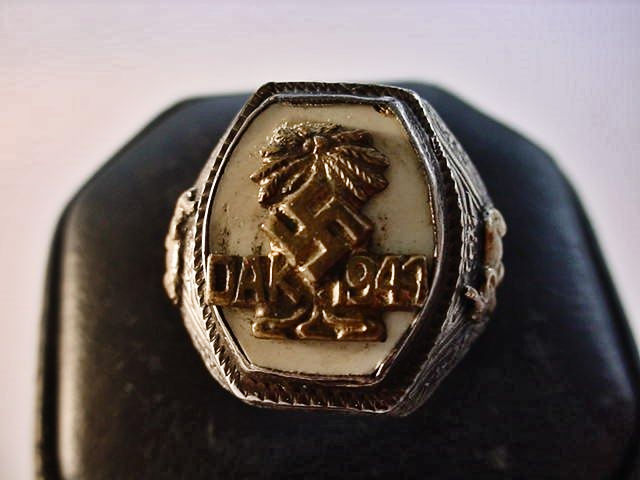
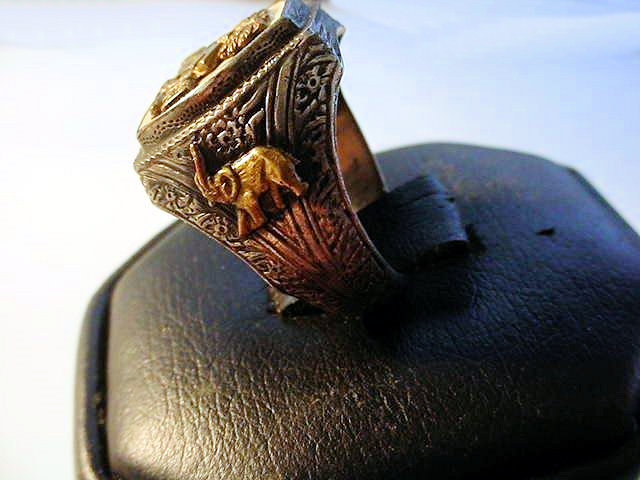
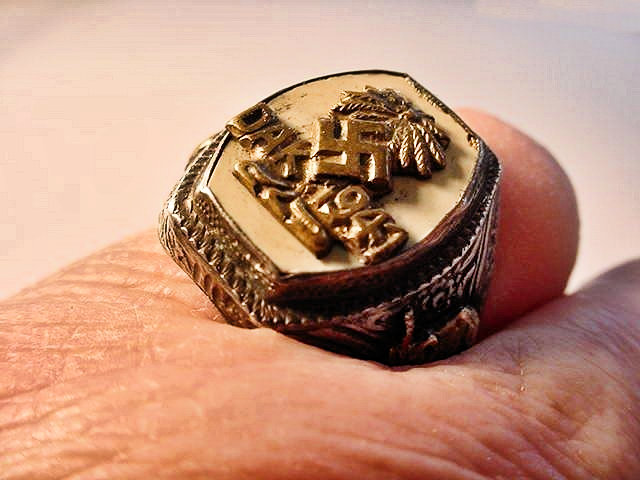
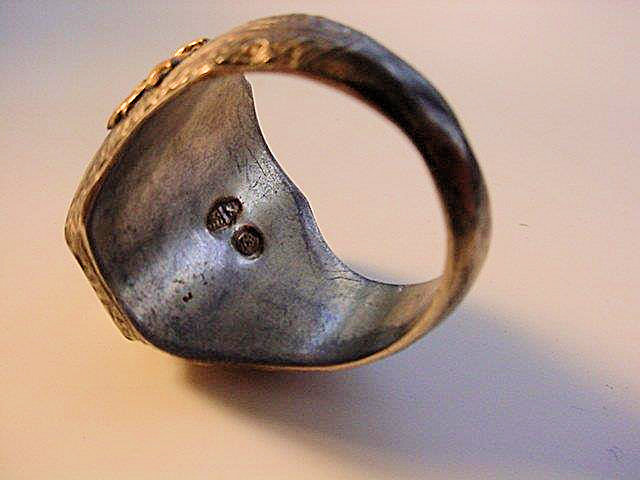
| DESCRIPTION: If you look at the ring on this page we called the “Best Africa Corps Ring Ever Found!”—at the time, it was—we just recently found another that is definitely equal, if not better, yet! Almost all Afrika Korps rings have a similar pattern, but now and then we run across a very special one like the one above at AFRICA 1-22. I have noted that these rings were made by Arabic craftsmen and traded or sold by the native jewelers to the soldiers of the Afrika Korps. We have had several and they are always unique (no two alike). In most cases they show a mosque, a camel, a palm tree . . . but this one is the first I have seen featuring “elephants” on both sides of the ring’s body (shank). Behind the pachyderms, you can see a pattern of Islamic design. The top is highly unusual in that it has a white-enamel insert that is a background for a palm tree fronted by a swastika that surmounts the initials “DAK” (Deutsches Afrikakorps) and the date “1941.” We suspect that all of this is in 10-karat gold. Inside the ring there are what seem to be two logos in gold that without a doubt must be the signature marks of the fine jeweler who created the piece. The ring is in size 10 and the parts not in gold are certainly fine silver. A better example you could never find—UNIQUE!.
PRICE: SOLD |


|
||
|
Africa Corps Malaria Tablet Canister (Item AFRICA 1-26) |
||
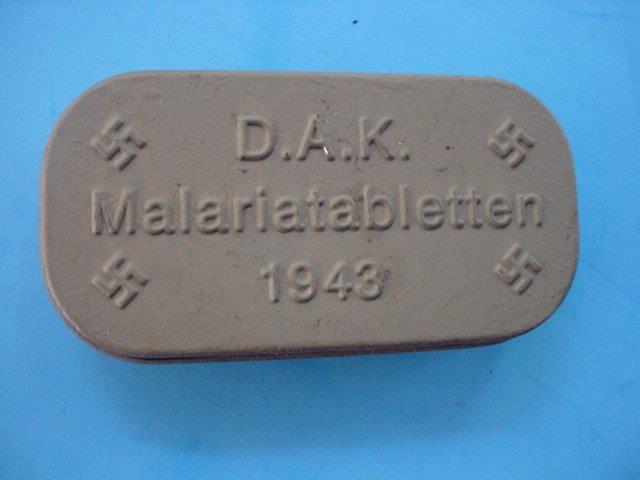
| DESCRIPTION: This may not be the most expensive item we ever might handle, but it might be the rarest. It’s a little, oblong tin canister about 3 inches long and 1½ inches wide that was distributed in the campaign in Africa to ward of malaria. It’s stamped on the tin in raised letters: “D.A.K.” which stands for Deutsches Afrikakorps, and it says “Malariatabletten 1943” and there are swastikas in all four corners. It’s the best one of these we have ever seen. Usually they came in cardboard packaging.
PRICE: SOLD |

|
|||||||
|
Africa Corps (DAK) Pith Helmet Shields (Item AFRICA 1-27) |
|||||||
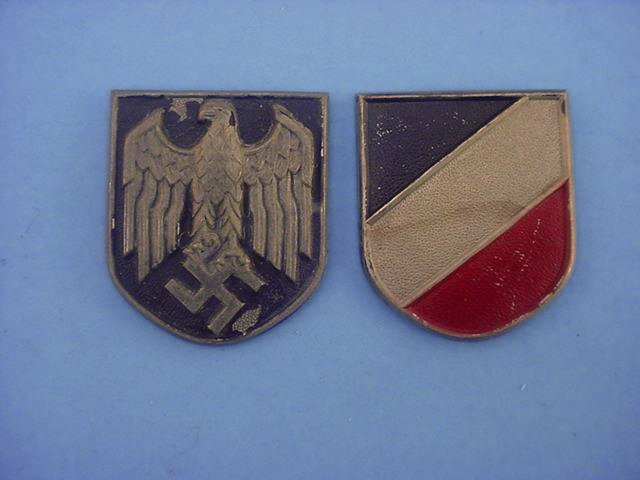
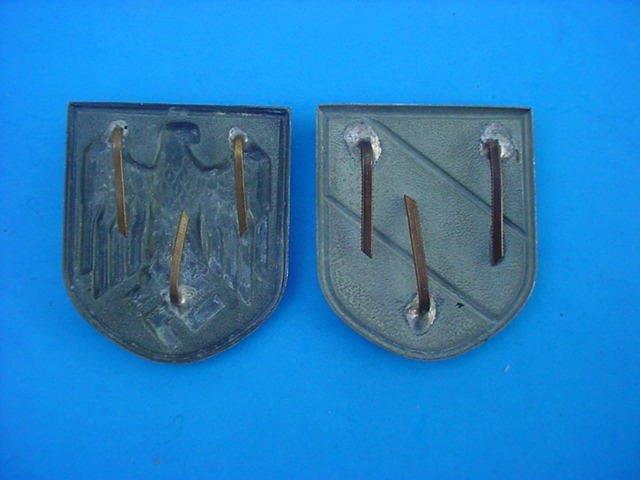
| DESCRIPTION: What’s different? Well, unlike others that you will see on the web, these are original! Yes, there is a little color loss on the eagle shield, but they are original! The back pin retainers are intact and ready for installation on a pith helmet or they make a great display unattached. There are not many around anymore. The originals are scarce these days.
PRICE: SOLD |


|
|||
|
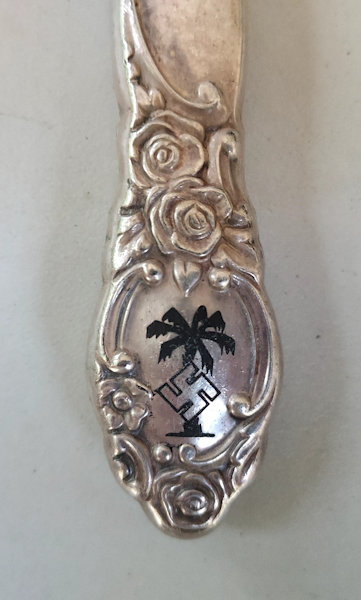
Afrika Korps Table Knives (Item AFRICA 1-28) |
|||
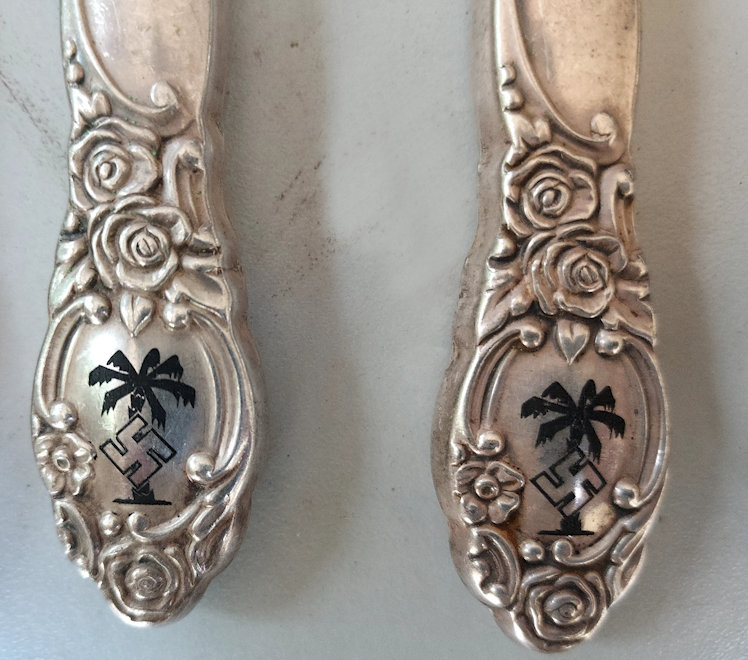
| DESCRIPTION: A consigner presented us with these and we were reluctant to post them. We have nothing to compare them to for authenticity and really, the only reason we agreed was that they are just “darn neat.” Whoever did them, and whenever, really made a nice set of knives with the Afrika Korps symbol finely executed on the metal. They really are a handsome set of cutleries with an unknown pedigree. Our reenactors love this sort of thing for their “Third Reich” dinners. It’s in pristine condition with no hallmarks. Sold as is.
PRICE: $375.00 for the set |

|
|||
|
DAK (Deutches Afrikakorps) Ring (Item AFRICA 1-29) |
|||
| DESCRIPTION: Yes, it’s true, this German Africa Corps ring is not as impressive as the others listed, but like all things Afrika Korps, is impressive just the same. These were usually made by local craftsman where the soldier was located. Its size is 9¾, has an “800” silver mark, and is in very good condition.
PRICE: $300.00 |


|
||
|
DAK (Deutches Afrikakorps) Ring (Item AFRICA 1-30) |
||
| DESCRIPTION: Here is a rather worn, but most discernible, Afrika Korps ring, size 9. It has the palm trees on front and sides. It is very crudely done because many of these rings were often created by local craftsmen. The soldier who just wanted a remembrance of his service had these done and as there are many great ones, there are as many not-so-great ones probably because of the wearer’s available funds.
PRICE: $275.00 |


|
|||
|
DAK (Deutches Afrikakorps) Ring (Item AFRICA 1-31) |
|||
| DESCRIPTION: Here we have another Afrika Korps ring, which is more in line with being a higher-end one with well-defined markings of swastika and palm trees; size 11. Like most, it has no identifying marks as to silver content or maker. We do see these markings with those made by jewelers when the soldiers returned home and had them made there.
PRICE: $300.00 |


Page One |
Please refer to item designator in parentheses in all correspondence.
Please E-mail for any additional information you may need.If you prefer, contact 'Germania' at PO Box 68, Lakemont, GA 30552
or call at 706.782.1668.
Please! do not call during the wee hours of the morning. The best time for calling us is between 9 and 11 am and between 9 and 11 pm eastern time.