
|
|
|
|
|
|
U.S. Articles of Interest
Page 1
|
|
|
|||||||||
|
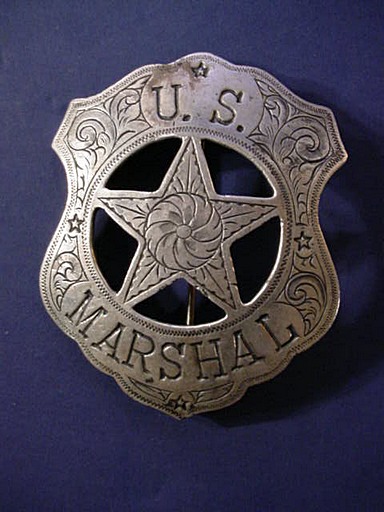
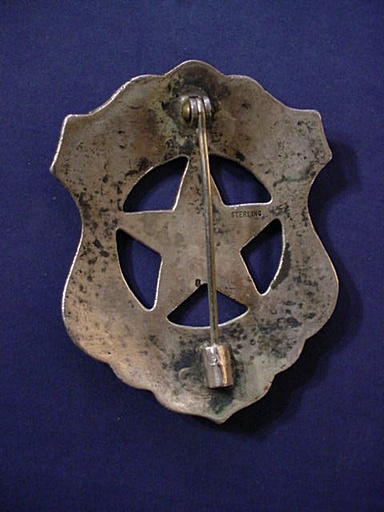
Old West Marshal’s Badge (Item USARTICLES 1-2) |
|||||||||
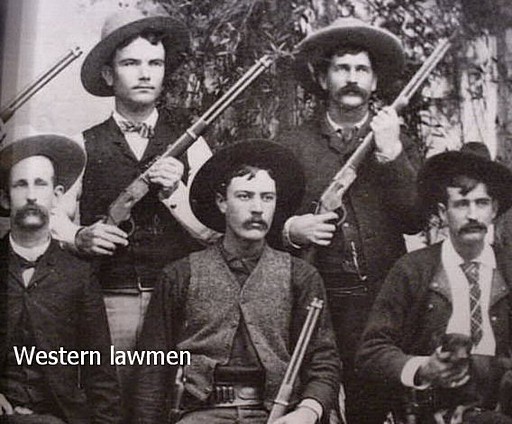
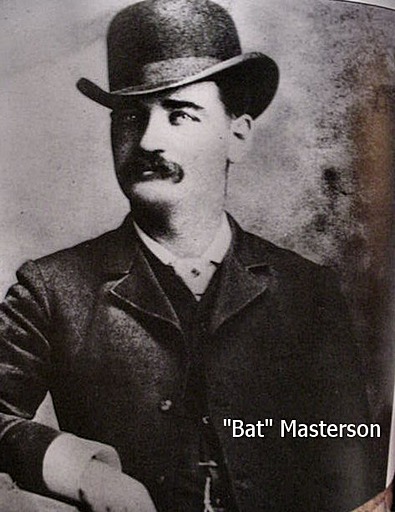
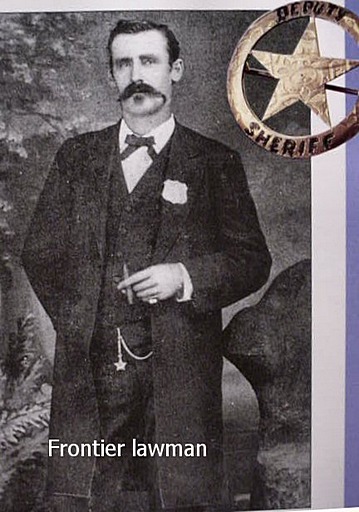
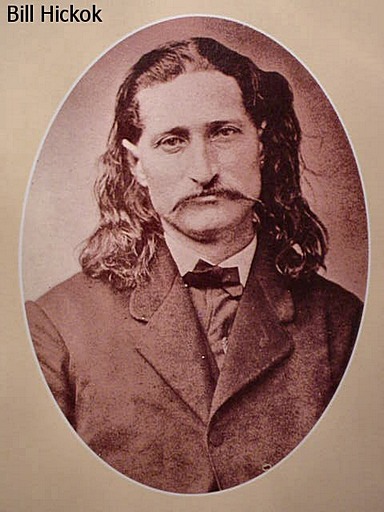
| DESCRIPTION: This is a U.S. Marshal's badge in sterling silver and it looks to be completely hand engraved. The federal marshals had no particular type of standard badge and used whatever they chose and bought or commissioned, so various types exist in collections in museums, today. Wild Bill Hickok (1837-1876) was a noted western lawman. He served as a deputy U.S. marshal at Fort Riley, Kansas, and contrary to the movies he never wore his badge, but carried in his vest pocket. Wyatt Earp (1848-1905), did sport his badge similar to the one we offer. He was appointed to his brother, Virgil Earp’s, place by the Arizona territorial governor “Bat” Masterson, who also for a time was a U.S. marshal. The badge is a real beauty with the cutout star and a fine floral carving. This is a very nice western relic.
PRICE: SOLD |
|
|||||||||||||||||||||||||||||||
|
|||||||||||||||||||||||||||||||
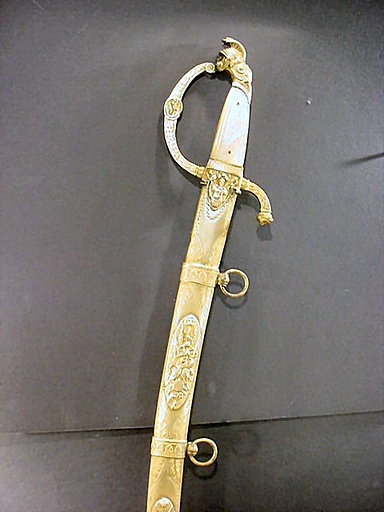
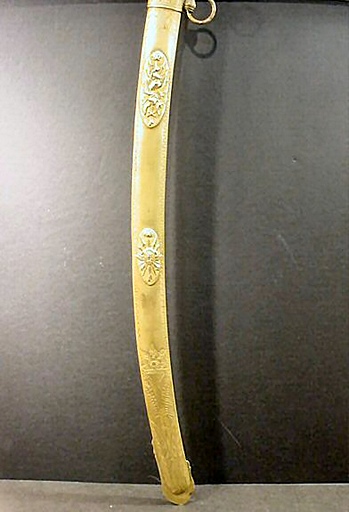
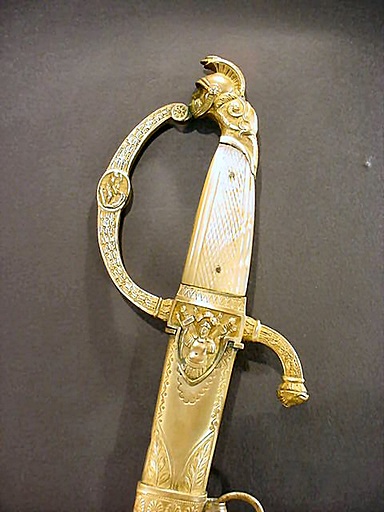
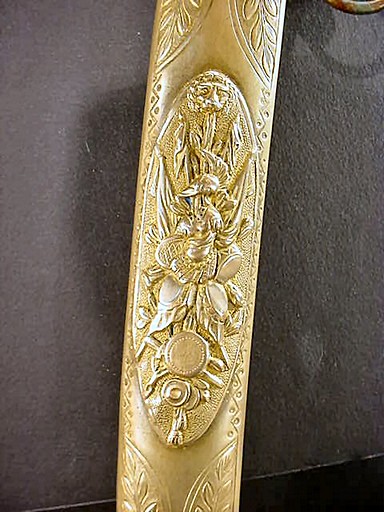
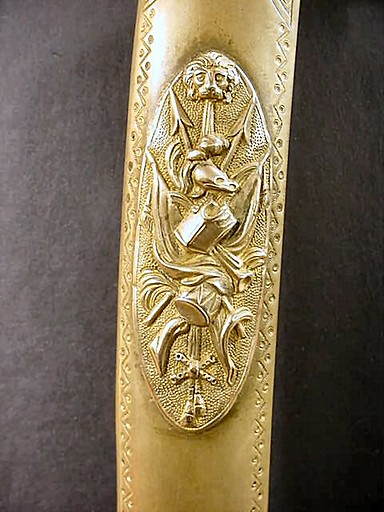
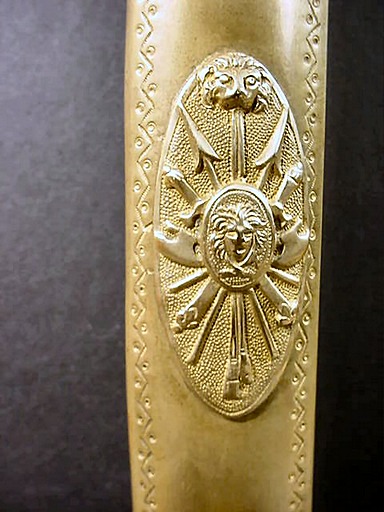
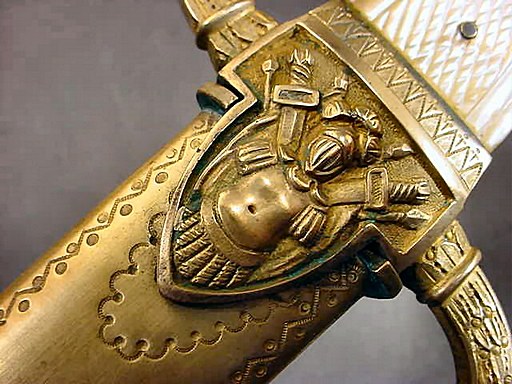
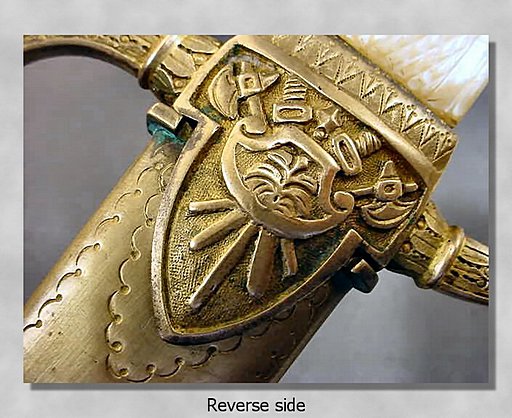
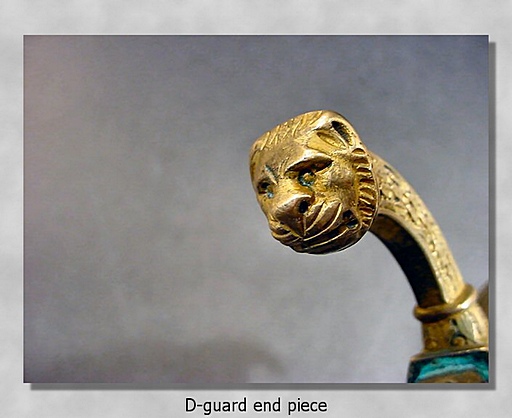
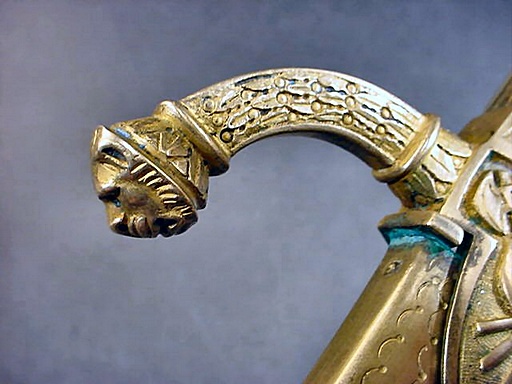
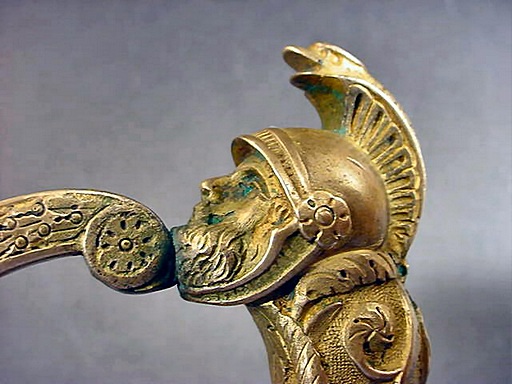
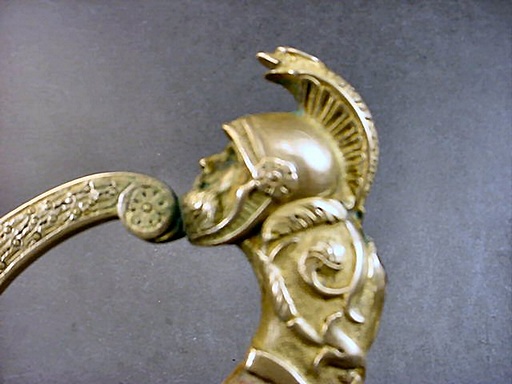
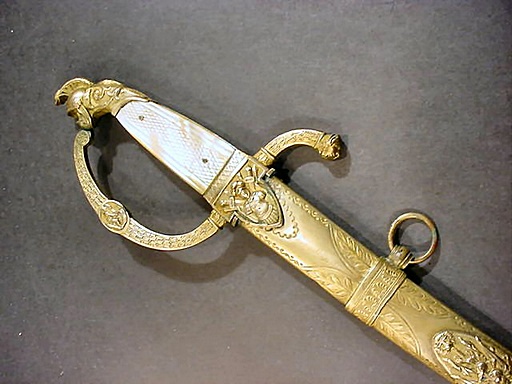
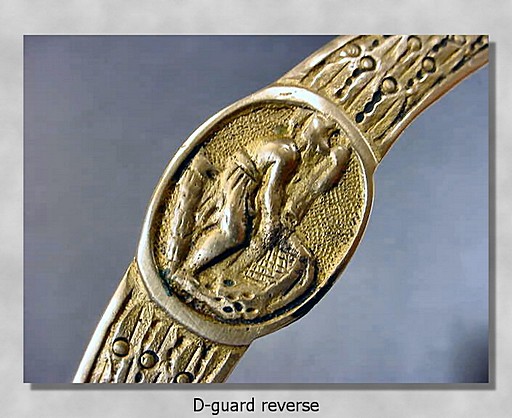
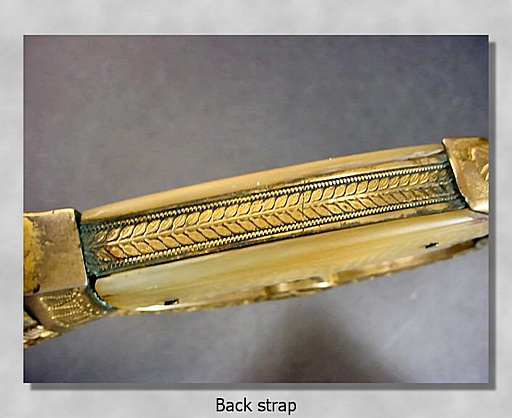
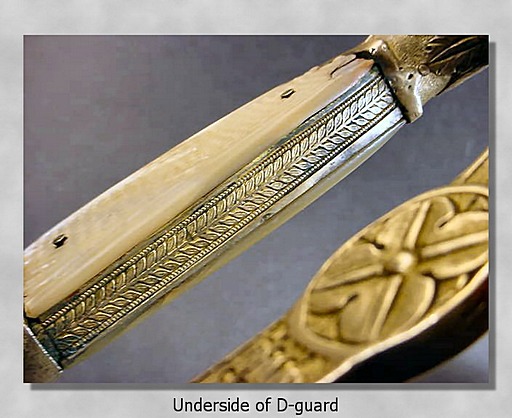
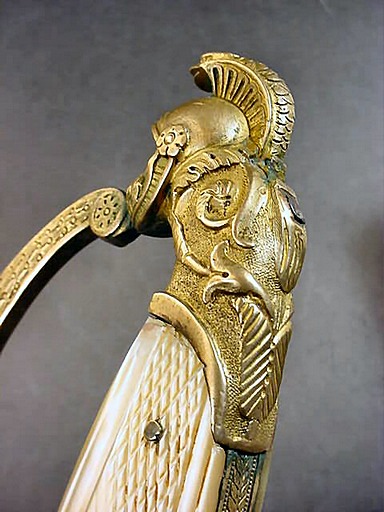
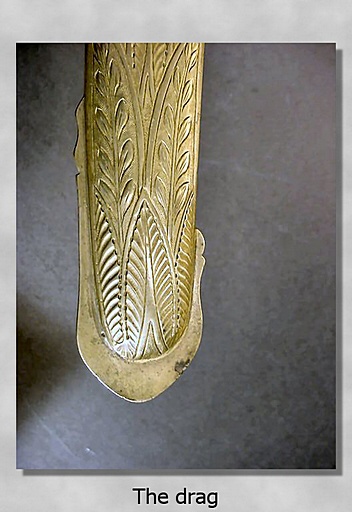
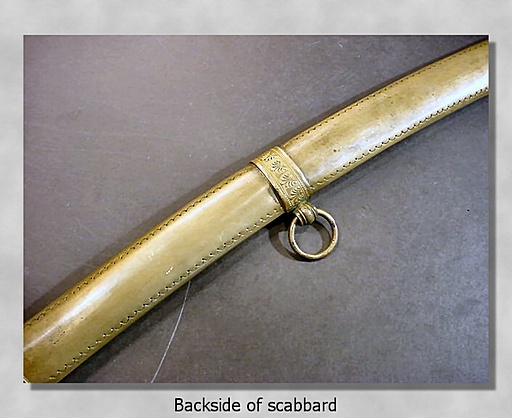
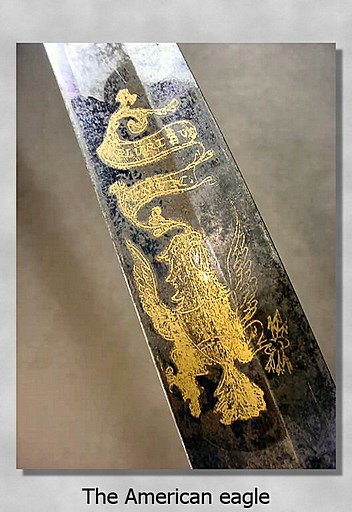
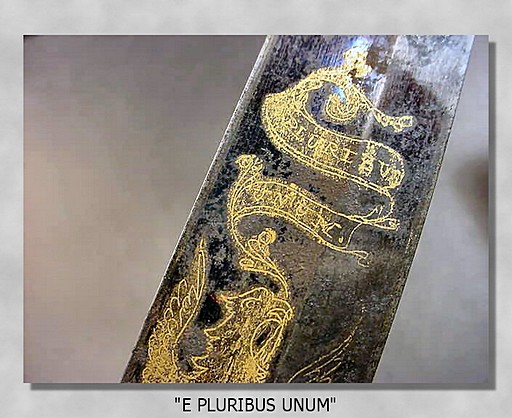
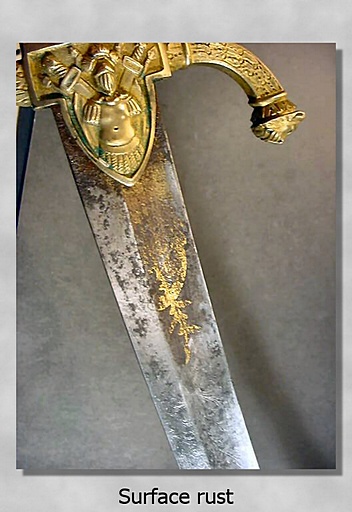
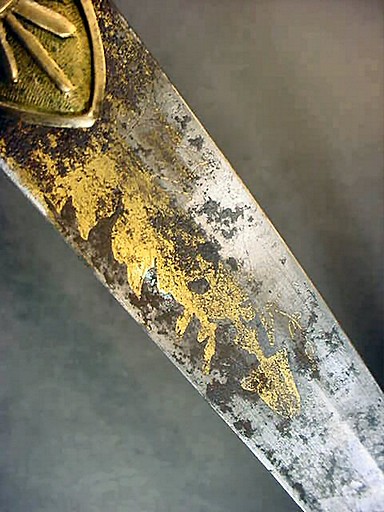
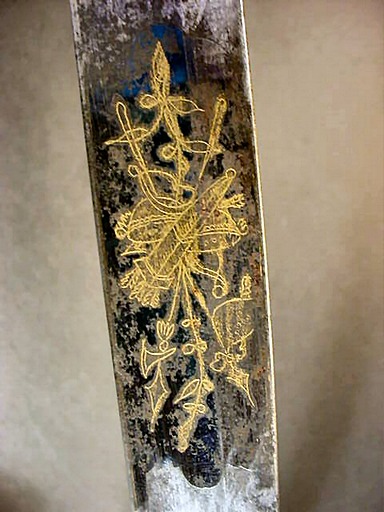
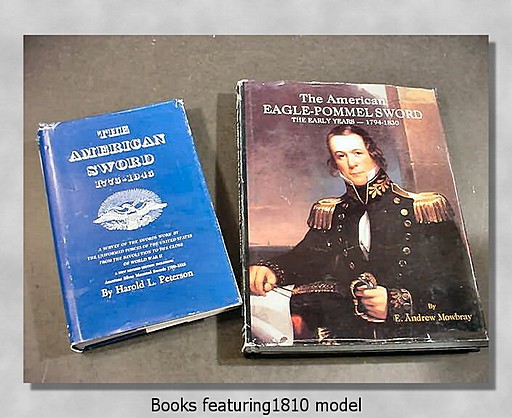
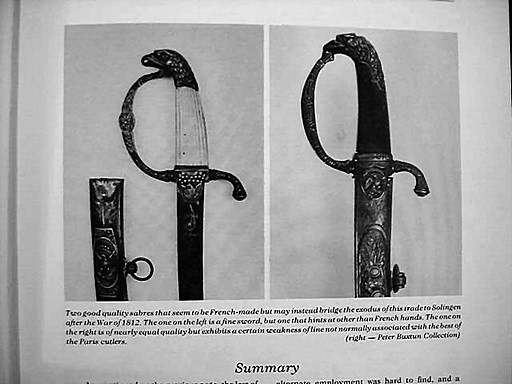
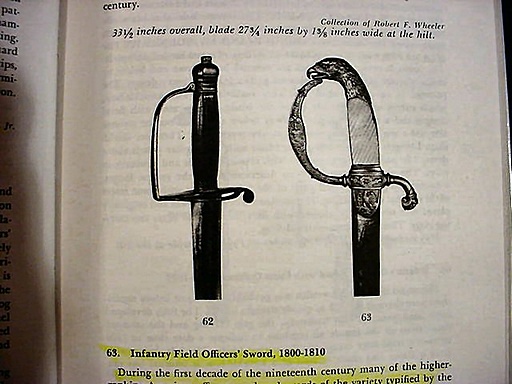
| DESCRIPTION: During the first decade of the 19th century many of the highest ranking American officers purchased swords of the variety typified by the saber that we offer here. These sabers were made in France in what the continental taste of the period considered the very best tradition. These swords most beautiful in their presentation that were made especially for the American market usually possessed eagle-head pommels and decorations using American motifs. The fact that these swords were worn by high-ranking officers is indicated not only by the quality of the weapons, but by the overall length and the length of the blade which is even longer than that prescribed for field officers in the regulations of 1801. The curved blade is single edged with a rudimentary false edge extending back about 9 inches from the point. A very broad fuller begins at the hilt and runs to a point just past the beginning of the false edge. It’s ornamented in gilt etching on the obverse side with the American eagle with the motto: “e pluribus unum” in a scroll above the eagle’s head. Various floral patterns are interspaced along the length of three fourths of the blade. The reverse also has three blued panels with military trophies and more floral designs. The grips are usually composed of two plaques of mother of pearl reeded obliquely with checkered design and this one is no exception even to the joints between the plaques that are covered both above and below with a fine leaf design in the finest Napoleonic pattern. The knuckle bow which curves in an even arc is decorated with further leaves in the French tradition. This culminates in a downward thrust on the other side of the languet with a lioness’ head beautifully executed. There are shield-shaped languets on each side of the blade with rectangular panels above them. The one on the obverse side bears the likeness of a helmeted Roman suit of armor with crossed Roman swords behind it. The reverse languet has a shield with various weapons, swords, axes. All-metal parts of the hilt are brass. The scabbard is of brass also. The scabbard is very elaborately decorated with three raised separately affixed panels employing helmets, flags, shields, armor, lances, lion heads, axes, pole arms, all beautifully arrayed. The panels are about 3 1/4 inches long and almost an inch and a half wide. The scabbard has two carrying rings with an asymmetrical drag. The scabbard has other floral designs in an engraved-looking appearance. Now! How is this one different from the other rare examples of the 1810-model officers’ swords? This lies in the fact that each example of this sword seen in museums and prestigious collections bears as its pommel the eagle’s head cast most realistically. Here the similarity ends. Because this obviously specially ordered custom sword has the head of Mars, the Roman god of war, as its pommel. There he is in all his martial glory with his dragon motif helmet upon his head. This feature had to be a very special order and sets this sword apart from all the other rare 1810 swords. The former owner must have been a particularly martial-minded officer to have this sword made to his specifications employing Mars. Being a sword from 1800-810 it is not being too speculative to suppose that it was used by its owner in the War of 1812 2 years later. It is a fantastic find and certainly an important historical relic. The design is of course taken from the patterns used by marshals of Napoleon’s Grand Armée, but it is American, very American and the finest sword to come along in a long time. The blade is in grade ‘average’ condition for weapons of this age. It has not been sharpened, shortened, abused, but after sitting in its scabbard for just short of 200 years, it shows its age. The blade is actually not bad at all considering, but the panels closest to the languets have some accumulated rust that could be easily removed; however, since the gilded designs are also at this point we would considered it dangerous to do so. A museum conservation team might be able to accomplish this goal if it were thought advisable or necessary. The rest of the blade is really average for condition. The grips, thank goodness, are intact except for a very small crack that is near the place where the pommel meets the grip on the obverse side. This is in itself incredible. Think about it! So, except for the blade rust (unavoidable) this sword is in noteworthy condition. Its importance is obvious; its beauty patently obvious; the best!
PRICE: Withdrawn by consigner |
|
||||||||||||||||
|
Two Tapestries Depicting Charles Lindbergh (Item USARTICLES 1-4; AVIATION 1-1) |
||||||||||||||||
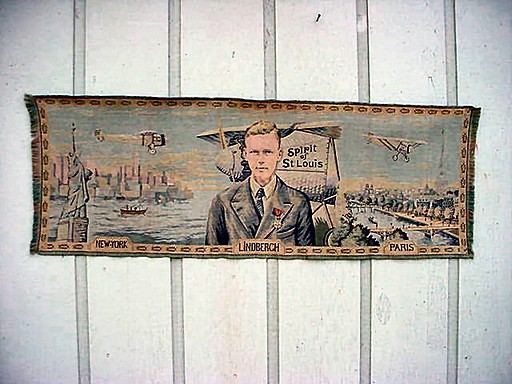
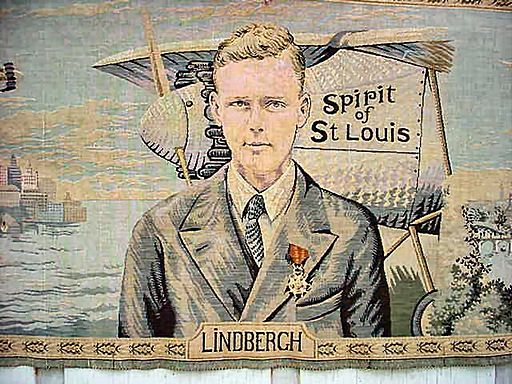
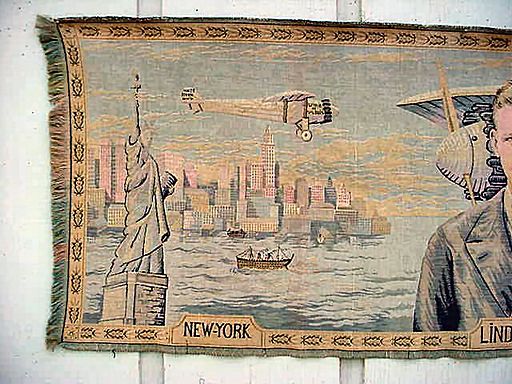
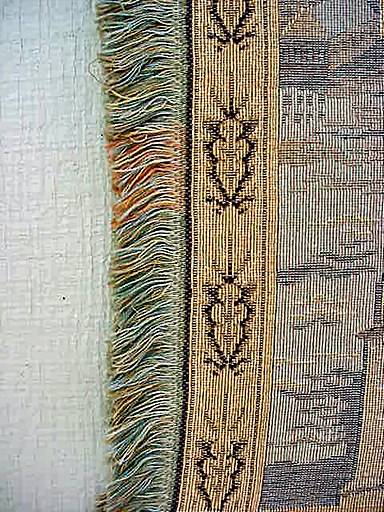
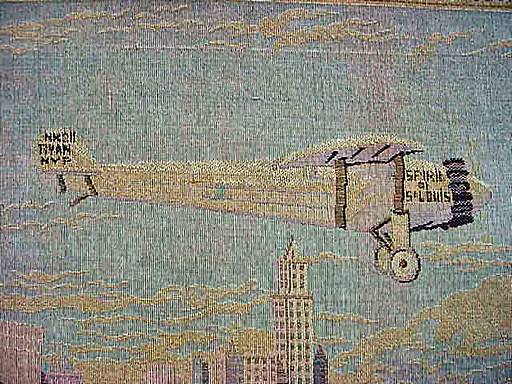
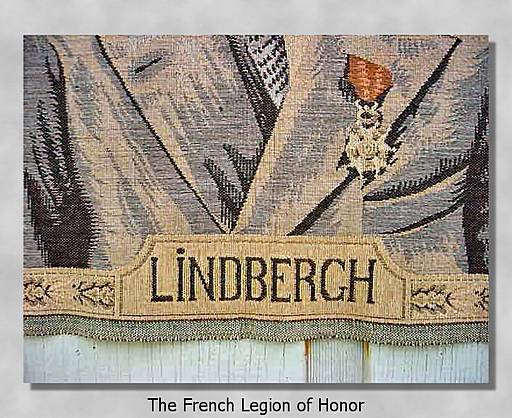
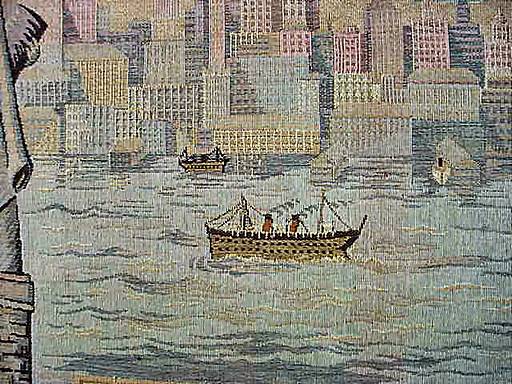
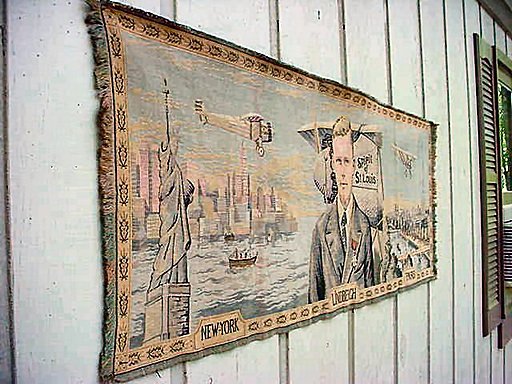
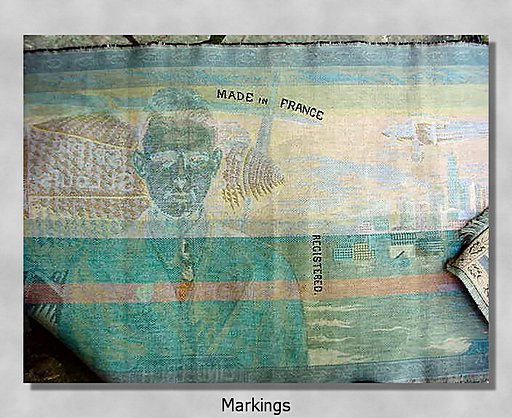
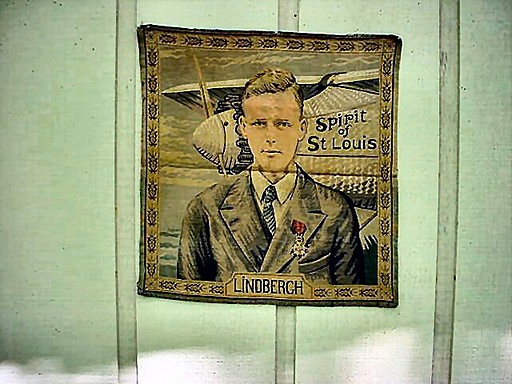
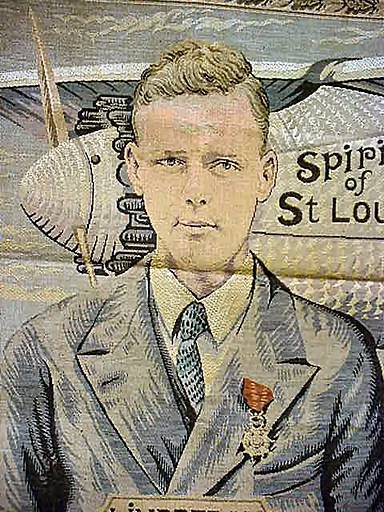
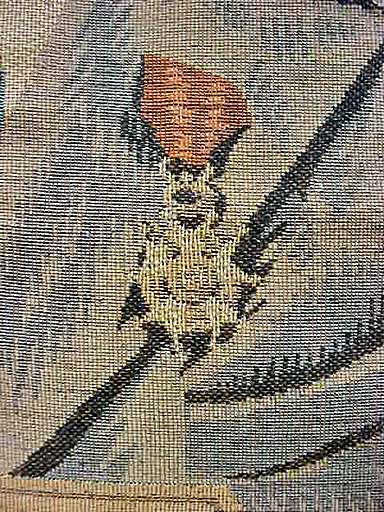
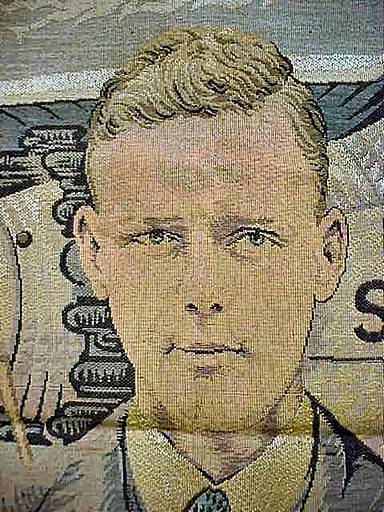
| DESCRIPTION: These are beautiful machine-made tapestries featuring “Lucky Lindy” and his famed aircraft, Spirit of St. Louis. We all know the story of this young American hero, or you can get it quickly by Googling his name. His fame will live in history, forever. Of course there are malignant detractors who still try to frame him in infamy because of his efforts to bring about peace in the pre-WWII years. Lindbergh was an author, aviator, inventor, explorer, and peace activist. The Lone Eagle, as he was called, rose from virtual obscurity to instantaneous world fame as a result of his exploits as the pilot of the first nonstop transatlantic flight from New York to Paris made in a single-seat, single-engine aircraft, Spirit of St. Louis. Later he became on outspoken advocate of keeping the U.S. out of the world conflict then raging and became a leader of the antiwar movement. Lindbergh considered Russia to be a semi-Asiatic country compared to Germany and he found communism to be an ideology that would, if gone unchecked, would destroy the west and replace everyone of European descent with a pressing sea of yellow, black, and brown. He openly stated that if he had to choose, he would rather see America allied with National Socialist Germany than Soviet Russia, but Roosevelt and Morgenthau had other more sinister plans that prevailed in the end. The Lone Eagle received the Order of the German Eagle from Reichsmarschal Hermann Göring and this was approved by the American Embassy. The Lindbergh’s were honored guests at Carinhalle, Göring’s palatial estate in the Prussian forest. The two men thought highly of each other. In Pat Buchanan’s book A Republic, Not an Empire: Reclaiming America’s Destiny, he portrays Lindbergh and other prewar isolationists as true American patriots who were smeared by interventionists during the months leading up to Pearl Harbor. Lindbergh always preached military strength and alertness. He believed that a strong defensive war machine would make America an impenetrable fortress and defend the western hemisphere from an attack by foreign powers and that should be the U.S. military’s sole purpose. But he was maliciously attacked by the yellow-rag American press much like former president Jimmy Carter is for his tireless and noble efforts in the cause of the peace. We know that Lindbergh’s efforts were quashed when Roosevelt and the anti-European machine virtually set up the “false-flag operation” known as Pearl Harbor. Charles later joined the U.S. Army Air Force and the U.S. Marine and Army pilots who served in WWII with him praised his courage and his patriotism. You can find much abject garbage abut this genuine American hero sliming about the internet, but (true) history accounts for a life of great worth and devotion to the cause of peace and national greatness for his beloved nation and race. We are proud to offer two tapestries that were recently bought from the estate of a late collector in California. The tapestries were made in France and after the famous flight the whole world was in a frenzy of adoration and joyful respect for the Lone Eagle and souvenirs of every material and shape emitted forth in hundreds and hundreds of objects from statues to paintings and prints, and the tapestries made in the U.S. and throughout the world. Tapestry art was very prevalent in those days—the 1920s although not so in the 2000s. Many the household had one of these Lucky Lindy tapestries slung over the back of the living-room sofa or the favorite lounge chair. They were also lovingly framed and proudly displayed everywhere. We were quite lucky to be able to purchase these and offer them on our pages. The larger one measures 55 x 20 inches and is most dramatic with two depictions of the “Spirit” along with the N.Y. skyline, ships in the N.Y. harbor, and the statue of liberty, of course. The young Aryan-American hero is shown wearing the French Legion of Honor proudly on his lapel, and behind him the nose of Spirit of St. Louis. To the right you see the airplane as it approaches Paris where the Eiffel Tower is seen, while below are the bridges of the River Seine. The smaller one is a center detail of the larger with only Lindbergh and his airplane depicted and this one measures 18 1/2 x 19 1/2 inches. The tapestries were kept by the collector in mint condition and their colors are vibrant, and no rips or tears are at all present. They are indeed beautiful and very obviously historically important. The larger one is, according to collectors, the far-more rare of the two. Possibly costing a “pretty penny” in its day, we offered the pieces at these prices.
PRICE: Large tapestry in mint condition: $1,200.00; small tapestry (mint); $685.00 |
|
|||||||||||||||
|
An Old 1880’s Catalog of Military Trappings for Sale to Members(Item USARTICLES 1-5) |
|||||||||||||||
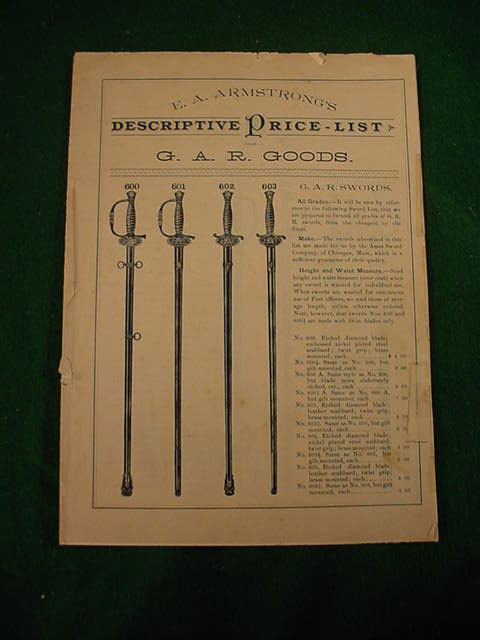
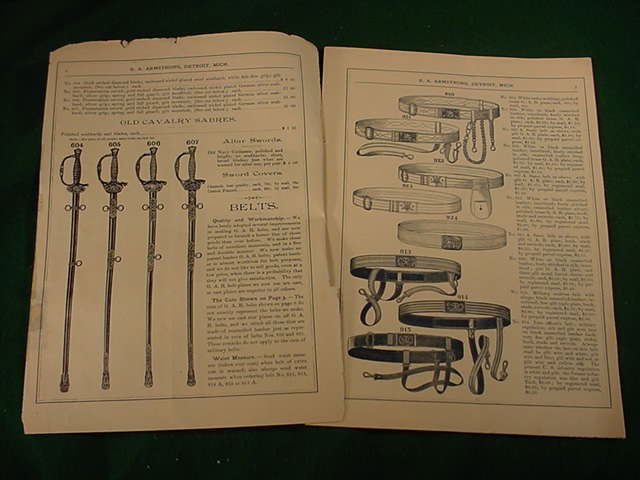
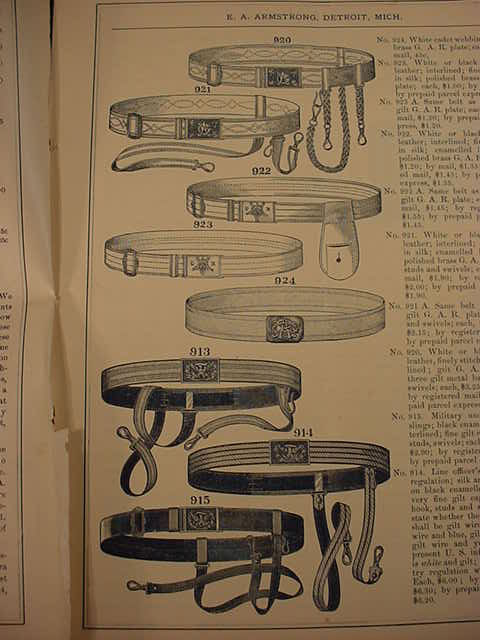
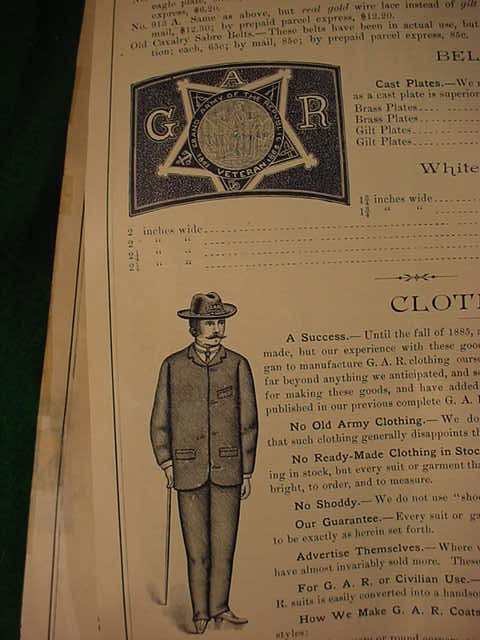
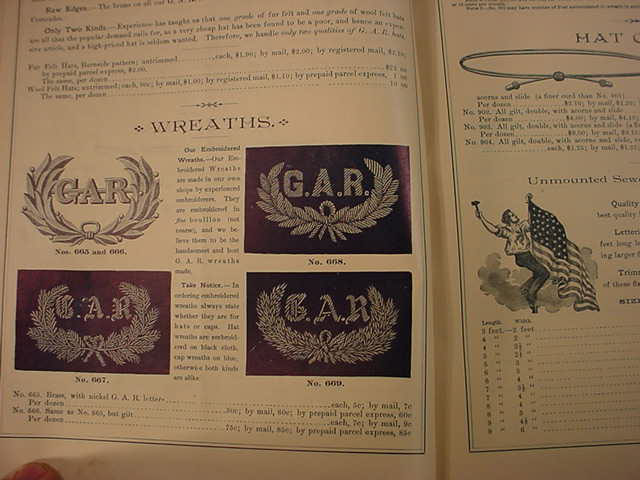
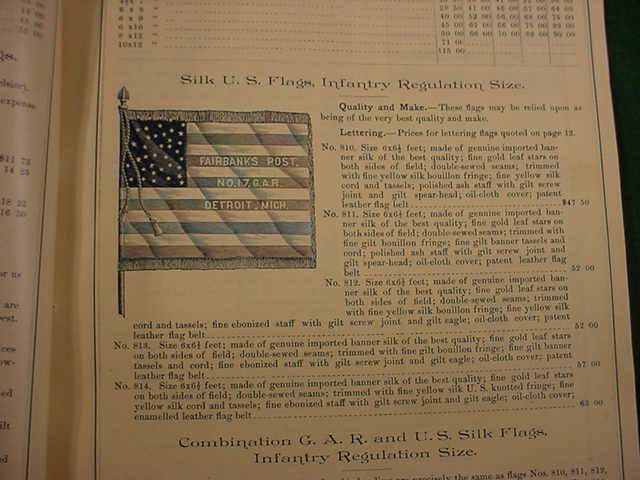
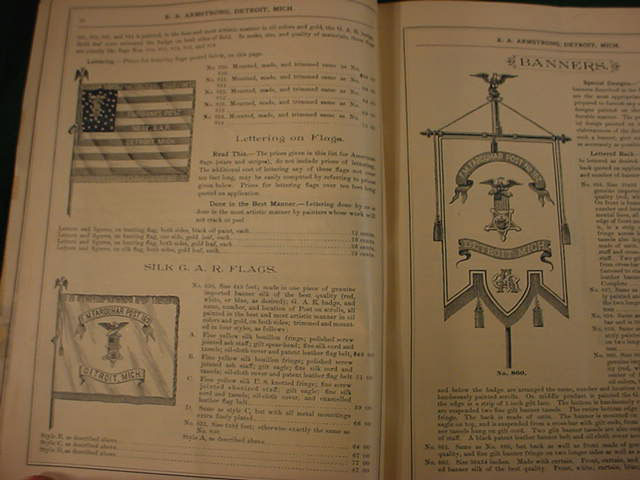
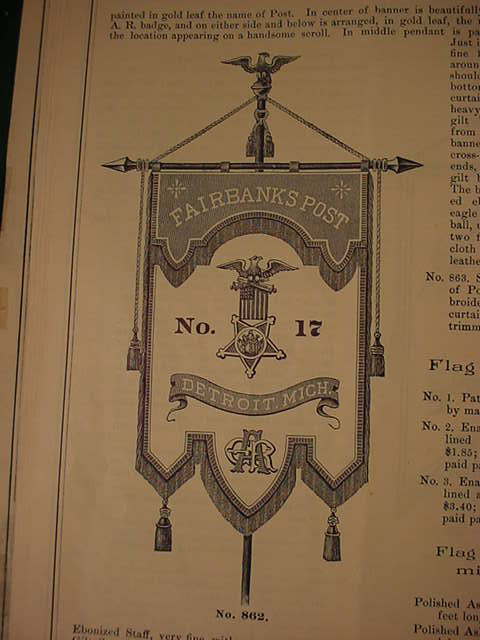
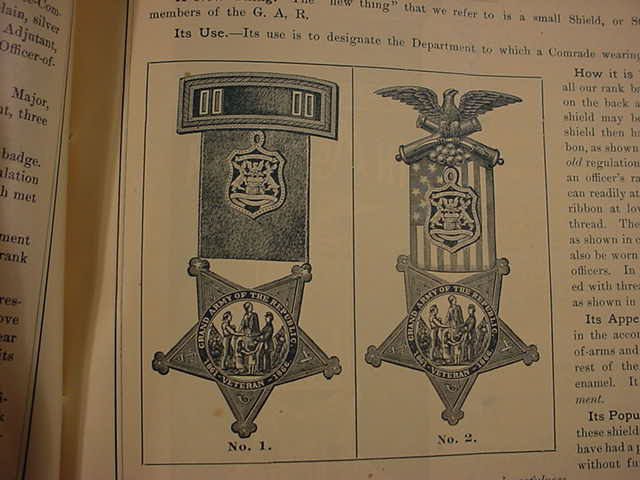
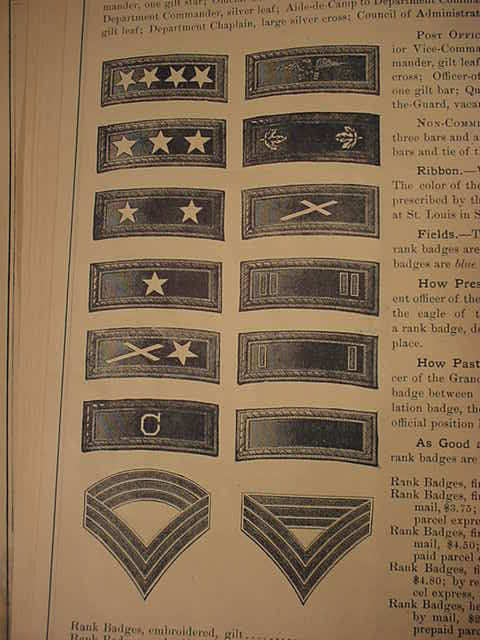
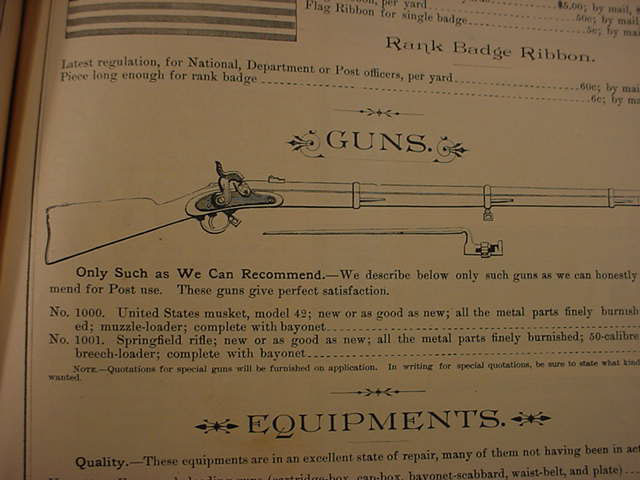
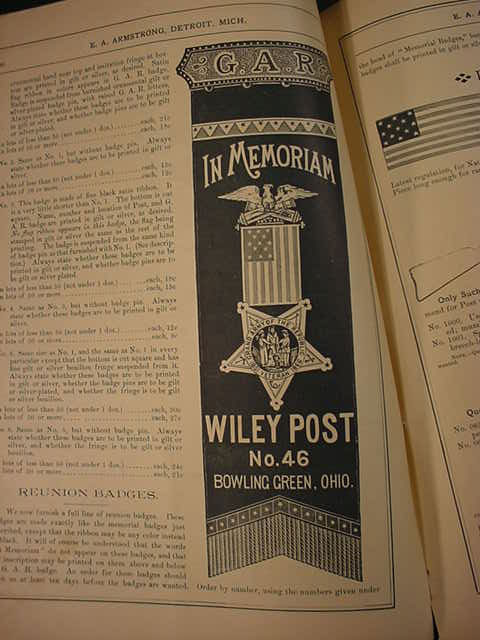
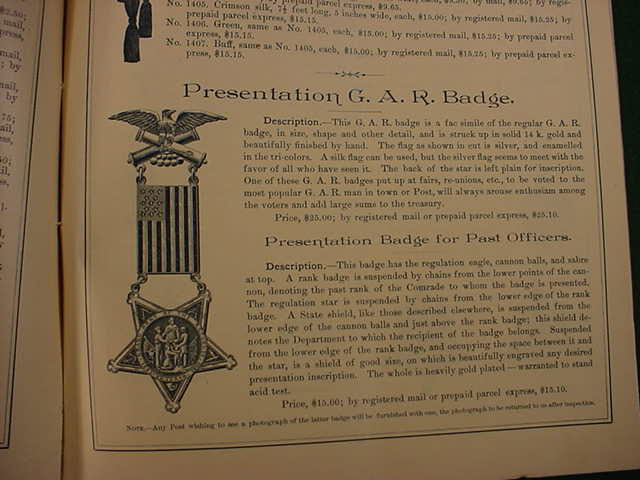
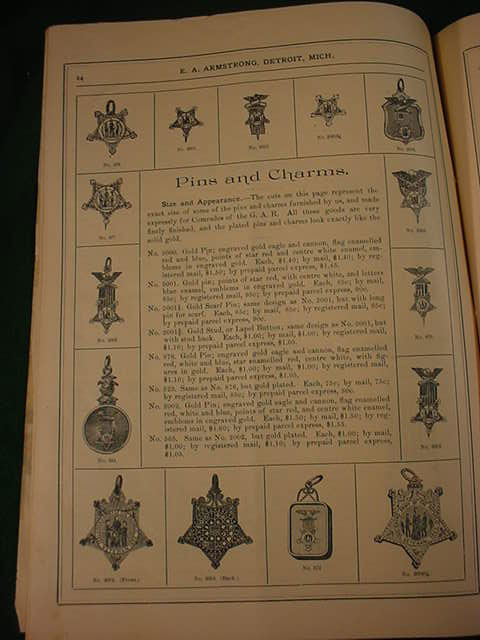
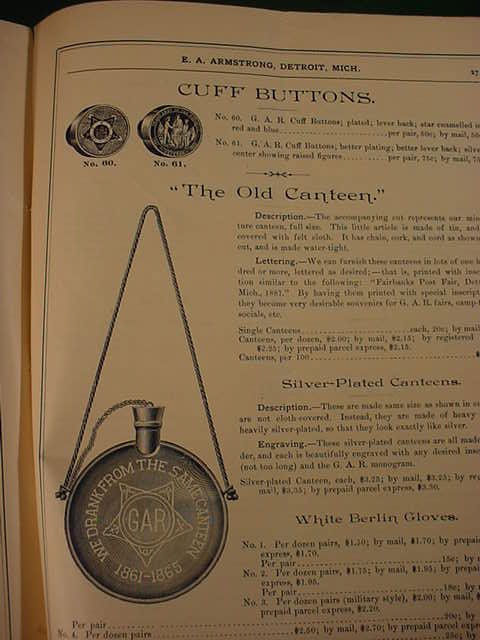
| DESCRIPTION: This is one great catalog; 35 pages of swords, medals, musical instruments, hats, buttons and guns. A collectors dream! This particular company E.A. Armstrong was in Detroit, Michigan and specialized in uniforms and accruements for the veterans of the G.A.R (the Grand Army of the Republic). In other words the Yankee aggressors in what has become known as the Civil War. But we in the south call it the 2nd War for Independence fought in our land. Regardless- - this is a great 35 page catalog. Just look at the prices! You could buy a US Musket Model 42 “new or as good as new”; all the metal parts finely burnished, this is a muzzle loader complete with bayonet for $2.00. Or a 50 Caliber Springfield Breech Loader complete with bayonet for $6.00. The encampment badges that are now $50 or $100 were 18¢ and 35¢ each. GAR swords ranged from $4.00 to $7.00. the catalog probably from the 1890’s has some frayed edges and a loose page or two but all in all holding pretty firmly and will probably be around a hundred years from now. It is especially interesting to see the ridiculous prices that these items brought many years ago. The $2.00 and $6.00 muskets cost the government then about 40-45 dollars each and today bring upwards of $1,500 each. This book contains 35 pages and measures 8 x 11 inches.
PRICE: Great catalog! $145.000 |
|
||
|
GAR (Grand Army of the Republic) Shoulder Board Set (Item USARTICLES 1-6) |
||
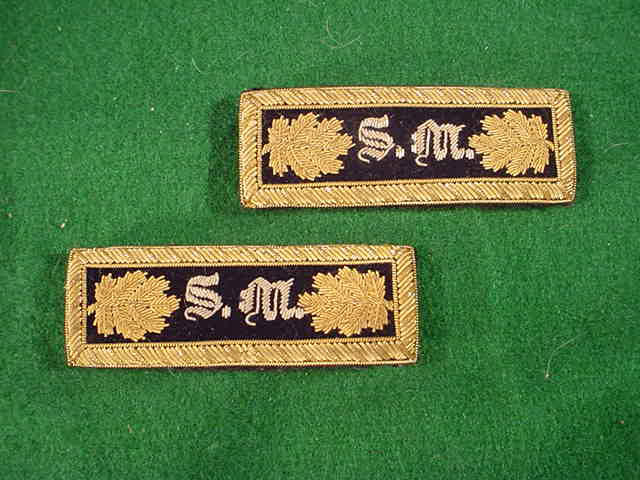
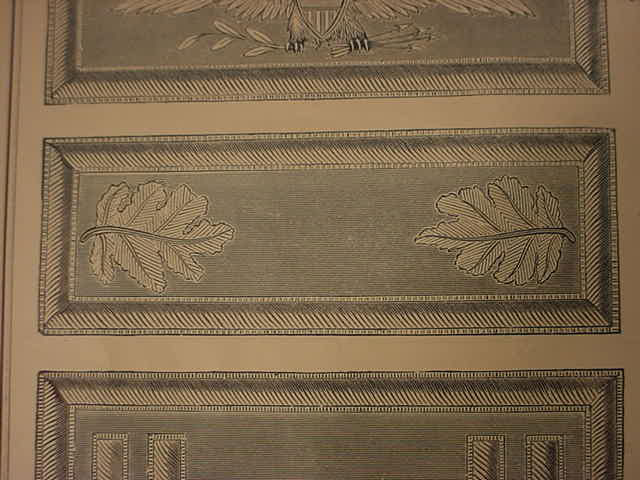
| DESCRIPTION: Here is an immaculate condition set of GAR Officer shoulder boards. The only difference really between these and the ones pictured in the GAR Catalog is that these have a “S.M.” in the center (Sgt. Major?). They are very handsome boards from in all probability the 1880’s or 1890’s. They each measure 3 ¾ in x 1 ¼ in.
PRICE: $48.00 for the pair. |
|
||||
|
A Slave Chain (Possibly Civil War Era) (Item USARTICLES 1-8) |
||||
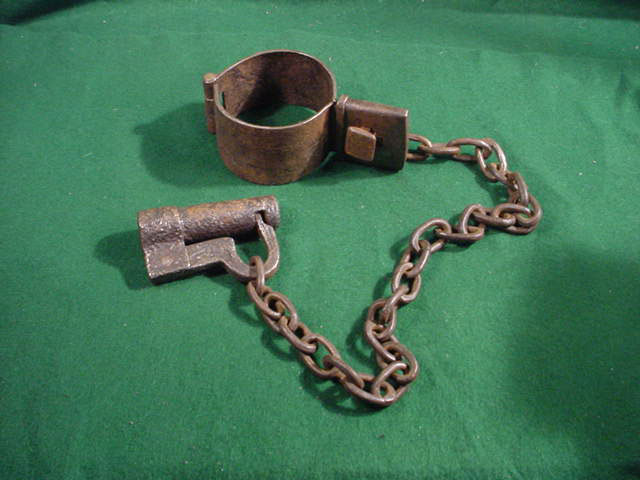
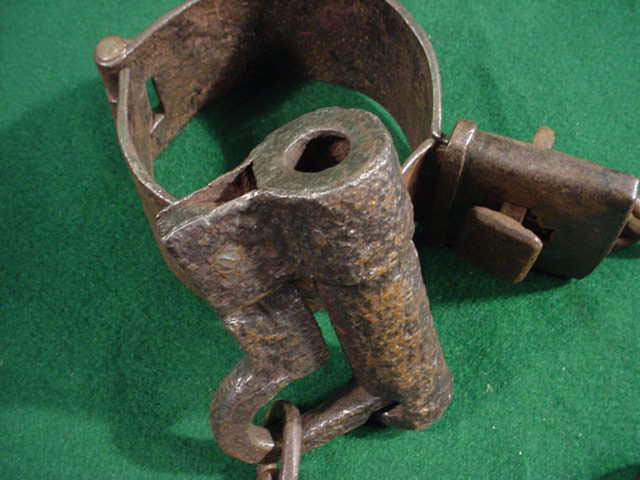
| DESCRIPTION: This was a style of chain that would be used at night in the sleeping quarters of the slaves. The section at the other end from the leg shackle was meant to attach to the next man’s chain and then of course to the next. So, if any man would try to move out of the sleeping racks he would have to take all the neighbors with him. Unless the guard would individually release and allow him free movement in a very temporary period of time. These chains were also used to shackle two or more prisoners or slaves when they were being moved outside of the limits of the plantation or prison. Only the slaves who tended to be unruly or hostile were actually shackled. An interesting piece of Americana
PRICE: SOLD |
|
||||||||
|
||||||||
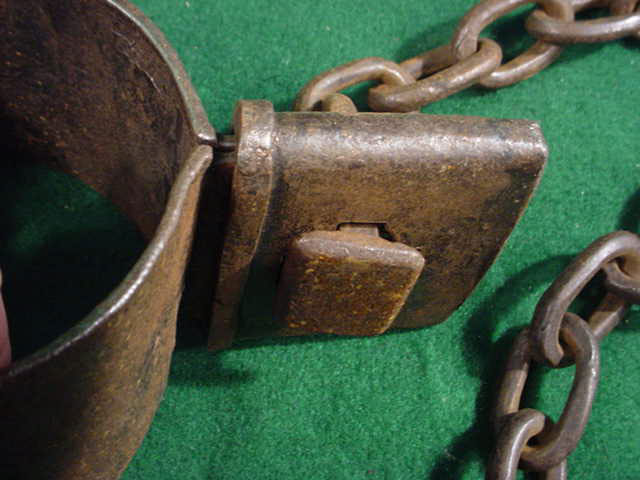
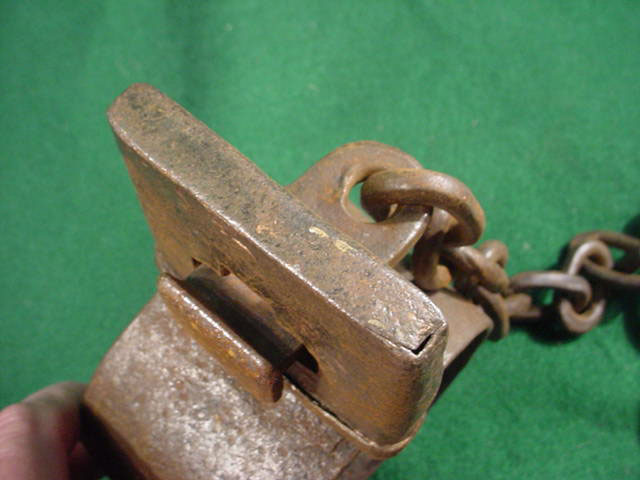
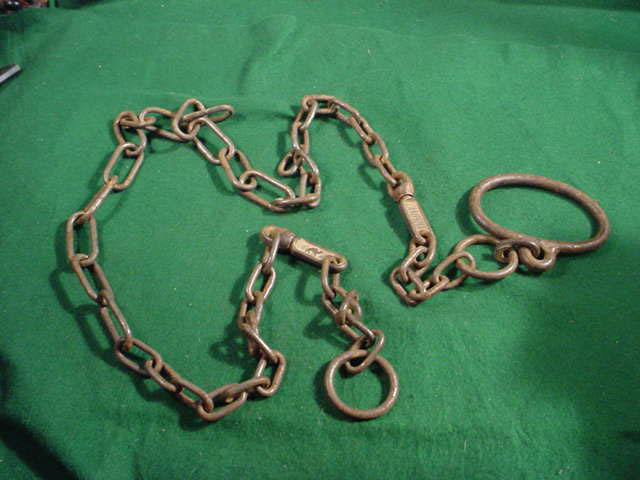
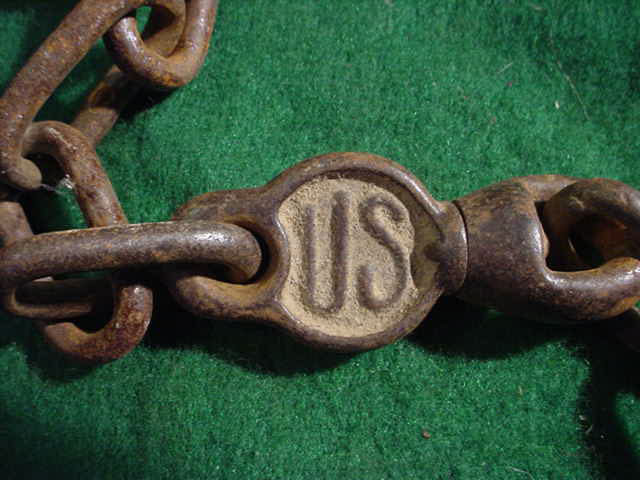
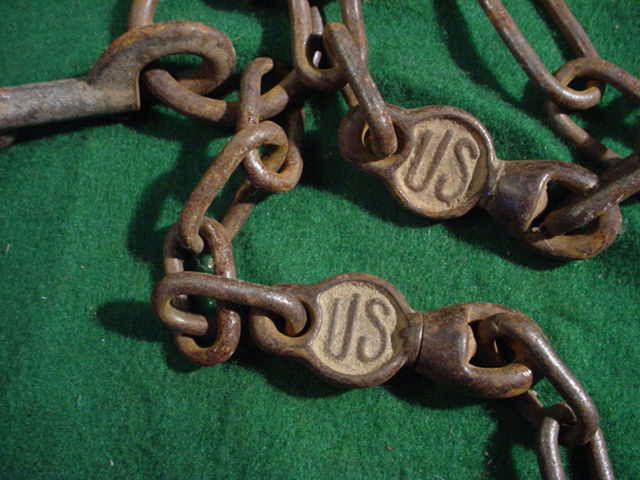
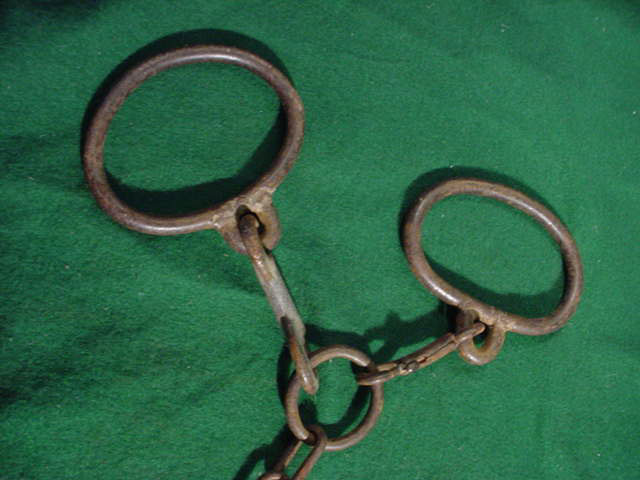
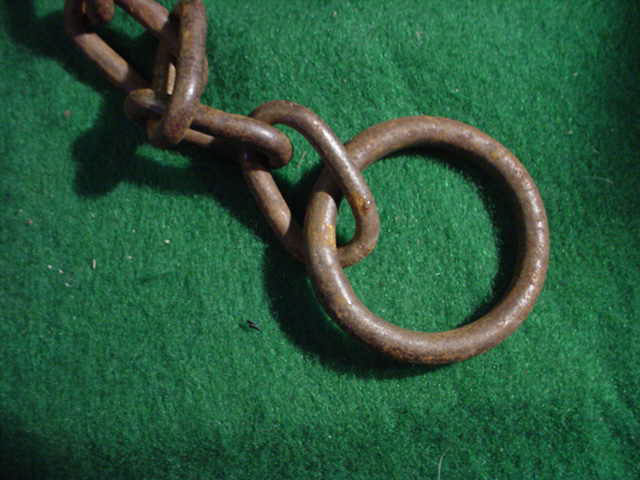
| DESCRIPTION: We admit we do not know the actual use for these chains. There are two sets, one set has the image of a camel on it. We did look up Cambell chain Co. on the net and found that they made all sorts of chains. They are situated in York, Pennsylvania. The chains were obviously made for some military purpose. Although they are identical except for the fact that one of them has (US) markings. This would indicate army usage, possibly somebody out there could fill us in on the purpose of these interesting items of American history.
PRICE: $290 the pair |
|
|||||||||||||||||||||||
|
|||||||||||||||||||||||
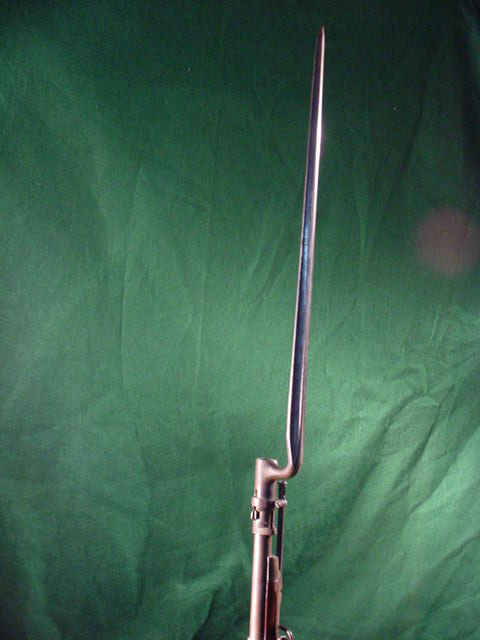
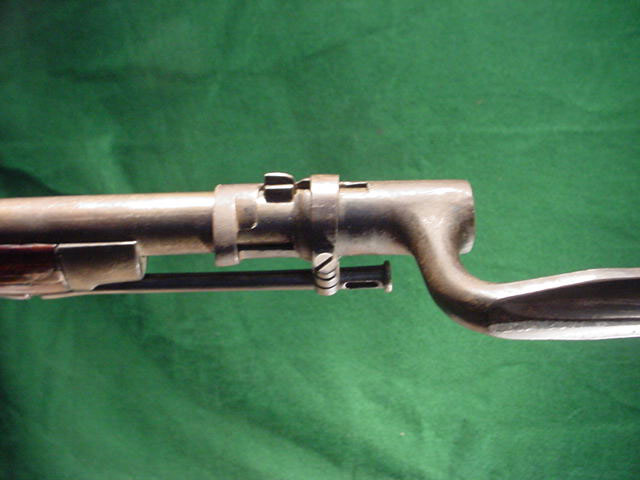
| DESCRIPTION:
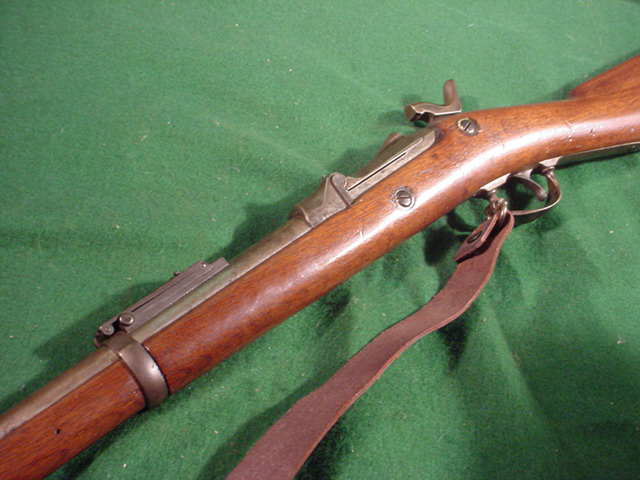
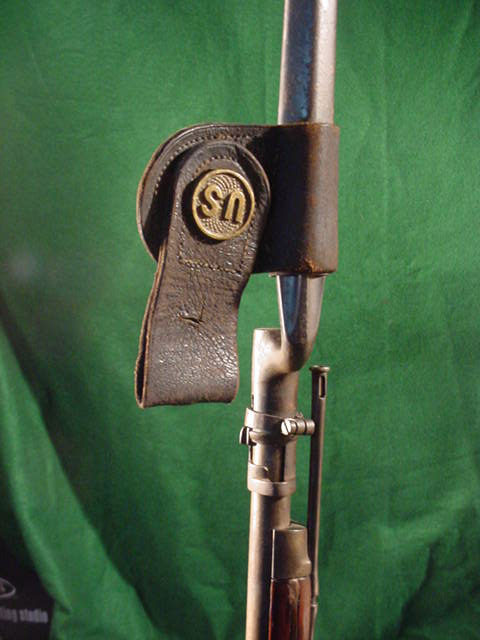
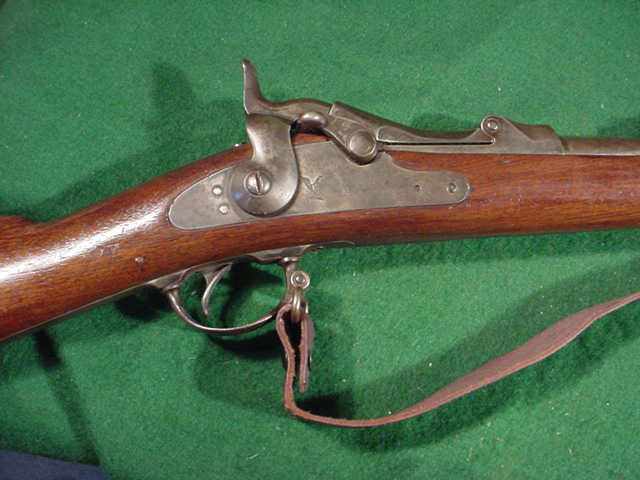
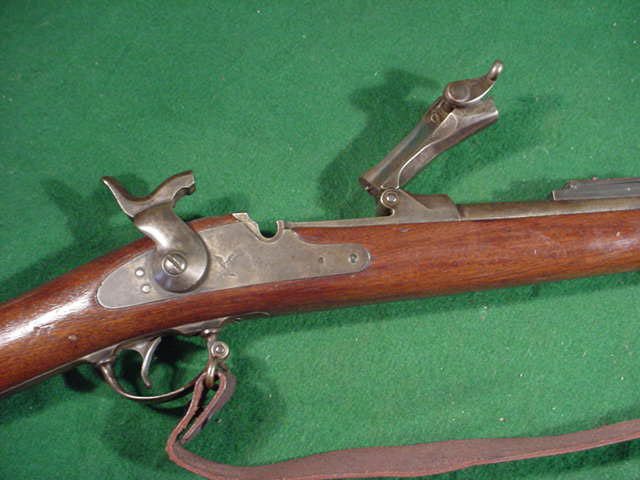
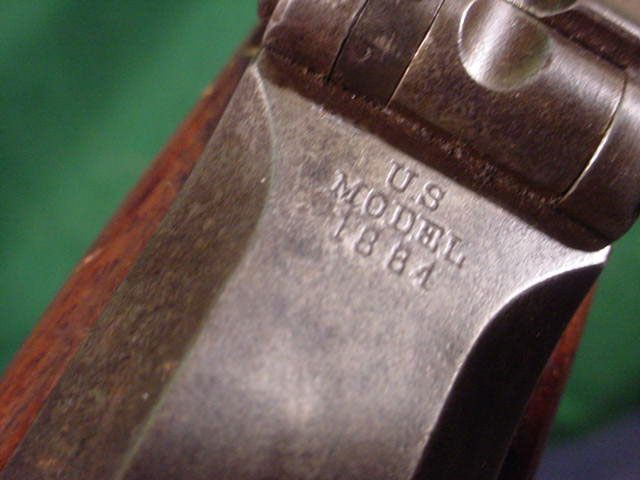
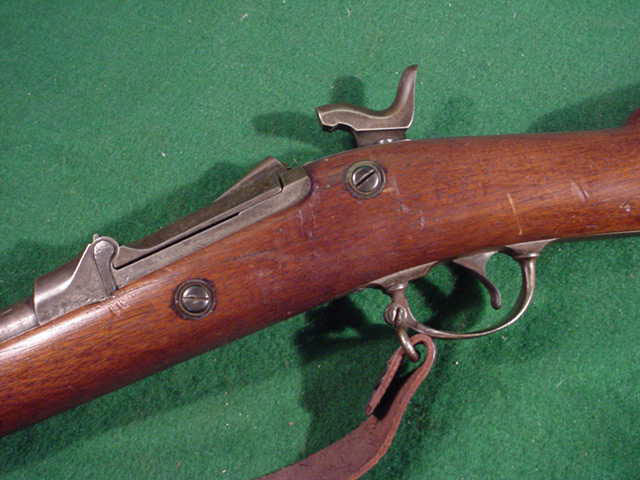
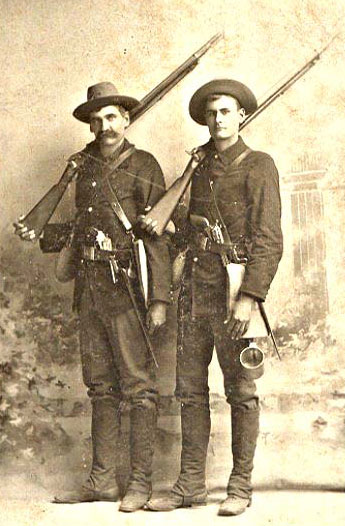
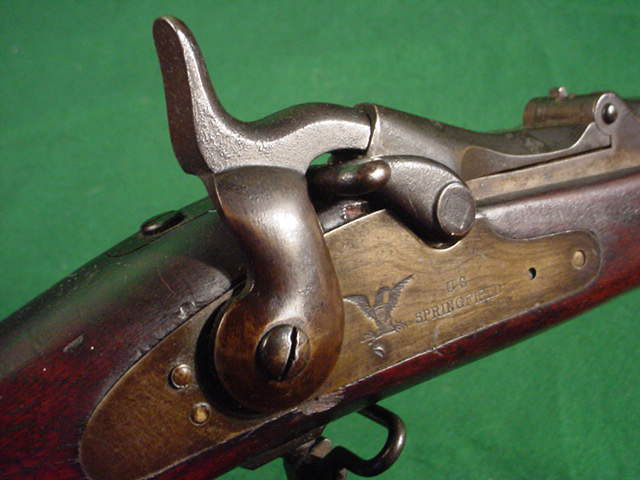
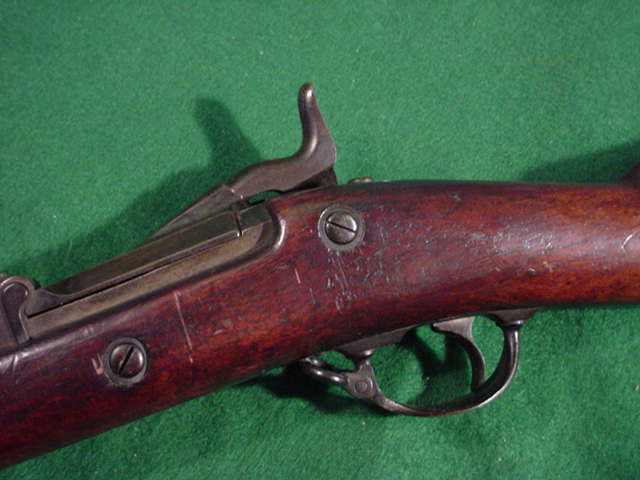
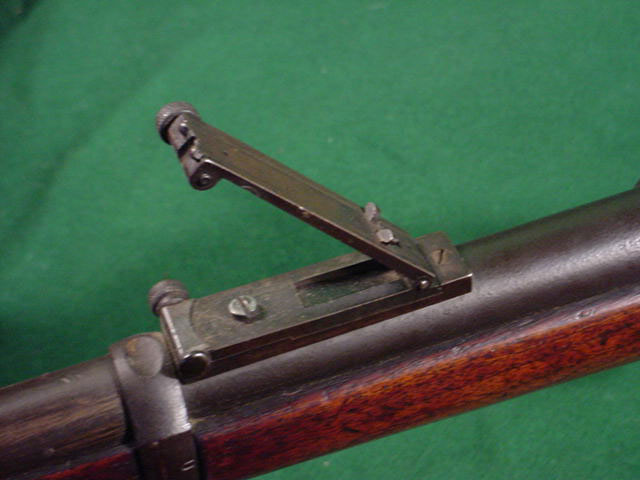
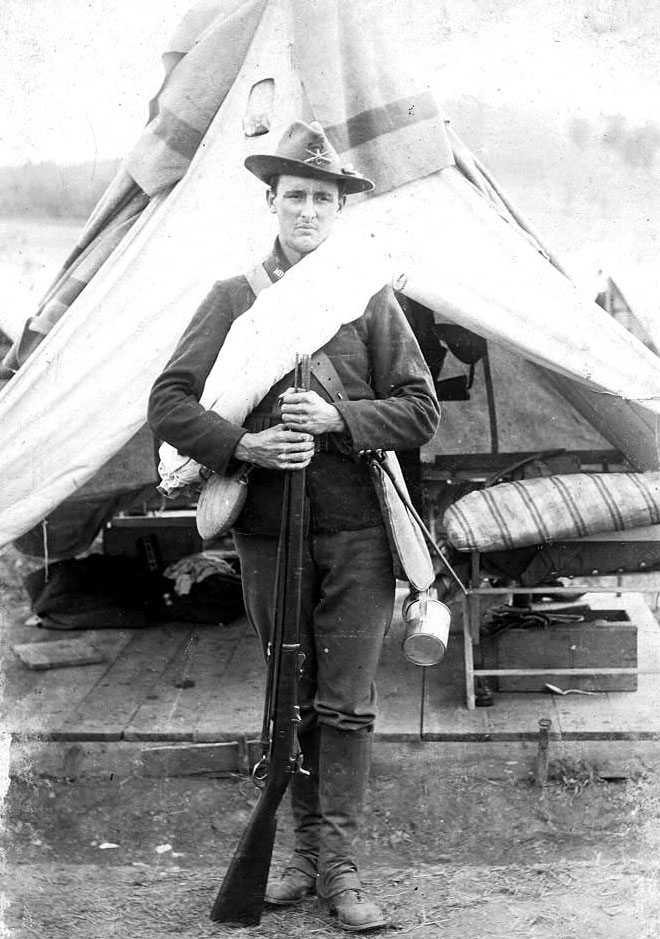
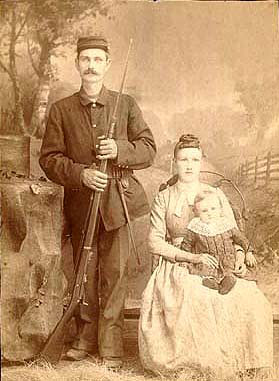
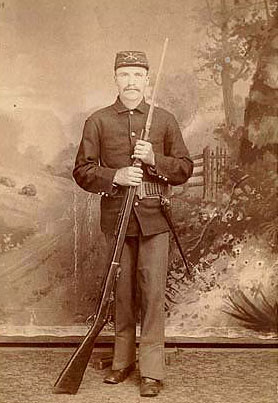
This was the rifle of the Indian Wars and the Spanish American War. This gun is in excellent plus condition . An Exceptional specimen with extremely good metal parts and barrel., 80% original finish. Some minor nicks and scratches to the otherwise excellent stock. Most of these rifles produced were regular infantry rifles although the trapdoor was produced in several varieties ,such as carbines the manufacture of the Springfield trapdoor was terminated in June of 1893. This model 1884 had the Buffington rear sight. This weapon became the typical weapon of the American soldier. Dependable with fine honed accuracy and a cartridge big enough to “do the job”.
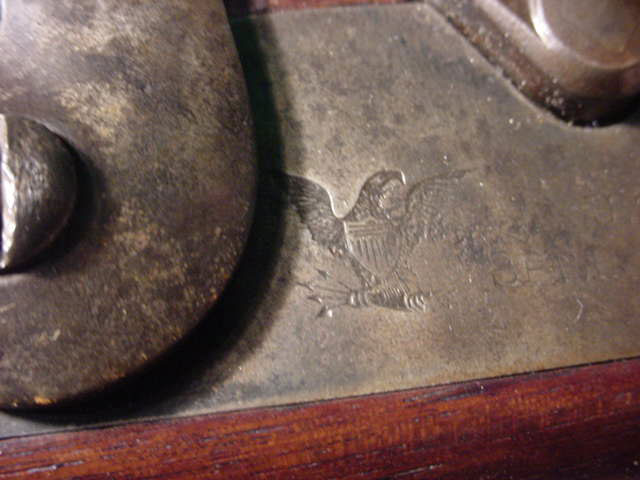
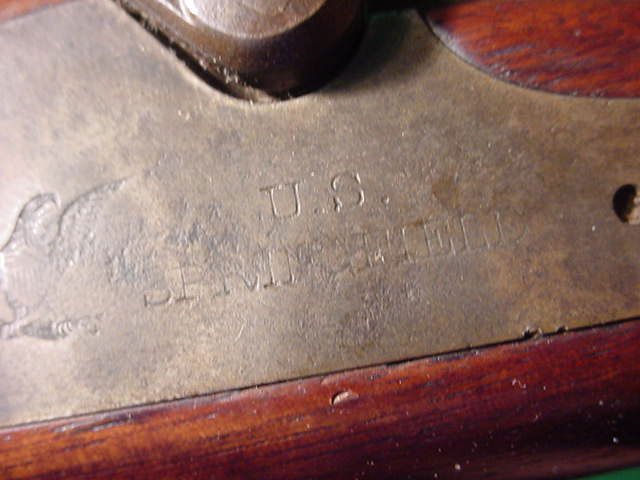
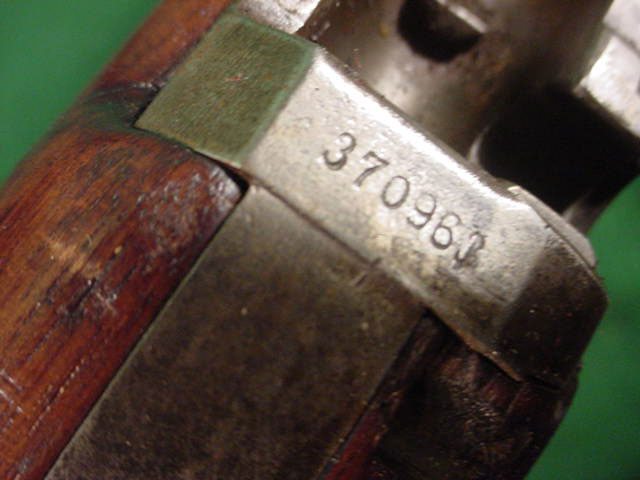
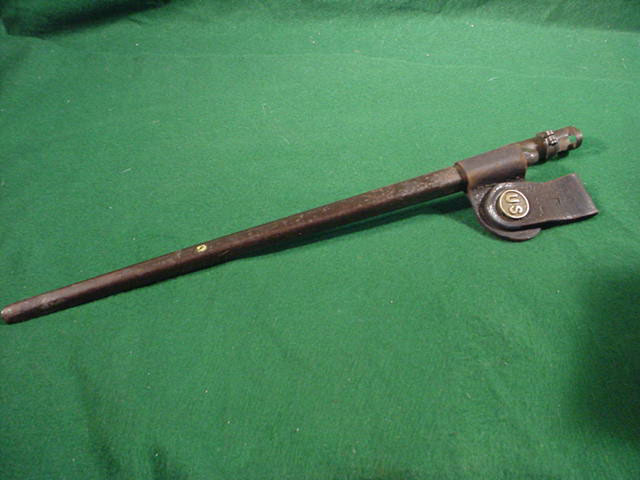
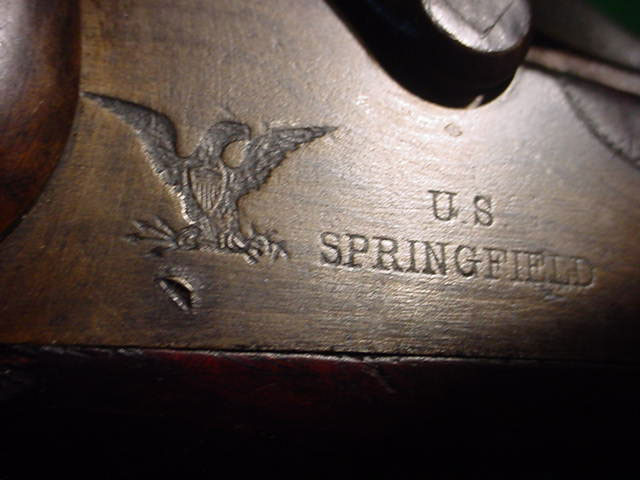
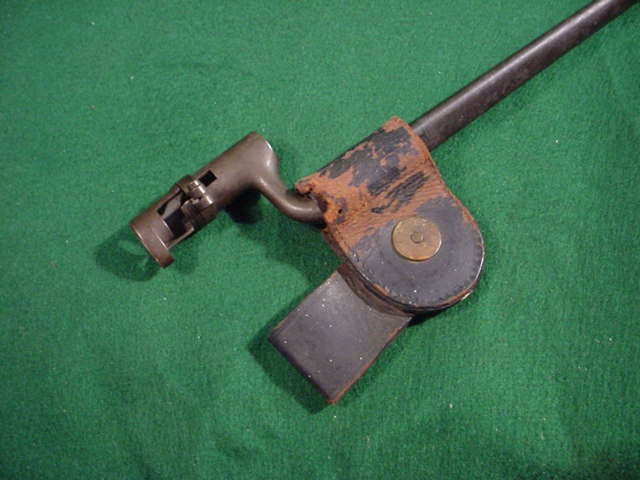
This is a really superior example with the original bayonet and scabbard. The bayonet is with the leather frog equipped with the dollar size bras plate with ( U.S. ) in raised letters. The cleaning rod is there and the original leather sling also. On the top of the trap door it is stamped (US Model 1884). The serial no. is 370983. On the lock plate is the American Federal Eagle and the words (US Springfield). The action is super tight and is like a brand new gun. The bore is excellent; the length is 51 inches altogether. The outside of the barrel is average with no rust or pitting. Case hardening can be clearly seen on the lock, door and hammer. They just usually don't come any better than this one. It is a great piece. (It really is!) I have fired it and is a real thrill to be firing this vintage antique that is still in perfect firing order.
PRICE: $2,800.00. On sale now and marked down to $2,000.00. This is really a “super bargain.” |
|
|||||||||||||||||||
|
|||||||||||||||||||
| DESCRIPTION:
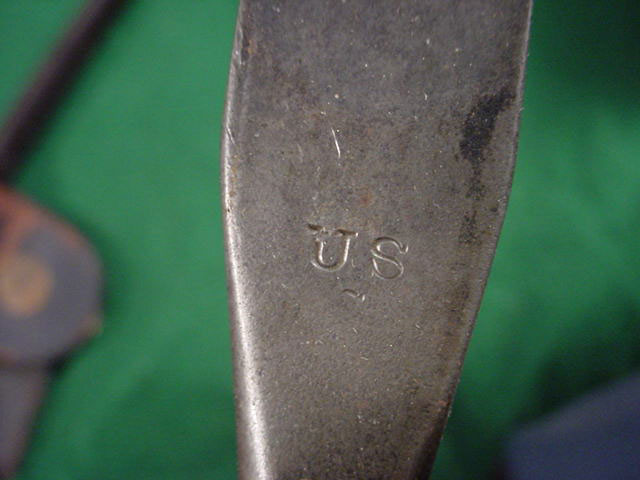
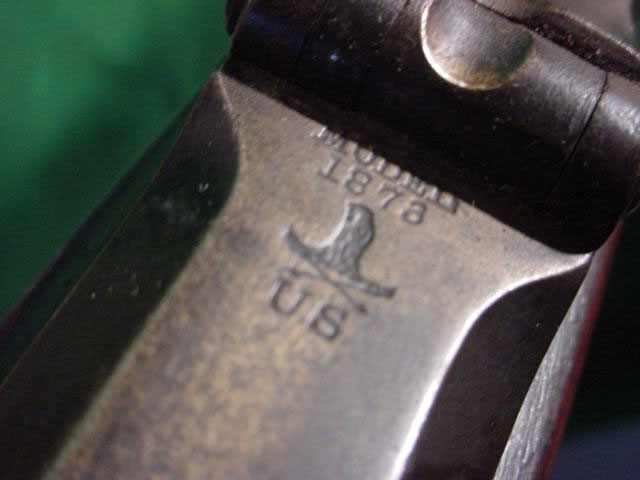
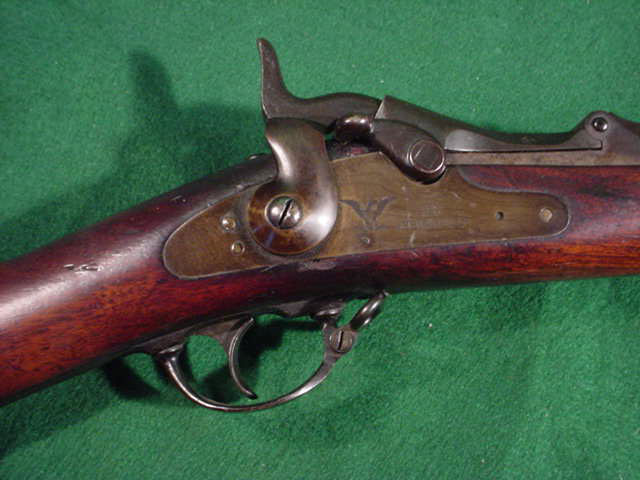
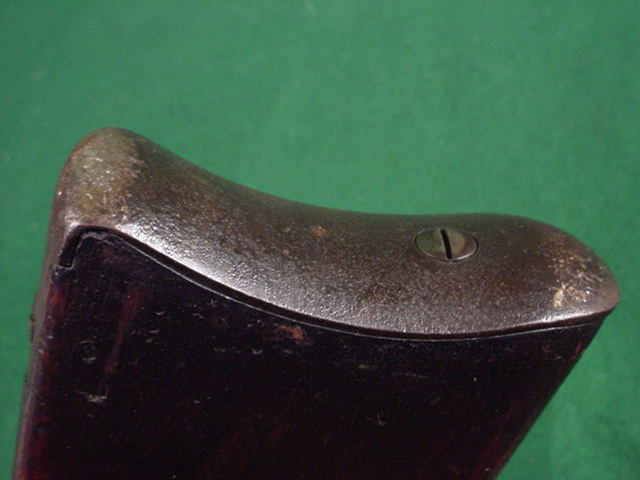
This is a fine example of the famed 45-70 Springfield trapdoor rifle that was used in the Indian wars and early in the Spanish American War. This is an exceptional specimen with exceptionally good metal parts that retain most of their case-hardened color. The barrel retains about 90 percent of its original bluing. The action is quite tight and functions like a new weapon. At the top end of the trapdoor, it says “MODEL 1878” with the eagle’s head over two arrows and “U.S.” Under this on the side place is “U.S. SPRINGFIELD” with the Federal Eagle stamp. The serial number on the breech is “242616.” The stock is slightly scratched, but unchipped. The butt plate is dark and marked “US.” No sling. The original cleaning rod is intact. This model has the Buffington rear sight; read more about these marvelous rifles on the internet. The overall length is 51 inches. All in all, this rare 1878 “shootin' piece” is in exceptionally good condition and worthy of a good collection or museum. These are handsome guns and prodigiously important to American history. You would do well to acquire one before they are nothing but history on paper.
PRICE: $2,400.00, but on special sale at $1,800.00 |
|
||||||||||||||
|
||||||||||||||
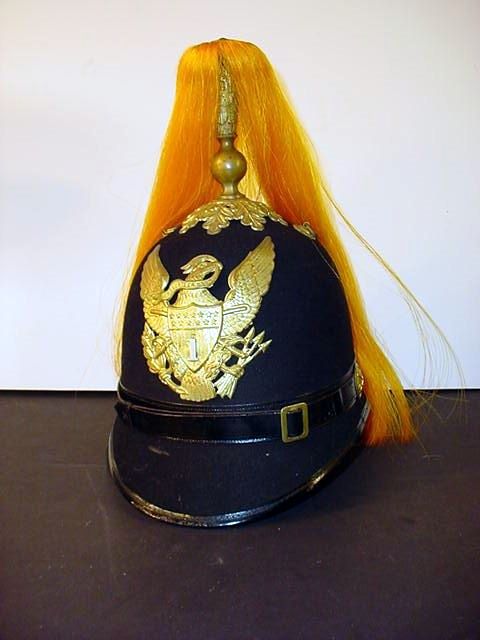
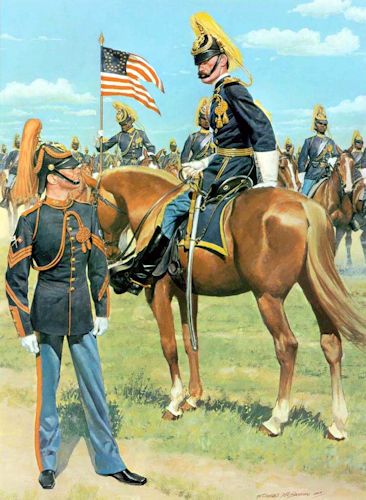
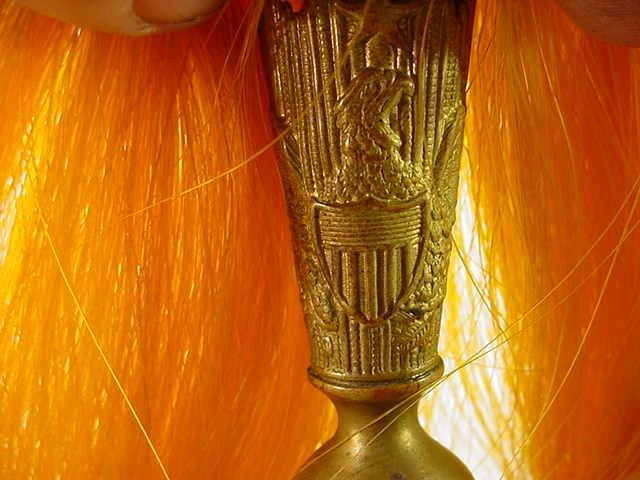
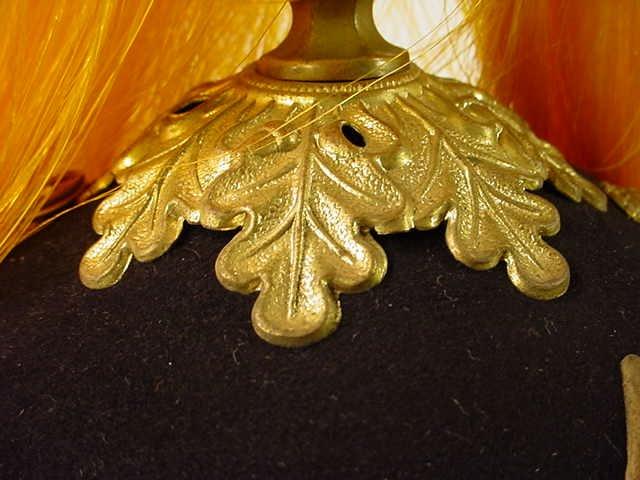
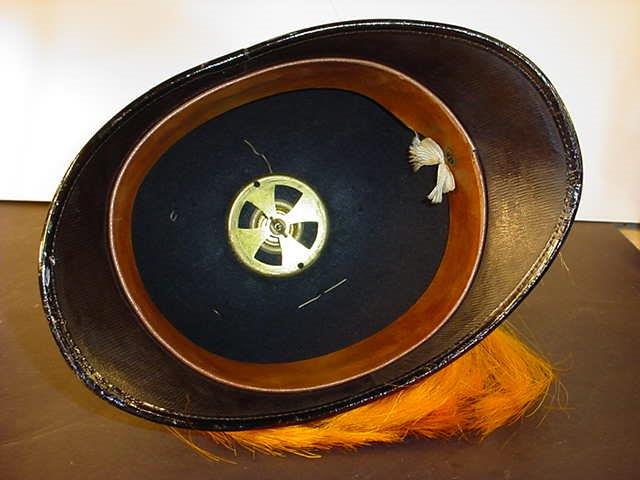
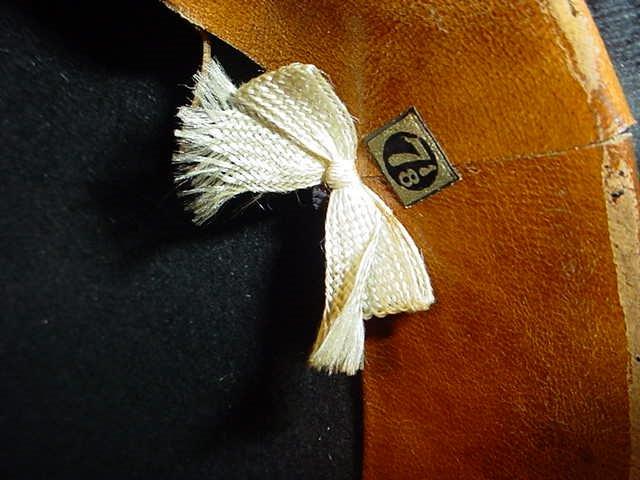
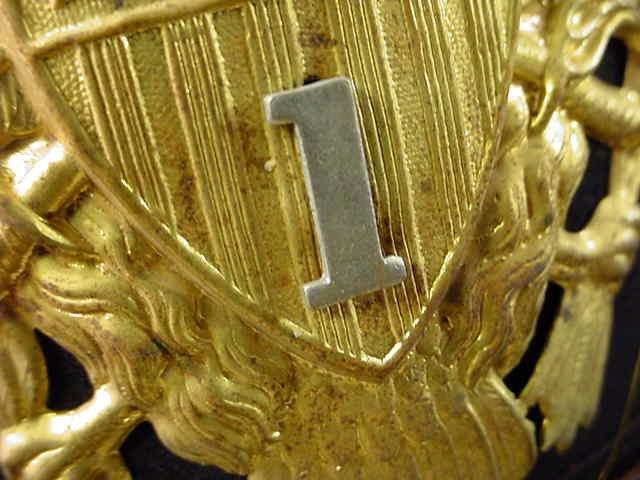
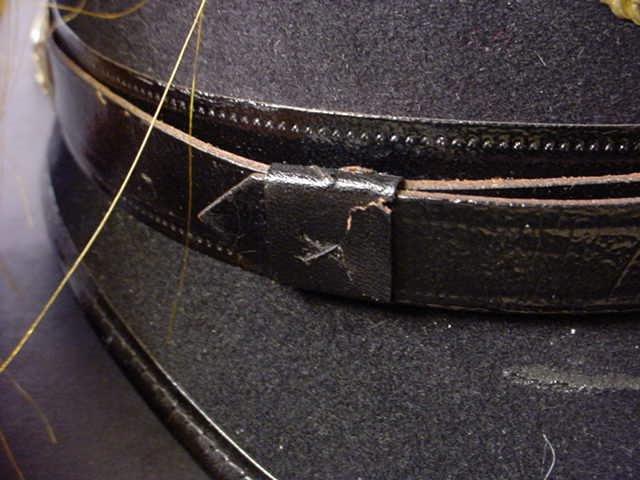
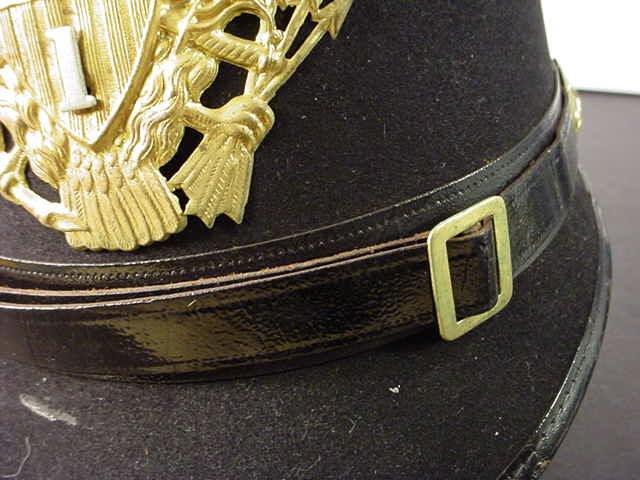
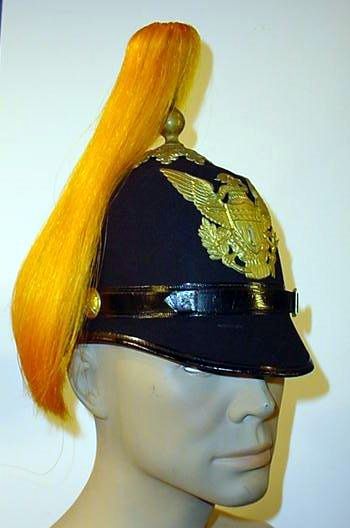
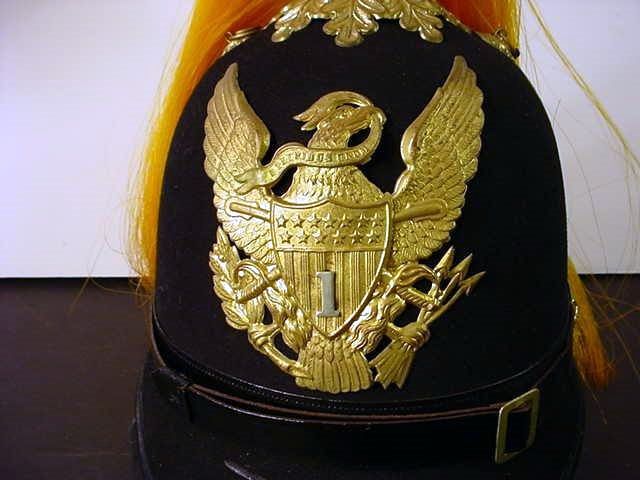
| DESCRIPTION: Here is the nicest-looking piece of headgear ever adopted by the U.S armed forces and it was virtually copied in the greatest part from the Prussian Pickelhaube or spiked helmet used in the Franco-Prussian War of 1870. It is the dress-style helmet used at reviews during the army’s genocidal wars against the American Indian tribes. The helmet when worn with the dress blues made a pretty picture indeed of the cavalry trooper in full dress. The helmet has a tin body covered in black felt. It has crossed cavalry sabers on the strap buttons. The most beautiful feature is the orange horsetail plume that flows from the upright spike device. The federal-eagle front plate with symbols has a silver number “1” that is in the middle of the U.S. shield. This stands for cavalry regiment No. 1. If you go to the web site entitled U.S. Cavalry versus the Indians 1832 through 1898 and follow the dates down the left column to June 1878 you will see a notation reading the following: “Captain Reuben F. Bernards (1st Cavalry) attacks Indians under Chief Egan at Silver Creek, forcing them to retreat. These Indians are Piute and Bannock.” I am sure much more can be found about the First Cavalry with a minimum of research, but this stood out for the moment. The helmet is in very fine condition throughout in a size 7 1/8 and was the typical manufacture by William H. Horst Company of Philadelphia. The golden lanyard-type brand of rope worn for some occasions is not with it, but this is usual as it was an accoutrement seldom worn. (only for high-dress occasions!). This is a wonderful piece of antique American headgear in incredible condition and very important historically. PRICE: $985.00; Seldom ever found in this pristine condition |
Page One |
Please refer to item designator in parentheses in all correspondence.
Please E-mail for any additional information you may need.