
|
Imperial Russia Page 5
|
|||||||||||||||||||||||||||||||||||||||||||||||||||
|
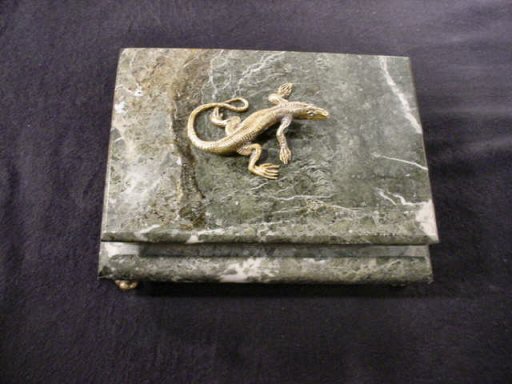
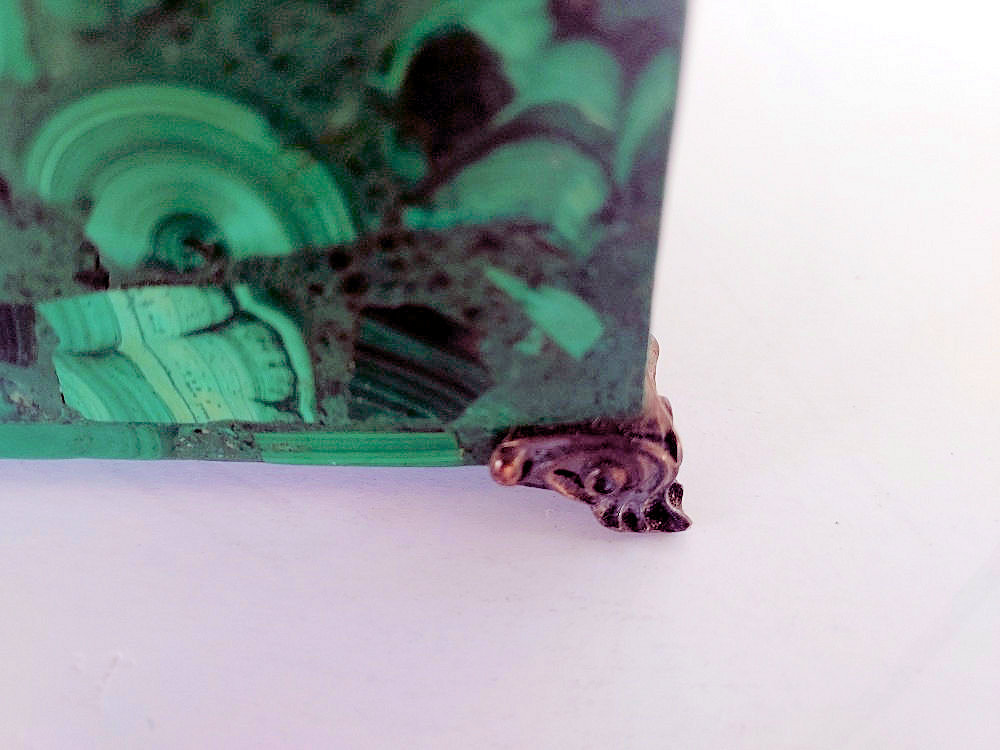
Russian Box (Granite) with a Lizard Motif (Item RUSO 5-3) |
|||||||||||||||||||||||||||||||||||||||||||||||||||
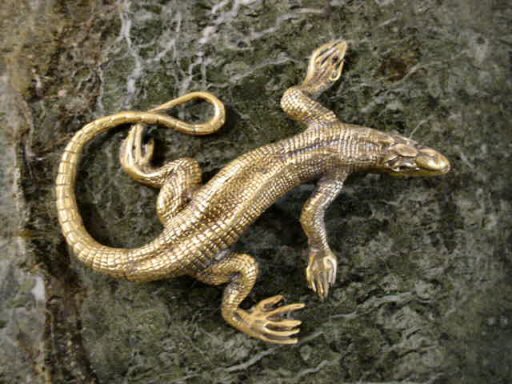
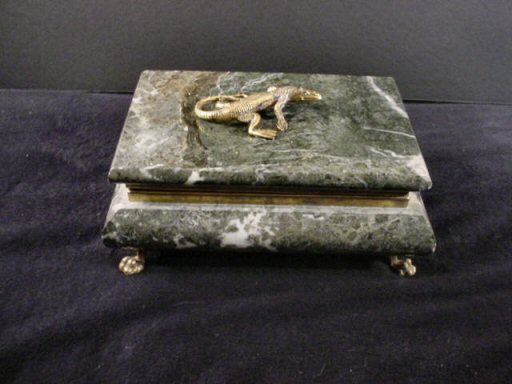
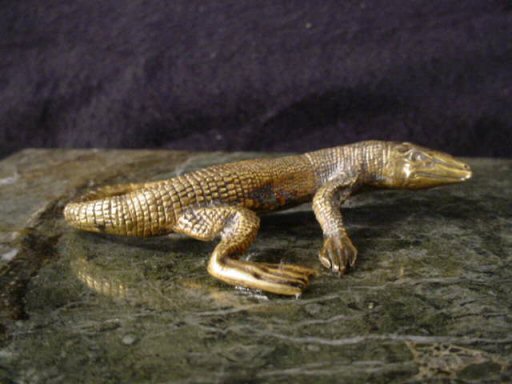
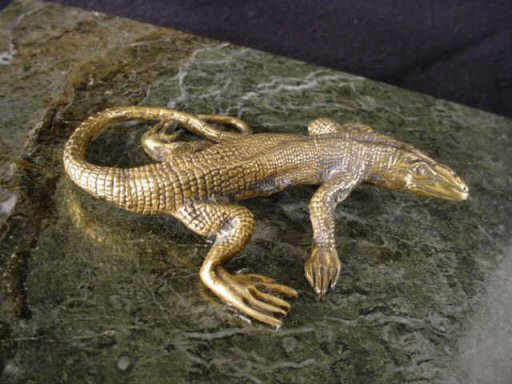
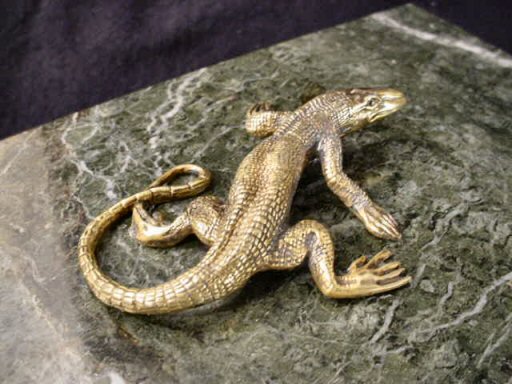
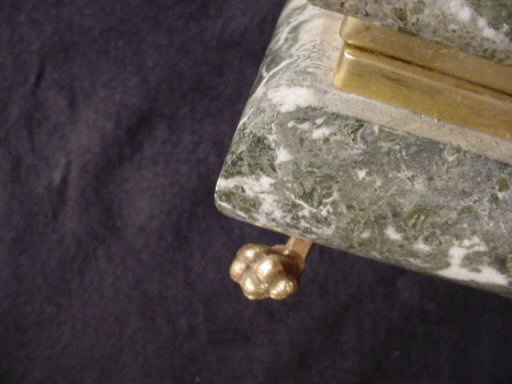
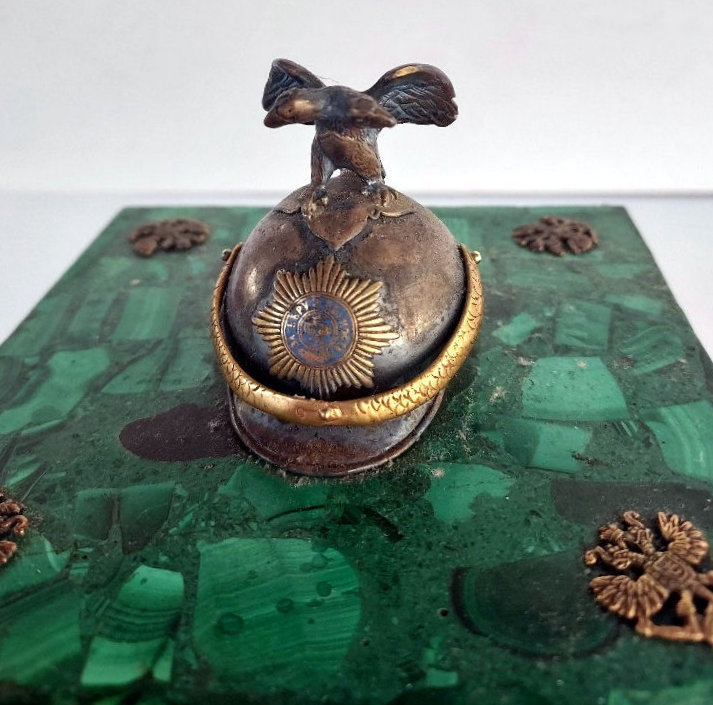
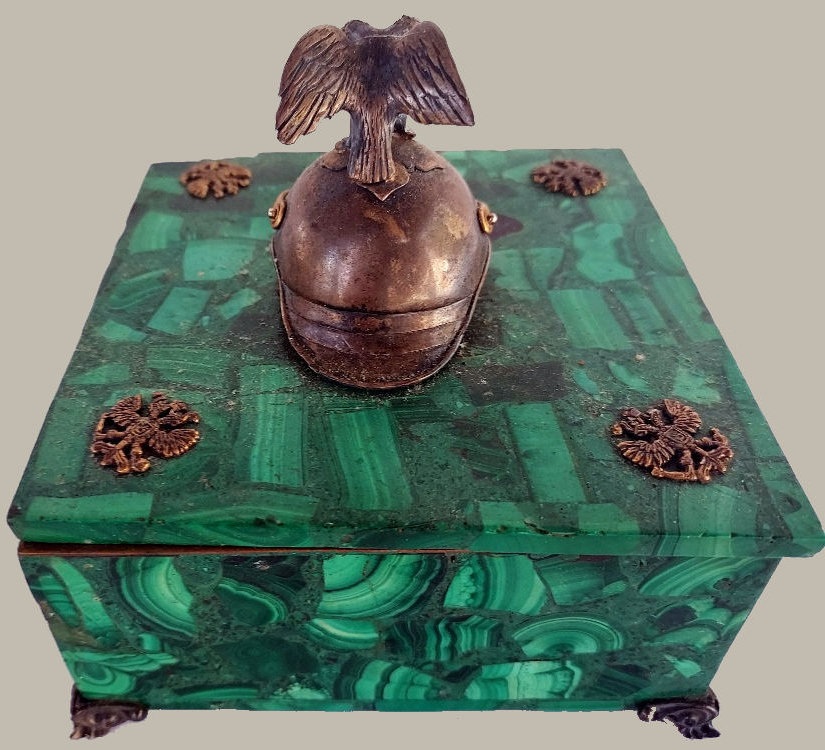
| DESCRIPTION: This is a beautiful box constructed from Russian granite with a lizard motif. Although possibly an old early 20th-century piece, it has been relined with a red satinlike lining. A lizard on the top of the box is in the Fabergé style. It measures 7 inches by about 5 1/2 inches across the top and is about 3 inches deep from the bottom of the claw feet to the top (not counting the lizard). The reptile is about 3 inches long with curled tail that if straight would be about another 3 inches. The bottom of the box is also covered with the red cloth material. This is a nice decorative piece that would nicely augment any good relics shelf.
PRICE: $550.00 |
|
Imperial Saddle Blanket Patch (Item RUSO 5-4) |
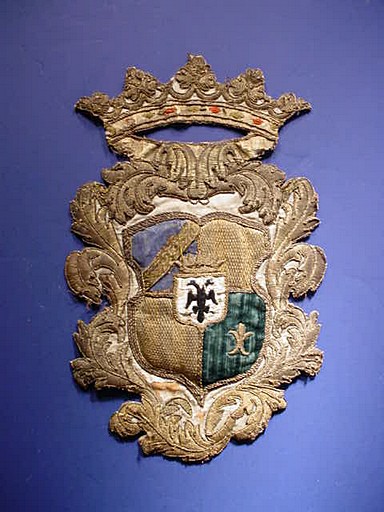
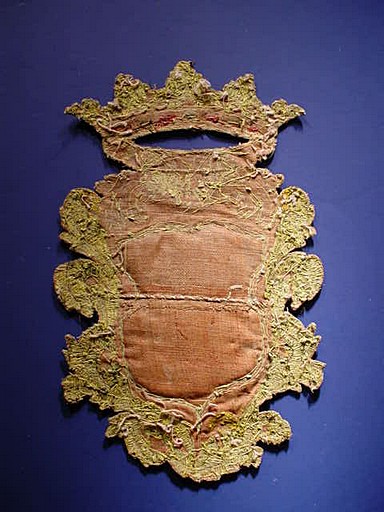
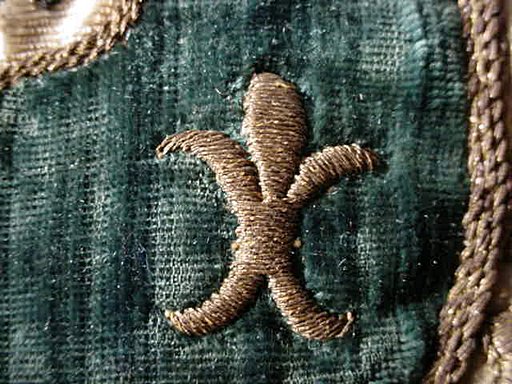
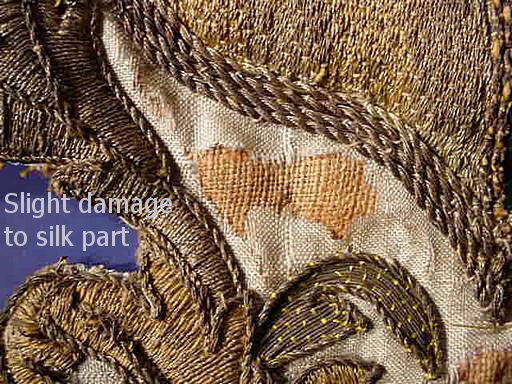
DESCRIPTION: This beautiful saddle blanket insignia must surely have belonged to Russian royalty. It was probably found in some deserted horse stable by German soldiers on their movement toward Moscow. It was later found in Germany at a military show. This patch is quite large - 7" wide by 11" high. The type of gold bullion thread and velvet panels suggest the 1830's or 1840's, or possibly earlier. It certainly is an item fit for a king or tsar. In those days, the equestrian arts were enjoyed only by royalty or extremely monied landed gentry. The condition is generally good with a little fraying in the silken parts. The bullion is all pretty much intact. This could be an 18th century piece just as easily as the latter. It certainly is a museum piece and probably very important. You be the judge! PRICE: $485.00 |
|
||||||||||||||||||||
|
Magnificent Grenadier Guard Miter (Item RUSO 5-6) |
||||||||||||||||||||
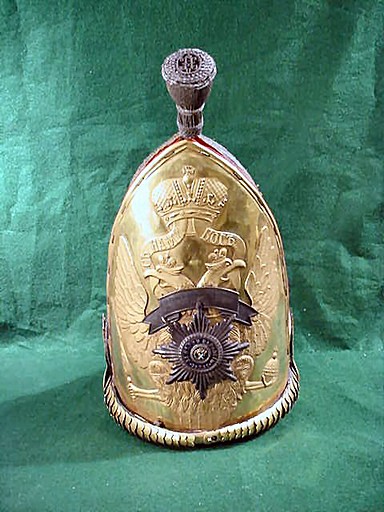
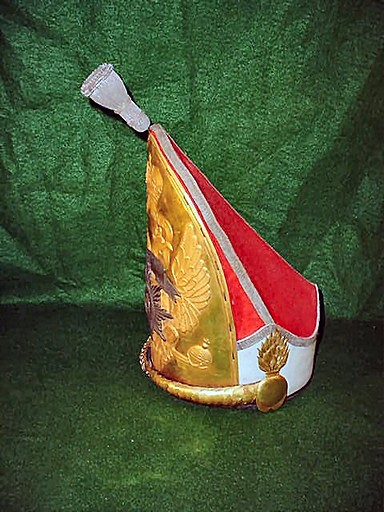
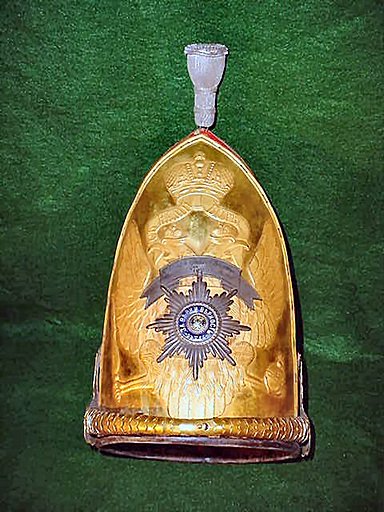
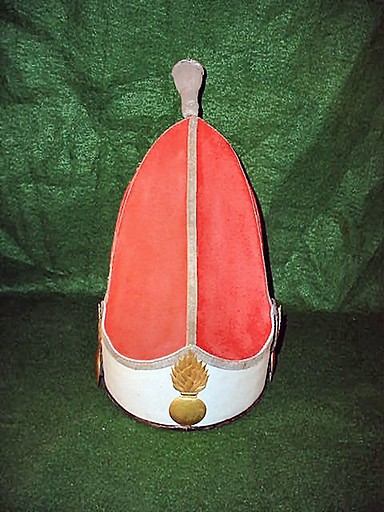
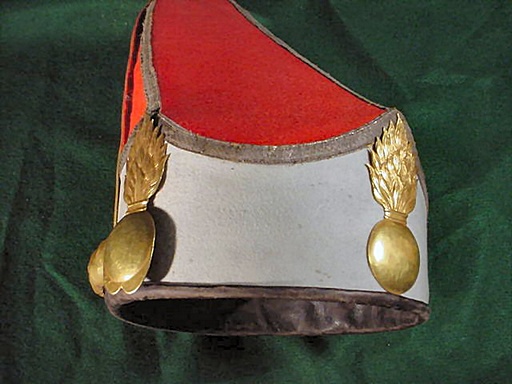
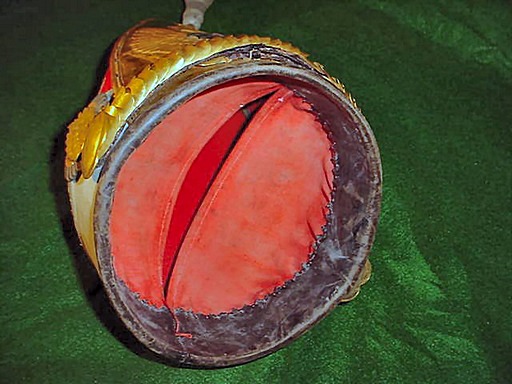
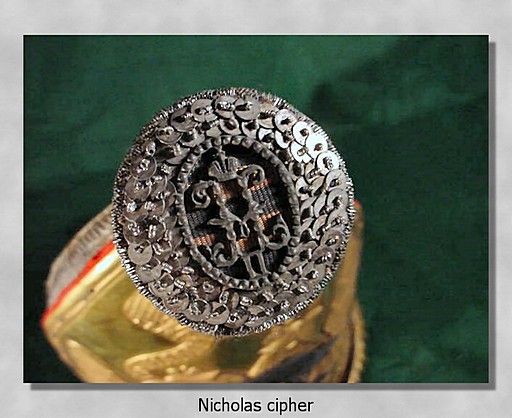
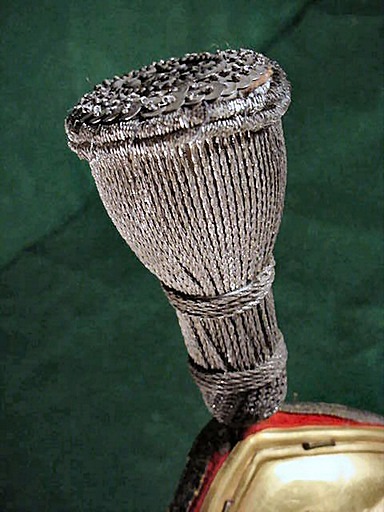
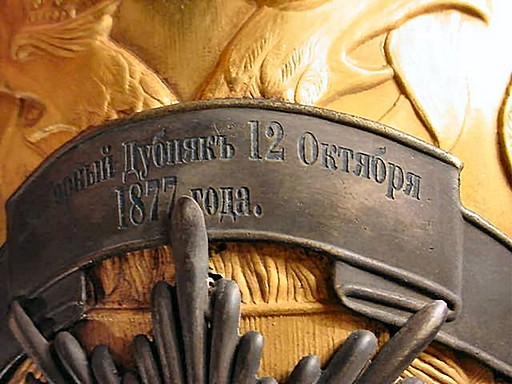
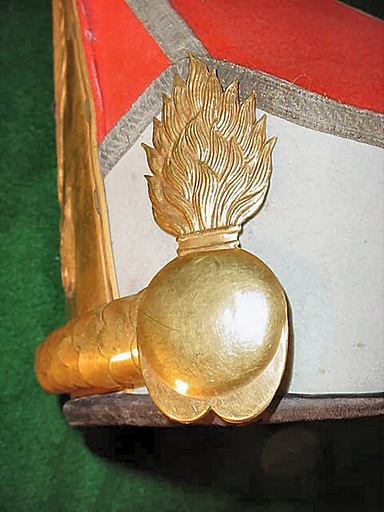
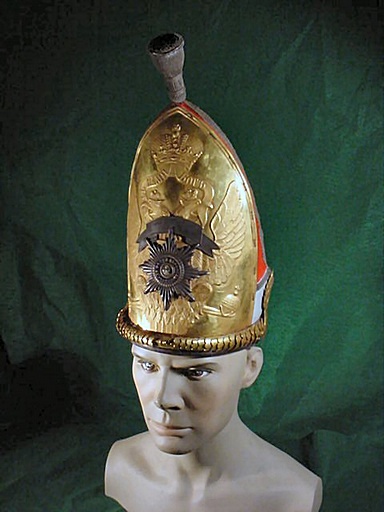
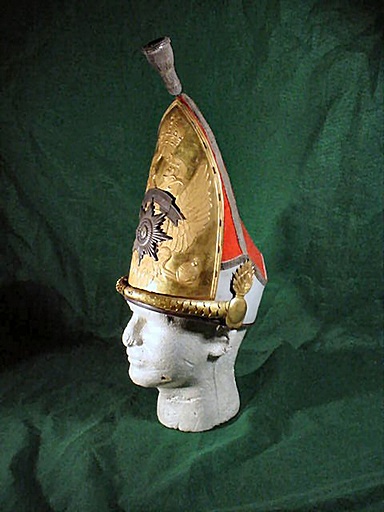
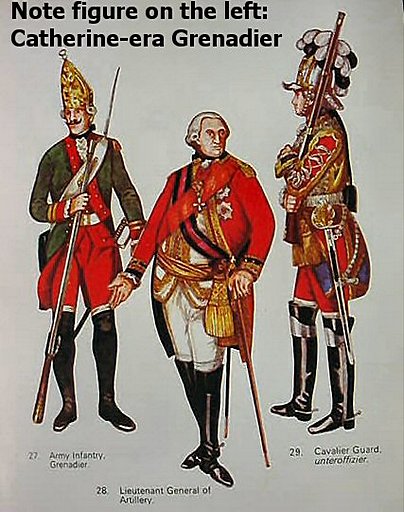
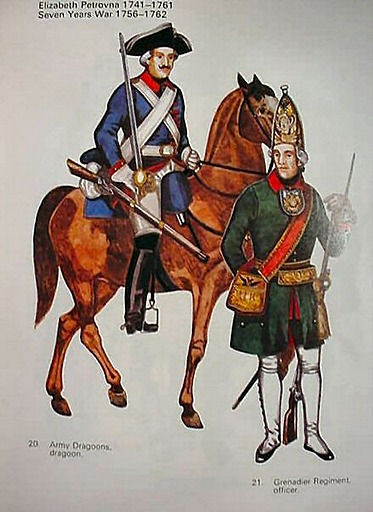
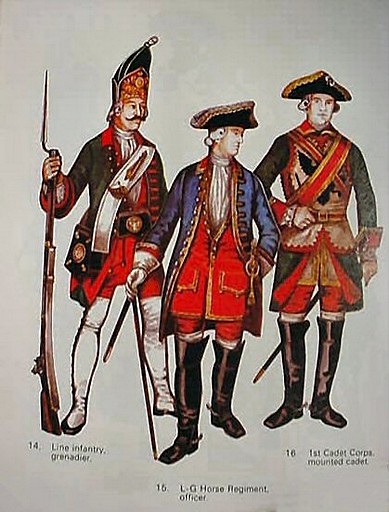
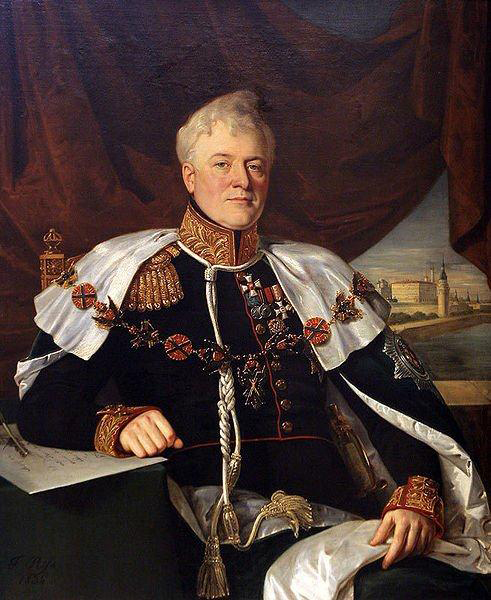
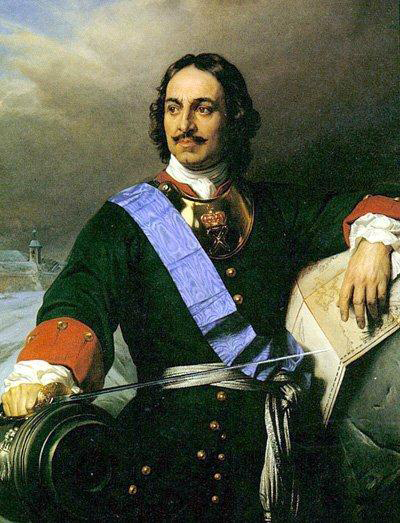
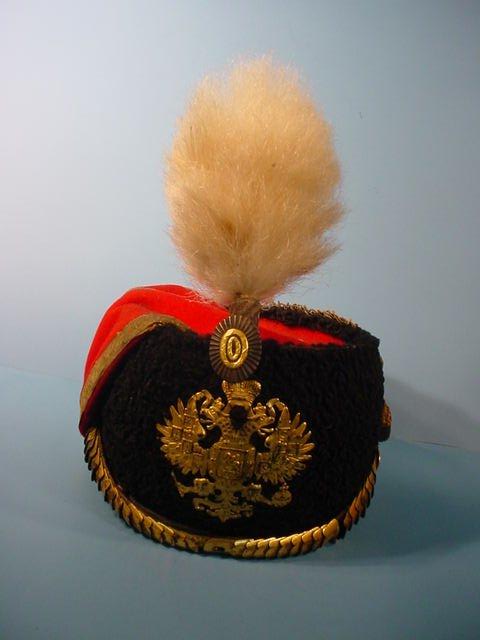
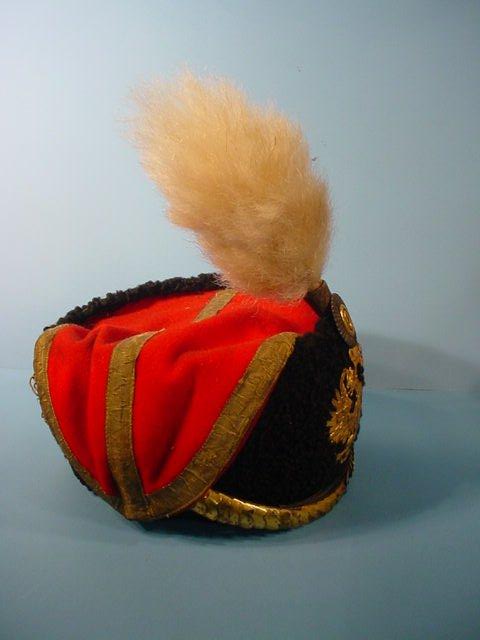
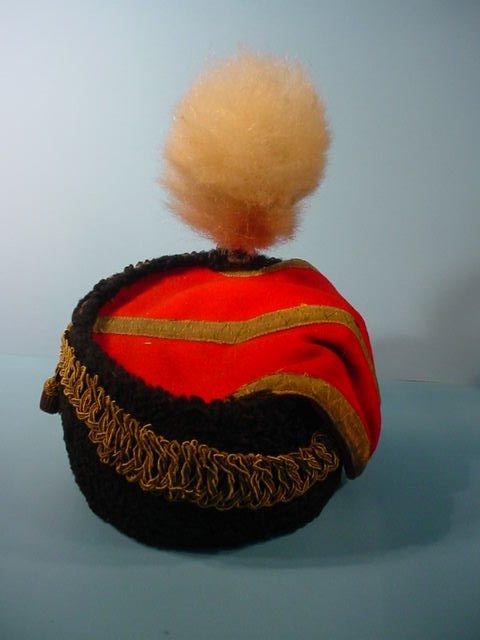
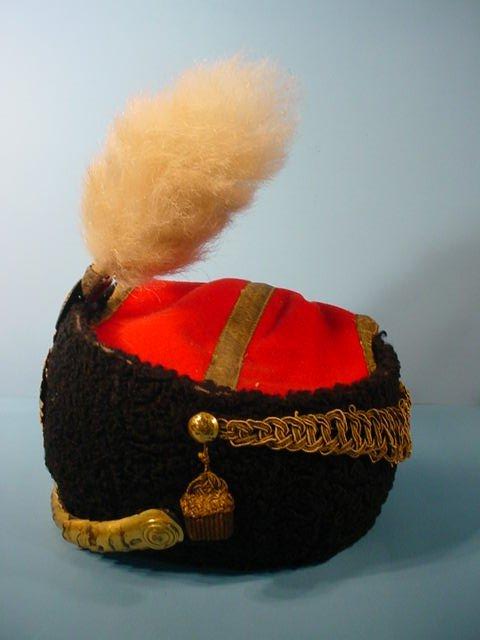
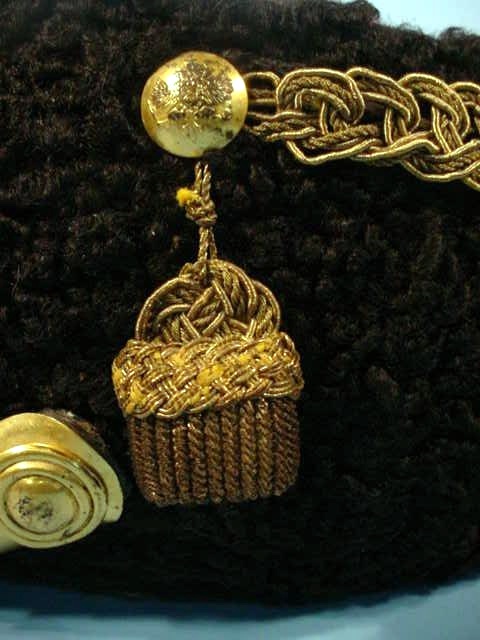
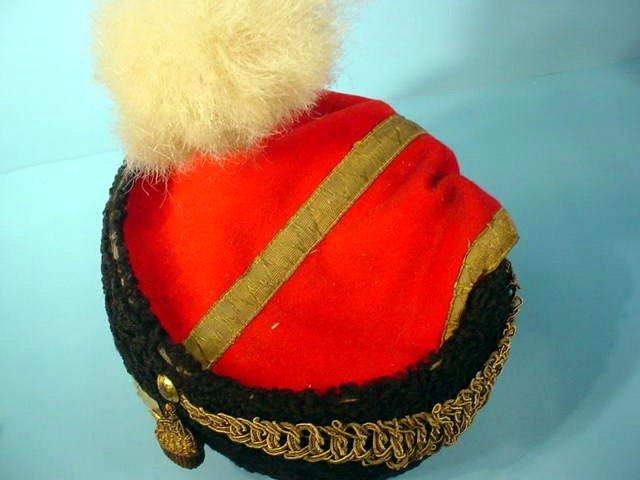
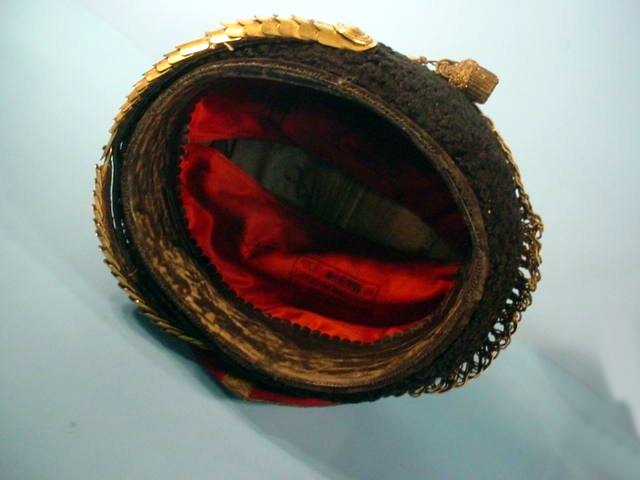
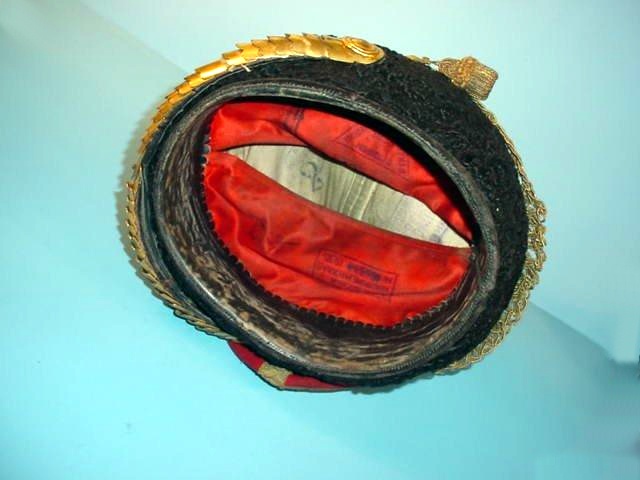
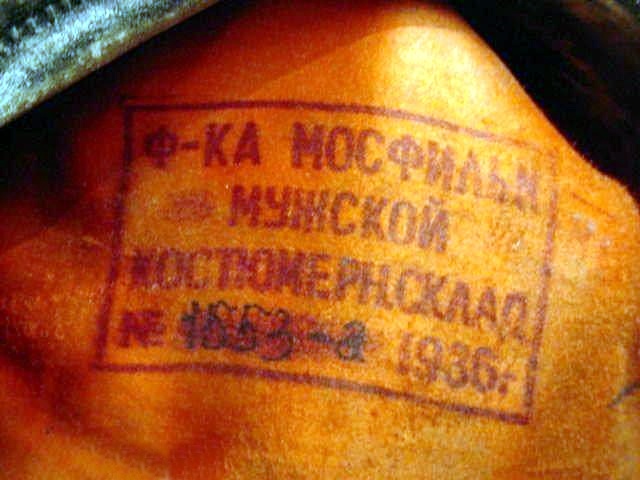
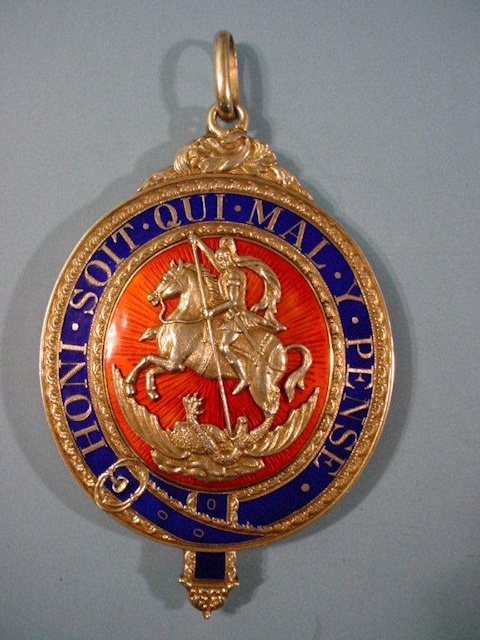
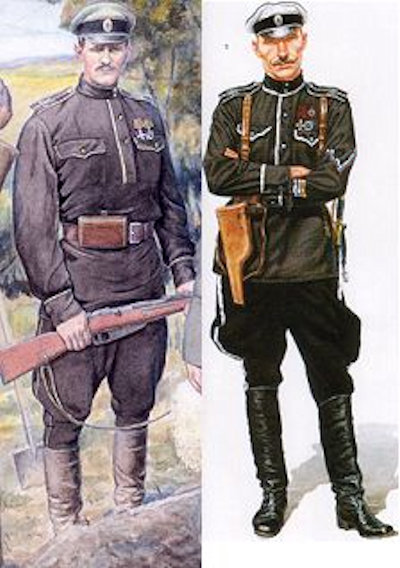
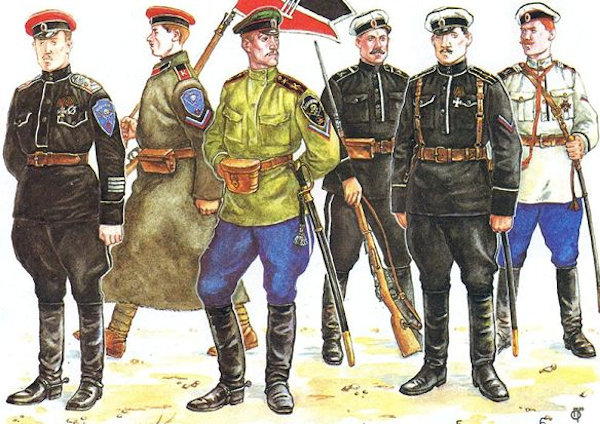
| DESCRIPTION: This is fantastic! a Grenadier miter in immaculate condition; right out of a Russian museum collection. It shows the crown of Catherine the Great at its top, and below is the motto, “God is with us.” Below this is a metal scroll that translates roughly to “Mountain Dubniyk 12 October 1877.” This was a battle honor for the guards who fought in the war against Turkey, and it says “For your beloved loyalty.” The star is the St. Andrew's Order won by the Regiment and could be worn on its headgear. The pom-pom at the top contains the colors of the St. George Order and the Cyrillic ‘H’ which is formed like the English ‘N’ for Nicholas II of the Romanoff Dynasty. The date of this miter is somewhere between 1880 and 1890; it could be as late as 1914. The Grenadiers who wore this were part of the Imperial Guard Regiment who, along with the Garde du Corps, who wore the metal helmet with the double-headed eagle at its top, guarded royal functions and personalities. We have borrowed some published pictures to illustrate miter-wearing Grenadiers through the historic epochs of Russia. This is an incredible piece, which is museum preserved, and we had to do some incredible trading to procure it. I think it is one of the most fantastic pieces of headgear that I have ever seen. It's absolutely stunning!
PRICE: $12,000.00 |
|
|
||||||
|
Communist Order of the Red Star (Item RUSO 5-7) |
||||||
| DESCRIPTION:
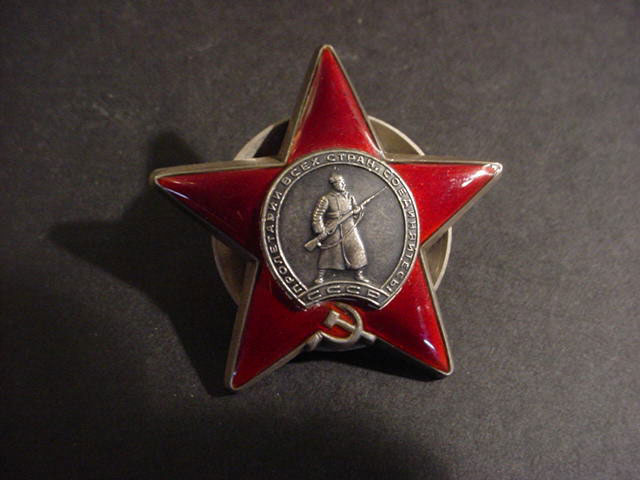
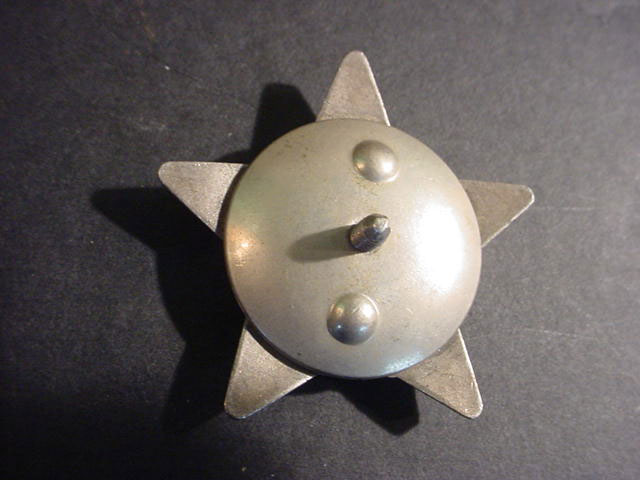
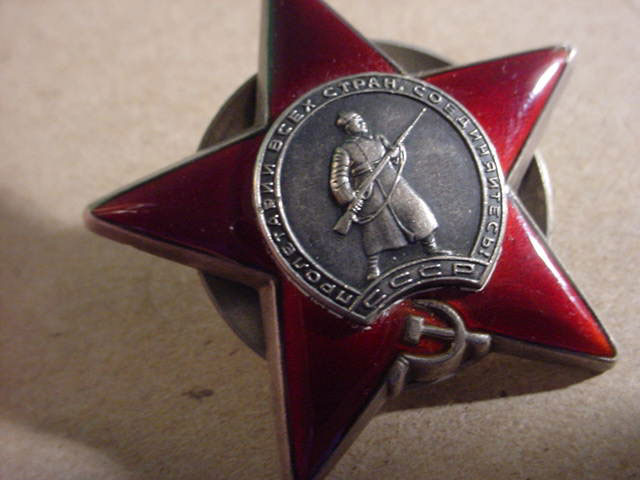
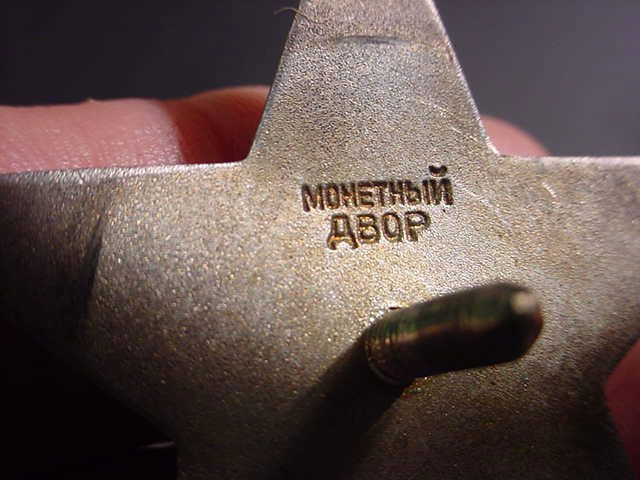
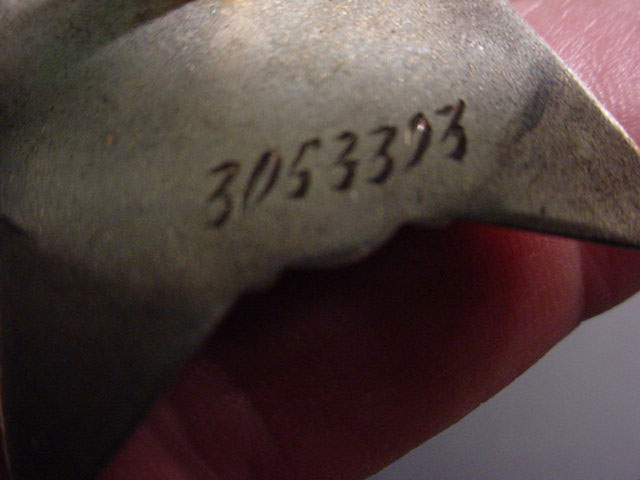
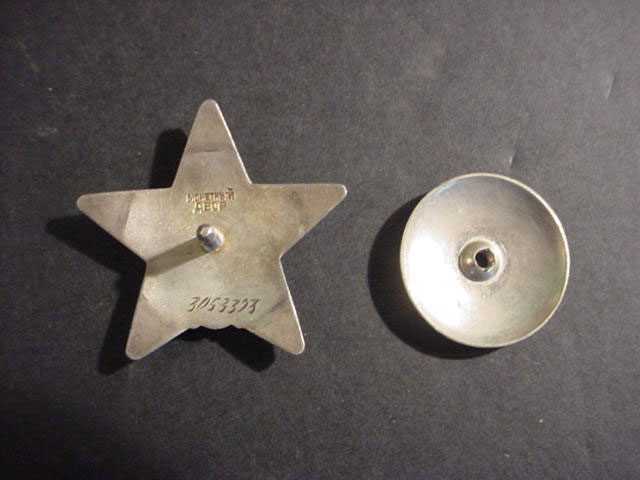
We prefer not to handle communist items.we despize communists and their fellow travelers in WWII and NOW ! Those who know us know where we stand on this. We know nothing about these items but we do know that the 4 of them we have are 100% genuine. We went to a site named “Collect Russian” and “Under the Order of the Red Star”; we see nine pieces listed and photographed. They range in price from $125 to $23,000. We will assume (perhaps mistakenly) that ours fall into the lowest class and this is the $125 to $260 category, so we will approximate ours to be in between because they are in better condition than the $185 one listed in the “Collect Russian” site. The WWII type screw plate is original and the number of the “unknown looter” is on the back. So here it is offered to you today with the complements of the folks who brought you the murder of the Tsar, the starvation death of millions in the Ukraine, the murders of countless German citizens and soldiers after the War, the wanton murders of many Hungarians, Czechs, and Cossacks. Makes you want this “hero medal” for sure doesn’t it?? Perfect condition with red enamel; the color of “Hell , Fire and Brimstone”.
PRICE: $250.00 |
|
|||||
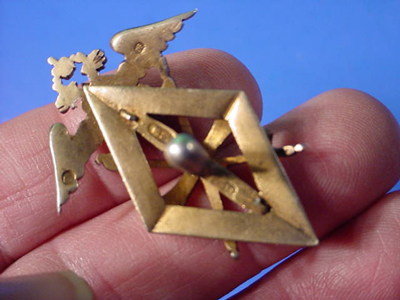
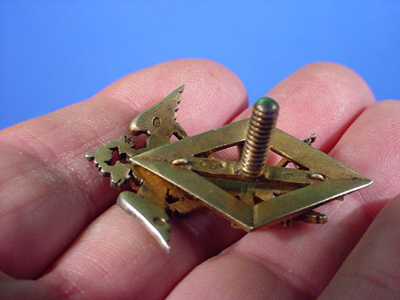
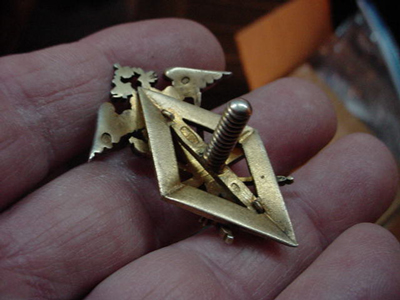
A Beautiful Imperial Russian Badge (Item RUSO 5-9a) |
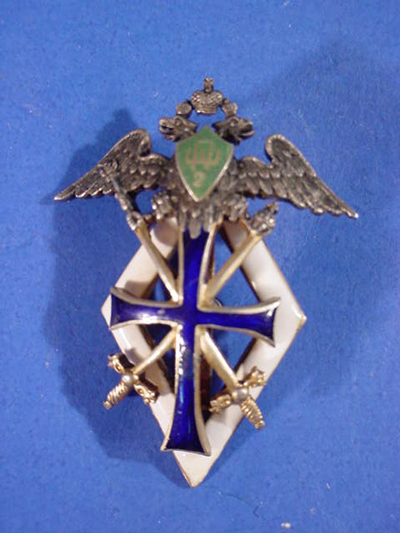
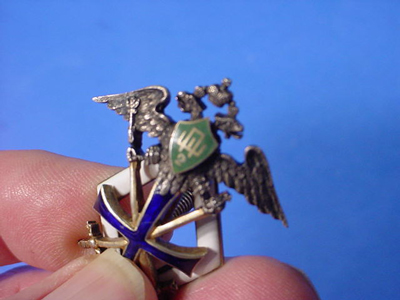
| DESCRIPTION: This is a badge for graduates of the higher institutions taking officer candidate training. There were several schools that used the same basic badge.The only difference is that the shield on the eagle indicated the city or local where the school was situated. The young man wearing this badge could be as proud as a peacock. It indicated he would go far in the military service of the Motherland. As usual in these badges they are practically Faberge quality with fine definition even under magnification. It has the Russian stamp the back indicating that it’s struck in silver (84) and has makers stamped marks. A little jeweler’s masterpiece. PRICE: SOLD |
![]() |
![]() |
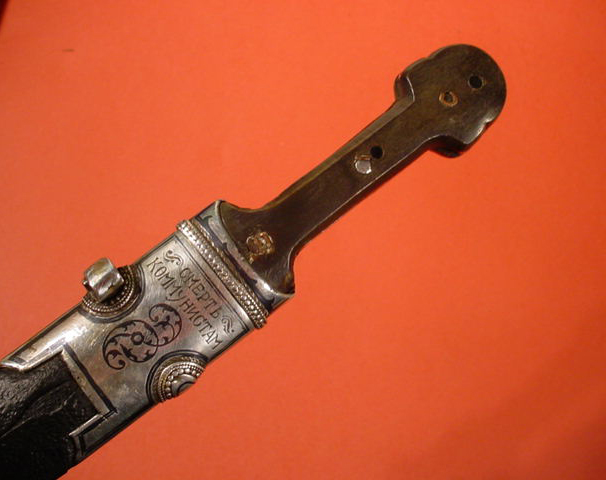
Large Cossack Kindjal with Anti-Communist Inscription on Scabbard (Don Cossacks) (Item RUSO 5-9) |
||||
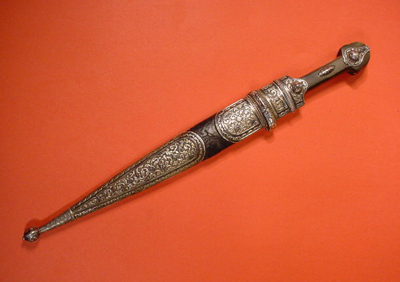
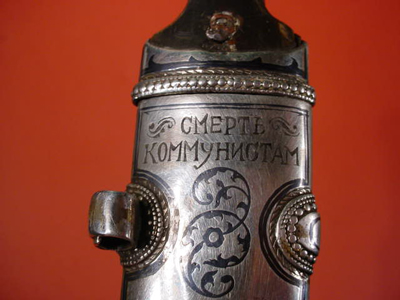
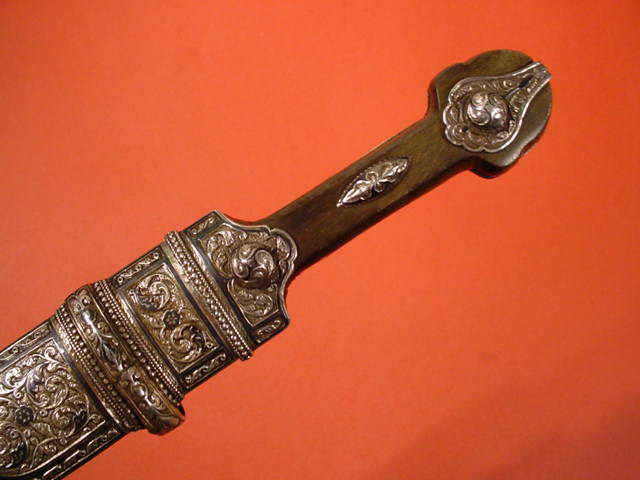
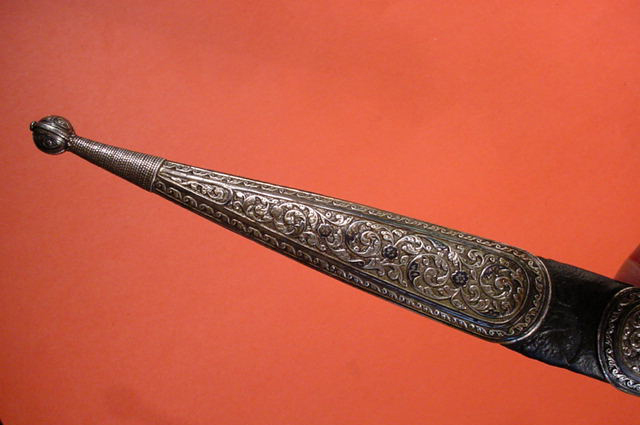
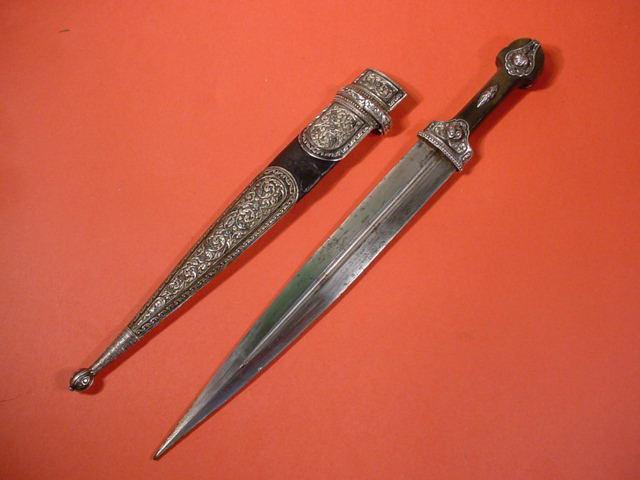
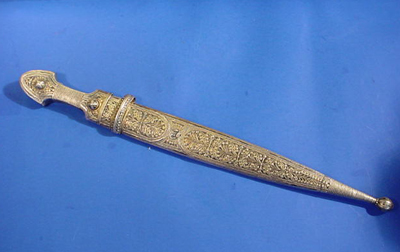
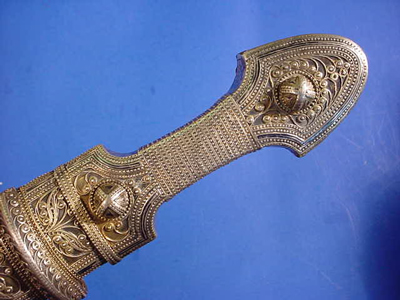
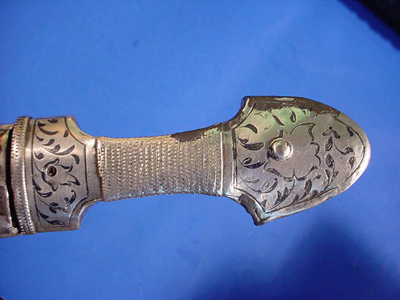
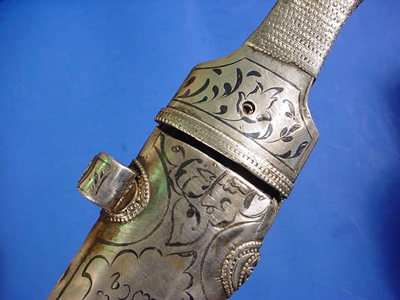
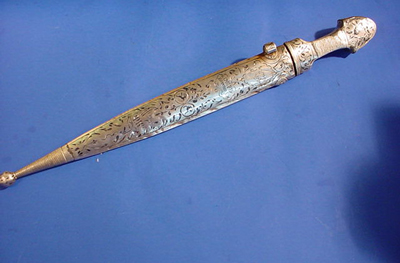
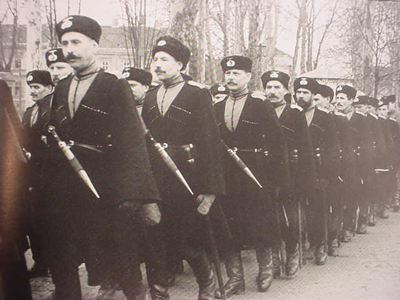
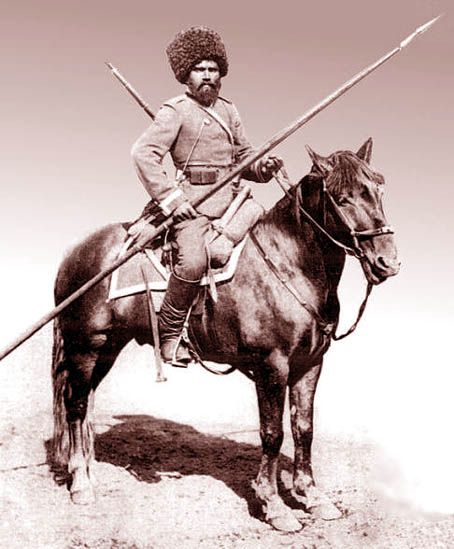
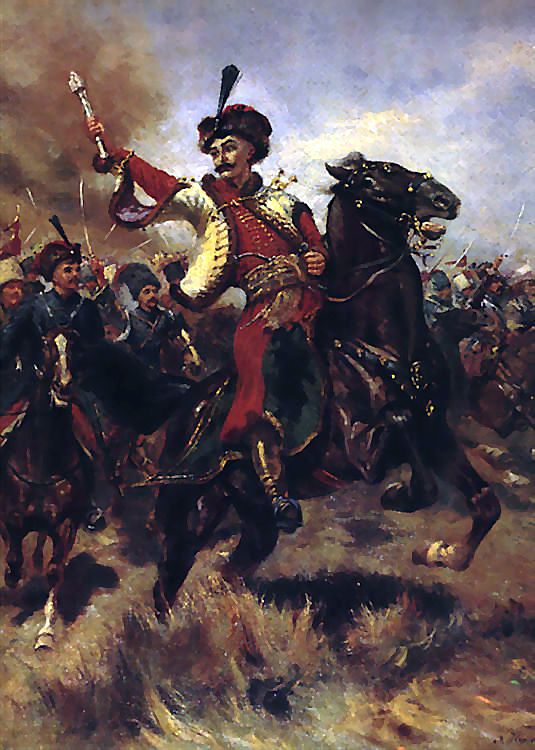
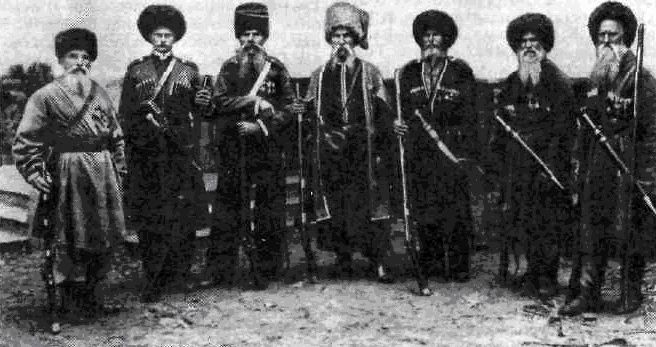
| DESCRIPTION: This is a very fine, large, elaborate Kindjal (dagger) of the Don Cossacks. This culture group was originally made up of nomadic peoples who settled in the middle and lower Fertile Steppes of the Don River.
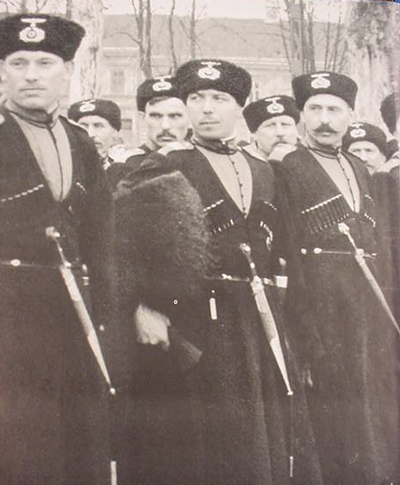
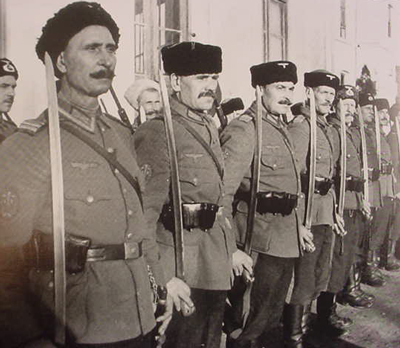
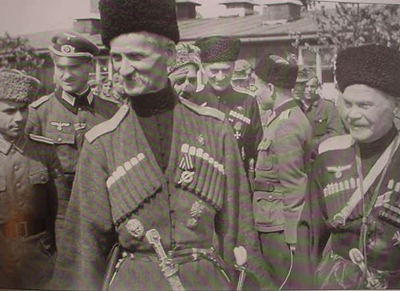
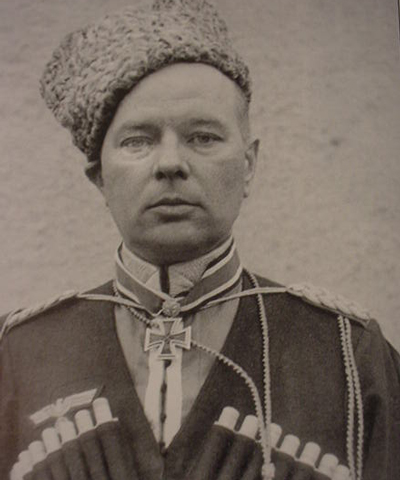
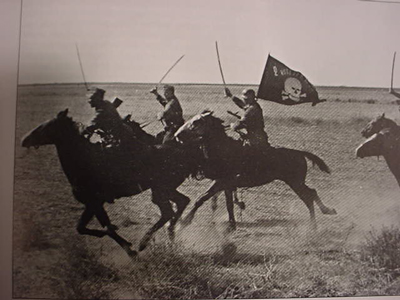
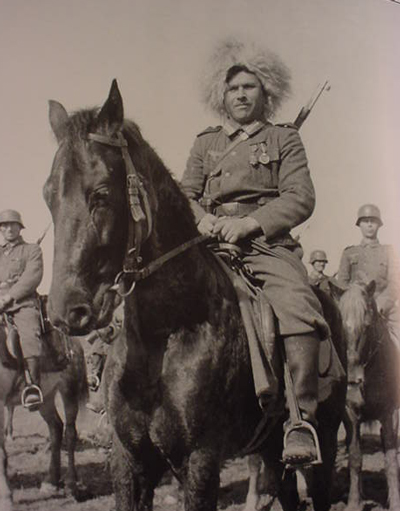
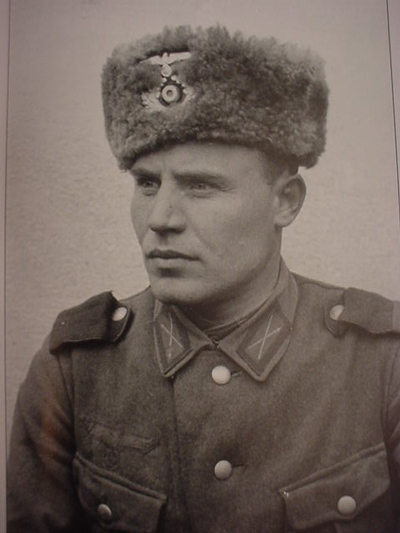
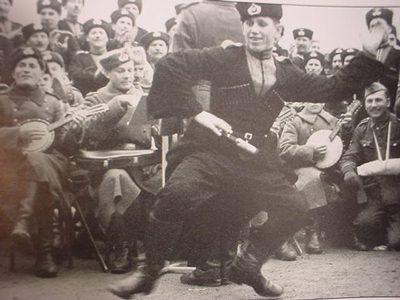
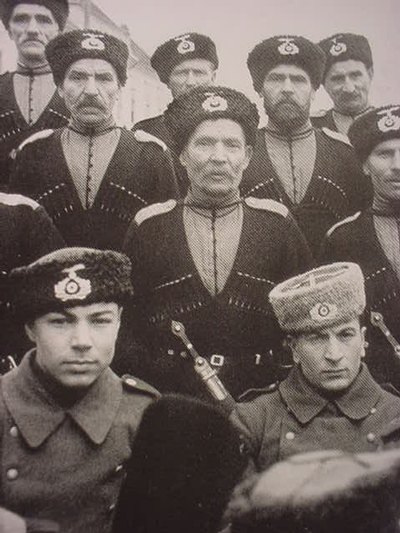
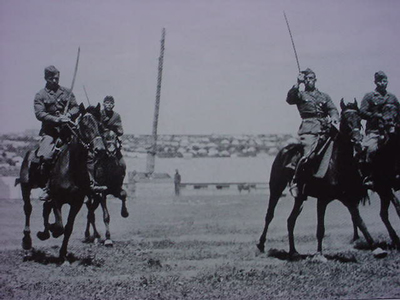
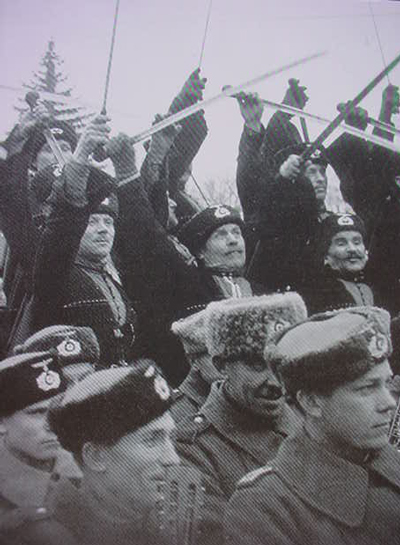
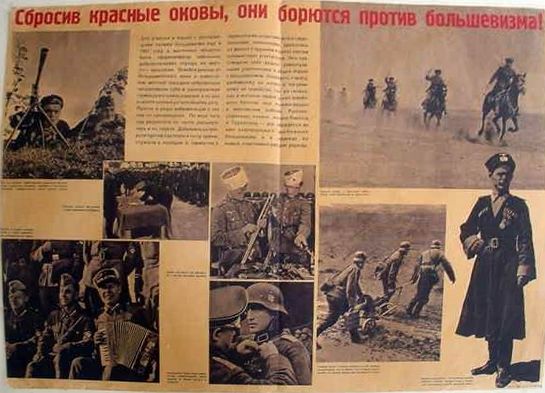
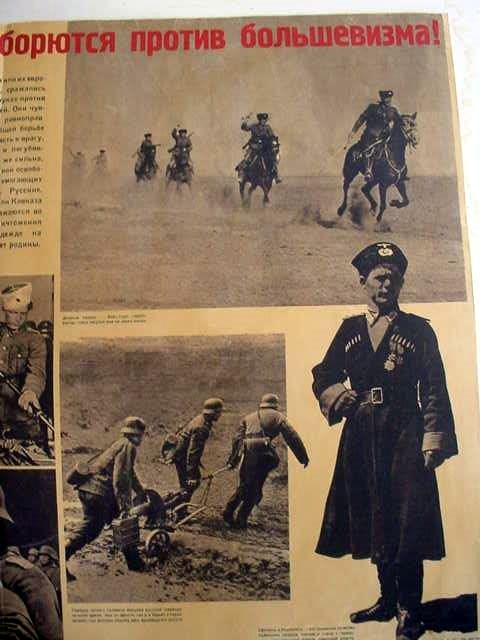
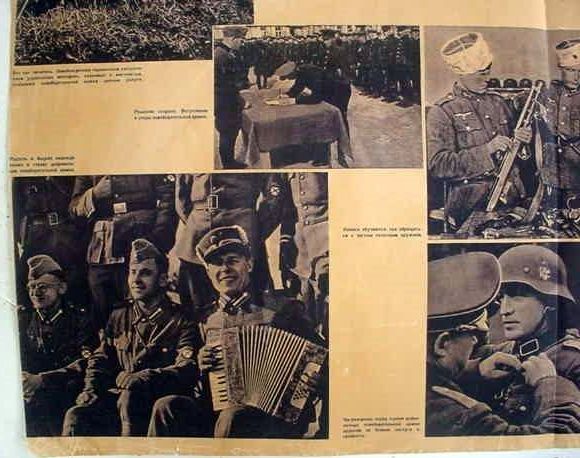
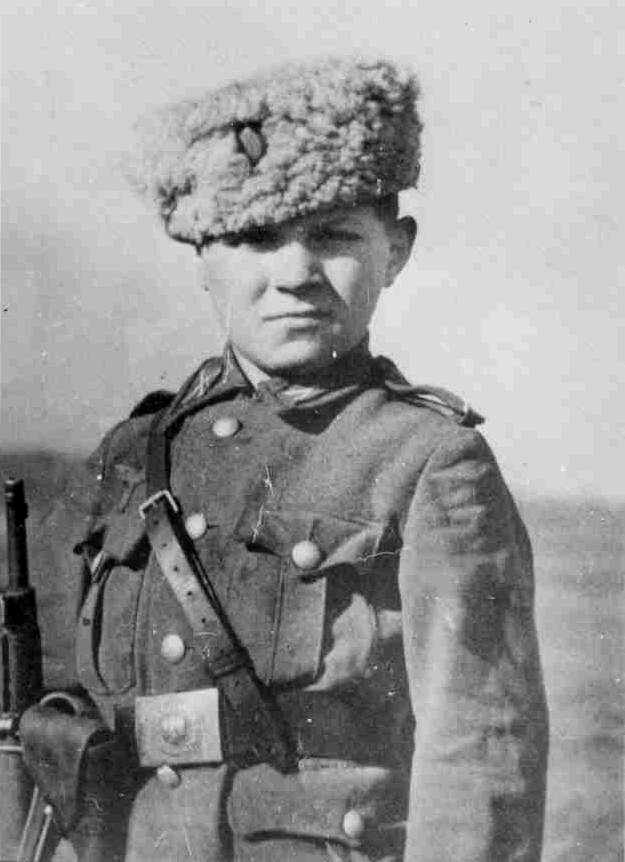
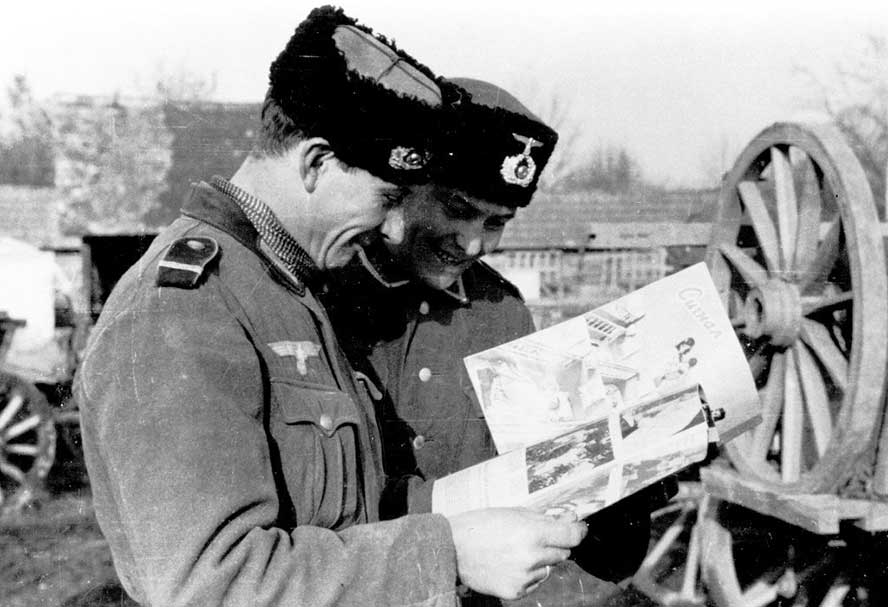
They were fiercely loyal to their Russian Motherland. They were supporters of the Tsars and after the Red Revolution, many of them were attached to the White Armies. Early during the Revolution they established the Don Military Government and fought bravely against the Bolsheviks. During World War II, many Cossack groups joined with the Germans to fight their traditional enemy Soviet Communism.
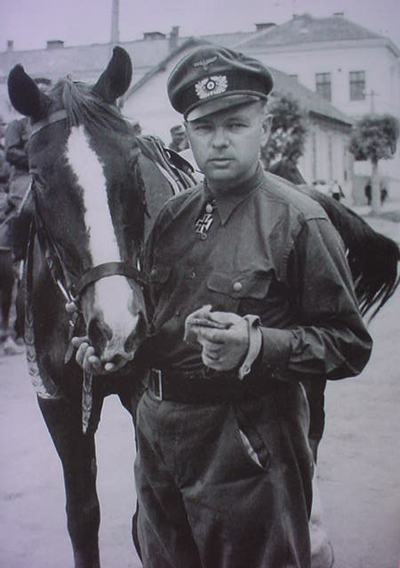
In April of 1942, Adolf Hitler gave his personal consent for the establishment of Cossack units within the German Wehrmacht and, subsequently, a number of such units were in existence. In the summer of 1943, the 1st Cossack Division was composed of seven regiments, two Regiments of Don Cossacks, two regiments of Kuban Cossacks, one Regt. of Terek Cossacks and one Regt. of Siberian Cossacks. The names Von Pannwitz, the German Commander of the 1st Cossack Division, and Kononov will live in the laurels of glorious history once revision of the lies has brought history to the truth! For more information about the Cossack Division and Helmuth V. Pannwitz, go to Art Executed by a German Master - Art Master 1-10.
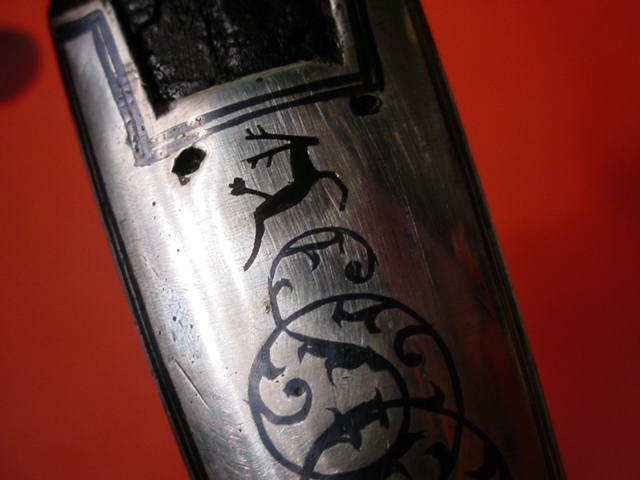
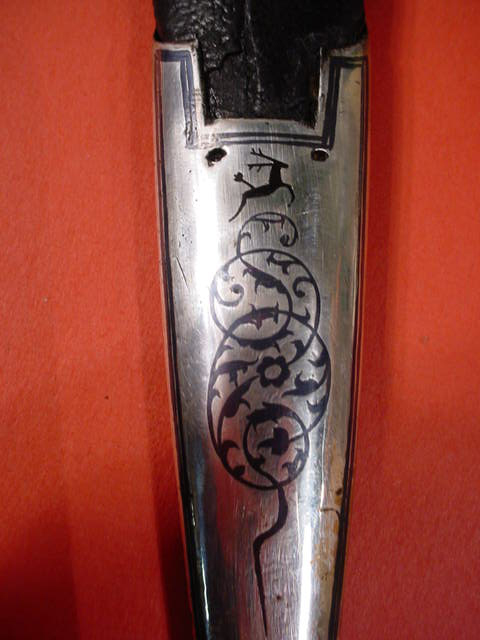
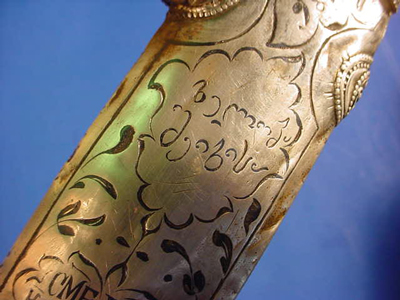
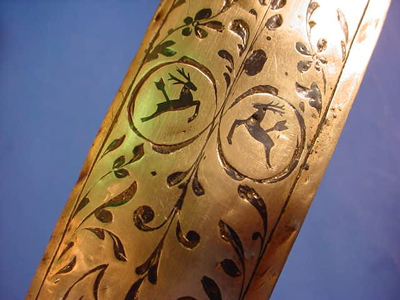
The symbol of the Don Cossack Regt. No 1 is the rampant deer with an arrow piercing his back. This escutcheon can be found in Niello work on the scabbard of the Kindjal.
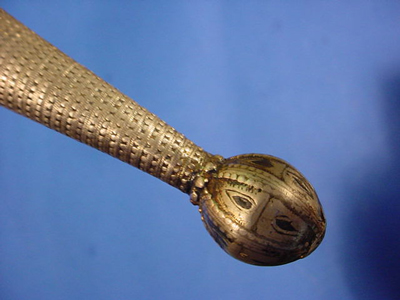
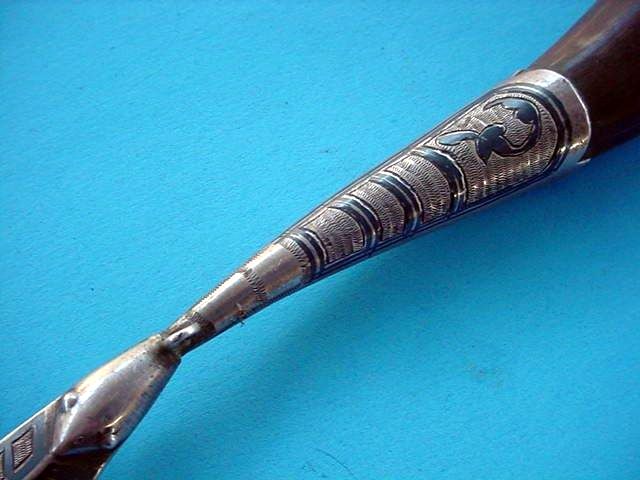
Niello is a process used for centuries by Russian, Turkish and Eastern specialists on jewelry, furniture, and weapons. This is the art of filling incised regions with various metallic alloys to bring out a special design. Kindjals and Shaska (Swords) are often decorated in this ancient manner. The back of this scabbard and the dagger's grip are highly decorated in this motif.
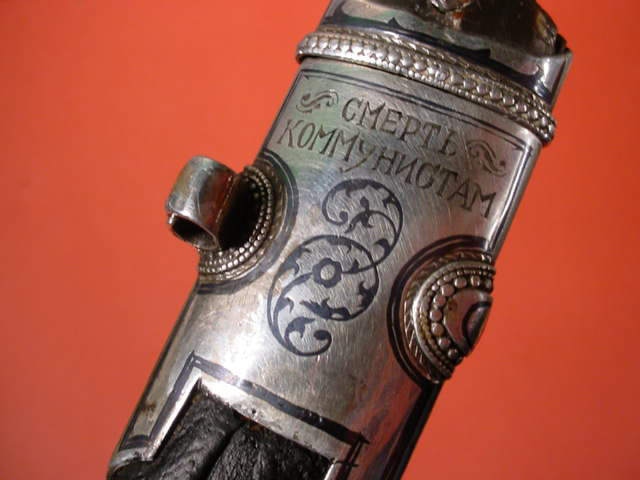
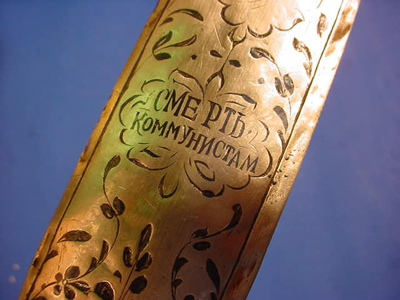
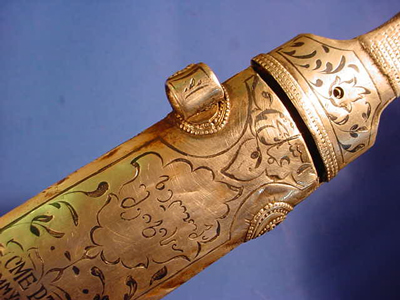
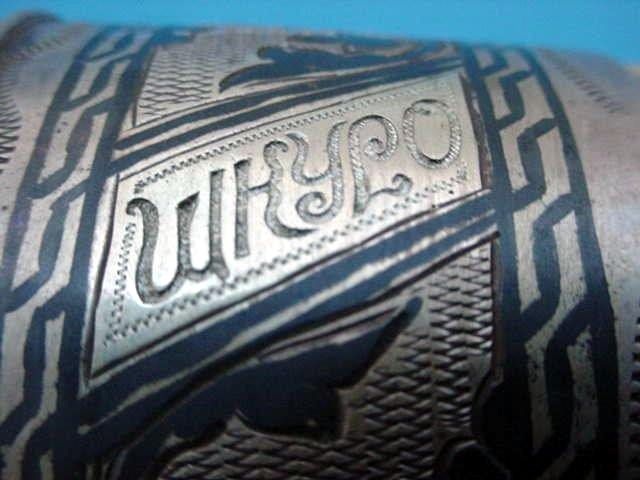
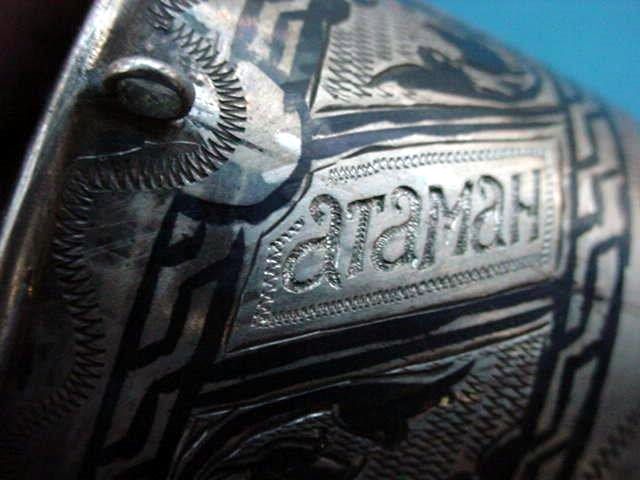
At the top of the scabbard is the signature of the weapon-smith who crafted this magnificent piece. Below this is another area where the Cyrillic letters spell out “Death to Communists,” then in the next area down you can see the deer set in Niello. This is the logo of the Don Cossack Regt. No. 1.
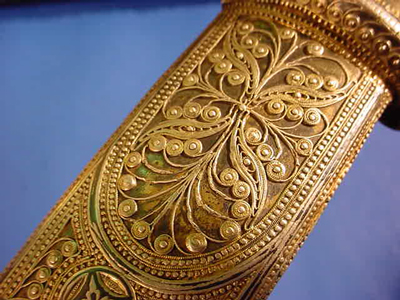
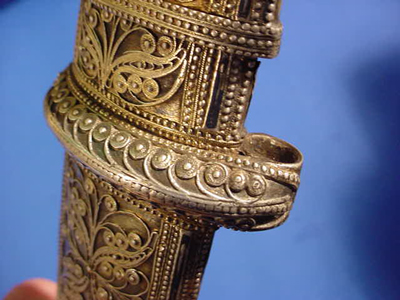
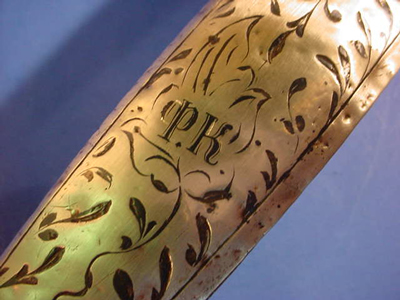
Below this is another patch that has the Cyrillic letters (PK). This is probably the initials of the owner of the weapon. The front of the piece is more than magnificent with elaborate filigree work. Also known as Telkari, the name given meaning "wire work". This is a jewelry work of a very delicate kind made with twisted threads of pure silver with a curving motif that often suggests floral motif.
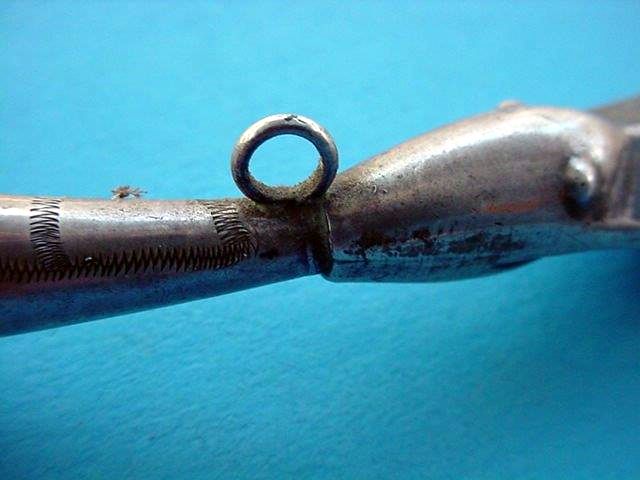
The Hermitage Museum of St. Petersburg contains an amazing rich collection of classic filigree art. The Cossack who could afford to would buy at considerable price Kindjals turned out by Master filigree craftsmen such as this one. This is a very exceptional piece probably made many years before the revolution or the second World War. But in all probability, it was handed down from grandfather to son and may be from father to the son who was an anti-communist Don Cossack. The anti-communist message was possibly added later, but in the true traditional Niello craftsmanship on special order. The weapon is 20" long and the very lethal blade is 14" long. There are triple blood grooves on the blade and this is unusual and even more unusual is the fact that the grooves are even decorated with engraving.
As a norm, these blades are not much to look at, but this one is special. The piece is in generally good shape with part of a seam on the scabbard slightly open, but not going too much further I am sure. The point of the blade shows some discoloration (probably from sticking into the gullets of Yugoslavian partisans who the Don Riders loved to capture and dutifully dispatch.) In the end the Cossacks were betrayed by the (so called) anti-Communist West (read about “Operation Keelhaul” by searching Google for Repatriation- the dark side of WWII by Jacob Hornberger). You will be astounded when you read about this Allied Holocaust. This magnificent Kindjal is possibly the finest and most historically significant one we have ever seen. PRICE: $3,450.00 - Kindjal removed but if you are interested in Kindjals, please contact us |
||||
|
|
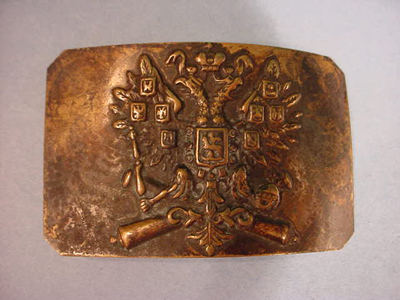
Imperial Russian Belt Buckle (Item RUSO 5-10) |
|
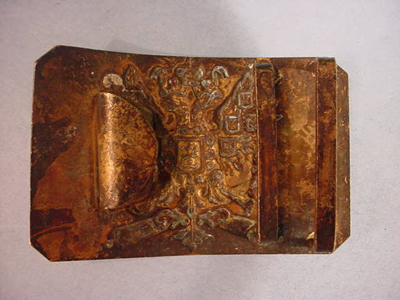
DESCRIPTION: Here is the belt buckle as worn by Tsarist officers of the Russian Army in WWI. It is constructed in heavy brass and measures 3 ½" x 2". It has manufacture and issue marks on the back left corner. It bears the Romanov Eagle symbol of Tsar Nicholas. The eagle sits upon crossed cannons indicating that the wearer is an artilleryman. In the center of the eagle is the symbol of St. George slaying the dragon. A very nice memento of Imperial Russia and its ill-fated role in WWI. Good condition. PRICE: $289.00 |
|
![]() |
Wonderful Russian Peasant Box Hand Made and Presented to a German Wehrmacht Officer (Item RUSO 5-11 & WEHR 31-6) |
||
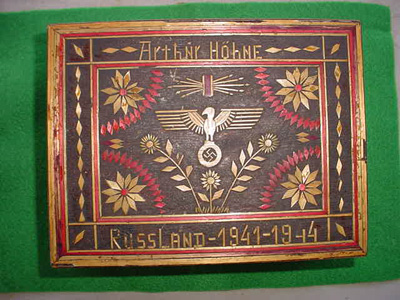
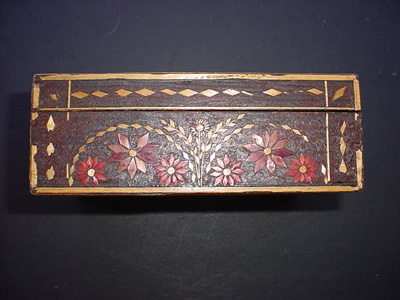
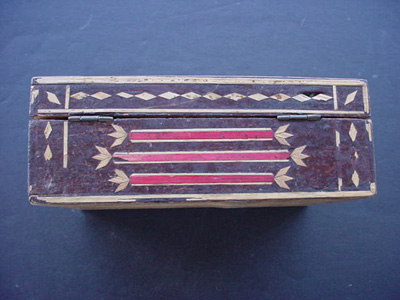
DESCRIPTION: This is typical of the art of the Ukraine and is absolutely gorgeous. It was presented to an officer who commanded a company of Cossacks who were fervently anti-Bolshevik and served on the German side in World War Two from 1941 to 1945. This information came from the German family survivors to our agent and picker. The box is of wood and the flowers and symbols are hand set into the surface. A very tedious task and it shows much talent of the maker. Each portion of the decoration had to be individually cut out and then fitted with the inlay of various types of wood in many sections of placement. The design is very typical of the Ukraine with the sunflowers and star designs. The central theme is the “Deutsche Adler” or German National eagle design. Also professionally inlaid in wood above this eagle is a symbol of a barrel type design with five spears emitting from each side. This would take some research but it looks somewhat like the Cossack insignia worn on the collar tabs of their uniforms -- this theory is at best vague but it is a possibility. The box measures 6" x 8" across and about 3 inches deep. The condition is great! And, it is very important historically and is just a beautiful artistic accomplishment. It is Russian peasant art from a people subjugated under the Bolshevic heel but still proud and noble. This is a token of the keen comradeship that developed between the German Wehrmacht soldiers of Liberation and Cossack brotherhood of the steppes. PRICE: $889.00 |
||
![]() |
![]() |
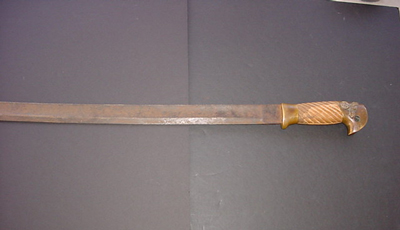
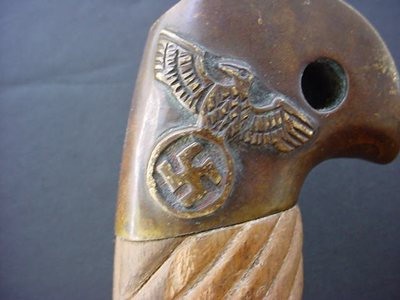
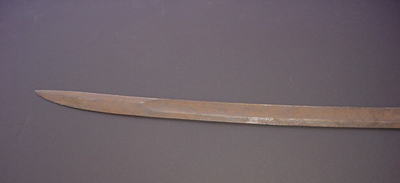
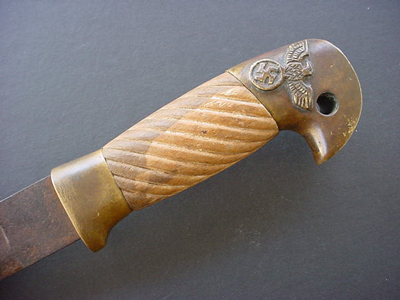
Cossack Sword (Shashqua) For the Cossack Brotherhood Serving in the German Wehrmacht (Item RUSO 5-12 & WEHR 31-8) |
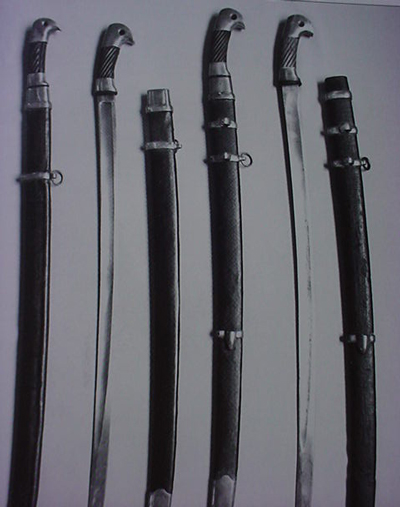
DESCRIPTION: This is the classic Cossack sword of the Steppes as used for centuries; however, this one has the Nazi eagle and swastika molded in the brass hilt. We remember when a large grouping of these were located in Europe and were purchased by a British dealer. The story was that the swords were produced by a firm that was located somewhere in the Caucasus and the small factory produced the swords for the Communist Cossacks with Hammer and Sickle but when the small staff thought that Germany and its Allies would win the Crusade against Bolshevism, they changed over and produced these swords with the National Socialist eagle to be sold to the officers of the Cossack legions that now were attached to the German Wehrmacht such as the divisions of Don Cossacks, tThe Brotherhood under the command of the brave and noble officer Helmuth Von Pannwitz. The Germans who were well aware of the Cossacks fighting ability and supreme valor and thanks to the efforts of Pannwitz a true Cossack army with all of its traditions became a Cossack Cavalry Corp. They were particularly effective in Yugoslavia where they fought against the filthy murderous partisans of the bloody demon Tito. It is believed that these swords were produced late in the war and the purpose was to make them an issue weapon to these fighters who had been forced from their lands by the advance of the Red Army, but hoped in their service to the German army to be given a new territory in Byelorussia when the Reds were finally defeated. In the meantime the members of the Crusade were settled nearly at the end of the war in an operational area for the Cossack Cavalry Corps in northern Italy. This may have been where the swords were to be sent. But as dark Fate would have it, the Reds and their willing Allies, the US and Britain, triumphed against Europe and the horrible Fate of these brave men, women, and children ensued and they were turned over by the same ‘Allies’ to the Soviet authorities. Almost 50,000 of these poor souls were turned over, men, women, and children, who for the most part were horribly executed, while others were sent to Gulags or deported for force labor. No more noble, dedicated and wonderful people ever existed *(author's opinion). The U.S. and England should live in eternal shame for bringing about “Operation Keelhaul.” Read about it on Google. The sword is 100% original. It is crude to some extent due to the shortage of certain materials necessary to the production at that late stage of the conflict but certainly it was produced to create an esprit de corps in the warrior ranks but also to be effective in usage. No scabbards were found. The theory was to why no scabbards on any of these swords is this -- the swords were shipped to the Italian Cossack redoubt in cartons but the scabbards were to follow in another separate shipment but due to the fortunes of war were never shipped. The shop very probably was geography right in the way of the changing tides of action on the Eastern Front. Lets hope that if the Mongols took possession of the shop that they did not find one of these swords because if they did they would have been in absolute ecstasy while roasting alive the owner his wife, children and any employees. The sword is a large: 38 inches long, the grip is 5 ½ inches long, the grip is of wood. the blade is not marked. It shows much old rust -- we know they were stored for many years in a barn, before being discovered they were exposed to the elements although packed in hay in loosely bound crates. But unlike the Cossacks who would have proudly carried them, they survived! Someday they will reach their full value potential. But for now this is a bargain at... PRICE: SOLD |
![]() |
![]() |
Magnificent Tsarist Russian Faberge Style Ring (Item RUSO 5-13) |
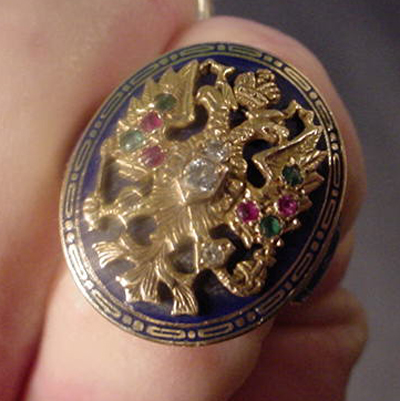
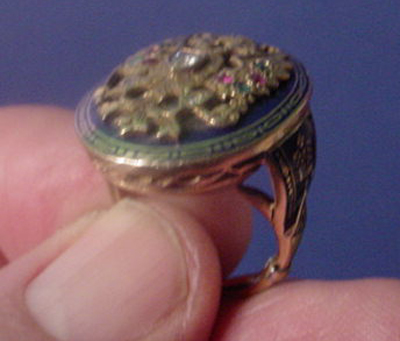
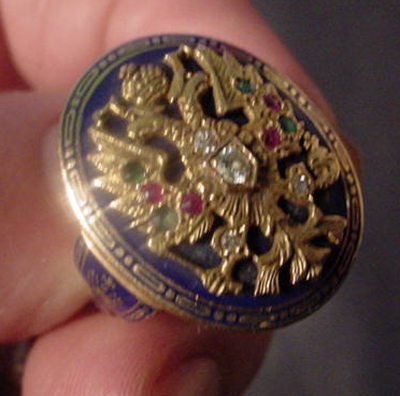
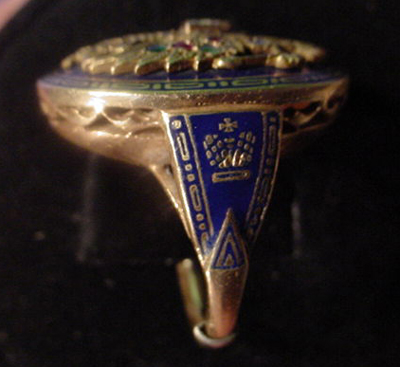
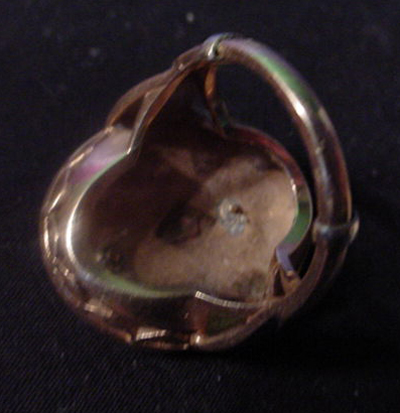
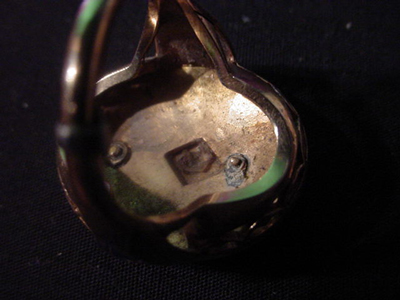
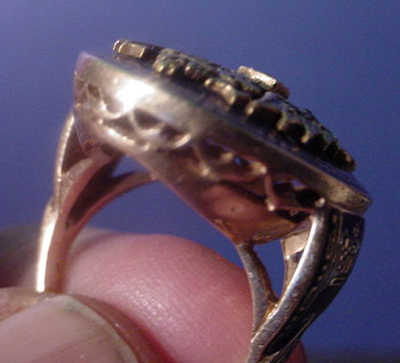
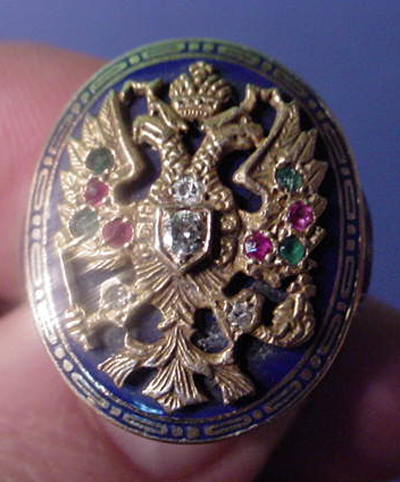
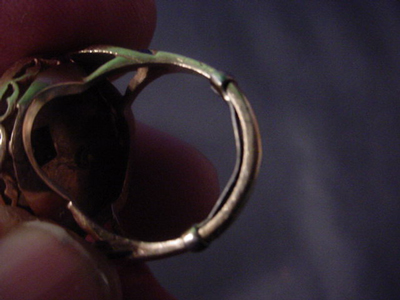
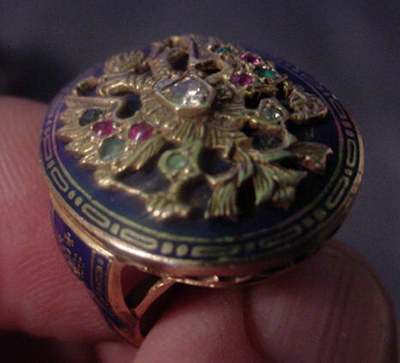
DESCRIPTION: This is simply spectacular! A beautiful jeweled ring in 18K gold with blue enameling on its surface and upon which is set the Romanov double headed eagle of the Russian Tsarist Empire. In the center of the eagle is a diamond chip. Please do not ask us about the size or karat of this jewel as we are not jewelers. We are historians and we would have no way to know that information. In the wings of the eagle there are embedded red and green stones. We do not know if they are rubies and tiny emeralds or not. On the sides or shank of the ring are enameled panels bearing the design of the Crown of the Romanov Dynasty. The gold setting that surrounds the top piece is in beautiful gold sculptured open work. There are no discernable markings evident. There is a tiny ring size spacer installed in the shank of the ring making it a size 6 ½ but with this sizing device removed it could be size 7. We do believe it is a ladies ring. Absolutely stunning! Although this ring is not marked, it seems to be Faberge workmanship, however, we do no actually make any claim that is indeed by Faberge. The style and beauty of the piece certainly is a testimony to the fabulous sophisticated grandeur of the Tsarist era of Russia. It has all the savoir-faire and genre of that better age and time in the Russian Motherland of old. PRICE: $2,800.00 A Treasure indeed ! |
Page Five |
Please refer to item designator in parentheses in all correspondence.
Please E-mail for any additional information you may need.