|
[ Home Page ]
[ Third Reich ]
[ Old Reich ]
[ Kaiser Reich ]
[ Imperial Russia ]
[ Axis Powers ]
[ Italian Fascist ]
[ WW I ]
[ Landsknecht ]
[ Kaiser Wilhelm ]
[ Frederick the Great ]
1936 Olympic Games and Sports
Page 7
|
|
|
|
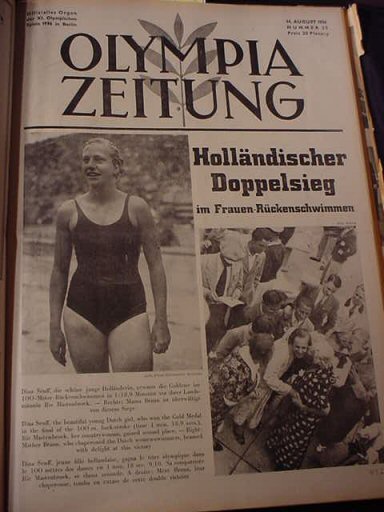
Olympia Zeitung (Item OLY 7-1)
|
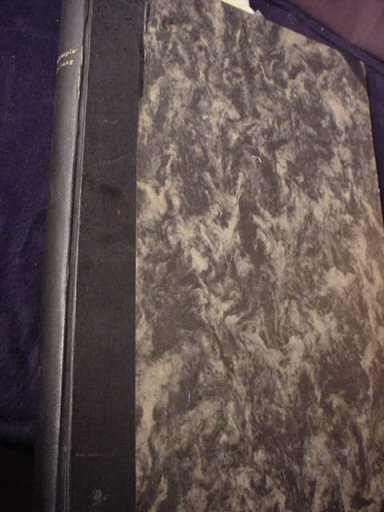
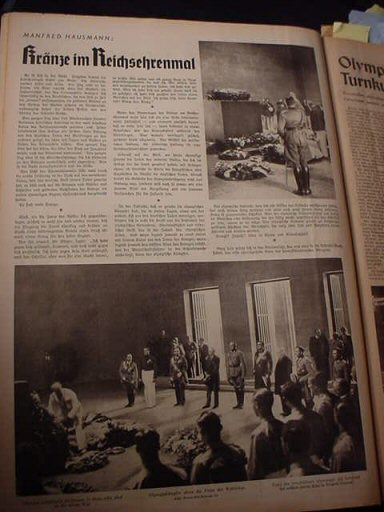
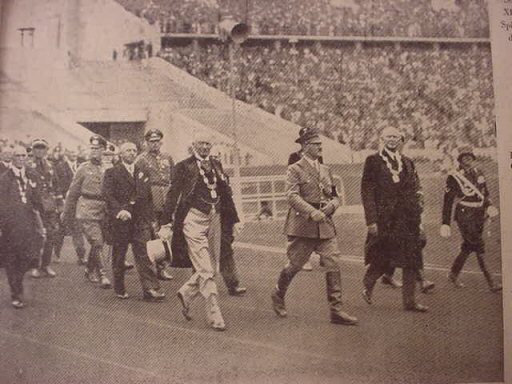
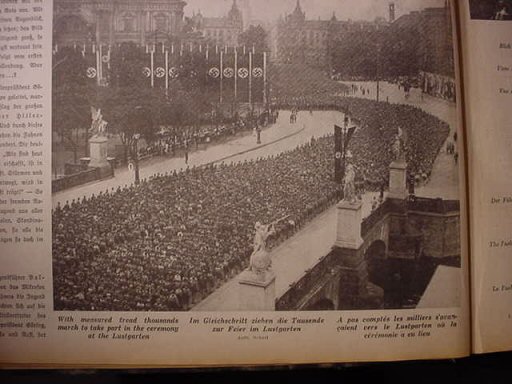
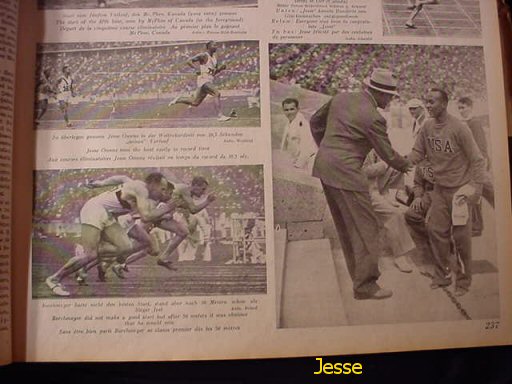
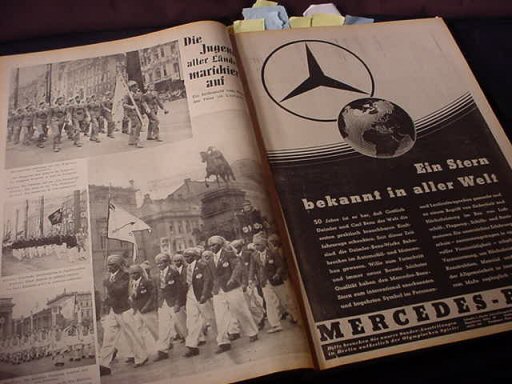
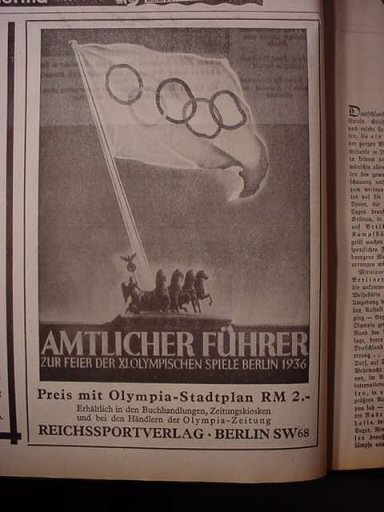
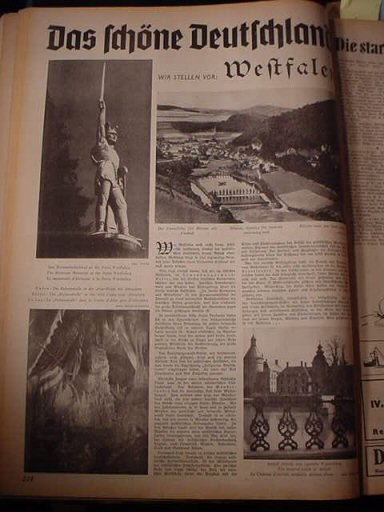
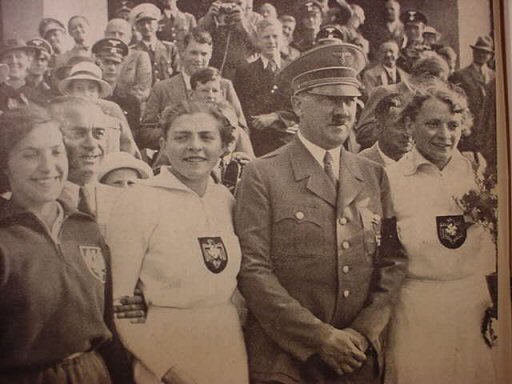
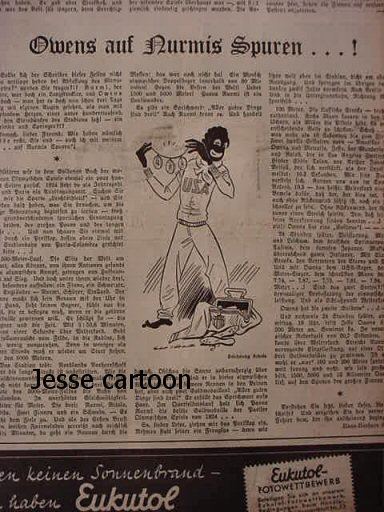
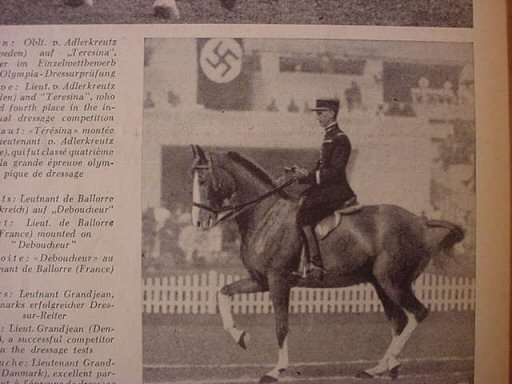
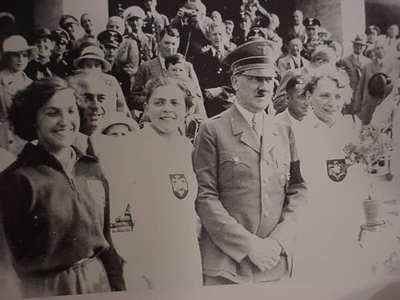
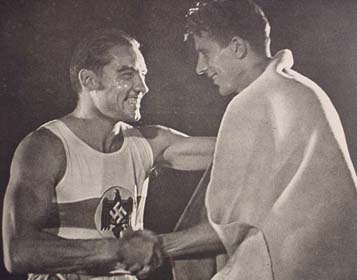
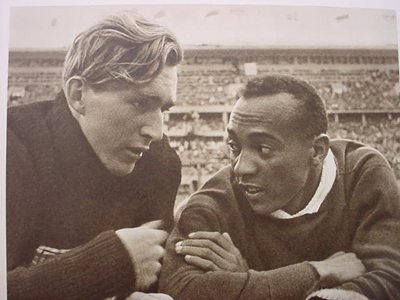
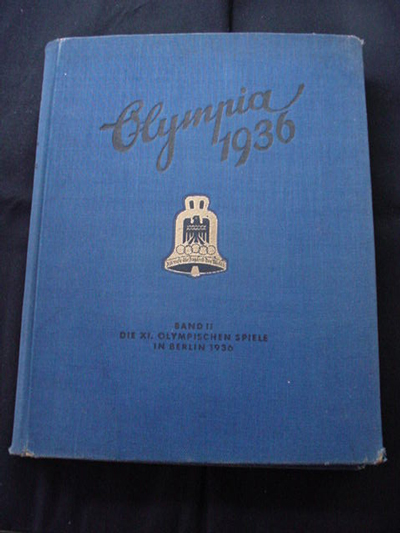
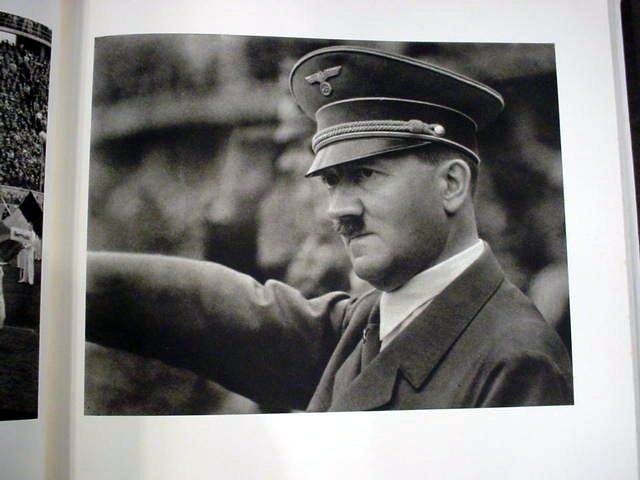
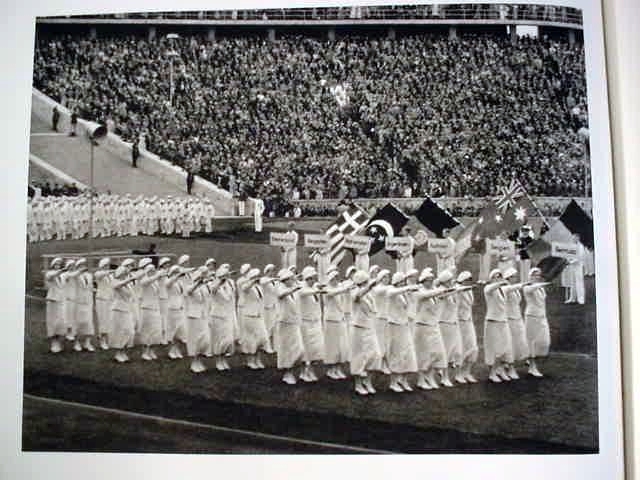
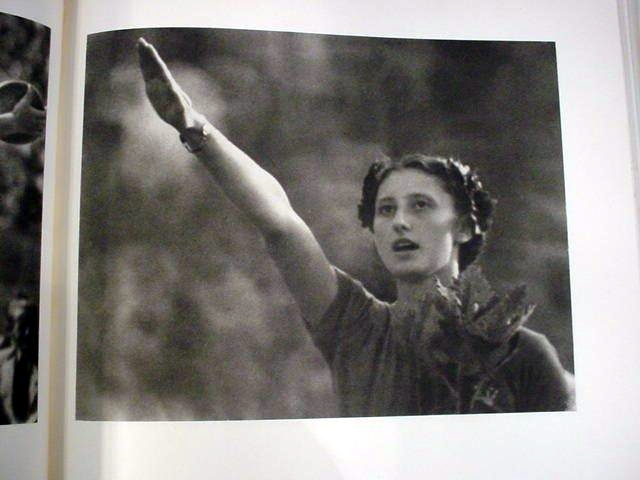
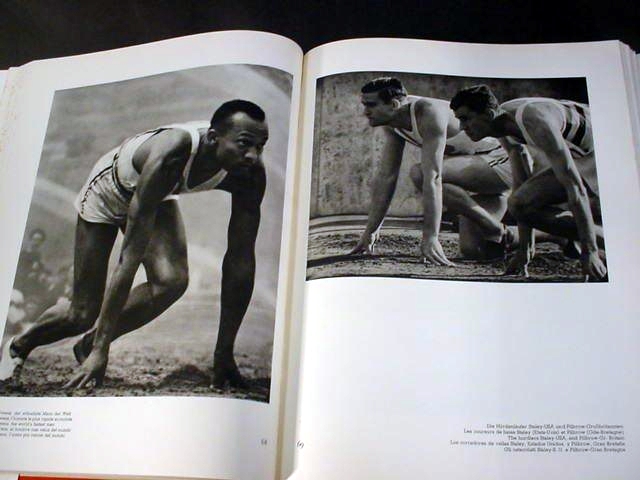
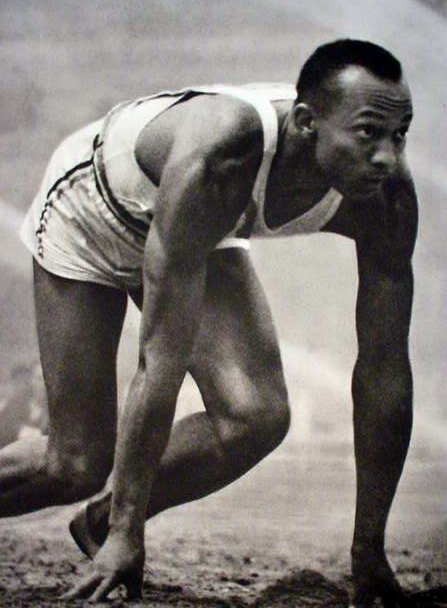
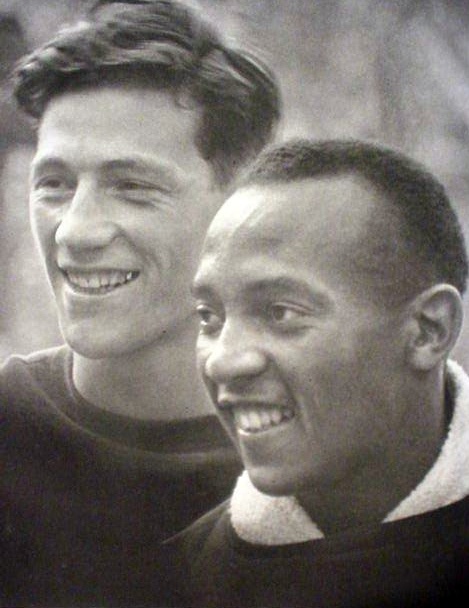
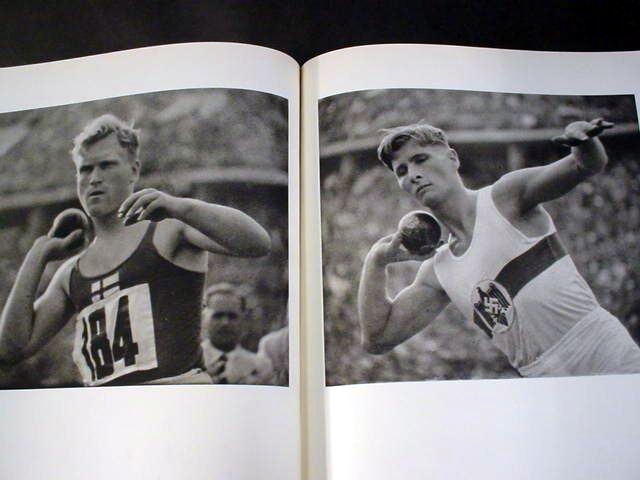
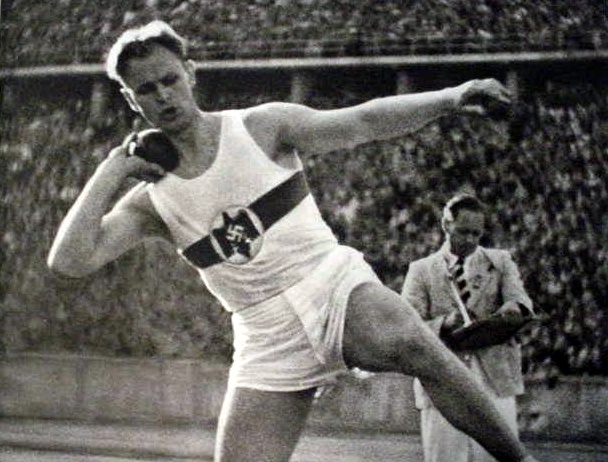
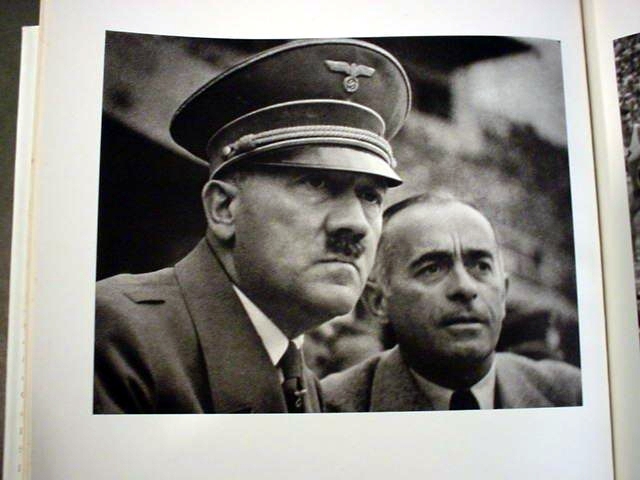
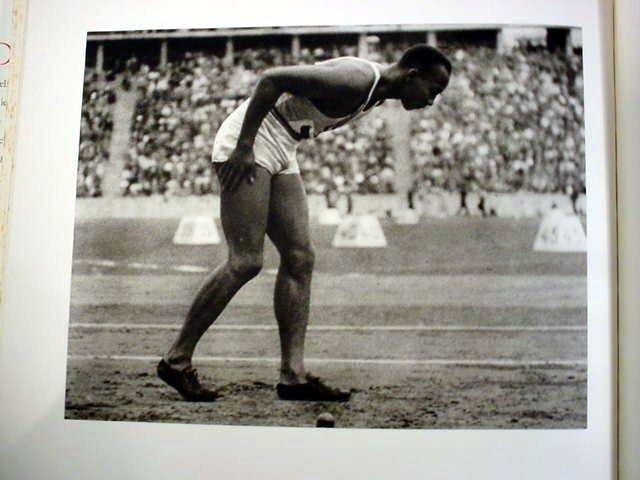
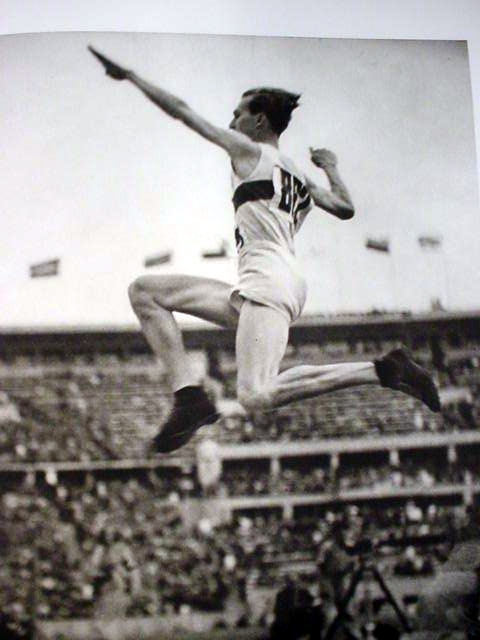
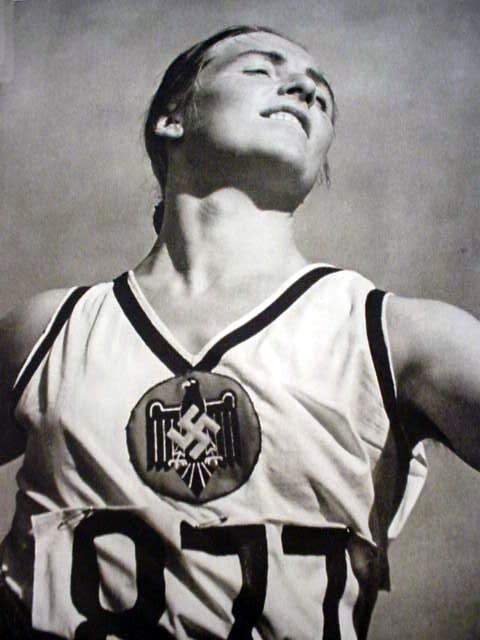
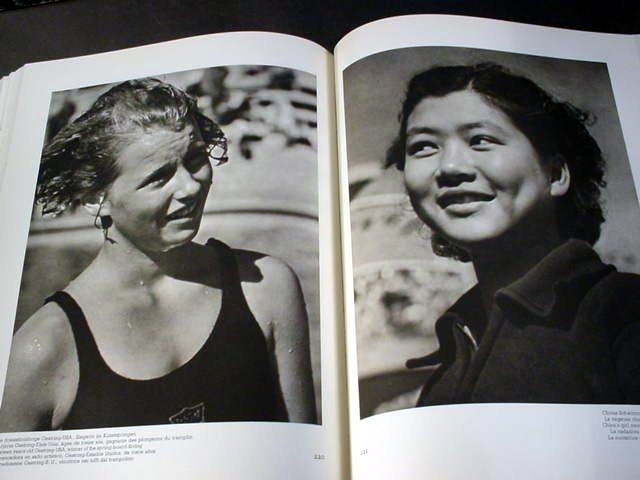
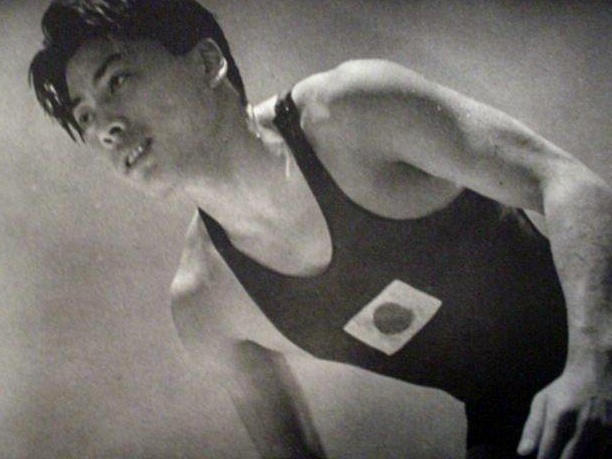
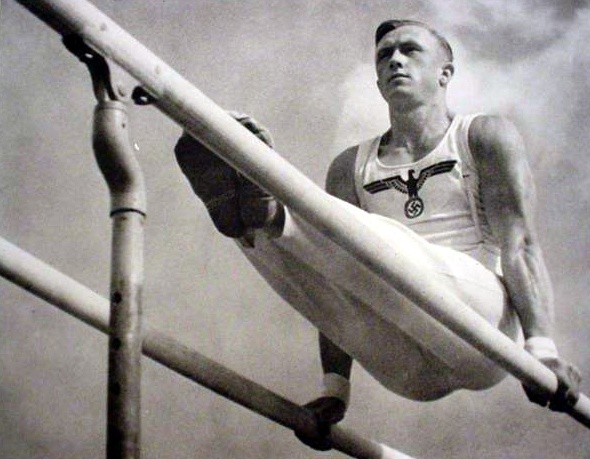
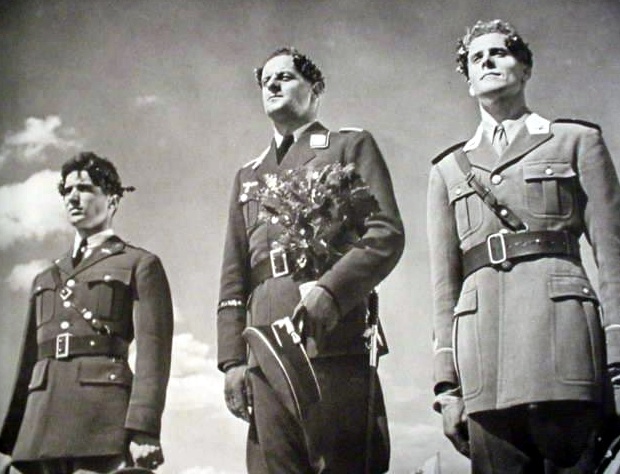
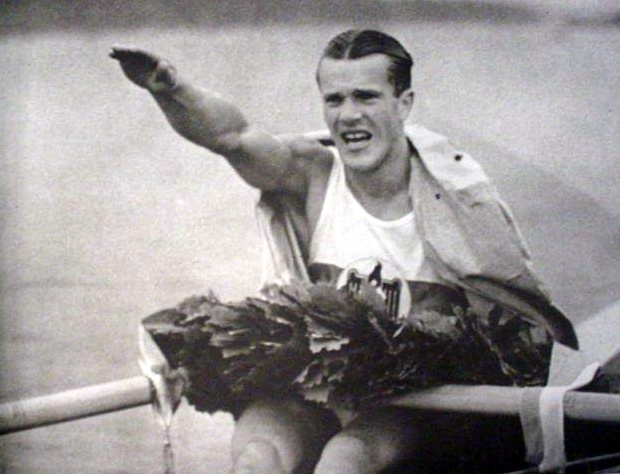
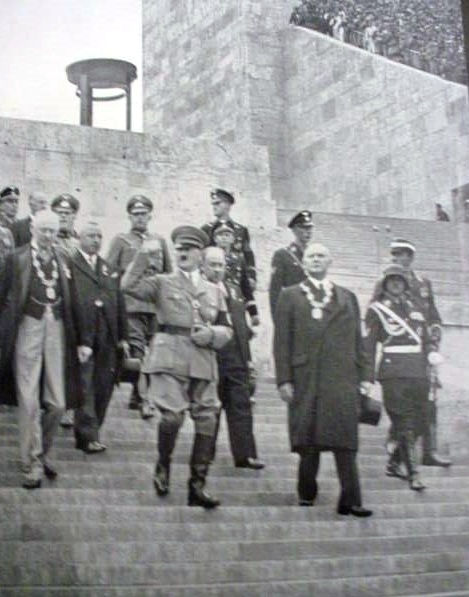
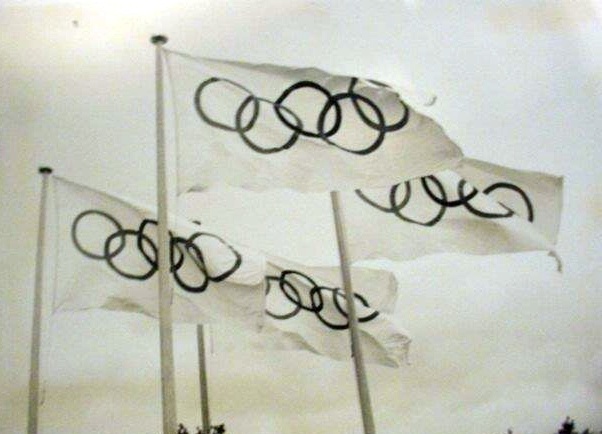
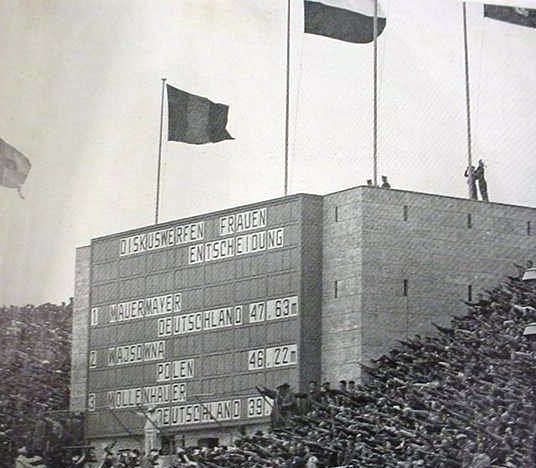
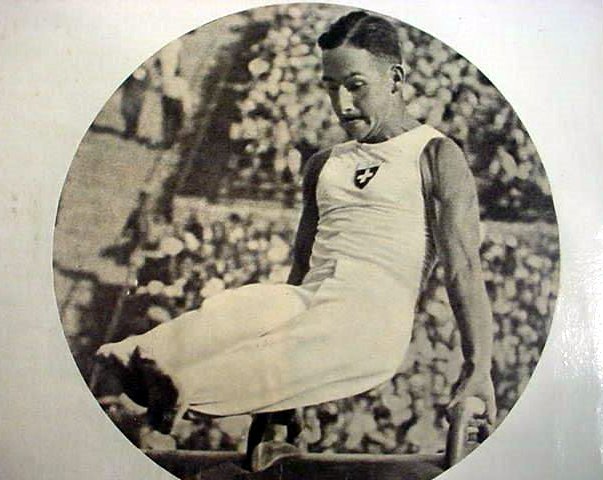
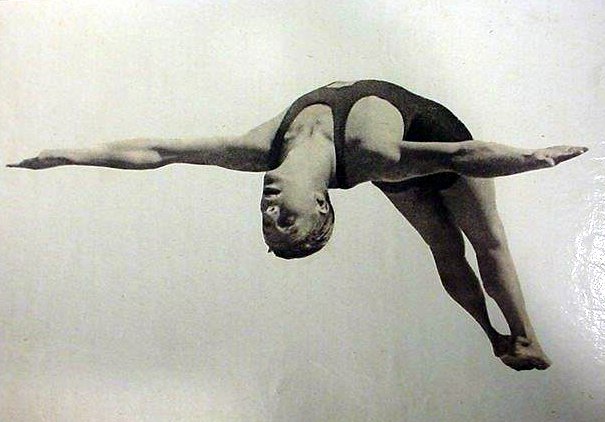
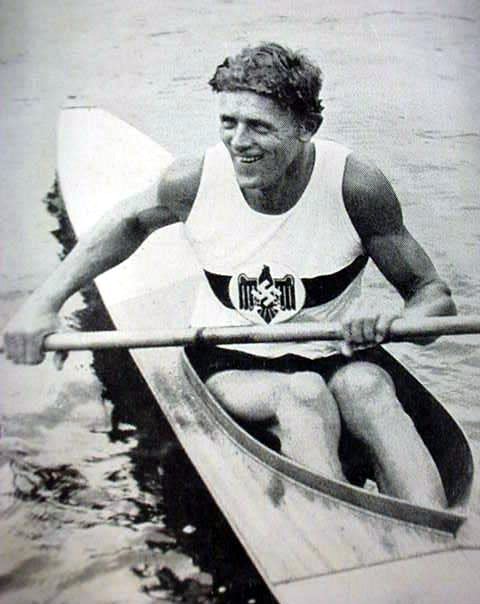
| DESCRIPTION: This is a huge volume of many copies of the official organ of the XI Olympic Games in 1936 in Berlin. Here we have in newspaper style hundreds of pages and thousands of pictures dealing with the greatest of the Games that the world has ever experienced. This was the NS Olympics and the glorious spectacle reveals in every aspect within these pages. The pages abound with great pictures of opening ceremonies, preparations, jubilant Berlin, and proud and happy Germany. No book published then or now covers in depth these glorious games as this one does. Jesse Owens, whom the propagandists say Hitler and the Germans snubbed, is shown on several pages. One picture has the title of “Everyone was keen to congratulate Jesse.” It’s so completely covered as to leave nothing out. It would take a very long written narration and seemingly endless photography to give you an idea of how voluminous this archival treasure truly is. The text throughout the issues is in German, English, and French. There are over 650 pages. This in every sense of the word is a treasure of an archival history of the 1936 Olympics.
PRICE: SOLD
|
|
|
|
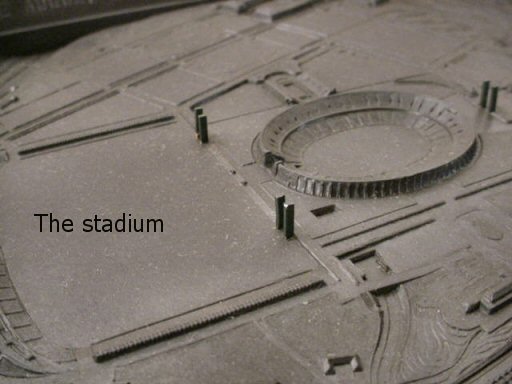
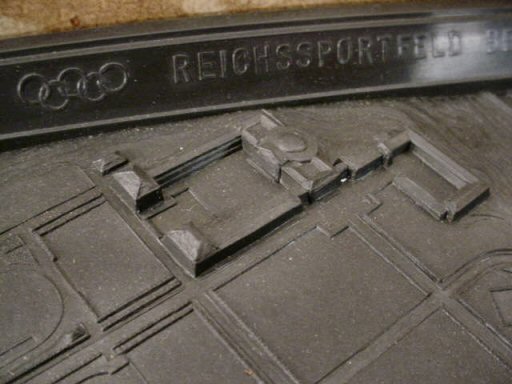
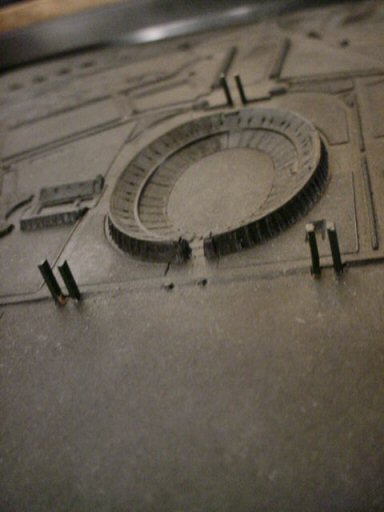
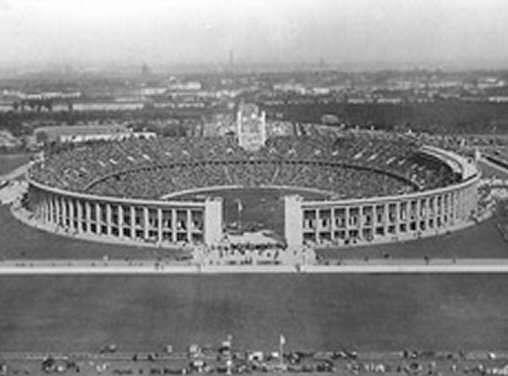
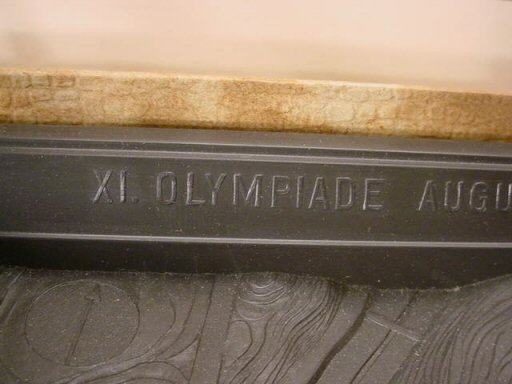
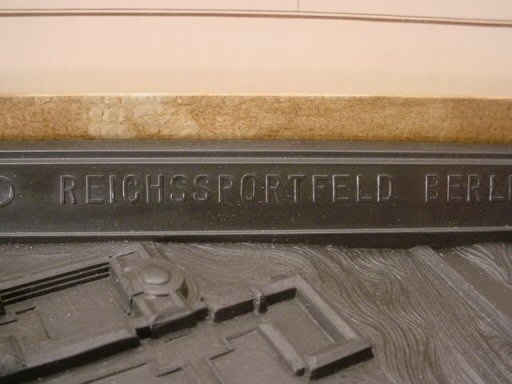
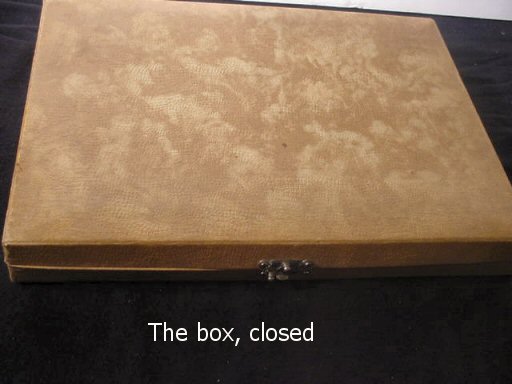
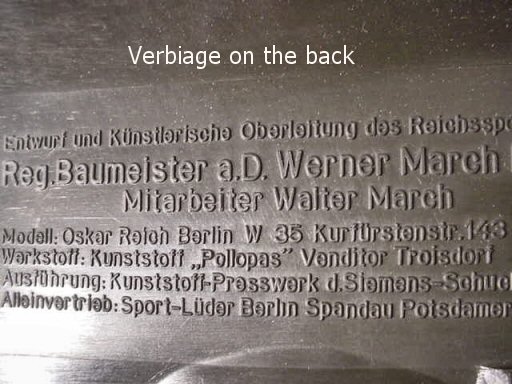
Model of the Reichsportsfeld Berlin, 1936 Olympiad (Item OLY 7-2)
|
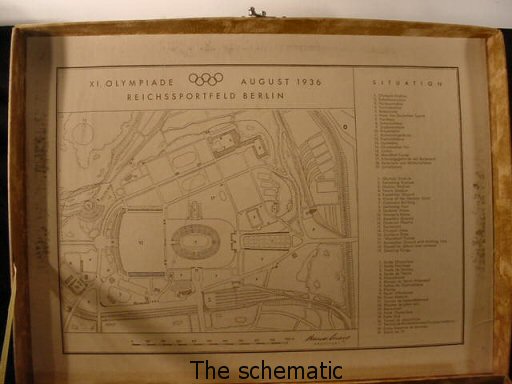
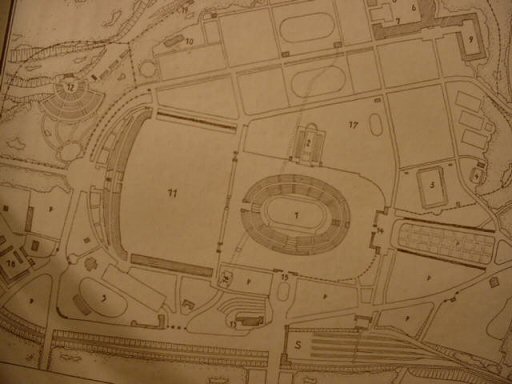
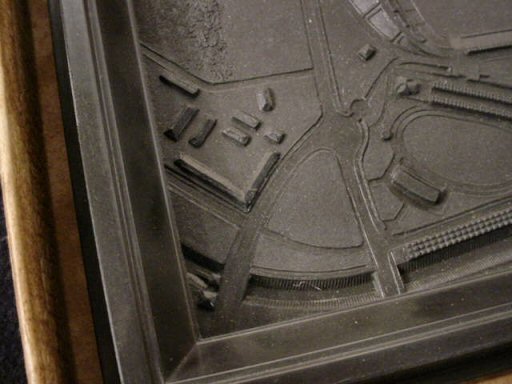
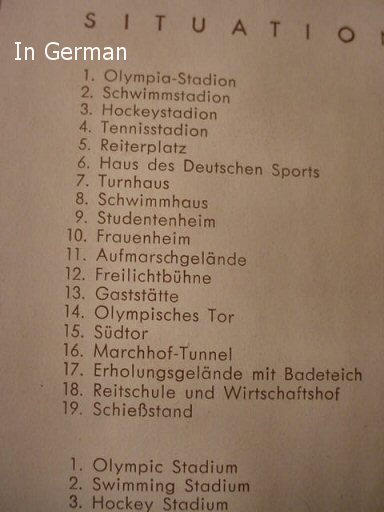
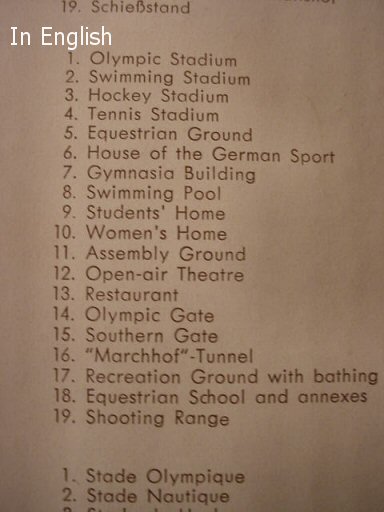
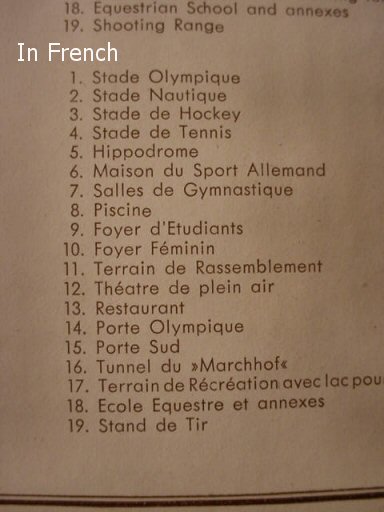
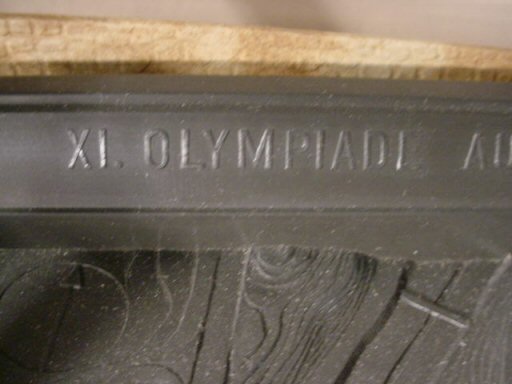
| DESCRIPTION: Here is an extremely rare, boxed relief map of the sports field of the 1936 Olympics held in Berlin in 1936. This is incredible! It is a 12 x 9-inch relief portrayal manufactured in plastic of the entire Olympic grounds including the main stadium and all the secondary stadiums, to include swimming pools, youth headquarters, horse barns, main gates with towers, places for riding, gymnastics, hockey arena, recreation grounds, equestrian school, open-air theatre “Dietrich Eckert Thingplatz,” the House of German Sport, tunnels, etc. At the edges of the map are the words XI Olympiad August 1936 (and then the Olympic rings) and it continues with Reichsportsfeld Berlin. In the top of the case that contains the map is a plan or chart that has a paper map with numbered areas designated and corresponding to the various places on the relief map below. The material used in the relief map is probably Bakelite rather than plastic. In any case, this is a wonderful and historically important find and would certainly be the centerpiece of any good Olympic collection. This was the Olympiad that historians admit was the greatest of them all.
PRICE: SOLD
|
|
|
|
1936 Olympic Cut Glass Pokal (Vase) (Wonderful) (Item OLY 7-3)
|
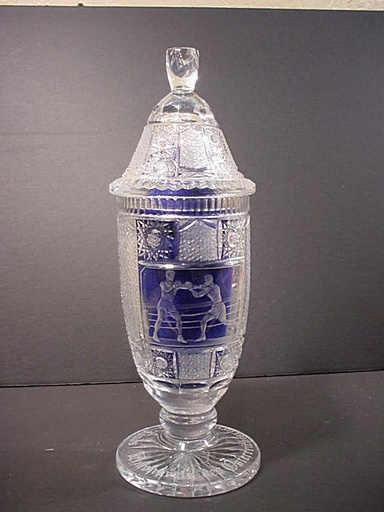
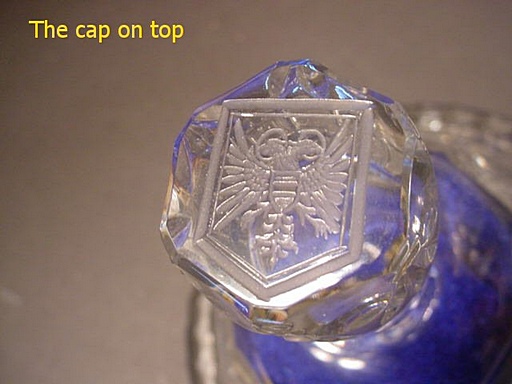
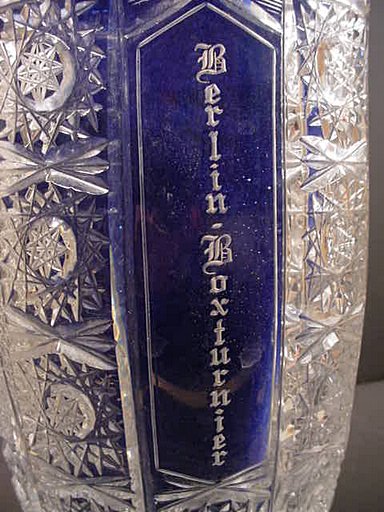
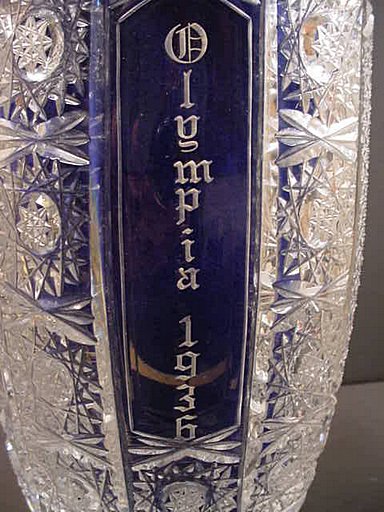
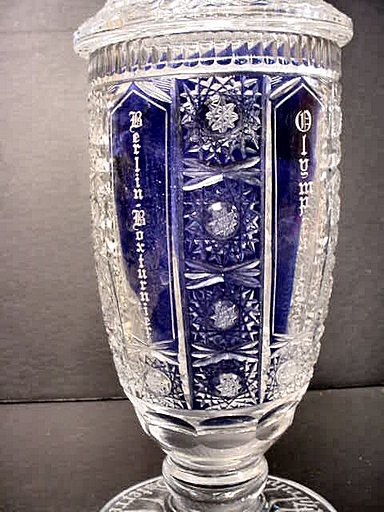
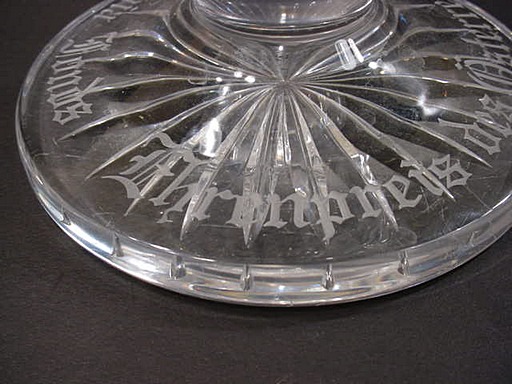
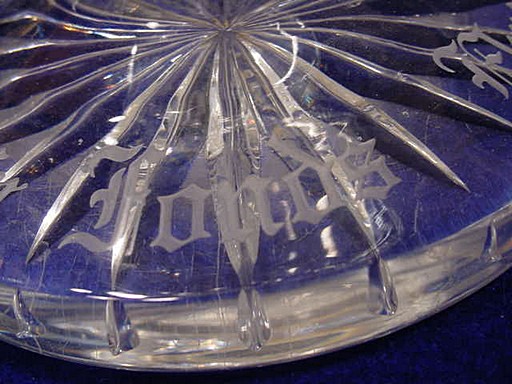
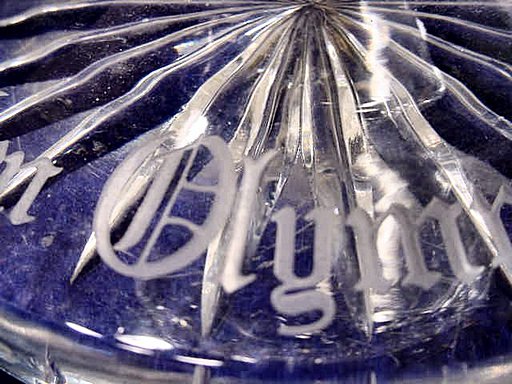
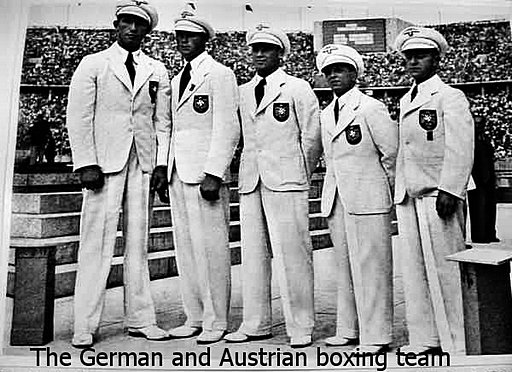
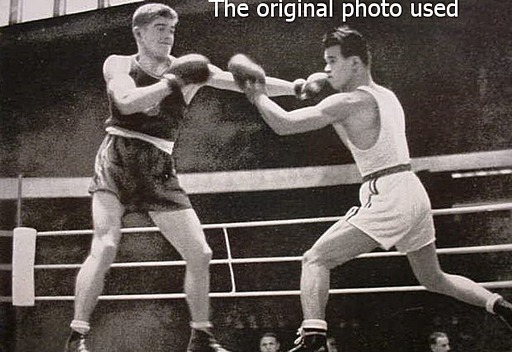
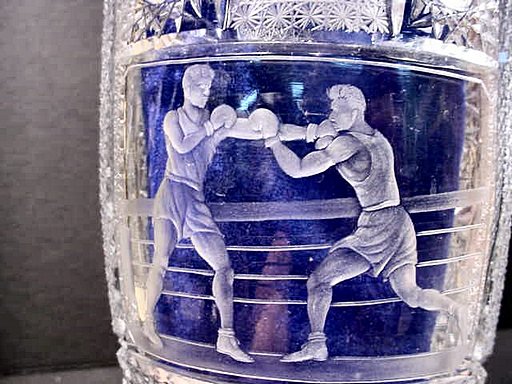
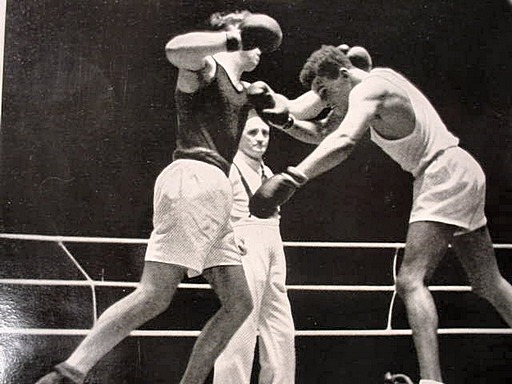
| DESCRIPTION: Olympic collectors, “get a grip.” This is one of the finest Olympic items that we have ever offered or ever seen offered, anywhere! It is a large vase or glass goblet in the finest of cut or pressed glass. It's about 15 1/2 inches tall with a 5-inch mouth opening and a bottom base portion about 6 inches in diameter. It is stunning indeed! This was obviously a special prize for an Austrian boxer at the 1936 Olympic Games. The central theme is a panel about 4 1/2 inches wide and 3 inches tall that has a great depiction of two prizefighters battling it out within the ropes of the ring. This scene is in genuine cut glass. Hand engraved on the other side is a panel that has the words cut in it that say “Berlin-Boxturnier,” or Berlin Boxing Competition, and then another panel says “Olympia 1936.” All these letters and words are hand engraved. At the crown or top of the lid is a beautiful Austrian double-headed eagle also hand cut into the glass. Around the bottom plinth are the words in old German script “Ehrenpreis des Osterreichischen Olympia Fonds.” This means that this honorable prize was from the Austrian Olympia funds. This was a very special fund that was raised by collection from sports enthusiasts all over the Austrian homeland to enable contestants to travel and be able to afford to stay in the Reichshauptstadt in Berlin, and train for weeks before and during the events. The fund was also to purchase such prizes as this that undoubtedly were very costly at that time. Something like this probably cost the special fund some real money. The piece is really beautiful and obviously very important, historically. The boxing competitions were held at Deutschland Hall and attracted the largest entry ever received in all classes from flyweight to heavyweight. The boxers from Germany and Austria carried off top honors in all classes. This Pokal was undoubtedly a very special prize given with intense pride to one of Austria's sons for exemplary performance and boxing skills. In the attached images we have placed some colored cloth inside the vase so that you might be able to see the design of the engraved glass more clearly. In one of the pictures you can see the actual knockout punch as delivered at the Olympics. The famous scene was the design for the picture on the vase; note the similarity. The German and Austrian boxing contestants are also shown in their specially designed Olympic summer uniforms. This vase is both rare and beautiful and deserves a very special place in a sports museum or fine collection such as yours.
PRICE: SOLD
|

|

|

|

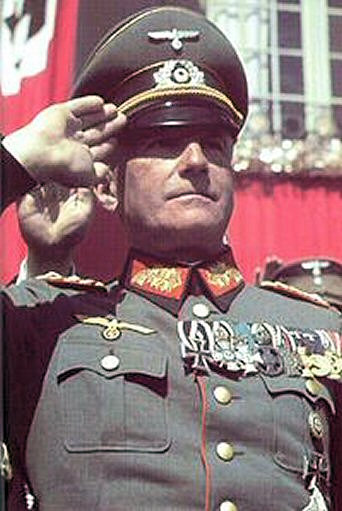
Field Marshal Walther von Brauchitsch
|
|
|
Spectacular! Important Items from the Career of Major (former Rittmeister) Rudolf Lippert (Item OLY 7-4; WEHR 26-10)
|
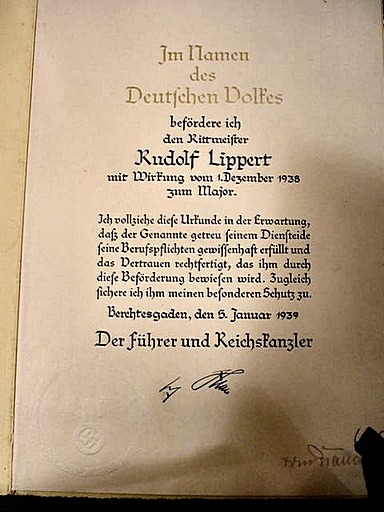
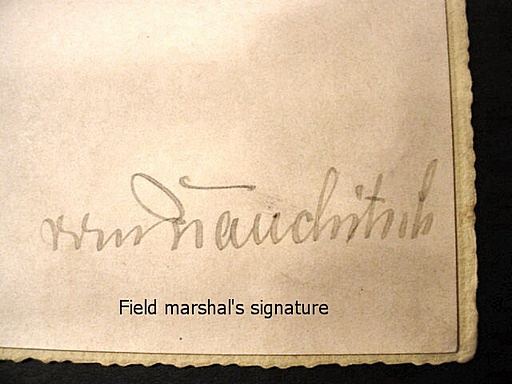
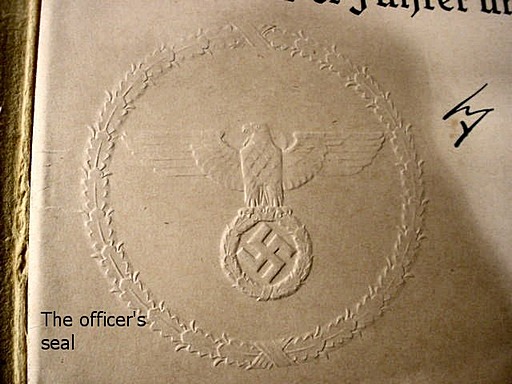
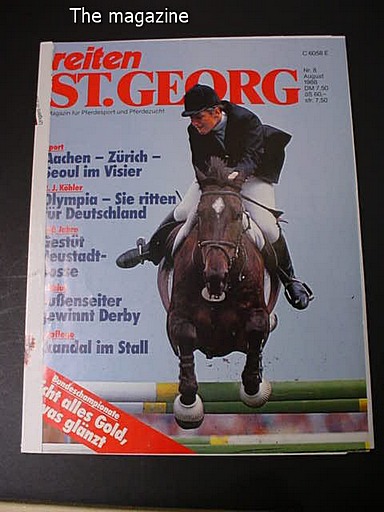
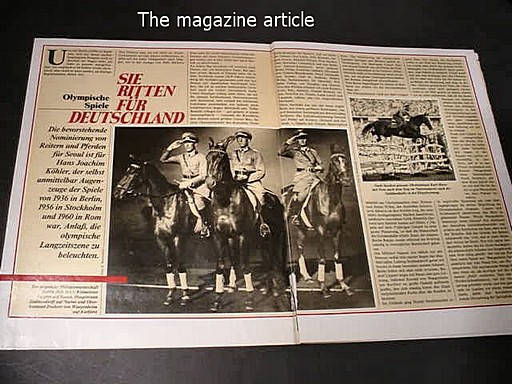
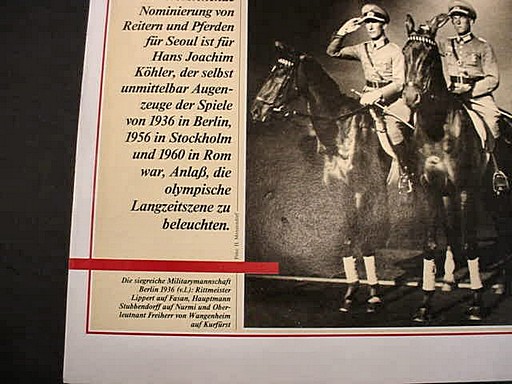
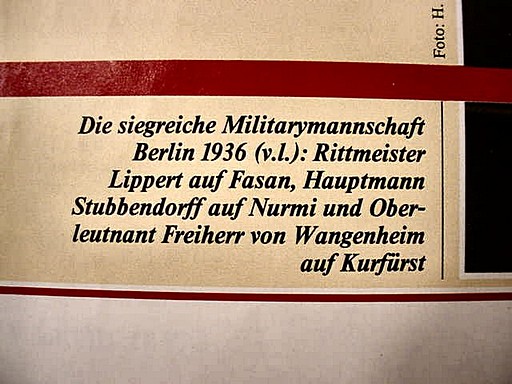
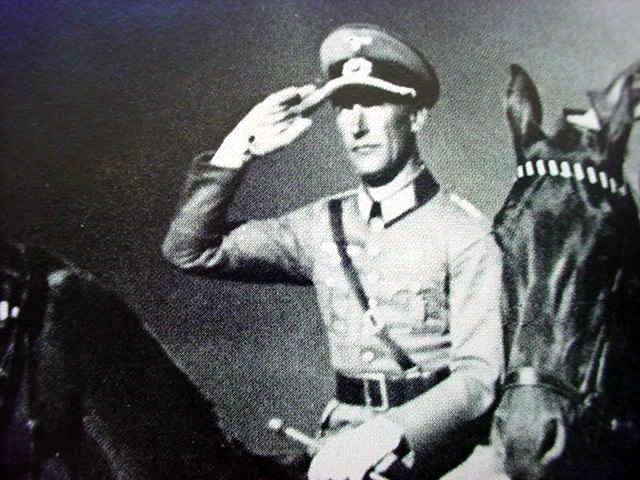
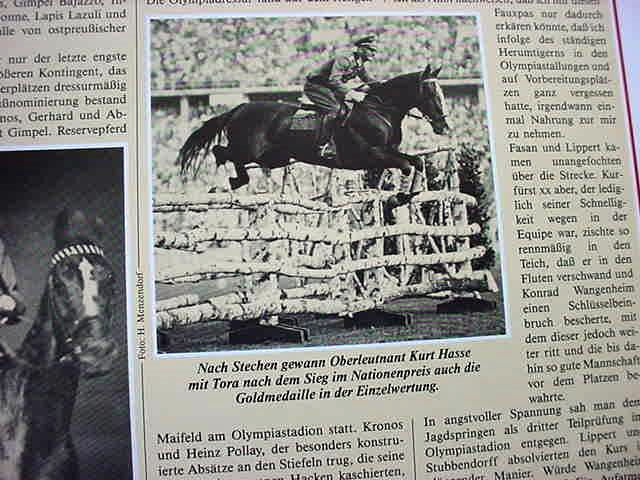
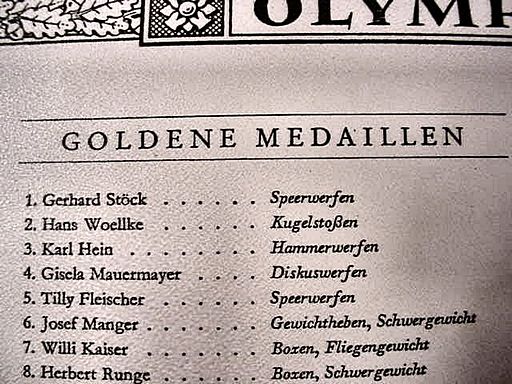
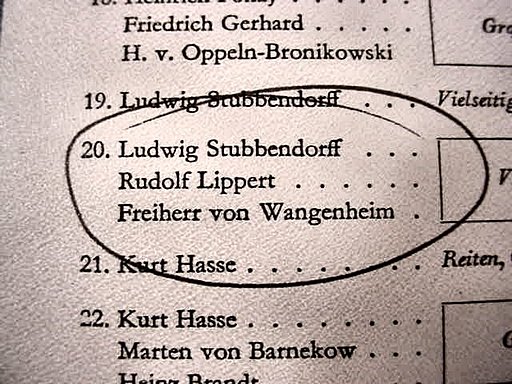
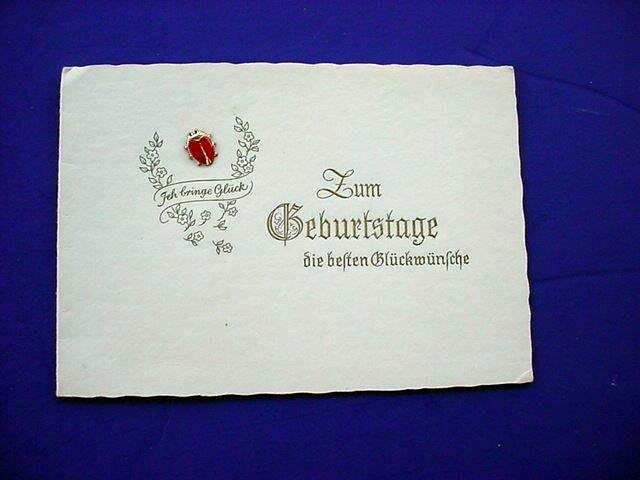
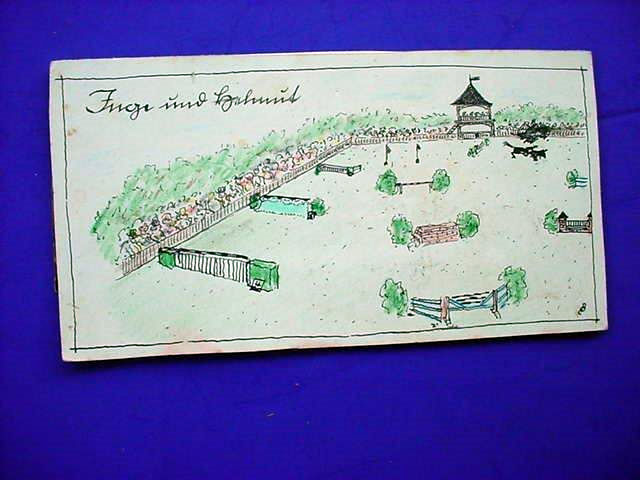
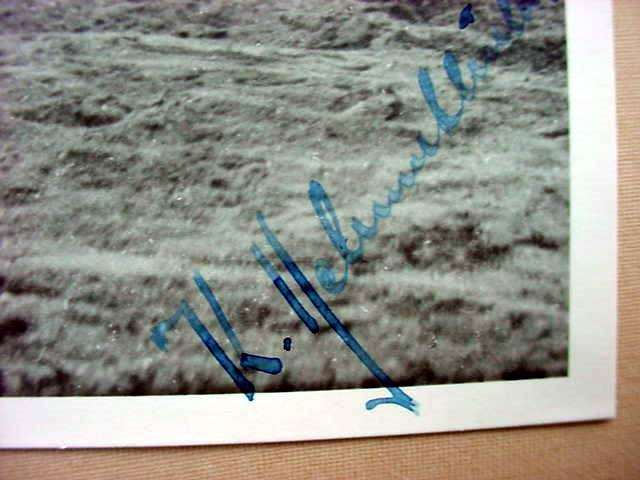
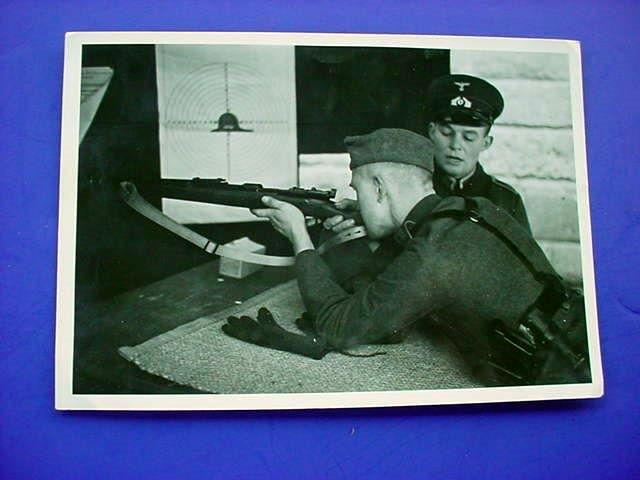
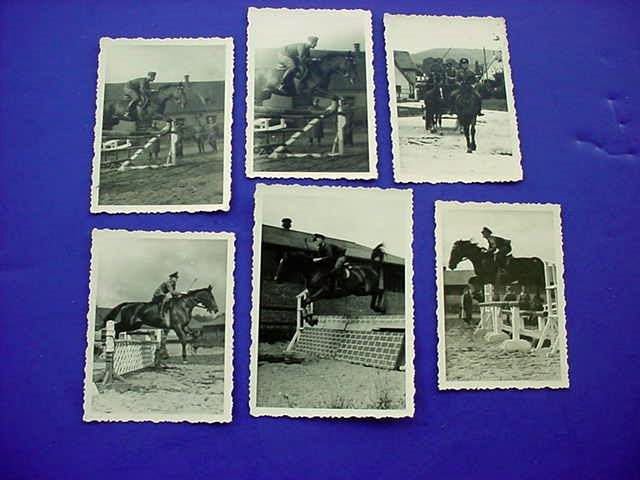
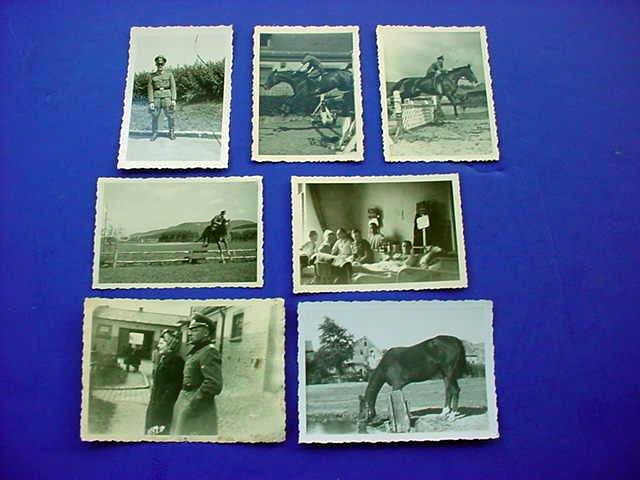
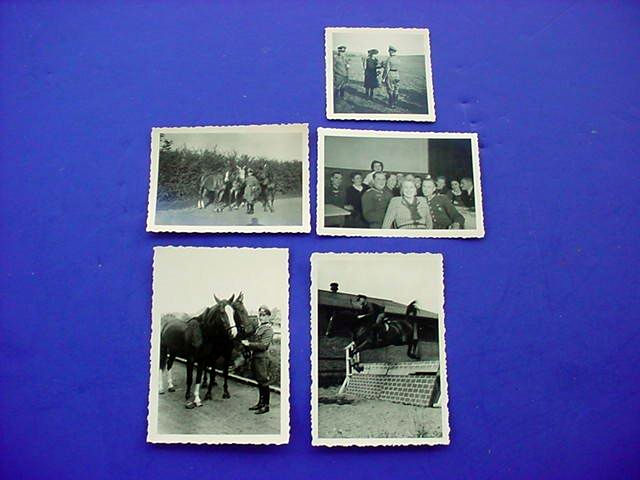
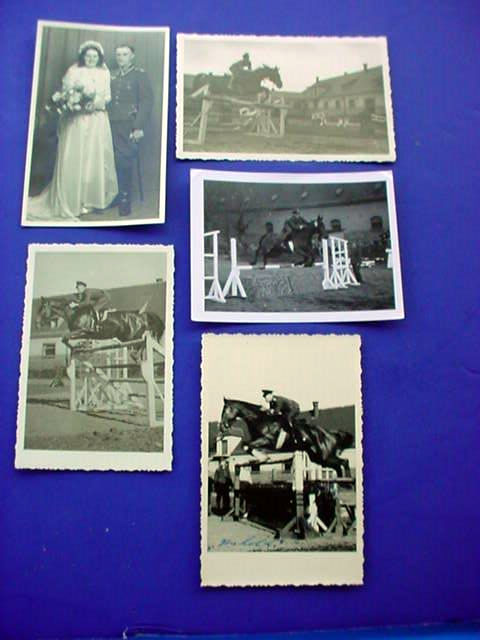
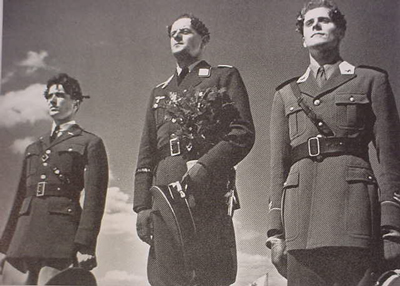
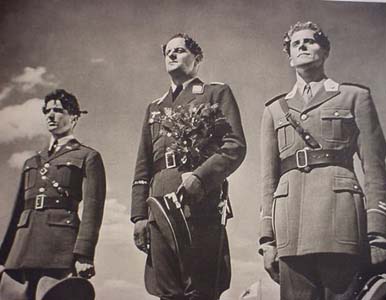
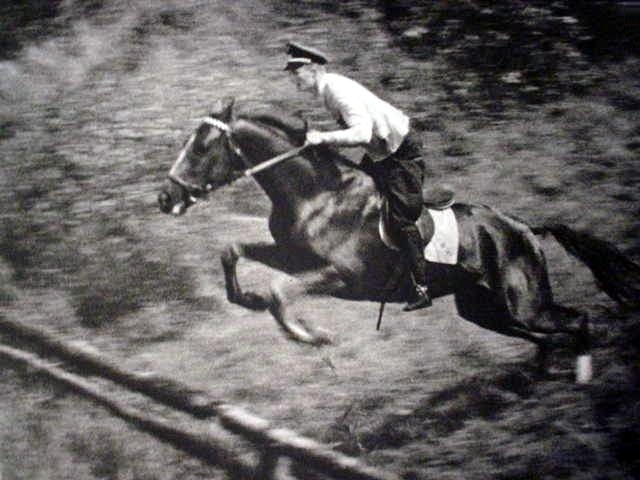
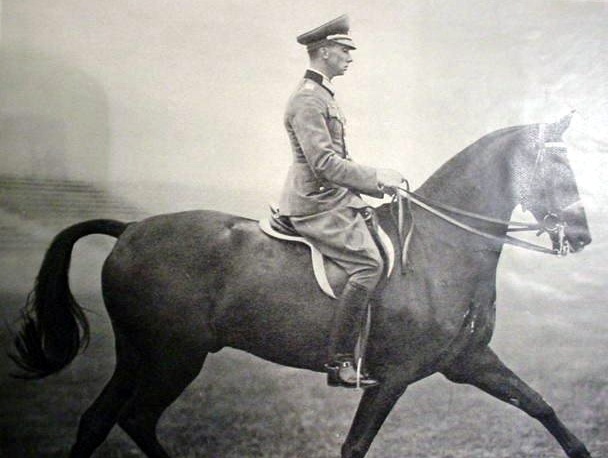
DESCRIPTION: The military rank of Rittmeister was a title and rank describing a commissioned military riding master in the armies of Germany, Austria-Hungary, Scandinavia, and some other countries. It's equivalent to the rank Hauptmann in those service, and captain in the U.S. Army and U.S. Marine Corps. Included in this lot is the original official promotion document with Hitler’s signature in facsimile. The document with embossed Third Reich government seal is actually hand signed by Walther von Brauchitsch, who, in 1938, was appointed Commander in Chief of the German Army. Interestingly, the document was signed and issued at the Reich Chancellery in Berchtesgaden, not Berlin. It's dated January 5, 1939. Again, we say that this grouping is not only spectacular, but also historically incredible because Rittmeister/Major Lippert was a gold medalist in the 1936 Summer Olympics at Berlin. He was obviously an equestrian champion, especially in the barrier high jump. In a two-page opening in the German rider journal known as reiten ST.GEORG, there is a great picture of Rudolf Lippert mounted on his steed, Fasan, while two other equestrian winners pose alongside. It's a very dramatic scene as these handsome officers offer their salute to the Führer and the assembled massive crowd. The varied contests that Rittmeister won were titled "Vielseitkeitsprüfung" ("various horse trials"). He was a master of them all! In the group, there is a printed list of all the German Gold Medal winners and, of course, it lists Lippert. A copy of the list and the original pertinent pages of the 1936 issue of reiten ST.GEORG is included in the group. Also, among the assemblage is a neat, little cartoon card that depicts a horse competition field with various walled obstacle courses. Included is a neat, little birthday card with a ladybug that says "Ich bringe Glück." Additionally, there are many other photos of various sizes from the personal property of Major Lippert to include many taken of him seen in his specialty, which was show jumping and excellent dressage. The promotion document, with its golden Reich eagle on its cover, measures 10 x 14 inches and except for a few minor petite stains on the outside, it's in really great shape. It's presented in a heavy parchment-type folder, while inside, the actual document is in practically mint condition and the embossed Reich eagle and wreath stand right out there. This is one of the finest and most important historical groupings that we have ever acquired and it is well known that we specialize in the most astonishing and amazing relics known to the collecting and archival world. Again, the offering comprises:
1. The promotion document
2. Actual pages from the magazine reiten ST.GEORG
3. An official list of 1936 Olympic Gold Medalists
4. A signed 6½ x 8-inch photo (mounted on cardboard) of an army officer competing in the barrier jump; probably a friend of Major Lippert
5. Photos of various sizes from Rudolf Lippert’s own private collection
PRICE: $2,950.00; for entire group
|
|
|
|
NS Sports Stein for the Physical Training Program (DRL) (Item OLY 7-5)
|
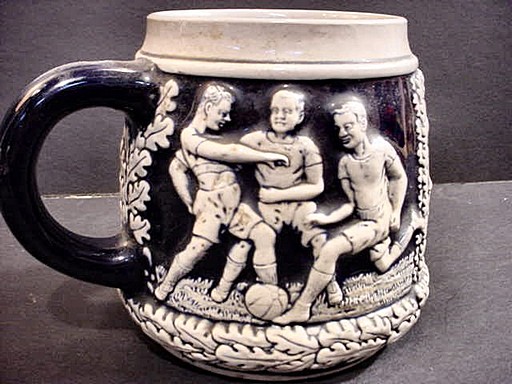
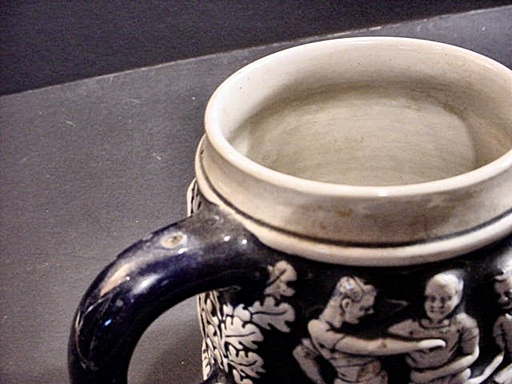
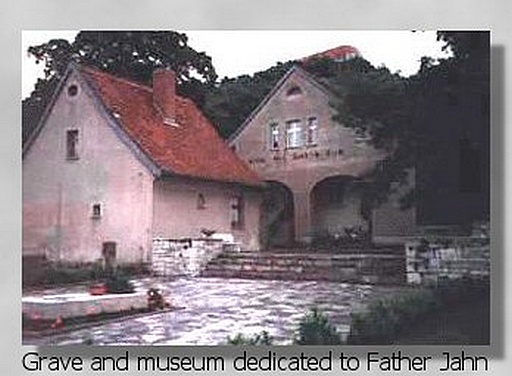
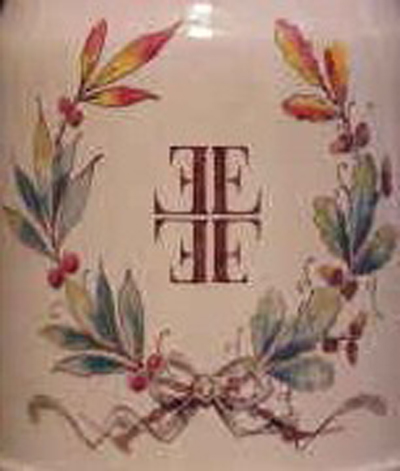
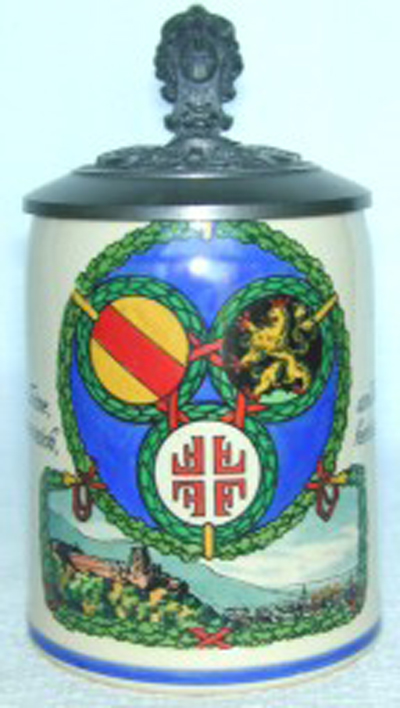
| DESCRIPTION: DRL was Deutscher Reichsbund für Liebesübungen (German Reich Organization for Physical Training). This stein or Krug was the official mug of the organization within the Third Reich dedicated to bringing sports and physical exercise to the German Volk. It was part and parcel to the National Sports Organization whose chief was the Reichsport Director Hans von Ischammer und Osten, the man who organized the German athletes for the 1936 Olympic Games in Berlin. The stein is actually a Krug measuring only 4 1/2 inches high with a 3 1/2-inch mouth opening. It’s a very colorful little stein. At the front design are two German athletes one on each side of a bust of “Father Jahn”, 1778-1852. The “Turnvater”, the greatest gymnastics teacher of the Fatherland’s youth. His given name is Fredrich Ludwig Jahn. It was Jahn that first developed the famous Turner Verien. Turnen was an old Teutonic word meaning gymnastics. Read about Father Jahn on the web. The stein has a hole in the upper handle. People always think when seeing this that a lid is missing; however, this is incorrect. All Krugs were made with the hole and it was there if the buyer wanted to order a lid. But if they did not the hole was in the mold and invariably was there in every case. This particular stein never had a lid. The blue delft-style color is quite attractive and this is a rare piece. How many survived the conflagration in 1944-45?
PRICE: SOLD
|
|
|
|
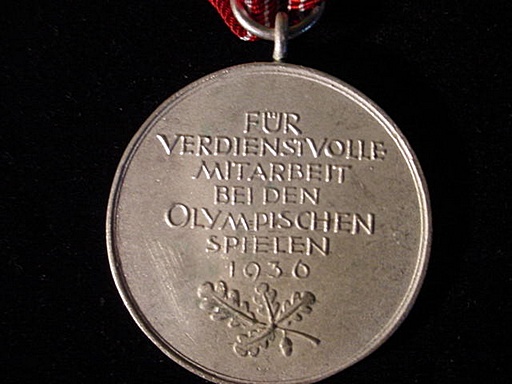
1936 Olympic Games Commemorative Medal (Item OLY 7-6)
|
| DESCRIPTION: Some 54,900 persons received this medal which was instituted on 31 July 1936. The award was established to recognize services rendered in connection with the preparation and execution of the 11th Summer and 4th Winter Olympic Games in 1936. The award was not restricted to German nationals on the reverse is the inscription: “FÜR VERDIENSTVOLLE MITARBEIT BEI DEN OLYMPISCHEN SPIELEN, 1936” -- “For Meritorious Cooperation in the Olympic Games, 1936.”
PRICE: SOLD
|
|
|
|
Turn Verein Standard with Father Jahn (Item OLY 7-7; GERMAN SPORTS 1-1)
|
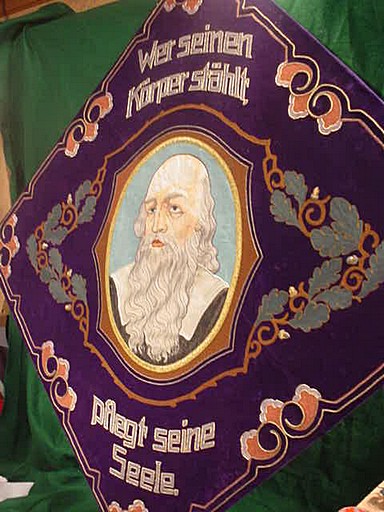
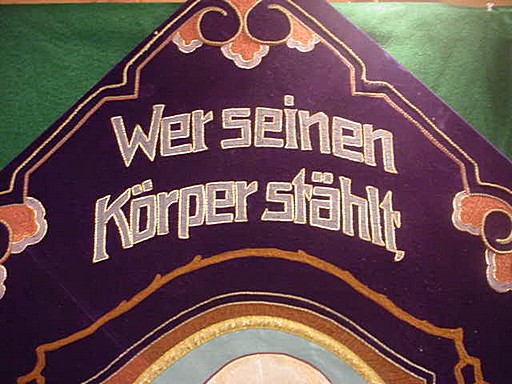
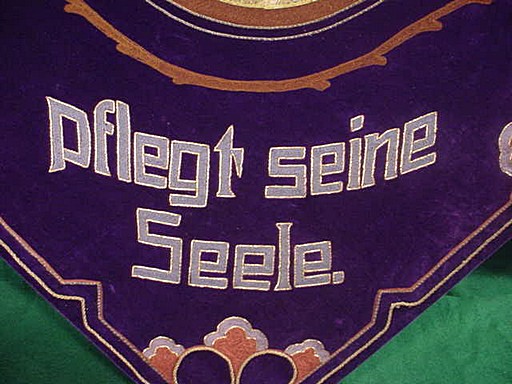
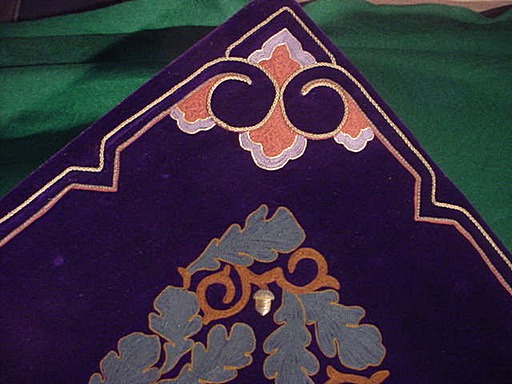
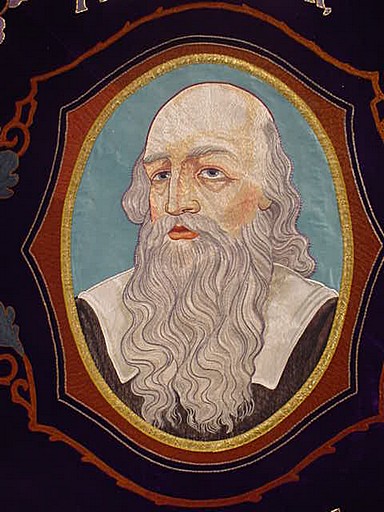
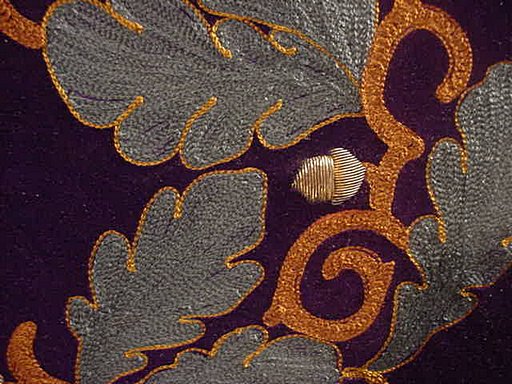
| DESCRIPTION: The first Turn Verein was established by Father Ludwig Jahn in 1809. This was developed by this priest to drill his followers in gymnastics, but also in military tactics because this was the time when Germany was being suppressed by Napoleon. In later years, however, music, theatricals, and oratory were added to the social function of the Turners in the German community. The watchword was always “a sound mind in a sound body.” It must always be kept in mind that the original organization was first formed as a nationalistic response to the war of liberation against Napoleon and fostered rigorous exercise among boys and young men to produce a healthy body and to enable them to be able to effectively protect their Fatherland. Suffering repression in its early decades it eventually became absorbed within the state. Father Jahn was born in 1778 in Brandenburg, Prussia. In 1806 he witnessed the defeat of Prussia and the conquest of Germany, which sparked his decision to work for the unity and freedom of Germany. In 1813 gymnasts and students proved their worth in the volunteer Lützow Corps; Jahn himself was one of the commanding officers. All this was good preparation for the “big one,” “the Battle of Nations” at Leipzig in 1813 followed after Napoleon’s utter defeat. The allies marched into Paris in 1814. Jahn’s demands of the day—“Freedom of Speech,” a real constitution; the unity of the Fatherland. Today, freedom of speech in Bundes-Deutschland is a joke. Father Jahn was imprisoned and persecuted for years for his thoughts and utterances just as scholars in Europe are also jailed for their thoughts and utterances. Friedrich Ludwig Jahn died at the age of 74 in Freyburg an der Unstrut. His name lives on all over the world in the gyms and stages of the Turner Veriens. Its motto “Frisch, Fromm, Frölich, Frei,” “Hardy, Pious, Cheerful, Free.” The banner measures 37 x 37 inches and is in beautiful almost-mint condition and it is the type that would be carried in a parade of the Turners and also would hang in its headquarters. The words at the top are “Wer Seinen Körper Stählt,” and at the bottom there are the words “Pflegt Seine Seele.”
PRICE: $380.00
|
Deutschen Turnverband Ring Sudetendeutsche (Item OLY 7-7A)
|
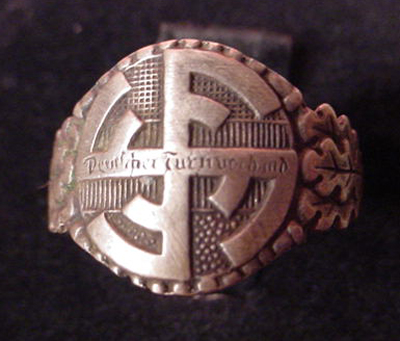
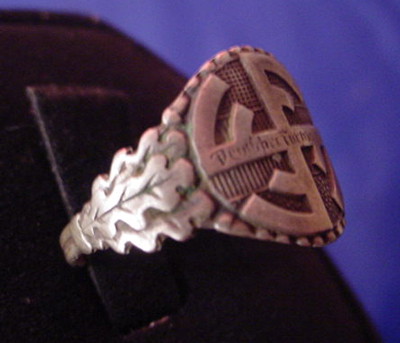
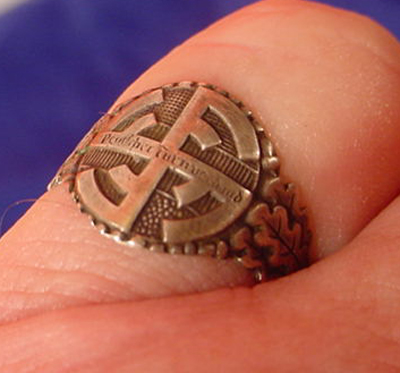
DESCRIPTION: This is a little ring that has very important historical significance. It was the official ring of, and with the insignia of, the Deutschen Turnerverband -- the sports organization first founded by a man by the name of Father John (see Oly 7-5 on this page and also see Oly 7-7 for further explanation of Fredrich Ludwig Jahn and his dedication to German Sport.) The ring is quite striking in simplistic beauty while employing a sun wheel swastika that is made up from four figures that resemble the letter F. This stood for the four words, Frish, Fromm, Frolich, Frei! (“Hardy, Pious, Cheerful, Free!”). These were the by-words of the organization whose beginnings were formed in combat for the Holy German Fatherland. This was the Nationalistic response to the war of liberation against Napoleon. Be sure to read the other articles on the page. When Adolf Hitler liberated the Memelands thereby freeing hundreds of thousands of German Volksdeutsche from the bonds of oppressive Czech rule, the German sports organization Turnerverband, which was admittingly a political and Nationalistic body as well as sports oriented, immediately set about training camps and organizing the Sudenten youth. In the border area of Czechoslovakia, known as the Sudetenland, Turner groups abounded among the now joyfully free Volksdeutshen; especially the youth flocked to join. The organization acted as a very successful conduit for the promulgation of the ideals and agenda of the homeland NSDAP. The units formed at that time actually became the basis for a Sudeten German Legion. The uniforms of the D.T.V. were much like the clothing of the Hitler Youth when not in the gym clothing issued. The four F swastikas became their symbol and sport shirts, patches and the awards that would be won were the same as ones issued in the Fatherland. The exception was the “Ehrenringe” of the Turnverband. This was the honor ring of the sports organization and was presented by the Sudetenland district leader to recipients who had distinguished themselves in gymnastic accomplishment. When received, it was proudly worn by these ethnic Germans much respected just like an award presented for heroism. The ring is small in dimension but very stylish with oak leaves running up the shank to meet the special swastika at the crown. The words read (not too clearly written) across the central bar are Deutschen Turnverband. Inside is the required 800 silver stamp. Read the narrative entitled "About our Rings and Sivler Insignia" on our home page. This will concern how we came to purchase a great part of his wonderful silver items at Stuttgart a few years ago. Absolutely the greatest purchase that Germania was ever able to make. This is a prodigiously important piece.
PRICE: SOLD |
|
|
|
|
|
 Markings
 |
 The American teams arrive
 |
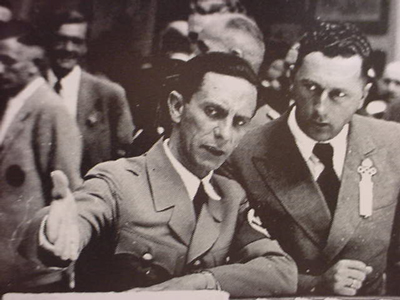
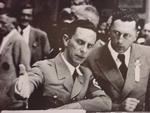 Goebbels with press
 |
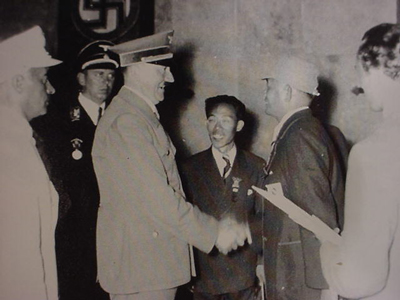
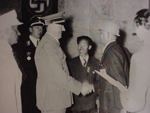 Hitler with foreign press
 |
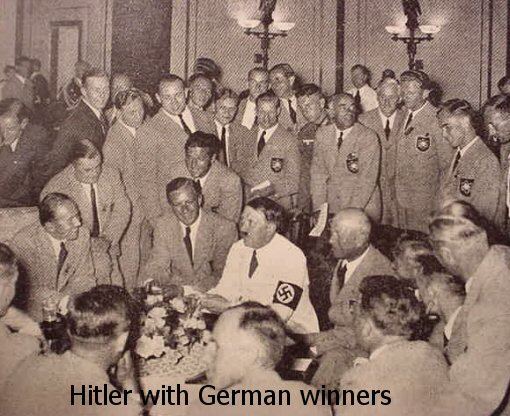
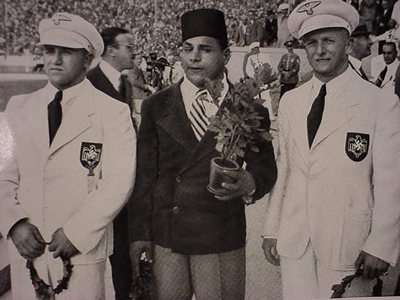
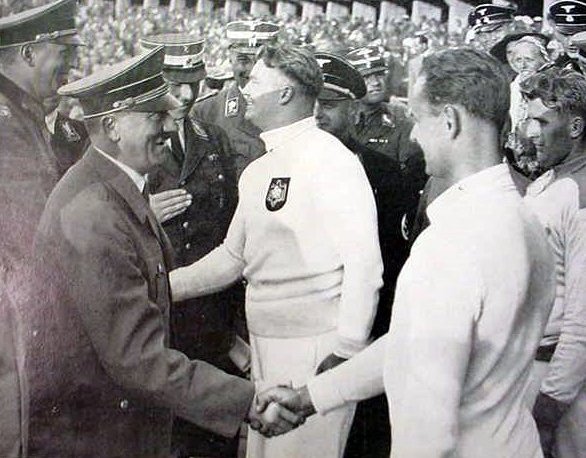
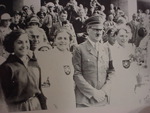 Hitler with winners
 |
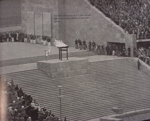 The torch arrives
 |
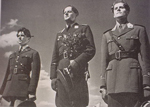 Military winners
 |
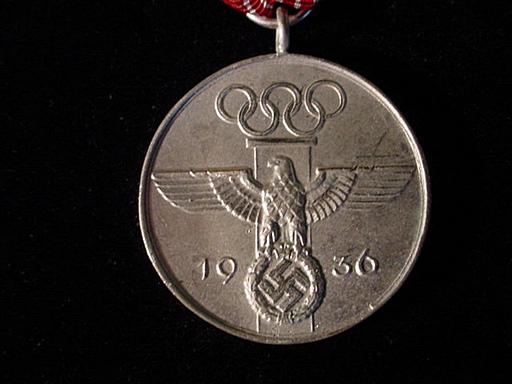
1936 Olympic Medallion in Silver (Item OLY 7-8) |
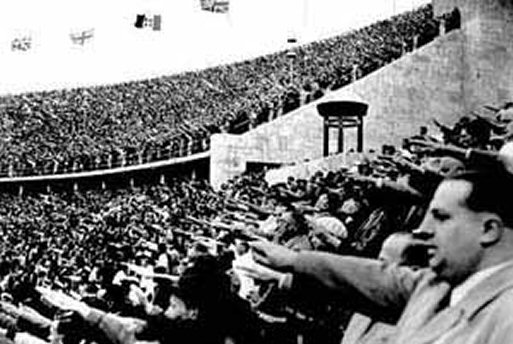
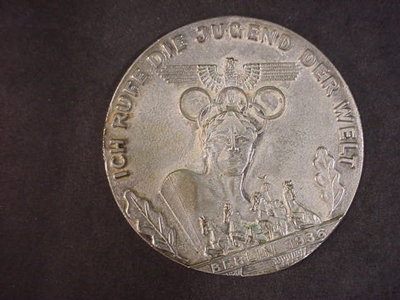
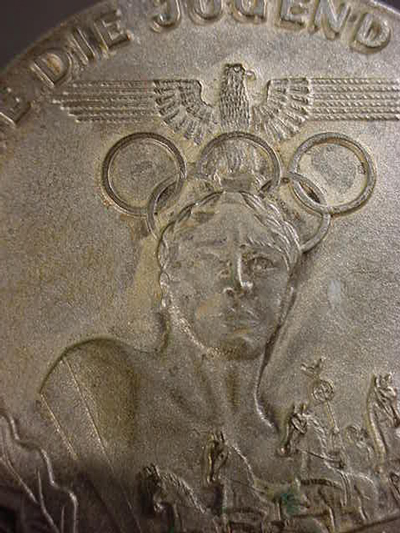
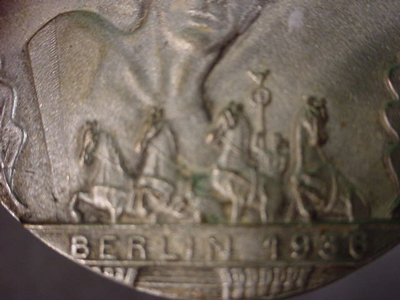
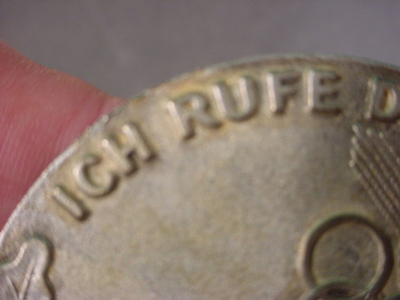
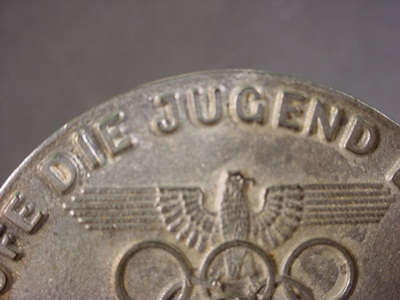
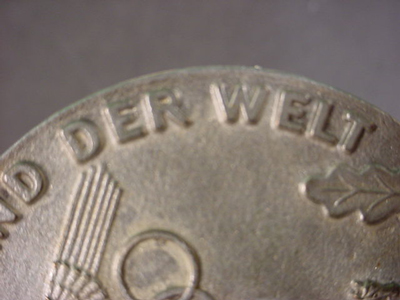
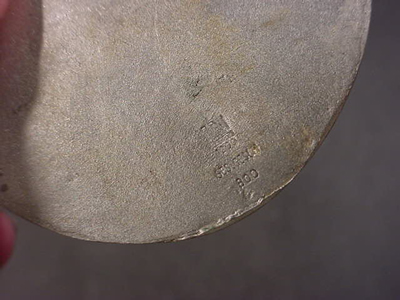
DESCRIPTION: This medallion was a souvenir piece but at the time a rather expensive one struck in silver and commemorated the 1936 Olympic Games at Berlin, Germany. These XI Olympics were possibly the greatest and best managed games ever held. Need we say more? Adolf Hitler and the N.S. Party hosting the event went to great lengths to be the perfect hosts to all who came there including Jesse Owens, who in turn loved the German people and their great hospitality. The American teams heaped praise on the German organizers and 99% of the hostile press was invented at the instigation of the usual pressure groups who continue to villify the 1936 games and the great people of the Fatherland who hosted it (par for the course!). The medal measures about 2 1/2 inches in diameter and has manufacturer marks and 800 on the backside. The front shows the German Reichs eagle, a victorious winner. At the top of the Berlin's Brandenburg Gate are the words "Ich rufe die Jugend der Welt" -- I call the children of the world. We believe that these pieces were originally cased but we did not receive a case with this one. The artwork is typically N.S. beautiful, heroic and dramatic. The medallion is quite rare and most difficult to find. It is quite heavy. Historically import for certain!
PRICE: $295.00 |
|
|
|
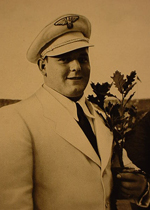 German champion lifter (Gold
Medal) at Olympics |
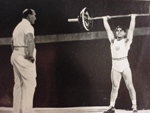 American lifter at Olympics
 |
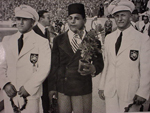 Champion lifters 1936
 |
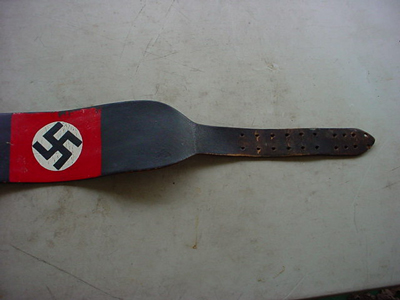
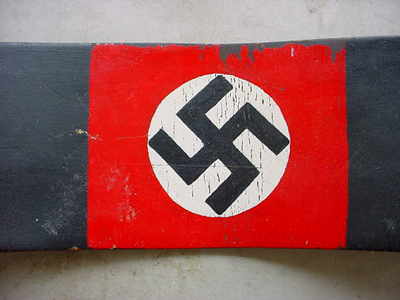
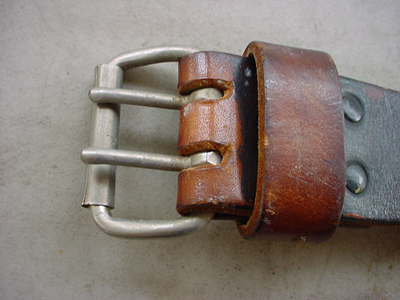
Olympic Weight Lifter Support Belt (Item OLY 7-9) |
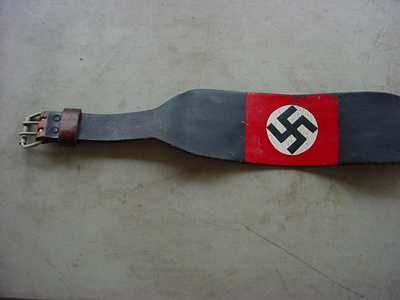
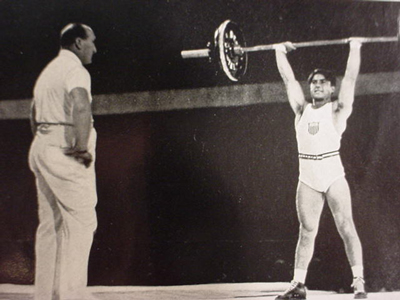
DESCRIPTION: This may or may not be from the Olympic games of 1936, but the family that we purchased it from in Germany told our agent that they thought it to be Olympic. It seems that a relative was a champion wrestler taking part in many sports contests within Germany and Austria. They didn’t know for sure if he took part in the Olympics or not but assumed he was at least signed up as a participant. The man was known to be an ardent N.S. Party member and considered himself to be a patriot in every sense of the word. So, it figures that he would have the swastika and national Socialist colors on his lifting belt. The belt is 40 inches long and five inches wide at its widest point. The swastika portion has the good honest wear and obvious age. It is apparent that this symbol was applied by the gentleman himself or an artist employed by him but it is 100% original and vintage. It is in good shape overall but the swastika panel shows some usage and wear. It is a unique item that illustrates the sports enthusiasm shown in the N.S. era. A great showpiece indeed.
PRICE: SOLD |
|
|
|
|
|
|
|
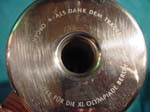 The platform
 |
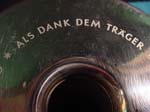 Thank the bearer of the torch
 |
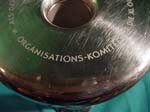 The committee
 |
|
|
|
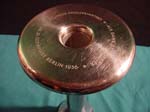 The platform
 |
 The base
 |
|
|
 The underside of platform
 |
|
 Foundation
 |
|
|
 Torch begins in Greece
 |
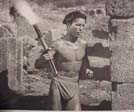 The start of the journey
 |
|
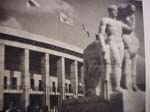 The Berlin Stadium
 |
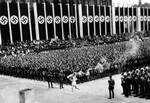 The torch enters the stadium
 |
|
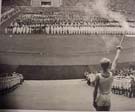 Olympic torch arrives
 |
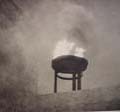 The flame is lit
 |
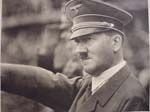 Hitler greets the teams
 |
|
|
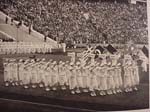 The German women contestants enter
 |
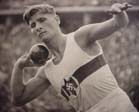 Tilli Fletcher, champion
 |
|
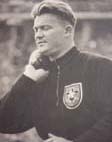 U.S. shotput
 |
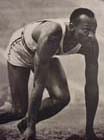 Jesse Owens
 |
|
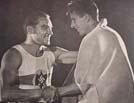 Good going, Yank!
 |
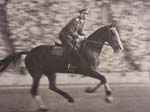 The Wehrmacht performs
 |
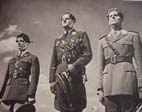 Victors!
 |
|
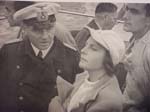 Leni Reifenstahl
 |
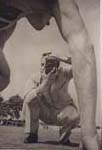 Leni's crew at work
 |
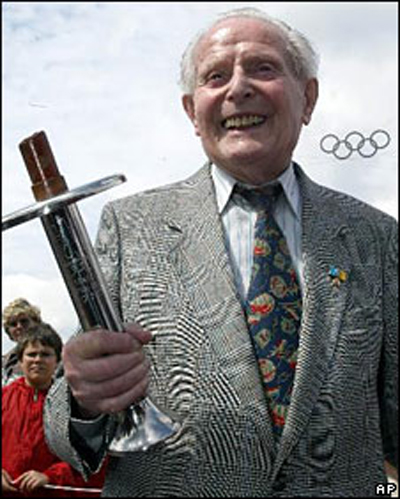
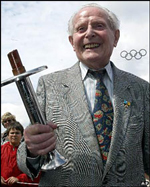 Siegrid Eifrig with 1936 torch
 |
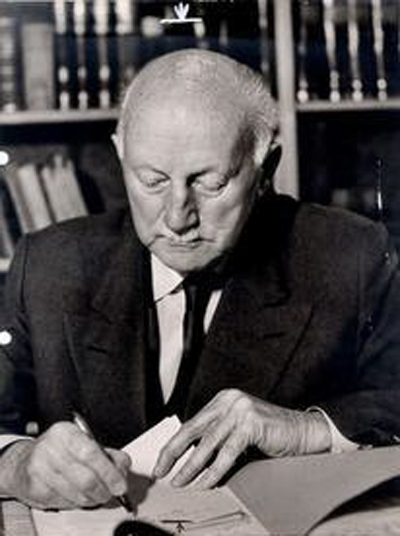
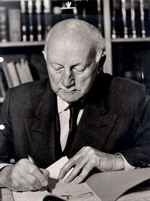 Dr. Carl Diem, mastermind behind
1936 games |
A 1936 Olympic Torch (Item OLY 7-10) |
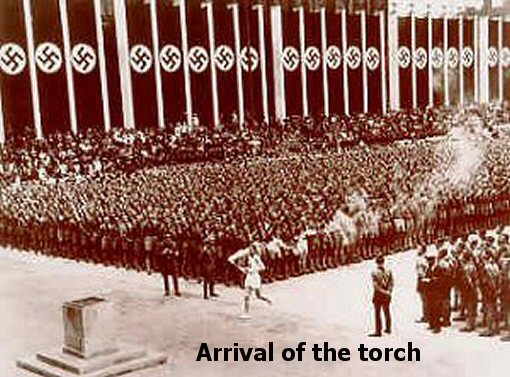
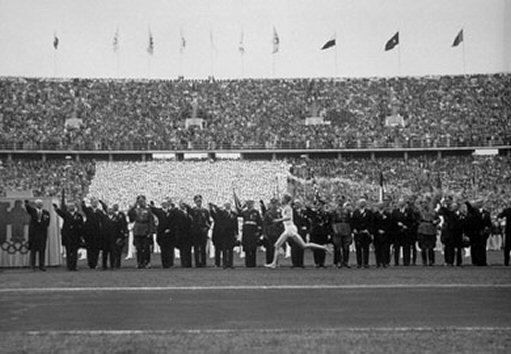
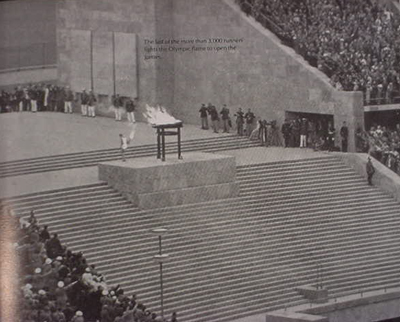
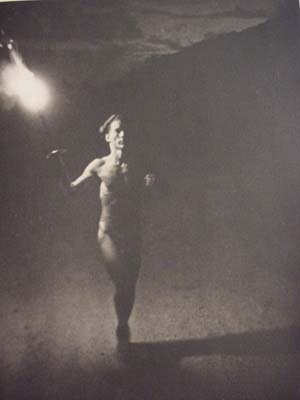
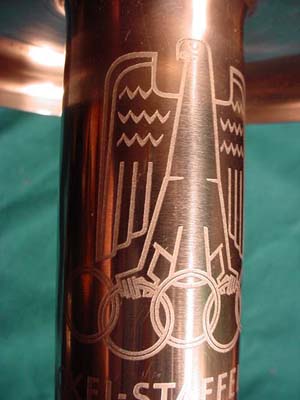
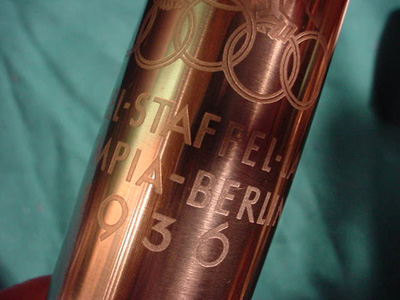
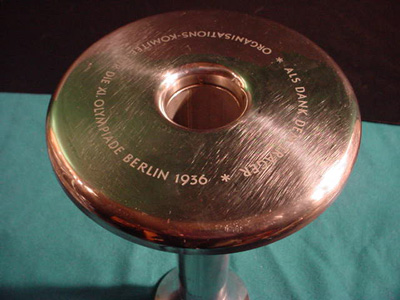
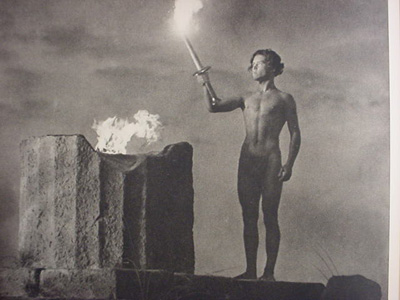
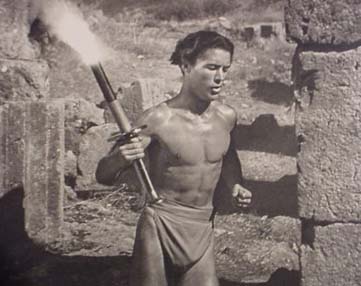
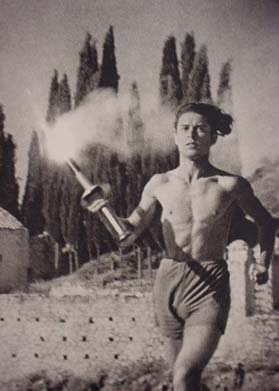
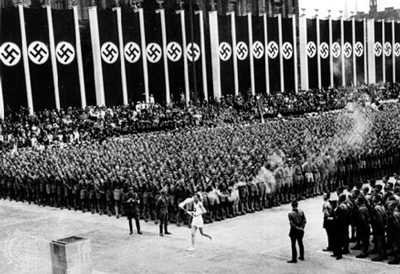
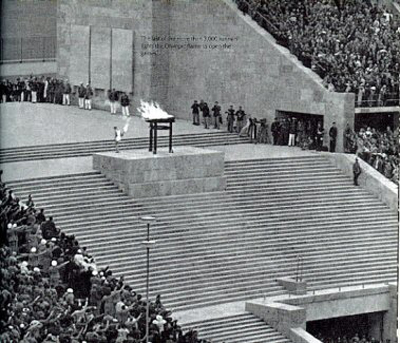
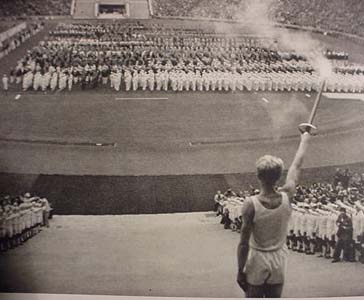
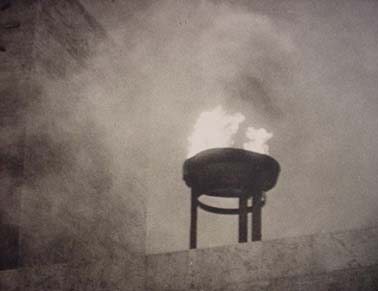
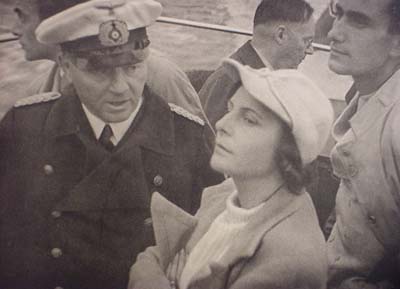
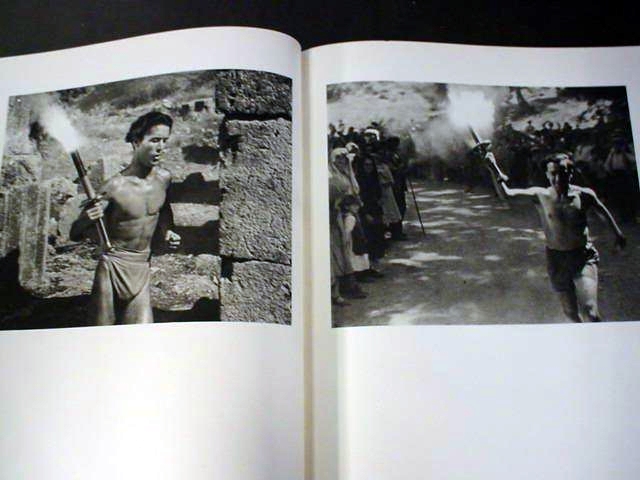
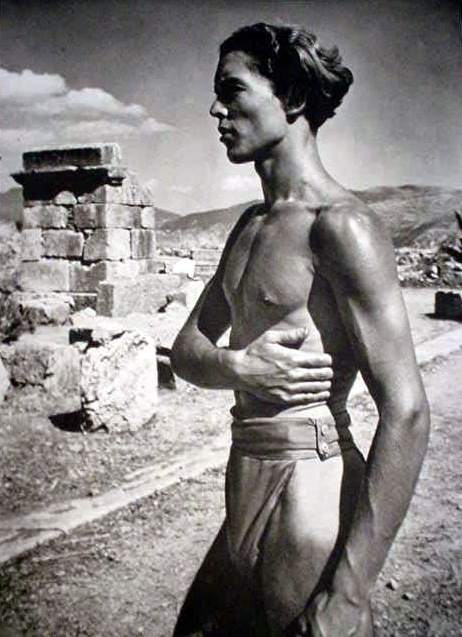
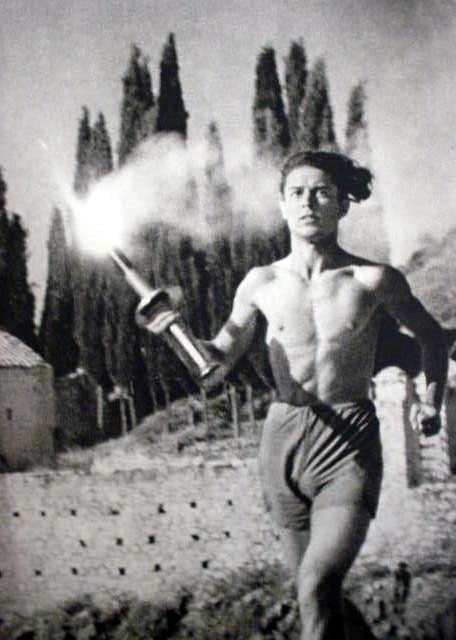
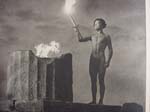
| DESCRIPTION: We present an Olympic torch, a relic of the 1936 Olympiad in Germany. The torch in this form was invented and presented in this form for the first time by the organizers of the 1936 games. The National Socialists wanted to stage an event that would link the modern Olympics to the ancient, so the idea was put forth and approved by Carl Diem, the main organizer of the games. The whole of this spectacular event was planned by the N.S. Leadership to project the image of the Third Reich as a modern economically ultra-dynamic state with growing international influence. The lighting of the torch at the ancient Olympian site in Greece and then running it through different counties was brilliant! The idea fit in perfectly with the belief that classical Greece was truly an Aryan forerunner of the modern German Reich of Adolf Hitler. The first torch was lit in Greece with the help of mirrors made by the German company Zeiss. Steel clad magnesium torches to carry the flare were specially produced by the Ruhr-based industrial giant Krupp. Media coverage was masterminded by the N.S. propaganda office and its chief, Dr. Paul Josef Goebbels, using the latest techniques and technology. Dramatic coverage of the torch's progress kept up the excitement and Leni Riefenstal filmed it masterfully to create beautiful yet powerful images. In 1936, the torch made its way from Greece to Berlin through countries in south-eastern and central Europe. The Fuhrer declared “Sporting chivalrous contest helps knit the bonds of peace between nations. Therefore may the Olympic flame never expire.” It is generally believed that the flames arrival in Vienna prompted major pro-N.S. demonstrations and may well have paved the way for the Austrian Anschulss or annexation of Austria in 1938. In 1936, there was no doubt that the spectacle of Diem’s torch relay was judged a great international success. As a suitably Aryan German athlete carried the torch into the stadium in Berlin, the BBC British Broadcasting Radio Commentator was deeply impressed. “He’s a fair young man in white shorts, he is beautifully made, a very fine sight as an athlete.” One of the runners was Siegfried Eifrig, who carried the torch as it arrived in the center of Berlin. Flanked by huge swastika flags, he then lit the fire on the iron alter in what could be called pseudo-religious symbolism (it was a very solemn ceremony and with the crowd still extremely impressed with Hitler’s statement about peace among the nations they treated that ceremony with suitable reverence).
Eifrig is still alive --aged 98 -- and still has his Krupp torch engraved with the route of the 1936 relay.
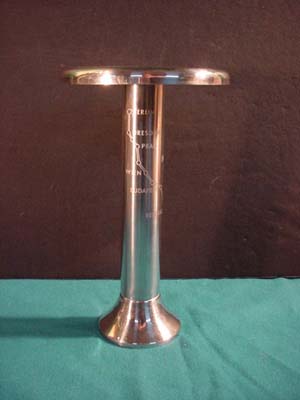
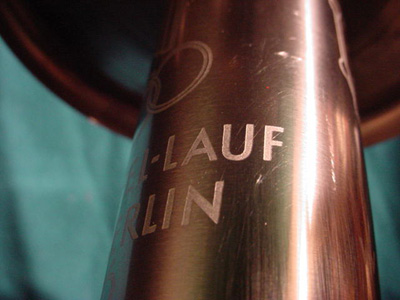
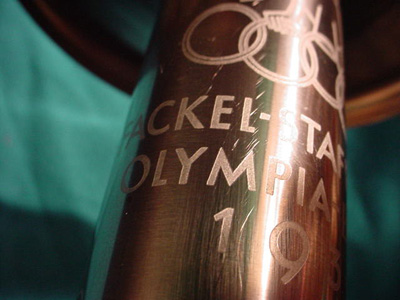
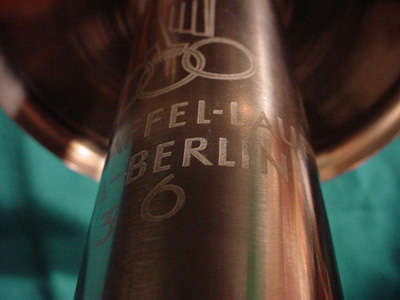
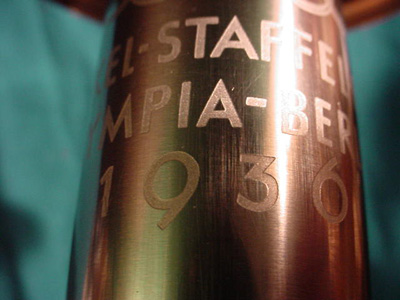
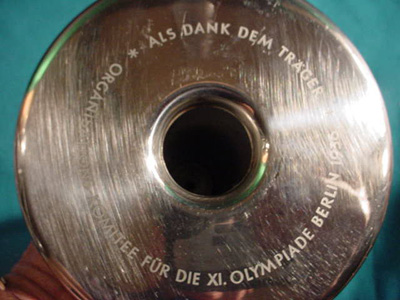
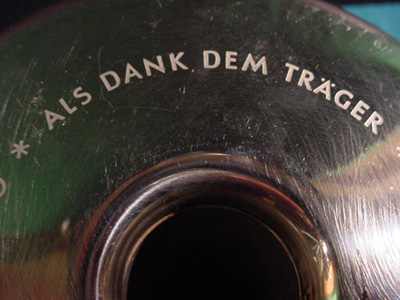
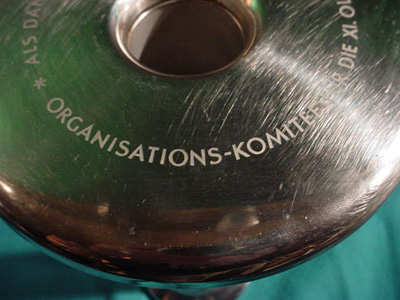
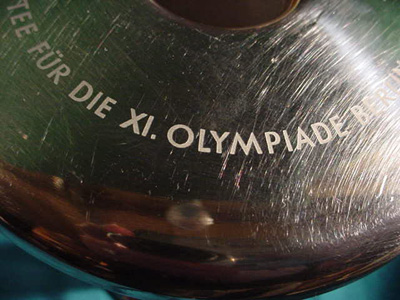
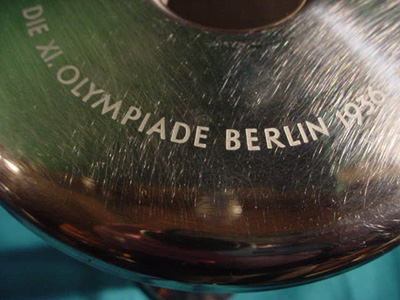
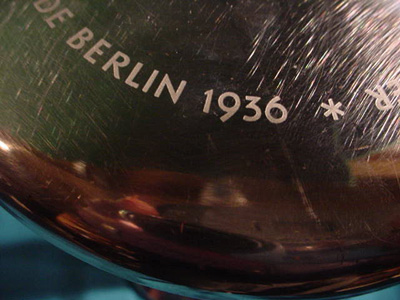
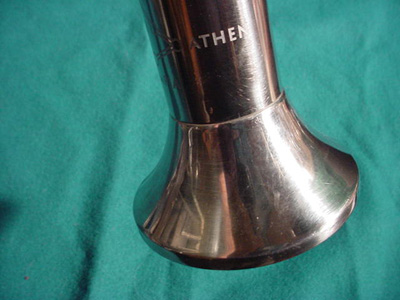
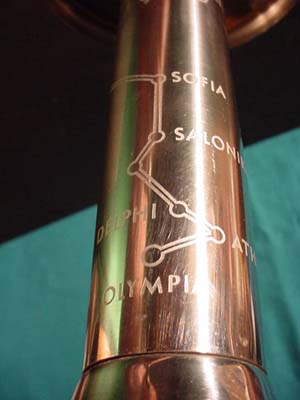
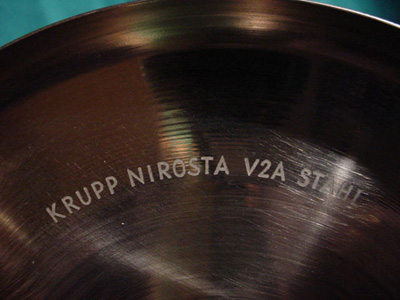
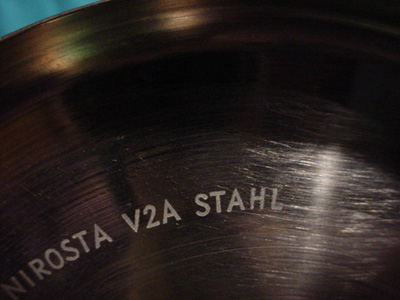
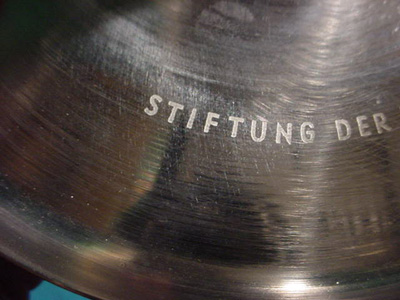
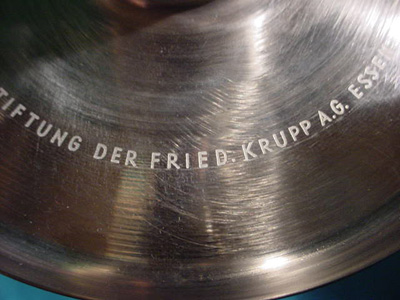
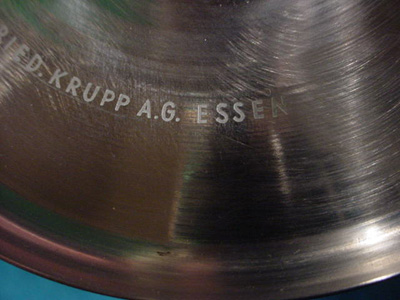
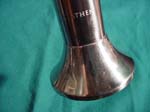
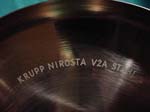
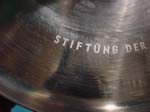
The torch itself was designed by the sculptor Lemcke and was in polished steel. On the handle was the inscription “Fackelstaffel-lauf Olympia 1936", with Olympic rings and the German eagle superimposed on the bottom part along the staff -- you will see the map of the route of the torch from Olympia to Berlin. On the top platform, is the inscription Organisations- Komitee fur die XL Olympiade Berlin 1936 Als Dank Der Trager” (Committee for the XL Olympic in Berlin. We thank the Carrier”). This is exactly what the piece we offer says. It is an exact period recreation of the Olympic torches originally carried back then and when we say (recreation) we mean period!!! These torches as you see here were crafted to be ‘exact’ recreations of the ones actually carried; they were presented by the Committee to persons who helped in the organization of the games, financial donors, and even non-German people who helped to make the games such a success. We have been told that the torches were even sold in some specialty shops in Berlin in the late 30’s but at very high prices. Underneath the platform are the words “Krupp Nirosta V2A Stahl and Stiftung der Fried.Krupp a.g. Essen. The word Stiftung means foundation so obviously the recreation torches were reproduced in the 30s and perhaps later by the Krupp firm to commerate the Games of 1936. The torch is made in light thin steel.
The words and map of the torch route stand out in a silver tone etching. The route map shows the path of the torch bearer from Olympic to Athens, then to Delphi, Salon, Sofia, Belgrade, Budapest, Vienna, Prag, and Dresden and on to Berlin. This is not only an impressive looking piece but a memorial in a way of the greatest Olympiad up to that time and in our opinion greater than all the ones hence -- we will say nothing about the controversies created by the leftist and liberal media. Especially the Jesse Owens falsehood and “myth.” We will not even address the fact that it was Germany who won more of the gold and silver medals than any other country. Sometime go to Google and put in German Myth 10 Hitler and Jesse Owens and see how propagandists in the U.S. managed to create the old canard and myth generally accepted by those who have no revisionist curiosity that empowers them to ferret the truth out of purposeful deception. Maybe this article that I write here might spur you on to further investigation into what have been continual lies and distortions for some 73 years now.
PRICE: SOLD
|
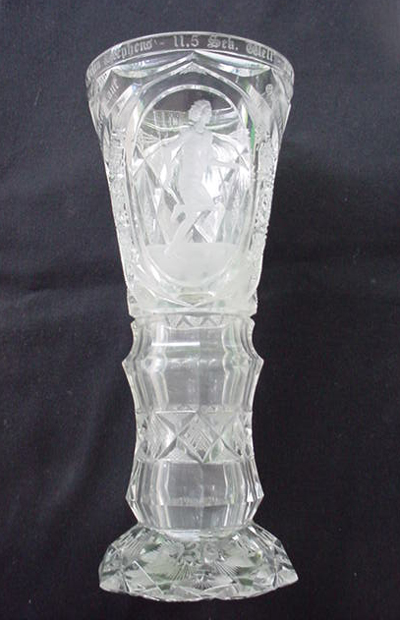
1936 Olympic Vase for the “World’s Fastest Woman” Helen Stephens (Item OLY 7-11) |
DESCRIPTION: We are often asked by customers, collectors and historians the question “What is the greatest, most historically important item that you have ever handled at Germania?" That is definitely a hard one because our company has had the absolutely greatest items that have ever seen (once more) the light of day...Hitler’s personal property, Heydrich, Goebbels, and some of the most fantastic items having been the personal effects of Hermann Goring, items of art and culture, Germanic and international abound in our pages. So, dear collector, it is with great pride that we now offer one of the most important pieces of all (our opinion).
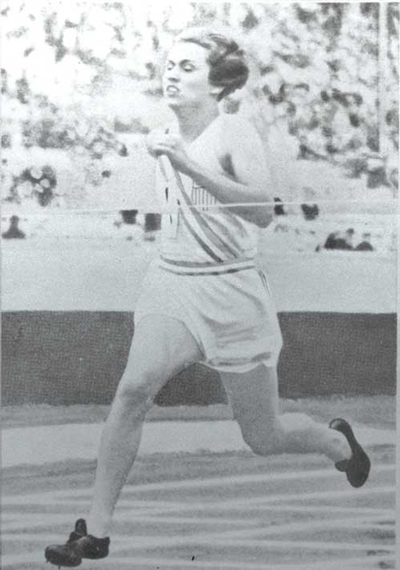
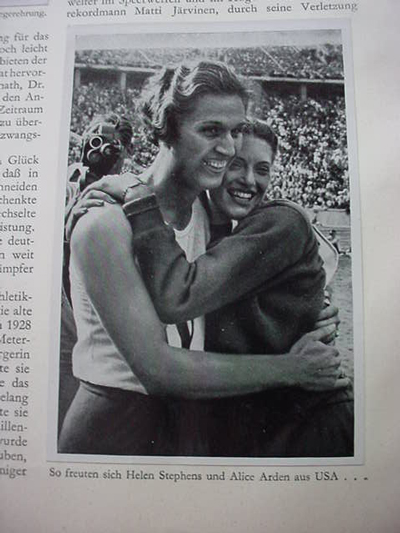
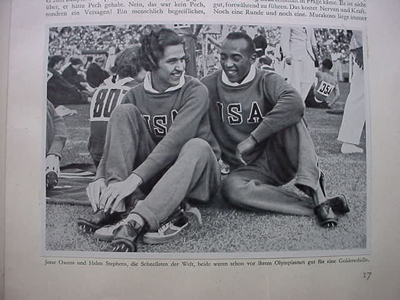
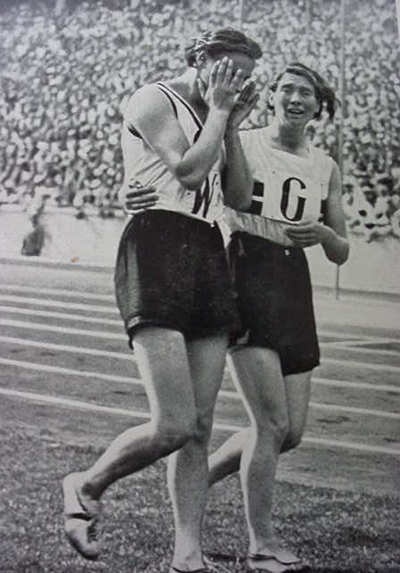
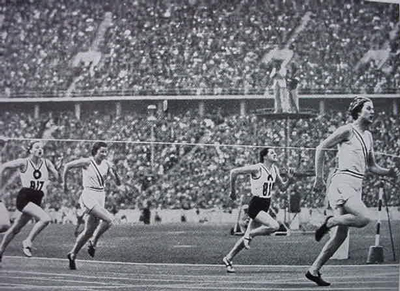
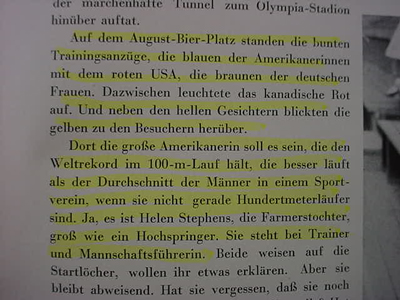
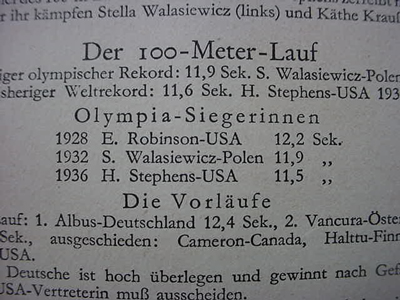
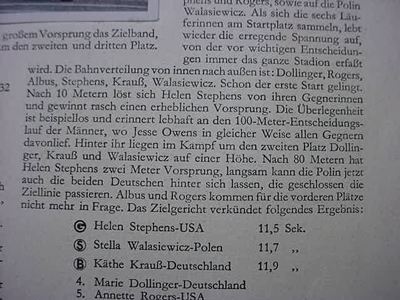
The Olympic games of 1936 were a celebration of youth and sport and some thought of it as a “manly sport” and indeed it was male dominated for centuries and one could envision it as the contests of the “warrior spirit,” and in fact, there was considerable opposition on moral and biological grounds to women competing in such vigorous sports. Sport heroines, such as the American Mildred ‘Babe’ Didrikson and the world’s “fastest woman,” Helen Stephens, who disavowed conventional images of femininity, were exploited and ridiculed by the press. Actually female athletes began to match the attainments of their male counterparts, yet sought to preserve the feminine qualities of their style. Helen Stephens, born February 3, 1918, grew up on a farm in Callaway County near Fulton, Missouri. As a child Helen loved to run, jump and climb. She also had to work hard on the family farm. “From the time when I was a small child I was in training, only I didn’t know it.” Helen once said, “I was walking, running, doing chores, building up my body, my lung capacity, my wind, my endurance, everything that people have to train for today.” When she was eight, Helen dreamed that she was the fastest runner in the world. Helen’s high school physical education teacher, Coach W. Burton Moore knew how to train athletes for track and field events and when he discovered how fast Helen could run he decided to help make her dream come true. In 1934, Helen was fifteen years old and nearly six feet tall. Coach Moore clocked Helen running the 50 yard dash. Her time was 5.8 seconds. This time actually tied the world record held by Elizabeth Robinson. On March 22, 1935 Coach Moore took Helen to St. Louis for her first official race. Helen ran against Stella Walsh, a Polish Gold Medalist from the 1932 Olympics. She beat Stella in the 50 meter dash at 6.6 seconds setting a new indoor record on a dirt track. The press gave Helen the titles “The Missouri Express” and “The Fulton Flash.” Years later Helen admitted “That's when I learned everybody likes a winner." In the summer of 1936, Helen Stephens and the other Olympic team members sailed to Germany to compete in the IX Olympiad in Berlin. During the voyage, Stephens received letters asking her not to compete. Some American wanted her to protest the alleged mistreatment of the Jews by Adolf Hitler and the Nazi Party. But she ignored these issues that she considered political, because she wanted to fulfill her responsibilities as an athlete. On August 4, 1936, 18 year old Helen Stephens set the Olympic World record for the 100 meter event at 11.5 seconds. Her record stood for 24 years until Wilma Rudolph beat it in the 1966 Olympics. On August 9th, Stephens was the anchor in the 400-meter relay team that set a World Record time of 46.9 seconds. She received a gold medal for each event. Stephens had fulfilled her childhood dream. She was the fastest woman runner in the world. Upon returning from Berlin she and Jesse Owens headlined a tour before Stephens moved on to play professional basketball and softball. She competed later in more than 100 races winning every one of them. She continually engaged in various sport activity for the rest of her life.
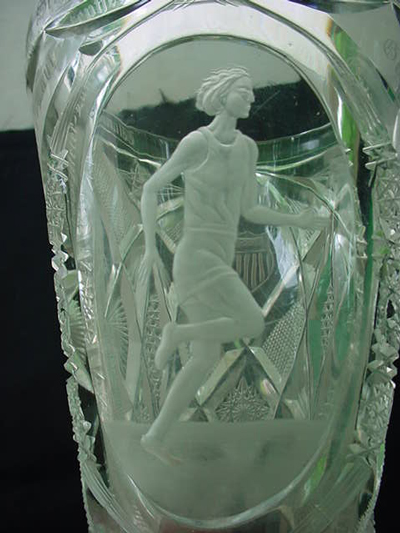
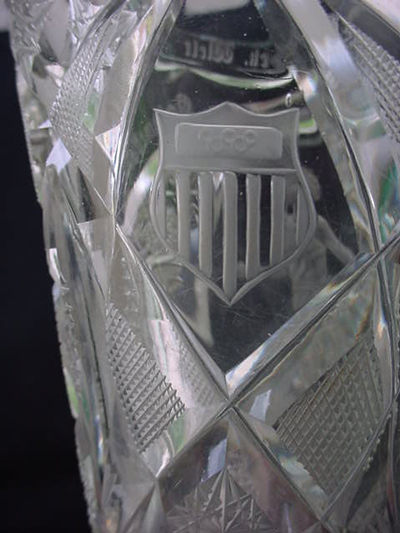
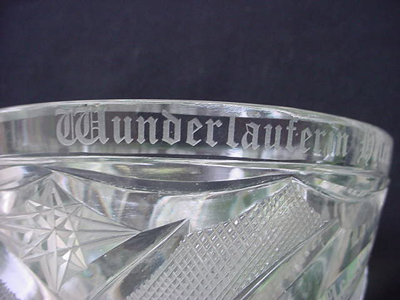
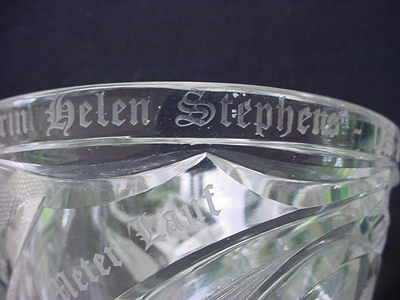
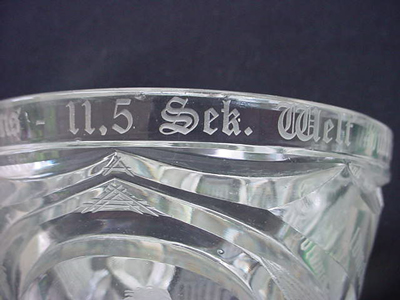
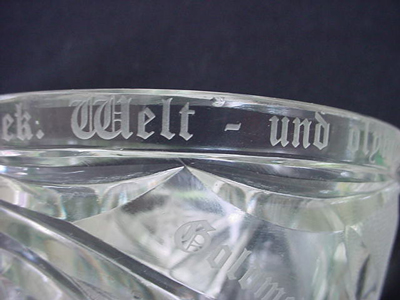
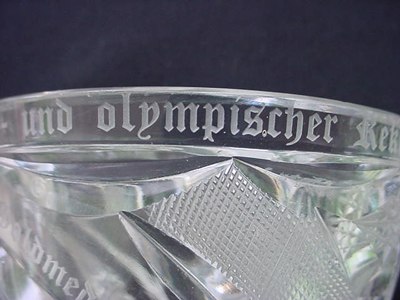
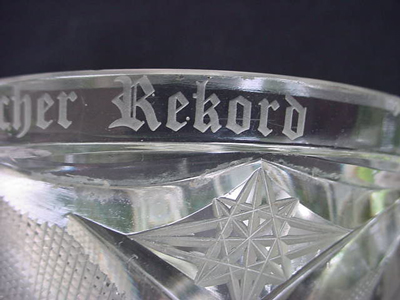
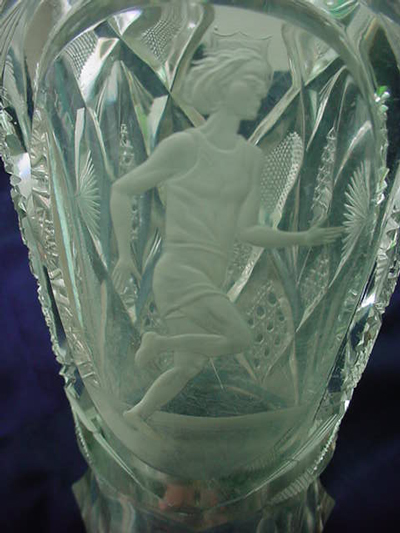
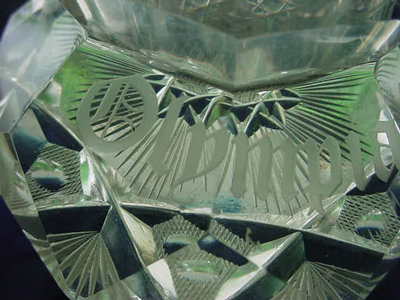
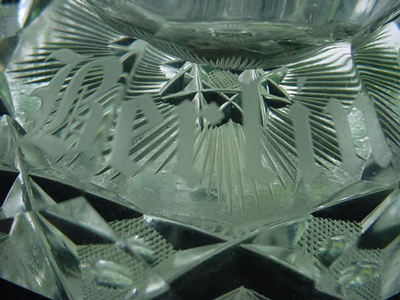
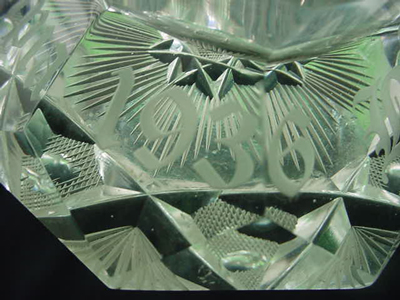
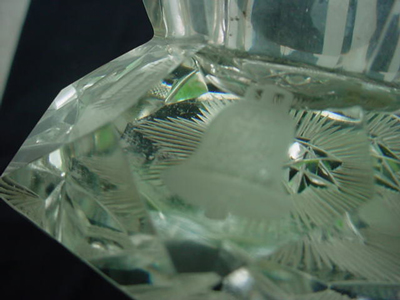
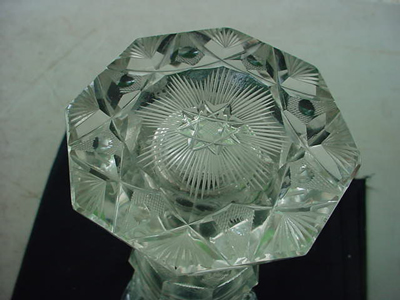
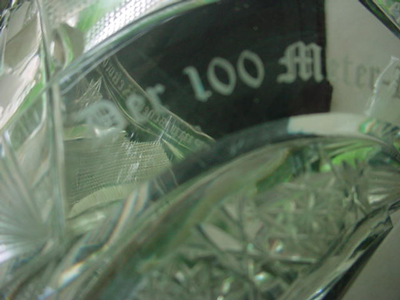
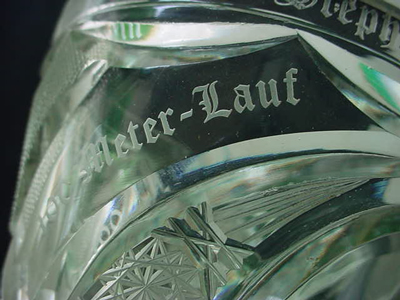
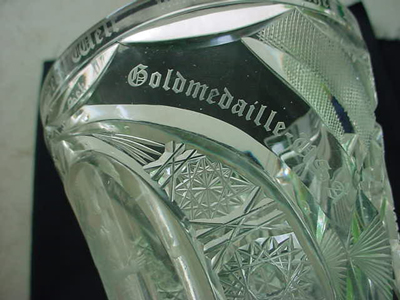
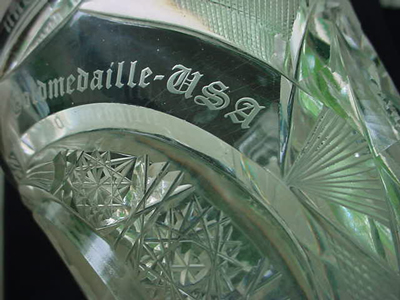
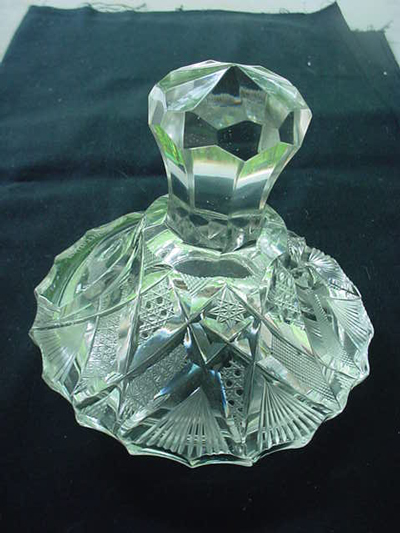
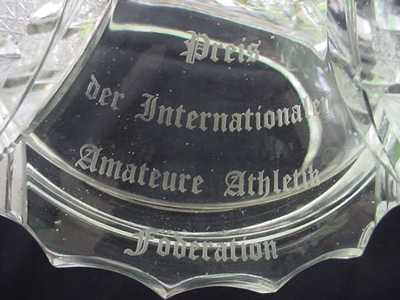
The vase is somewhat of a mystery. We know that several of them were made up and purchased by the national sport organization on the special orders of the Reichs-sport director Hans Von Tshammer und Osten; it was his intention to award these beautiful cut glass vases to all the gold medal winners but this would have been weeks or months after the games were over. By this time the blatant anti-German propaganda and demonstrations had reached a fever pitch in the USA. Various ethnic and religious groups beating the drums of discord against Germany were blatantly in evidence, especially since the Fatherland was beginning to be looked at with admiration and awe by so many who were extremely impressed with the showing that Germany and its leaders had made with the games. No Olympia before this one or afterward would ever be able to match the beauty and excitement of the Berlin presentation. This would not do with certain groups and their venom was both loud and effective. Thus Jesse Owens and Helen Stephens never went back to claim their laurels or the vase. They would have been highly honored by the N.S. Government and the German people -- this was assured but who can blame them for not going, when one considers the name calling and vilification they would have had to endure especially in America now that the media was controlled by the agitators who were a small minority but had a powerful strangle hold on media influenced bias. So, Helen never returned to Germany to receive the vase. How many of the Gold competitors did, we do not know and how the vase dedicated to her that would have contained bright flowers was never presented? How it got from the possession of the Olympic committee to a shop in East Berlin we will probably never know but it can be assumed that in the turmoil of 1945 and later in Germany’s war torn capitol anything not nailed down was surely stolen or it was sequestered away. Actually, it was only by luck that our German picker was able to procure it for us. Positively amazing!!!. Besides all the great history connected to this piece, you must realize it is also an art piece of great beauty. It is a cut glass vase ‘par excellence’ as was a befitting prize to the top winners who Germany wanted to individually honor highly .The vase stands about 15 inches tall...10 inches for the body of the glass and 5 inches for the measurement of the top lid. The diameter of the mouth when uncovered is 4 ½ inches, while the bottom pedestal measures 4 inches. The engraving in the bottom pedestal proclaims Olympia 1936 Berlin while around the top rim it says “Wunderlauternin Helen Stevens- 11.5 Sek. Welt und Olympisher rekord.” This translates to: "Wonder-runner Helen Stephens 11.5 seconds. World and Olympic Record." Below this and in the center is a wonderful engraved image of a female runner. Amazingly it actually looks like Helen. Over this is engraved - Der 100 Meter Lauf Goldmedaille USA. (The 100 meter race --Gold Medal U.S.A.). On the back side of the glass is the American flag shield. On the top lid is engraved Preis Der Internationalen Amateure Athletik Federation (Prize for the International Amateur Athletic Federation).
The vase is, as we emphasize, an art treasure on its own with various geometric patterns of great artistic beauty all throughout the creation. This was truly a prize that Helen would have adored and would have had great pride in exhibiting with all her other dozens of trophies. This would have been the best of all of them, a pity that abusive propaganda sewn by “culture aliens” prevented her from attending the ceremonies that accompanied the presentation of these prizes. Incredible that after all these years that Germania International, LLC was able to bring it to America where it truly belongs. The collector who manages to procure this one will be equally proud. Probably as proud as the World’s Fastest Woman would have been to receive it and Germania is very proud to have the chance to offer it. Here is both America and the Reich honoring Helen Stephens, Olympic Champion personified.
PRICE: No longer with us |
 The NSDAP stamp
 |
|
|
 Meeting with the Committee
President |
 The Fuhrer arrives
 |
|
 Hitler, Goring, Goebbels
 |
|
|
|
|
|
|
|
|
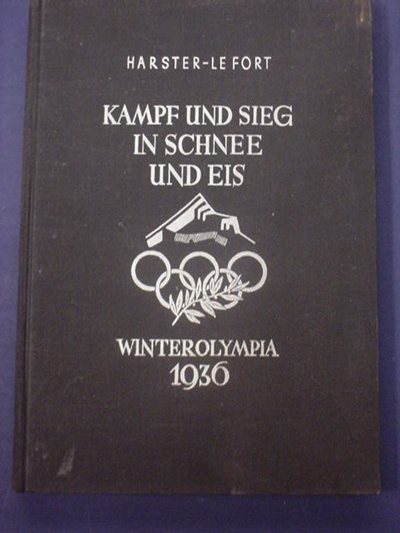
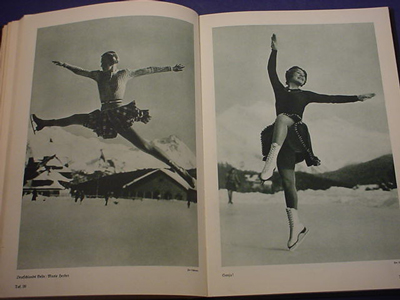
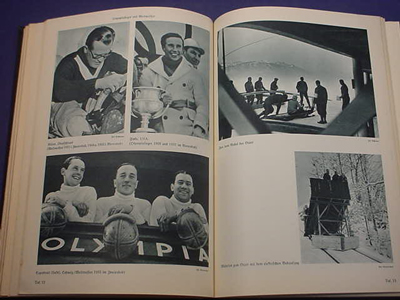
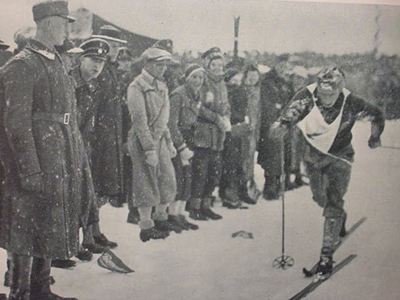
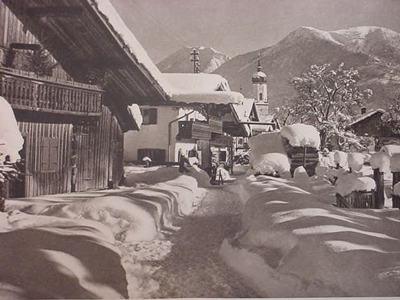
Kampf und Seig in Schnee und Eis WinterOlympia 1936 (Item OLY 7-12) |
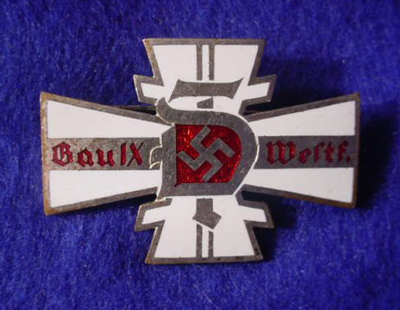
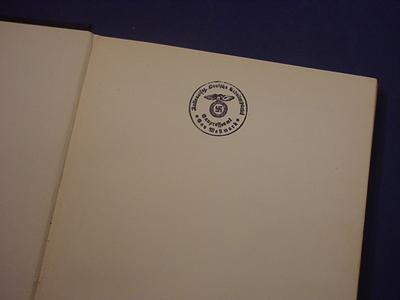
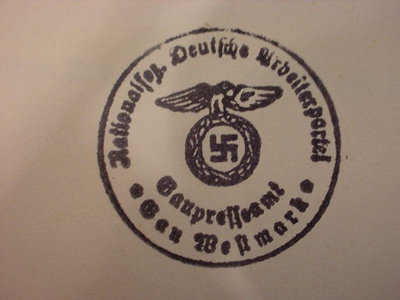
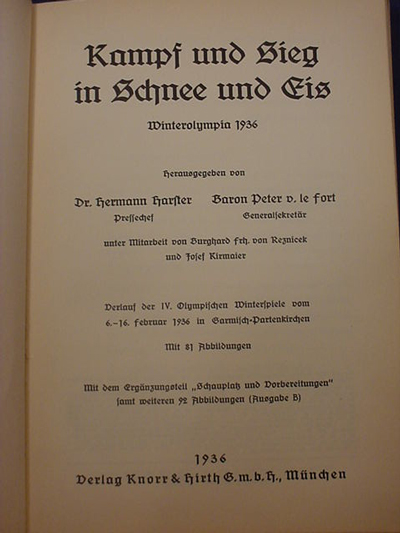
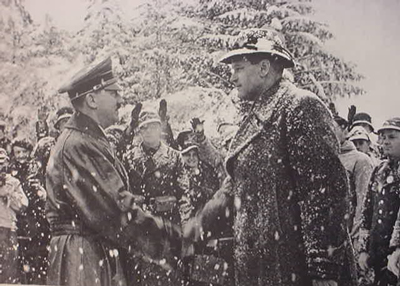
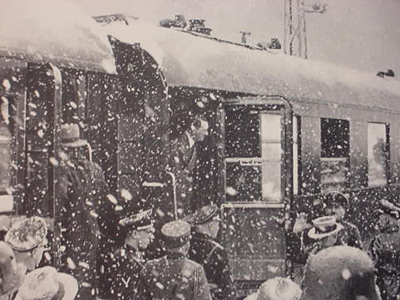
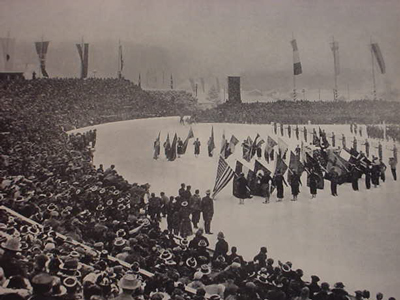
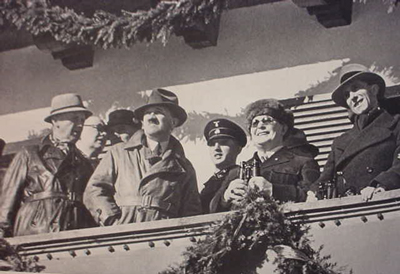
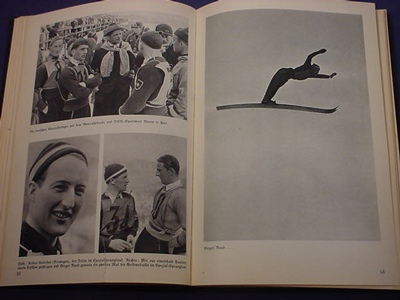
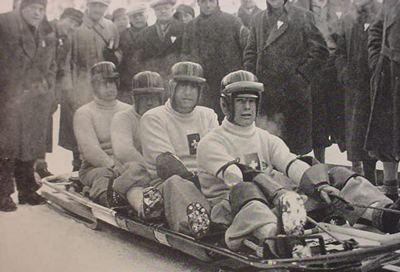
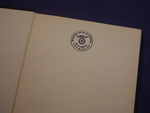
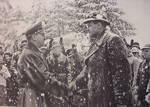
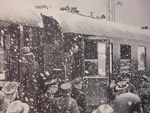
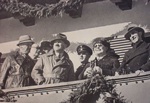
DESCRIPTION: This rare Olympic book is the one purchased in 1936 by the Press-amt (Press offices of the National Socialist Party) in Gau Westmark. It bears the stamp of that organization inside the front cover. The book is in two parts inside -- part 1 has 112 pages and part 2 has 46 pages All the way through the both parts are crisp fine photos in black and white of all the winter events of the greatest Olympics of all time. Many pictures that bring up the adventures in vivid photography the excitement of the games, there are also maps and charts, lists of the competitors and winners, pictures of Hitler, Göring, Goebbels as they enjoyed all the action. Hitler arriving in a train during a snowstorm and a great photo of the Fuhrer as he shakes hands with the Olympic president Dr. Ritter Von Halt. The picture is so interesting because it is taken during the snowfall (great effect!) The book measures 7" x 10" and is in excellent plus condition. The press corps probably bought the book in order to review it and show it in various magazines and newspapers throughout the Reich.
PRICE: $185.00 |
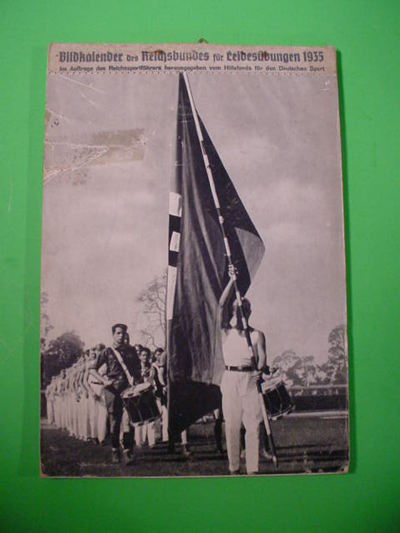
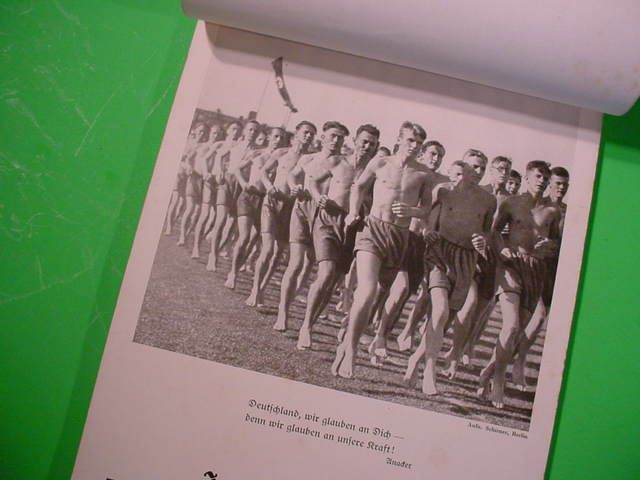
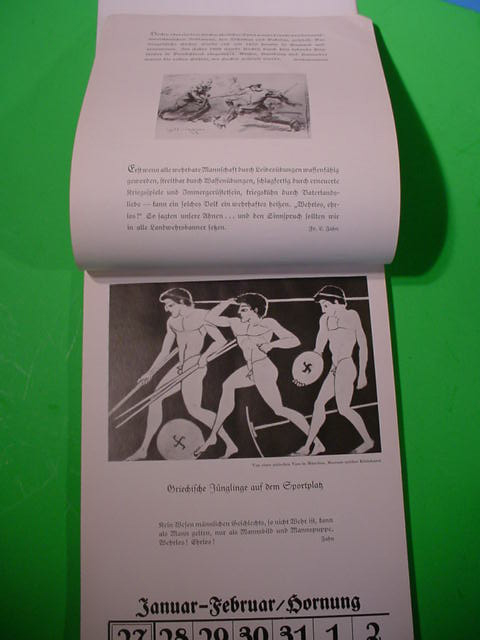
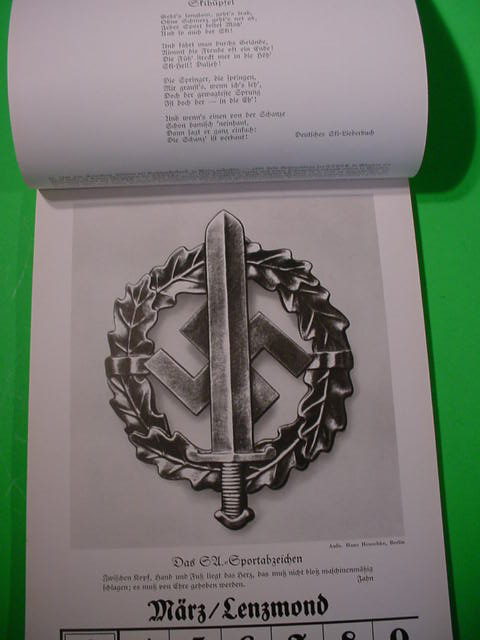
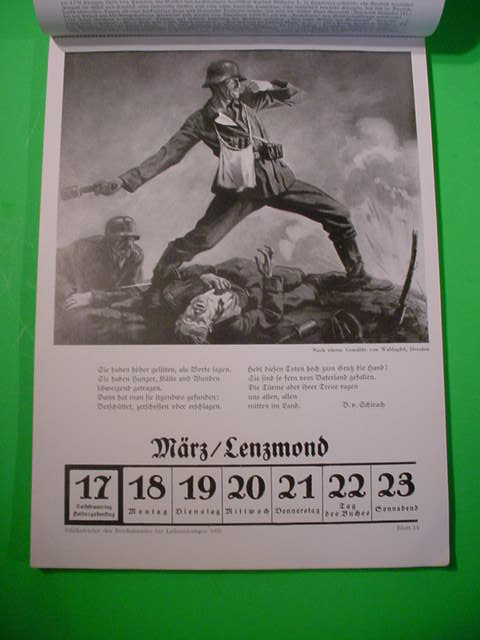
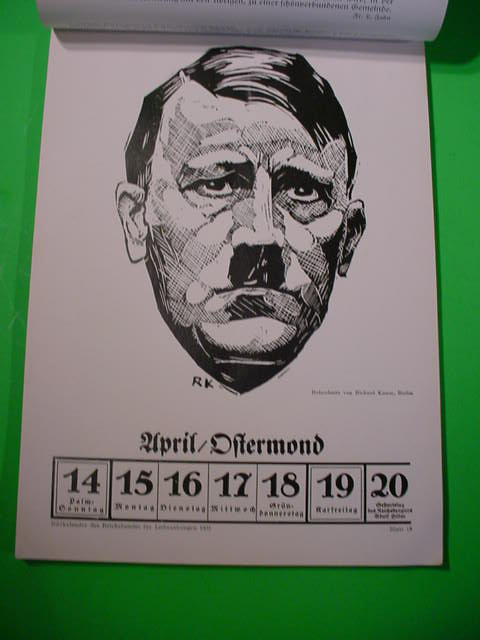
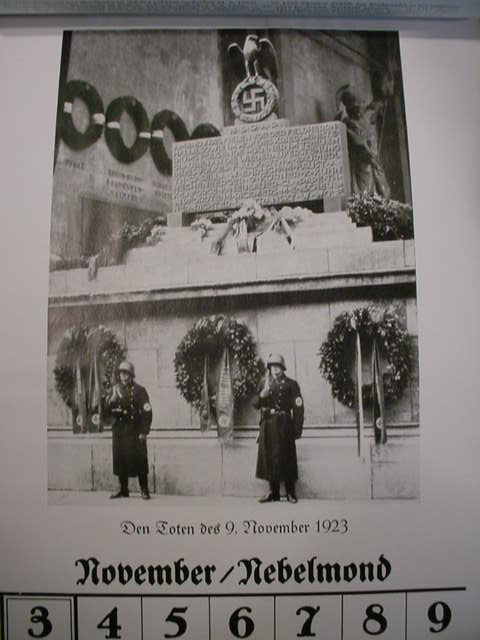
Calendar of the German Sports Organization Reichsbund für Leibesubungen (Item OLY 7-13)
|
DESCRIPTION: This is a calendar from 1935, it is still in very good shape and complete. It is filled with great art prints, photos, poems and has songs and histories. Great pictures in various sizes but almost all are in ½ page size at least. Many are concerning ancient and modern sport but there are also many N.S. party pictures as well. It is a treasure trove of important archival N.S. knowledge. Olympic collectors should be especially interested since we know that the German athletes were preparing for the 1936 Olympiad to be held in Berlin.
PRICE: $135.00 (don’t sell it short -- it’s great!) |
Presentation letter
|
|
|
Presentation page
|
The Olympics of antiquity
|
|
|
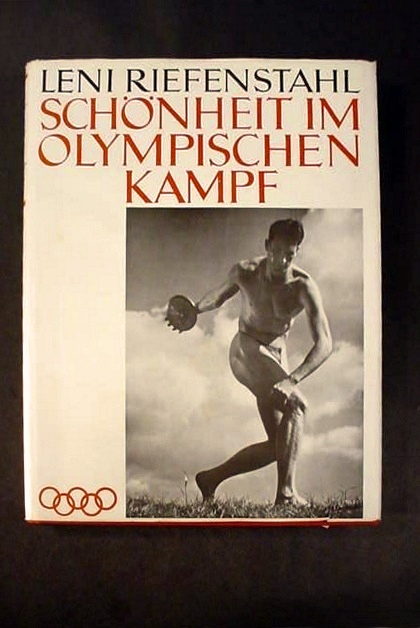
Book by Leni Riefenstahl entitled Schönheit Im Olympischen Kampf (Beauty in Olympic Competition)
(Item OLY 7-14; ART 17-14; PARTEI 4-9)
|
|
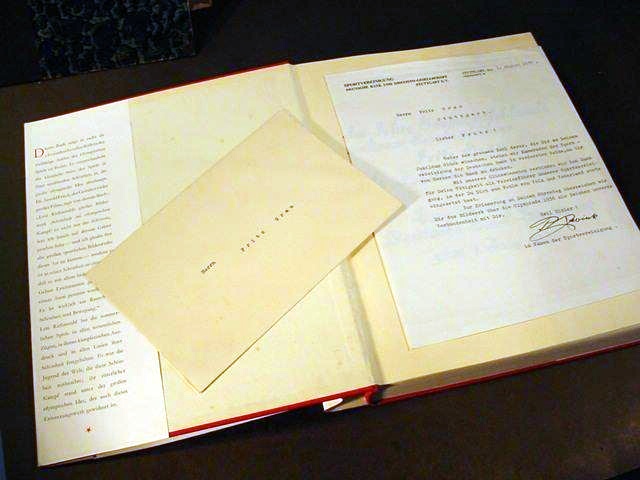
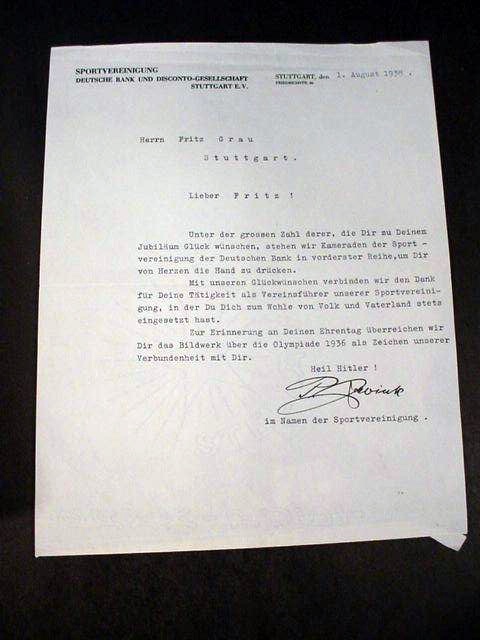
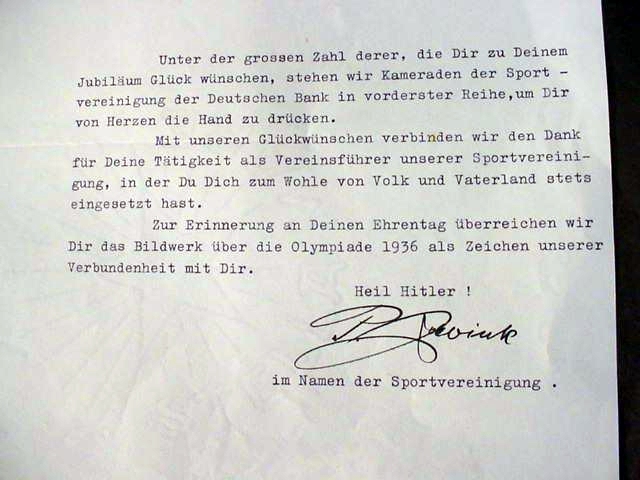
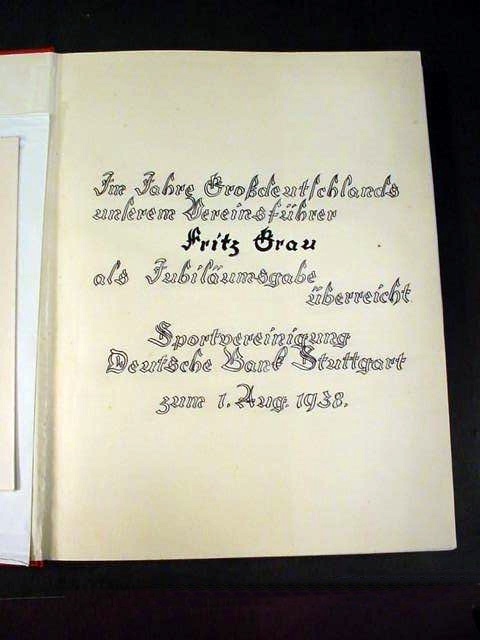
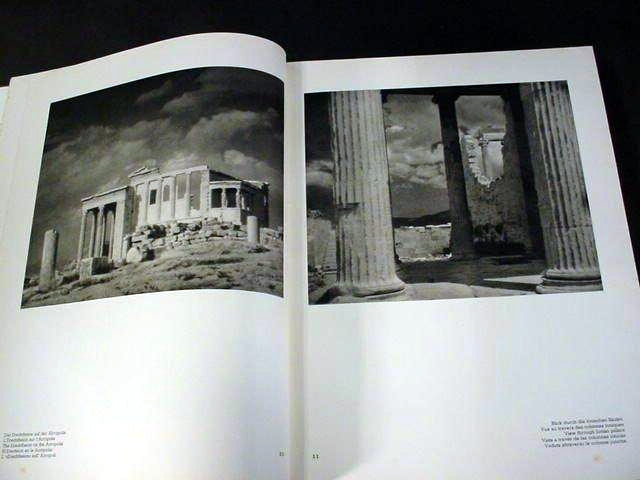
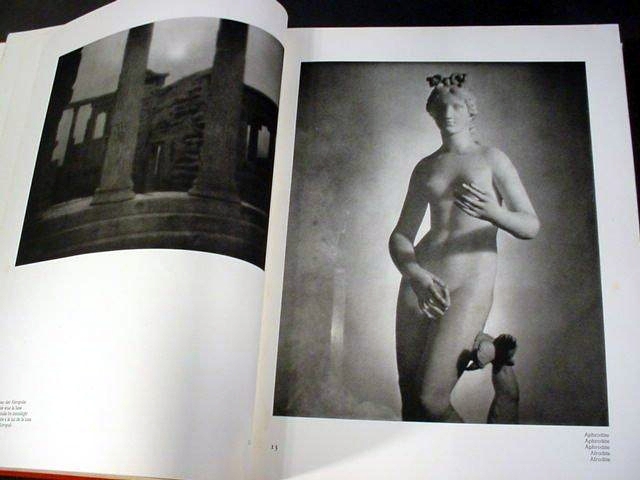
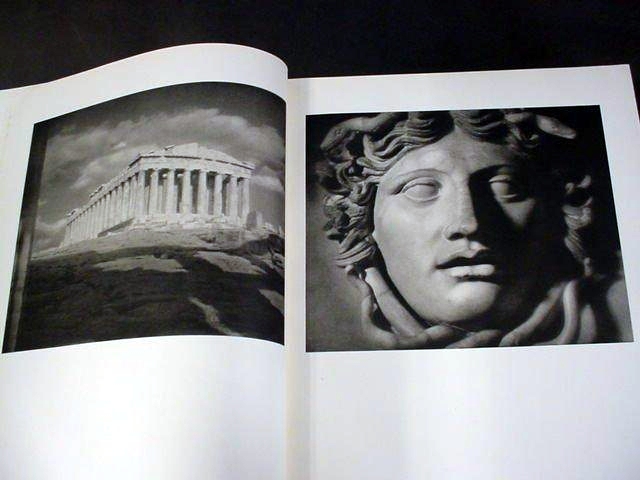
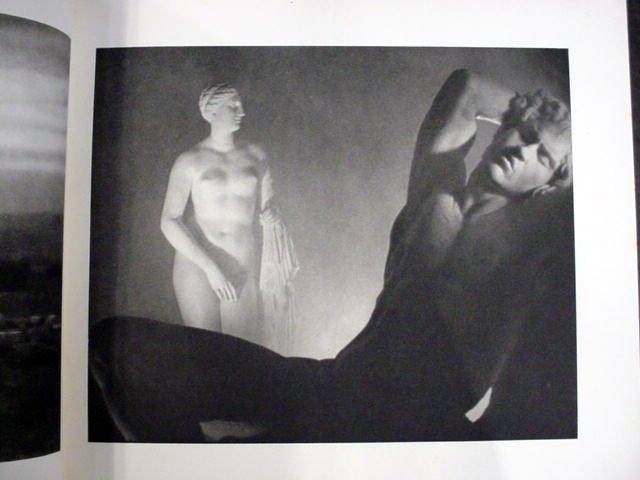
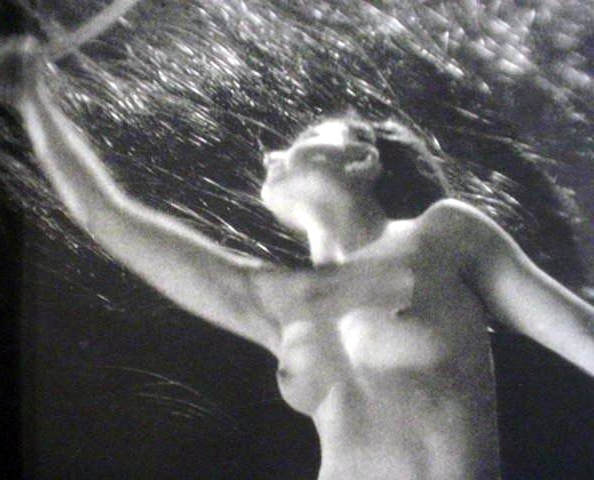
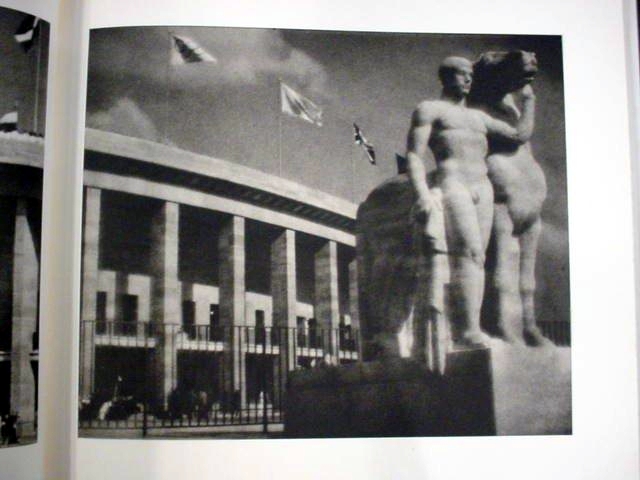
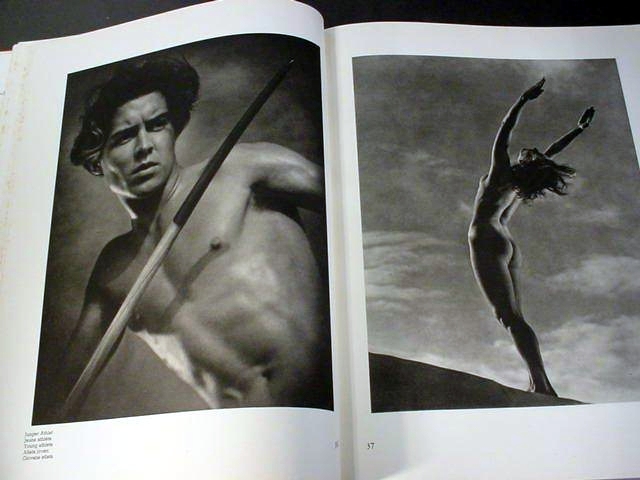
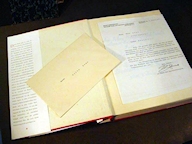
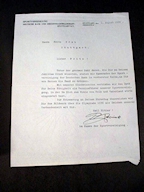
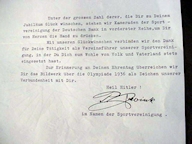
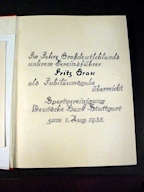
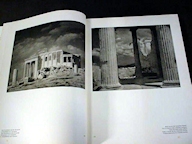
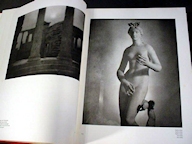
DESCRIPTION: Let’s begin by telling you that this is a very rare book in any condition, and continue by telling you that the condition is near ‘mint’ with the original dustcover and this is just never found! Second, this is a presentation volume and was presented in 1938 to Herr Fritz Grau, who was evidently the president of the Deutsche Bank in Stuttgart; the presentation was mad by the members of the sports association connected to the bank. The Deutsche Bank was one of the major sponsors of the Berlin 1936 Olympics. The association had given him this beautiful book as a gift in appreciation of his untiring work on behalf of the group and the Jubilee of the Association. The original letter of presentation and its envelope are found folded under the cover. There is a beautiful hand-written presentation inscription on the front page of the book; it reads as follows: “In Jahre Grossdeutschlands unserem als Vereinsführer Fritz Grau Jubiläumsgabe überreicht Sportvereinigung Deutsche Bank Stuttgart Zum 1 Aug 1938.“ This translates to: “In the year of “Great Germany” our association leader Fritz Gau - In the jubilee we present this from the sports group of the German Bank of Stuttgart on August 1, 1938.” The book itself is a marvelous collection of photography all taken by the master photographer Leni Riefenstahl, herself, and her crew. It is the greatest and most artistic endeavor ever put in book form on sports and is still never equaled. It’s a massive coffee-table book of 281 pages chronicling the beauty of the human form at its best; a celebration of human endurance and the true brotherhood of man, as it should be. Here they were bringing out the best of the races of man. They were competing, but also sharing a common goal and that was to make their individual nations proud of their achievements, yet they were taking part in a true spirit of international brotherhood. When one looks through these pictures one realizes that the propaganda of the subhuman element in the U.S. and British press—then and now—spreads lies that were nothing but pure B.S. For instance, the “whopper” about the Führer’s snubbing Jesse Owens and all the other lies spread by what and who I call the “traditional enemy” of truth. The way Leni Riefenstahl, as a very important representative of the N.S. Reich, handled pictures of Owens in this book illustrates better than words what the German people thought of him and it is starting to come out what he thought of them. The thing about Hitler’s snubbing him was nothing but a flagrant lie and should be put to rest with all the other Roosevelton canards to be thrown in a manure heap.
That’s where historical revision makes its mark bringing history in accordance with the facts. “Brotherhood” should mean no ‘Brother wars’ for the sake of G.W. Bush, Mitt Romney, Obama, or George Soros. “Let’s make Olympics, not war.” This is the finest book we have ever offered for even better reason than its obvious beauty. It is a testimony to the dignity of man that has lived through the ages and rises above the insidious hate brought about by culture aliens; then and now. It measures 9 ½ x 12 inches and is captioned in German, English, French, Spanish—Olympiad Hail!
PRICE: SOLD
|
|
Front
|
Back
|
The "KPM" mark inside
|
The Führer enters the games
|
|
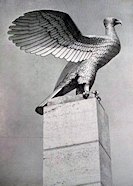
The eagle decoration on the "Sports Haus"
|
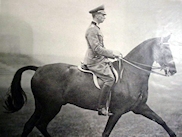
Equestrian military sport
|
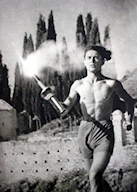
The Olympic torch arrives
|
|
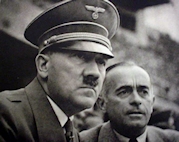
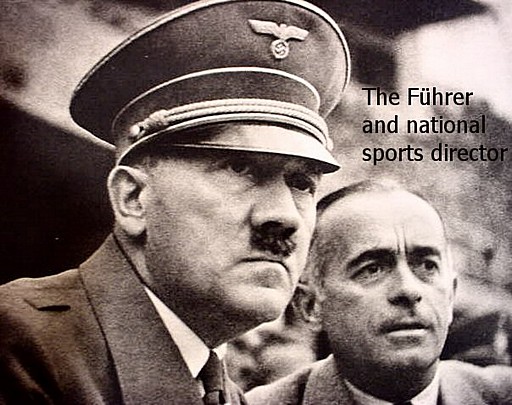
The Führer and National Sports director
|
|
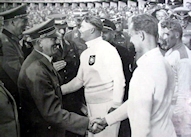
The Führer greets the first winners of the day.
|
|
Porcelain Bell from the 1936 Berlin Olympics
(Item OLY 7-15)
|
|
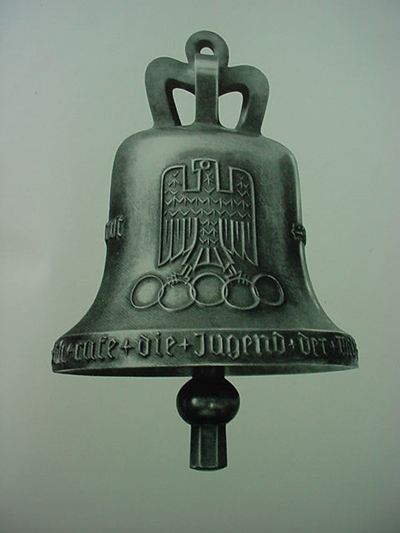
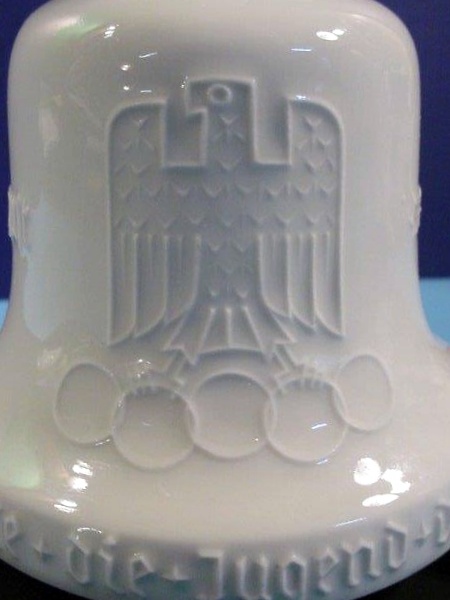
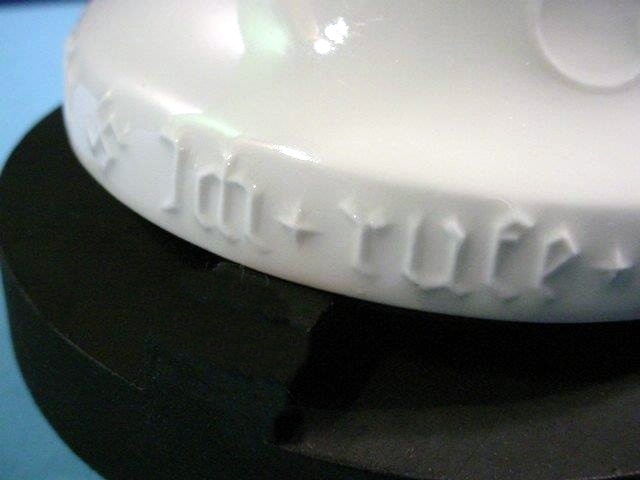
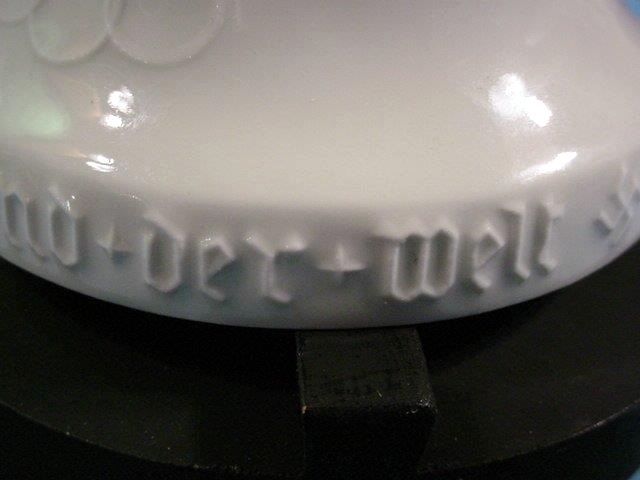
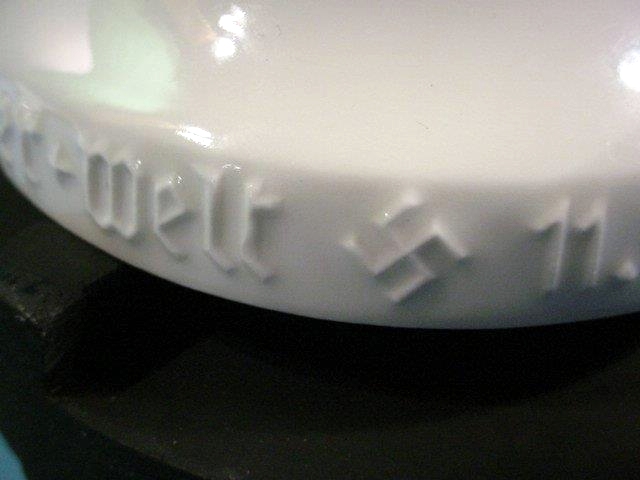
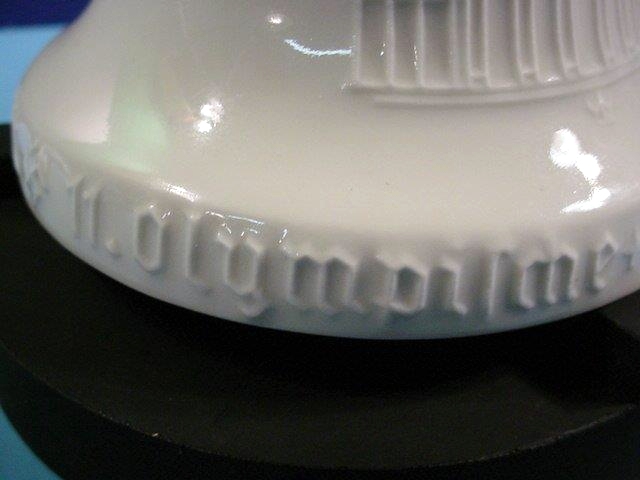
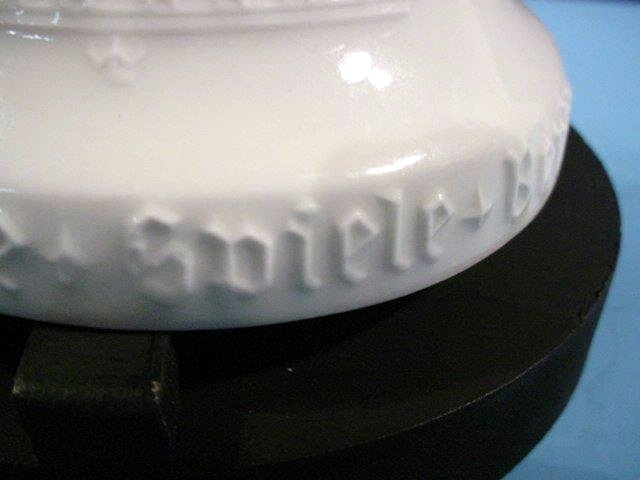
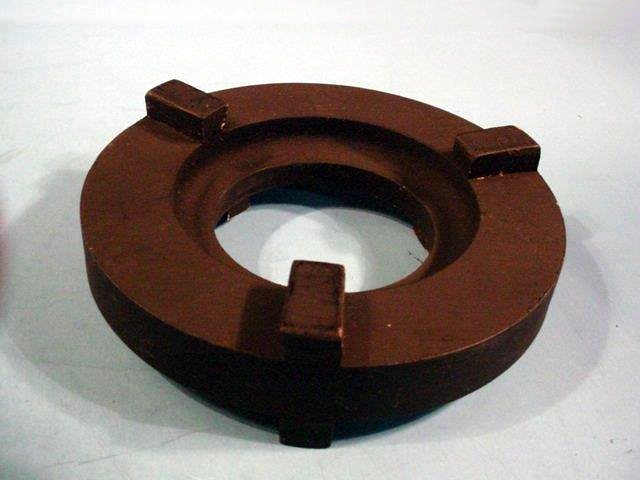
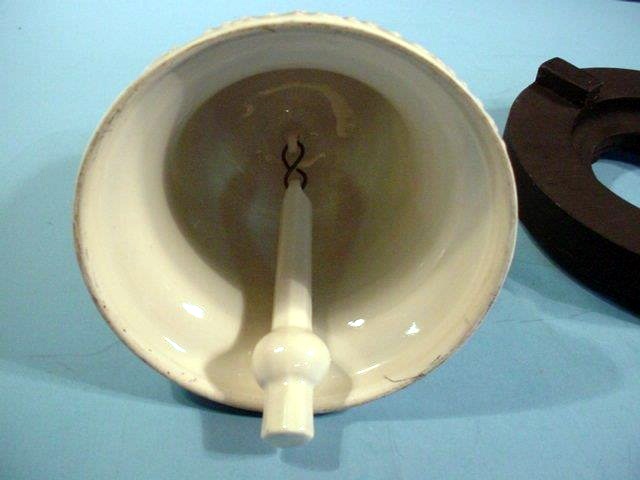
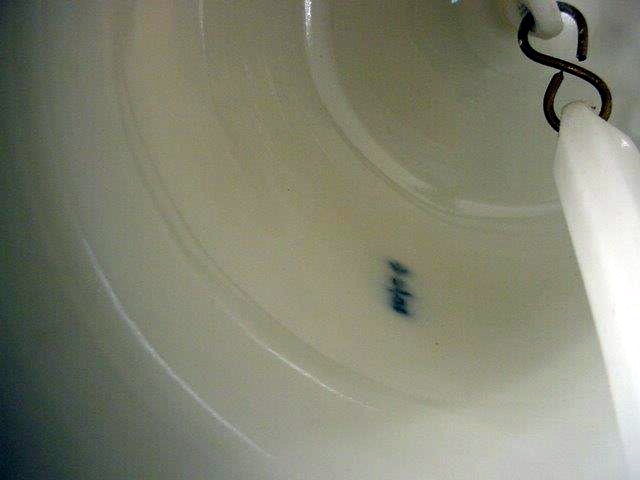
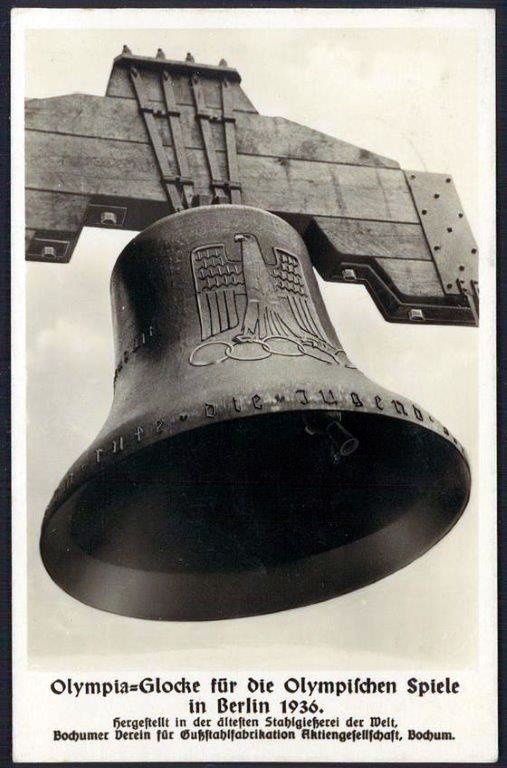
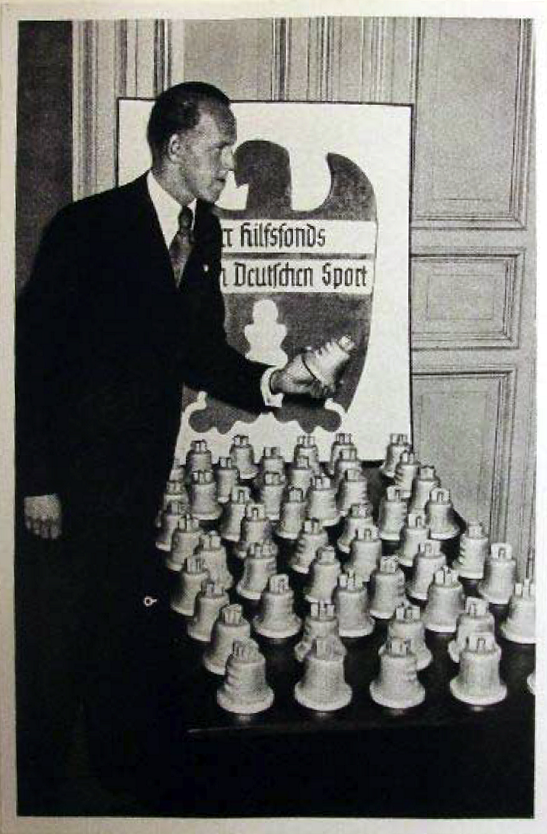
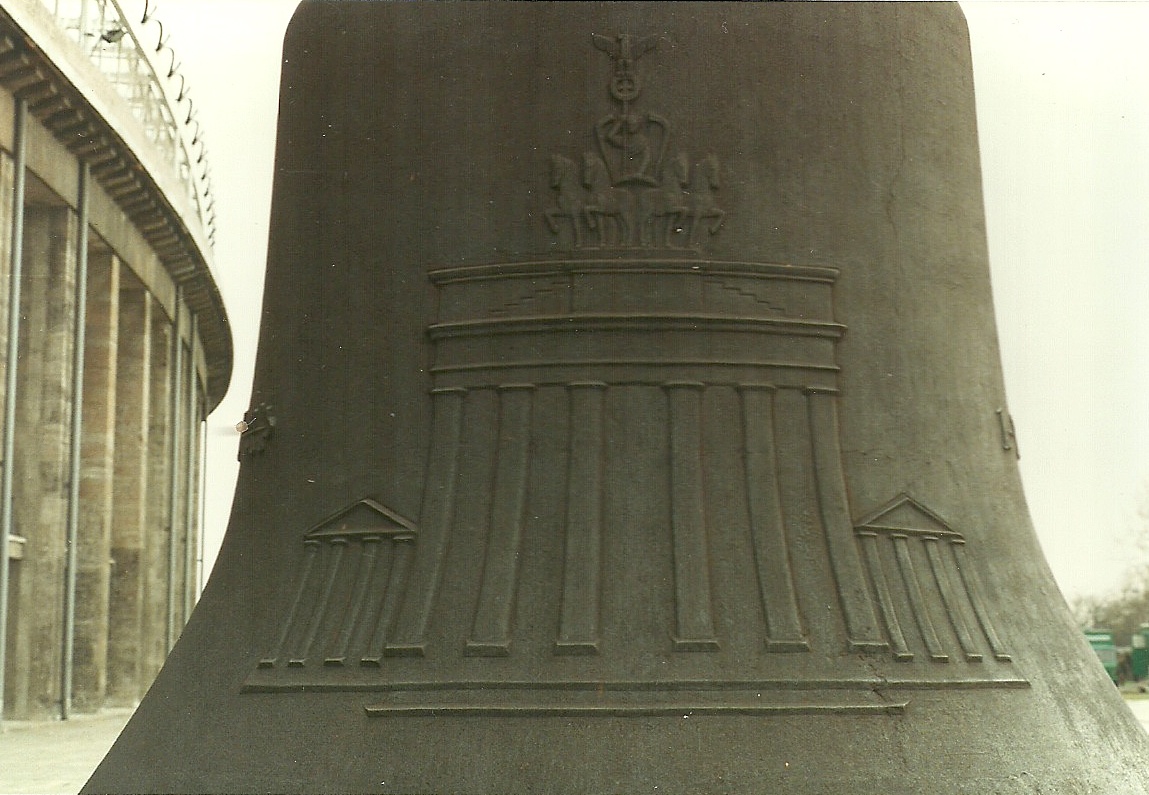
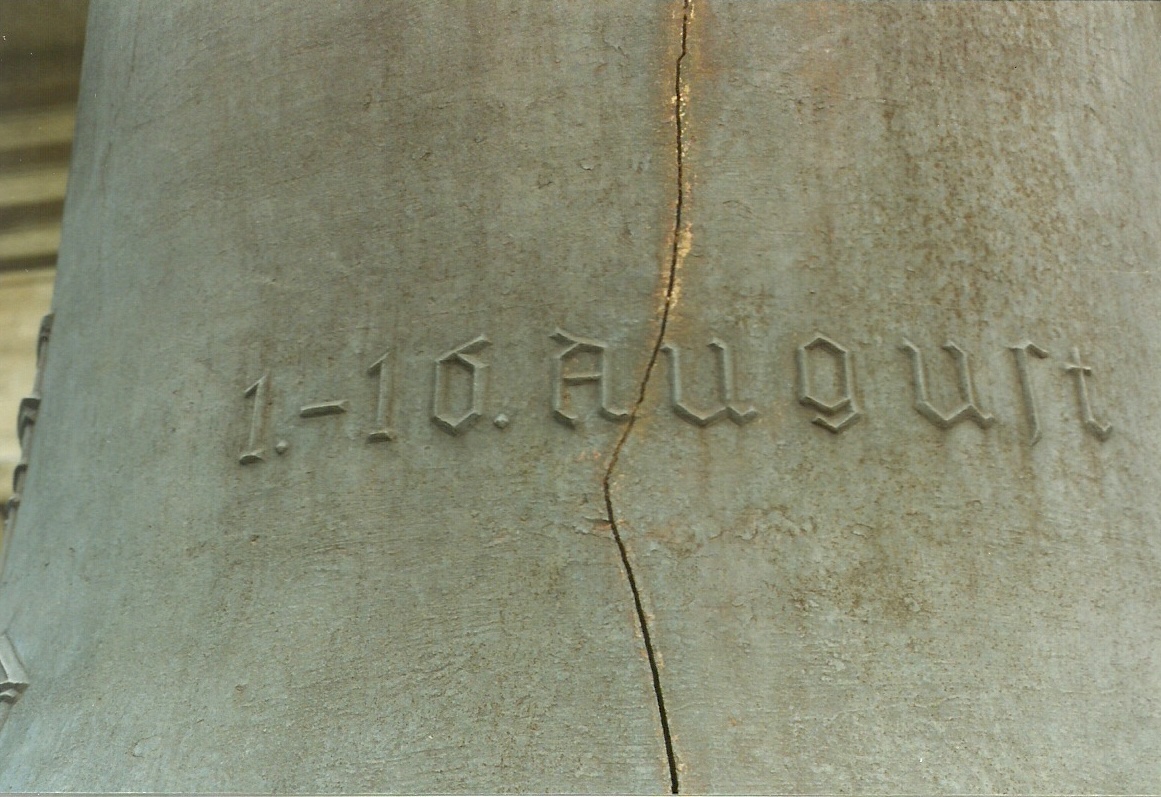
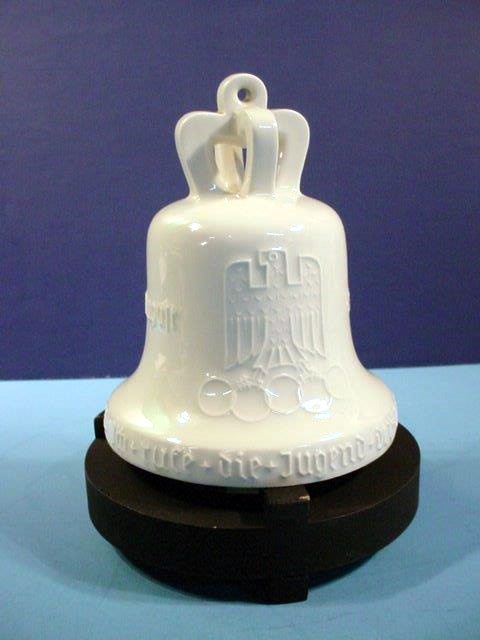
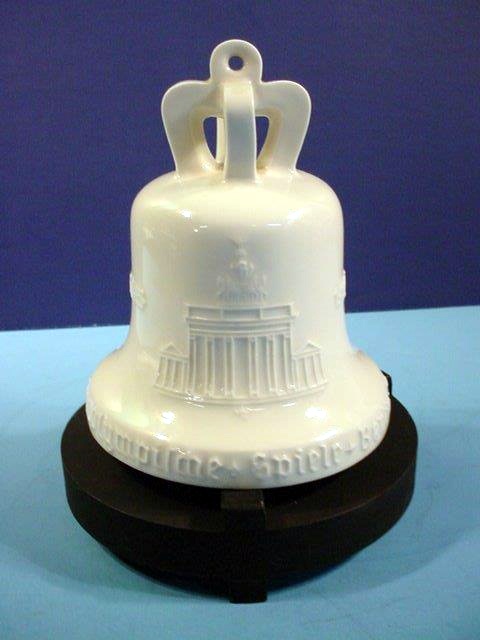
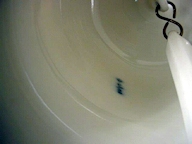
DESCRIPTION: Here is a highly sought after 1936 Olympic souvenir actually produced by the prestigious porcelain firm of KPM in Berlin. If you go on Google to Bonham’s Auction #160 you will see one estimated to sell for up to $800 and over, but that one was being offered at the starting price without the wooden stand that just about always is missing when one of these bells is rarely found. KPM stands for Königliche Porzellan-Manufaktur, or Royal Porcelain Maker. This little bell of course was in its day an accurate re-creation of the actual Olympic bell. The singular large bell in bronze was designed by Walter E. Lemcke who was also responsible for the design of the Olympic torch for that illustrious event that had the world at that time “spellbound.” The bell has the words at the bottom edge (Ich rufe die Jugend der Welt!) “I am calling the youth of the world!” and 11. Olympische Spiele Berlin–“11th Olympic Games Berlin.” In the center part of the bell are the dates 1-16 August and on the opposite side the year 1936. It also depicts the famed Brandenburg Gate and an eagle holding the Olympic rings. The total height is about 5 inches; the lower diameter is about 4 inches. The porcelain bell clapper is intact (the bell is in almost perfect condition throughout). When first sold at the games in ’36 they always came with the black wooden stand as pictured, but invariably the stand is missing; this bell comes to us as doubly rare because it is one of the few that you will ever see that includes this original stand. The only damage, if you could call it that, is a minute crack at the bottom edge (super minute!). This is from the clapper’s striking the edge (God knows how many times.) It is not so much a crack as an abrasion—tiny and going nowhere. When you touch your finger to it you can feel no crack. So is it a crack? (probably not!) Inside the bell is the blue mark of the KPM firm. A swastika appears on each side of the separate wording on the rim. This is a 100-percent original period piece (super-rare with original stand).
<--p>PRICE: $750.00 PRICE: SOLD
|
My Personal Visit to the Site of the 1936 Berlin Olympics:
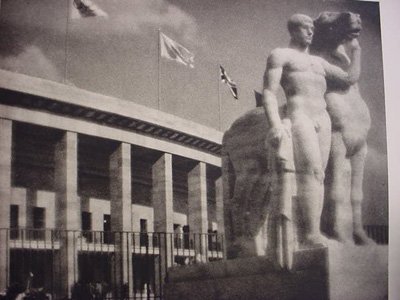
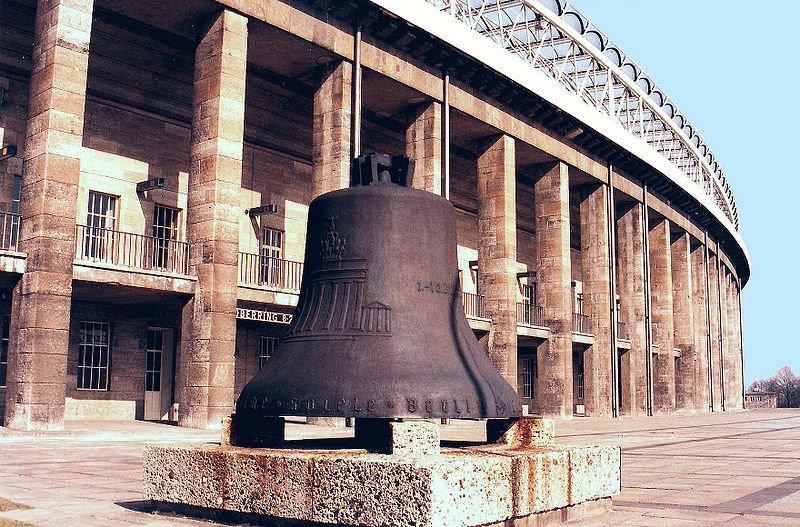
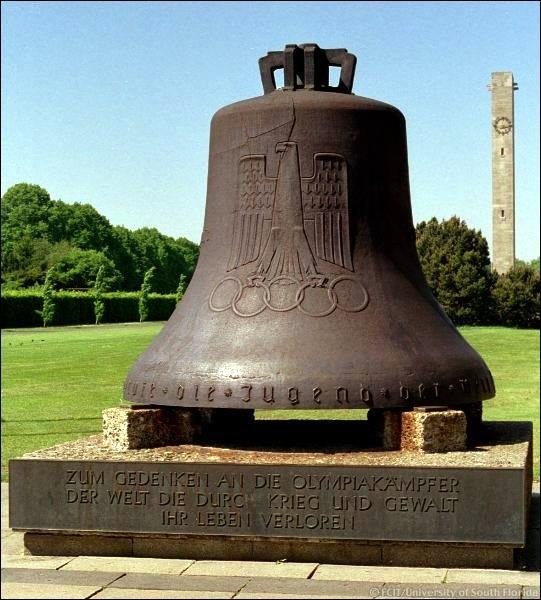
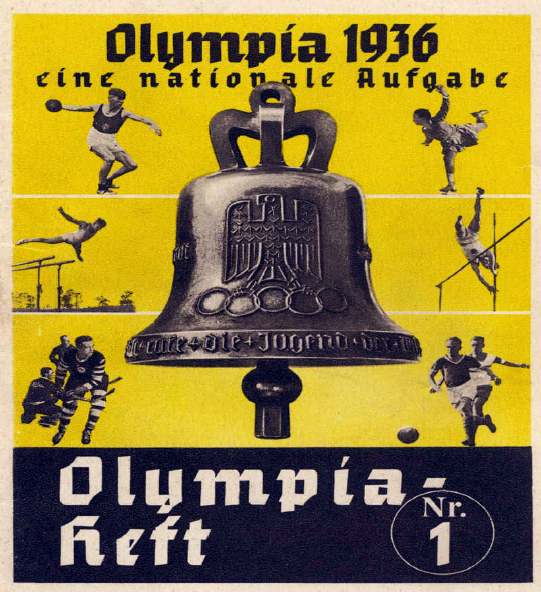
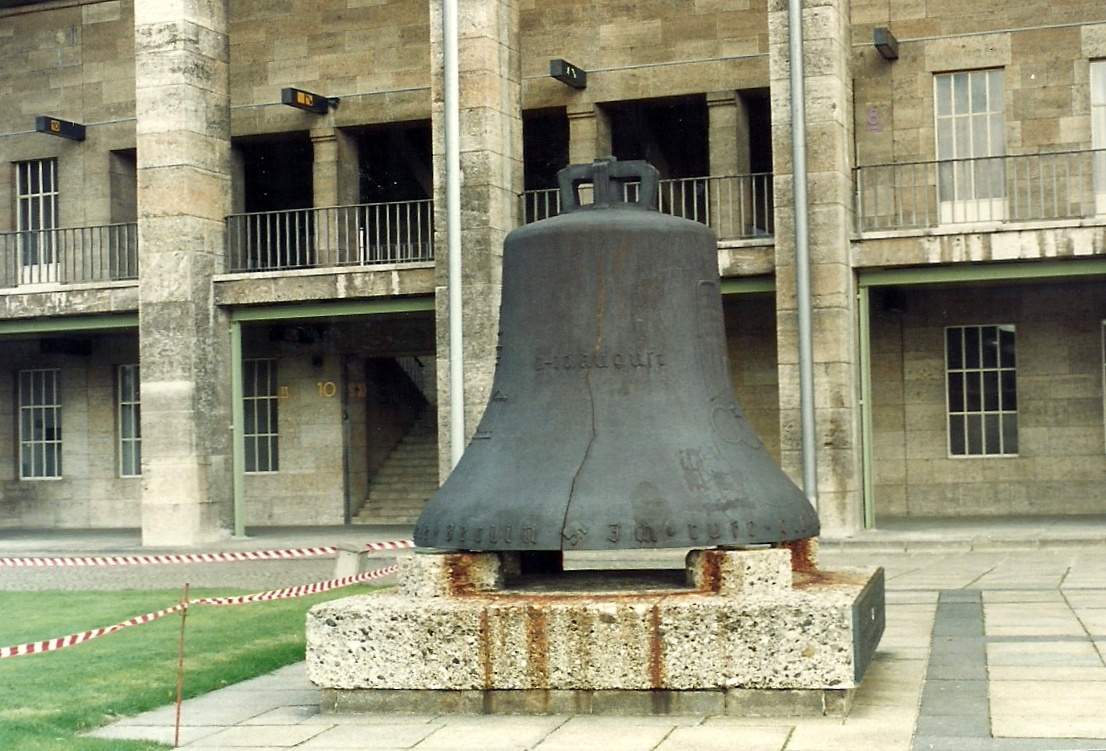
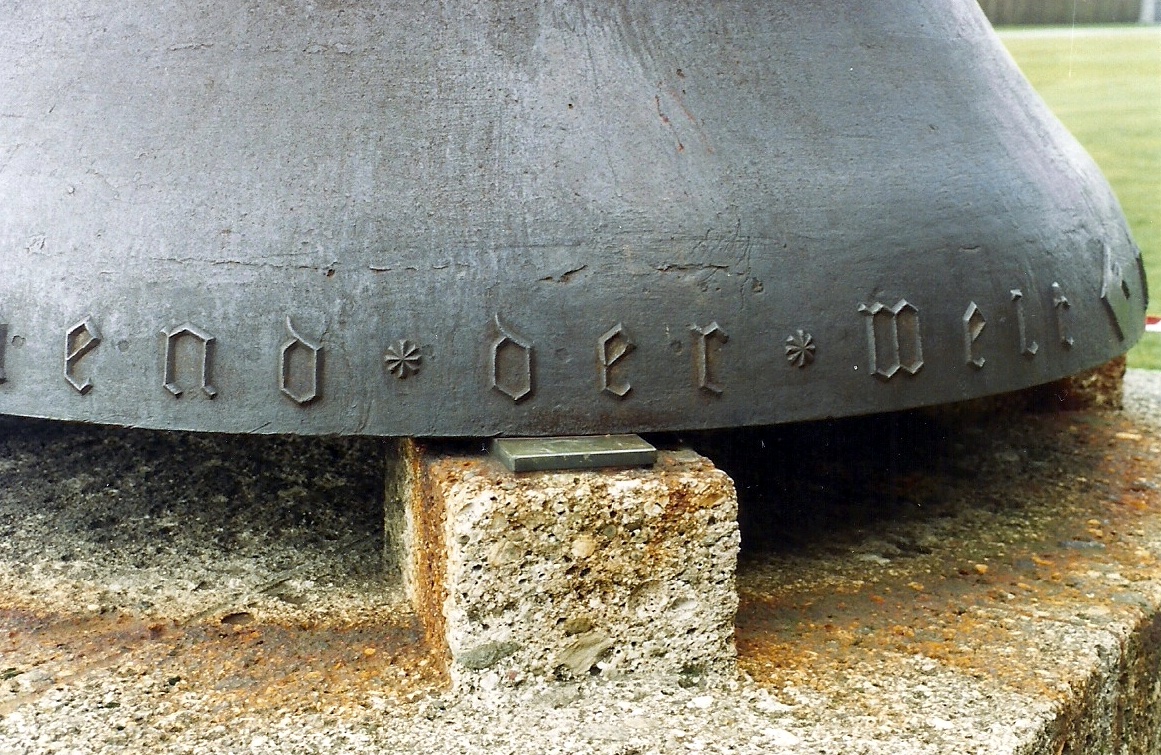
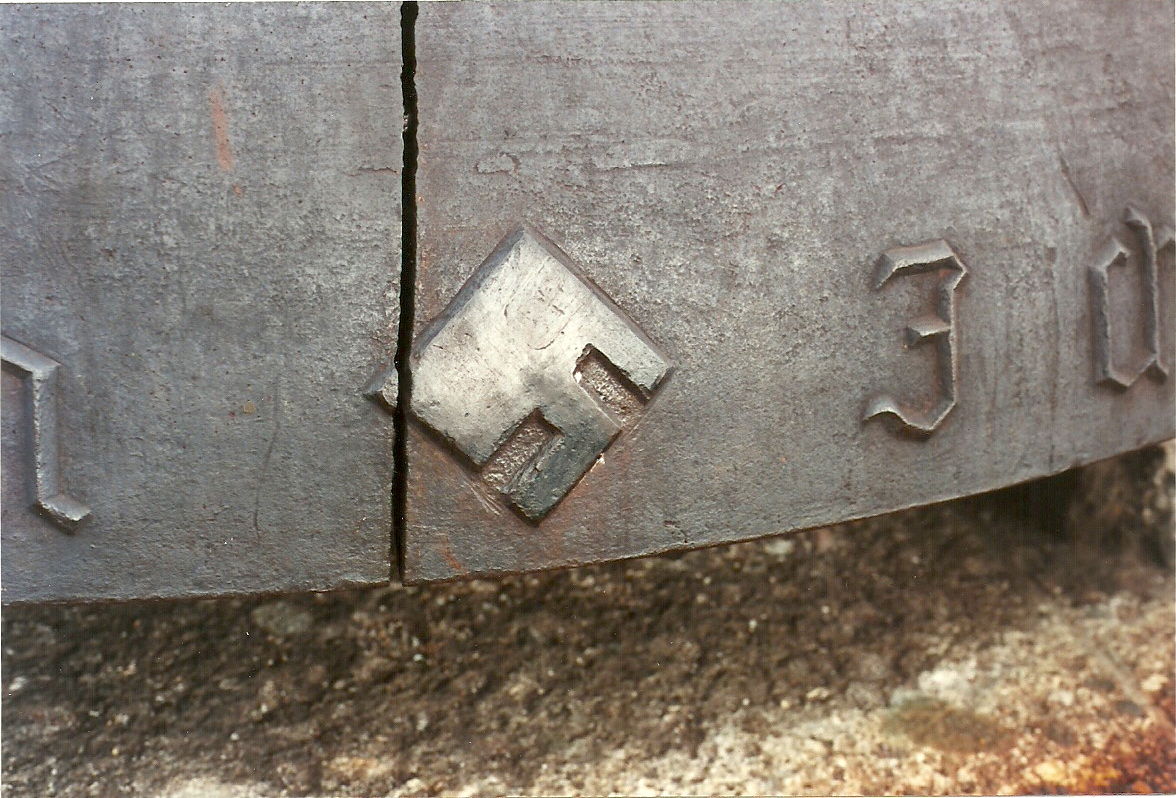
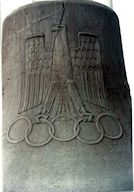
In the fall of 1990, while I was in Berlin and had some time on my hands, I happened to think one day: I believe I’ll go to the old 1936 Olympic stadium. The greatest thing about that particular visit to the Deutschlandhalle was that I was alone except for two mounted policemen who came along: they were the only other persons in the main sports field and stadium. The officers were practicing professional horseback riding on the sports track. The weather was wonderful and crisp on that beautiful October day and the feeling within me was of pure historic bliss as I walked all around the Olympic grounds and snapped photos of the buildings and even photographed beautiful statuary left from the Heldenzeit (heroic time). Some of the statuary was cordoned off behind wire fences and the grounds’ attendants on behalf of the state had quite purposely allowed thick ivy grow all over the fenced enclosures so they ‘hopefully’ might not be noticed. On the wire netting was a sign that exclaimed: Achtung Vorsicht! Eintrag Verboten (Attention! Notice! Entry Forbidden!). In spite of this warning I, as the consummate Germanophile through and through, deemed it justified that I actually had more right to enter than they had the right to exclude me from seeing these wonderful statues. These sculptures were accomplished in that true realism practiced almost exclusively by artists of the Third Reich. The only other human being that was there anywhere besides the police officers was a man who operated elevator rides to the top of the Glockenturm ( bell tower). Here, for three Deutsche Marks, I was able to take the 25-second ride to the top where the new bell was located and it was an exact copy of the original—minus swastikas. It even bears the immortal words around the rim calling the youth of the world to Berlin to participate in this ancient ritual event the meaning of which was to promote true peace and brotherhood. The old, original bell was originally situated on a cement pad in front of the entrance to the Olympic grounds and stadium. From the bell tower’s crest, one could look over all of the vast Olympiad grounds and most of the city and suburbs, but I was most interested in looking over the layout of the Dietrich Eckert Thingplatz that enjoined the stadium grounds. This was the outdoor amphitheater built to honor Hitler’s mentor and literally the father of the NSDAP, Dietrich Eckert. Here “Völkisch” performances were presented in the ancient traditions of the Nordic people. The Deutsches Thingplatz were outdoor theatres built and situated all over the Reich and were erected as much as possible in natural settings with trees, stone, and sometimes bodies of water in certain areas. This all had much to do with the party’s Blut und Boden (blood and soil) ideology and was always a beautiful idyllic program that brought an entire people into strong ties with their glorious and ancient Germanic past! The statues that I was able to see that surrounded the stadium were by such masters as Kolbe, who did the decathlon statue; and Josef Wackerle, who sculpted the famous horse being led by the Aryan warrior that we see in so many Third Reich-period books. You can see this statue in the background of the picture I took of the policemen riding by inside the stadium. Then I went to see the original Olympiad Bell that as I have stated was there in front of the entrance and I was surprised to see that at least at that particular time in 1990 the “culture destroyers” had only obliterated part of the swastikas that once adorned the bell. I guess before this I had thought that the bell was completely destroyed after its fall from the tower at the end of the war and the enemies of Germany from “within and without” would have melted down to molten metal the once-proud symbol of youthful dedication to health, beauty, and high principle. The bell weighed 30,000 pounds and written upon it you could see the noble words: “I call the youth of the world!” (Ich rufe die Jugend der Welt!). I stood motionless, in deep thought and reverence, looking upon it while thinking: What if that wonderful message were heard today. What would the reaction be? Would all the high-minded young people left on the earth be as happy as that early jubilant multitude? Would that joyful throng that answered the call of the Olympiad Glocke have the wish for peace from all the world leaders and finally peace and freedom for the still-beleaguered DEUTSCHES VOLK? Standing there in the Olympic stadium it would have been hard to think thoughts that would be anything other than the wish that true and genuine peace could somehow find the hearts of men, especially brothers. Why, oh why, is it that we, as Americans, cannot even for a moment catch on to the evil agendas and the constant sabre rattling of our present-day leaders and demand that they stop promoting ‘regime change’ in every sovereign land where we have absolutely no business whatsoever? The latest very sad news coming to me regarding the beautiful Olympic stadium and grounds is that they are “no longer there!” As of the first of December 2011, the vicious demonic march of the culture destroyers finally caught up with this, the practically last of the wonderful edifices and ultra-important historic landmarks of Third Reich history still standing. Now, most of the 1936 Olympic grounds have been demolished! I’m sure that the ultra-liberal present-day governmental officials gleefully gloated in pure Orwellian ecstasy. Please do not think for a moment that this was done only because the space was needed for the new 65-million-pound conference center to be built there. No, it was one of the last acts of culture vandalism as perpetrated by evil Orwellian automatons that bear a grotesque hate for anything that stands as a reminder of the Third German Reich and its glories. There, I said it, and I’m glad! After all I am an incurable, unrepentant Germanophile and politically a populist and very proud of the fact! Our own country’s heroes George Washington and Thomas Jefferson warned us against being entangled in foreign alliances that we seem more than content to enter into in a heartbeat today! We let very alien influences make our decisions for us in this day and age. Teddy Roosevelt would have been sickened at the thought, as he would see his once-proud America grovel at the feet of certain political lobbies whose entire agenda is one of destroying American historic values and supplanting them with the demonic spirit and forced beliefs of the “NEW WORLD ORDER!” The voices of real American heroes such as Charles Lindbergh in the 1930s were drowned out as they appealed for American isolationism and peace and against the giant money-backed war policies of the forever intoxicated W. Churchill and of course the other alien creature that was then squatting in America’s White House at that time. I wonder when and if the American people will finally wake up and realize that the unnecessary war against Europe in which 100,000 men of the U.S. bomber force alone died while dropping their deadly bombs on people who shared their racial identification and for the most part their religious and social values. How can we possibly celebrate this so-called victory? I’m sure in some cases young people who shortly before shared the Berlin Olympic fields side by side in hope and fervent aspirations for world peace there at the 1936 games now were pitted against each other in a horrid fratricidal struggle to the death! Let a new bell be cast three times as big as this old one and it should ring out the message: “Ich rufe für Frieden in die ganze Welt! (I call for peace in the entire world!).
There will be those who will vehemently disagree with my findings I’m sure, but that is what freedom is all about . . . all should have the right of freedom of expression!
“I may disagree with what you have to say, but I will defend to the death your right to say it. ” (Attributed to Voltaire).
|
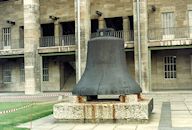
This was my first view of the Olympic bell
when I visited the 1936 Olympia grounds.
|
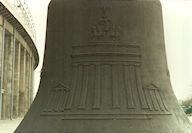
There it was . . . the original Olympic bell.
|
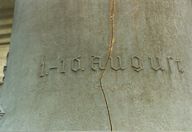
The crack is very obvious.
|
Other cracks can be seen, as well.
|
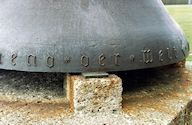
The beautiful, eternal appeal at the base
|
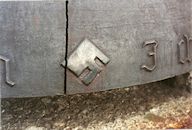
Cultural vandalism
|
The backside
|
|
|
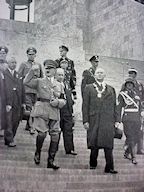
The Führer enters the games
|
|
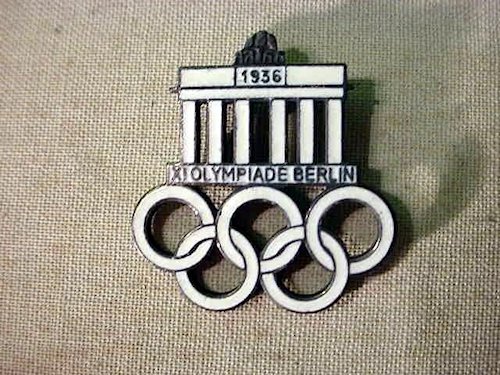
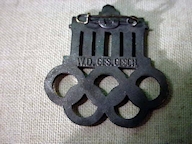
Small, Souvenir 1936 Olympic Pin (Item OLY 7-16; PINS 8-21)
|
|
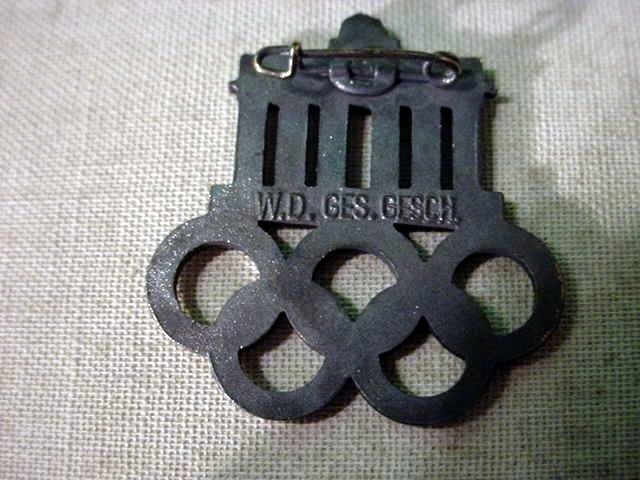
DESCRIPTION: Here is a beautiful pin showing the famed Brandenburg Gate in Berlin in bright, enameled finish (very nicely presented!). This is a petite badge that almost anyone who attended the 1936 Olympiad in Berlin would buy from the walk-around venders that would sell them in the halls throughout the stadium; these venders were only allowed to sell their souvenirs during breaks and intermissions. It’s really a rather gorgeous-looking badge and many of the spectators were more than proud to wear them to show that they were privileged to witness the greatest Olympiad the world had ever seen. The pin measures a little over an inch tall and an inch wide with the Berlin maker’s name on its back. The gate has the letters below spelling out “XI Olympiade Berlin,” and at the top we see “1936.”
PRICE: $125.00
|
|
|
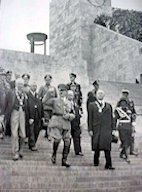
The Führer arrives
|
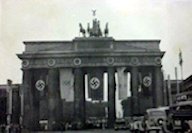
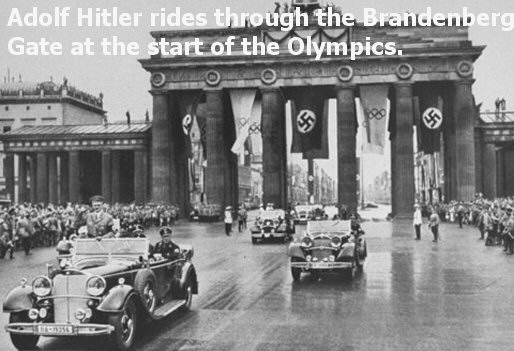
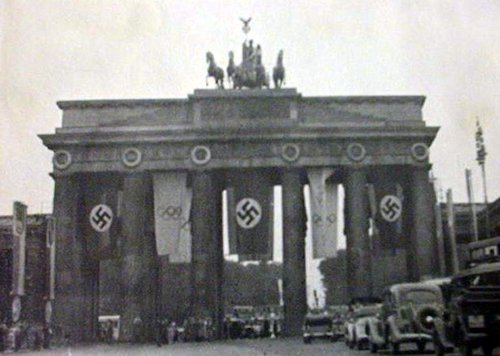
Berlin's Brandenburg Gate
|
|
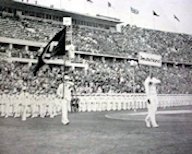
The German team arrives
|
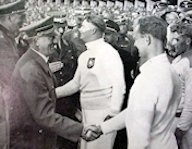
The Führer greets the German athletes.
|
|
1936 Olympiad in Berlin; a Badge for Film Crews (Item OLY 7-17)
|
|
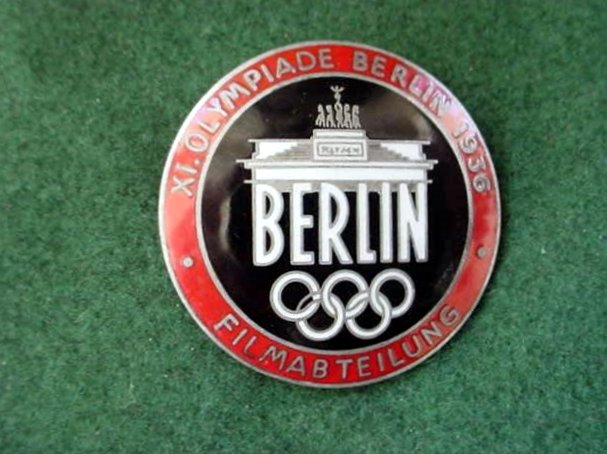
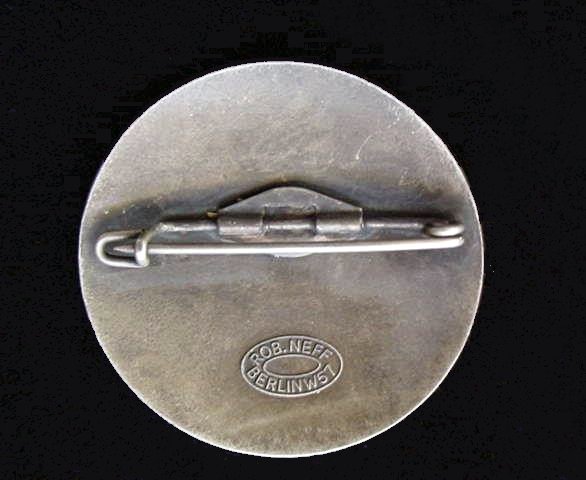
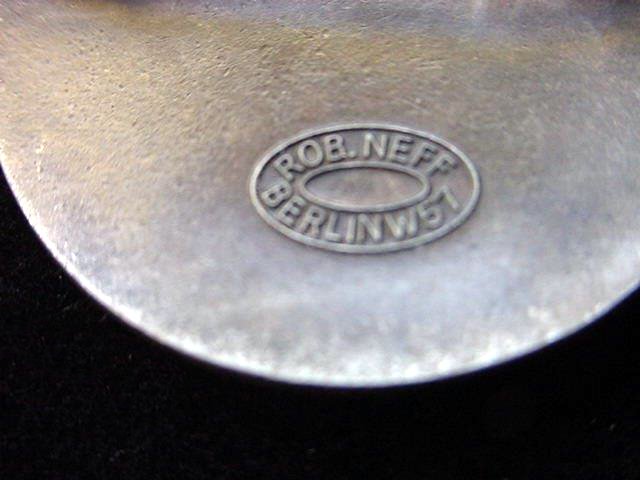
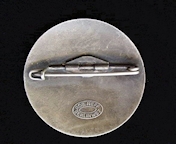
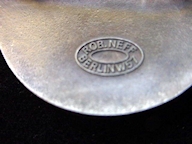
DESCRIPTION: Here is a real-pretty badge struck and issued to the journalists, photographers, and filming crews that were there in the multihundreds to record this event that is remembered as the most meaningful Olympiad in world history and that is what it turned out to be, regardless of the slimy trash that is spread by invective vilification and vicious slander generated out of the mouths and pens of today’s muck-raking liars, who cannot for a moment be even a tiny-bit fair in their assessments about Germany’s great Olympic games; the lies about super race, the lie about Hitler’s snubbing Jesse Owens, and all sorts of vicious and unnecessary slander when reporting about those wonderful games. This badge in fine, enameled colors is truly handsome. It measures about 1 ½ inches in diameter and the manufacturer’s mark is on the back (“Rob. Neff Berlin W57”). These badges have been copied—the copies are awful—but this is the original. Therefore, we will say at this time that this badge is sold with the stipulation that we will make no return of money sent for this badge under any condition or circumstance because of the word of some ‘expert’ (X-Spurt ). Once sold it stays sold because it is 100-percent original. If you want it, buy it and enjoy it.
PRICE: $198.00
|
|
|
|
|
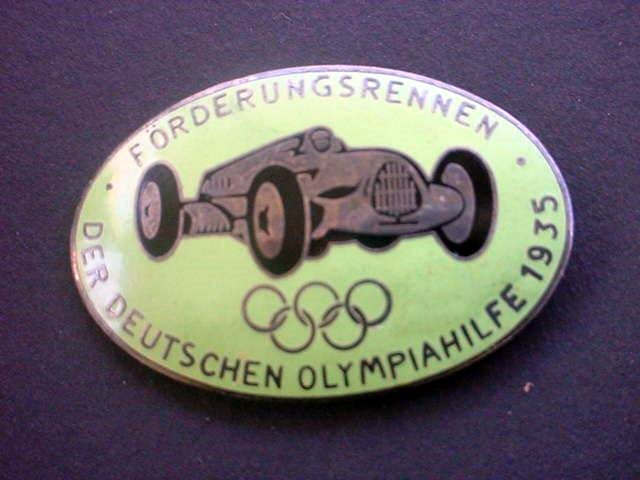
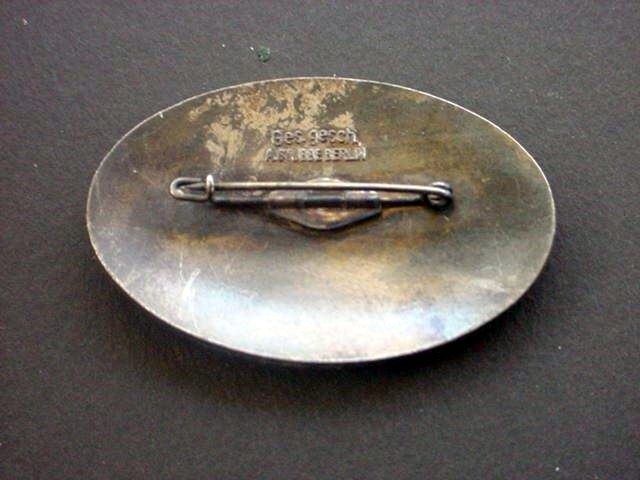
Pre-Olympic Racing Badge (Förderungsrennen) (Item OLY 7-18)
|
|
DESCRIPTION: As far as we can make out this was a sponsored race by an organization within the National Socialist Party structure that sponsored a special auto race. It is believed that BMW was the main sponsor although no particular sponsor was revealed by name. This was on official order of the party leadership since it was determined that no company would be able to have any financial advantage over any other in this year of 1935, one year prior to the opening of the 1936 Olympics. Any company, however, that contributed was given credit in the official “Hilfe Rosters.” The oval badge shows a high-speed racecar with the words “Förderungsrennen” (Sponsored Race). It shows the Olympic rings under the vehicle and under that are the words “Der Deutschen Olympiahilfe 1935” (German Olympic Aid 1935). It is believed that these badges were given to the racecar drivers and their crews, but also to all contributors and exhibition personnel. Many of the events and personages participating were sponsored and financed by various companies such as BMW and Mercedes-Benz and, of course, all other events of the upcoming Olympics such as swimming, shooting, skiing, and track running were supported by grants from German industrial firms throughout the Reich. This is a pretty badge, but also historically important. It was presented in several background colors.
PRICE: $178.00
|
|

The actual statue
|
|
|
|
Silver Statue by N.S. Artist Josef Thorak (Item ART 1-1)
|
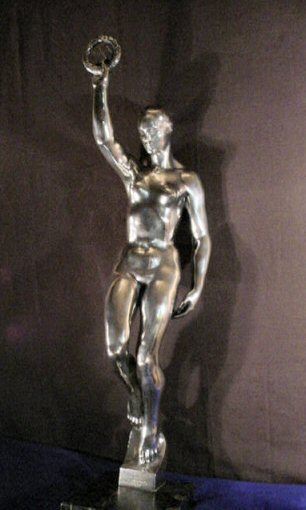
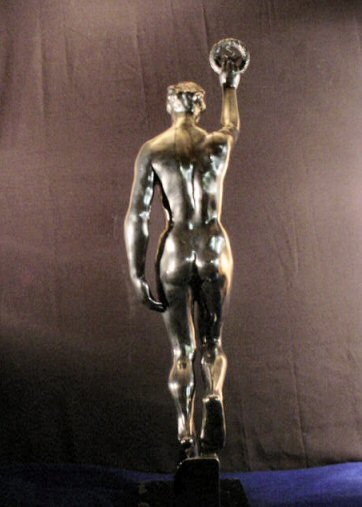
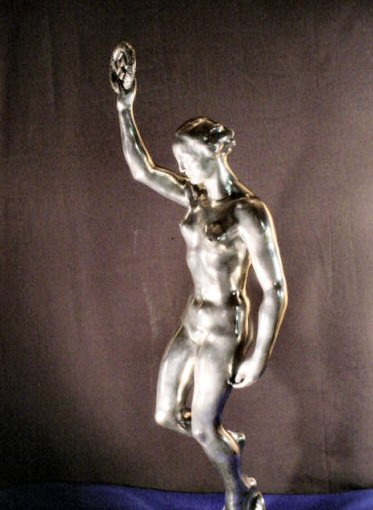
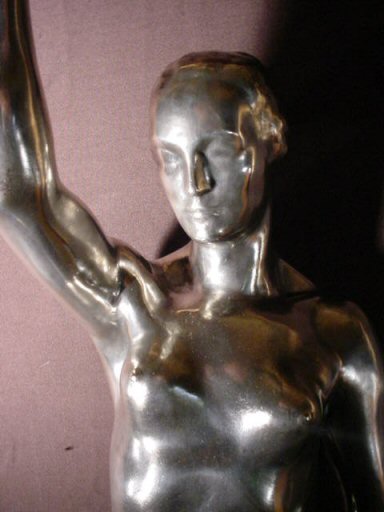
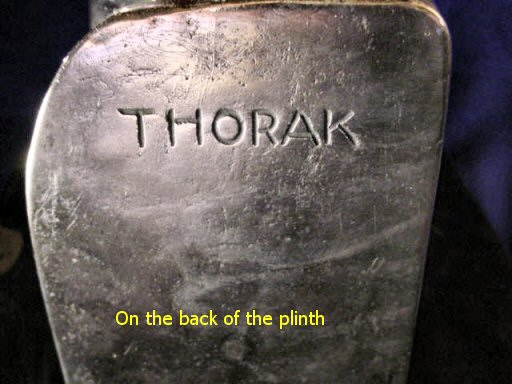
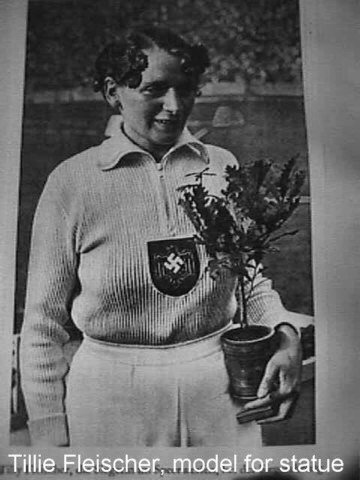
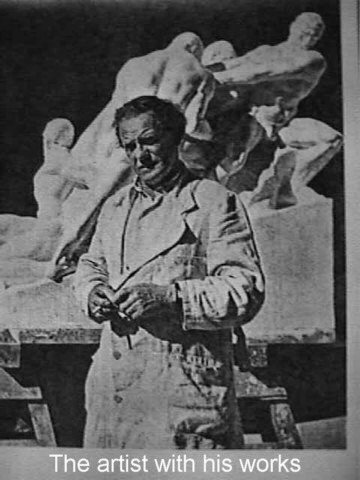
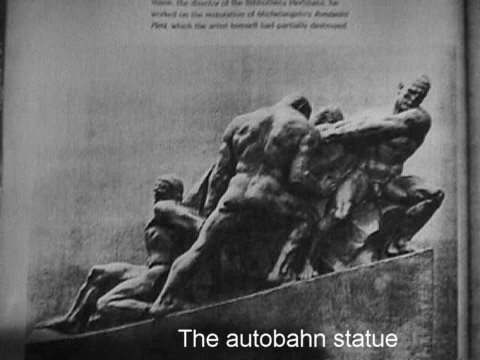
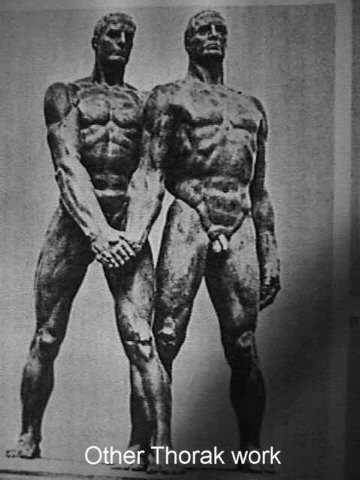
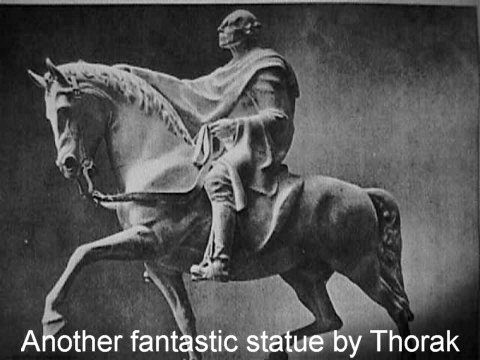
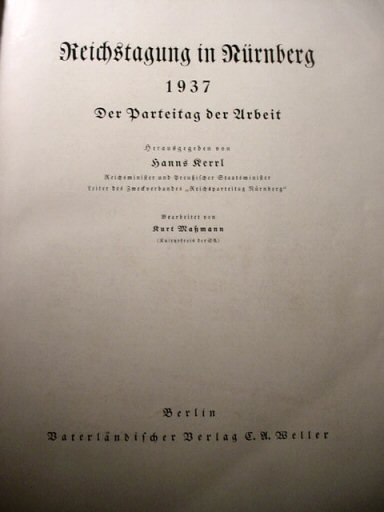
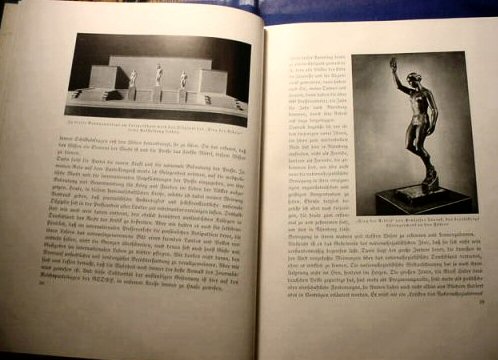
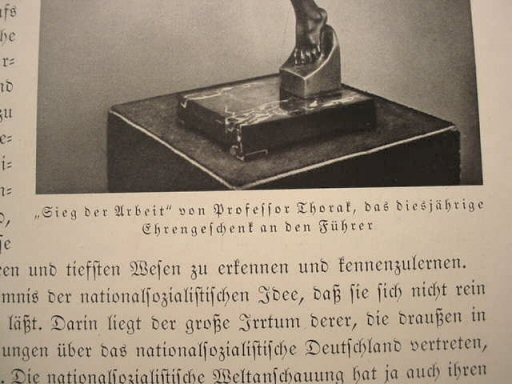
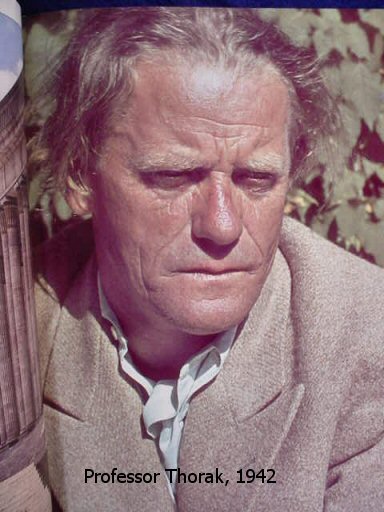
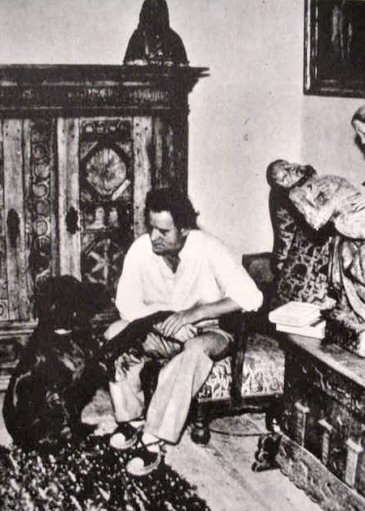
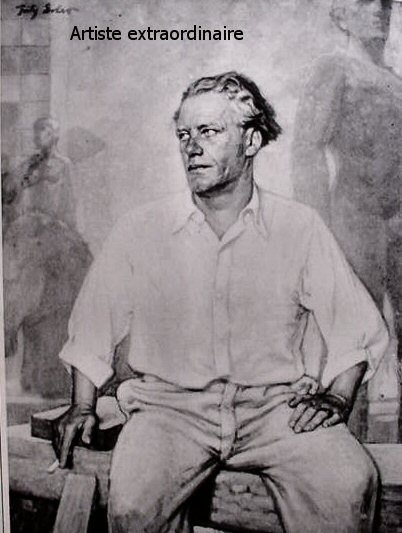
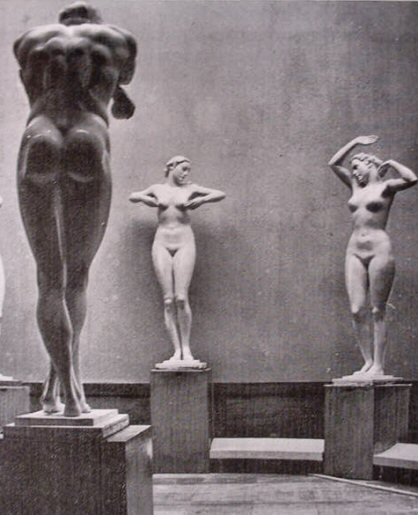
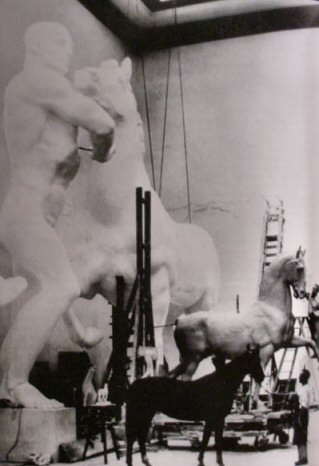
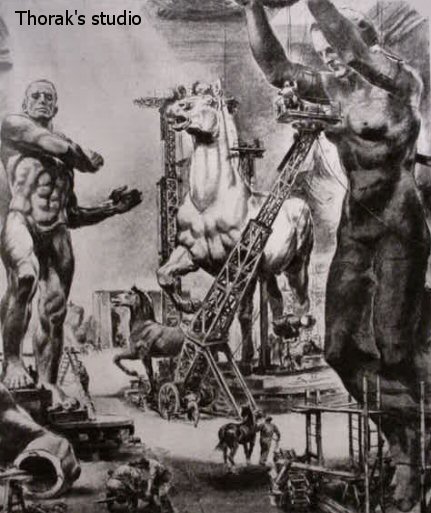
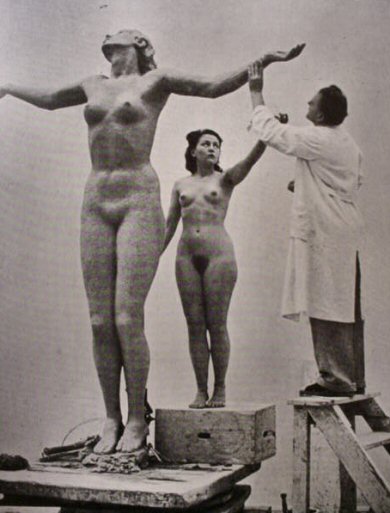
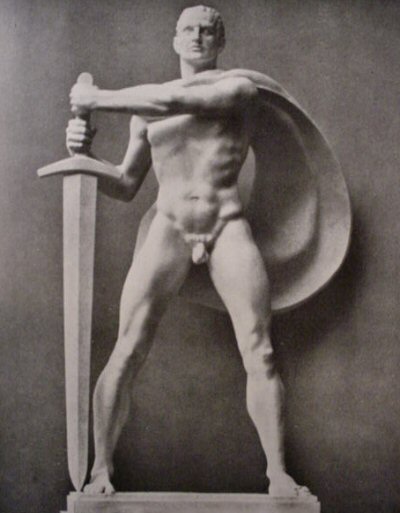
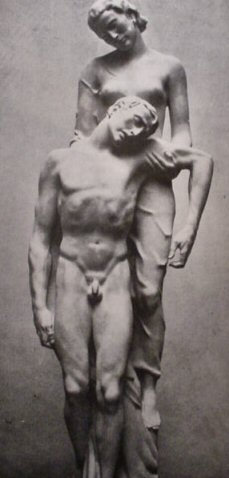
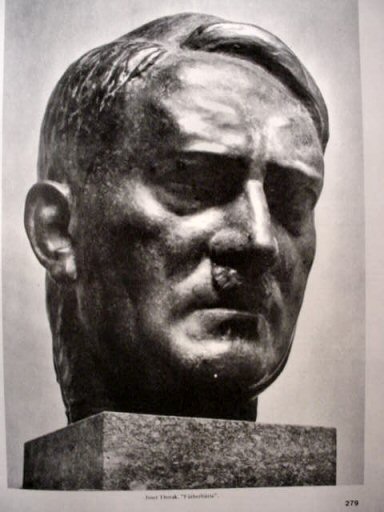
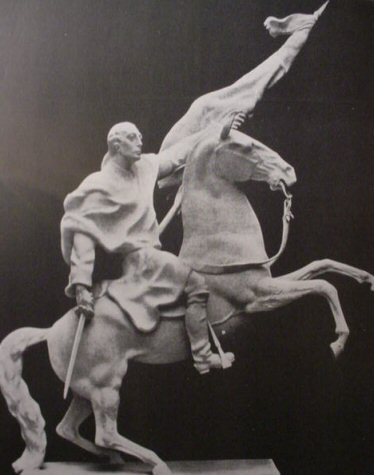
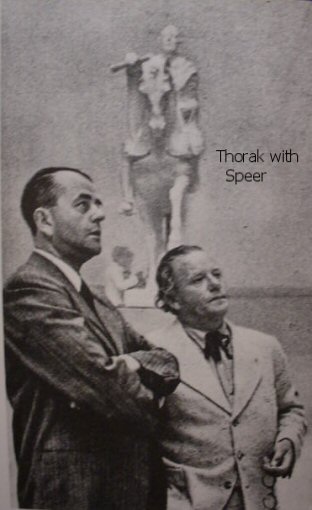
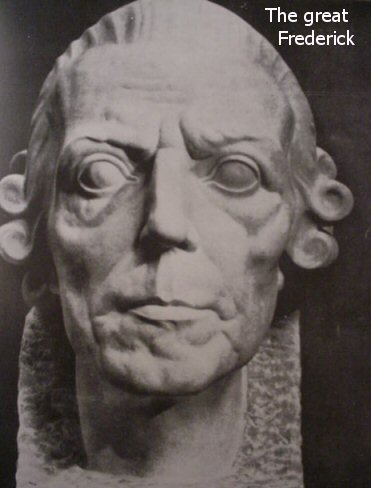
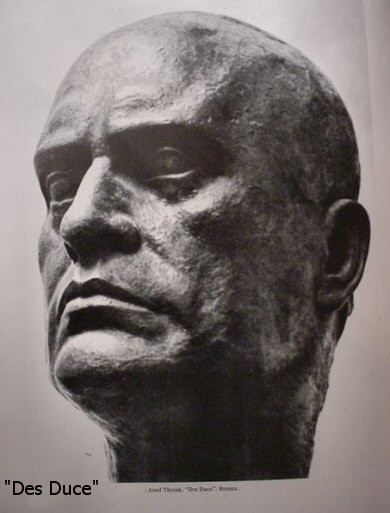
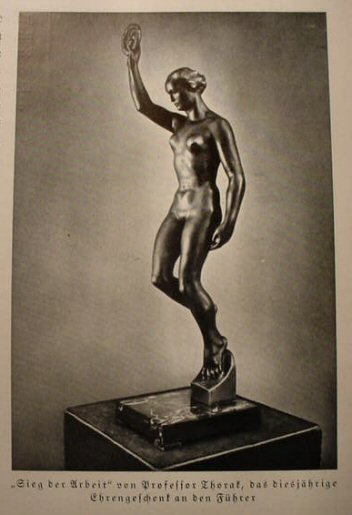
| DESCRIPTION: Germania International, LLC now enjoys the reputation of being unique because the articles of history offered here lead and vastly surpass all competitors’. We constantly strive to bring you, the connoisseur, the finest and, ultimately, the most rare and important of Third Reich objects. He we present what is without a doubt one of the greatest pieces of Nazi art ever offered on the web. This is a magnificent unique statue by one of the two most prolific and superb artists in N.S. Germany, namely Arno Brecker and Josef Thorak, both sculpting heroic-proportion Germanic subjects. These were the official state artists, reaching this coveted title through their supreme skill in sculpting the human figure in the form which God created them in. Thorak depicted men and women as nature and divinity intended. No one since Michelangelo ever came close to their work. It was truly heavenly inspired, indeed! This elegant example of Thorak's work is cast in pure 800 silver--not plated--but solid silver. Why silver and not bronze? Because it was actually an official state presentation to Germany's chancellor, Adolf Hitler. On the base one can perceive the words engraved there: "Nürnberg - Reichs - Parteitag 1937." This pilot piece was actually presented to Hitler himself by Josef Thorak in commemoration of the future unveiling of the same figure in gigantic proportion at the grounds of the party rallies. In several books on the art of the Third Reich, this very same silver statue is shown. Note the picture we have provided directly from the official German book, Reichstagung in Nürnberg 1937, Der Parteitag der Arbiet, Reich's Meeting in Nuremberg 1937, The Party Day of Work showing the actual silver figure we offer here (THE VERY ONE!). The words underneath the picture translate to: "'Victory of Labor' by Professor Thorak, an honorary gift to the Führer from the artist." This is without a doubt at least one of the most famous creations by one of the most renowned artists of immense majestic statuary. Thorak's work transcends the Nazi era and there have been many articles in books and magazines about this man and his immortal creations. The importance of this wonderful objet d'art cannot be overemphasized, not only because of the great fame of the artist or the prestige of to whom it was presented, but for the sheer beauty of the piece itself. Whether the later figure in huge proportion was shown in bronze or stone is unknown to us at this time. The sculpture was said to have been modeled from a picture of German Olympic gold-medal winner Tillie Fleischer, who was a favorite of Adolf Hitler. The figure was, we believe, meant to have been the largest central theme within the confines of the planned, but never completed, Sportspalast on the rally grounds. The figure also became the forerunner of the popular theme, which dominated the Third Reich art form. In the accompanying pictures of Thorak statuary one can readily see the Kunstgeist, or motif, valiantly expressed. The artist on behalf of the Ministry of Labor presented the nude figure personally. This must have been the absolute highlight of the artistic career of this extremely fine artist, born in 1889, the same year as the Führer, and not geographically far apart--Thorak in Vienna, Hitler a few miles away in Brannau. A sketch of this illustrious career and a history of his works will accompany the statue. As long as man aspires to artistic fineness and admires the human body in its finest portrayal, Josef Thorak's works will be remembered. Here is the chance to acquire the "best of the best" and to preserve it for posterity. At the end of the war many of Thorak's works were destroyed by the Kulturträger, "Bringers of Culture:" the equestrian statue of Frederick the Great, the model for the "monument to work," and the groups for the Nuremberg Marsfeld, so, in all probability "Sieg der Arbeit" in its final form was one of them. The Bekronung, group, discovered in his studio in Berlin was used by American soldiers for target practice. This figure has the artist's signature on the reverse of the base: 'THORAK.' The '800' silver mark appears with the moon and crown acceptance mark on the side of this base. The figure weighs about 45 pounds and is about 34 ½ inches high. The measurement of the black marble base is 10 by 7 ¾ by 1 ¾ inches. After the auspicious occasion of its presentation, the figure was taken to the Führerbau or "leader's building" in Munich. In this beautiful building in what was known as the Haupstadt der Bewegung or "Head City of the Movement," it stayed until looted by GI's. This building still stands today in the Königsplatz and is virtually unchanged except that the once-proud eagles and swastikas that surmounted the twin entrances are gone. This is without doubt one of the most famous creations by one of this world's most renowned artists. Although smaller than his other immense statuary it was important enough to present to the world's most powerful head of state. Nothing as important as this was ever offered on the web or ever in all probability ever will be, again. "Here it is in all its glory!" Be sure to look at the pictures from the Reichsparteitag book. Very seldom does a Hitler item of such artistic and historic importance ever show up. This is practically the ultimate for all reasons promulgated.
PRICE: SOLD
|
|
|
|
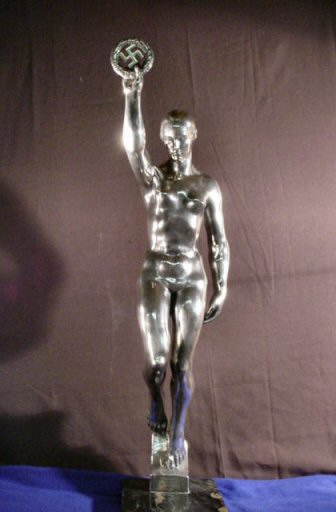
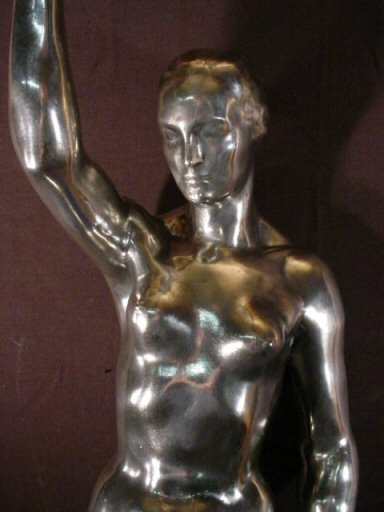
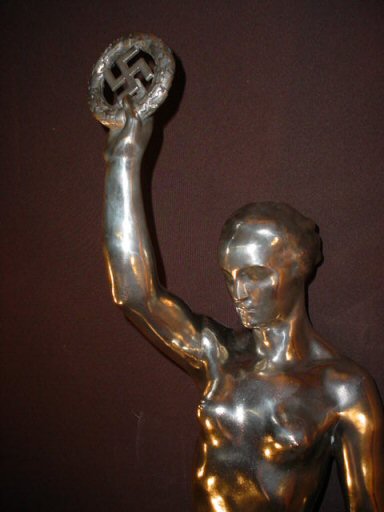
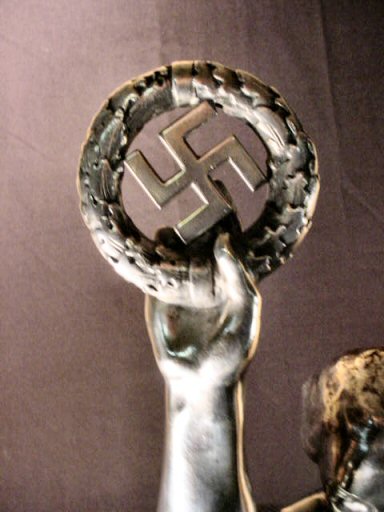
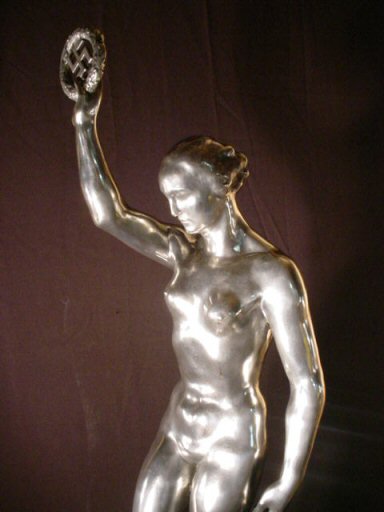
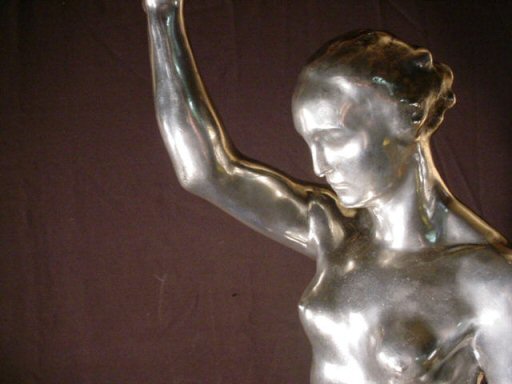
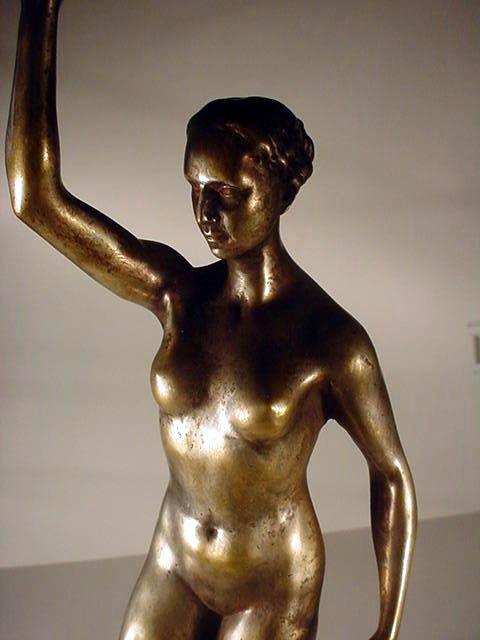
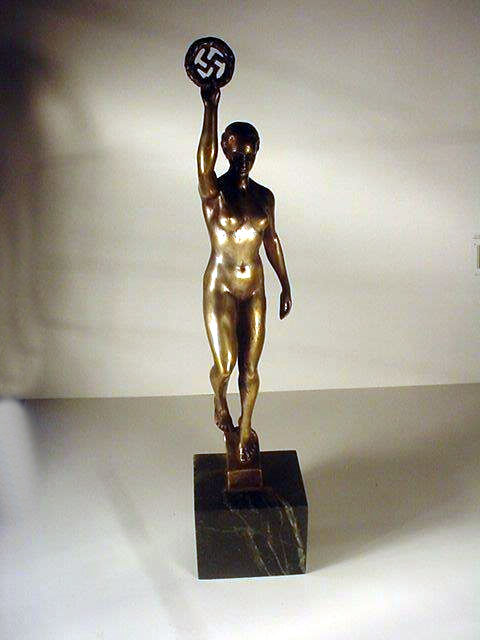
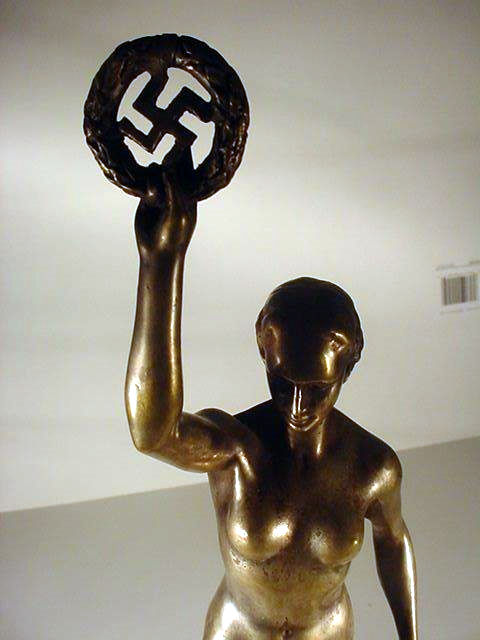
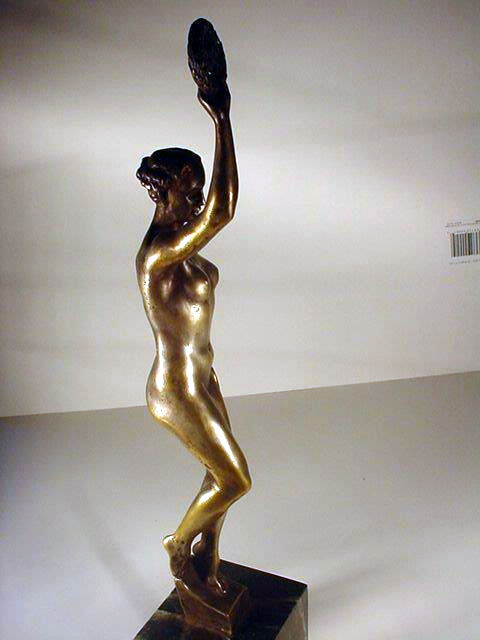
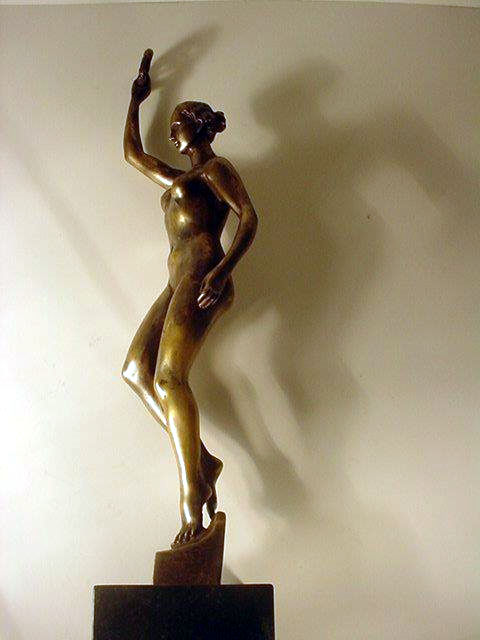
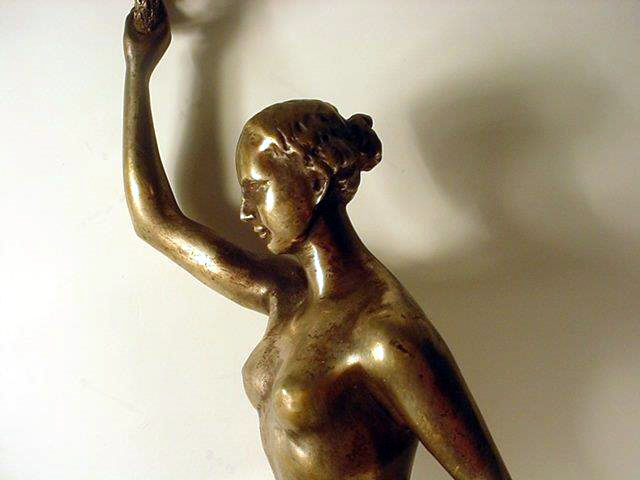
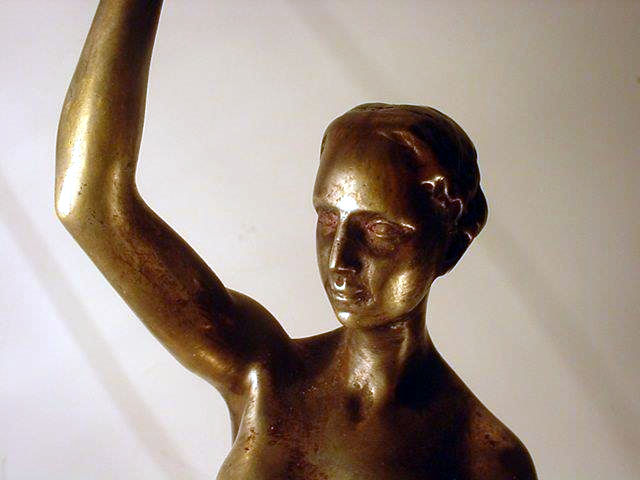
Bronze Olympic Statue by Famed Third Reich Artist Josef Thorak (See the text and images in the above-featured item.) (Item OLY 7-19; ART 1-2; BRONZEMET 4-8)
|
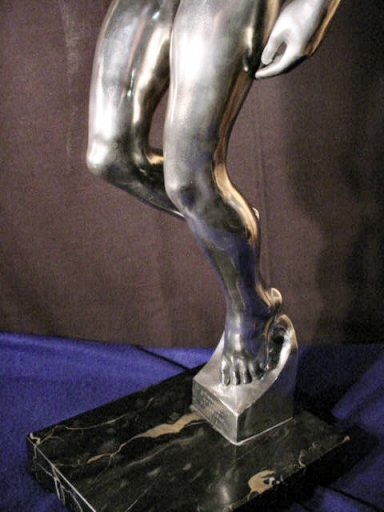
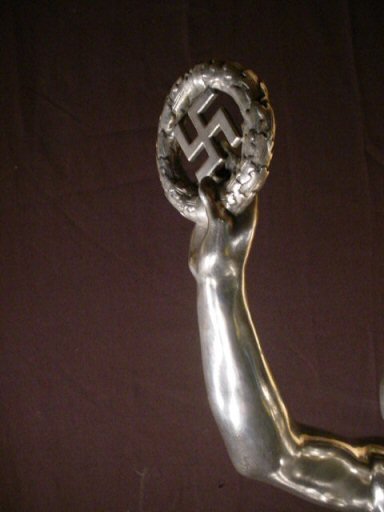
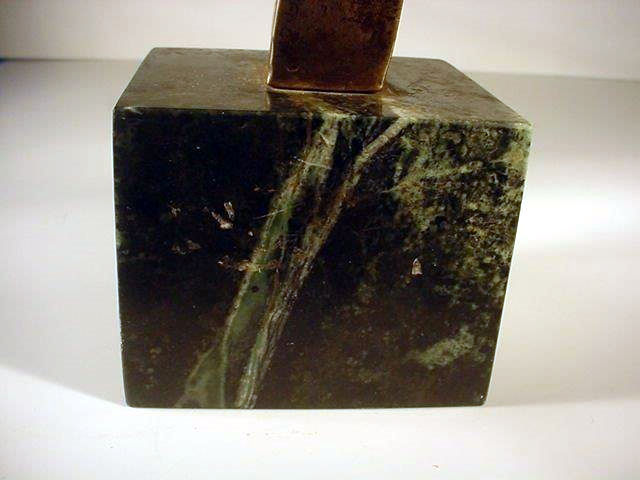
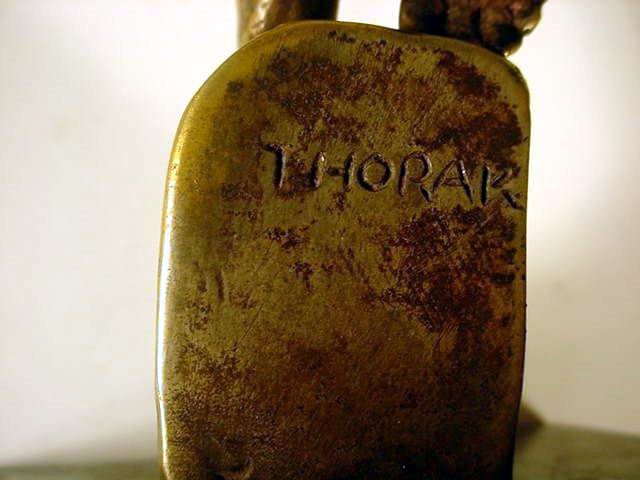
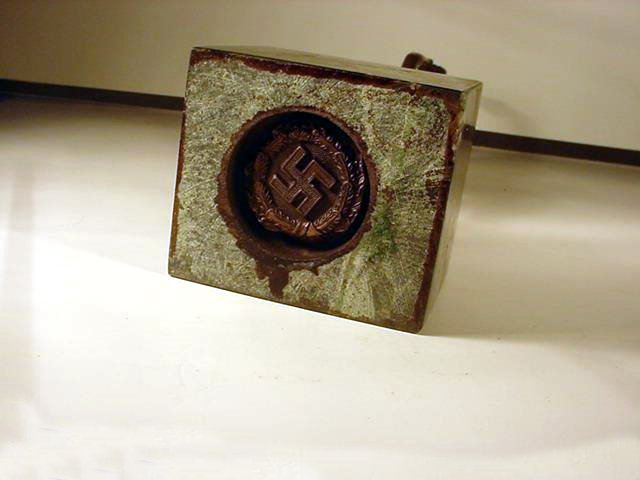
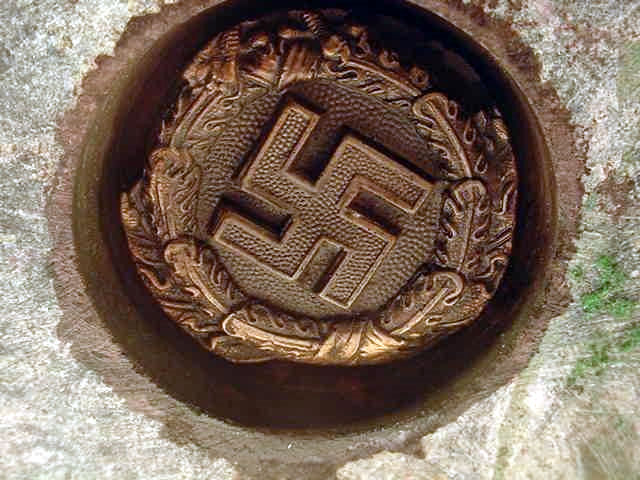
| DESCRIPTION: So much did the fame of the statue that the artist presented to Adolf Hitler reverberate through the N.S. Reich, that the great artist Josef Thorak, who not only created the wonderful silver statute as seen in the above website position, but he created several small versions of it in bronze to be presented to various dignitaries both N.S. party officials and some important foreign admirers of his immortal art. As professional experts in this field, it’s a fact that over various times we had often heard from certain artistically “connected” persons who had survived WWII that Thorak had indeed made these little bronze statuettes, but in half a century we had never actually come across one and NOW a German collector after seeing our pictures informed us that he actually owned one of these and would consider selling it, but he knew how rare it was and it was a real task getting together with him but knowing how saliently important this piece is we just had to have it. The sculpture is artistically crafted in fine bronze and the figure and its marble plinth are in pristine condition. The statue itself measures about 12 inches from the top of the wreathed swastika in her hand to the bottom of the small rock-style formation that the lady delicately balances herself upon. At the back of this rock is the name Thorak. The figure is then seen mounted on a fine-grained marble plinth that measures three inches square and three inches deep (beautiful coloration!). Knowing these statues were presented to high party officials and admirers there is another little unexpected bonus. When the bottom of the figure and its marble plinth are viewed, one will perceive a bronze, wreathed swastika in high detail that is embedded into the granite. The German gentleman that sold the statute had installed a piece of felt cloth on the bottom of the marble plinth thus covering this bronze swastika and it stayed covered like that for many years. WHY??? Anyway, when he sold it he uncovered it and we are sure we would never have known it was there. We believe or at least theorize that the artist Thorak included this as a sort of extra testimony of his fervent belief in the ideals and artistic values imbued in National Socialism. Hitler and the great artists like Arno Breker, Carl Diebitsch, and Wolfgang Willrich all worked diligently to replace the degenerate sick Picasso garbage that prevailed in the Weimar Republic with the heroic, the extremely realistic scenes of workers in the fields and factories and the beauty of the Aryan man and woman. This statuette by the great artist Thorak truly depicts and personifies the classic expressive lines of very “special people”—Olympic competitors—and this lady must go to a very special person who in the German language would be described as a “ Kulturträger,” in other words, a collector of cultural and historically significant art.
PRICE: SOLD
|
|
|
|
Beautiful Olympic Vase (Item OLY 7-20)
|
| DESCRIPTION: Issued at the time of the Olympic Games of 1936, it states on the bottom of the vase that it was approved by the Propaganda Committee. It was produced by the German porcelain company Echt Tuppack. It’s rimmed in gold on the top rim and on the bottom, while the logo is clear and has retained the colors. Overall, it’s in very good condition except for a hairline crack, which is shown. Because of that, a $600-$800 piece has been demoted in price.
PRICE: $325.00
|
|
|
|
Olympic Booklets (Item OLY 7-21)
|
| DESCRIPTION: These were issued as a set of 26, but we only have 8, as you can see. Each covers a different event. They are in excellent condition; the covers just a bit stressed from age.
PRICE: $45.00 takes all 8
|
|
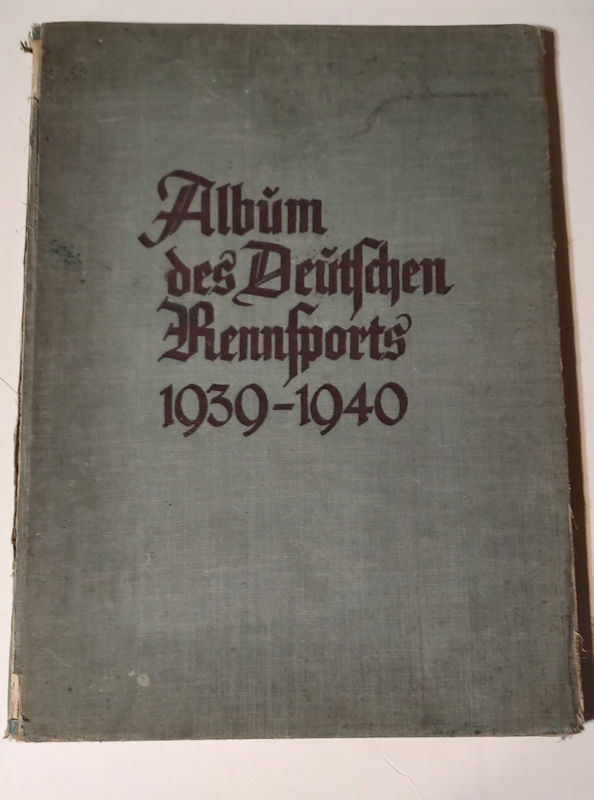
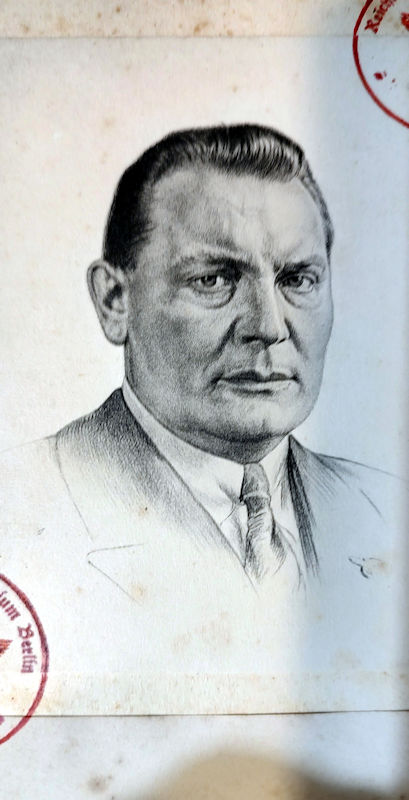
Book on Horse Racing Signed by Hermann Göring (Item OLY 7-22; GOR 13-5)
|
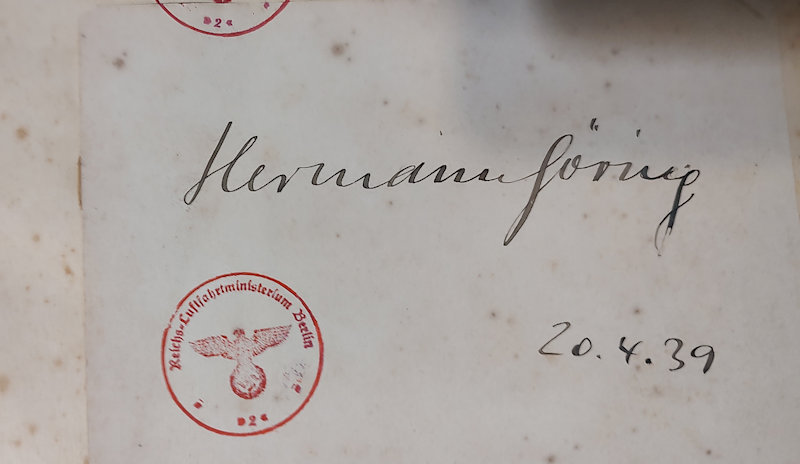
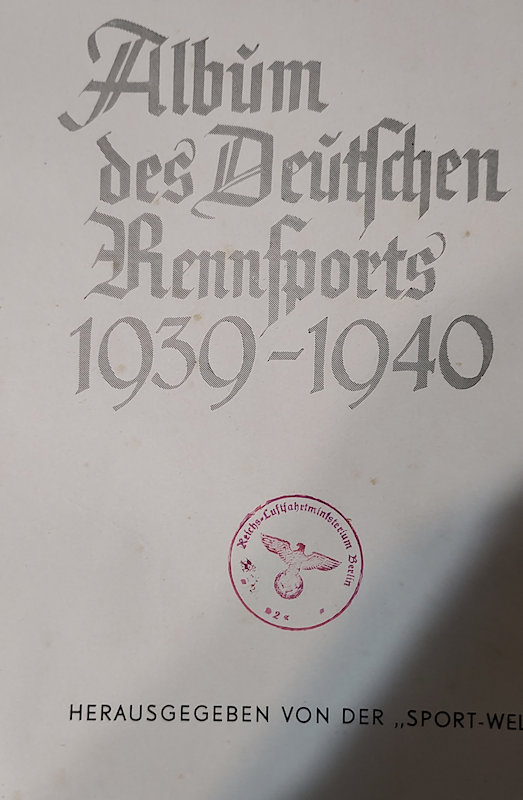
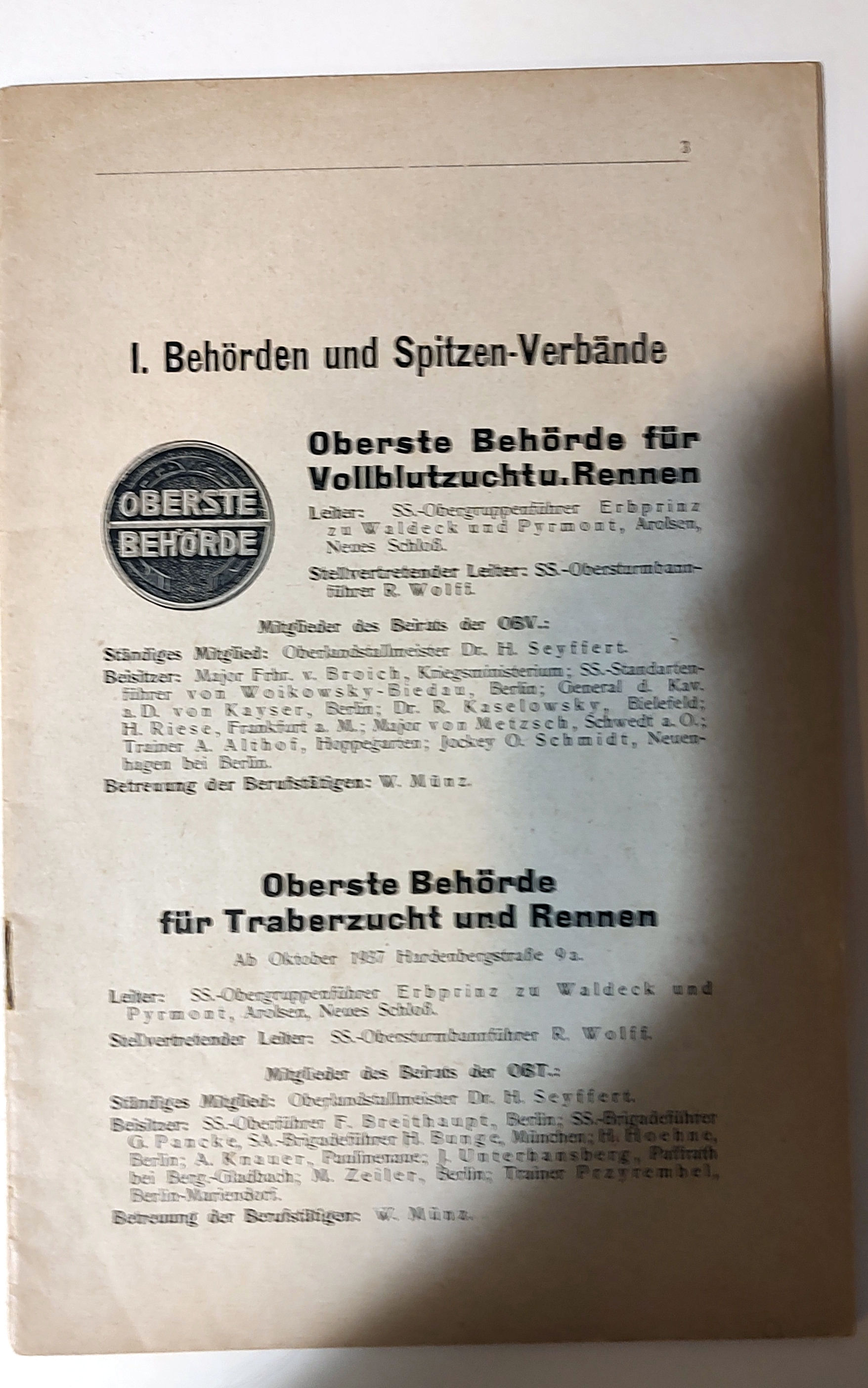
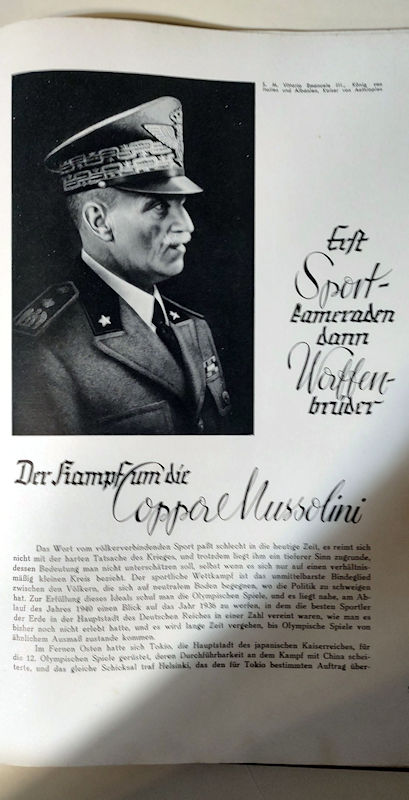
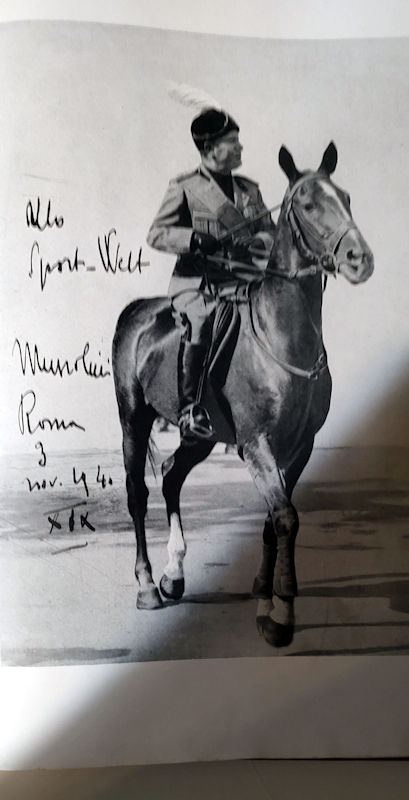
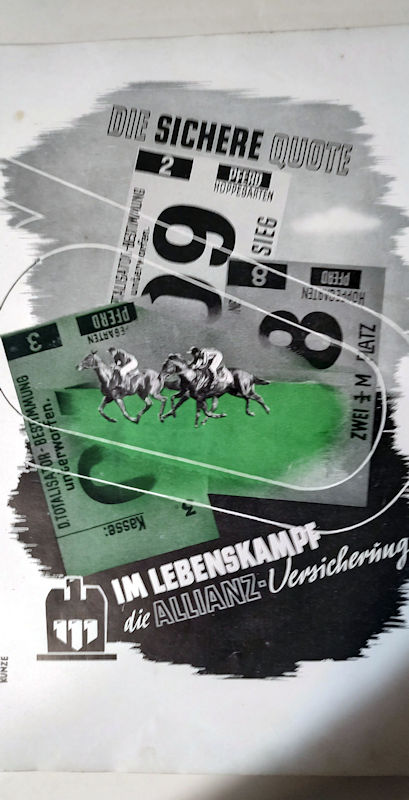
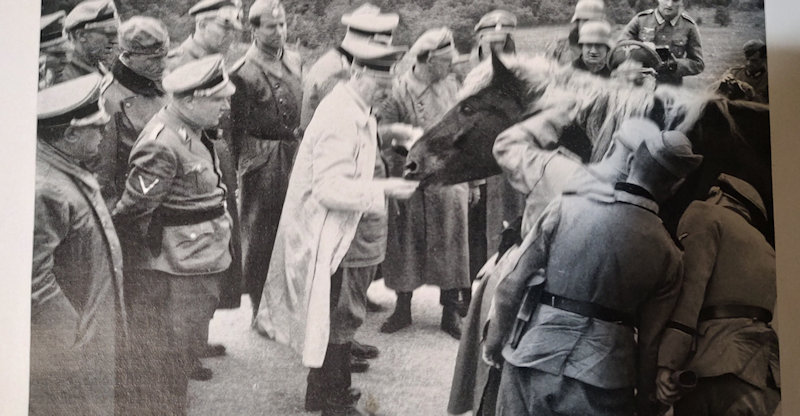
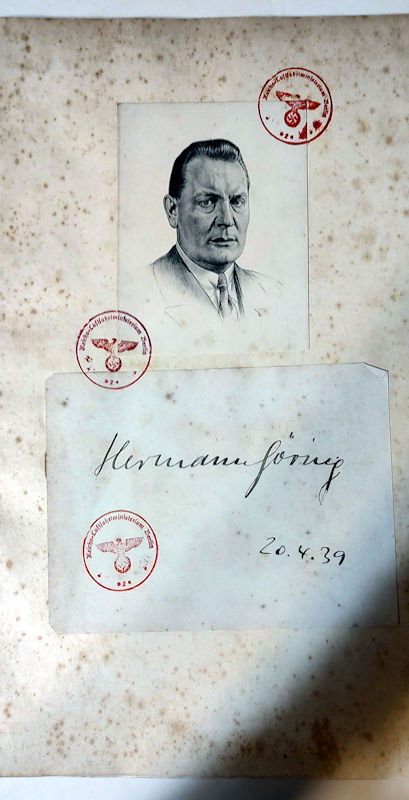
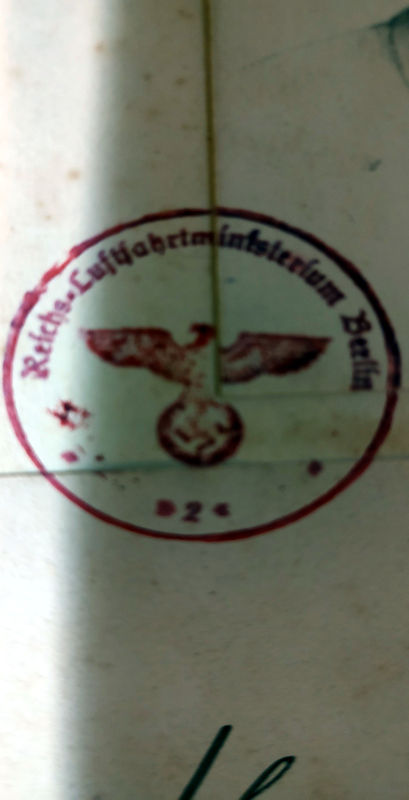
| DESCRIPTION:The Sport of Kings was also the favorite of the elites of the Third Reich of which Göring was a huge fan of. This book is full of horse-racing pictures along with such admirers as Mussolini pictured. The autograph of Göring is quite large and distinct as we often see with his prominent and masculine form of writing making it without hesitation that it is his signature. There are several Luftwaffe air ministry stamps on this page. The book is in excellent condition except as you can see from the photo that there is some foxing on this page. Also, the spine is slightly distressed, but holding well. One of the pages is slightly torn but all there. The book starts with a lovely critique of horses from use on farms to the military and then gravitates to racing both general and with a sulky. A small pamphlet was included with the book on racing in general and is entitled “Behörden und Spitzen-Verbände” which is a listing of the leading authorities involved in racing. This is a TOP Göring collectible! It’s worthy of any historical collection.
PRICE: $2,500.00
|
|
Contact Us
Please refer to item designator in parentheses in all correspondence.
Please E-mail for any additional information you may need.
If you prefer, contact 'Germania' at PO Box 68, Lakemont, GA 30552
or call at 706.782.1668 or 706.782.4398.
Please! do not call during the wee hours of the morning. The best time for calling us is between 10am and 12 noon and between 9 and 11 pm eastern time.
|