
|
|
|
|
|
|
I bet you think you know all about Adolf Hitler! Think again! |
|
Adolf Hitler
Page 22
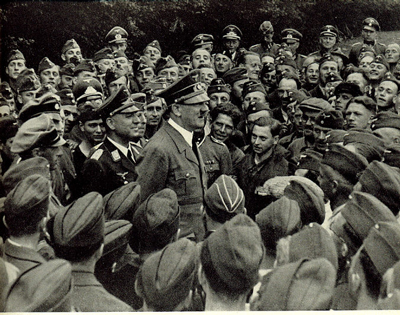
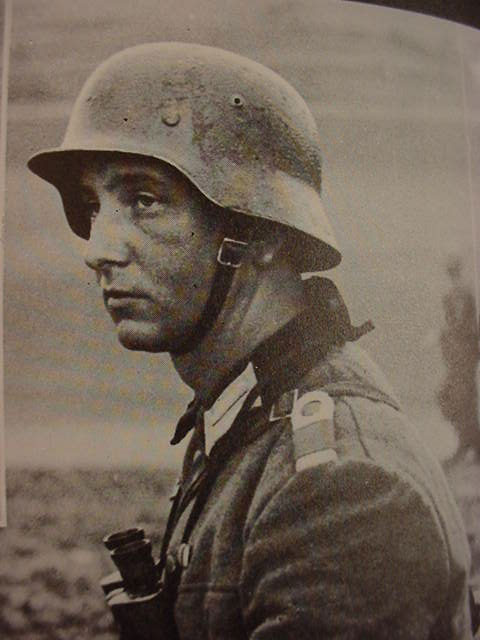
The German leader with his soldiers in Poland, 1939
|
|||||||||||||||
|
|||||||||||||||
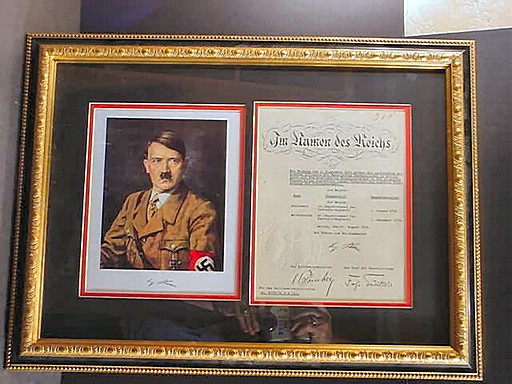
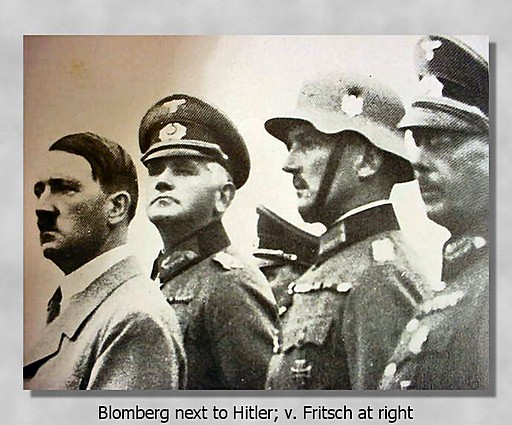
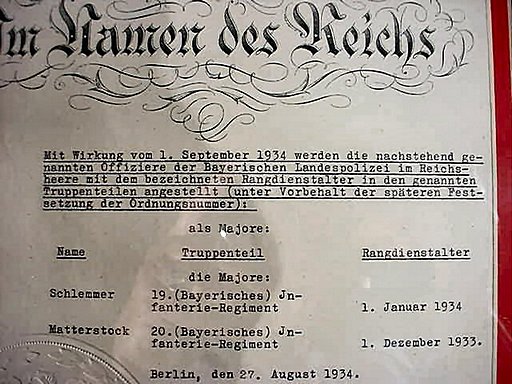
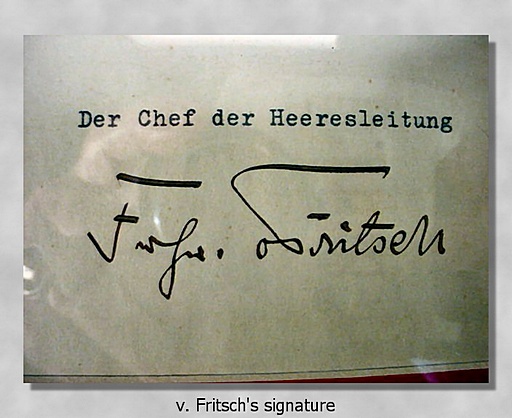
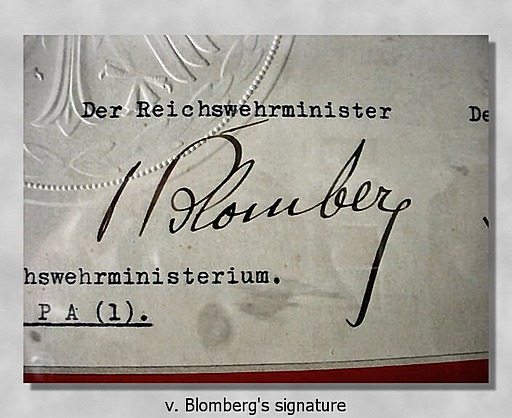
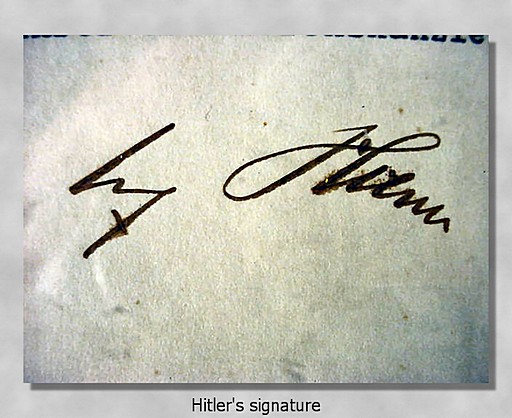
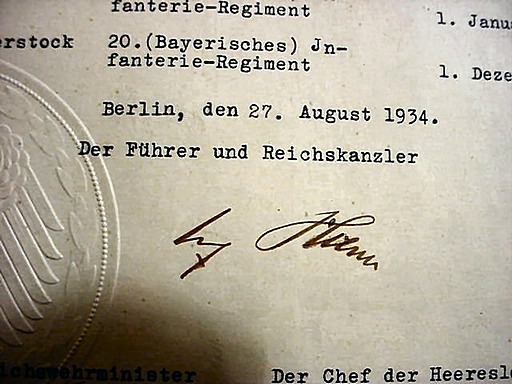
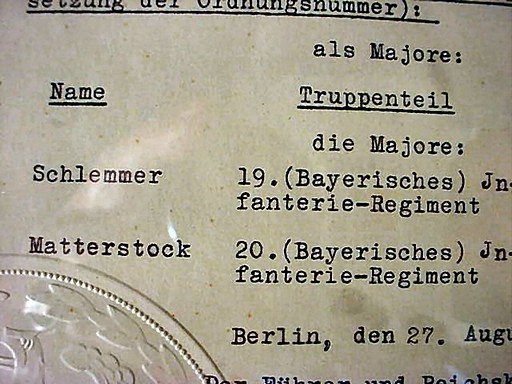
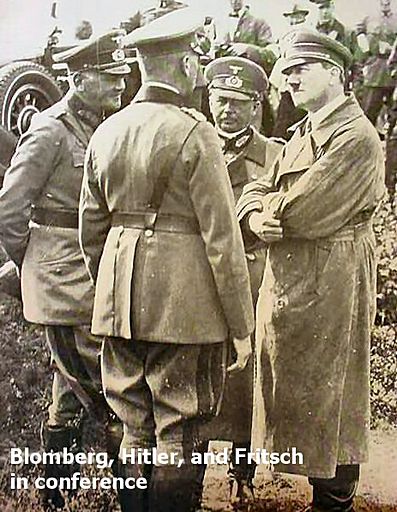
| DESCRIPTION: Why do we call it that? Because it definitely would be hard to beat. It not only has the hand signature of Adolf Hitler in the second year of his ascension to power (1934), but it is also signed by the Commander in Chief of the German Armed Forces, Werner von Blomberg, (September 2, 1878-March 14, 1946). He was Minister of Defense of the German Reich. The document is a promotion certificate for two important German officers. The document has the raised German eagle and is entitled In the name of the Reich. The other signature at the bottom of the page is none other than Werner Freiherr (baron) von Fritsch (August 4, 1880-September 22, 1939). Both Blomberg and Fritsch were the first major leaders of the rearmed German army under Adolf Hitler. In 1933 Blomberg rose to national prominence when he was appointed as Minister of Defense by Hitler. He became one of Hitler’s most devoted followers. He worked feverishly to expand the size and power of the army. It was he who encouraged Hitler to crack down on SA leader Ernst Röhm and his followers in 1934. It was Blomberg who personally ordered all soldiers in the Wehrmacht to pledge the Reichswehreid oath of allegiance to Hitler, not just to the Volk und Vaterland. Because of a scandal over his wife Blomberg had to resign all of his posts on January 27, 1938. Later, Werner von Fritsch was also forced to resign as Commander in Chief of the Armed Forces. The bottom line seemed to be that Hermann Göring and Heinrich Himmler wanted to oust all the old-school Prussian general staff and replace them with younger men more steeped in National Socialist ideology and martial fervor. The resignation of these two men within a short time of each other came to be called the Blomberg-Fritsch Affair. (no link for the juicy and conjured-up charges???) Werner von Fritsch was a prominent Wehrmacht officer, a member of the German high command, and the first German general to die in WWII. In 1934 he was promoted to the German High Command (OKH) and was made commander in chief the following year. He, along with von Blomberg, set about rearming Germany. Fritsch was among the officers present at the Hossbach Conference in 1937, when Adolf Hitler made his intentions known as to Germany’s agenda concerning lost territories that should be regained. Because of a disagreement with Himmler and Göring he, like Blomberg, was forced to resign. The Führer replaced several other high-ranking generals and ministers with people whom he deemed more loyal to him and friendly with the NSDAP agenda. Just before the outbreak of WWII in 1939, he was recalled but in an inspection tour of the front in Poland (a very unusual activity for someone of his rank). On September 22, 1939, before the siege of Warsaw he was mortally wounded in a freak accident of war. Again, to have all three of these most famous personalities on one document is incredible! Now as far as the purpose of the document: It is a promotion to the rank of major for two outstanding officers of the Bavarian Landespolizei and this document was the official paper of record. We now give the regimental history of these two men who were obviously of great leadership quality back then in 1934, but as their record reveals they went on to even greater marshal glory in the Second World War. Otto MATTERSTOCK Born 19 October 1889 Kirchbach, and alive 1958 in München Bavarian army 19 July 1909 to circa 1920, then Bavarian Landespolizei 10 14 October 1935, reassigned back to army 15 October 1935. Leutnant 15.12.11/26.10.11, Oberleutnant 9.7.15, Hauptmann—, Polizei-Major—, Polizei-Oberstleutnant 1.6.35, Oberst 1.1.37, Generalmajor 1.9.41, Generalleutnant 1.11.42 Commissioned in Bavarian Infantry Regiment 17. Known awards = Bavarian Military Merit Order 4 X, 1914 Iron Cross 2nd Class, 1911 Luitpold Jubilee Medal. Commandant of Wurzburg 1.6.38. Commander 1st Battalion/Ersatz Regiment 73 1.9.39. Commander Infantry Regiment 330 (in 183rd Inf Div) 1.12.39 (no action). Commander 716th Infantry Division 3 May 1941 to 1 April 1943 (Caen, Normandy occupation duty),. Commander 147th Reserve Division 17.9.43-10.1.44 in action in the Ukraine. Fortress Commandant in the ' LineofWehrkreisXIl 1.12.44. Ernst SCHLEMMER Born 8 July 1889 Wollstein/Rheinhessen, died 1949 in Heidelberg. Bavarian army 1909 to ca 1920, then Bavarian Landespolizei circa 1920 to 30 September 1935. back to the army 1 October 1935. Leutnant 26.10.11, Oberleutnant 9.7.15, Hauptmann — , Polizei-Major — , Polizei-Oberstleutnant 1.7.34, Oberst 1.1.37, Generalmajor 1.12.40, Generalleutnant 1.12.42. Commissioned in Bavarian Infantry Regiment 18, but transferred to the Bavarian Flying Battalion 1913/14 and apparently served in aviation throughout the First World War. Known awards = Bavarian Military Merit Order 4X, both classes of 1914 Iron Cross, and 1911 Luitpold Jubilee Medal. Commander of Mountain Infantry Regiment 100 6 October 1936. Commander of Mountain Infantry Regiment 137 3.1 1.38. Commander of Mountain Replacement Regiment 136 24.2.40-17.2.41. Commander of 2nd Mountain Division 8.3.41-3.3.43 (occupation northern Norway, then Lapland front against Murmansk). German Liaison Officer with the Italian Alpini Corps 25.8.42-6.2.43. Commander of training "Division 188" 8.4.43. Commander of training "Division 418" 15.5. 1.11 .43. Liaison with Luftwaffe Command at Rome 29. 1 1 .43. Commander of "Gruppe Schlemmer" 18.1.44. Commandant of Milan district 23. 1.44. Commandant of Oberfeldkommendantur 397 17.3.44-9.5.45 German Cross in Gold 19.12.41 as CO of 2. Gebirgs Division. So, “Meine Dammen und Herren,” you see before you possibly the greatest Hitler document offered on the worldwide web! It also is ultra-important to the history of the German army, as well. The document has been framed with special conservation-museum handling with nonglare glass and 100-percent-cotton-fiber material as to the matting. The document is not glued down rather it is very professionally mounted with acid-free, water-soluble material mountings. The glass is UV-filtering glass. In other words the effect is great, but more importantly this precious document is sealed and presented with all the professional care it deserves. We are talking about an ultra-important historical document here. The size of the frame is 25 x 18 1/2 inches and it is a first-class, gallery-quality item that in its gold and black motif certainly does credit to the subject. The document itself is 10 x 8 3/4 inches. A fine period photograph of Hitler 6 1/2 x 8 inches accompanies the document. Under the picture is a copy of Hitler’s signature that one can compare with the authentic one on the document. This fantastic, outstanding acquisition is one of Germania’s paramount discoveries in 2008. We are most extraordinarily proud to offer it to the museum or collector who is serious enough to recognize its important historical significance. This truly can be called the ultimate Hitler document because of its wide range of historical coverage. PRICE: SOLD |
|
||||||
|
||||||
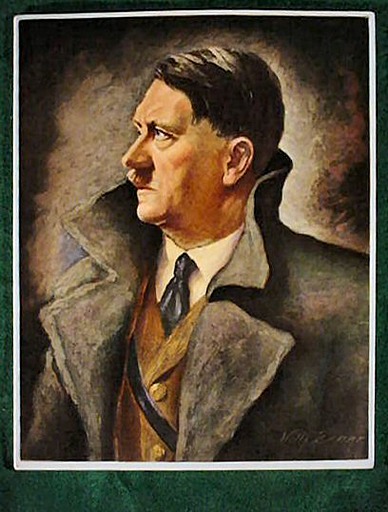
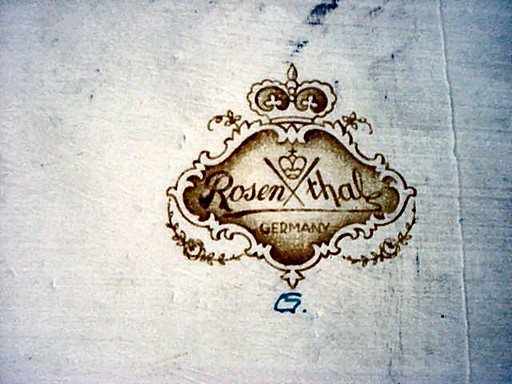
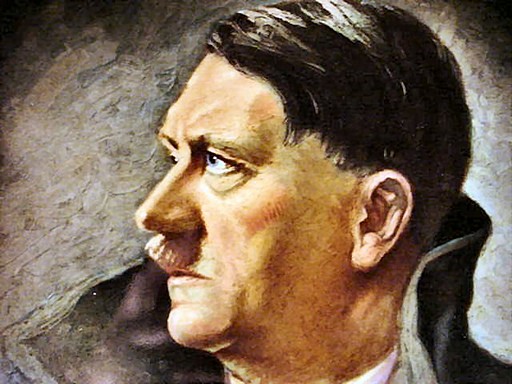
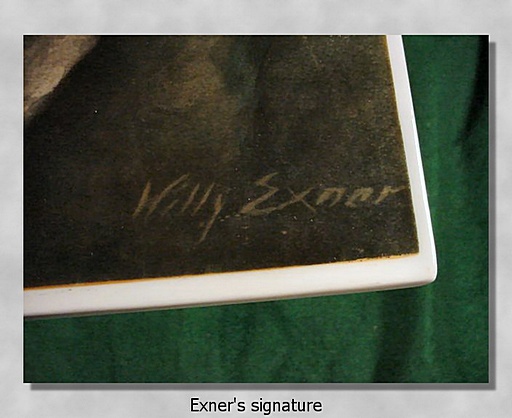
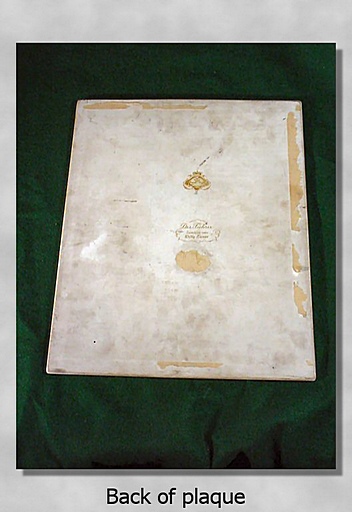
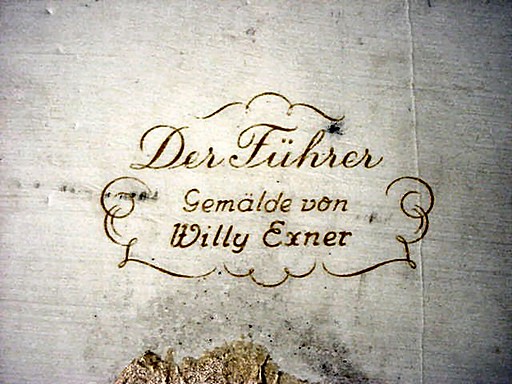
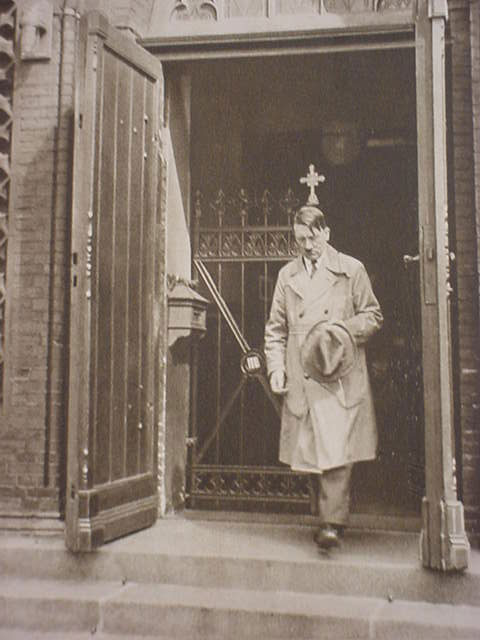
| DESCRIPTION: Exner was a great artist working in the era of the Third Reich. He painted several prominent Third Reich figures including Hermann Göring, Goebbels, etc. His portrait of the Führer was so popular that it was displayed in schools, offices, and public institutions throughout the Reich. You can see a print of Exner’s famous painting at Item AH 5-2. This one, however, is the Exner painting on porcelain and this brings out the color and detail to its zenith! The porcelain was produced by the famed Rosenthal Company and is clearly marked on the back. The condition is mint on its obverse, but one of the Rosenthal paper labels is missing on the back (no big thing!). The plaque is large—12 1/2 x 10 inches. They were sold by the Rosenthal Company unframed and it was left to the buyer to frame them. This is nothing short of a magnificent rendering. It depicts the Führer in his fifties shown here in his famous greatcoat. This is a historical treasure indeed, and at a very reasonable price.
PRICE: $2,500.00; a far-less-interesting, but vintage Rosenthal plaque of this size would cost this much today |
|
||||||
|
||||||
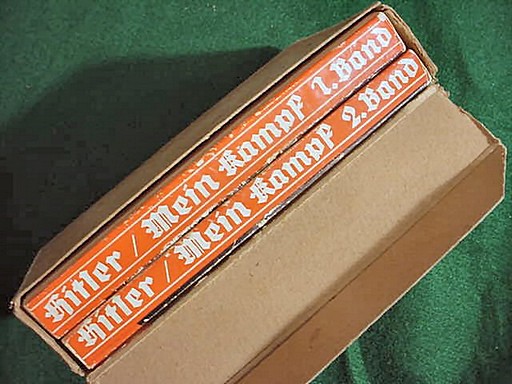
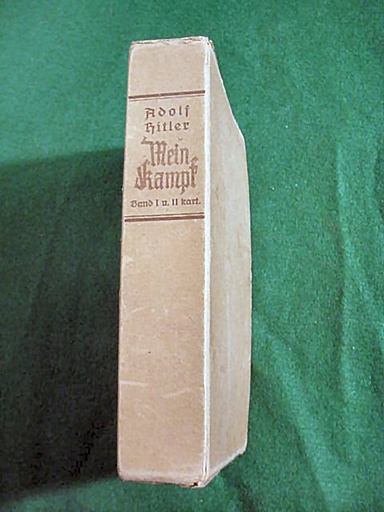
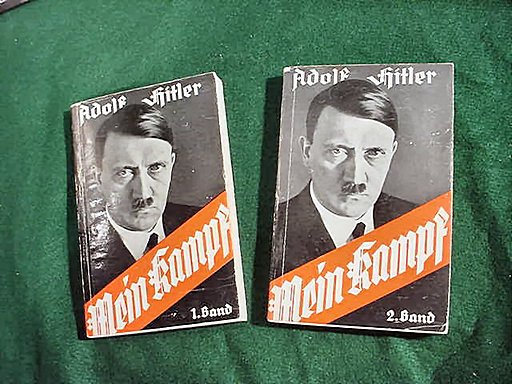
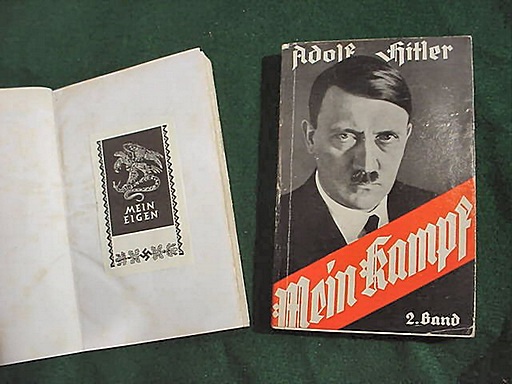
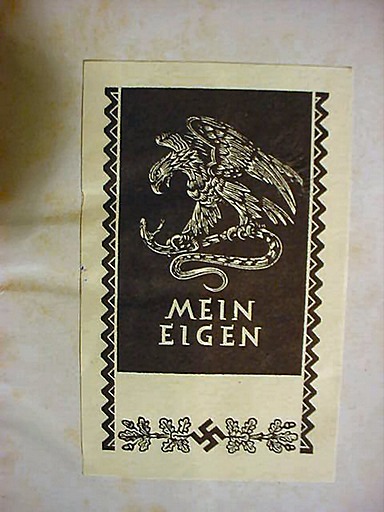
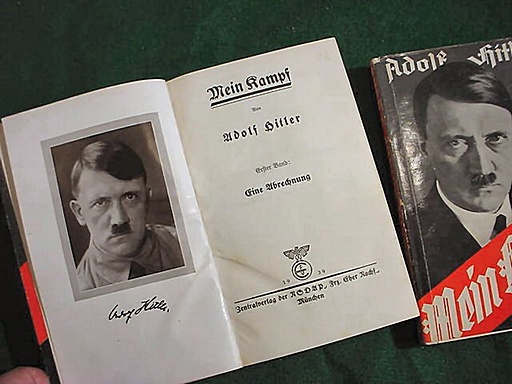
| DESCRIPTION: This is the extremely rare edition of My Struggle, Books One and Two, by Adolf Hitler. They are enclosed in their original carton. Like so many books published by the central printing office of the NSDAP (Franz Eherverlag in Munich), these books have the bookplate (“Mein Eigen”), “my property,” in the front. This bookplate is rather neat looking with the eagle taking action against a book thief; you know, the guy who borrows books and doesn’t return them! The books are soft covered with the Führer’s likeness on the covers. Only the Bible outsold this book the world over, but to find original copies that survived the allies’ “book burning” of the late 1940s is tough indeed, especially this rare set. The books are in remarkably great condition as is the carton case that they are enclosed in. This is a great investment piece; they just aren’t around, anymore.
PRICE: $450.00 |
| |||||||||||||||||||||||||
|
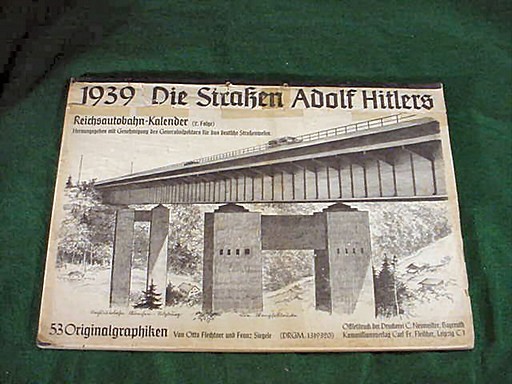
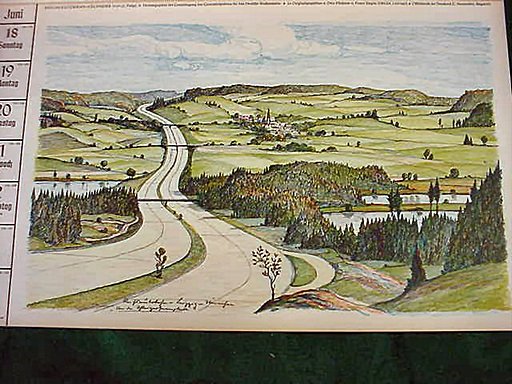
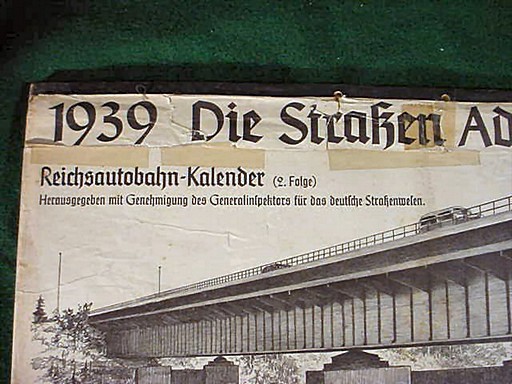
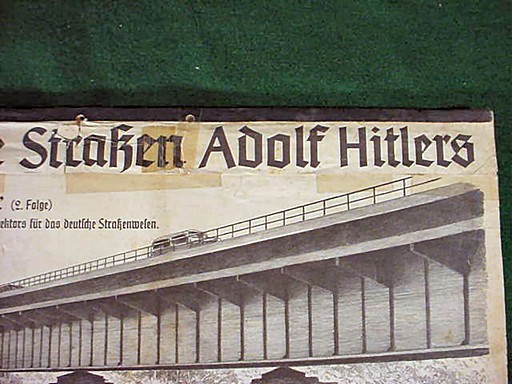
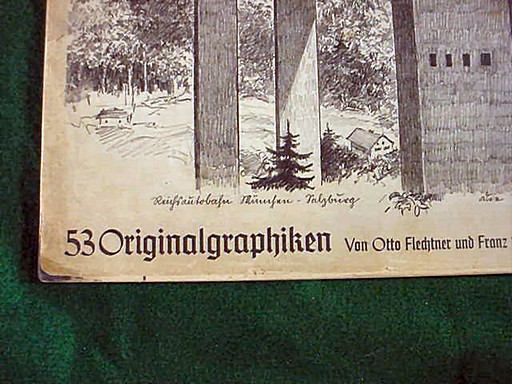
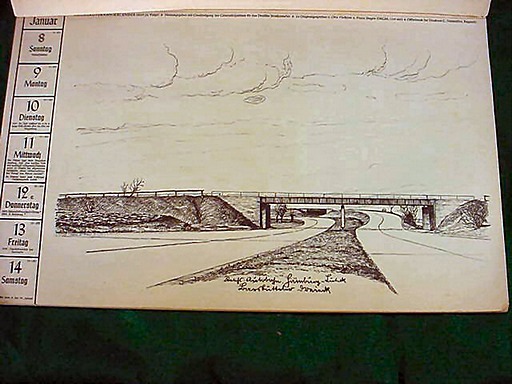
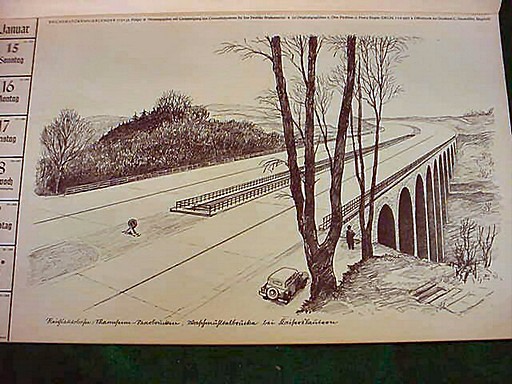
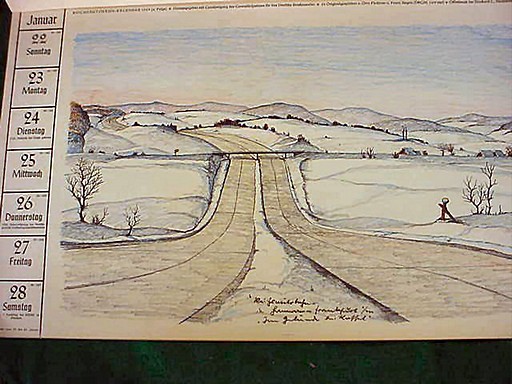
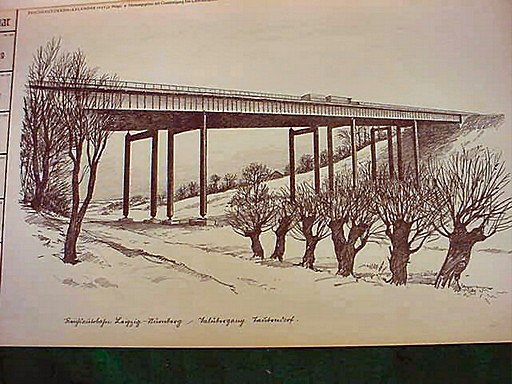
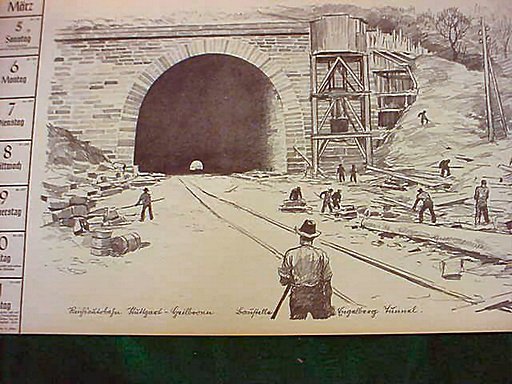
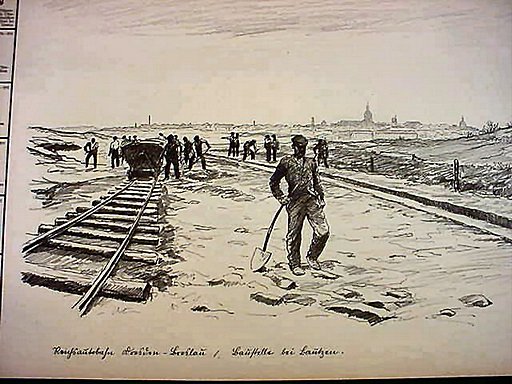
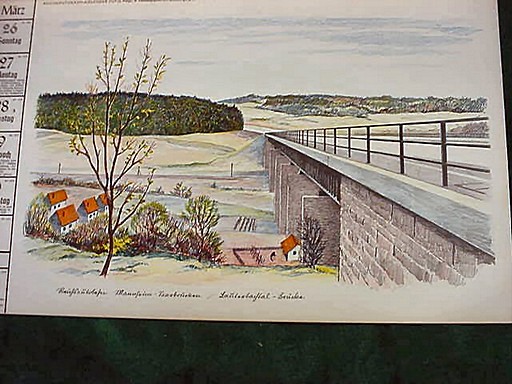
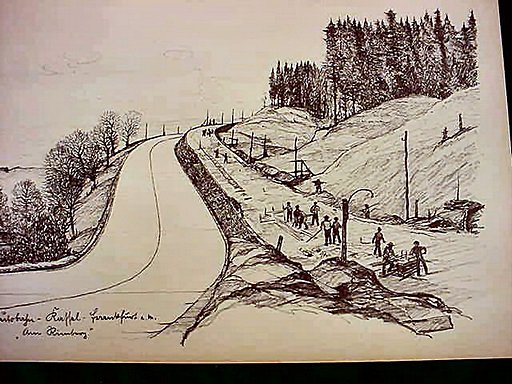
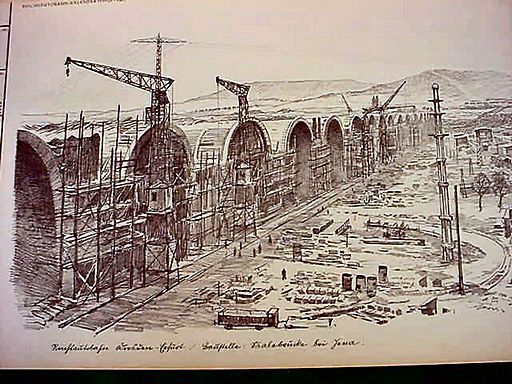
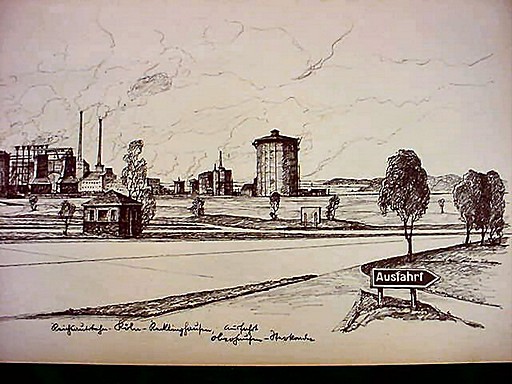
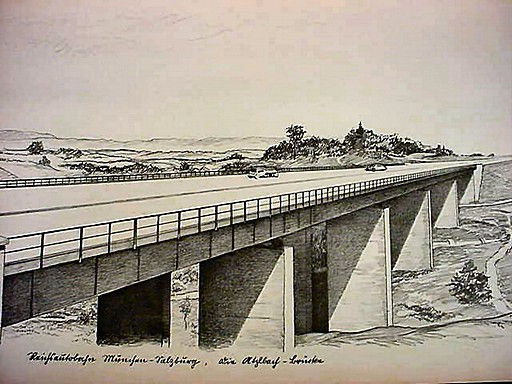
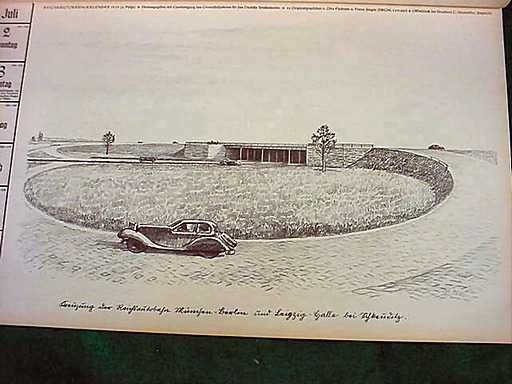
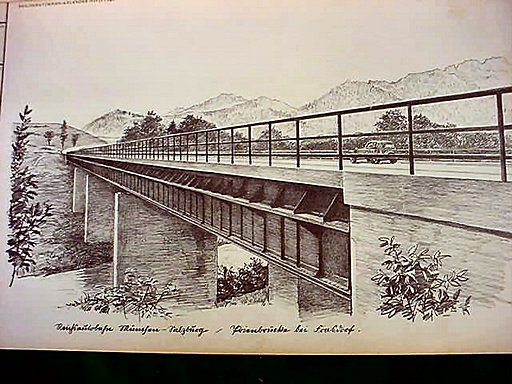
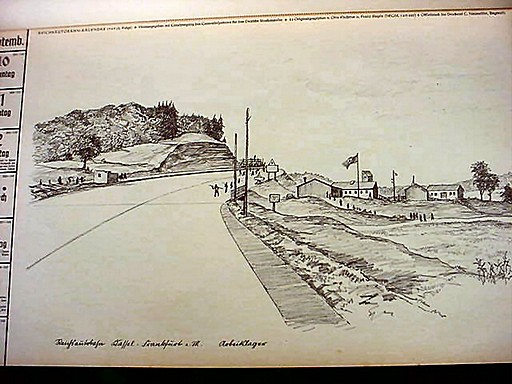
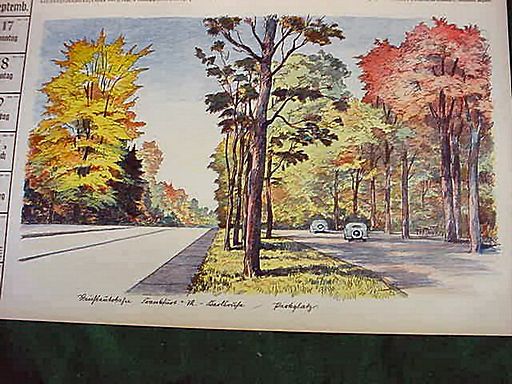
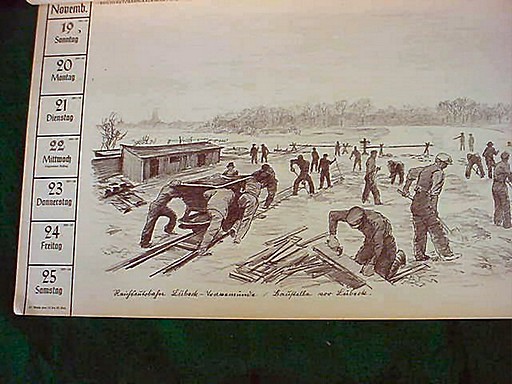
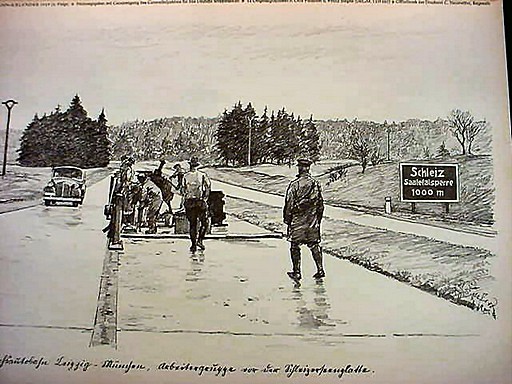
1939 Reichsautobahn Kalendar; “Die Strassen Adolf Hitlers,” “Adolf Hitler’s Street” (Item AH 22-4) |
|||||||||||||||||||||||||
| DESCRIPTION: This is a huge calendar published with 50 original graphics of roads, bridges, work crews, autos, trestles, tunnels, etc., of the first superhighway in the world, and this was the idea brought to fruition by the German Führer, himself. The calendar was designed and published under the official auspices of the General Inspector of German Roads. It is a huge office-sized calendar measuring 17 x 12 inches and is complete and in good condition with some old tape repair at the top of the cover page. Most of the pictures are black-and-white prints of etchings done by artists of the time. Summer, winter, spring, and fall sequences are seen in very realistic settings. A few of them are in color. This is a rare and profoundly historically important tribute to the 1930s technology on the German NS state.
PRICE: $225.00 |
| |||||
|
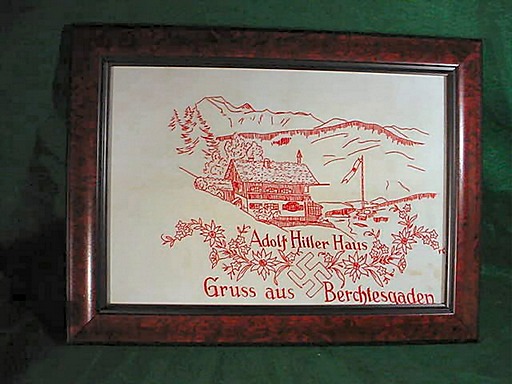
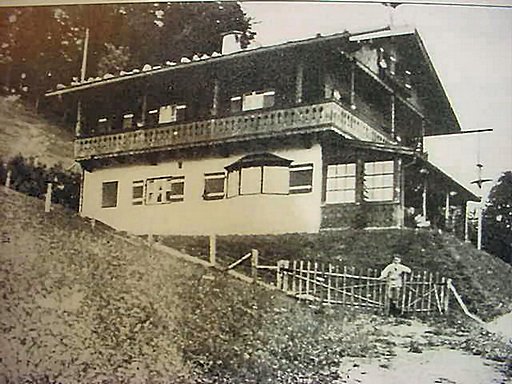
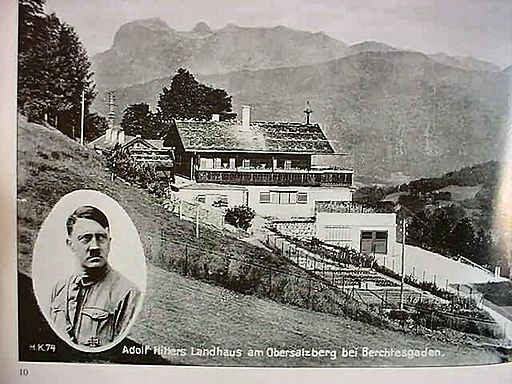
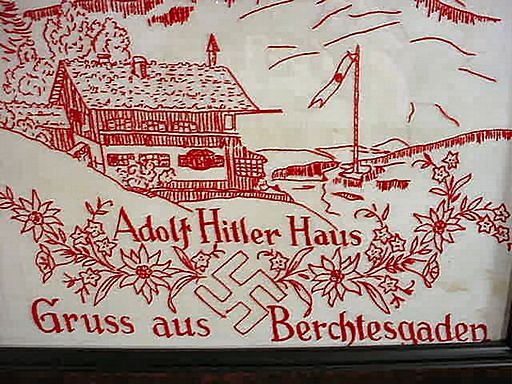
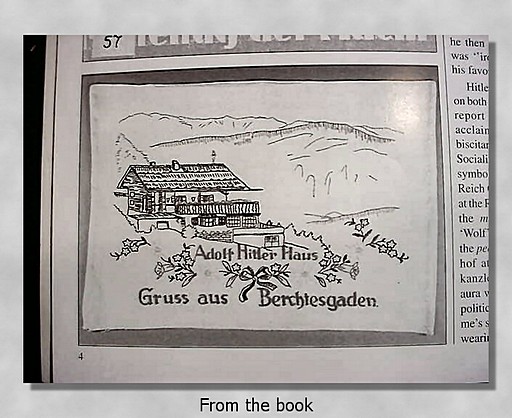
Hitler’s House (Haus Wachenfeld) (Item AH 22-6) |
|||||
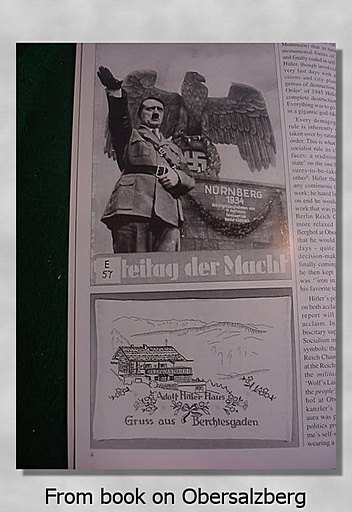
| DESCRIPTION: This is Hitler’s house on the Obersalzberg that preceded the famous “Berghof.” This house was built in 1916 for a banker named Winter as a vacation cottage (his wife’s maiden name was Wachenfeld). Through his half-sister, Angela Raubel, Hitler rented this house in 1927 for 100 Reich marks per month and he secured the rights to purchase it in 1932. He bought the house in June 1933 for 40,000 gold marks. After his election as Reichskanzler he commissioned architect Alois Degano to remodel the house first with a sunroom added to the front where there had only been an open front porch, a garage with a terrace on top, and additional outbuildings (later, the Berghof adjutancy). The modifications were completed in the spring of 1933. The extensive second remodeling which resulted in the Berghof was carried out by Degano in 1936. The tea towel that has been framed is the work of the mother of the lady who sold it to us. She was a true German patriot at the time, and all the way to her passing in 1985. The embroidery is fine and the depiction of Haus Wachenfeld is really greatly done in this artistic mode. The size with its frame is about 21 x 17 inches. This is an important piece of NS “Volk Kunst” (art of the people).
PRICE: $550.00 |
| ||||||||
|
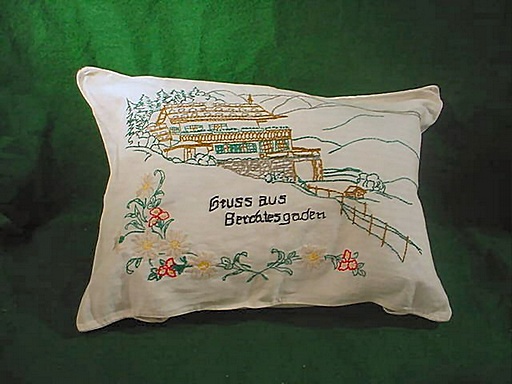
Berchtesgaden Pillow (Item AH 22-6a) |
||||||||
| DESCRIPTION: This neat, little couch pillow is again “Volkkunst,” “people’s art” done probably in the 1930s. It depicts “Haus Wachenfeld” and is very similar to the one we offer at Item AH 22-6 on this page. Please read abut that one because the description would fit this one, too. This one employs a bit more color and of course is not framed. It measures about 24 x 18 inches and is in perfect shape. The man we purchased it from at a German antique show said his mother made it. The embroidery of edelweiss flowers brings out the beauty of the whole scene. This is just a great expression of patriotism and faith in Germany’s leader.
PRICE: $350.00 |
| |||||||
|
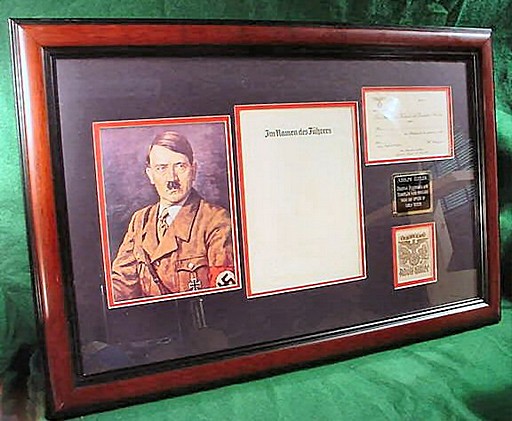
Collection of Original Hitler Paper Items (beautifully framed) (Item AH 22-7) |
|||||||
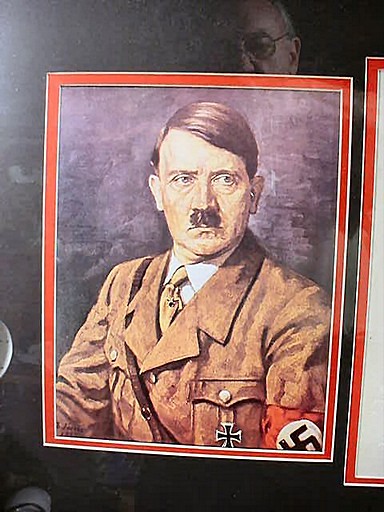
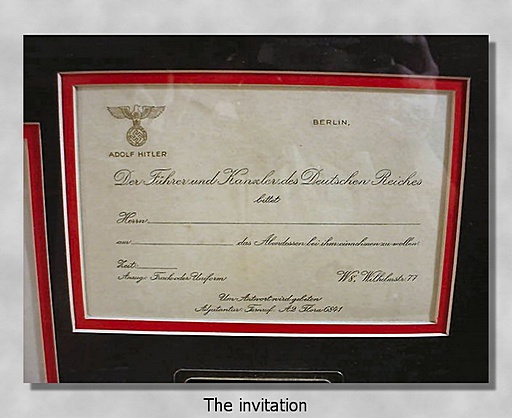
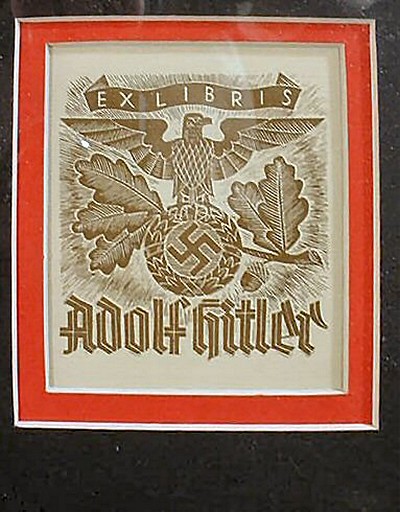
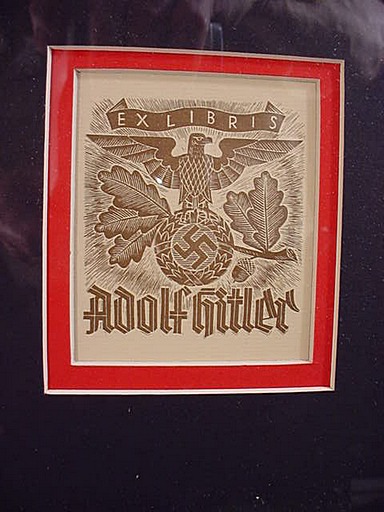
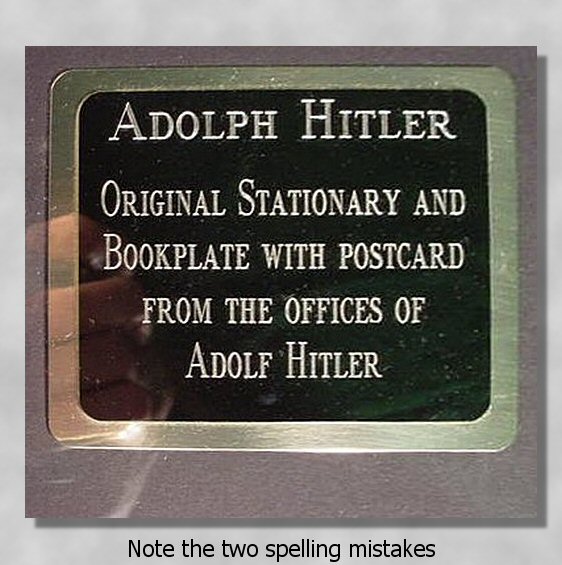
| DESCRIPTION: This is a really important and handsome historical grouping. It’s composed of four pieces: No 1: Color picture of the German Führer Adolf Hitler. It may be an original. It measures 7 1/2 x 9 3/4 inches. No. 2: Original sheet of original and official stationery from his desk at the Reich Chancellery. This was the type used by his secretary for the issuance of official orders directly from the Chancellor. It has the official raised eagle in an oak leaf. It all beautifully embossed. At the top is the title, “Im Namen des Fuhrers,” “In the name of the Führer.” It measures 8 x 11 inches. No. #: Official invitation directly from the desk of the Führer that would be used for inviting some favored or diplomatically important persons to a luncheon with the German leader personally. It has the national NS eagle at its top and across from this it says ‘Berlin.’ Then translated from German is: “The leader and Chancellor of the German Reich invites Herrn (Mr.) ______ on (date and time) to a luncheon with him (acceptance, and a suggestion that dress attire or uniform should be worn) Then the place W8, Wilhelmstrasse 77. Answer to the Adjutant, telephone A2 Flora 6841.” This measures 7 x 4 1/2 inches. No. 4: One of the Führer’s official bookplates (ex libris Adolf Hitler) with the early style NS eagle peculiar to Hitler only. There is an attached explanation within the frame that is accurate except for one thing, the man who had it framed referred to the invitation as a postcard, and since he didn't read German he thought it indeed was a postcard; probably because it was lined out on the rear like a card sent through the mail. Other than that this is a masterpiece of the framing art and these personal Hitler articles are priceless! (With a price!). The frame measures 33 1/2 x 22 inches. It is a nice size to mount on the wall of your office or den. These are 100-percent original Hitler documents and bookplate and are extremely rare, but priced a very competitively by the consigner. This is a very excellent and sound investment. It's a great item, but the owner spelled Hitler's first name wrong at one point. Erroneously identified the object and misspelled the word ‘stationery.’ PRICE: SOLD |
| ||||||||
|
Voting Ballot from Election Campaign (Item AH 22-8) |
||||||||
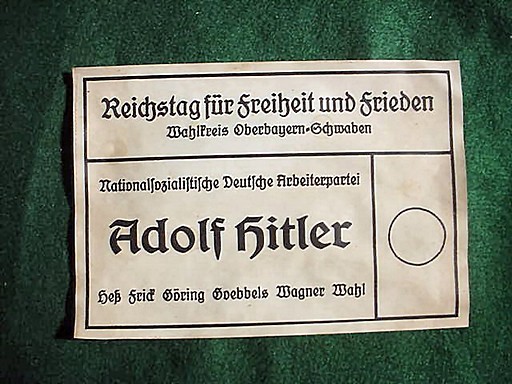
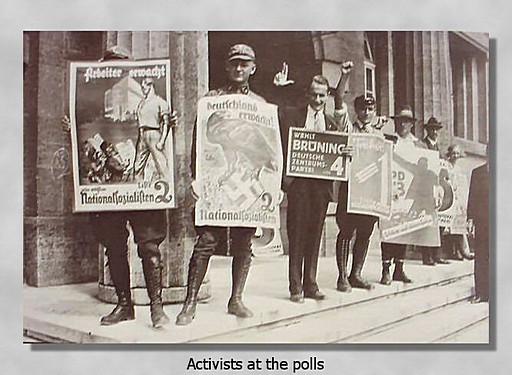
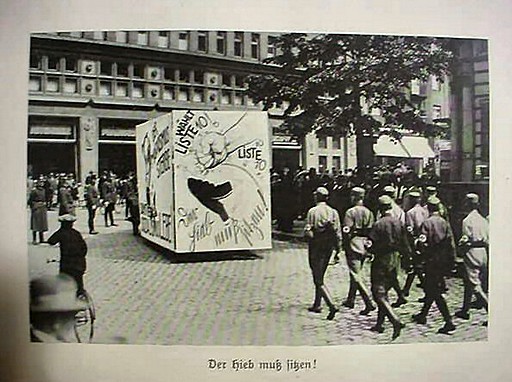
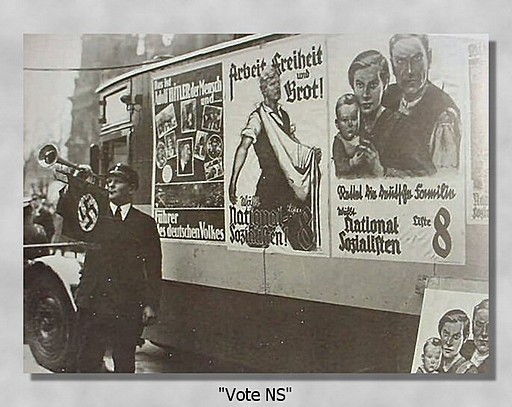
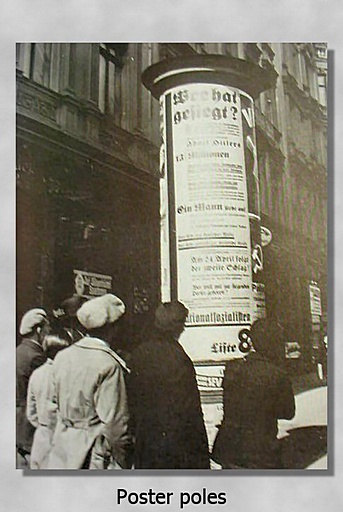
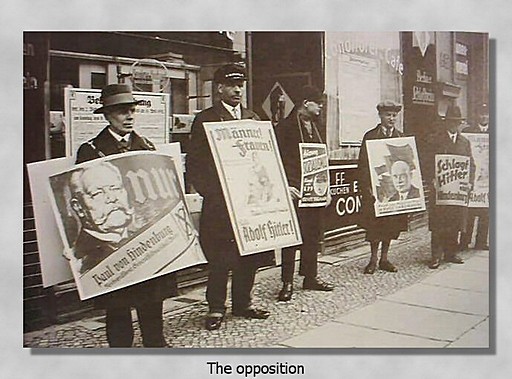
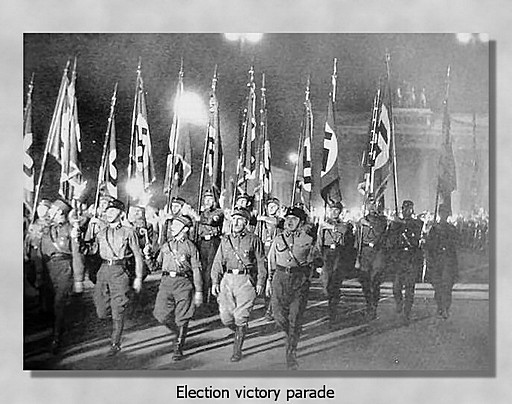
| DESCRIPTION: This is a small group of actual election ballots from the 1933 general election. Hitler was not truly elected; he was appointed Chancellor of Germany by Paul v. Hindenburg. Hitler received about 37 percent of the popular vote in the November 1932 elections and he assured the president that he could form a coalition with some of the other right-wing parties. It was Hindenburg who was actually elected in 1925, but in the 1932 elections his opponent was Adolf Hitler and although he lost the presidential election of 1932, he succeeded Hindenburg as head of state. Only 2 years later when Hindenburg’s death brought his term to a premature end in 1934 Germany voted then with paper ballots; something this nation of ours should have never abandoned. “Freedom and Bread” was the slogan used by the National Socialists in the 1932 elections. Joseph Goebbels waged a furious propaganda campaign on behalf of Adolf Hitler outdoing the previous election effort of 1930. Nazi posters were plastered everywhere. There was a whirlwind schedule of speeches on behalf of and by Hitler. The Nazis held thousands of rallies each day all across Germany. They gave out millions of pamphlets and extra copies of NS newspapers. Goebbels also used new technology, making phonograph records and films of Hitler to distribute. Among the handouts was a replica of the election ballot that was almost identical to the actual ballot. However oversized, the words “Reichstag für Freiheit und Frieden” appear at the top. This translates to “Parliament for Freedom and Peace.” Under this it says voting district Upper Bavaria-Swabia (trans) then in the main block it says National Socialist German Workers’ Party (trans). Under this in large letters “Adolf Hitler.” Below this “vote also for Hess, Frick, Göring, Goebbels, Wagner.” To the right side in a separate box is the circle where voters would put their checkmark or ‘x’ to cast their vote for the NS Hitler party. We turned up a few of these in Germany in a bookshop dealing in rare books and documents. The ballots measure 8 x 5 1/2 inches. Most are in really good shape. This is a rare document item, historically very important, and reasonably priced. They sat in cellar for many years and they are dark with just a bit of staining, but perfectly collectable; no mildew!
PRICE: SOLD We have no more of these (voting ballot). |
 |
 |
 |
 |
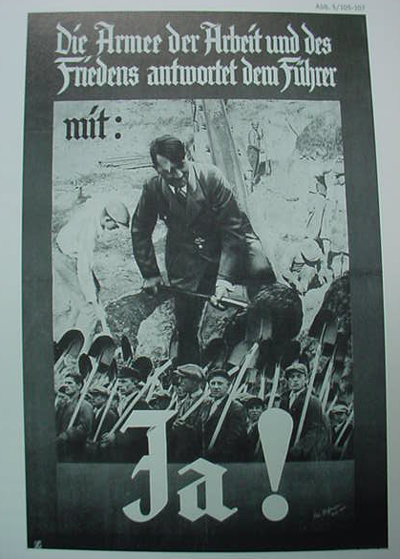 Note: Ja! |
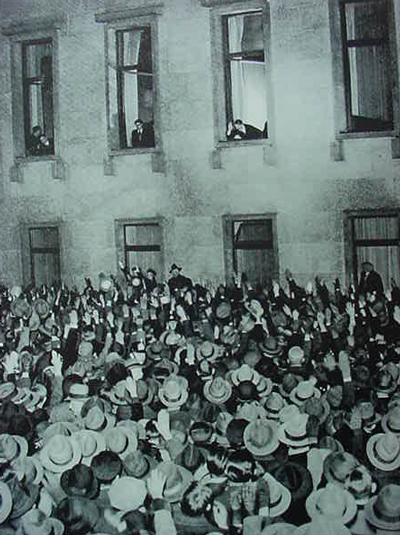
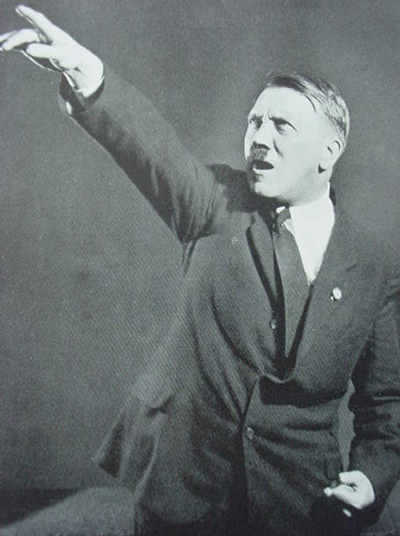
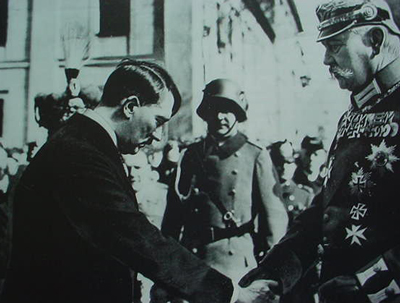 Hitler appointed by Hindenburg |
 |
 |
 |
 |
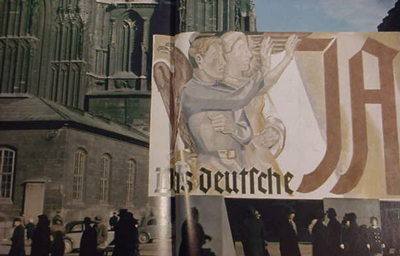 Ja for Anschlus |
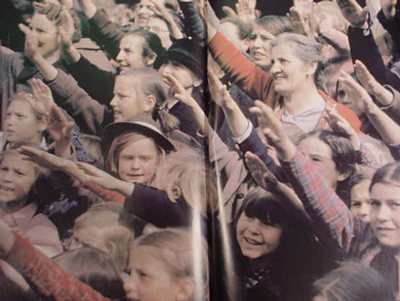 Austria greets the Fuhrer |
 |
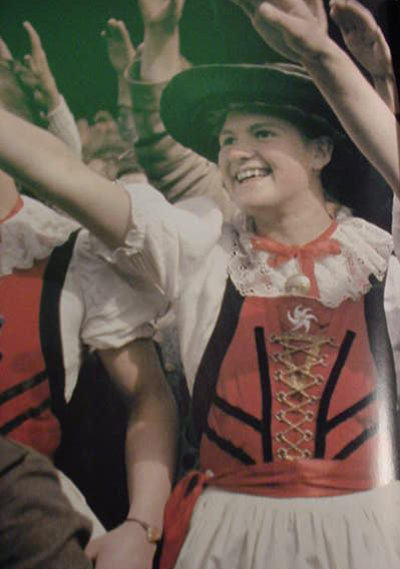 |
 |
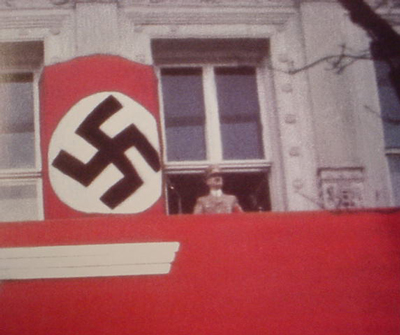 |
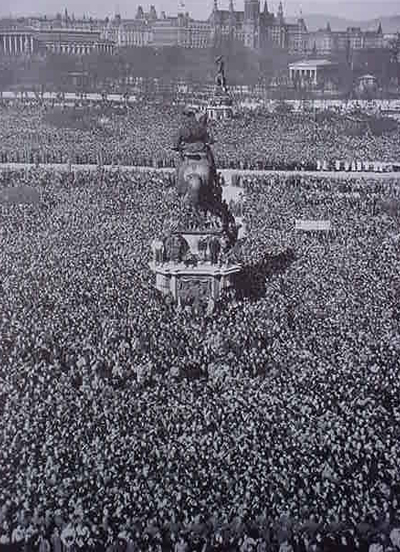 |
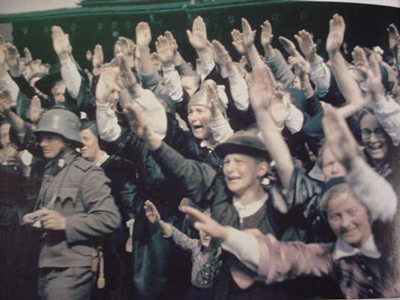
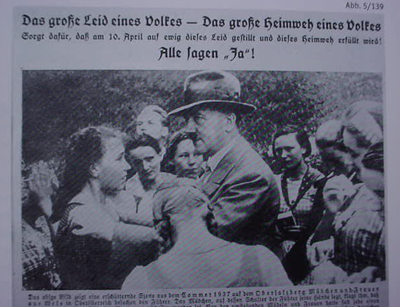 All say Ja! |
 At grave site of his parents |
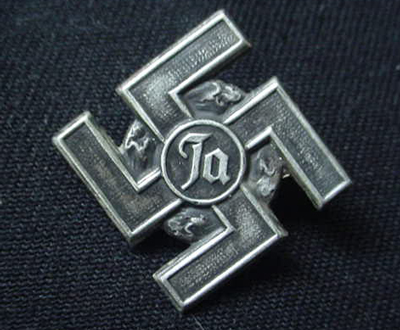
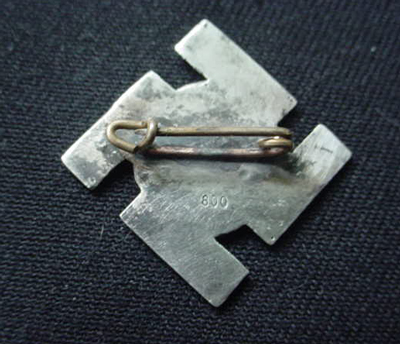
"JA" for Hitler Pin (Item AH 22-8A & PINS 8-22AA & NSD 18-13) |
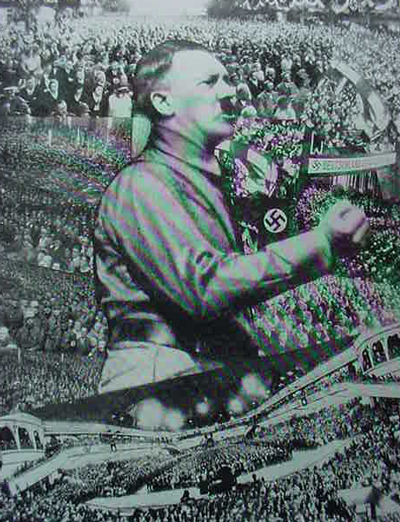
DESCRIPTION: This is a special pin made in a very special silversmith shop. Some of the dealers on the internet sites who are “fly by the seat of their pants forgers” have attempted to copy the Schnell items that we have in our grouping but to practically no avail. The copies are without the crisp detail and fine lines since these “Arschlocks” use the lost wax process and could never afford to use dies that would necessitate a huge amount of financial capital. To date not one has tried it and I am sure they will not. They will simply stay with their futile efforts of trying to “make a silk purse out of a sows ear” (*old Scottish expression). So dear collector, these items retain their integrity because they are original productions of the Third Reich. As to the item at hand, this is a special lapel pin that was exclusively ordered through the official auspices of the NSDAP (The Party). The son of original jeweler assured me that the original design was by his father and the Elder produced only a few of them. He made only the silver ones and he later turned the design over to a company in Ludenshied who produced a version in thin brass. The exclusive silver version was for special presentation to German citizens who helped to bring about the victory of the N.S.Party in 1933. Hitler was defeated in 1932 by field Marshal Von Hindenburg but even though he had lost the bid for power to this point, he was drawing ever larger crowds. In one day July 27th, he spoke to 60,000 enthusiastic persons in Brandenburg and too nearly as many in Potsdam and that same evening to 120,000 massed in the giant Grunwald Stadium in Berlin, while outside an additional 100,000 heard his voice by loudspeaker. So popular was Hitler in the eyes of the German people that President Hindenburg on Jan 1933 appointed Him Chancellor of Germany. This now was the victory and history records that the Fuhrer went on to many more in the saga of the Third Reich. As we have said, this beautifully designed lapel pin was more or less an award for loyalists whose diligent labors brought about this political win, however it was effectuated at that point in time. We are told that the pin was not designed nor issued until after Hitler’s appointment as Chancellor. It was strictly an award token. We were also told that more of them were made and issued by the Party to those who participated intently in the 1938 Austrian Plebiscite. The watchword and promotional slogan for this was (JA) “yes” worn by Germans and Austrians who were 90% in favor of the Anschluss. Again the N S motivated public wore this pin in brass to show their support while the Parteimitglieder who worked toward these ends feverishly and diligently were issued the pin in the coveted silver version. So it really is a very rare historically important article we have, due to our fortunate procurement of them at Stuttgart. The pin measures ¾ of one inch square about the size of an American nickel coin in dimension. It was made in 800 silver and is so marked on the back. It has the usual clasp as seen on many German badges. The swastika is of the mobile style with the circle in the middle with the “JA” (Yes) in German script letters. It is the ultimate symbol of loyalty and solidarity expressed in the form of the Hakenkreuz or Swastika. This we believe is the ultimate Third Reich collectable for those who appreciate the true early history of the N.S. movement. How much more interesting than a pair of jackboots, a field pack, a unit patch, or general assault badge! PRICE: $450.00 A Bargain!!! |
|
||||||||||||
|
||||||||||||
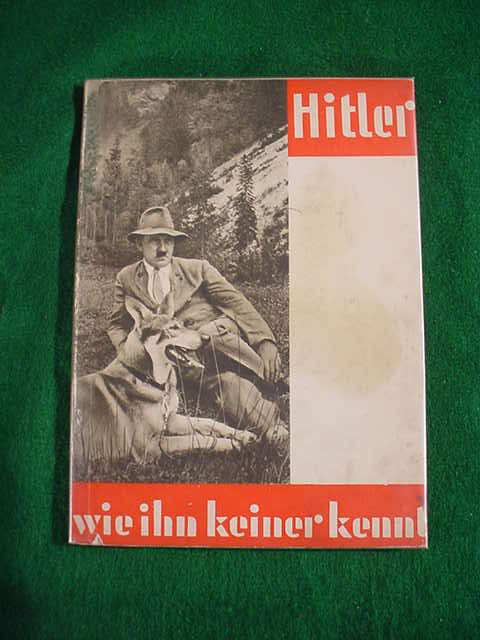
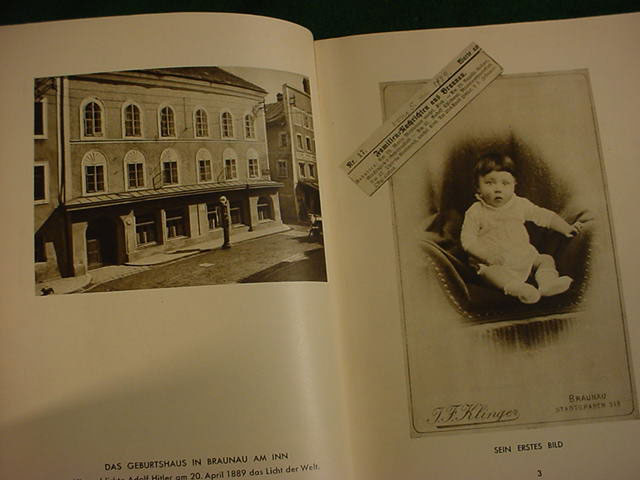
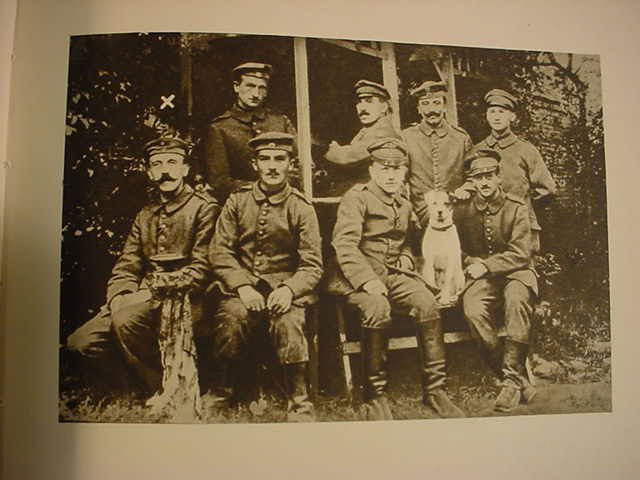
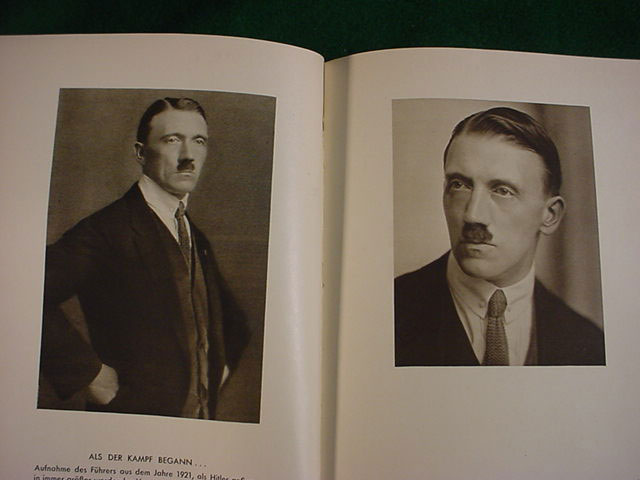
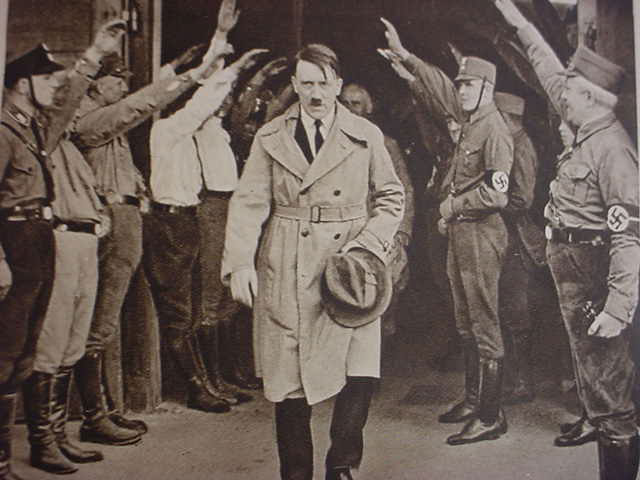
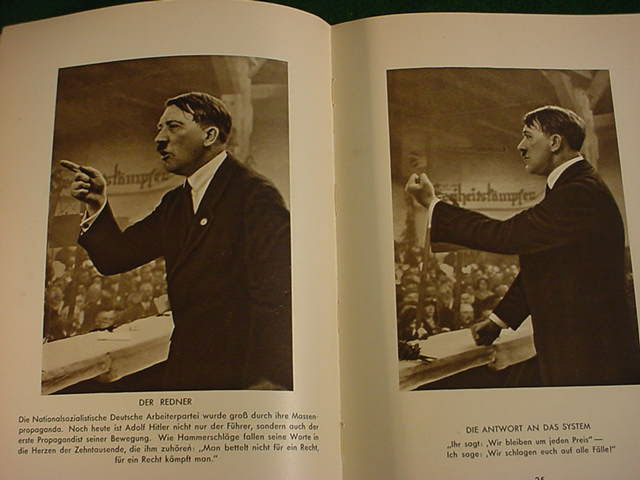
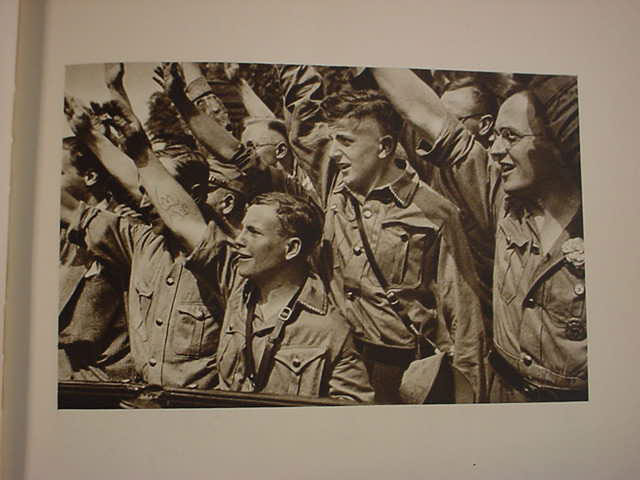
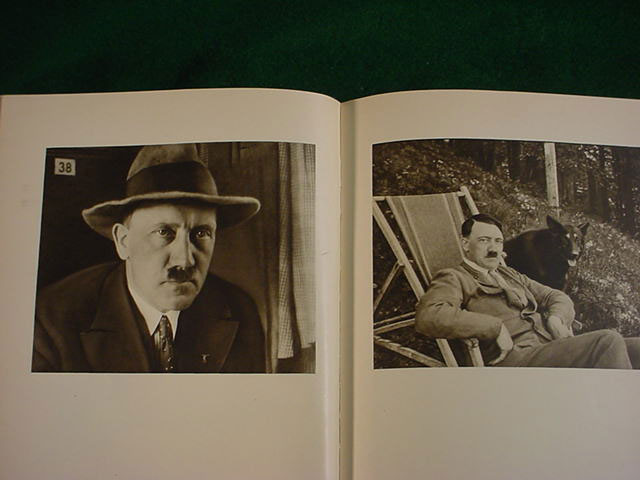
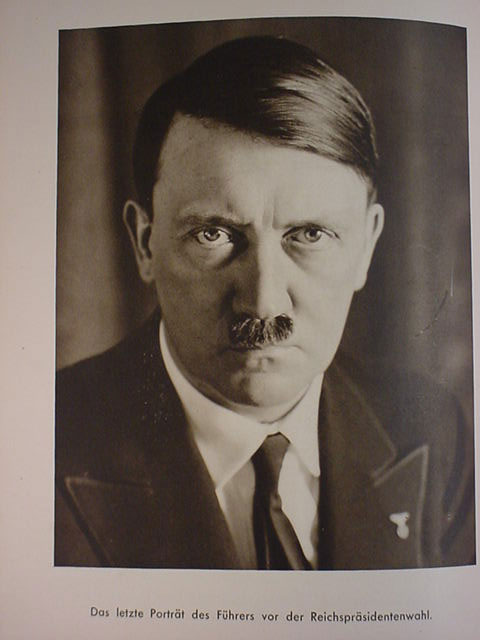
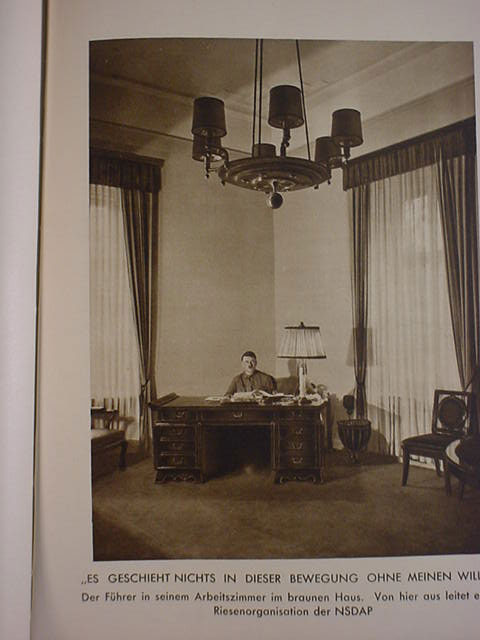
| DESCRIPTION: This is a book of 96 pages of pictures produced by Hitler’s personal photographer Heinrich Hoffmann who was the official photographer of the Reichsleitung (officials) of the Third Reich. It is complete with the 96 pages and in addition a forward by. Reich’s Youth leader Balder v. Schirach. The book takes one in fine sepia tone photos from the Führer’s childhood to almost the eve of his taking power in 1933. The pictures are nothing short of wonderful in their clarity and brilliance. Hoffmann was a genius in the photographic arts. The book is in excellent plus condition. The former owner kept it sealed in plastic wrap. This is an archival treasure.
PRICE: SOLD |
|
|||||||||||||||||
|
|||||||||||||||||
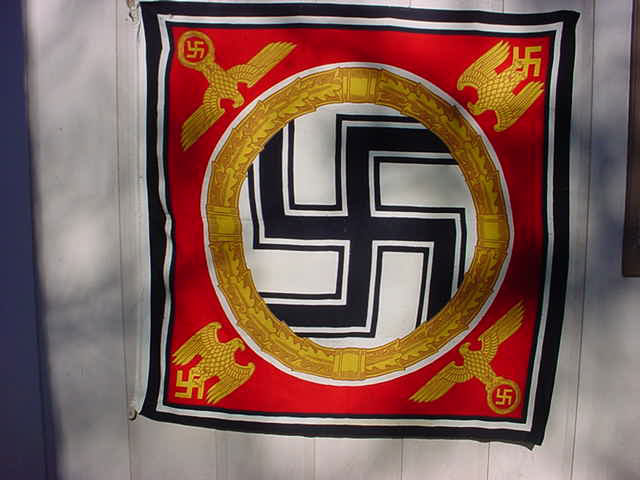
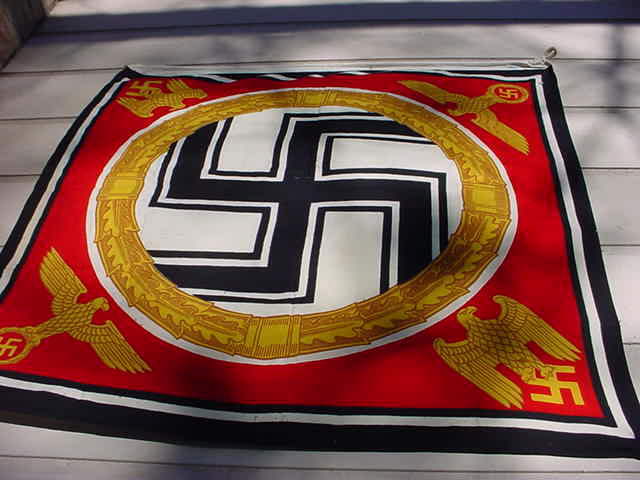
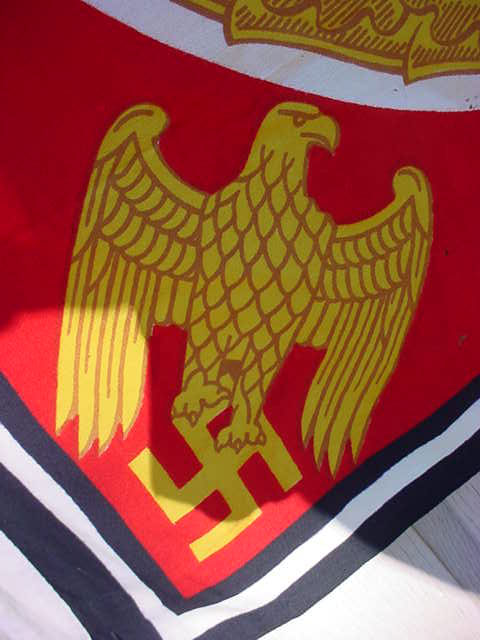
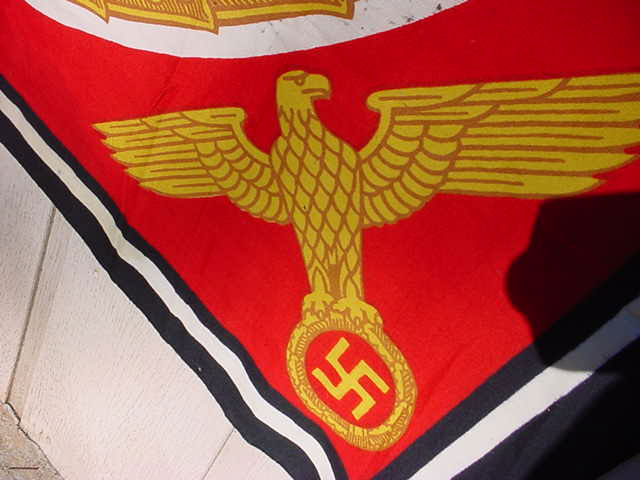
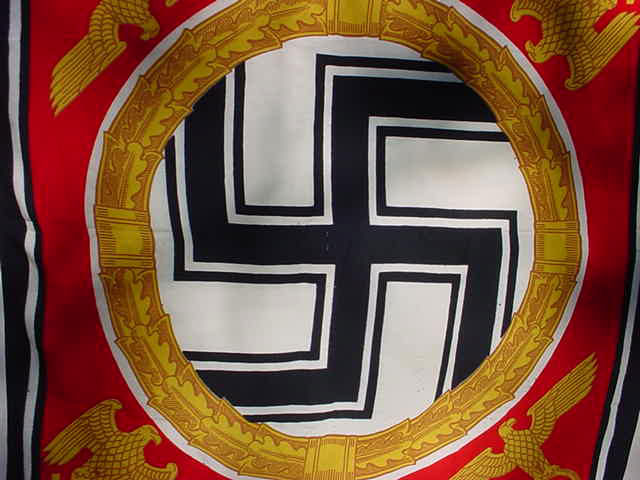
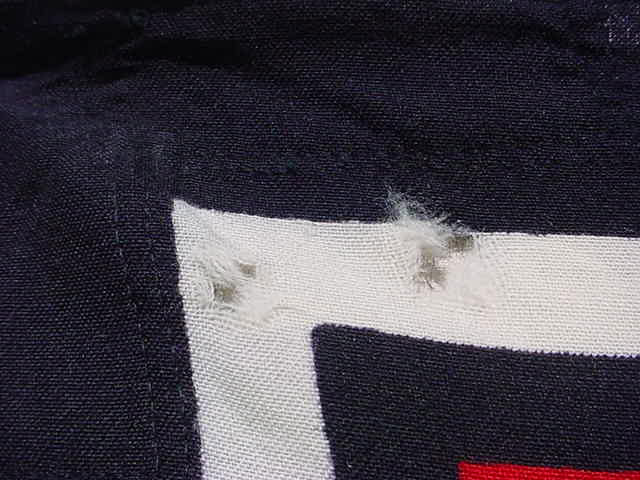
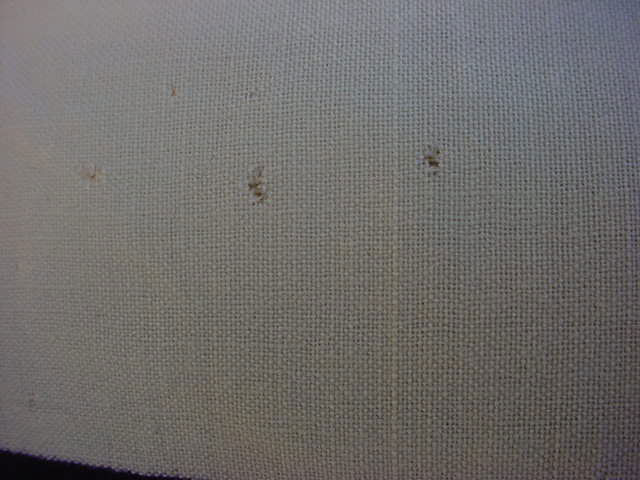
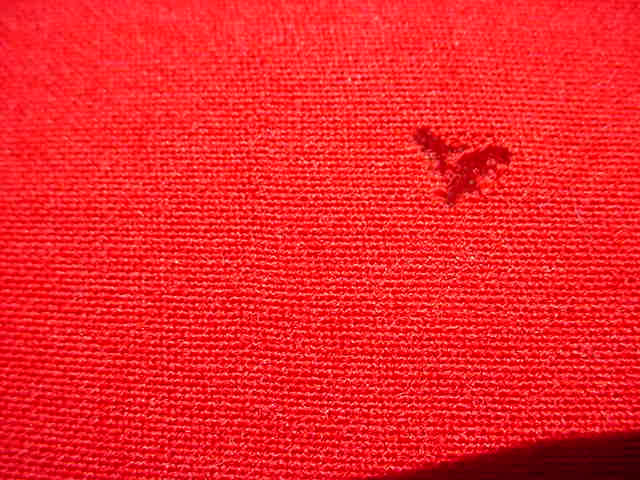
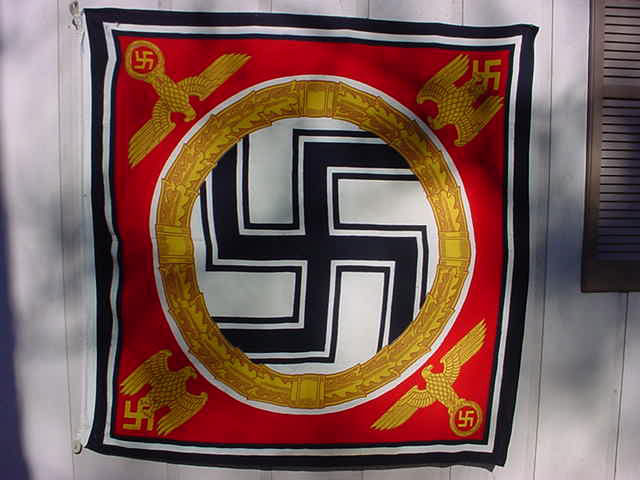
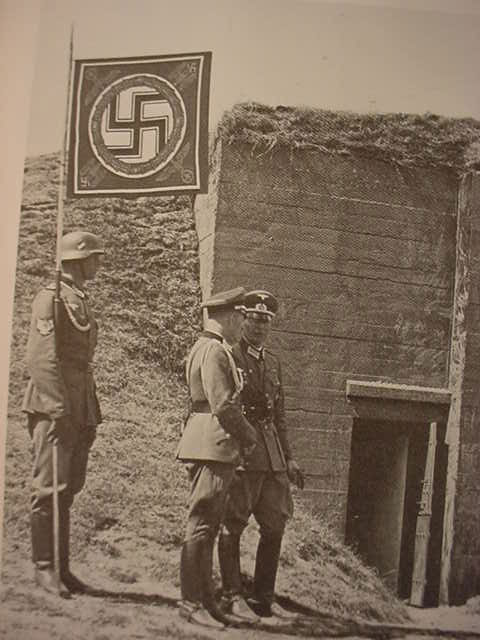
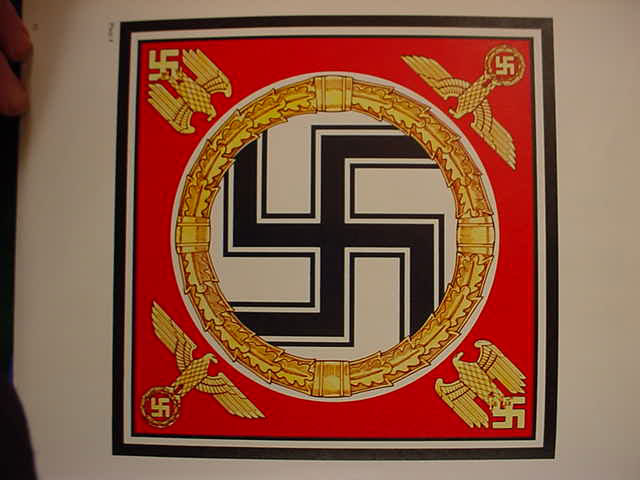
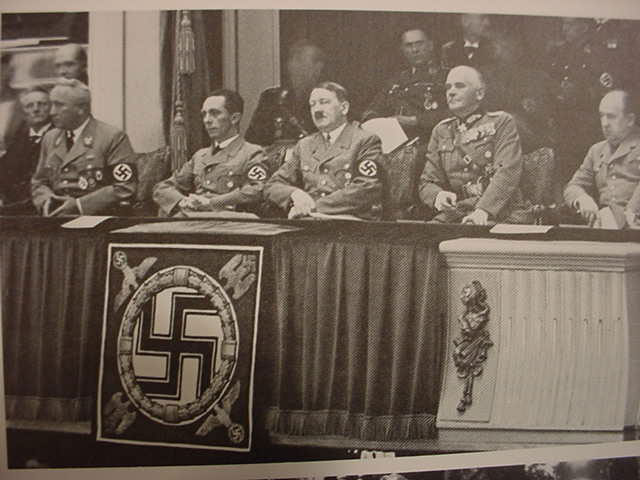
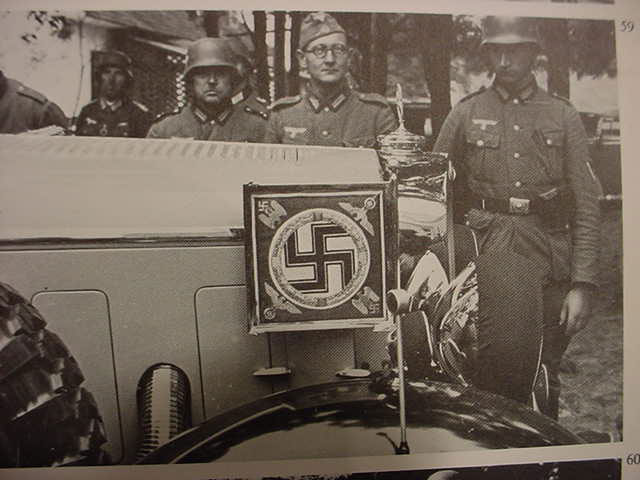
| DESCRIPTION: This is the flag that would be raised on ships, army posts, field headquarters, of the Wehrmacht, and special occasions when Adolf Hitler was present. The full name of this flag was Standarte Des Fuhrers und Obersten Befehlshaber Der Wehrmacht. It was a red square flag with a central white disk; just inside the disk is a gold oak garland inside of which a black and white bordered upright black swastika touches the sides of the garland. In the upper hoist and lower there is a Nazi Party style eagle and in the other two corners a national eagle all in gold color with the tops of the heads pointed towards the center of the flag. This flag replaced theWeimar Presidential Standard after Adolf Hitler assumed the position of Supreme Commander of the armed forces in 1938. There was an embroidered version and years ago it was sold for $20,000 to a Mr. Don Brownlew. Today, it would bring well over $100,000. The other version is the printed example and they (when rarely found) are heatedly sought after. Mr. Nick Artimovich wrote a good description of these flags on a web site call “flags of the world”. In his narrative, he mentions that over a year ago he had seen two examples, one was for sale at the Baltimore Militaria Show priced at $4,500.00 and the other was donated to the US Navy Academy museum. This from a man who keeps careful track of rare flags. There is no question that the flag is one of the most sought after and rare of all Third Reich artifacts and relics. The one we offer is of course the printed version and 100% original. It measures 56 x 56 inches. It has quite a few small to medium size moth holes throughout but nothing that seriously effects its beauty or rarity. It has the bunting edge with rope loops for mounting it to a flagpole and a small label in the upper part of the bunting placed by the manufacturer of the flag. It says, Wurttembergische Cotton manufacturer, Heidenheim A. BRZ. This was a maker of various cloth items manufactured in cotton such as flags and banners.So, Germanophiles, here it is, the” ultimate”! We may never see one offered again. Prodigiously, historically important and for the most part in good museum presentable readiness. For proud display PRICE: SOLD |
Page Twenty-two |
Please refer to item designator in parentheses in all correspondence.