
|
Hermann Göring Page 9
|
|||||||||||||||||||||||||||||||||||||||||||||||||||||||||||||||||||||||||
|
Butter Knife, 8 1/2 inches (Item GOR 9-4a) |
|||||||||||||||||||||||||||||||||||||||||||||||||||||||||||||||||||||||||
|
PRICE: $350.00 |
|
|
|
|
Large Soup Spoon, 8 inches (Item GOR 9-4b) |
|
|
PRICE: $450.00. |
|
|
|
|
Dinner Spoon, 7 1/8 inches (Item GOR 9-4c) |
|
|
PRICE: $450.00. |
|
|
|
|
Cake Fork, 7 inches (Item GOR 9-4d) |
|
|
PRICE: $350.00. |
|
|
|
|
Three Pickle Forks, 6 inches (Item GOR 9-4e) |
|
|
PRICE: $300.00; each |
|
|
|
|
Small Luncheon Fork, 5 3/4 inches (Item GOR 9-4f) |
|
|
PRICE: $275.00. |
|
|
|
|
Small Demitasse Spoon, 4 1/2 inches (Item GOR 9-4g) |
|
|
PRICE: $275.00. |
|
|
|
|
Teaspoon, 5 3/4 inches (Item GOR 9-4h) |
|
|
PRICE: $275.00. |
|
|
|
|
Sugar Spoon, 5 1/2 inches (Item GOR 9-4i) |
|
|
PRICE: $350.00. |
|
|||||||||||||||||||
|
Life Magazine; the one Everyone is Looking for, September 1939 (Item GOR 9-5; NSD 14-20) |
|||||||||||||||||||
| DESCRIPTION: This is the very elusive September 139 issue of Life, the one with Benito Mussolini in the cover. But that’s not all. This is the issue that chronicles Hermann Göring’s story. It’s the one with the great full-color picture on a full page of Göring at Carinhalle. The article is rather unbiased to a degree, believe it or not? Anyway, many collectors have written to us over the years asking if we could locate this issue. So here it is and you need to grab it before it disappears.
PRICE: $75.00 |
|
|||||||||||||||||
|
Book Ein Volk in Waffen, by the Famed Sven Hedin (Item GOR 9-6; PERS 4-1) |
|||||||||||||||||
| DESCRIPTION: This book, which is a concise history of the German nation at war, is from the personal library that Hermann Göring maintained at the Obersalzberg above Bertesgaden. This book with several others was obtained at a Frankfurt, Germany book fair. It bears Göring’s personal ex libris card that is seen inside the front pages. The bookplate shows the triumphant knight St. George slaying the dragon. In the upper-right corner is the Göring family’s crest; the armored arm holding the ring. About the equestrian figure are the words that appear in clouds: Ehre=”Honor,” Freiheit=”Freedom,” Wahrheit=”Truth,” Brot=”Bread.” Then it says “Aus der Bücherei HERMANN GÖRING.” (“From the book collection of Herman Göring.”) The book has 534 pages of text and pictures of Germany at war, 1914-1915. It was published in the second year of the terrible fratricidal war in Leipzig and dedicated to Dem Deutschen Heer, (The German Army). Sven Hedin, the author, was a famed Swedish explorer, geographer, and geopolitician with many amazing discoveries involved with Pamir, the Taklimakan Desert, the ancient Silk Road, and the Himalayas. He was a 100 percent Germanophile since his days of study in Berlin. He was a strong advocate of an alliance of Sweden and Germany in the First World War and this book was written to promote this concept and desire. Hedin always thought that Soviet Russia posed a great threat to the west and this is part of the reason he supported Germany in both wars. Hedin received support from the German airline Lufthansa in his central Asian mapping expeditions and his book Germany and World Peace was funded by the German government. Hedin fully supported Hitler and the NSDAP. He met Hermann Göring during several missions to Germany and was often a guest at Carinhalle. He was an avid supporter of Hitler and in 1945, when interrogated, he would not deny his support of or denigrate the Führer or the NSDAP agenda. He was not of course the only prominent figure who supported Germany. The Nobel Prize writer Knut Hamsun was arrested several times after the war and put before a real Star Chamber court for his opinions. Sven Hedin died on November 26, 1952. He was the greatest of the great explorers and writers. It is only natural that Hermann Göring would have this pro-German literary treasure on his shelf. The book is in fine condition except for a map in the rear that is loose. The book measures 6 1/2 x 9 1/4 x 1 1/2 inches.
PRICE: $395.00 |
| ||||||||||||
|
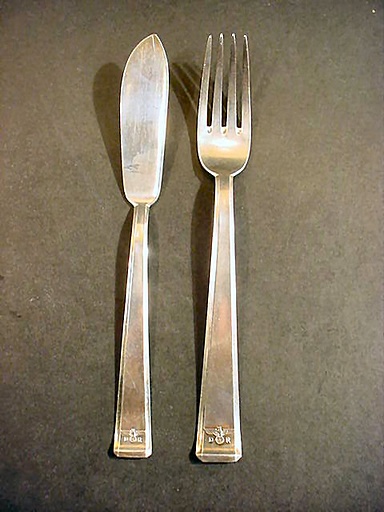
Butter Knife and Dinner Fork from Special NS Railroad Dining Car (Item GOR 9-7; GEN 12-11; AH 21-17) |
||||||||||||
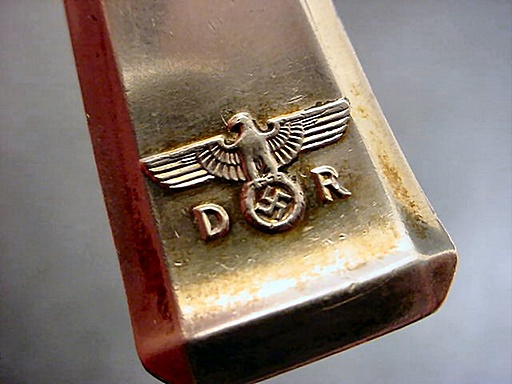
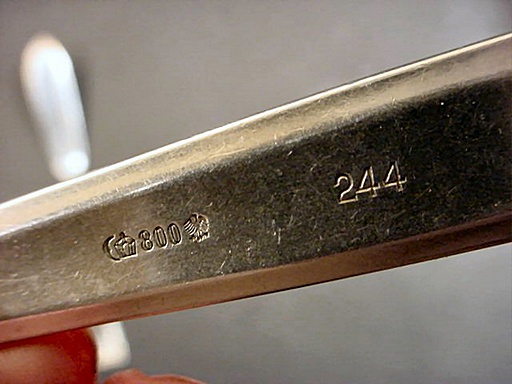
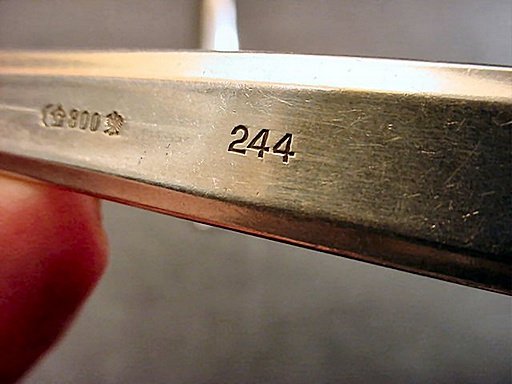
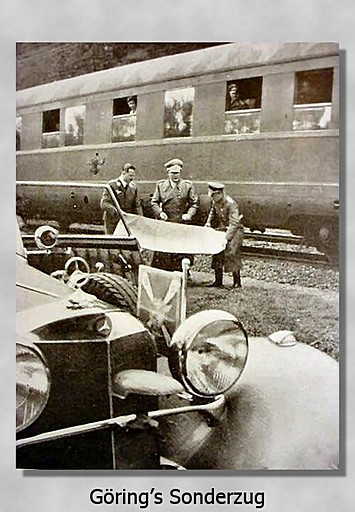
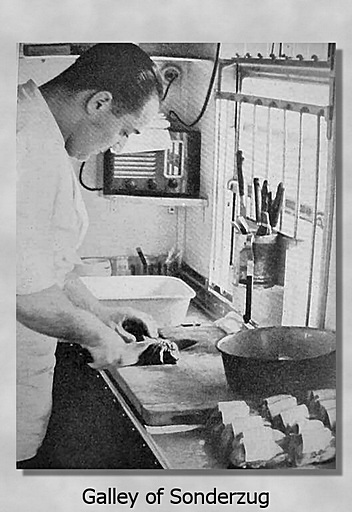
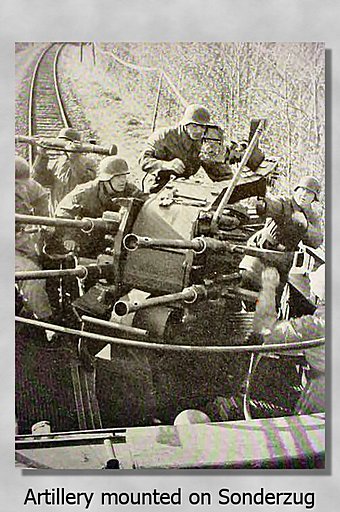
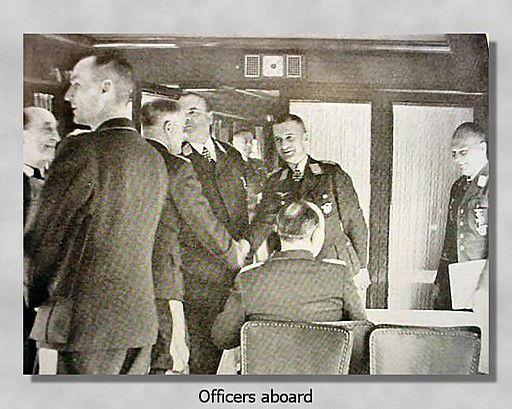
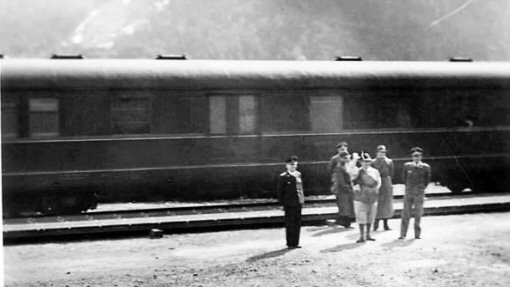
| DESCRIPTION: This is really a beautiful group of two railroad (Deutsches Reichsbahn) pieces of flatware. The veteran these came from said he personally looted them from the private dining car of Hermann Göring. The German National Rail System had a complete train called the Führerzug. That was the Führer Adolf Hitler’s personal train—Göring had two cars that were personally his. Instead of Hitler’s personalized formal-pattern flatware or Göring’s familiar armored arm with ring flatware the railcars for these two famous personalities had the national eagle and swastika with “DR” flanking it. This was used by both the Führer and Göring and their entourage and guests. So these two items could have been from time to time used by the Führer or the Reichsmarschal; however, the vet says that they were removed from Göring’s car. It’s not clear if they were removed from Göring’s cars or from one of Göring’s personal trains (Sonderzug). He had two of these personal trains; one was named “Der Robinson.” These pieces are considered much more rare than the formal or informal Göring or Hitler pieces that are more often seen. The fork is 8 1/4 inches long and is marked on the back with the crown, half moon, the eagle, and the ‘800’ for silver content. The butter knife measures 8 1/4 inches long also and is marked in the same way. Both pieces also are numbered ‘244’ (set placement codes for what service they are included in.) The eagle, swastika, and ‘DR’ appear at the end of each grip (raised). They are in immaculate condition.
PRICE: SOLD |
| ||||||||||||
|
Two Tibetan Knives from Hermann Göring’s Blade Collection (Item GOR 9-8) |
||||||||||||
| DESCRIPTION: The Reichsmarschal Hermann Göring was quite fond of collecting swords, daggers, and knives from all over the world. Friends and admirers throughout the Reich and foreign lands were known to present him with lavish and also some simple, but meaningful, gifts of this nature. The Deutsche Ahnenerbe or Ancestral Heritage Foundation sent Ernst Schäfer, who commanded the Institute for Inner-Asian research, on several Ahnenerbe expeditions to Tibet. Much of this information can be garnered from the web by entering “Ahnenerbe” in a search engine. It has been fairly well established that Schäfer brought back quite a few souvenirs from these academically inspired journeys. He presented Göring with several Tibetan edged weapons and these two small knives of the ceremonial variety were among them. They were looted by GI’s from Castle Veldenstein where much of Göring’s art collection was moved to in late 1944 and 1945. Both pieces bear Göring’s inventory tags for Carinhalle. They are by their very nature rare, but enjoy the additional prestige of being from the collection of “Unser Hermann” as he was called by the German people.
PRICE: $495.00; for the larger: $550.00; for the smaller |
|
||||||||||||||||||||||||||||||||
|
||||||||||||||||||||||||||||||||
| DESCRIPTION: This dagger was a very special birthday gift presented by SS-Obergruppenführer Reinhard Heydrich to Hermann Göring on 12 January 1939. At that time, Göring was General Field Marshal and Reinhard Heydrich was an SS-Obergruppenführer, which translates to senior group leader or major general. Hermann Göring was from his earliest days an avid collector of bladed weapons. In the book by Major John Angola Swords of Hitler's Third Reich in chapter 14 there is quite a bit of information about his enthusiastic predilection for the collection of swords, daggers, etc. The field marshal and later "Der Reichsmarschall des Grossdeutschen Reiches" was the second most powerful official of the NS Reich. Both men even in 1939 had massive power. Heydrich right behind Göring was considered the most likely successor to the office of Reichschancellor after the possible demise of Adolf Hitler. He was always considered the "perfect National Socialist.” Göring held the title of "Master of the Hunt" and the Reich’s Forest Master, among his other numerous official offices. He actually was one of the greatest and most effective conservationists that Europe had ever seen. He was the creator of the 1935 Reich Conservation Law known as the "Reichsnaturschutzgesesetz" (RNG) which was the most advanced nature protection law of its time. Even today, Göring emerges historically as the leading "green Nazi" for his dedicated work and input for natural hunting preserves and many other great environmental goals and achievements. Heydrich, of course, recognized this, being an avid hunter himself and this admiration for Germany’s chief Jäger is apparent as he refers to Hermann as the "Schirmherrn der Deutschen Jagd. As the Reich Protector of German hunting he also refers to him as his hunting friend. The inscription is as follows: “Meinem Jagdfreund und Schirmherrn der deutschen Jagd, Generalfeldmarschall Hermann Göring zum Geburtstag am 12 jan. 1939, SS Obergruppenführer Heydrich.” Heydrich’s facsimile signature is unmistakable. The dagger is a piece made long before the Third Reich era; possibly even in the early 19th century or even late 18th century. Heydrich, of course, would have known that Göring with a "short order" could have had any of the Solingen factories create the most lavish edged weaponry that it would be possible to imagine, but it was the historically important old pieces that he enthusiastically favored That is why Heydrich would quite naturally pick what he would consider a rare historic treasure. The dagger might have belonged originally to some important Ritter (knight), a king, or a prince. Its unique lines and general motif clearly indicate that this was no "peasant knife;" that is patently evident. The oak leaves and swastikas were added with other embellishments in 1939. The swastika is an ages-old symbol used by almost every culture group in the world at one time or another, but especially used by the Aryan and Teutonic peoples. This obviously would be the perfect birthday gift to the SS-Obergruppenführer’s (Jagdfreund) and superior in the Reich hierarchy. The origins of the dagger are a mystery, but for sure the style of wording is "Heydrich" all the way and of course there is his facsimile signature in the presentation wording. The grip of the dagger is classic Teutonic with the Deutsches Adler or Germanic eagle with its noble but stern look. The oval symbol on the throat contains the crest of the Göring family surrounded by oak leaves interspersed with swastikas to points on top, bottom, and sides. These are similar to the swastikas along the top throat and the bottom sheath fitting. The cross guard has winged griffins that are almost Babylonian in appearance. The center of the grip bears a silver enameled swastika set in a cluster of oak leaves. The upper throat has typical floral patterns found in many mid-European metal art pieces. The scabbard is typical leather, of course. A specially mounted small ring projects from the side of the lower part to the scabbard throat fitting. This was for a portepee or leather thong with a ceremonial knot that was suspended from it. We were told that the dagger was worn in a frog or leather carrying appurtenance that was cut away at its front to display the marvelous Göring crest. The crest is exactly what its name implies, “crest.” This was literally the crest or top design from a full coat of arms such as the Göring family had. The armored arm clutching the ring symbolizes the victorious knight with the ring prize given by the sovereign as a reward for heroic daring-do. The blade is of the type known as Ritterklinge or knight’s blade. It is crafted in true Damascus steel all through in rather worn shape from possibly a century or so of usage. Just for the moment imagine a knight of old possibly even a Teutonic knight plunging this weapon 1 or 2 inches into the great oaken table in the center of the 'Rittershalle (knight’s hall) of the castle and thus demanding the beginning of the great feast and ceremonies with the German hunters call, “Horrido!” Why do I wax poetic with this relic of the days of regal glory? Because like no other that I have handled this one raises the hackles of my never-abating historic interest. Its design, its motif, its general feeling in the hand, and, of course, the two world-famous personalities connected to it are major factors, as well. This is a very special weapon that was duly presented with deep respect and admiration from one important leader to another and of course the ongoing mystery of its beginning is prodigiously fascinating to the utmost degree. We have been proud to procure it and equally ecstatic and elated to offer it now to the serious collecting public. Long footnote: When Reinhard Heydrich became the Reichs Protector for Bohemia and Moravia he actually did much to awaken the historic cultural awareness of the people of the area. Before WWII the German-populated area of the mountainous regions of Bohemia and Moravia came to be known by the collective name Sudetenland, a name that was derived from the Sudeten Mountains that stretch for 200 miles in the north of what was then Czechoslovakia. The Czechs, Moravians, and Sudeten Germans had been an integral part of the Austro-Hungarian Empire for many centuries. There were times for instance in the 16th century when Prague was the capital city of the Germanic Reich, but also of the Czechs with the Hradschin (main citadel) being the seat of the German emperor. In 1348, the first German university was founded in Prague even though the majority of the population may at the time have been Czech. The whole area, especially Prague, became the land of high art with the Sudetenland being always wholly infatuated with Germanic art. Many of these treasures of antiquity that were considered Teutonic in nature were returned or transported for sanctuary sake to Germany for inclusion in museum collections after the Sudeten crisis in the summer and fall of 1938. The Munich agreement signed by the prime ministers of France and Great Britain with the leaders of German and Italy in September 1938 made the areas of Czechoslovakia—which were directly connected to the German areas of greater Germany and Austria—part of the Reich once again. Nearly 3 million Sudeten Germans rejoiced when their sacred land became German again. This, to SS-Obergruppenführer Heydrich was an important facet of world history rivaling the Battle of the Teutobergerwald and the Discovery of America. Thus Bohemia and Moravia were like Vienna, the “pearl” of the Reich. The important Germanic art treasures abounded and he confiscated “when necessary” certain treasures from what he deemed enemies of the Reich while purchasing others from more friendly citizens. Paintings, bronzes, and marble statuary were sent to Berlin on a regular basis. Ancient pieces were sent to the Ahnenerbe Stiftung (Heritage Foundation) for cataloging and exhibit. The word was out and many people came forward with wonderful items of antiquity that had been hidden for centuries. Now that the German government and the SS were buying at fair market value the citizens were overjoyed to become sellers of such treasured articles and the Reichs Kulturampt (culture office) was only too happy to purchase them. Such was the overt interest in artistic and cultural acquisition fervor in NS Germany. On an individual basis it is well know that as well as being a very cultured man—pianist, pilot, writer, fencing master—Heydrich was always politically ambitious and shrewd. Among the antiques that he managed to keep for his own collection there were quite a few weapons and armor from the Moravian past. The area was almost as well known for such weaponry as Augsburg in Germany, especially for its swords and daggers. The “Königritterdolch,” or king’s knight’s daggers, were of special note. These fine edged weapons were in a word ‘special’ and were often constructed with Damascus blades, iron or brass fittings and almost invariably with carved ivory grips. There is a picture of Heydrich presenting one of these to Reichsmarschall Hermann Göring. This picture is in the archival collection of the Library of Congress. The one being presented is very similar to the one in our possession and it is believed it was one of three presented to Göring by Heydrich in 1939 and 1940 as birthday presents. The whereabouts of the other two at this time are unknown. We do not believe it would be wild speculation that this one now consigned to Germania from a central-European consigner would be one of three as claimed by the owner. Certainly the historic evidence although circumstantial is patently evident. The value of this prodigiously important weapon can only be guessed at, but we are sure it far exceeds the price asked. PRICE: $48,000.00 |
Page Nine |
Contact Us
Please E-mail for any additional information you may need.
If you prefer, contact 'Germania' at PO Box 68, Lakemont, GA 30552
or call at 706.782.1668.
Please! do not call during the wee hours of the morning. The best time for calling us is between 9 and 11 am and between 9 and 11 pm eastern time.