|
|
|
|

Bread Plates of the Third Reich
Without any doubt the German Third Reich was the Imperium of what the faithful consider the Caucasian Utopia! Here were the true progenitors of the glories of the grandiose past ages that included ancient Egypt, Greece of Antiquity, Imperial Rome, and other highly placed civilizations that had reached the true heights of culture in architecture, the sciences, and other wondrous arts. Among Teutonic folkdom, there were various items of meaningful symbology that collectively survived over the centuries. They were typical, but often profoundly meaningful, and some were actually religious and sacred in their meaning and presentation to the people. In the Third Reich, certain inanimate objects took on very special meaning as the admiration of them often passed down from ages gone by. Many of these had a deep and awesome spiritual meaning; for instance, the oak tree, and its acorns. Various runic symbols worn as jewelry such as Bernstein (amber), and most important of all, the Hakenkreuz (swastika). Also revered were ancient geographic places of nature such as monolithic rock formations (Externsteine) and notably phrases such as “Blut und Boden” (“blood and soil”) were highly revered. This terminology brings to mind the oft times usage of “Arbeit und Brot” (“work and bread”). These were the catchwords and phrases in constant usage in this the Workers’ Reich and partly due to the repetition of these sayings, the carved bread plate joined the sacrosanct items of special, almost-sacred symbols of the Third Reich. For centuries, bread plates in Germany were carved in wood, usually with such words as “Gibt uns heute unser täglich Brot” (“Give us today our daily bread”). Sometimes, other prayerful messages were employed, but practically always the message was one of thankfulness and praise. In the Third Reich and before it, patriotic sayings were often promoted. The NSDAP and especially the SA and SS employed excellent woodcarvers to convey messages to the world about their N.S. solidarity and loyalty! Often a town logo or symbol was the subject of the finished plate. In any case, generally they are as typical German and Teutonic as the mighty Deutscher Adler (German eagle) or sauerkraut! No Aryan abode of a Germanophile should be without one or two bread plates; below we present our collection of “Holzteller.”
Page 1
 |
 |
 |
 |
 |
 |
 |
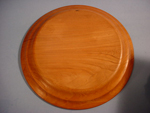 |
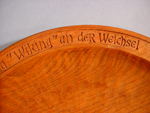
SS Wiking Division Presentation Hand Carved Bread Plate (Item BRE 1-1 & SS 34-10) |
|
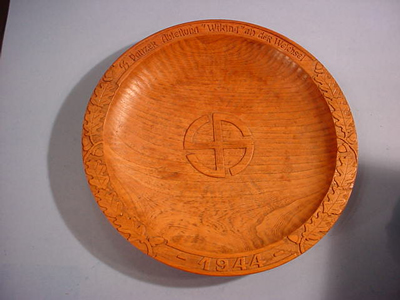
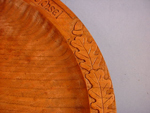
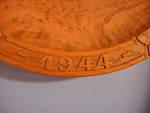
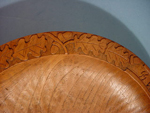
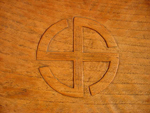
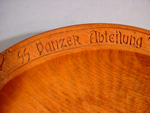
DESCRIPTION: The SS Viking (Wiking) Division was one of the elite fighting units of the Waffen SS. It was recruited from foreign volunteers from Scandanavia, the Netherlands, and Belgium under the command of German officers. During the course of WWII, the Division progessed from a motorized infantry division to a Panzer Division and served mainly on the Eastern Front during the war. Originally organized as the Nordische Division it was to be made up of volunteers from Nordic lands mixed with German Waffen SS veterans. In December 1941, the new motorized Division was to be designated SS Division Germania, but during its formative period the name was changed to SS Division Wikingon, Jan 1941. Command of the newly formed Division was given to Brigadefuhrer Felix Steiner the former commander of the Verfugungstruppe SS Regt. Deutschland. The division was ordered east in June 1941 to take part with army group South’s advance into the Ukraine during operation Barbarossa. The rest is a heroic story of intense combat against the monster of Bolshevism and can be found in several places on the web (go to Google). This plate was presented in commemoration of the fierce fighting on the Weichsel river front in 1944. This wooden plate was possibly a unit gift given to one of the commanders of the unit. Possibly Felix Steiner. This was very often done as bread plates had deep sentimental attachment and often were gifts to favored commanders of the Wehrmacht and SS. The Weichsel front was a battle ground for the Wiking and other Waffen SS units through 1944 and 1945. And this the most formidable of the SS divisions covered themselves with blood and glory here on several occasions. The plate we offer can be considered one of the few mementoes to an elite group of the toughest and bravest soldiers since the 300 Spartans at Thermopylae. PRICE: SOLD |
|
|
||||||||||||||||||||||||||||
|
||||||||||||||||||||||||||||
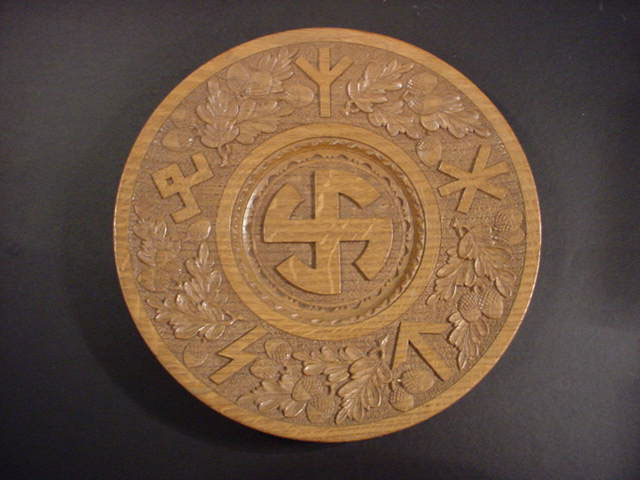
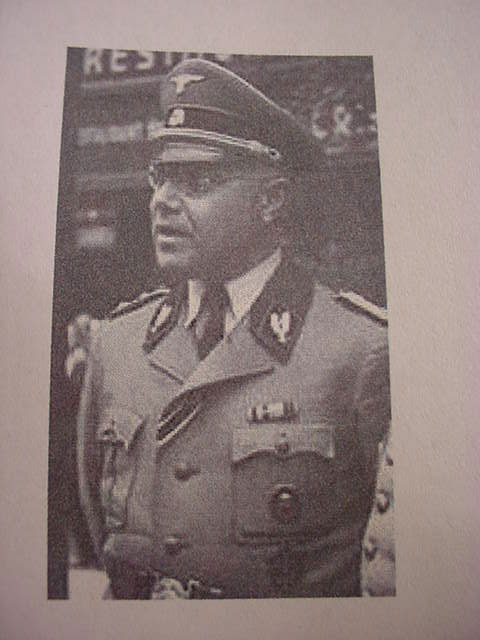
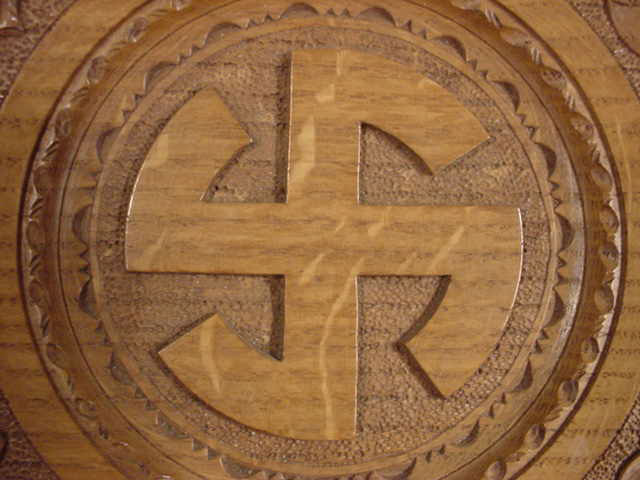
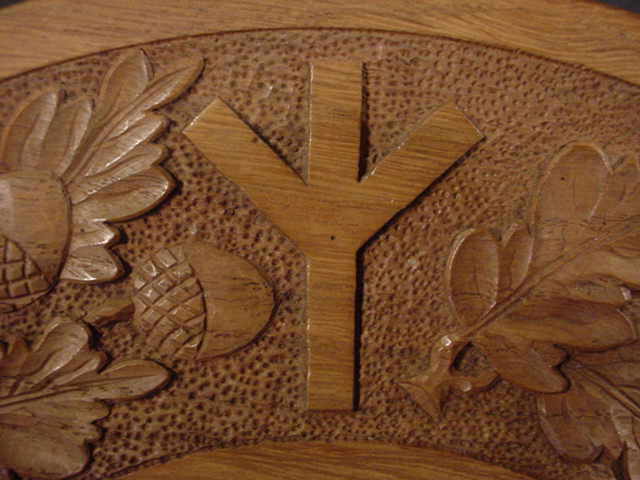
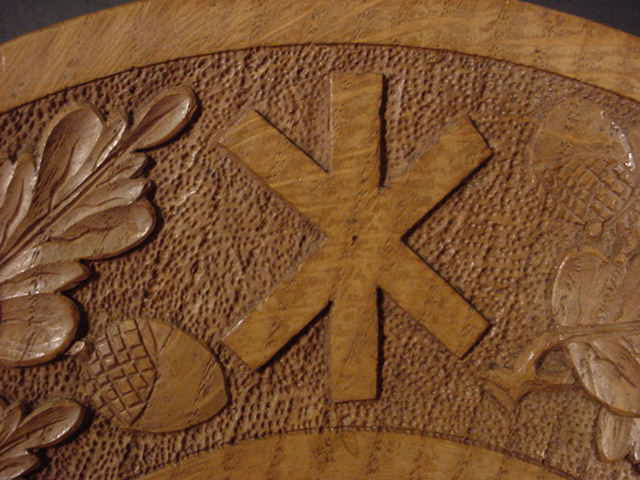
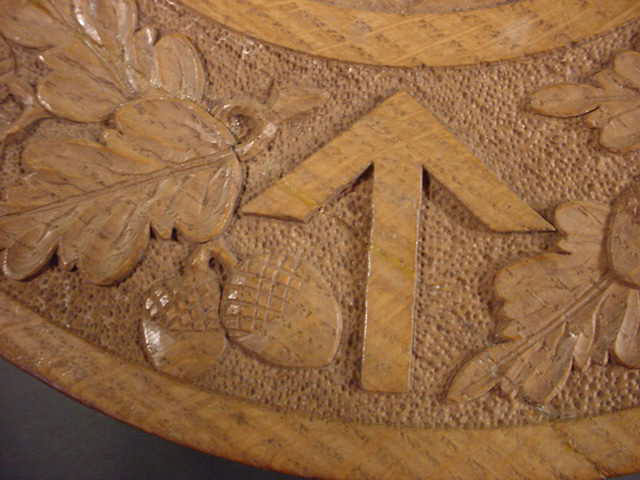
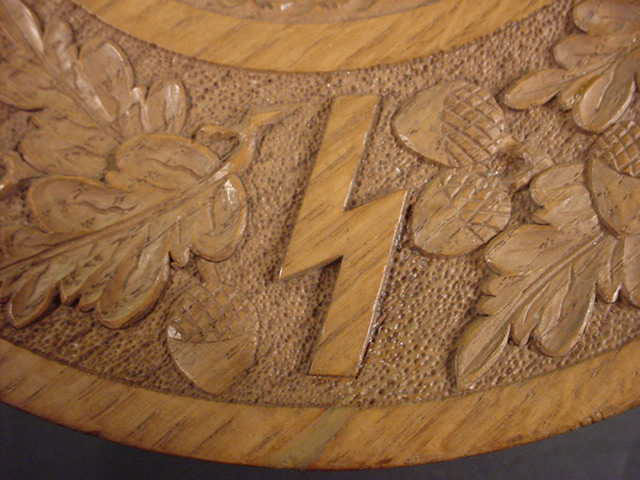
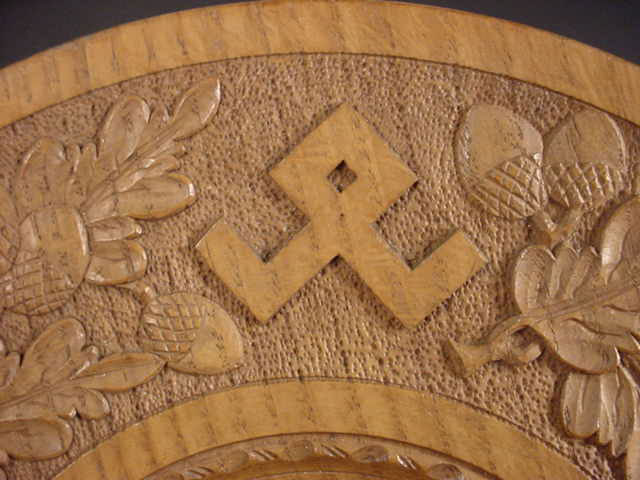
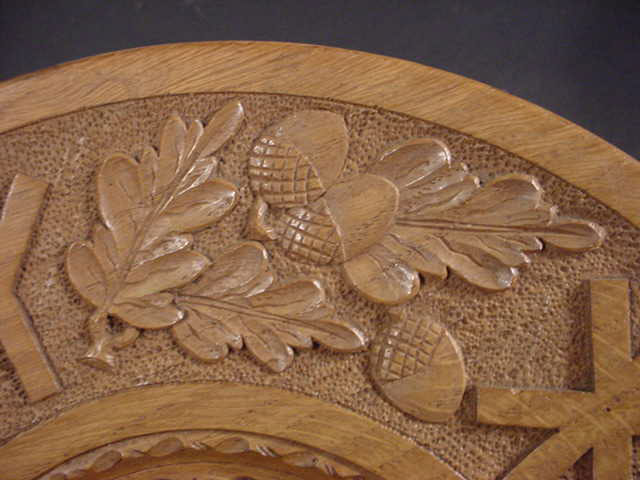
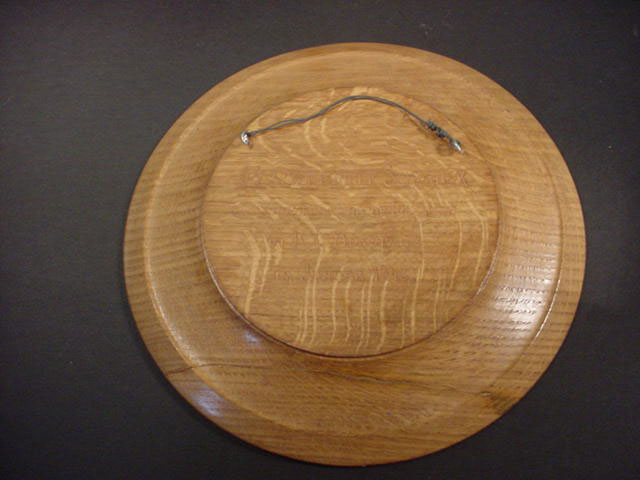
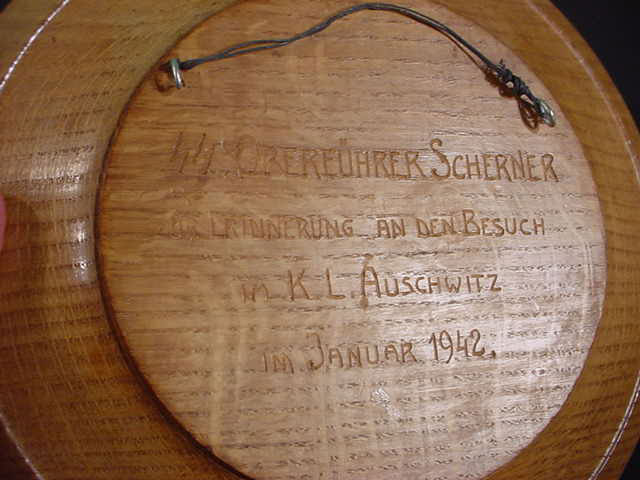
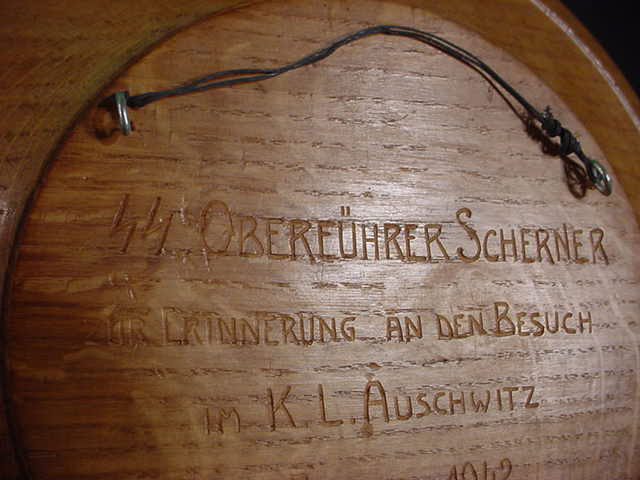
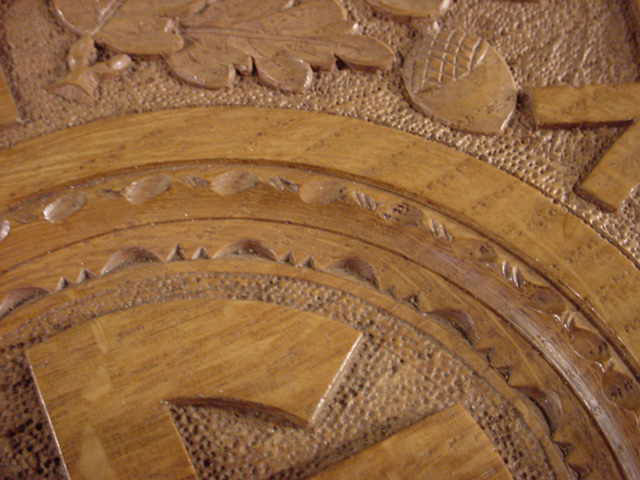
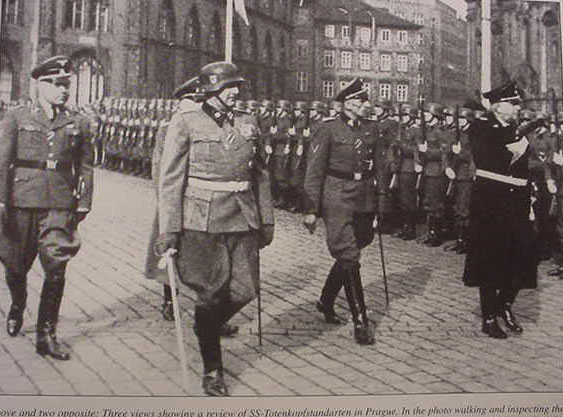
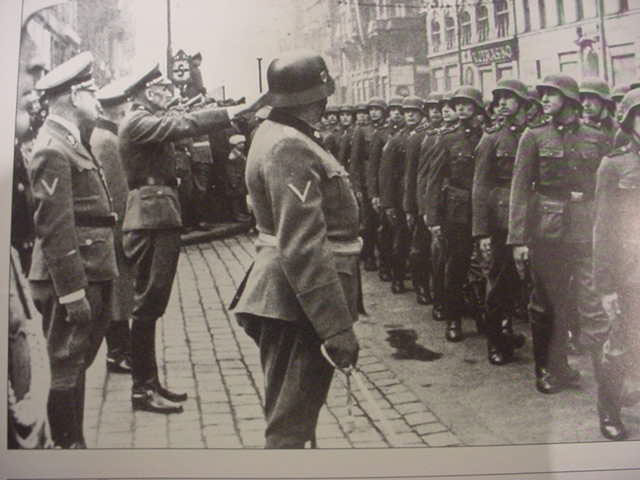
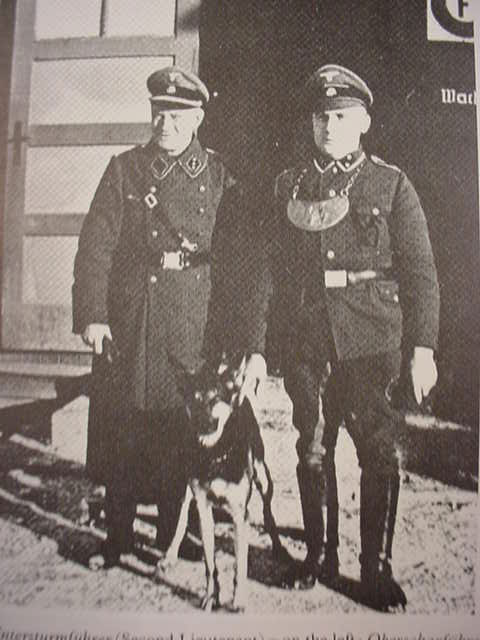
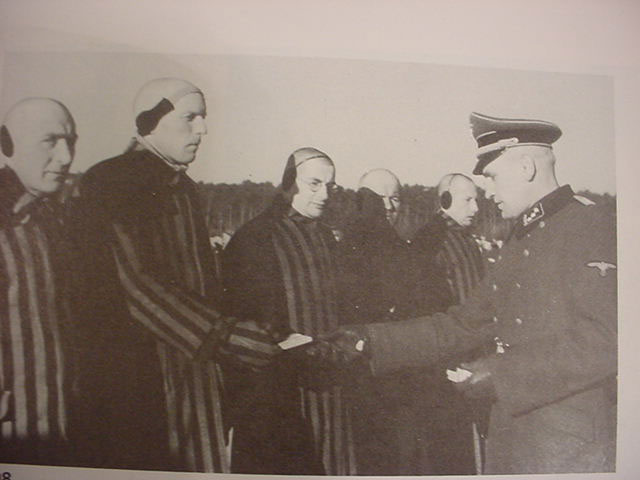
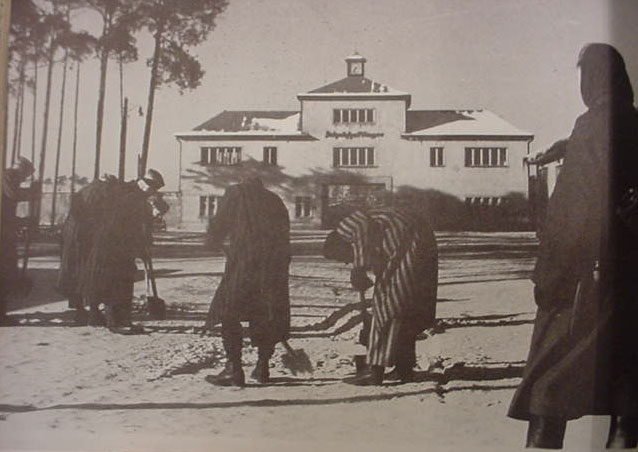
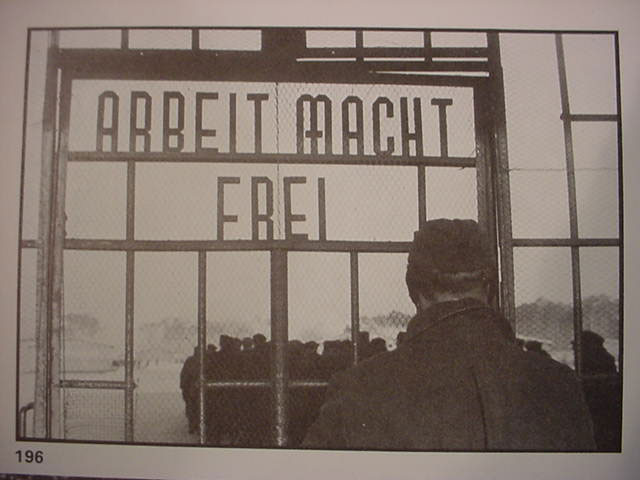
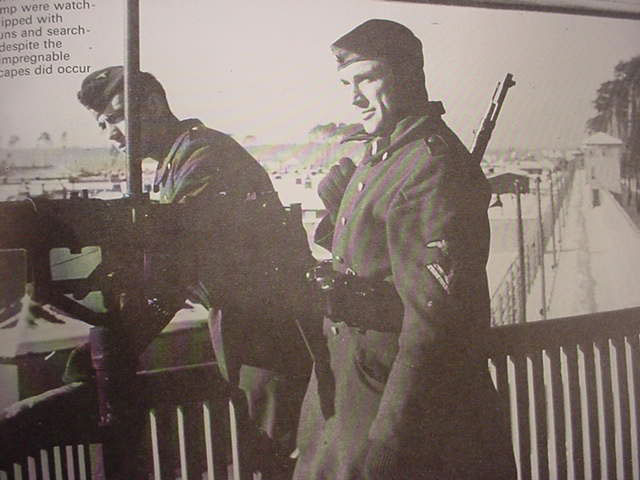
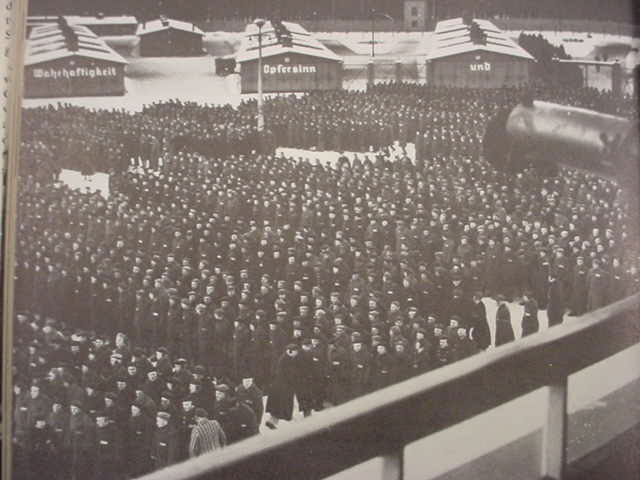
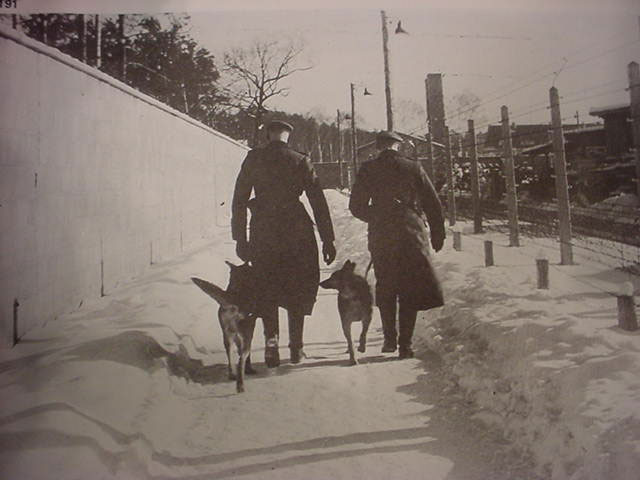
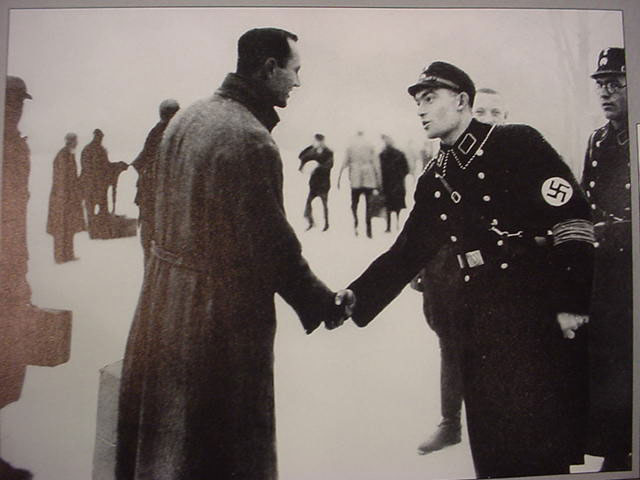
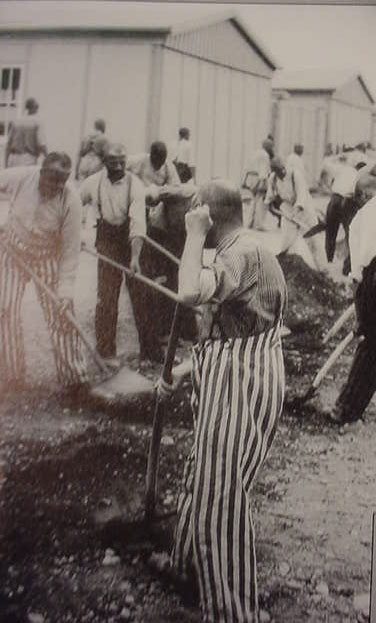
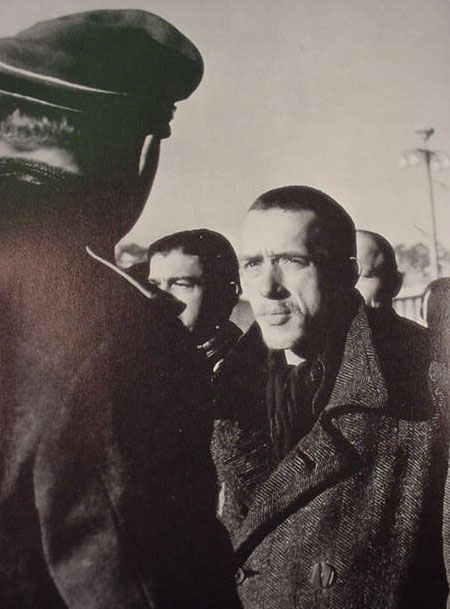
| DESCRIPTION: Julian Scherner born September 23, 1895 – died April 28, 1945. His fame was as S.S. Oberführer. This was an early paramilitary rank of the S.S. dating back to 1921. Julian Scherner served the Reich from early Kampfzeit times. He became a S.S. Untersturmführer in 1933 and worked up through the years to S.S. Oberführer in 1937. He was a holder of the Iron Cross 2nd Class, the Honor Ring of the S.S., the War Merit Cross 2nd class with swords, the Deutsches Kreuz, the Wound Badge, the Honor sword of the S.S, the Coburg Badge, and last but most important the Blood Order. He was the commander of the S.S. Standarte Julius Schreck in 1934-1935. Then commander of S.S. Abschnitt XIV in 1937. In1939 he was in charge as commander of the Mountain Troop Regiment II (Reinhard Heydrich). Then January 1940 until January 1941 he was the commander of the S.S. Totenkopf Standarte 8. From January 1941 to August 1941 he was commander of the S.S. Truppenübungsplatz Böhmen. His final command was as S.S. and Police Leader of Krakow, Poland from August 1941 to March 1944. In this role he was responsible for overseeing of all evacuations that took place during his time there. Scherner became immortalized in the film “Schindler’s List” a dubious work of fiction. He is portrayed as the cold and calculating S.S. Commander of the region. Remember the victors write their history and fictions and they also excel in telling the history of the vanquished as well and does it really surprise us if the latter’s history might be a bit biased? We might also see some fiction mixed with fact thrown in to Embellish! (Gild the Lily so to speak!). The wooden bread plate is probably the finest ever offered on any site or military show in the present or past. The carving is exquisite! With the Sonnenrad Finally we come to the “Odal Rune” at 10:00. This symbol symbolized kinship and family and bringing together of people of similar blood or race. It was adopted by the S.S. race and resettlement office (R.U.S.A.) and was used by the S.S. Freiwilligen Gebirgs (mountain) Division “Prinz Eugene”. The center design of course is the “Sonnenrad” or sunwheel swastika and was an ancient Norse representation of the life giving sun. This symbol was adopted by the 5th S.S. Panzer Division “Wiking”. Now back to the bread plate. It was customary among N.S. inspired patriots to present something deeply symbolic to a person the giver wished to honor. This usually came down to a sword, a dagger, a book, or a ring. But the most revered item given out especially among the S.S. was always the” bread plate”. Bread had special significance among the faithful because it was the staff of life. It was mentioned in N.S. sayings such as “brot und arbeit” (bread and work). “Hitler gibt arbeit und brot” (Hitler gave us work and bread). Bread was (sacrosanct) and it only follows that bread plates were the choice for presentation to those who would be specially honored. This plate was presented by the S.S. Wachtmannshaft or Guard Staff to Oberführer SS> Julian Scherner when he paid a visit to (KL) concentration camp Auschwitz in 1942. Carved into the back of the plate are the words “SS Oberführer Scherner Zur Erinnerung an den Besuch im K.L. Auschwitz im Januar 1942” Translated this means – To: Oberführer Scherner in memory of his visit to concentration camp Auschwitz in January 1942. A crack can be seen across the bottom half of the plate but it must have been expertly repaired at one time. It cannot even be seen from the front. A hanging wire has been added to the back. This is without a single doubt one of the most important historical items we have ever offered and the beauty of it is obvious. A masterpiece of wood carving with practically no rival that we have ever seen, and of course its historical importance is eminently presented.PRICE: $4,300.00* |

|
|||||||||
Bread Plate in Ancient Teutonic Tradition (Item BRE 1-3; SS 27-7) |
|||||||||
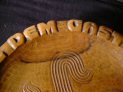
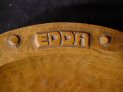
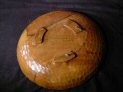
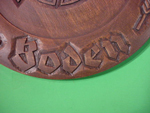
| DESCRIPTION: Here is an item from the great traditional culture base of the Germanic peoples. A plate carved in oak like this would be found in the homes of SS personnel. The words around the swastika are from the Norse Edda: “Heil dem Gast der zu uns kommt,” “Hail the guest that to us comes. (Edda).” The words are carved with rounded edges that look to be applied, but actually are carved right along with the actual plate (it’s all one piece). The stylized swastika in the center is the Sonnenrad Hakenkreutz, or sun wheel. This is the truest form of the symbol of the ever-turning fiery celestial orb in that its arms resemble flames. On the back is a single ‘W’ and that is presumed to be the logo or mark of the carver. The plate measures 12 1/2 inches in diameter. The marks that look like cracks are not. They are merely natural graining. We earnestly believe that this is connected with the SS-Ahnenerbe Stiftung because of its very nature. Plates such as these that were often called ‘Julteller,’ ‘Yule plates,’ were often a gift to another SS family at the time of the Julfest, Christmas. Not only was the birth of Jesus celebrated by most of the SS, but also the traditions of the Germanic peoples in their winter solstice. In the context of the SS traditions, the word ‘Christmas’ Weihnachtfest, had nothing originally to do with the Christian faith, but related to Germanic pre-Christian beliefs. The sun symbol on the plate also has the connotation of eternal life (eternally rolls the wheel of life). Everything dies, everything blooms again; eternally rolls the wheel of life Sonnenrad everything breaks, everything is mended. Eternally builds the house of life. Everyone parts, everyone meets. Forever, the cycle of life stays true. Certain SS men refused to part with their Christian ways and this was respected by the SS parent organization. So both faiths, Christian and Pagan, were celebrated together in the Third Reich and in the Schutzstaffel.
PRICE: SOLD |


 |
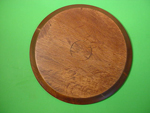 Back of plate |
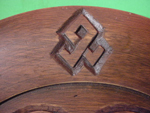 The Odel rune |
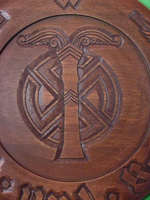 Sacred Irminsul und Sonnenrad |
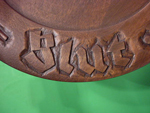 "Blood" |
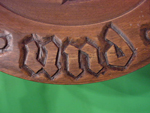 "And" |
 "Soil" |
Irminsul Bread Plate “Blut und Boden” (Item BRE 1-4 & AHN 4-13) |
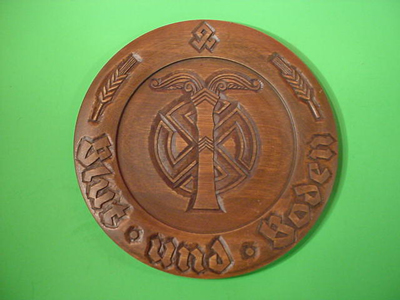
DESCRIPTION: This is a typical Germanic bread plate but its message places it in the ‘rare’ category. It depicts the Irminsul of the SS Ahnenerbe or Ancestral Heritage Foundation. At its top you see the Odel rune and at the sides are the words ‘Blut und Boden (translation: Blood and Soil), while at the sides are wheat sheaths to signify bread (the staff of life). The Irminsul is backed up with the ancient sun symbol, the ‘Sonnenrad’ or Sun Swastika. The plate measures a little over 11 inches in diameter and of course is hand carved. Those of you familiar with the Ahnenerbe and some of the mythos of the National Socialist ideology will know about the important symbolism of the Saxon Irminsul. For further information on that sacred symbol, type in Saxon Irminsul on Google; for fascinating information found there. This bread plate is the personification of what is termed Teutonic legend that is indeed as fascinating as the quest of the Holy Grail! Who but Germania could offer something as awe inspiring and wondrous as this? PRICE: SOLD |
 |
 Julefest (Christmas) 1941 |
 |
 |
 |
 "Our" |
 "Daily" |
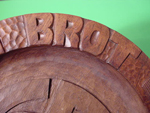 "Bread" |
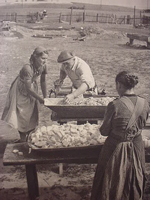
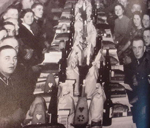 Note loaves of bread |
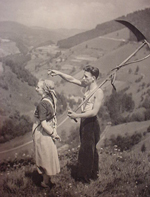
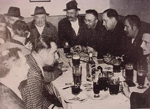 Himmler with farmers |
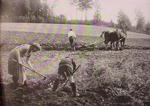
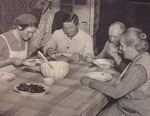
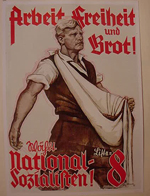 The importance of farming - Brot! |
 |
 |
 |
 |
 |
 |
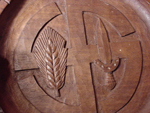
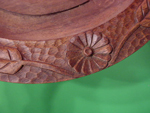
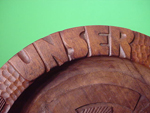
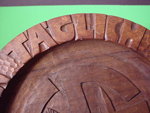
Carved Bread Plate from the Reich's Farming Organization (Item BRE 1-5) |
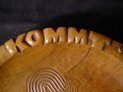
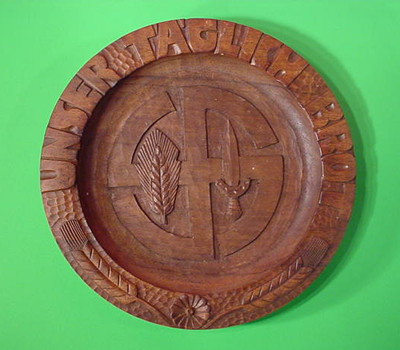
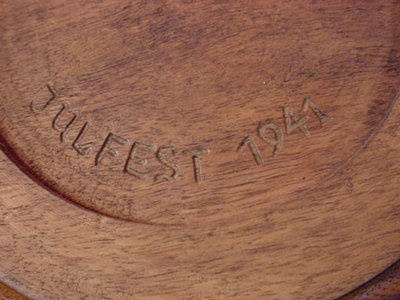
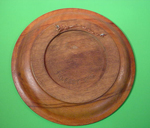
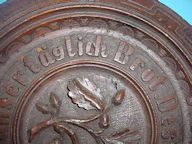
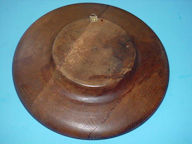
DESCRIPTION: This is a beautiful hand carved bread plate depicting the organizational symbol of the Reichsnarstand; this was the official organization for protection of German farms and farmers in the 3rd Reich. The words at the top, “Unser Taglish brot“ translates to “Our Daily Bread,” a saying from the Christian bible and of course these words were universal. Nothing could be more important to the people anywhere than this meal consumed for strength and survival. It especially was ultra-important in the Third Reich since it was Adolf Hitler and the National Socialist movement that through their four year plan and subsequent social programs that brought Germany back from brink of despair to being the most productive society in Europe. Give us our daily bread was to be interpreted as a nation's grateful thanks to a movement that gave not only bread to the citizens but brought them back to happiness and prosperity so the plate has much significance The Sonnerad or Sun Wheel Swastika with its wheat sheath and Teutonic sword personify the strength of the nation that once more stands proud in the world after the devastation of the ‘Great War’, little did they know that influences within the Reich and without were girding up for another even more horrible attack against the people and the spirit of the West. Germany would once again be the victim of the destroyers and the “traditional enemy”. The plate is 10 inches in diameter with the word and date Julefest 1941 carved on the back. This was the Teutonic Christmas Season. The collector who had it among his accumulations put the eye screws and a copper wire on the back for hanging purpose. This is a very beautiful pllate and historically important in its own right. PRICE: SOLD |
 |
 |
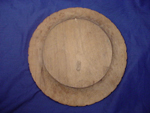 Back |
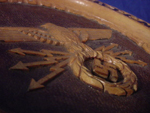 Note the depth of carving |
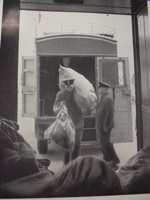 The mail out of Krosno |
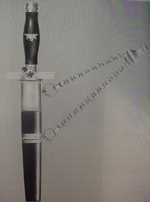 Postschutz Officer dagger (note the eagle configuration) |
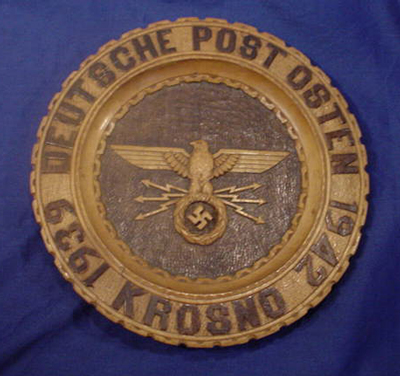
Carved Bread Plate from the Military Postal Police (Postshutz) in Krosno, Poland (Item BRE 1-6 & WEHR 31-21) |
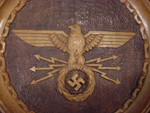
DESCRIPTION: This may be the finest German bread plate we have ever seen and we have seen many fine collections of them. This plate is expertly carved with the eagle of the German Military Postshutz eagle as its central design. The Postshutz (Postal Police) comprised about 4,500 members stationed all over Europe and they were tasked with the security of Germany’s Reichspost; they were not only responsible for security of the mail but other communications media such as telephone and telegraph systems. The plate was from the HQ of this organization in Poland. They were stationed there after the Polish attack on the German radio station at Gleiwitz, in 1939 -- the event that after many Polish atrocities against the German minority in Poland finally launched the German retaliation and began WWII. After that vicious attack units of the postal protection police were dispatched to several locations in Poland to prevent something like this happening again. One of these outposts was Krosno which is a medieval fortified town; a former royal “free town” in medieval Europe. The carved plate was probably a gift from Poles who not only cooperated with the German occupiers but actually sided with their mission of destroying Soviet Communism. There were many who thought this way. The contemporary orthodox history books do not mention this of course. The dish says along its edges "Deutsche Post Osten 1939-1942 Krosno." It measures 11 inches in diameter and is in excellent condition. The carved Postshutz eagle rises in deep relief carving and is very dramatic. It is the eagle that you see in the middle of the grip of the rare Postshutz daggers. The piece is not only artistically great but is a really important historic relic of the turbulent time! PRICE: SOLD |
|
|
|
|
|
|
|
|
|
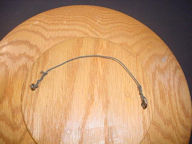
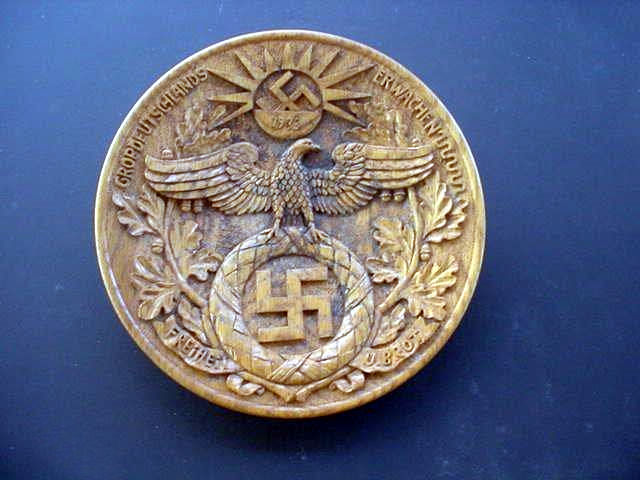
Beautifully Carved Wooden Plate from the “Kampfzeit” (Struggle for Power) (Item BRE 1-7; WOODMASTER 1-12; NSD 22-3; SA 15-2; ART 18-7) |
|
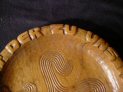
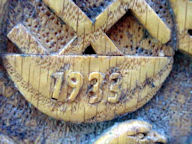
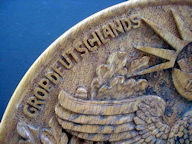
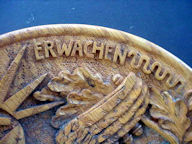
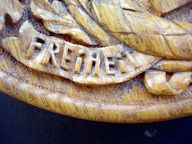
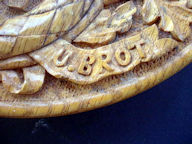
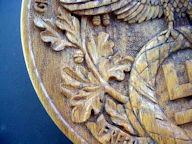
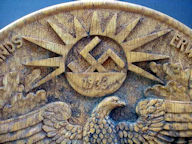
DESCRIPTION: This is without a doubt the most beautiful carved commemorative plate that we have ever seen and certainly with the greatest meaning. In 1933, Adolf Hitler was appointed as Reichs Chancellor. The whole meaning of the plate is to commemorate this important world event. The plate has at the top a swastika within the figure of rising a sun. The central design is the large, early NS Party eagle perched upon the early nonmobile swastika that is within a wreath with the date “1933” below it. The meaning is quite deep and has to do with the Machtergreifung (The Seizure of Power). Behind the eagle’s wings are sprays of oak leaves and acorns, the ancient German symbol of victory. Along the edges are the separate cutout words “GROßDEUTSCHLANDS ERWACHEN” (Greater Germany’s Awakening). Below the wreathed swastika are the watchwords (“Freedom and Bread”) of the NS movement “Freiheit u. Brot.” The plate measures 11 inches in diameter. It is in wonderful condition with no parts of the carving missing. All of the artwork is deeply cut and raised. It is probably the finest woodcarving that we have ever seen and would be considered not only extremely rare but also exceedingly beautiful when one looks at the carved wording that is all individually hand cut with fantastic skill; you can realize that this is one of the true artistic treasures of the early Third Reich.
PRICE: SOLD |
|
|
|
|
|
|
|
|
|
|
|
|
|
|
|
|
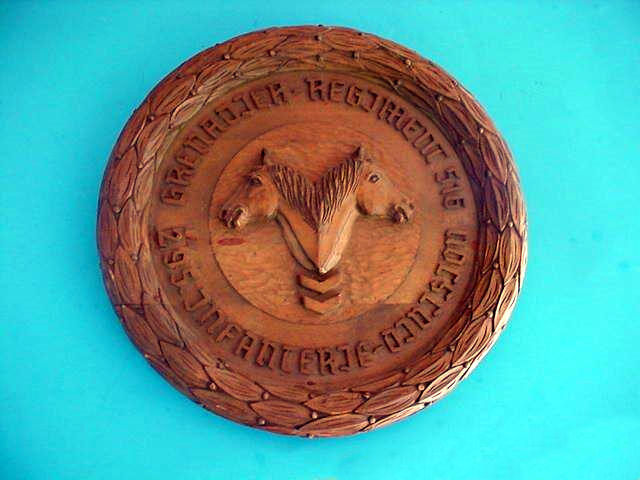
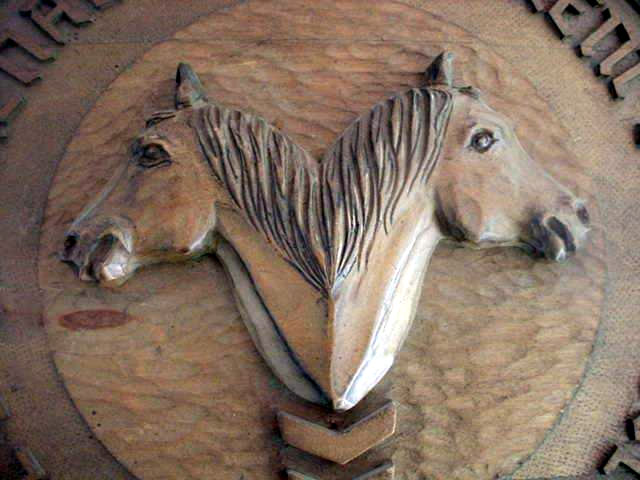
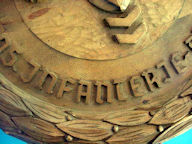
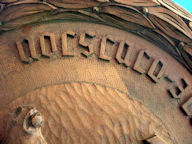
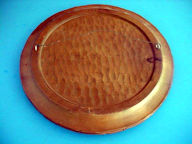
Commemorative Bread Plate from the 295th Infantry Division, Regt. 516 (Item BRE 1-8) |
|
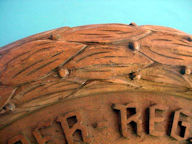
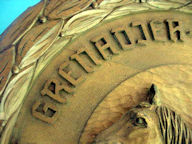
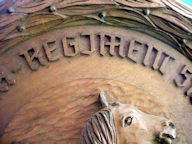
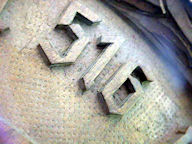
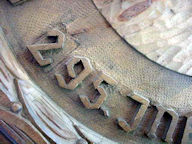
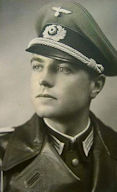
DESCRIPTION: This was one of the most famous German divisions of WWII and comes from the even more famous Grenadier Regt. 516. Because of the twin-horse insignia of the division it was given the nicknames Doppelkopf-Division (Double Head Division) and Pferdekopf (Horse Head Division). It served in Belgium and France between May 1946 and June 1941, and in the Eastern Front between June 1941 and October 1942. They surrendered at Stalingrad in 1943. Survivors served at Norway between May 1943 and May 1945. The Bread Plate The plate is quite heavy and has the beautifully depicted double horse heads as its central theme with the name of the 295th Inf. Division all highly carved at the bottom and this is joined by the title of some Russian place name that we cannot interpret. Across the top of the horses is the regimental identification “NR 516” known as a grenadier regiment. This magnificent plaque was bought in Germany from a lady whose father was in this very 516 grenadier regiment. She wanted to share her father’s great commemorative plaque with historians and collectors in memory of her dad, who by the way fought the good fight. The carving is nothing short of magnificent both on the horses and on the leaf motif frame. PRICE: $850.00 |
|
|
|
|
|
|
|
|
|
|
|
|
|
|
|
|
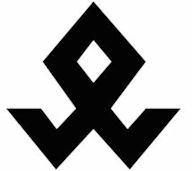
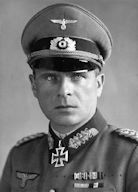
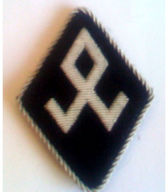
Bread Plate Depicting the Odal Rune as the Central Theme along with other N.S. Symbology (Item BRE 1-9) |
|
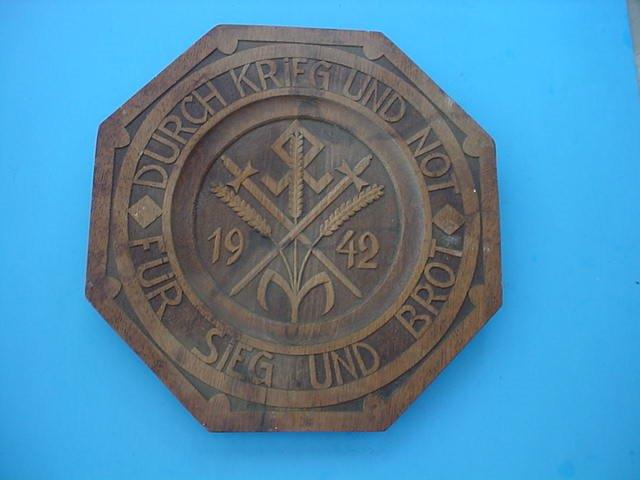
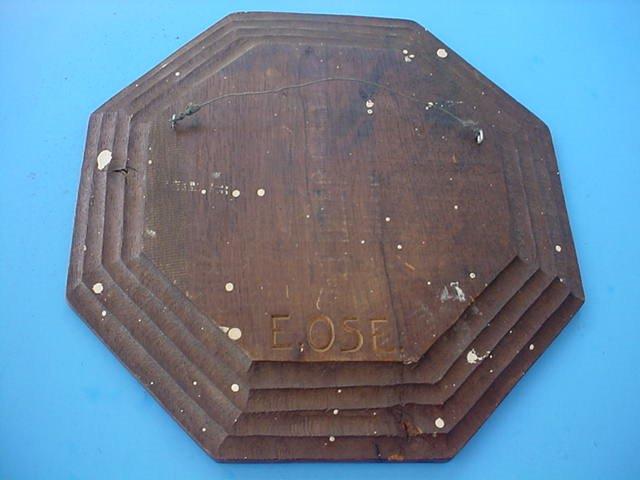
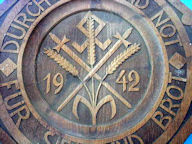
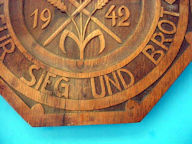
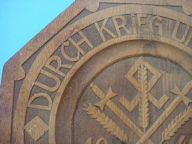
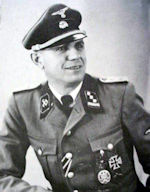
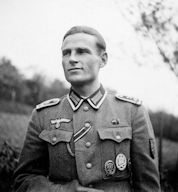
DESCRIPTION: The Odal rune symbolized several values which were of central importance to National Socialist ideology. It was adopted from the Elder Futhark Odal rune. During the Second World War it was used by the 7th SS Volunteer Mountain Division Prinz Eugen, as well as the SS Race and Settlement Main Office, which was responsible for maintaining the racial purity of the SS. The wonderful carving depicts this sacred Teutonic icon along with other symbols and wordage that were of supreme importance to the Bewegung (movement). The wording along the edges translates to: “Through war and hardship-For victory and bread,” while in center there are crossed over three wheat sheaths and in their center are two crossed swords and the date, which is the war year 1942. The middle wheat stalk protrudes into the base of the odal rune. Loyal Germanophiles will instantly recognized the very deep meaning to this particular plate.
PRICE: SOLD |
|
|||||||||||||
|
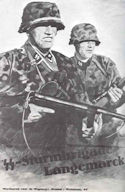
Commemorative Bread Plate from the 27th Waffen |
|||||||||||||
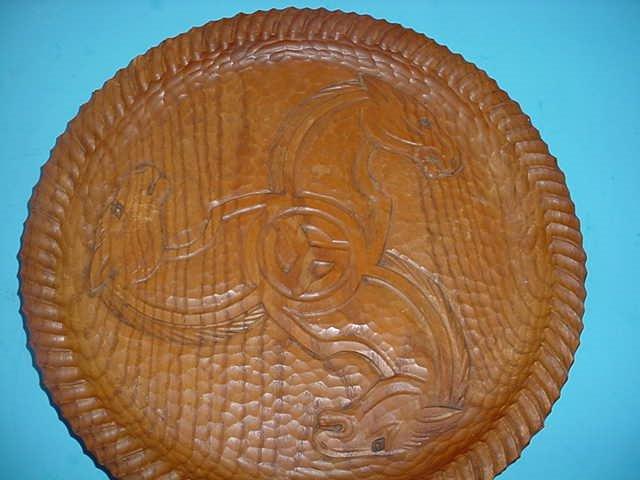
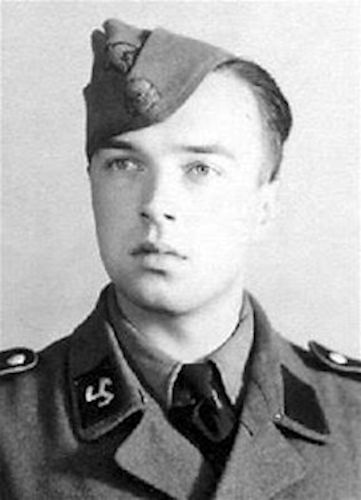
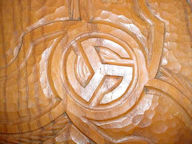
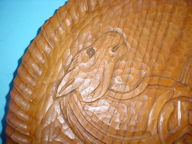
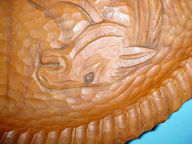
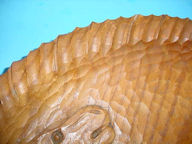
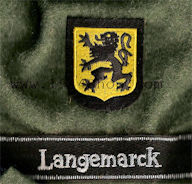
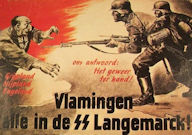
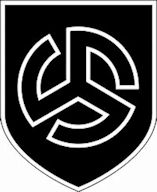
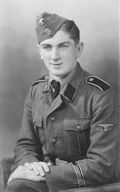
DESCRIPTION: The 27th SS Volunteer Division “Langemarck” was a German Waffen-SS division comprising volunteers of Flemish background and was employed chiefly on the Eastern Front, first in Ukraine in early 1944, then participating with a crack combat group in Estonia along the Tannenberg Line in the summer of 1944. Members fought alongside other European Waffen-SS volunteers subordinate to III.SS-Pz. Korps; covering themselves with glory and suffering heavy losses. After transformation into a division, "Langemarck" participated in the final fighting on the Pomeranian and Oder fronts, continuing to fight under extreme conditions, and always loyal in holding their assigned positions, and counterattacking whenever possible. Most of the Flemish volunteers were able to surrender to the Anglo-American forces, thus escaping capture by the Russians. If only all the brave men who as Europeans fought together against the Bolshevik menace had survived, the world would be a better place (author’s opinion). Where is the Waffen- now that we have Antifa terrorists sowing violence and mayhem in our streets and our universities? now that we have Antifa terrorists sowing violence and mayhem in our streets and our universities?The Bread Plate This is another woodworker’s masterpiece measuring 15 inches in diameter. The three-armed swastikas, which was the insignia of the -Langemarck Grenadier Division, is seen in the center of the carved three horsehead artistic motif. The horsehead comes from Flemish antiquity and is often seen displayed on shields and sword blades having belonged to knights of ancient times and on early religious trappings as well. The horses represented fidelity, honor, and allegiance to one’s fatherland.
PRICE: SOLD |
|
|||||
|
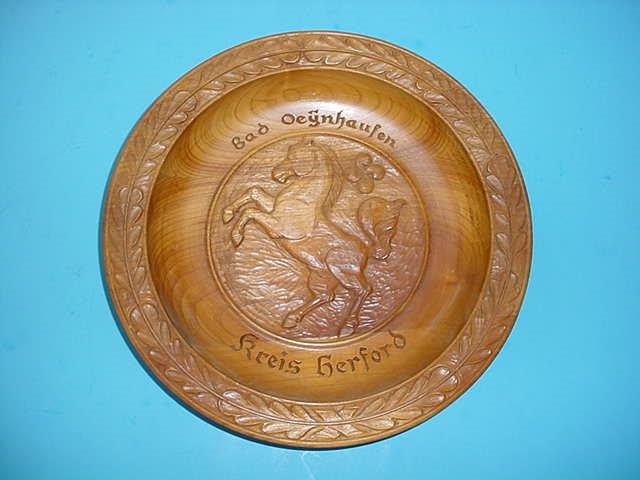
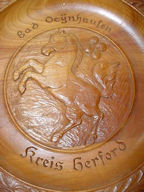
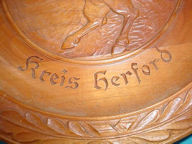
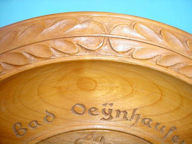
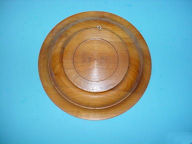
Bread Plate Bad Oeynhausen Kreis Herford, N.S. Period (Item BRE 1-11) |
|||||
| DESCRIPTION: This is a nicely carved wooden bread plate from this hamlet 39 KM from Bielefeld. It is one of the spa towns famed for the great health baths. The bread plate features a rampant horse as its central motif and bears the name of the town and it’s Kreis Herford. The bowl of the plate is deep and the oak-leaf framing is excellent. The wood is especially beautiful. It has a little swastika with bulbous ends that can be seen just behind the horse’s mane. We think that almost without a doubt this traditional symbol dates the work to the National Socialist era. This is a very nice piece of patriotic folk art.
PRICE: $350.00 |
|
|||||||
|
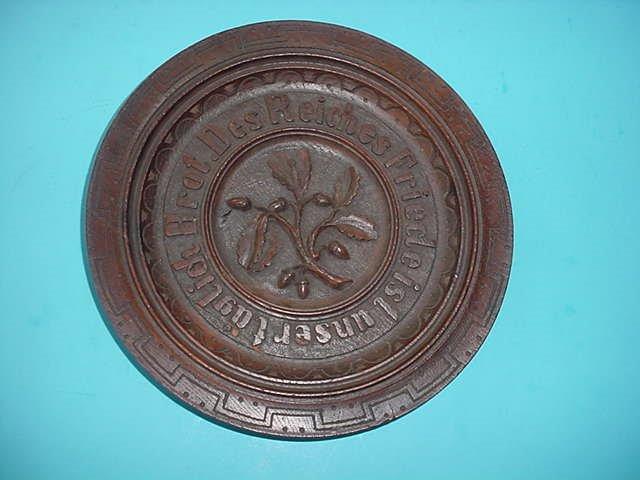
Bread Plate with SS NSDAP Quote (Item BRE 1-12) |
|||||||
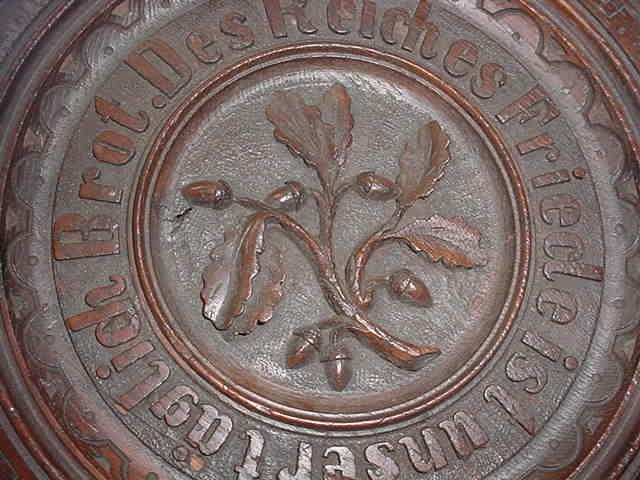
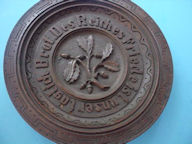
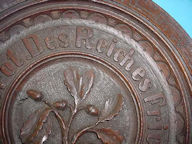
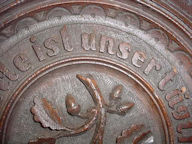
| DESCRIPTION: Here is a handsome Third Reich-period bread plate with a saying that reads: “Des Reiches Friede ist unser täglich Brot.” This translates to: “The Reich’s Peace is our Daily Bread.” This was an attitude that was prevalent in Germany in the 1930s in that Hitler’s National Socialists had brought freedom from such as the appalling horrid Versailles Treaty and all the other gruesome atrocities perpetrated against the German people, and they felt that their God had failed to stand with an army that had the words “GOTT MIT UNS” on their military belt buckles all during their struggle against half the allied world forces. “Die ganze Welt gegen uns!!!” In the center of this bread plate is the symbol that their Teutonic ancestors held in holy regard, this is the strand of oak leaves and acorns symbolizing rebirth and regeneration This has deep meaning to the Bewegungkameraden and Germanophiles. The bread plate measures 12 inches in diameter and is in fine condition. It’s carved from oak and it has some evidence of an old-age crack at the back, but this does not show in the front. Anyone who collects wooden art knows this is a completely regular phenomenon and practically all oak sculpture that even gets to be 50 years old will do that as a rule, but we love oak all the same!
PRICE: SOLD |
|
|||||
|
Bread Plate as an Award (Item BRE 1-13) |
|||||
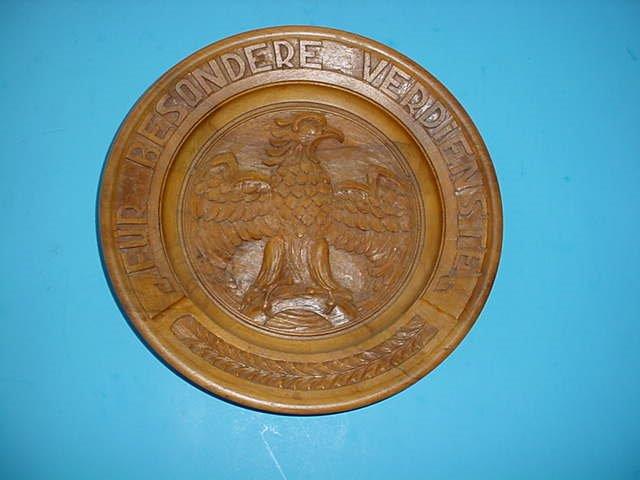
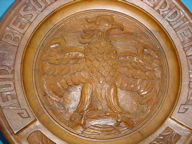
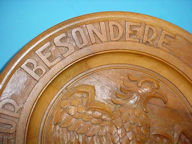
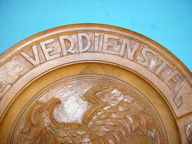
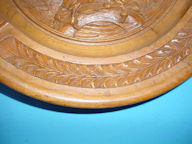
| DESCRIPTION: Here is a magnificently carved bread plate that was obviously an award in the military during the era of the Third Reich. It has a stylized militaristic-looking eagle as its central theme with the raised wording “Für Besondere Verdienste” (“In Faithful Service”). The plate is deep and measures one foot in diameter. The carved plate is, to say the least, very dramatic looking and bold, as were the troops of the WWII German army that this carving represents.
PRICE: $650.00 |
|
|||||||
|
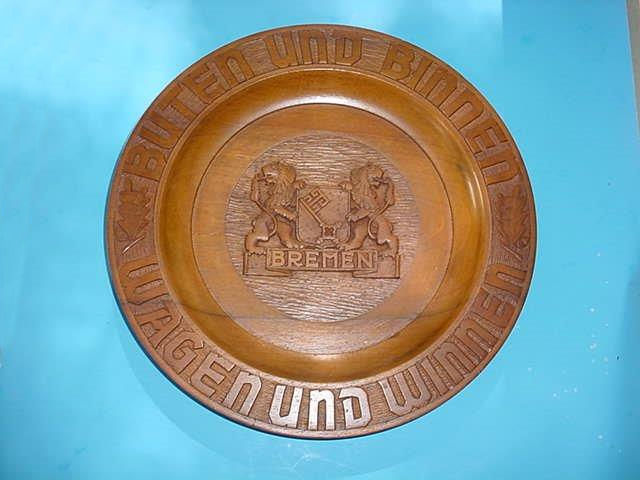
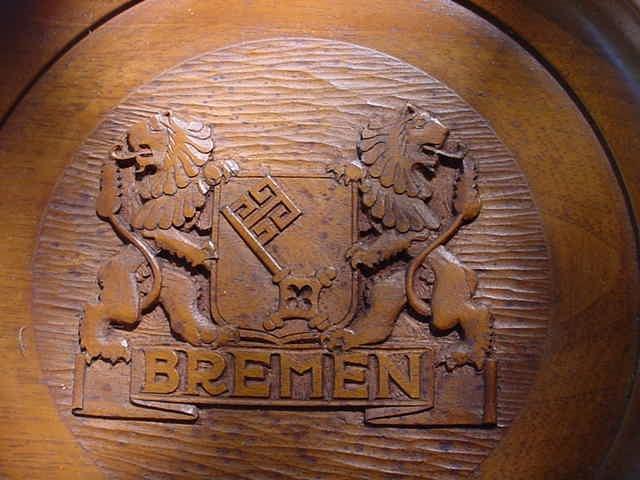
Bread Plate Representing Bremen, a Major City of the Hanseatic League (Item BRE 1-14) |
|||||||
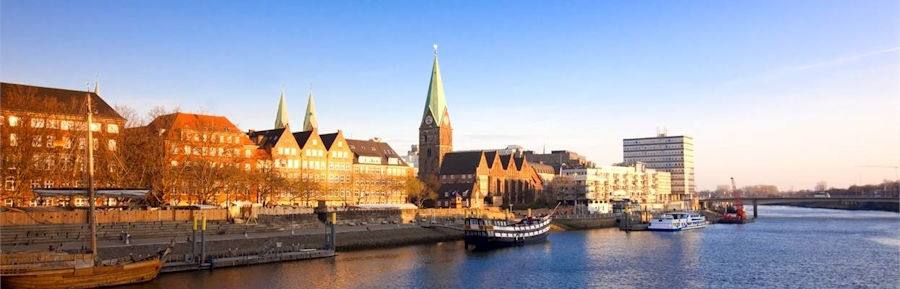
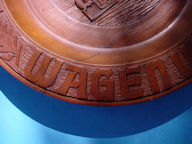
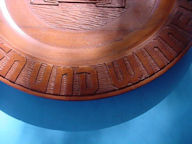
| DESCRIPTION: This is probably the finest carving we have ever seen on a bread plate. The familiar lions and key are fantastic in their minute, yet, bold detail. The old Bremen dialectal slogan is stark and carved to perfection: “Buten und Binnen, Wagen und Winnen.” This can be translated in more than one way, but usually in use it works out to "Abroad and at Home - to Venture and Win" (Traditional saying of the merchants in this Hanseatic City of Bremen). Because this piece was purchased from a U.S. WWII veteran, we think we are safe to assume that it was a Third Reich-produced item and, frankly, it has that look to us! Nevertheless, it is a truly beautiful relic and would grace any Germanic collection out there in collector land. It measures 14 inches in diameter and is quite heavy; carved in beautiful oak and we will be sad to see it go. “A thing of beauty is a joy forever.”—John Keats
PRICE: $385.00 |
|
||||||||||||
|
Bread Plate for the 14th Waffen Grenadier Division of the SS (1st Galician) (Item BRE 1-15) |
||||||||||||
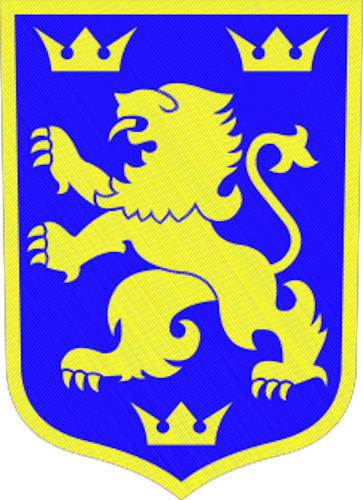
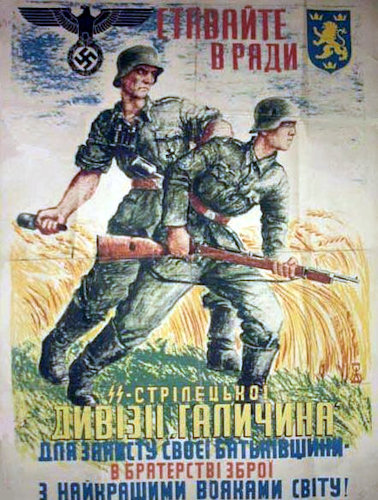
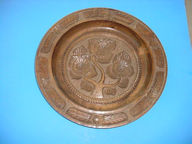
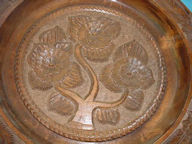
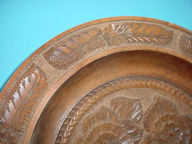
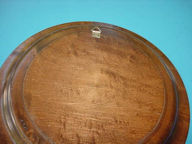
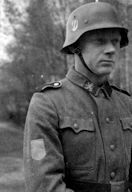
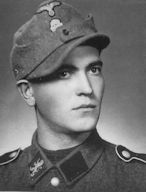
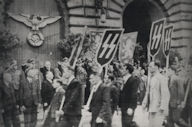
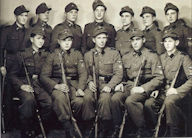
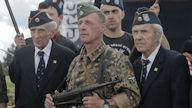
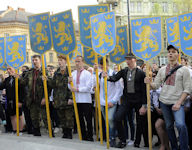
| DESCRIPTION: This marvelous bread plate is large measuring 15 inches in diameter. Its central décor is typical of the artistic mode of the eastern Caucasus where various sunflower patterns appear in designs throughout the region. The floral woodcarving seen here is exceptional, but typical. The plate is quite heavy and deep. Artistic, handmade trophies such as these were often presented to German Army and Waffen-SS soldiers as tokens of friendship from the local Ukrainian people who so loved and appreciated these most welcomed liberators who came to save them from the horrors of Bolshevism. The plate is considered much rarer than German ones. It is indeed rare and beautiful. Prior to 1944, the “14th” was titled the 14th SS-Volunteer Division "Galicia." It was a World War II German military formation made up predominantly of military volunteers with a Ukrainian ethnic background from the area of Galicia, later also with some Slovaks and Czechs. It was best known for combating partisan units and its military history bespeaks brave young soldiers doing their level best in fighting against the bestial monsters as to be straight from hell! It is not surprising that even today the veterans of the unit still don some of their military attire and along with their admiring sons, daughters, and grandchildren defy liberal sensitivities and march together proudly in memory of the great struggle and their fallen comrades as they thankfully still do. “You may write me down in history with your bitter, twisted lies. You may trod me in the very dirt, but still, like dust, I’ll rise.” – Maya Angelou. PRICE: $450.00 |
|
|||||||
|
Funny Munich Bread Plate (Item BRE 1-16) |
|||||||
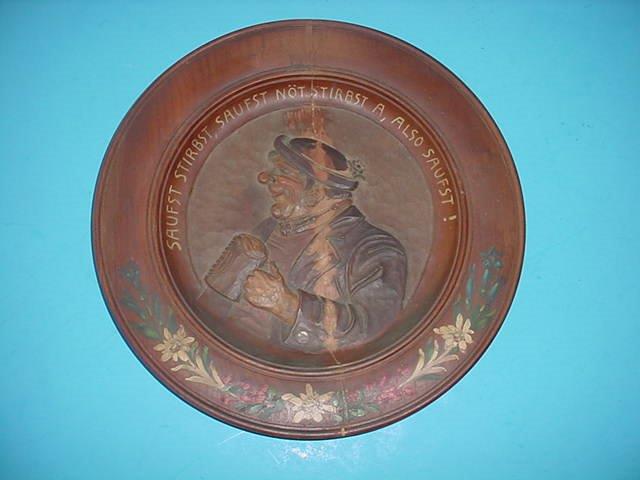
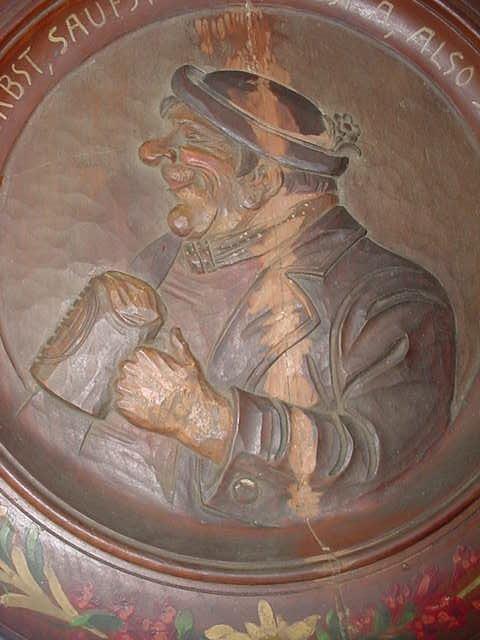
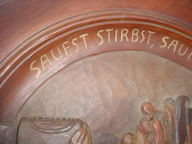
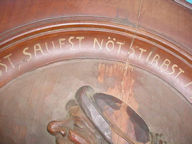
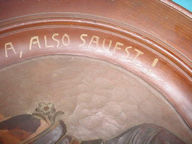
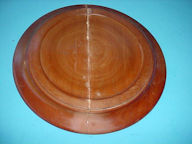
| DESCRIPTION: On the lighter side, here is a cute bread plate from Munich. It was once broken in half, but expertly glued back to whole, but never finished as far as staining. So, here is a project for the handyman. The plate is 13 inches in diameter. Here we see a carved depiction of a typical Hofbräuhaus beer guzzler. Carved out along the top of the plate is an old Bavarian proverb: “You drink, you die. You don’t drink, you also die. So drink!” Why not go ahead and fix him; he truly deserves it! He’s just too cute not to, don’t you think?
PRICE: $75.00 |
 |
 |
 |
 |
 |
 |
 |
 |
 |
 |
 |
 |
 |
 |
A Beautiful Carved Wooden Plate |
|||||
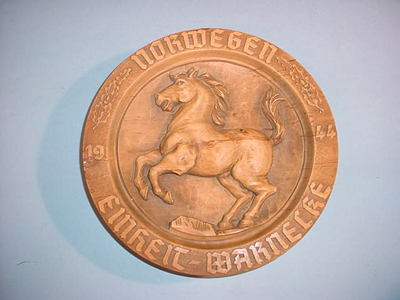
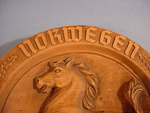
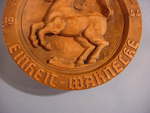
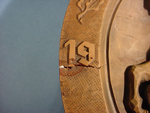
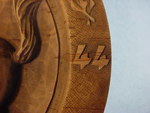
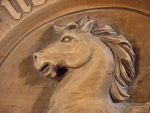
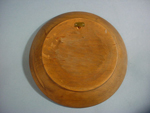
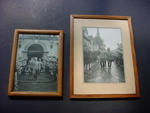
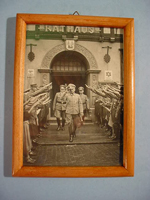
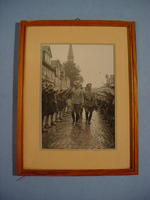
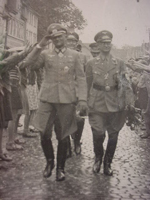
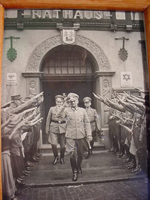
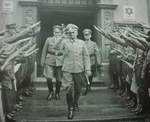
DESCRIPTION: This large wall plate with horse was presented by the townspeople of Stuttgart to this hero that they adopted. Stuttgart is always represented by a horse like the one seen on this plate. Major Fredrich Warnecke received this plate upon his return from the Norwegian Campaign. He received the Knights Cross at Stalingrad when he was Abteilung Commander of the 29th Infantry Division 517th Inf. Regt. III Abteilung. He received it on 22 January 1943. Earlier he had won the Deutsches Kreutz (German Cross) in gold. He served commanding German Norwegian forces until 1944. This was when he was given this hand carved plate upon his return. The plate measures with a 11" diameter and is 2" thick (very heavy). It is accompanied with two original period photos (framed) of Major Warnecke on occasion of his return to Stuttgart. He is accompanied with the Gauleiter and several political leaders and is the receiver of the cheers and greetings of the assembled townsfolk and various N.S. functionaries. This is a great art object as well as an important historical treasure made of oak and of course a crack naturally occurs here and there and this is quite natural with oak but it is quite sound! PRICE: $1,650.00; Special sale; reduced to $1,250.00 |
|||||
Please refer to item designator in parentheses in all correspondence.
Please E-mail for any additional information you may need.If you prefer, contact 'Germania' at PO Box 68, Lakemont, GA 30552
or call at 706.782.1668.
Please! do not call during the wee hours of the morning. The best time for calling us is between 10 am and 12 noon and between 9 and 11 pm eastern time.