

|
|
|
|
Old Reich
Page 2
|
|
|
|
|
|||||||||||
|
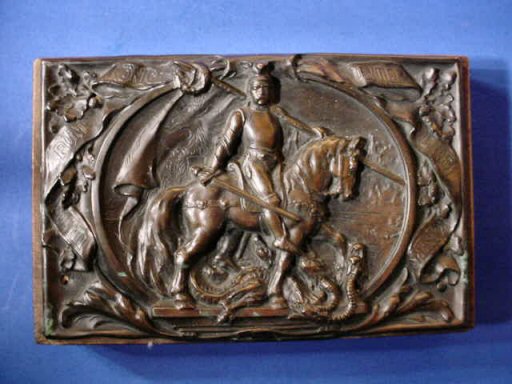
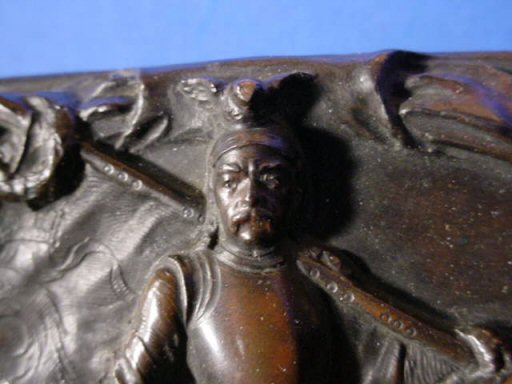
BISMARK BRONZE PAPERWEIGHT (Item OLD 2-2) |
|||||||||||
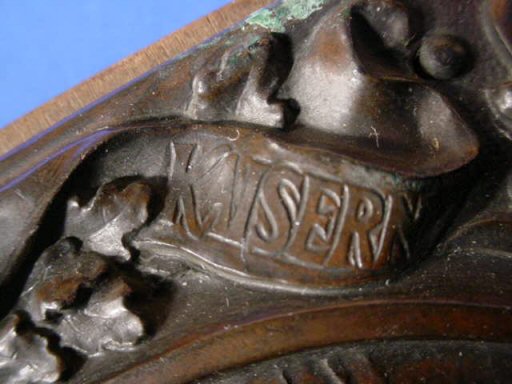
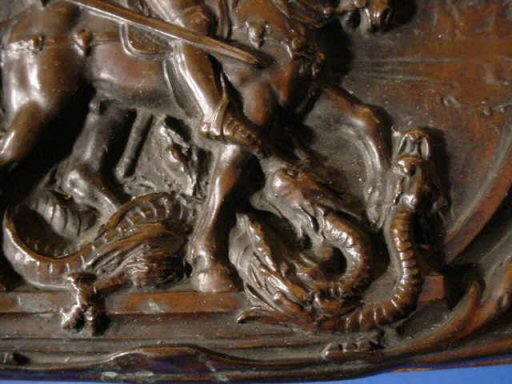
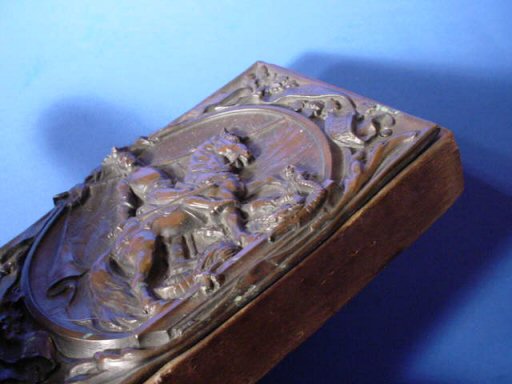
| DESCRIPTION: This Object d’ art
is indeed a wonderful piece of German History. It is a bronze plaque type
sculpture that graphically depicts Bismark, Germany’s Iron Chancellor in
a fanciful but dramatic equestrian scene, riding his steed while tramping
out dragons of disunity. He carries the royal German standard and sword of
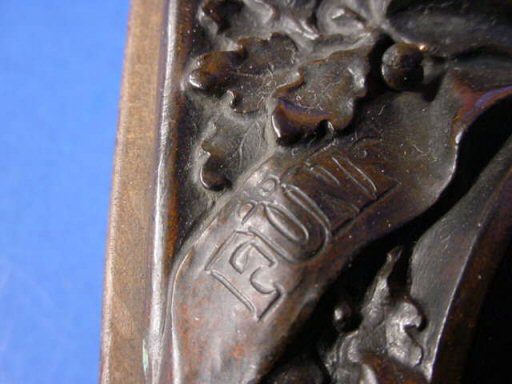
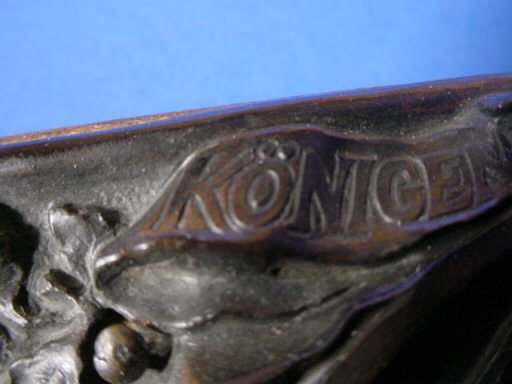
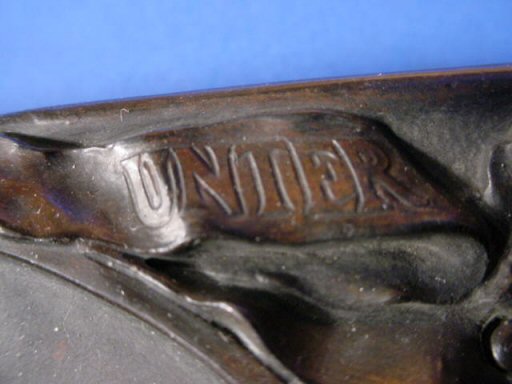
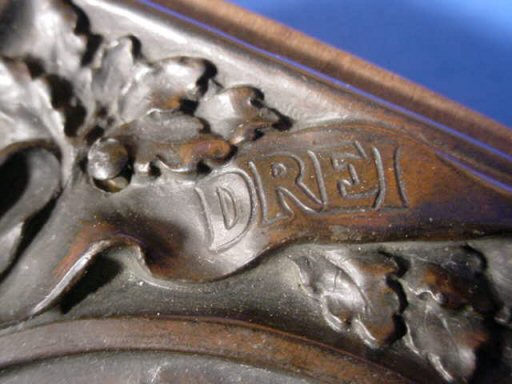
Germania. The ribbon around the scene says, "Under Five Kings, Under
Three Kaisers". Oakleaves adorn the sides of the piece. This is 19th
century romantic interpretation at this zenith. The piece measures 3
½" wide, 5 ½" long and 1 ¼" thick. It is mounted on a
wooden base.
PRICE: $ 450.00 |
|
|||||||||||||
|
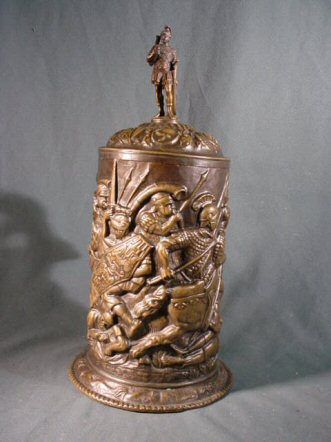
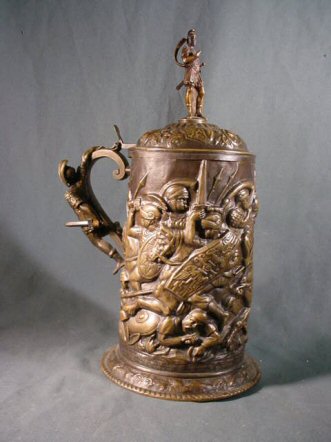
GERMAN VICTORY OVER ROME BEER STEIN (Item OLD 2-3; KSTEIN 1-8) |
|||||||||||||
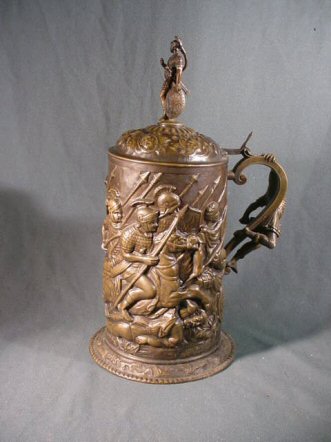
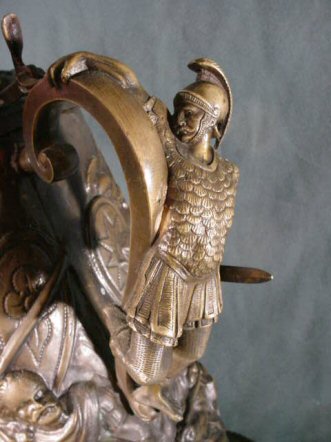
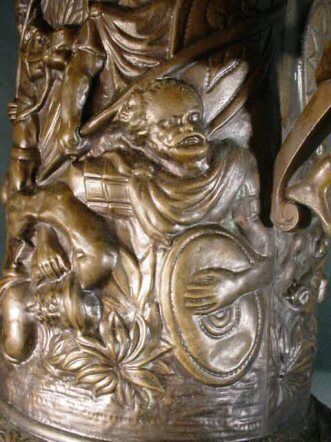
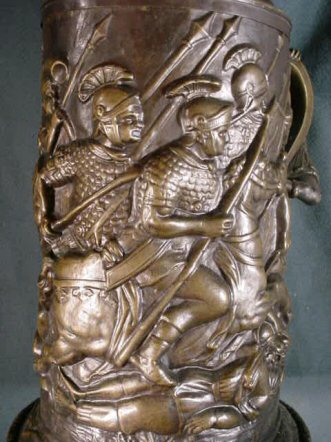
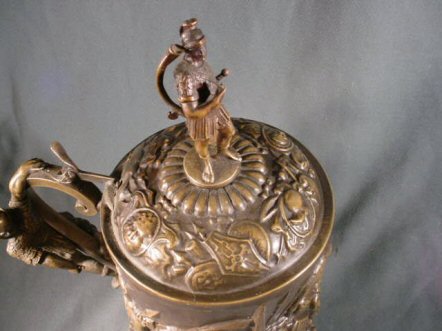
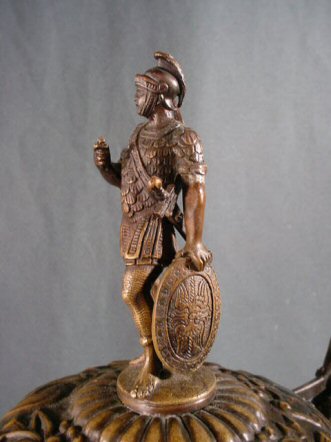
| DESCRIPTION: This is probably one
of the most interesting beer steins ever found. It depicts very
dramatically, the saga of the Battle and total defeat of the Roman legions
under General Quintilius Varus at the hands of Hermann the Cheruskian
chieftain. Hermann and his Teutonic warriors surprised the Roman’s and
defeated them. The stein has a diameter of 8 ½" at the bottom. It is
17 ½" tall and 11" wide at its widest point. It is interesting
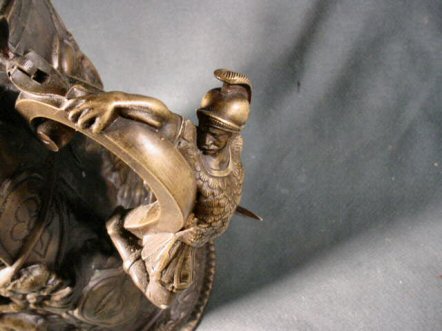
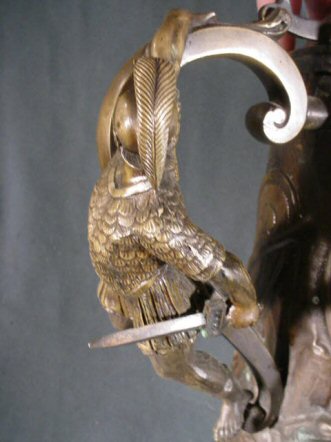
to view this legionnaire as he seemingly attempts to escape the horrible
fate of those who managed to escape the initial blood letting. This krug
is an extremely rare document of a battle that changed the history of the
world.
PRICE: SOLD |
|
||
|
Huge Iron Plaque of Karl der Grosse (Charlemagne) (Item OLD 2-5) |
||
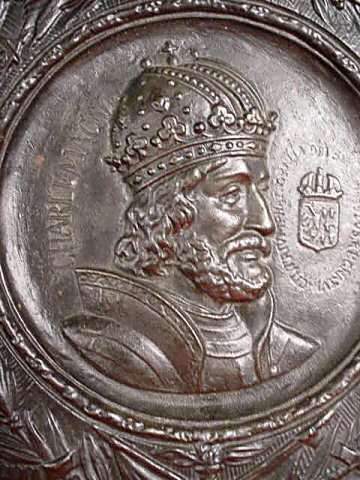
| DESCRIPTION: This is the King of the Franks, Emperor of the Holy Roman Empire, 742-814. It is said by his admirers that "By the sword and the cross he became the master of Western Europe." "Through his enlightened leadership the roots of learning and order were restored to medieval Europe." Well, good things are said about "Ike" Eisenhower, also, by those who really don't know the whole truth (see Basque's Other Losses). Charlemagne's Christianizing of the west included murder, most savagely against the Saxons, whom he considered pagans who stood in the way of his objectives and agenda in the course of the long war against Wittekind, the Saxon leader. The great Christian emperor ordered the foul massacre of 4,500 Saxon prisoners including almost all the tribal chiefs. The plaque is of iron and is quite heavy. The king is surrounded by a panoply of items: helmets, telescope, and floral decorations. His crest, surrounded by a Latin inscription, can be seen to the right of his face. The plaque is huge measuring 16 ½ inches in diameter. How it was mounted is problematical. No mounting device is visible. Perhaps it was framed in another outer mounting. This is a fine and exciting art plaque with historically important connotations: possibly Kaiserreich manufacturing or even Third Reich. Hitler admired Charlemagne, while Himmler was a Wittekind fan.
PRICE: $175.00 for the set |
|
|
Page Two |
Please refer to item designator in parentheses in all correspondence.
Please E-mail for any additional information you may need.